Some homes make an immediate impression; others reveal themselves gradually through texture, colour, craftsmanship and memory. In a 750-square-foot apartment in Lokhandwala, Mumbai, Chhaav takes the latter approach, creating a residence that feels layered and deeply personal, with each element contributing to a larger narrative rather than competing for attention.
Named after the monsoon song Rim-jhim Gire Saavan from the 1979 film Manzil, Rimjhim was designed by the Mumbai studio, led by Tanya Shaikh, for an actor and a writer who together run a production house. The clients envisioned a home that reflected their creative lives while drawing from the warmth and understated opulence of Rajasthan, particularly its rich colours, tactile materials and traditional craftsmanship. Chhaav translates these influences into a contemporary Mumbai setting with restraint, allowing vintage references and regional character to emerge through considered details rather than overt motifs. The result is a home that feels intimate, expressive and collected over time.
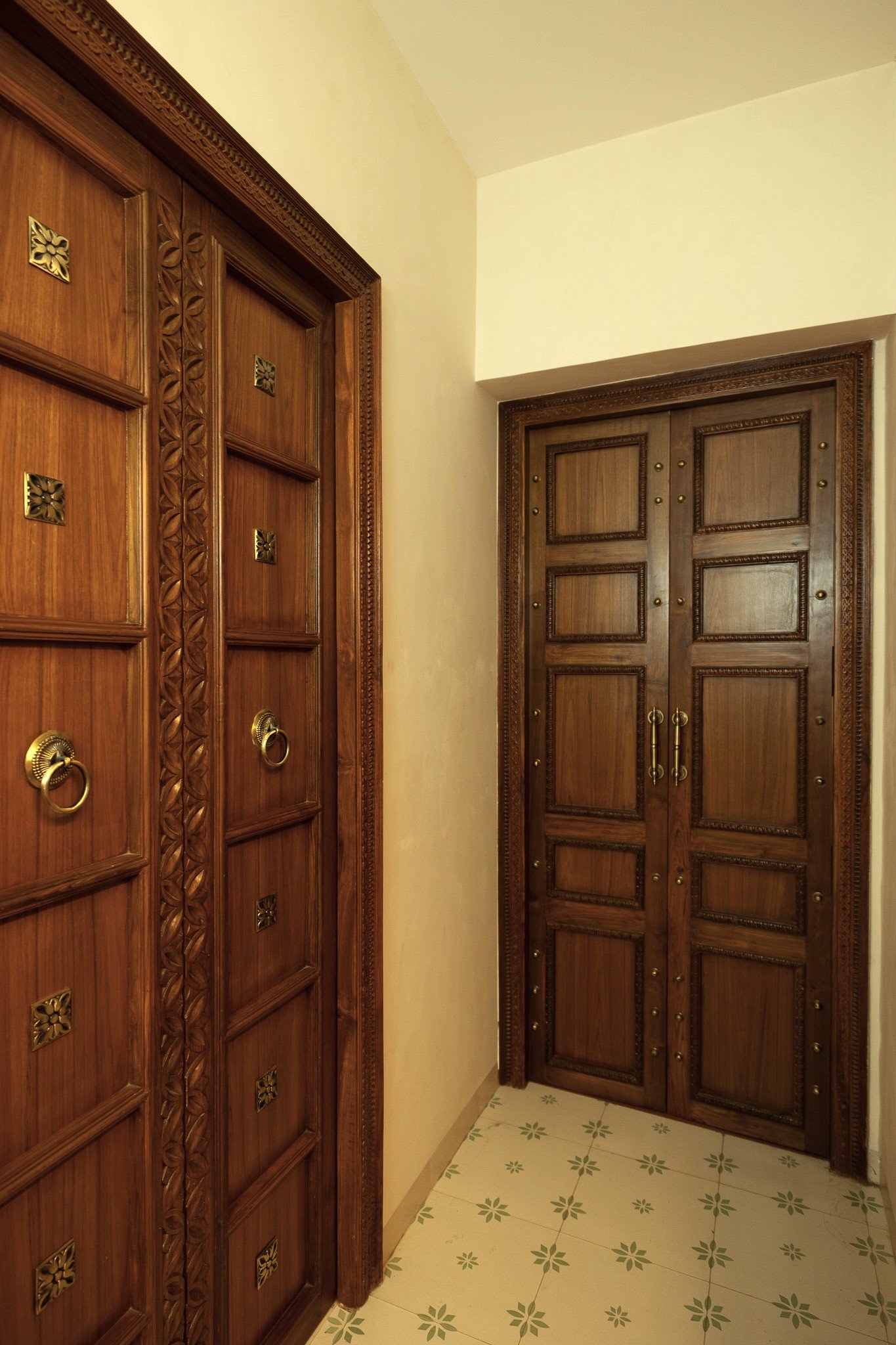
The entrance establishes the home’s character from the outset. A pair of panelled wooden doors, framed by a carved border and detailed with brass rosettes and ring pulls, anchors a short passage laid in patterned green-and-cream cement tiles. The combination of aged finishes, decorative detailing and traditional materials introduces the home’s Rajasthani influences with quiet confidence, setting the tone for the layered interiors that unfold beyond.
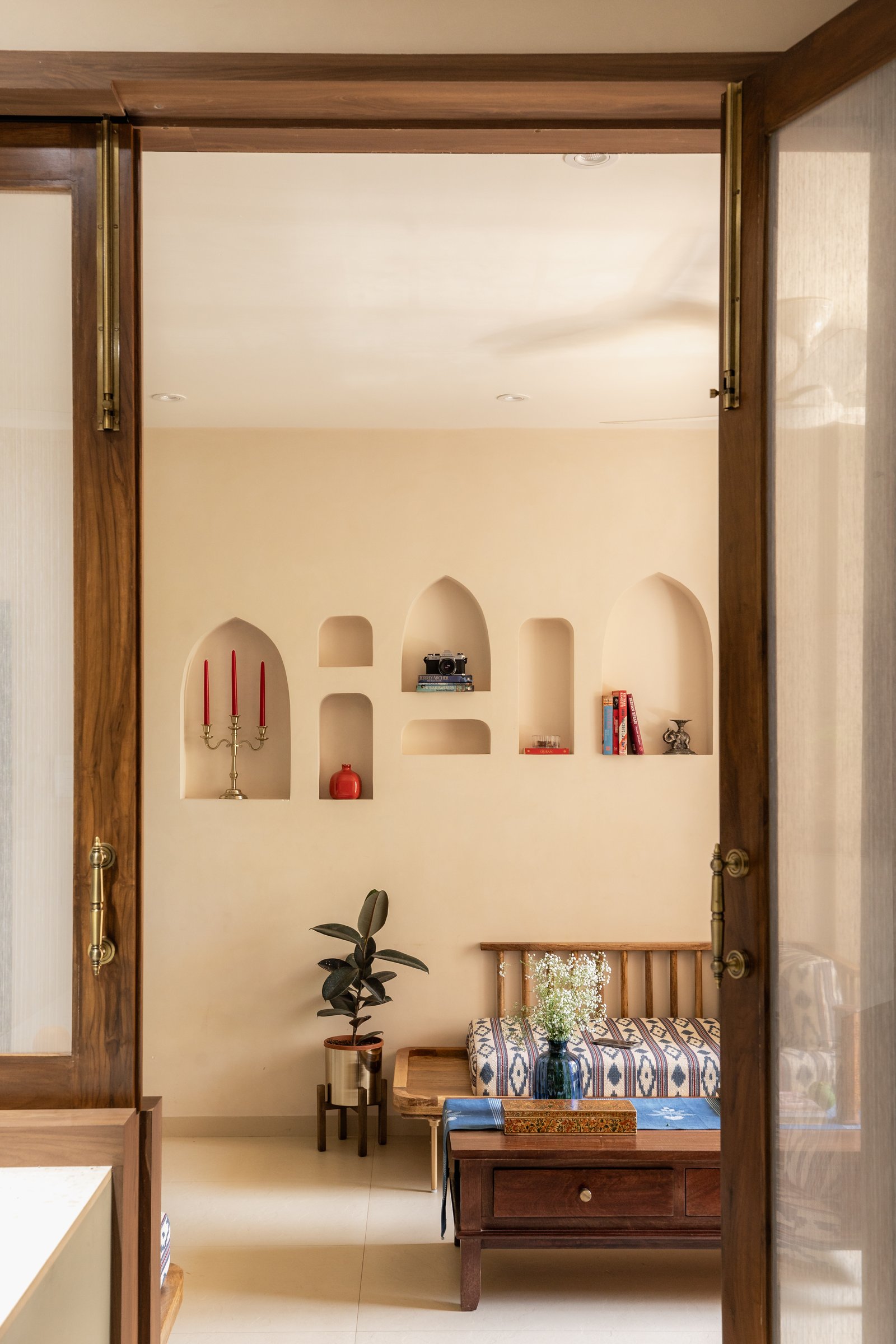
Beyond the entrance, the living room unfolds through a carefully framed view: a wall of arched niches set into softly finished plaster, a low wooden daybed and a carved coffee table illuminated by natural light. With their pointed profiles, the niches subtly reference the alcoves of traditional Rajasthani havelis, reinterpreted at an apartment scale as understated architectural elements rather than overt decorative motifs.
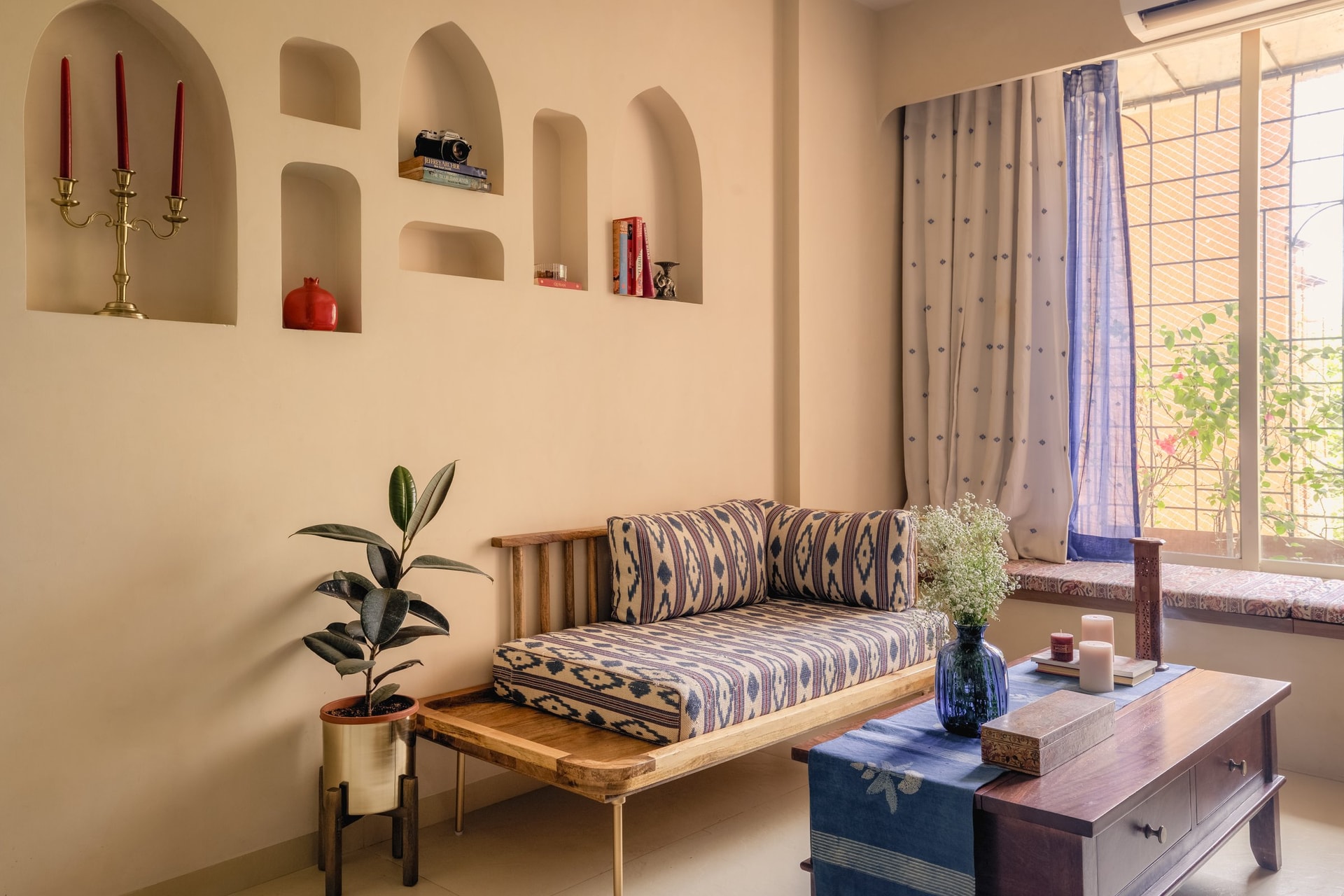
Soft-toned plaster walls create a quiet backdrop, while the ikat-upholstered daybed and carved wooden coffee table introduce pattern, texture and natural grain. Along the window, a built-in cushioned bench makes thoughtful use of the available space, extending the room’s functionality while allowing the compact living area to feel open and generous.
““The focus was on creating a space that felt rooted, timeless, and emotionally resonant, layered with materials, memories, and meanings.””
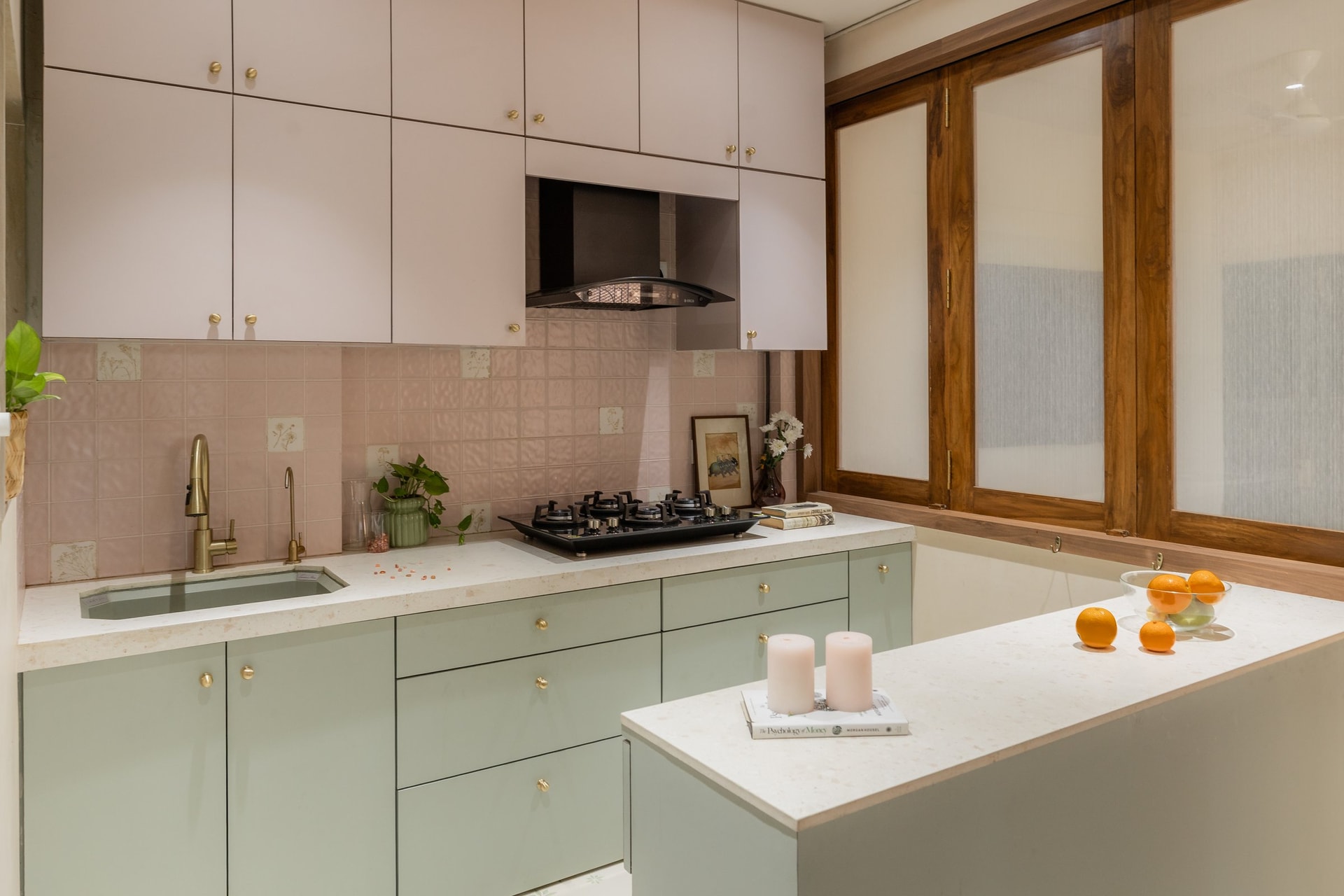
The kitchen introduces a more playful shift in palette, pairing sage-green base cabinetry with soft pink upper cabinets and a light stone countertop. Brass knobs create a subtle visual thread between the contrasting tones, while a wooden-framed partition softens the transition into the adjoining living space. Distinct from the more conventional language of compact urban kitchens, the space brings colour and character into the home without compromising its sense of restraint.
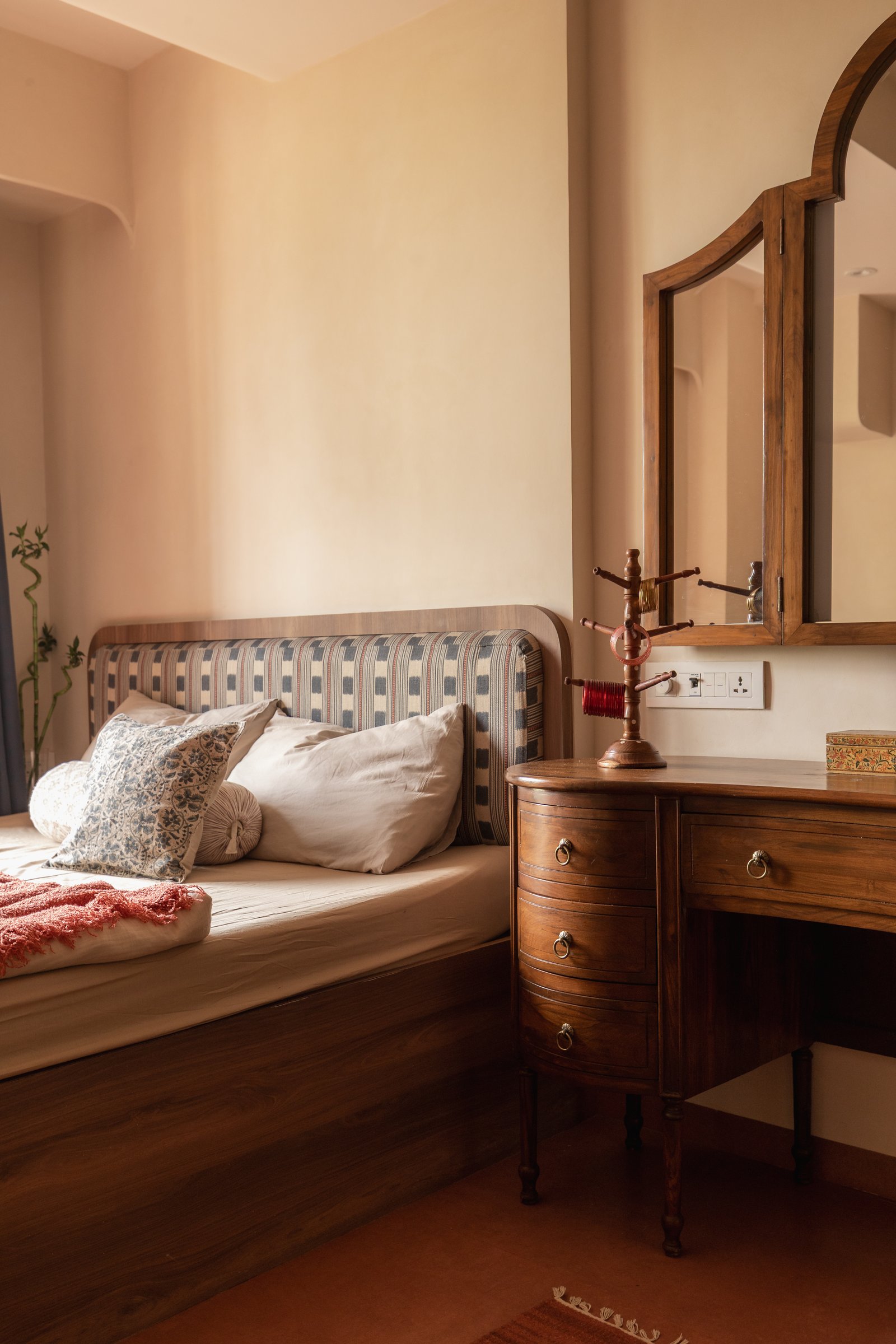
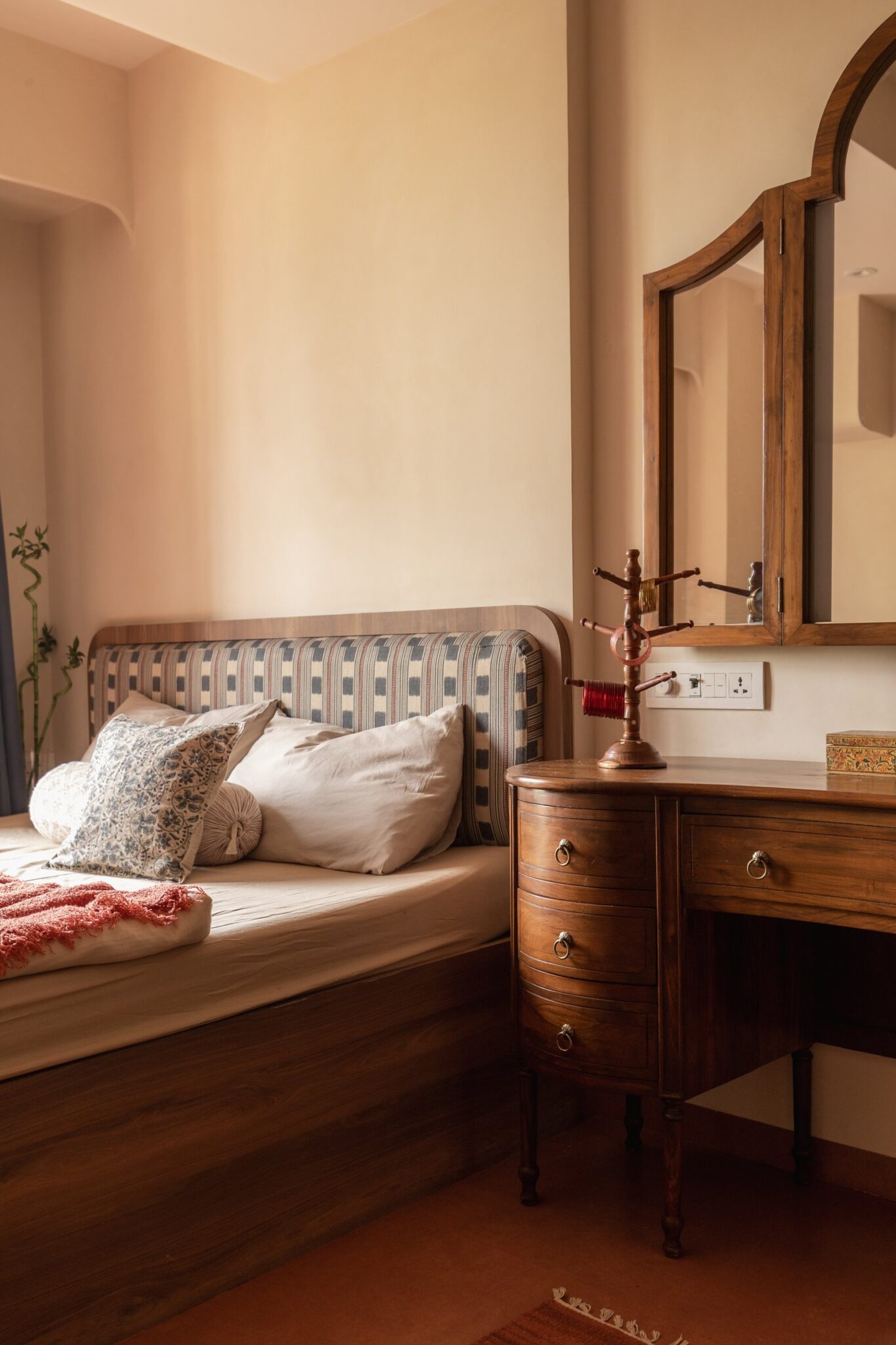
In the bedroom, the home’s warm palette takes on a deeper, more intimate character. A platform bed with a checked upholstered headboard rests against a softly textured wall in a warm honey tone, while rich wood across the bed frame and flooring grounds the space.
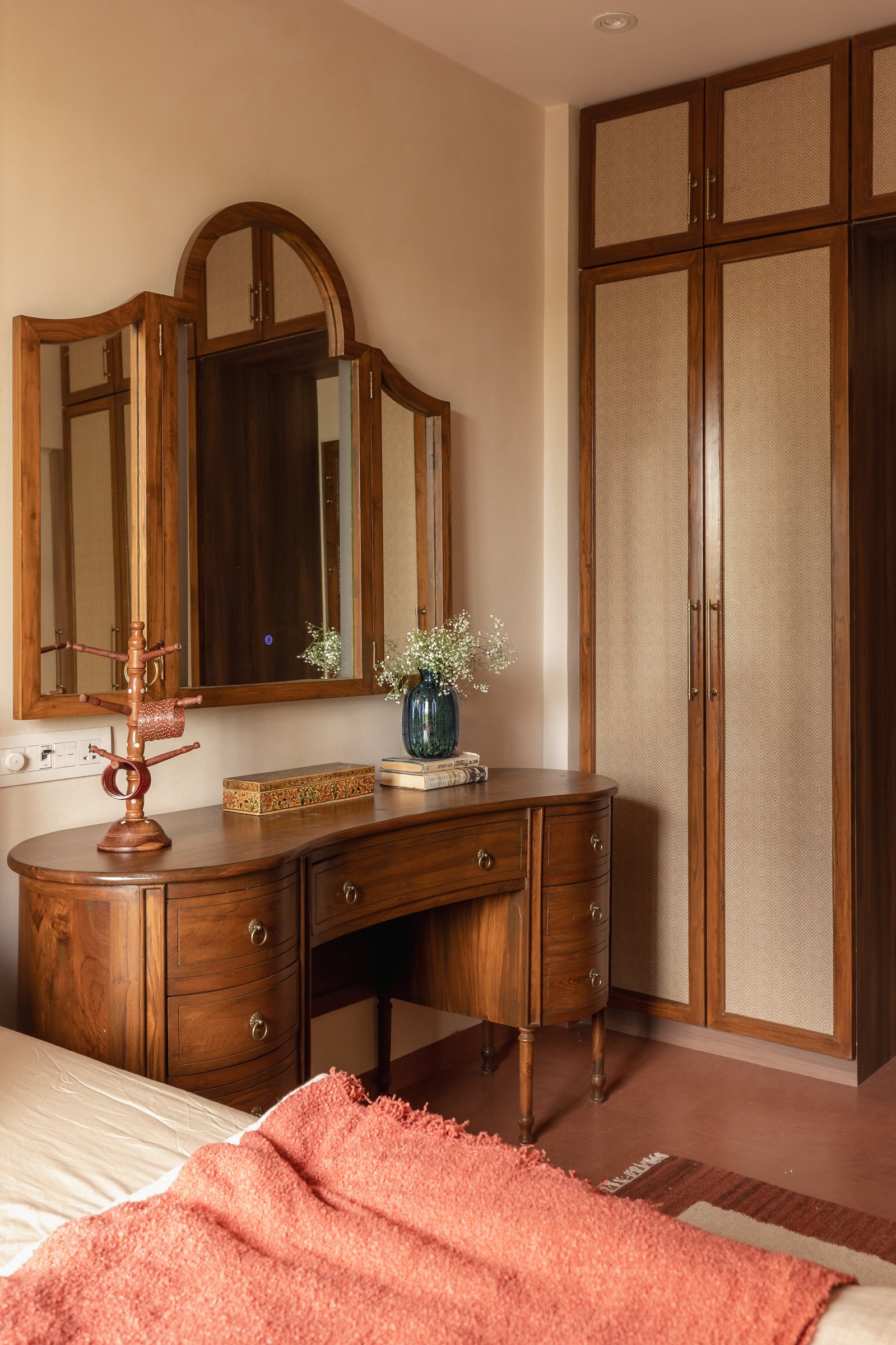
A curved wooden dressing table with a triple-arched mirror anchors one corner, alongside a floor-to-ceiling wardrobe detailed with woven cane panels framed in wood. The wardrobe’s full-height composition, divided into a rhythm of square and rectangular panels, subtly echoes the joinery of the entrance door. This repetition creates a sense of continuity, carrying the home’s material and design language into the more private spaces.
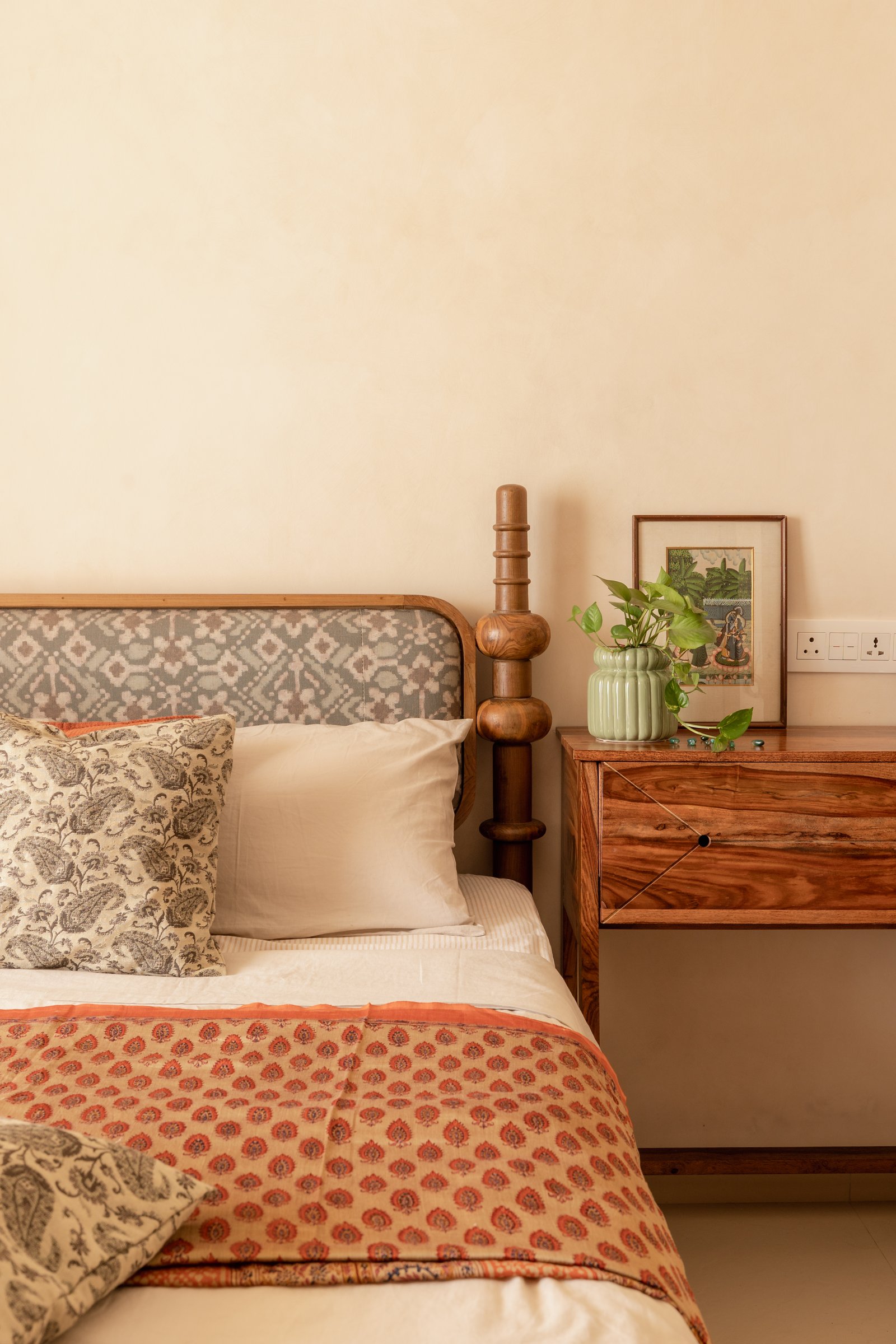
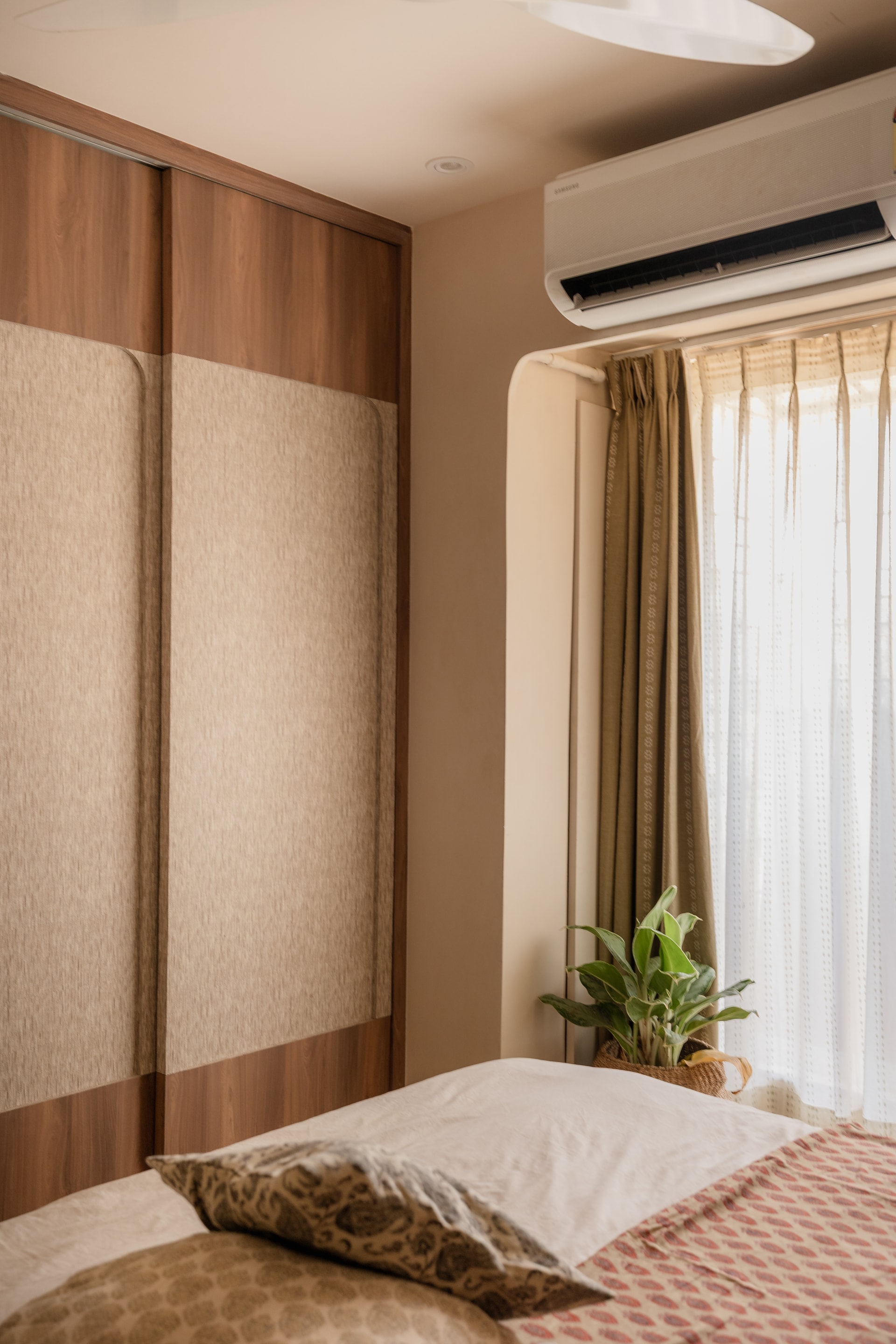
In another bedroom, the design remains compact yet rich in character. The bed features a low headboard upholstered in muted ikat, framed in wood and finished with a turned finial at the corner. Beside it, a nightstand in richly grained wood holds a small framed miniature painting, introducing a subtle reference to traditional Indian interiors without making it feel overtly nostalgic.
Rimjhim reflects a considered approach to designing within Mumbai’s compact urban footprint, where the ambition is not to emulate a larger residence but to create richness through material, detail and character. Rather than borrowing directly from Rajasthan’s visual motifs, Chhaav draws from its material sensibility, craftsmanship and warmth, creating an interior that feels rooted in its references without being overtly traditional.
What ultimately defines the apartment is its sense of being collected rather than composed. Texture, colour, handcrafted details and vintage influences move naturally across the rooms, allowing older references to sit comfortably within a contemporary setting. The result is a home that feels as though it has evolved with its occupants over time, rather than one delivered as a finished interior scheme.