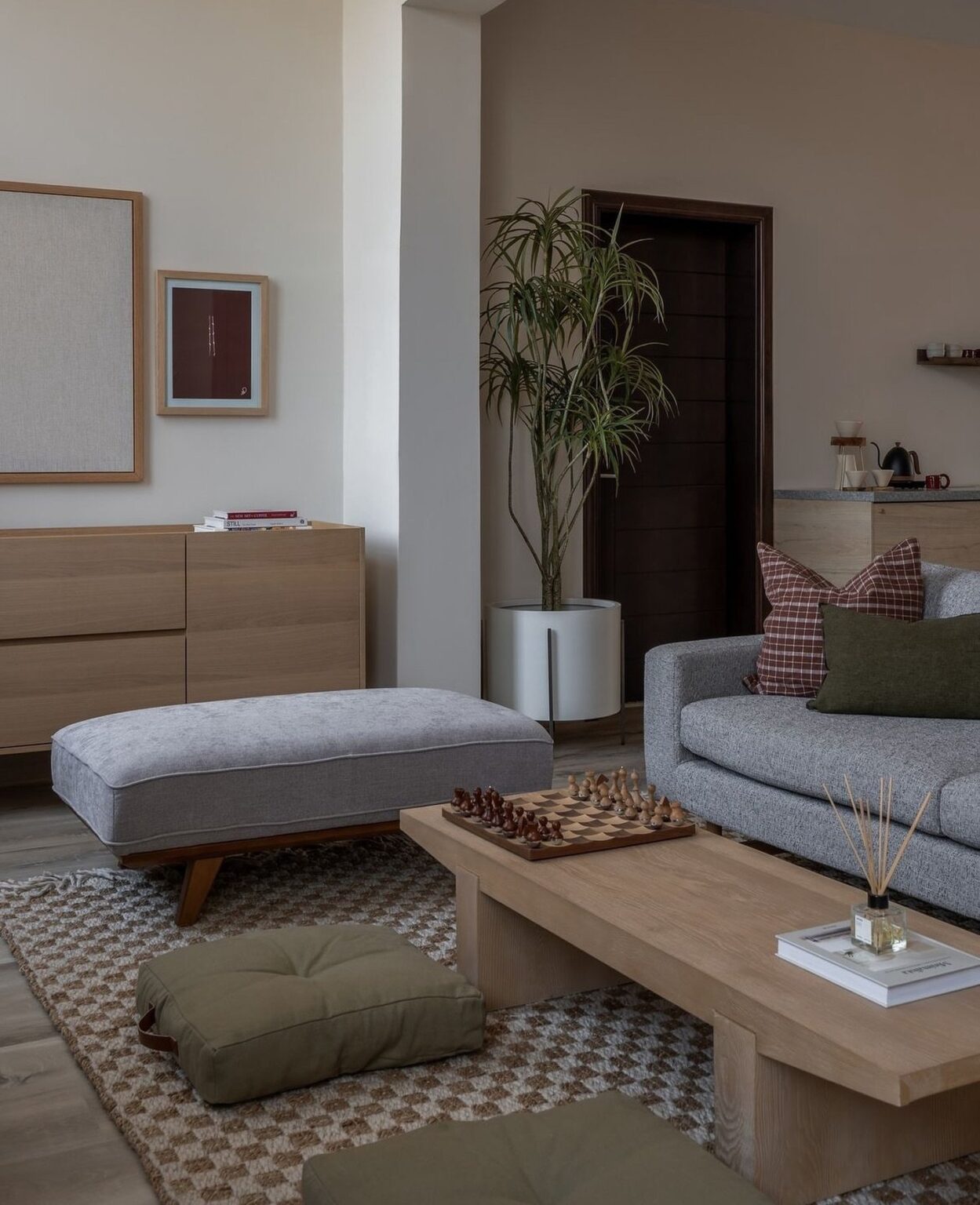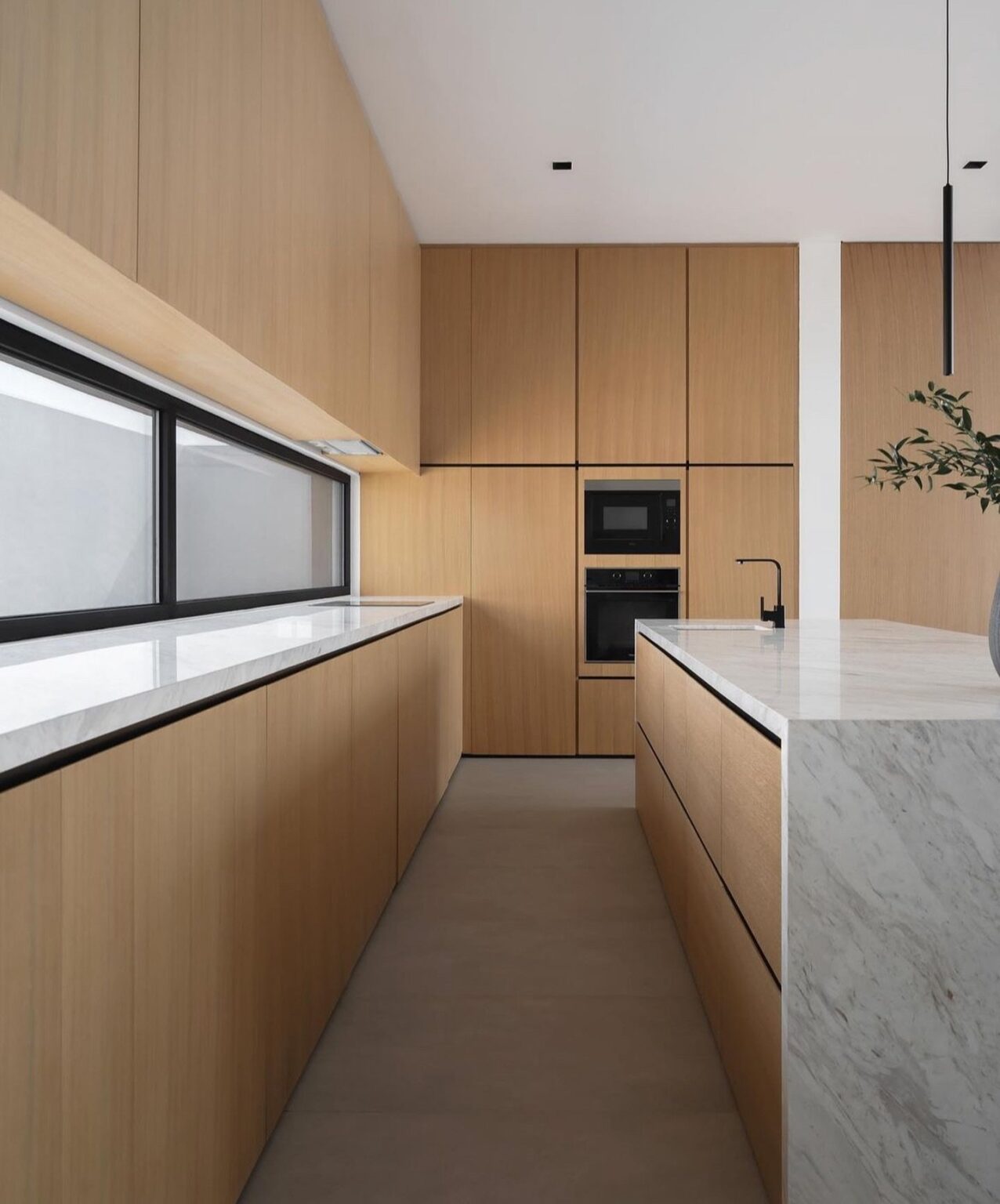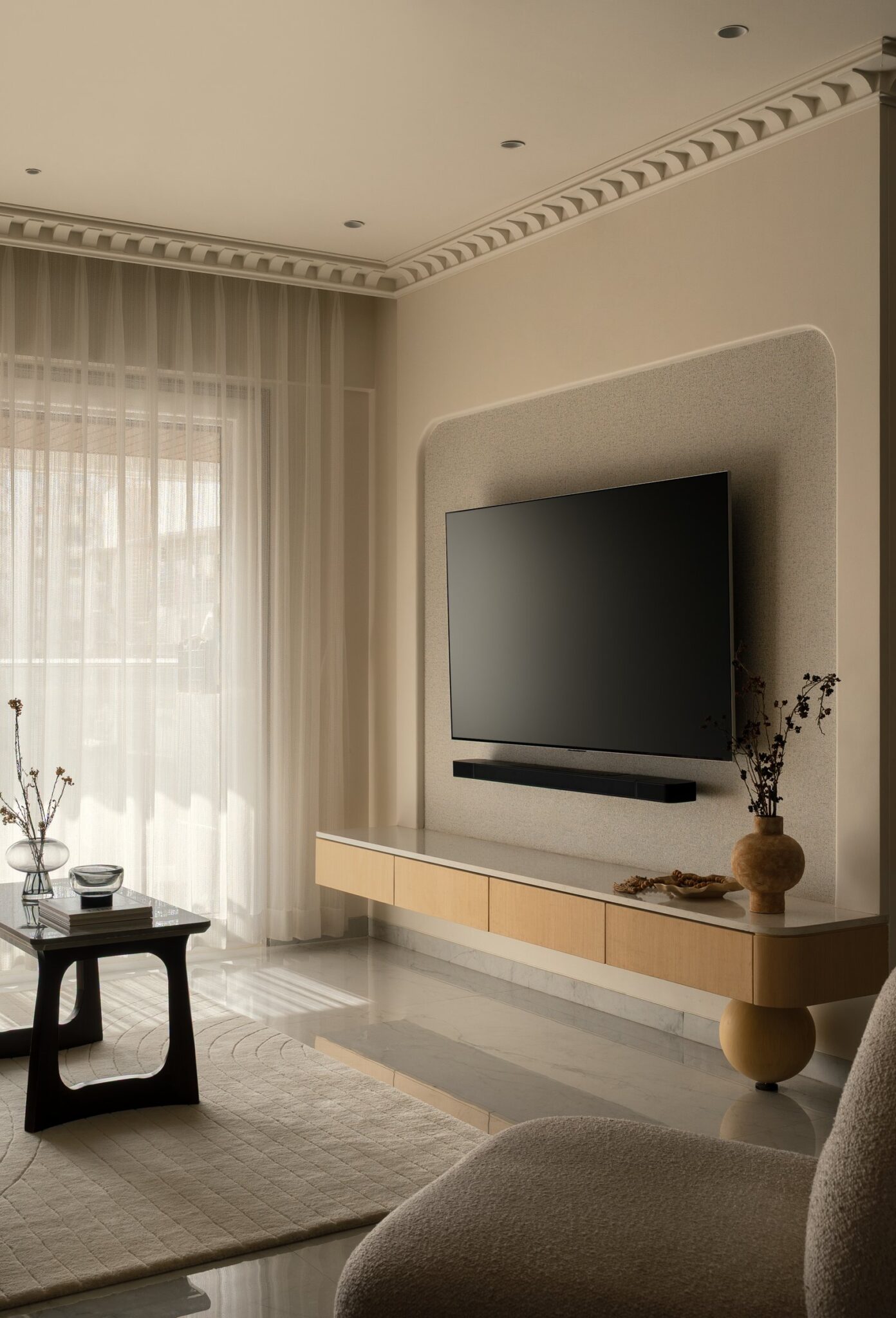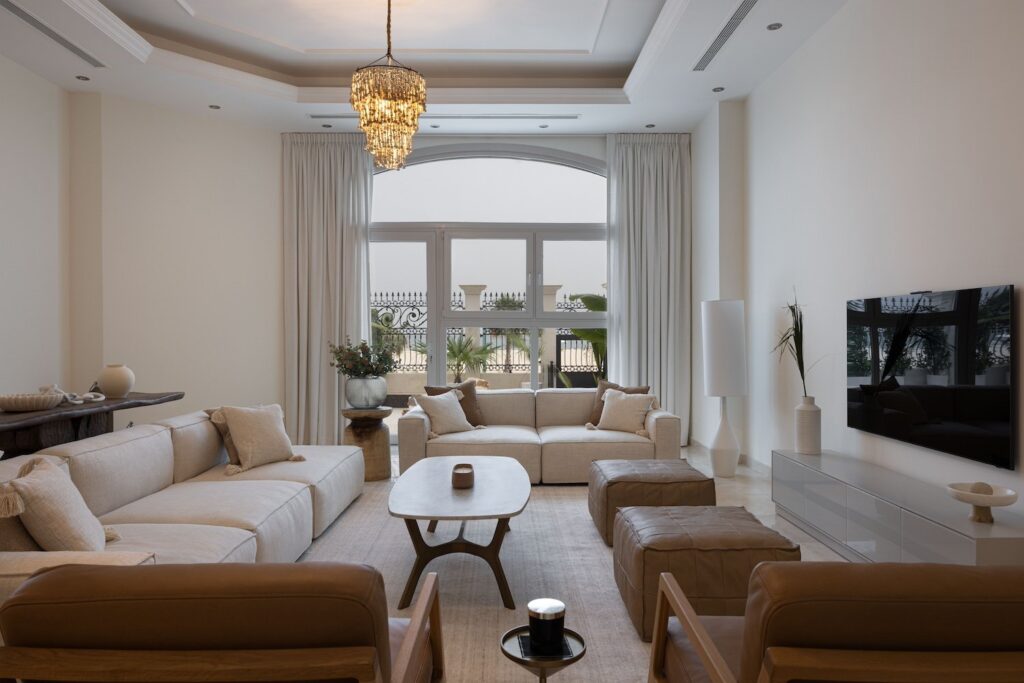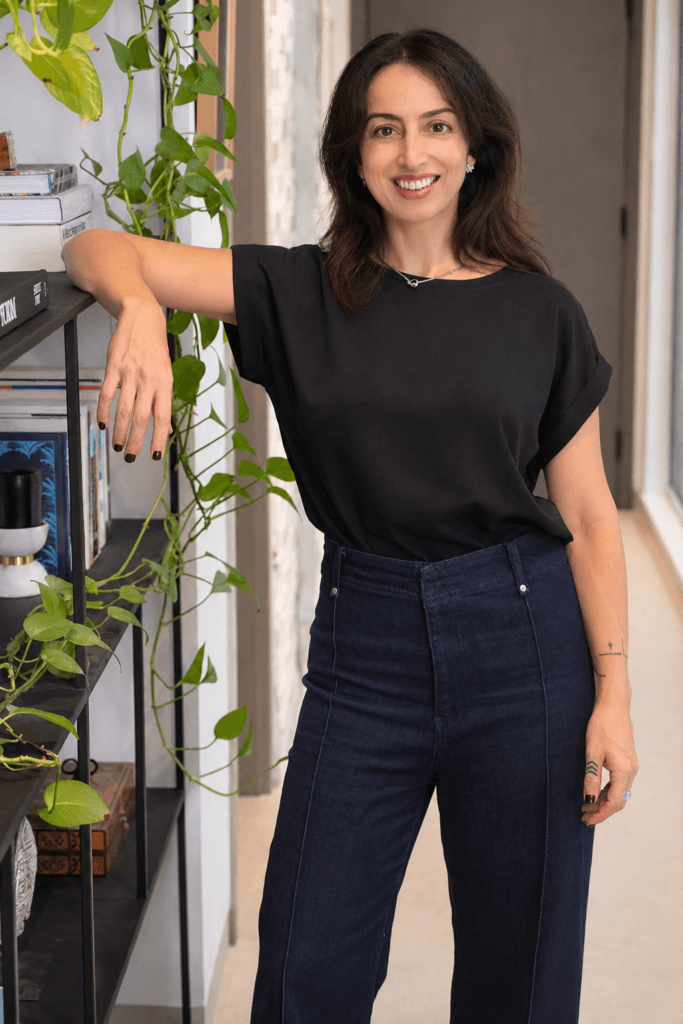
For Sandra Fadayel, a home is more than a carefully composed interior. It is a reflection of personal identity—an environment that quietly influences how we live, think, rest and experience everyday life. This understanding forms the foundation of her design philosophy, one that moves beyond prescribed aesthetics to create spaces that feel deeply personal and connected to those who inhabit them.
Founder of Inhabitat, a boutique, art-led interior design studio based in Dubai, Fadayel brings a distinctive perspective shaped by her background in interior architecture and her practice as an exhibiting artist. With over thirty residential projects completed across the UAE, her approach draws equally from creative expression and lived experience. Having spent more than two decades between New York, Amman, Florence, Toronto and Dubai, she understands the idea of home through the lens of belonging, identity and the search for a sense of permanence. It is this perspective that informs her work, where design is less about adhering to a particular style and more about creating spaces that genuinely resonate with the people who live in them.
Design Philosophy
Fadayel defines her design philosophy through four words: warm, clean, layered and intentional. Yet behind this seemingly simple approach lies a perspective shaped by years of living across cultures and continents. Growing up as an expatriate and attending international schools, she developed an early understanding that identity is not necessarily tied to a single place. A family visit to Palestine in 1995, during her teenage years, deepened this connection between place, belonging and personal identity. “It wasn’t about politics, or history, or real estate. It was about identity, and home isn’t just a place. It’s how we root ourselves,” she reflects.
This understanding continues to inform her design process, where context takes precedence over passing trends. For Fadayel, every home has its own distinct character, one that must be understood before its design language begins to take shape. Her approach brings aesthetics and functionality together through thoughtful material choices and practical detailing. The placement of silk on the back of a chair rather than its seat, for instance, allows the material’s beauty to be appreciated without compromising durability. Beyond these considerations, it is what she describes as the art-led layer that gives a space its emotional depth, introducing personal expression, meaningful objects and creative elements that reflect the individuality of those who inhabit it.
““Through my experience of living in nine different cities, I’ve come to understand that home is more than a place. It is where we create a sense of identity and belonging, and that belief continues to drive my work.””
Process & Practice
At Inhabitat, the design process unfolds across three distinct stages: Direction, Creation and Manifestation. The first establishes the foundation for everything that follows, beginning with an in-depth client questionnaire that explores more than aesthetic preferences. It seeks to understand individual lifestyles, personal values and the emotions clients associate with home. These insights shape the creative direction, guiding the transition into detailed design and eventually construction. Throughout the execution phase, the studio remains closely involved, working alongside project teams to navigate on-site challenges and ensure the original design intent is maintained.
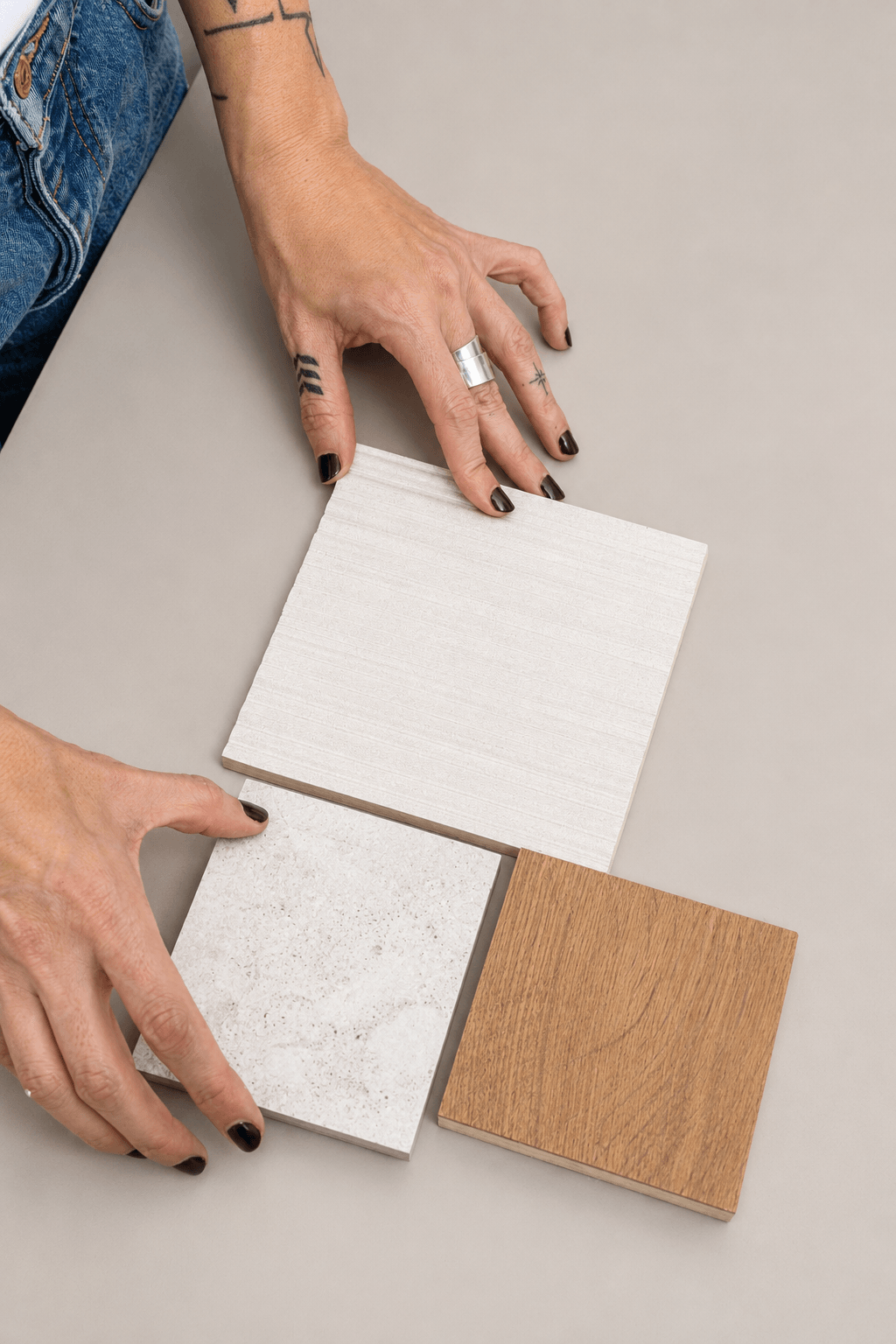
Materials, textures and lighting are central to Fadayel’s approach, creating depth, warmth and a sense of continuity throughout a space. Art forms an equally important fourth element, bringing individuality and emotional character to the interiors. Collaboration with consultants, contractors and skilled artisans is integral to translating these ideas into reality. For Fadayel, understanding a client’s needs often means recognising the sentiment behind a specific request. She recalls a client who wanted a three-metre-wide bed dressed in the exact linens used at his favourite Dubai hotel. Beyond the unusual dimensions, the request revealed something far more personal. “He was telling us exactly what comfort means to him,” she explains.
This sensitivity to individual preferences allows the studio’s work to remain intuitive rather than confined to a predetermined aesthetic. As Fadayel describes it, the process is “a little like choosing a gift: you bring your own eye and combine it with theirs.” It is this exchange between the designer’s creative perspective and the client’s personal identity that ultimately gives each project its distinct character.
Project Highlight: Kite Beach Villa
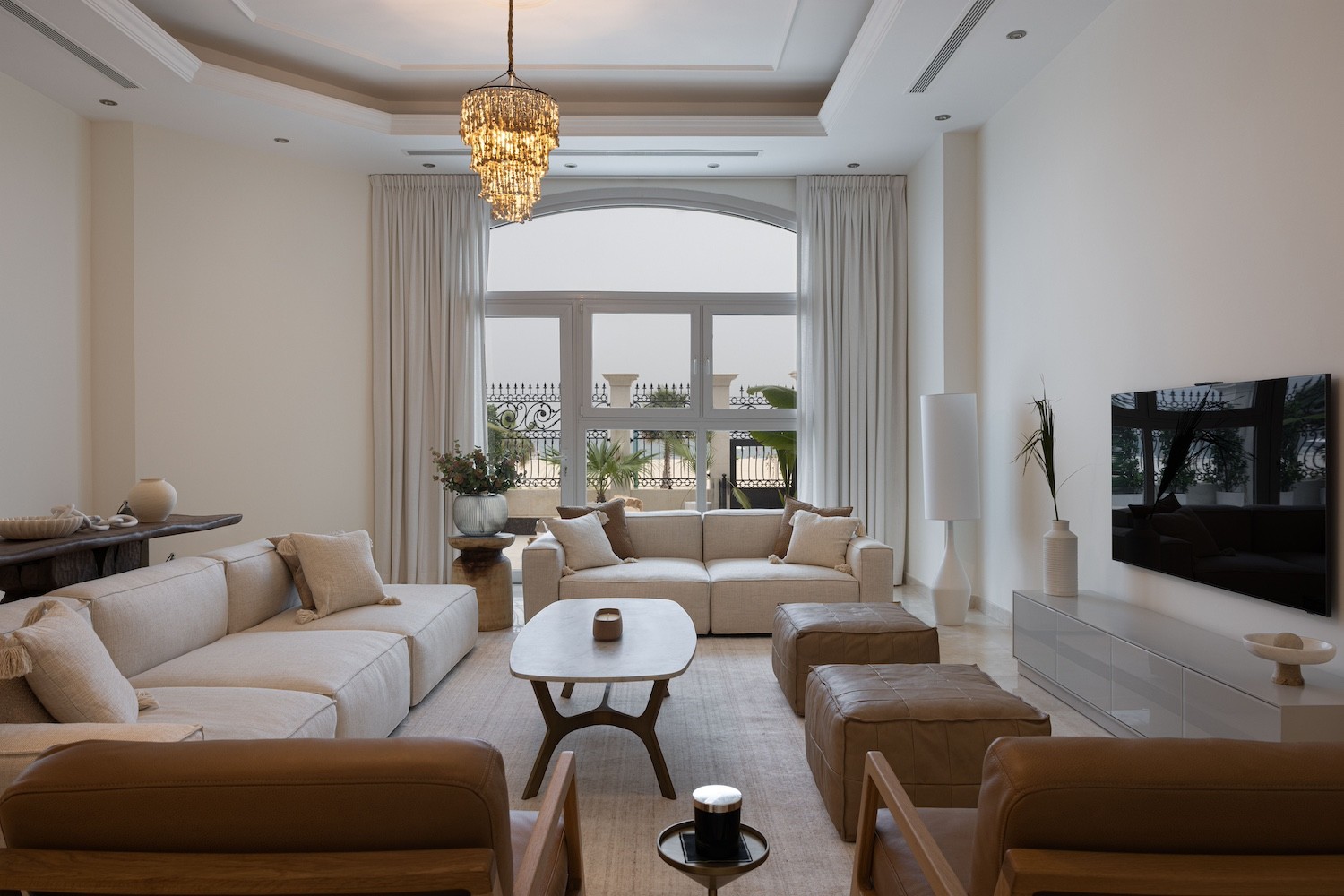
Among Inhabitat’s recent projects, Kite Beach Villa stands out as an expression of the studio’s design philosophy. The five-bedroom residence, handed over unfurnished, was envisioned as a relaxed family home that prioritised comfort and everyday living over formality. A palette of sandy neutrals and soft pastels establishes a warm, inviting atmosphere, complemented by tactile materials such as caramel leather, natural wood, raffia and linen. The interiors embrace an understated elegance, with open, comfortable spaces designed to accommodate the family’s daily routines and moments of leisure.
One of the project’s most distinctive features emerged from a deeply personal request. The client wanted a three-metre-wide bed dressed in the exact linens used at his favourite hotel in Dubai. With no readily available option matching these specifications, the studio traced the hotel’s supplier, sourced the fabric and commissioned a bespoke bed. The children’s bedroom reflects a similarly thoughtful approach, with a flexible layout and minimal fixed elements that allow the space to evolve as the boys grow. This emphasis on adaptability introduces a practical dimension to sustainability, ensuring the interiors remain relevant as the family’s needs change.
While Kite Beach Villa demonstrates the value of understanding a client’s lifestyle, an earlier project reinforced the importance of establishing a clear design direction from the outset. Faced with a collection of Pinterest references and loosely defined aesthetic preferences, Fadayel found the design process repeatedly circling without a cohesive vision. The experience became a turning point, leading to the development of Inhabitat’s detailed client discovery questionnaire. “Depth and clarity at the start are everything. It comes down to knowing the right questions to ask,” she explains. Today, that principle remains fundamental to the studio’s process, ensuring each project begins with a meaningful understanding of the people it is being designed for.
Looking Forward
Looking ahead, Fadayel identifies two significant shifts influencing the future of interior design: the growing presence of artificial intelligence and the evolving definition of luxury. While she recognises AI’s potential to enhance the creative process, she remains mindful of the risks associated with overdependence on technology. “Used well, AI forces us to be more intentional,” she observes, emphasising the importance of preserving independent thinking and creative exploration. For Fadayel, technology is most valuable when it supports the designer’s vision rather than replacing the imagination and critical thinking that shape it.
At the same time, she sees luxury moving beyond material possessions and visual statements towards a greater emphasis on wellness, time, comfort and the freedom to disconnect. This shift is particularly relevant in Dubai, where she has witnessed a gradual change in how residents perceive their homes. Having arrived in the city a decade ago, when it felt largely transient, she now observes a growing desire for permanence and belonging. As more people establish long-term roots, their expectations of residential spaces are becoming increasingly personal, with greater attention given to comfort, functionality and quality of life.

Sustainability, for Fadayel, is closely connected to this idea of permanence. Rather than approaching it solely through prescribed standards or material checklists, she advocates for longevity, adaptability and considered craftsmanship. In an industry where rapidly changing trends have encouraged a culture of disposable interiors, and even art, she believes lasting design begins with respect for materials, skilled workmanship and thoughtful choices. Her approach favours spaces that can evolve with their occupants while retaining their relevance and character over time.
In Reflection
For emerging designers, Fadayel’s advice centres on continuous creative exploration and a conscious approach to the influences they absorb. She encourages young practitioners to keep creating while being selective about the content, ideas and references that shape their perspectives. Developing an individual design language, a discerning eye and genuine depth takes time and dedication. Her own professional journey has reinforced the importance of respecting the distinct disciplines within the creative industry. Having studied architecture, she initially believed interior design to be a simpler practice and art curation to be a natural extension of it. Experience, however, has given her a deeper appreciation for the expertise, discipline and creative rigour each demands.
Looking ahead, Fadayel hopes to bring her parallel practices in art and interior design into closer dialogue, envisioning projects where her own commissioned artworks become integral to the architectural and interior narrative of a home. A new collection from her Unmapped series is scheduled to launch at the end of November, as part of her winter 2026 work. Yet beyond artistic milestones or the growth of Inhabitat, her understanding of success remains rooted in the everyday experience of the spaces she creates. For Fadayel, the true measure of design lies not in recognition or scale, but in its ability to enrich daily life, foster a sense of belonging and create environments that continue to resonate with those who call them home.
Editor’s Note
At the heart of Fadayel’s design philosophy is the belief that a home should be an authentic reflection of those who inhabit it. Rather than beginning with a predetermined aesthetic, she approaches each project with an understanding of personal identity, lifestyle and individual expression. This emphasis on discovering the character of a home before defining its visual language distinguishes her practice, where thoughtful design emerges from a deeper connection between people and their surroundings.
With more than thirty private residences completed across the UAE, Inhabitat continues to develop a distinctive portfolio that brings together interior architecture, art and personal storytelling. Fadayel’s ambition to integrate her artistic practice more closely with her interior design work marks an evolving direction for the studio. Her forthcoming Unmapped collection, scheduled to launch at the end of November, represents another step in this creative journey. Ultimately, her work reflects a philosophy in which art and interiors are not separate disciplines, but complementary expressions of identity, belonging and the meaning of home.
You can follow Sandra’s work at @inhabitat.ae and @sandrafadayel, or visit inhabitat.ae.