A house on a busy stretch of town can respond in one of two ways: it can shield itself from the noise with defensive walls and narrow openings, or it can turn inward and create a world of its own. Lael Residence, designed by Basil and Partners in Mannarkad, chooses the latter. Organised around a series of landscaped courts, the house draws the tropics deep into its plan, replacing the presence of the street with a quieter dialogue between architecture, light, and greenery.
The site itself encouraged this approach. Positioned nearly three metres below the main road and buffered by an ancestral home on higher ground at the front, the plot arrived with a natural separation from the bustle of the town. Principal designer Basil Kalladi transformed this topographical advantage into a spatial strategy, weaving landscape through the home’s public, private, and service zones. The result is a residence where movement unfolds through a sequence of gardens and courtyards, ensuring that every transition is accompanied by a connection to the outdoors.
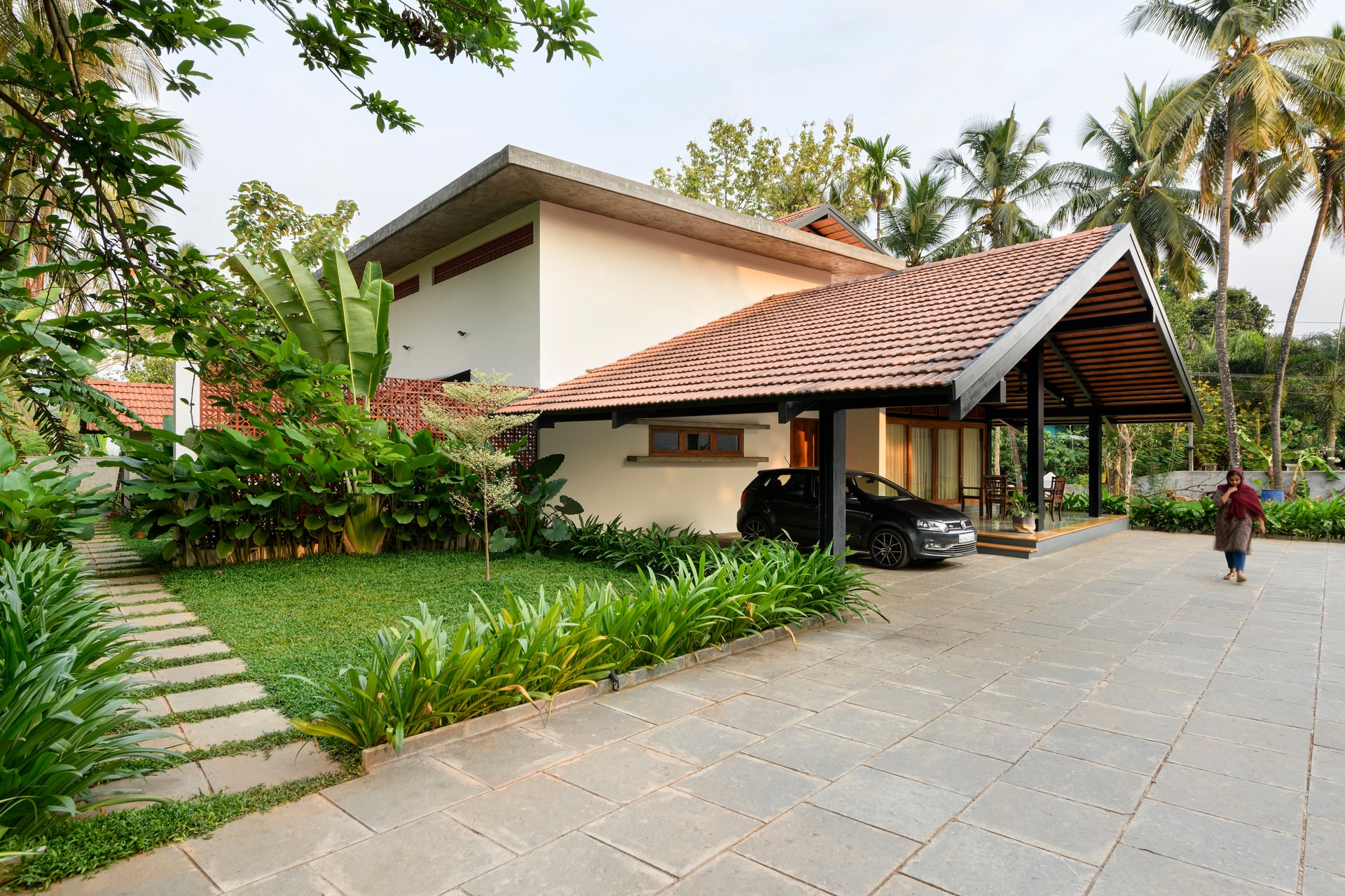
The arrival sequence establishes the home’s character at once. A pitched roof of exposed timber rafters, supported by slender black steel columns, extends across the parking court and verandah, creating a sheltered transition from exterior to interior. A large picture window offers an early glimpse into the living space beyond, hinting at the openness that defines the house.
The entrance itself is composed with quiet restraint. Two warm-toned steps lead to a solid timber door set within a tall plastered volume, its vertical presence anchoring the otherwise lightweight composition. Together, these elements create a threshold that feels both welcoming and grounded, introducing the home’s balance of tropical openness and architectural clarity.
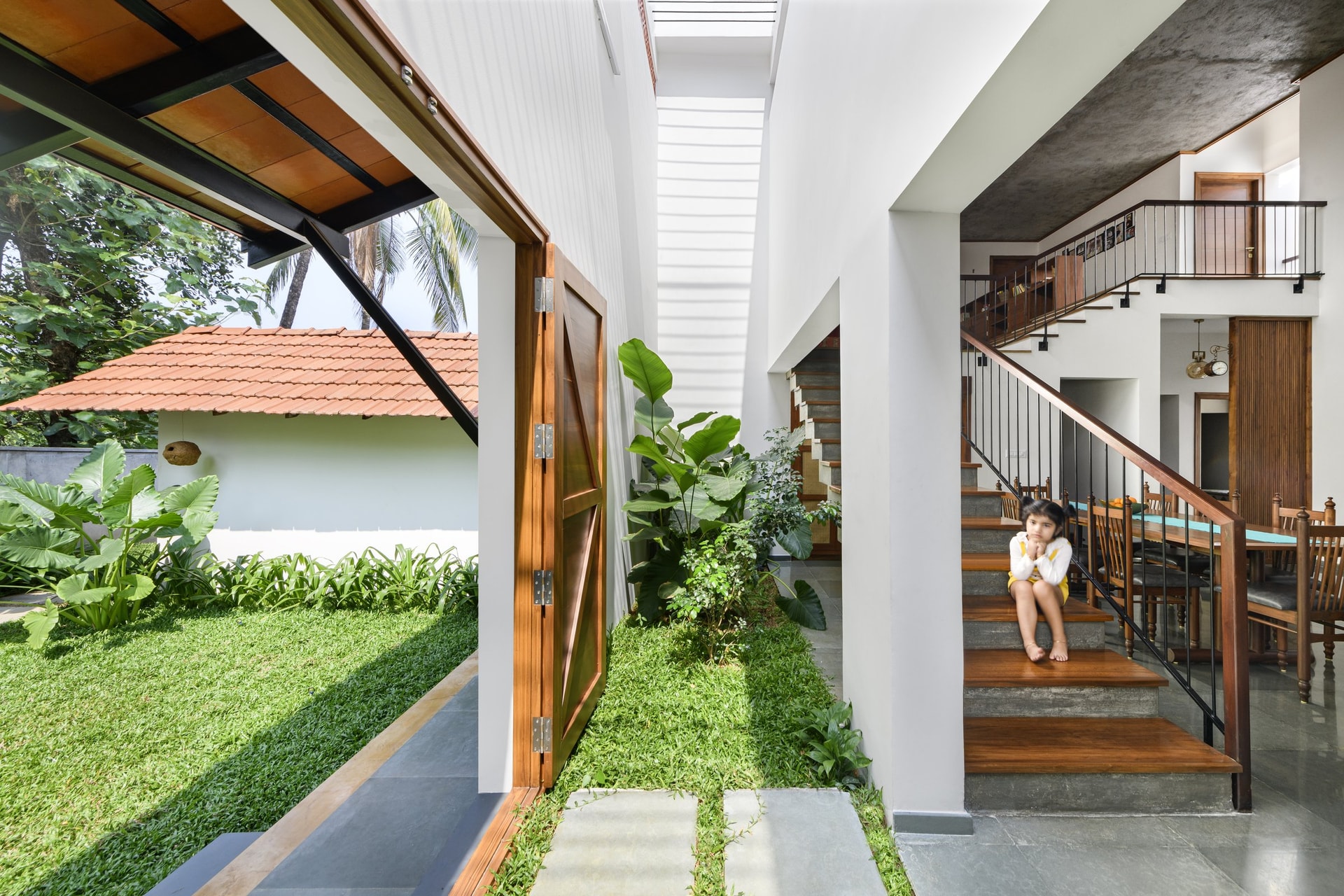
The front door opens not into a conventional foyer but into a landscape. A narrow planted court runs alongside the staircase, softening the threshold and blurring the distinction between interior and exterior from the moment of arrival. A floating slab pathway threads through grass and tropical foliage, creating a gentle transition into the heart of the home.
Beyond, a timber staircase rises against a slender black metal balustrade, its warmth contrasting with the greenery that surrounds it. Designed as more than a circulation element, the stair becomes an informal gathering point, with its lower steps naturally accommodating moments of pause, conversation, or play.
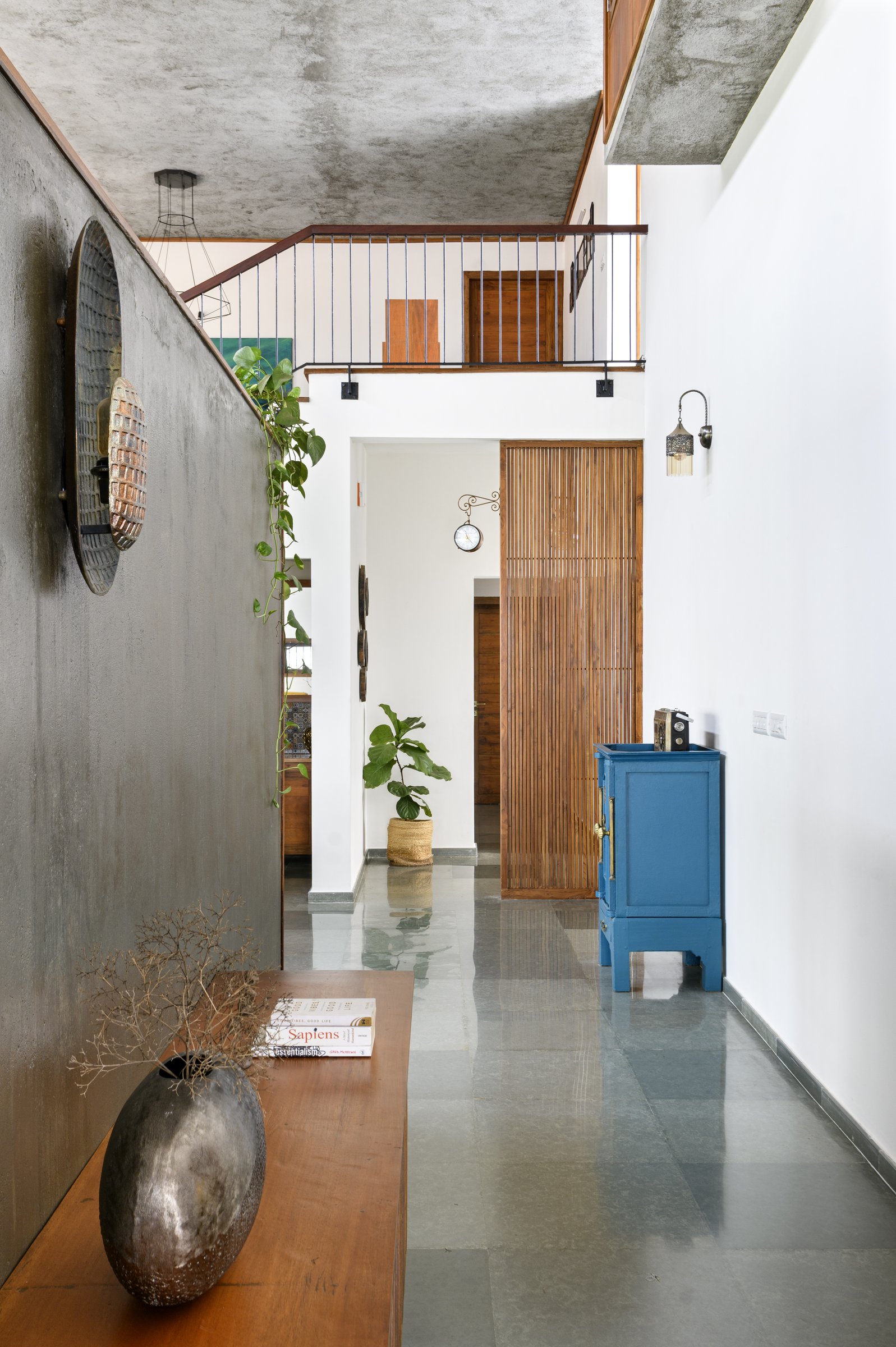
From the entry, the foyer unfolds as a long corridor finished in polished Kadappa stone, framed by a textured concrete wall on one side and a crisp white surface on the other. The restrained material palette lends the passage a quiet clarity, while a low timber console grounds the space with warmth and scale.
Carefully placed accents introduce moments of character without disrupting the calm. A circular woven artwork and a small blue-painted cabinet provide subtle notes of colour, while a slatted timber screen at the far end marks the transition towards the home’s more private quarters, filtering views and lending depth to the journey through the house.
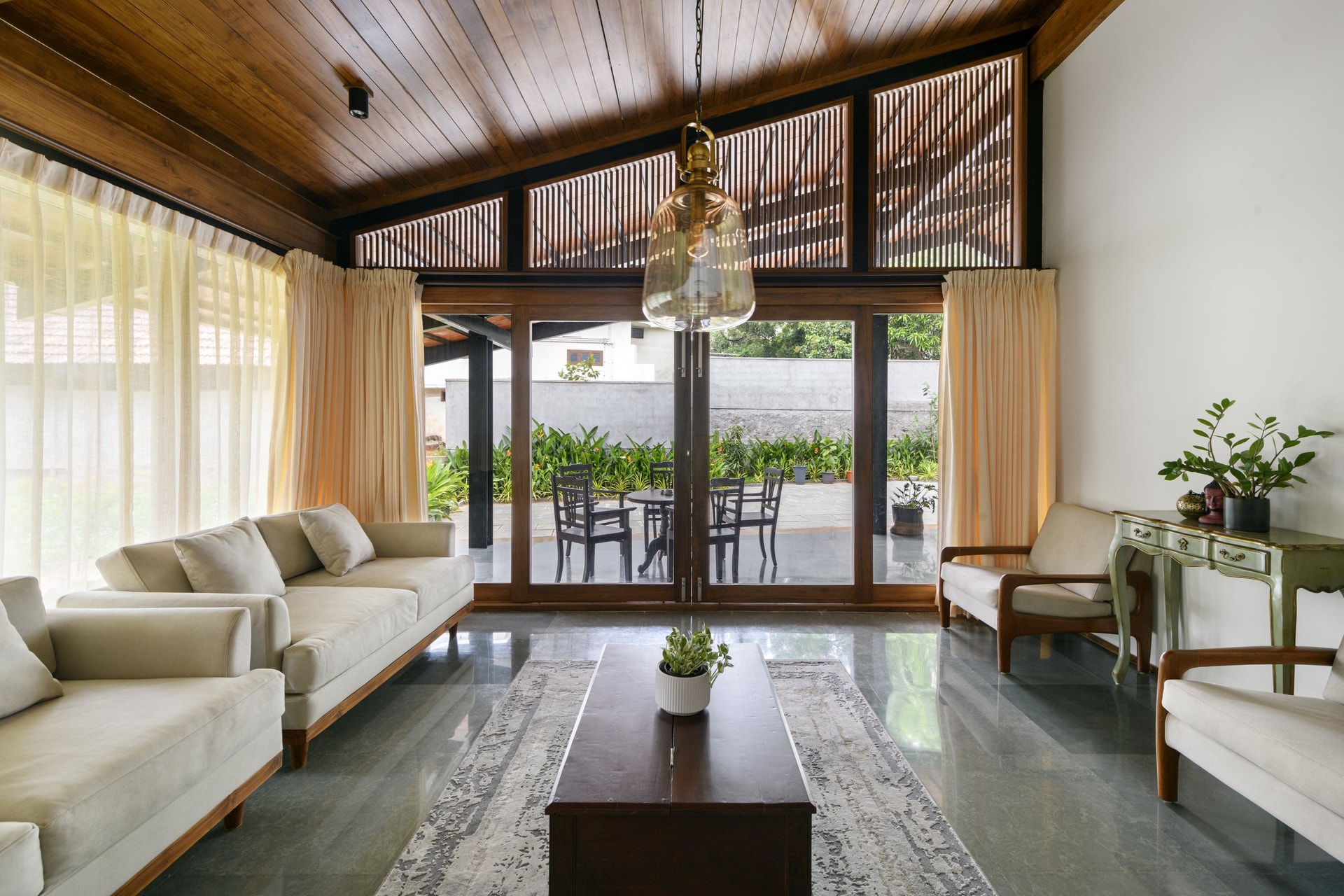
The formal living room unfolds beneath a soaring pitched ceiling clad in dark timber, its volume amplified by clerestory openings screened with vertical wooden battens that filter light deep into the space. Framed by expansive glazing, the room maintains a constant visual connection to the surrounding landscape while remaining comfortably sheltered within.
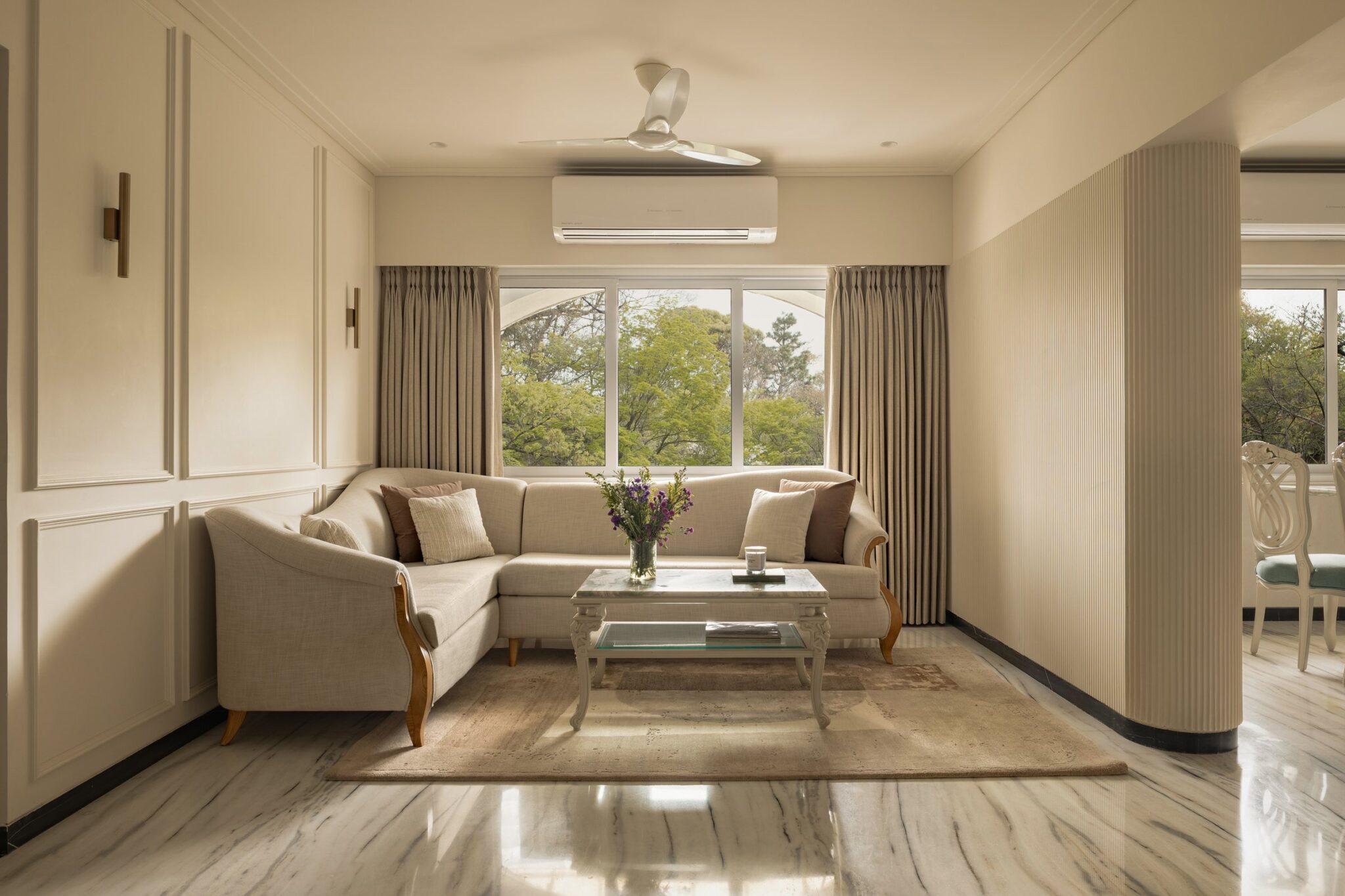
A palette of muted creams and warm wood tones reinforces the sense of calm. Pale upholstered sofas are arranged around a low timber coffee table set atop a softly patterned grey rug, creating an atmosphere of understated elegance. Full-height sheer curtains temper the daylight and gently blur the edge between interior and garden, allowing the tropical setting to become an integral part of the room’s experience.
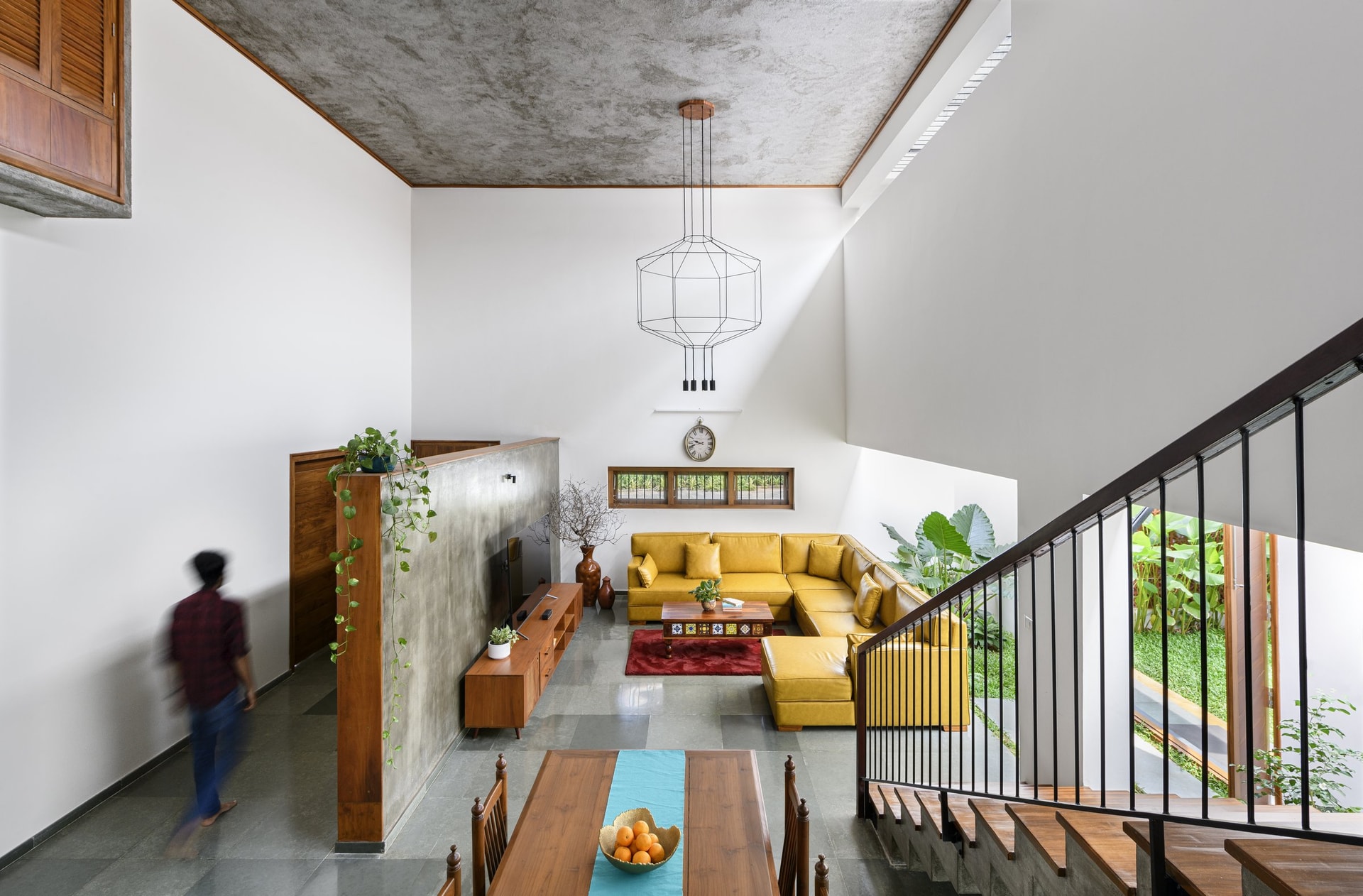
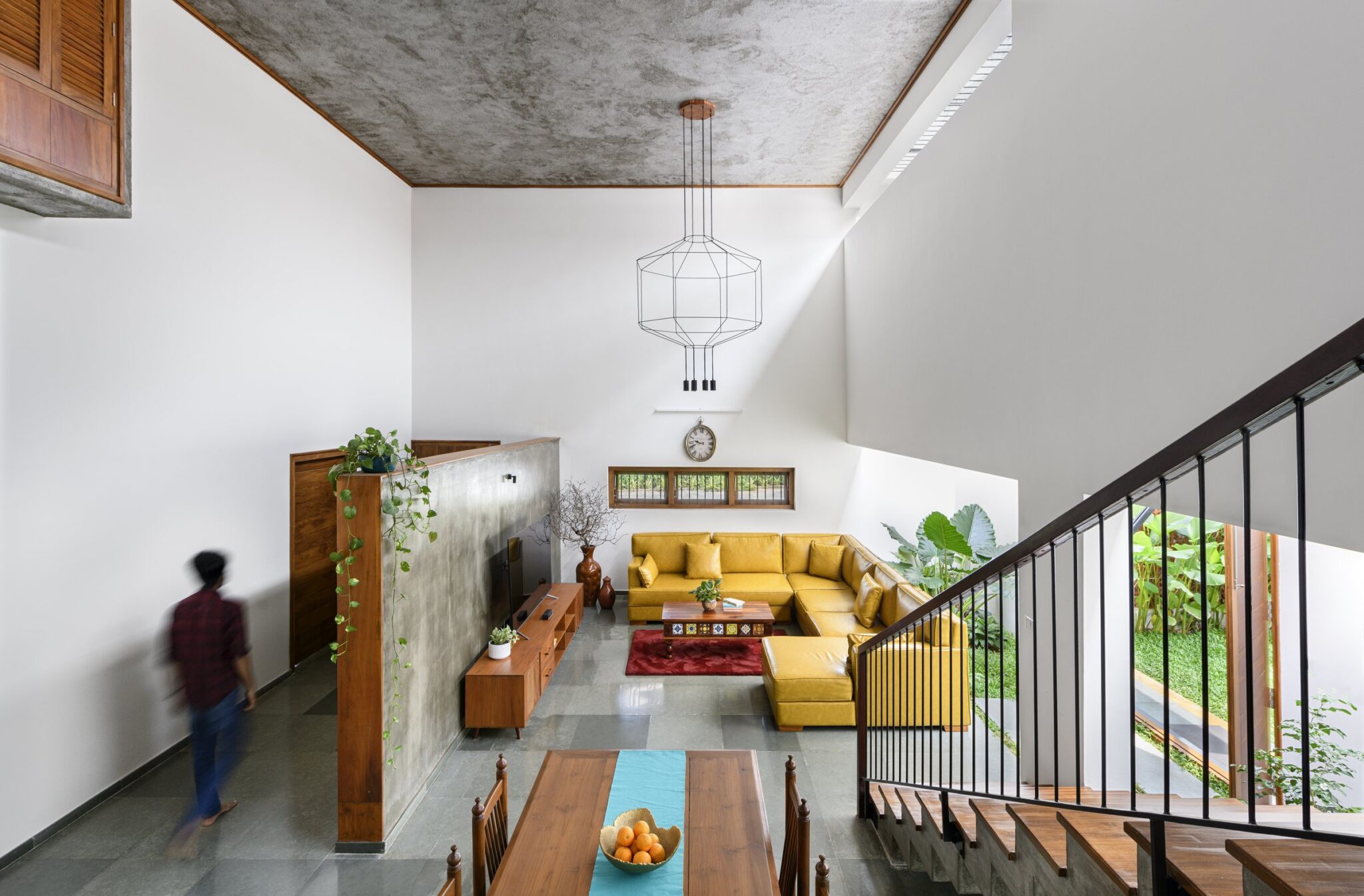
At the centre of the house, the family living and dining area unfolds as a dramatic double-height volume that acts as the social heart of the plan. Overhead, a textured concrete ceiling framed by a slender timber cornice lends the space a sense of weight and permanence, while the generous volume allows light and air to move freely through the interior.
A mustard-yellow sectional sofa anchors the living area, introducing a note of warmth against the restrained palette of concrete, timber, and stone. Positioned alongside a low wooden media console and a concrete-finished partition, it establishes a comfortable gathering zone without interrupting the openness of the space. Above, a sculptural wire-frame pendant descends through the double-height void, visually linking the living and dining areas and unifying them beneath a single architectural gesture.
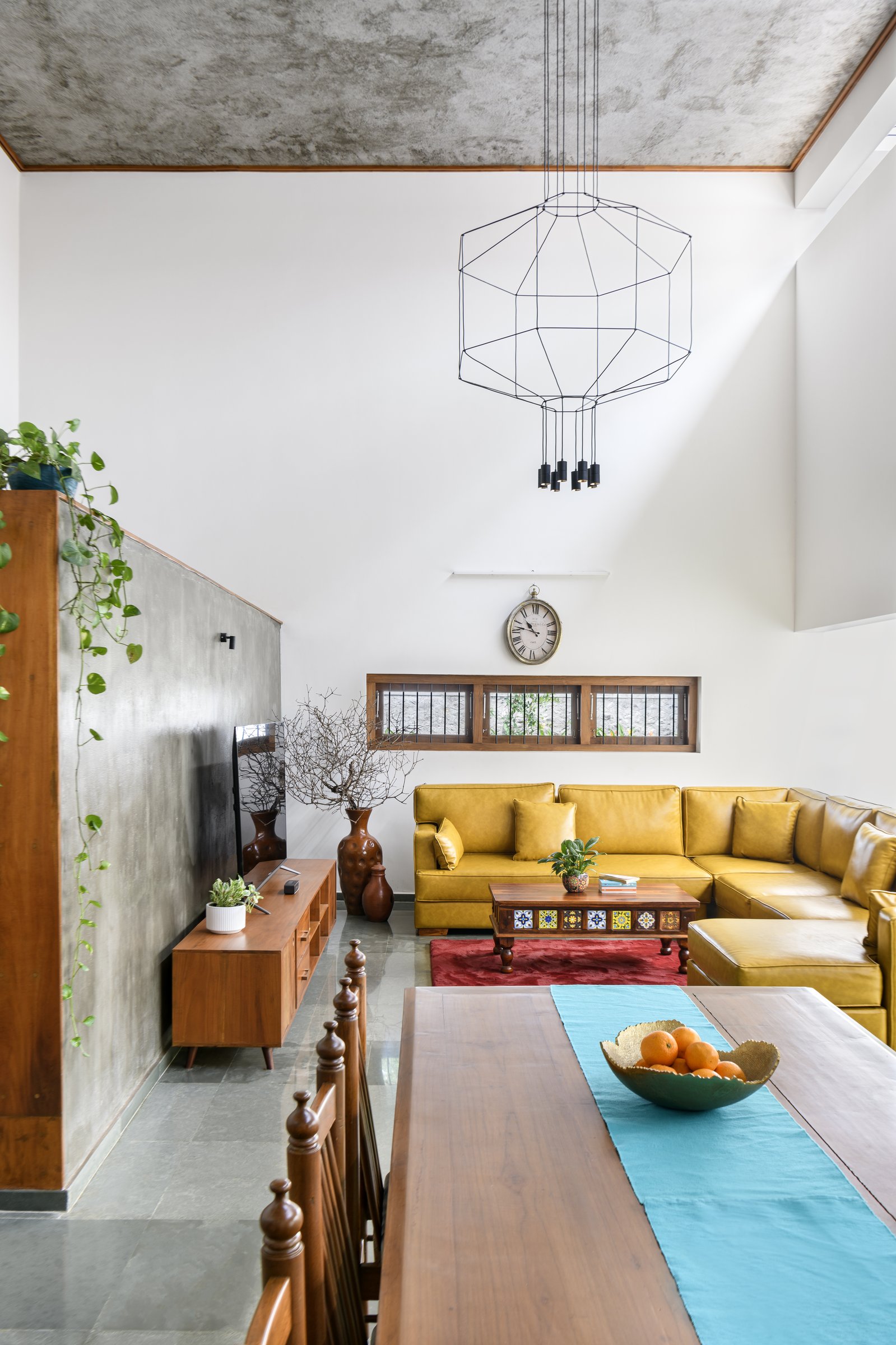
Seen more closely, the room’s character emerges through its careful layering of materials and textures. Rather than relying on overt gestures, the design builds warmth through a considered composition of furnishings: the mustard sectional, timber console, spindle-back dining chairs, and patterned-tile coffee table each contribute a distinct note while remaining part of a cohesive whole.
Their coexistence feels effortless because the architectural backdrop remains deliberately restrained. Concrete, timber, and neutral surfaces provide a calm framework that allows the furniture and crafted details to bring colour, texture, and personality to the space, creating an atmosphere that is both grounded and inviting.
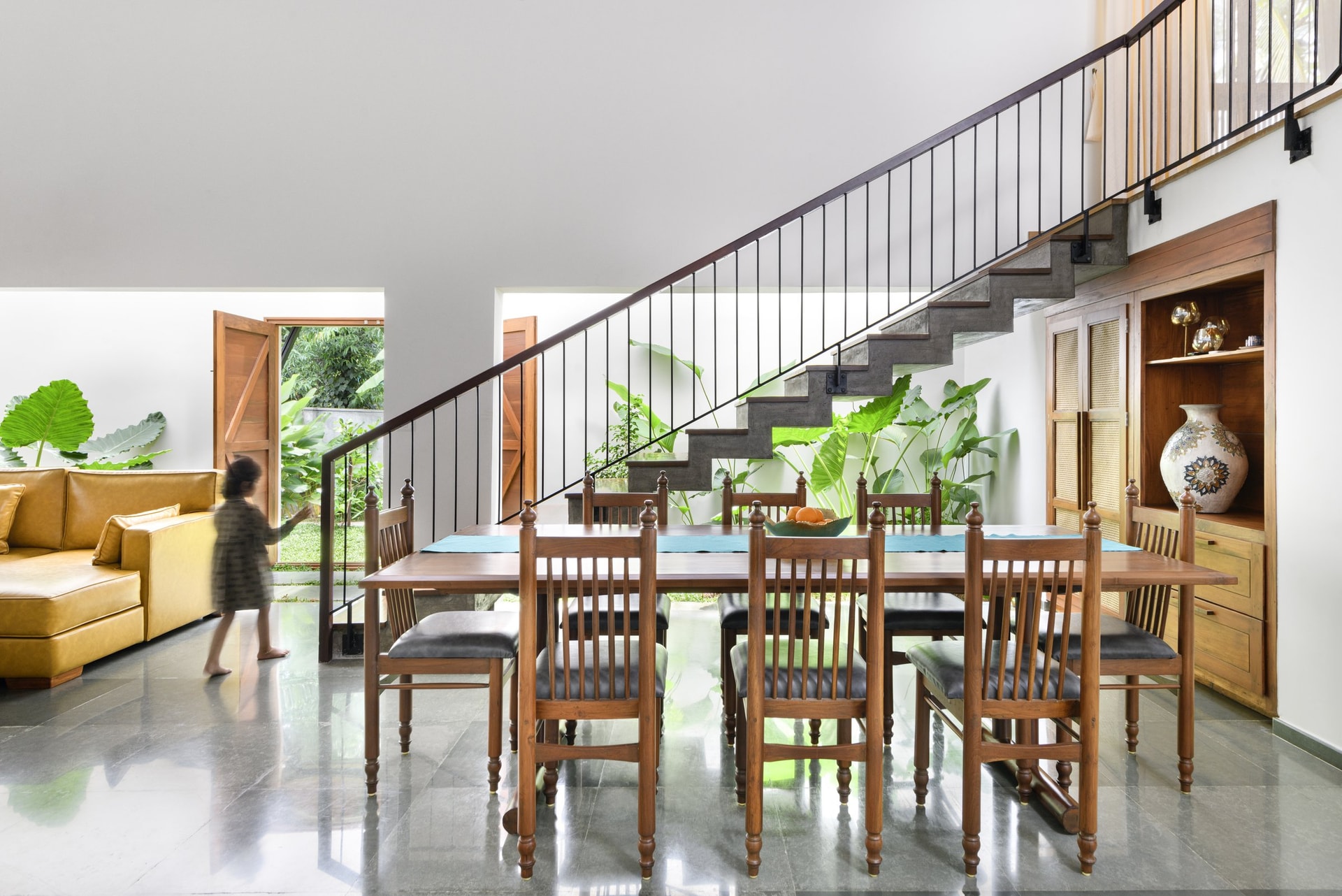
The dining area is positioned alongside the staircase, allowing circulation and gathering spaces to overlap naturally. Cantilevered concrete treads rise with apparent lightness, paired with a slender black metal balustrade and a continuous timber handrail that introduces warmth to the composition. Beyond, carefully framed views reveal a tan leather sofa and an open timber door looking onto the rear garden, while a timber display niche housing a single ceramic vessel provides a moment of quiet visual pause.
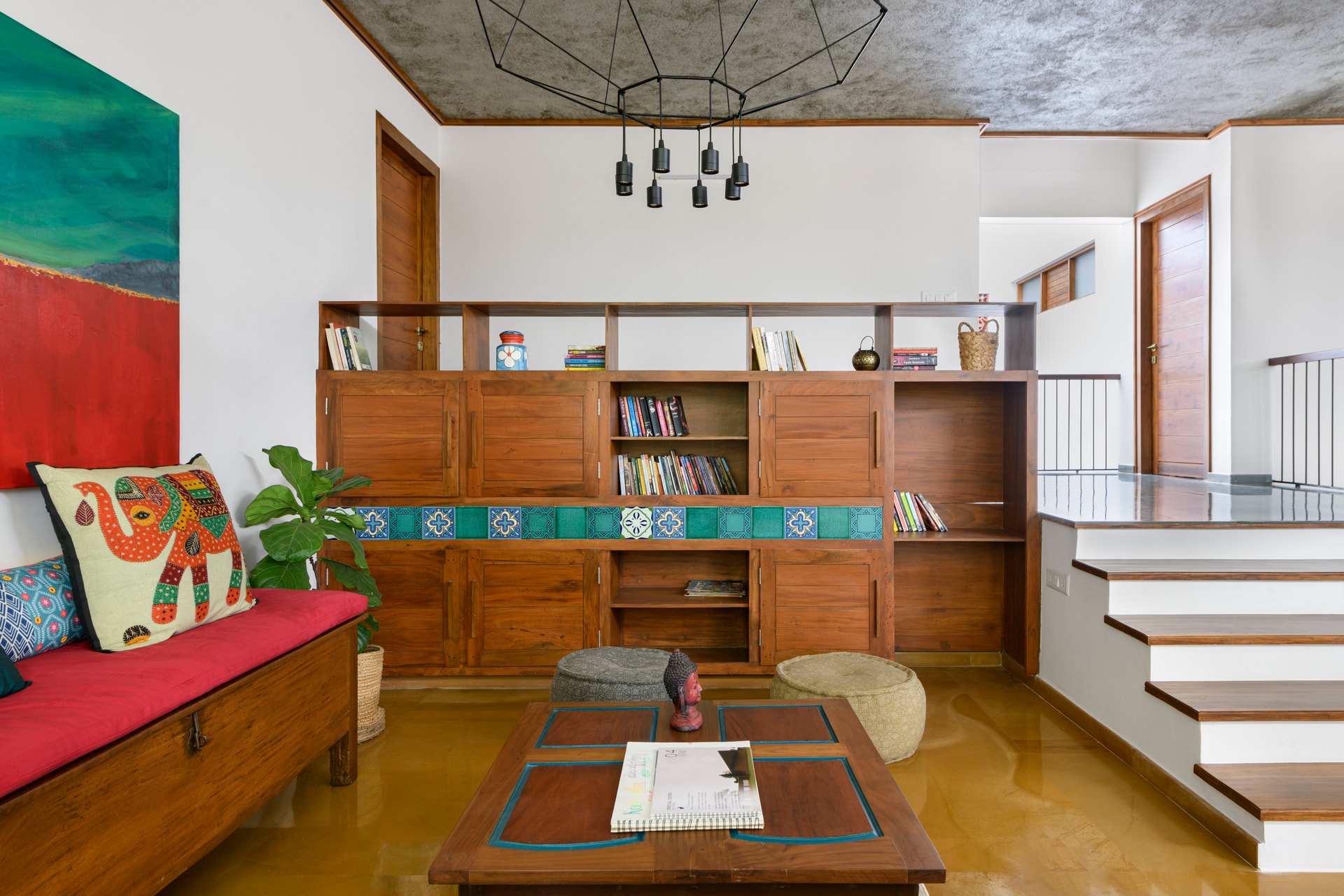
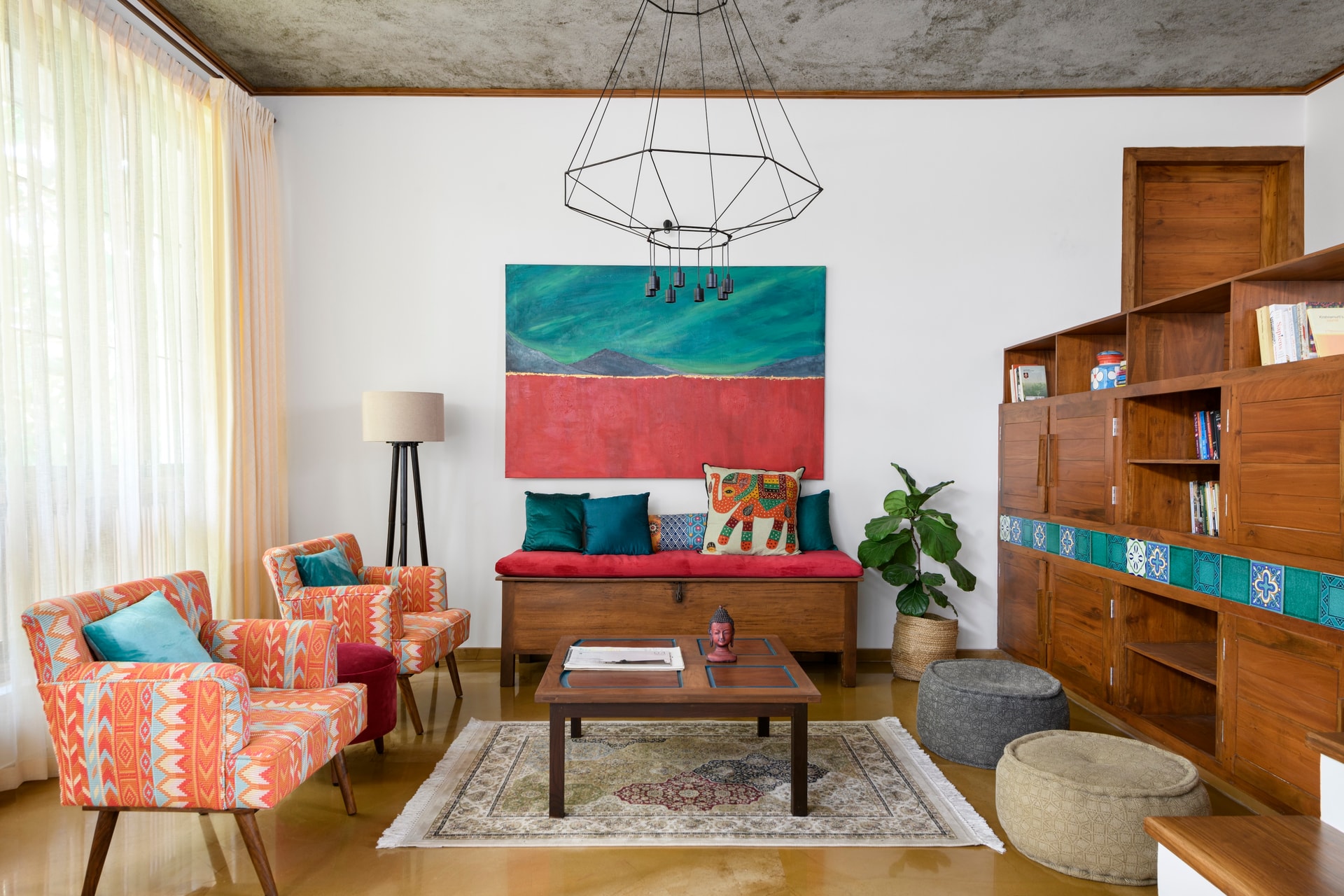
On the upper level, a secondary lounge adopts a more informal and intimate character. A warm-toned polished floor is paired with a wall-length timber cabinet, punctuated by a band of patterned tiles in greens and blues that introduces subtle ornament. A low wooden bench topped with a deep red cushion sits beneath a landscape artwork, while upholstered poufs and a timber-and-tile coffee table create a comfortable setting for reading, conversation, or retreat.
Viewed from the opposite side, the lounge reveals a richer interplay of colour and pattern. Upholstered armchairs in vibrant orange and blue face the bench, bringing energy to the otherwise restrained architecture. A floor lamp and the sculptural wire-frame pendant overhead complete the composition, creating a space that feels thoughtfully collected over time rather than rigidly coordinated.
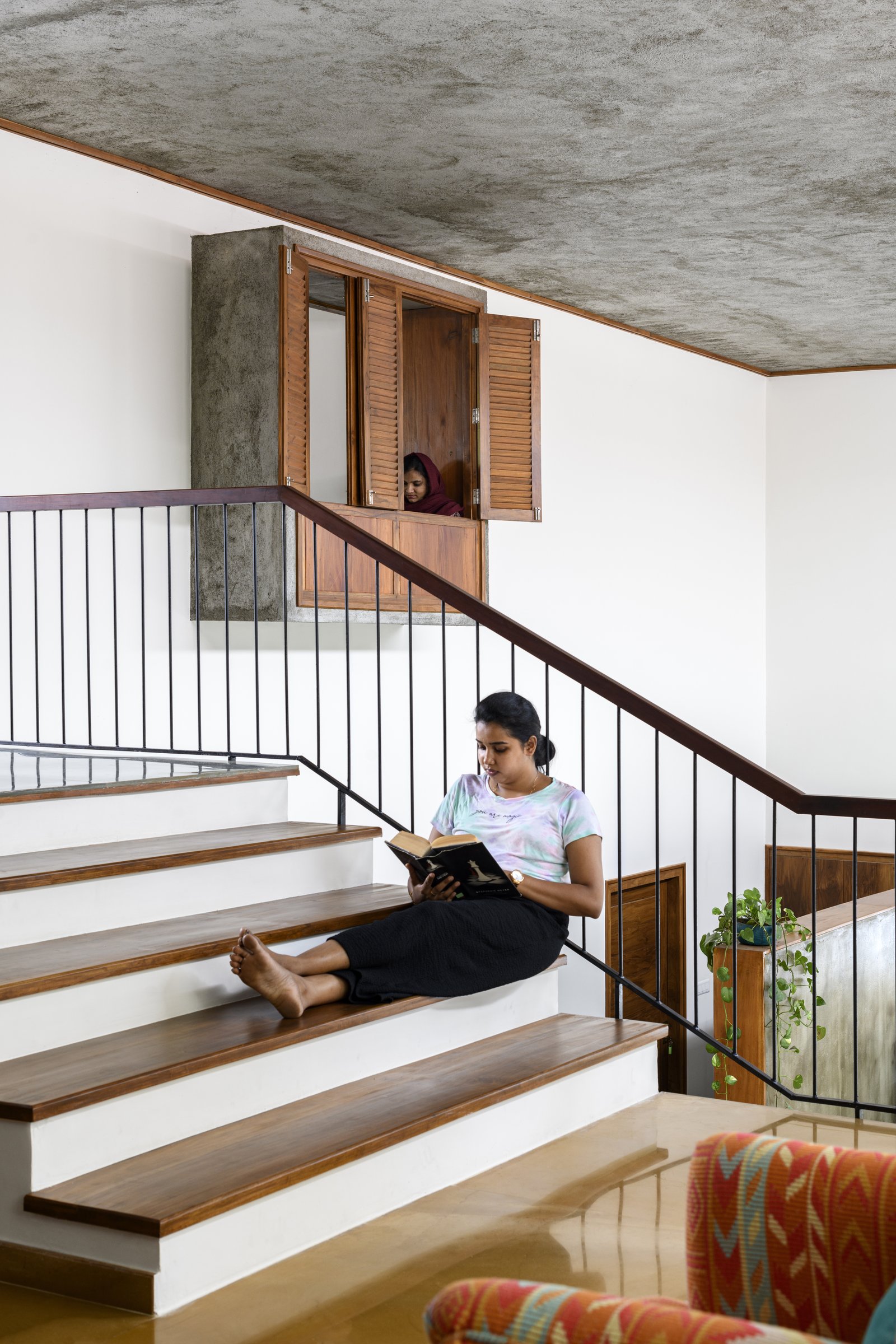
The staircase is conceived as more than a circulation element, becoming a place for pause, and quiet observation. Timber treads with crisp white risers ascend alongside a slender black metal balustrade, their warm materiality softening the otherwise architectural composition. Bathed in natural light, the stair unfolds as a calm vertical journey through the house.
An unexpected detail enriches the experience: a small timber-shuttered window projects from an upper room into the stair void, creating an interior elevation that feels almost domestic in scale. Overlooking the movement below, it introduces a sense of intimacy and encourages moments of stillness, transforming the staircase into a lived-in space rather than merely a route between floors.
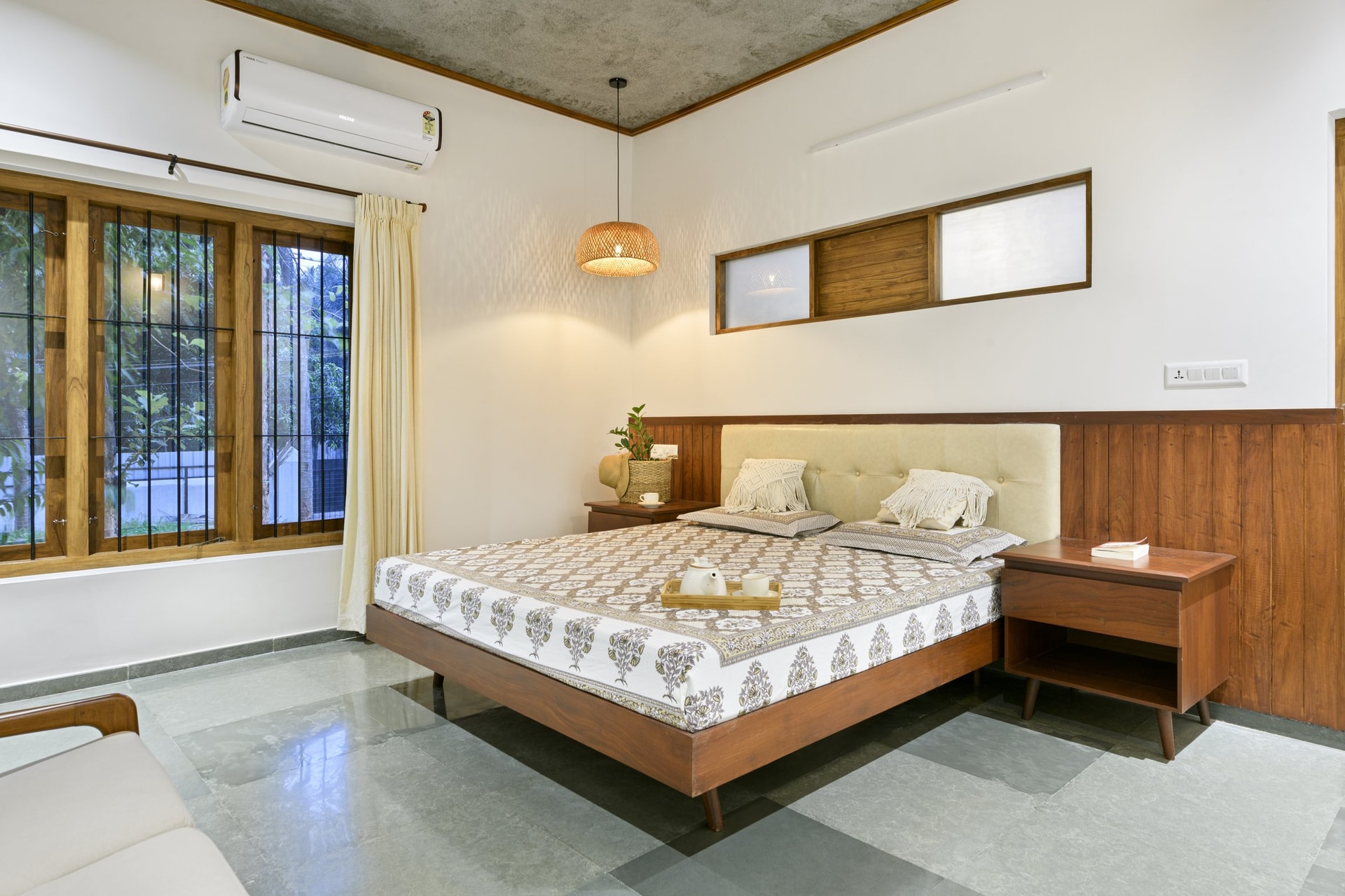
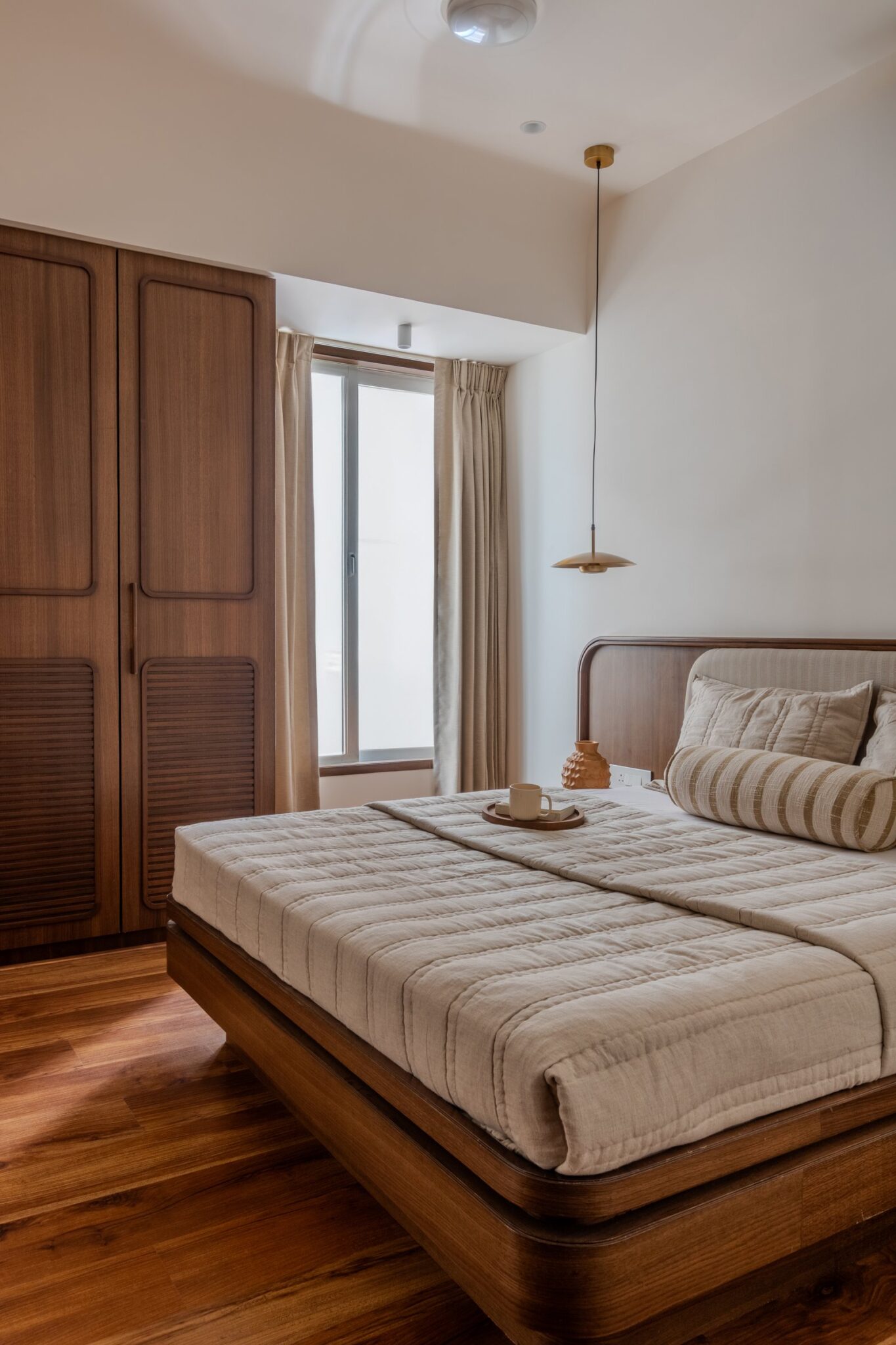
The guest bedroom adopts a deliberately restrained palette, prioritising comfort and calm over visual drama. A softly upholstered headboard is set against a panelled timber wall, anchoring the low wooden bed and lending warmth to the space. Beside it, a generous timber-framed window opens towards the surrounding greenery, allowing the landscape to become a subtle extension of the room.
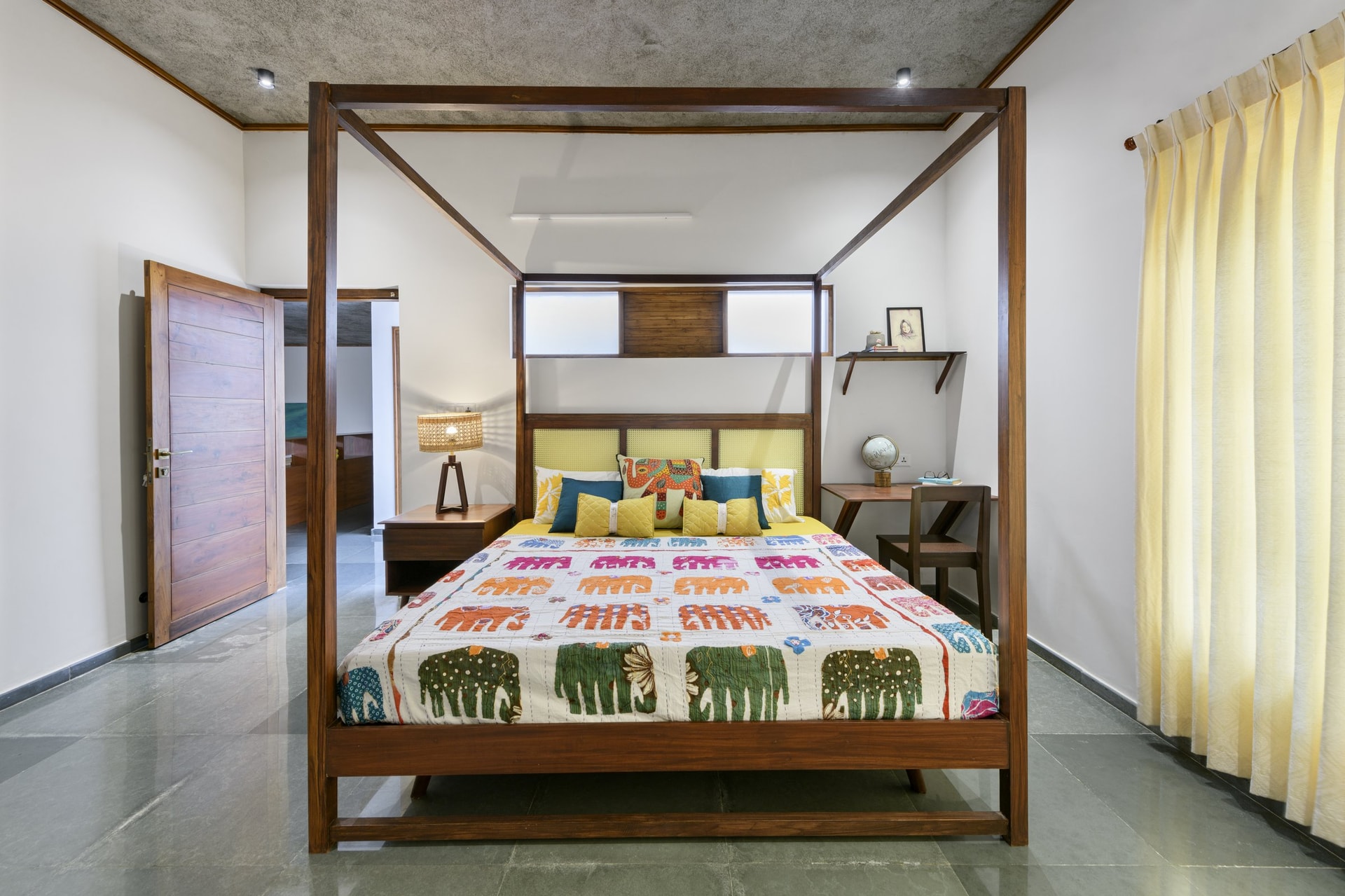
A second bedroom introduces a lighter, more playful character while remaining within the home’s restrained material language. At its centre, a timber four-poster bed establishes a strong architectural presence beneath the textured concrete ceiling, its warm tones balancing the room’s otherwise minimal composition.
The surrounding elements are intentionally understated. A slim bedside table and compact timber study chair reinforce the room’s sense of utility and ease, while a clerestory opening creates a visual connection to the adjoining spaces, drawing borrowed light into the interior.
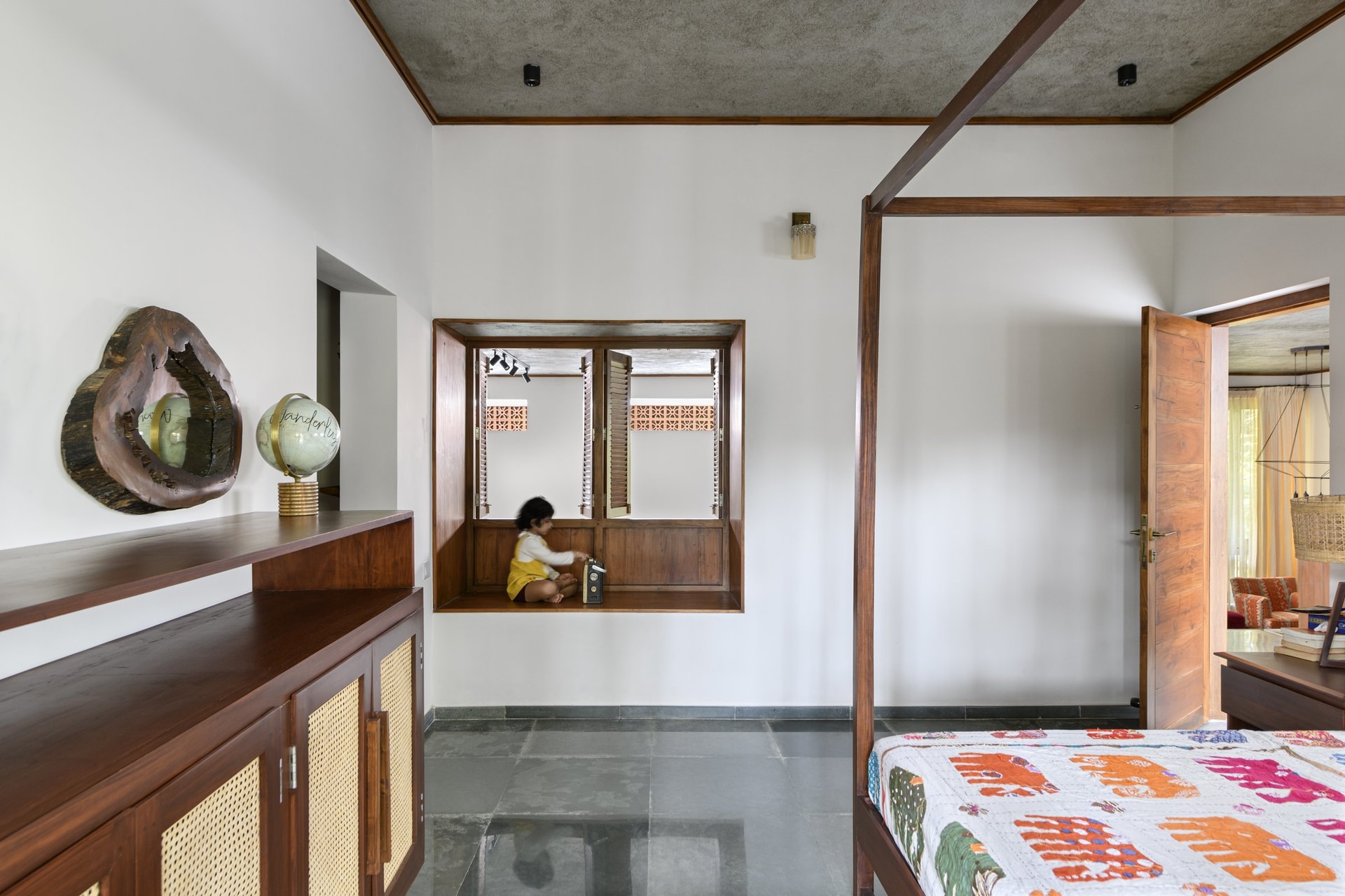
In a quieter corner of the upper level, a built-in window seat forms an intimate retreat. Clad entirely in timber, it projects from a crisp white wall and is framed by louvered shutters that open towards the brick screen beyond, filtering light and breeze into the space. Along the adjoining wall, a long timber console with cane-fronted cabinetry provides both storage and display, its collection of personal objects lending the room an authentic sense of inhabitation rather than decoration.
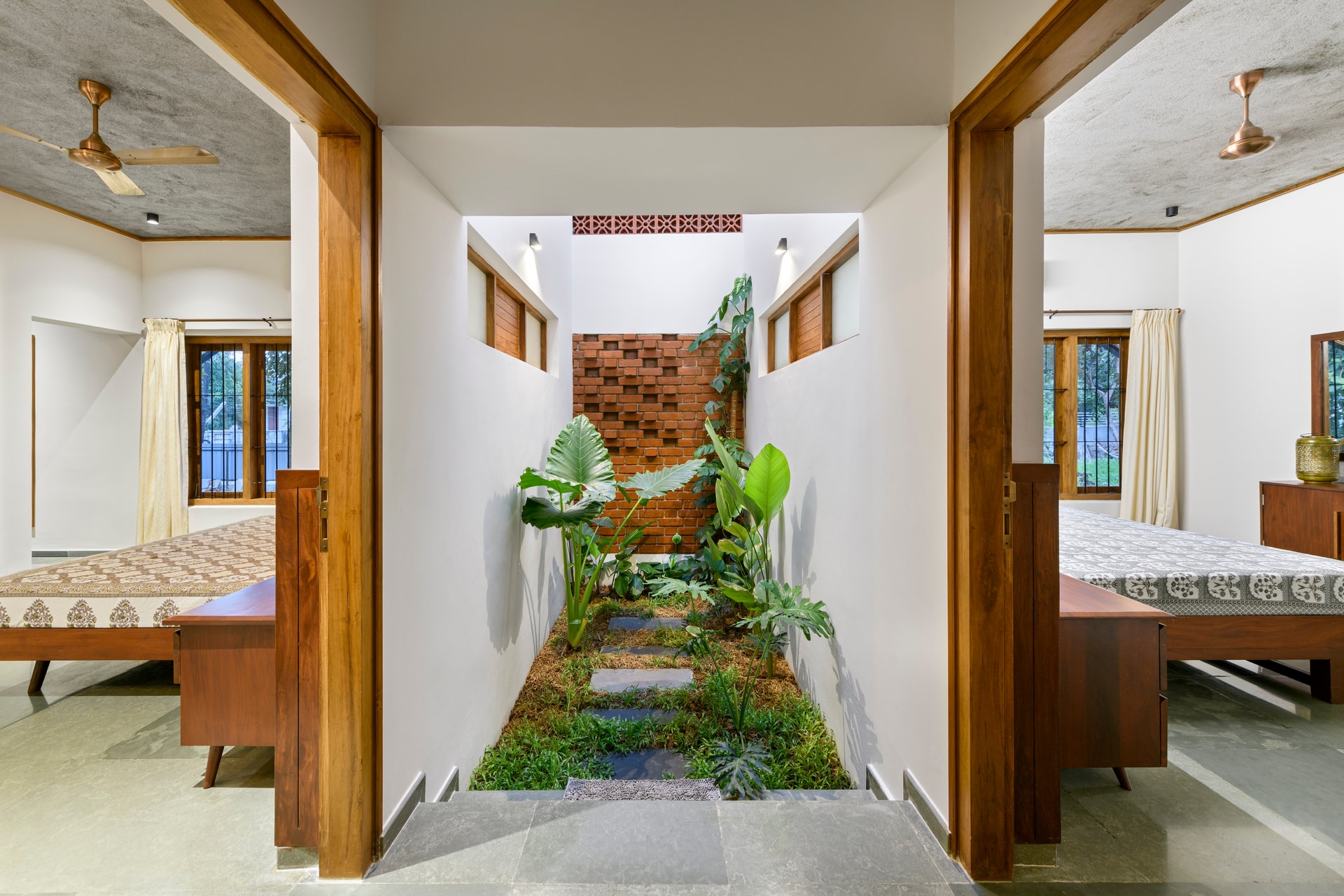
Connecting two of the upper bedrooms, a slender open-to-sky courtyard reinforces the home’s deep relationship with landscape. Defined by a textured red-brick wall, lush tropical planting, and a stepping-stone path set within ground cover, the garden acts as a quiet pause between rooms. Viewed through timber-framed doorways on either side, it draws daylight, greenery, and natural ventilation into the most private areas of the house, performing the subtle yet essential role that underpins the entire design.
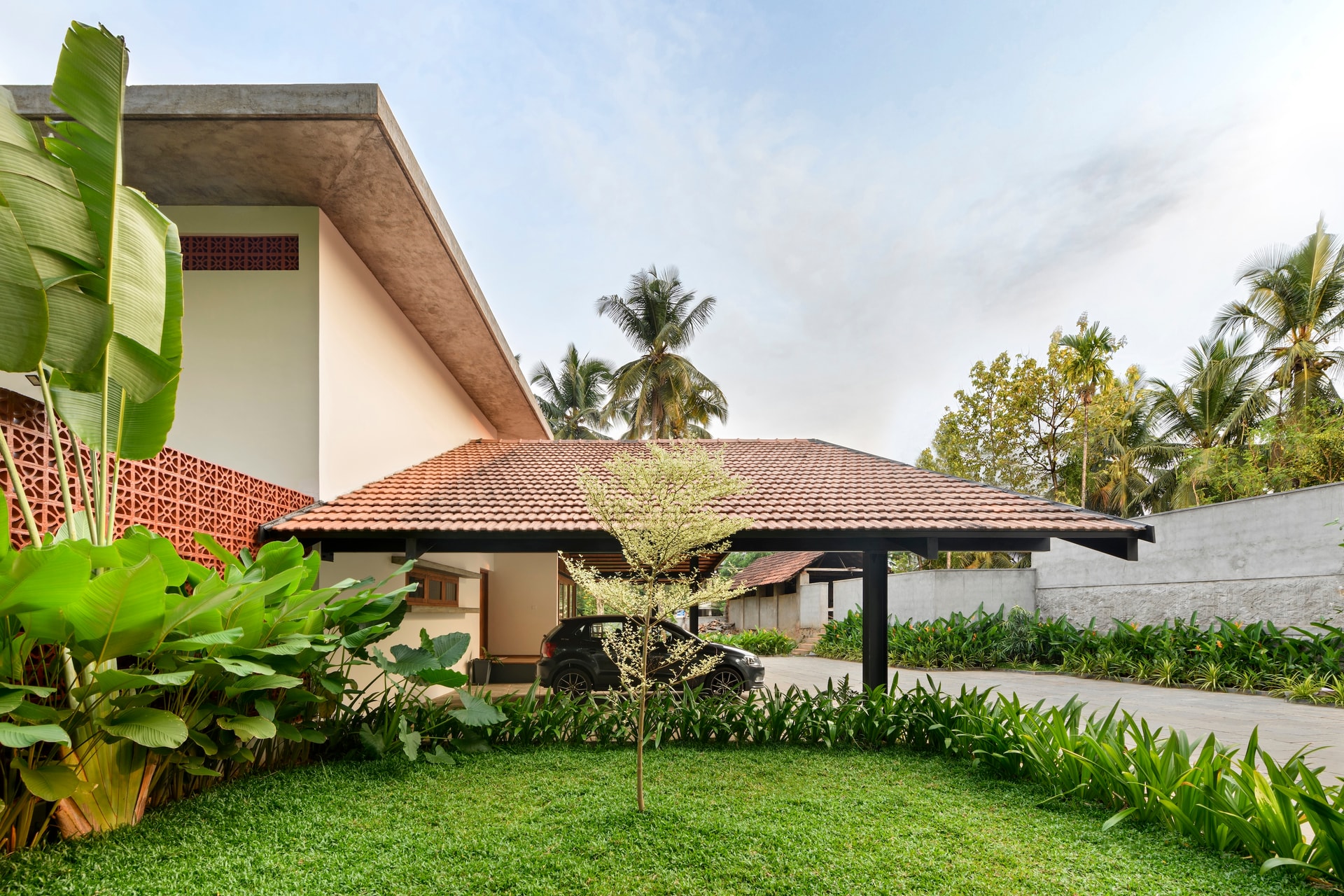
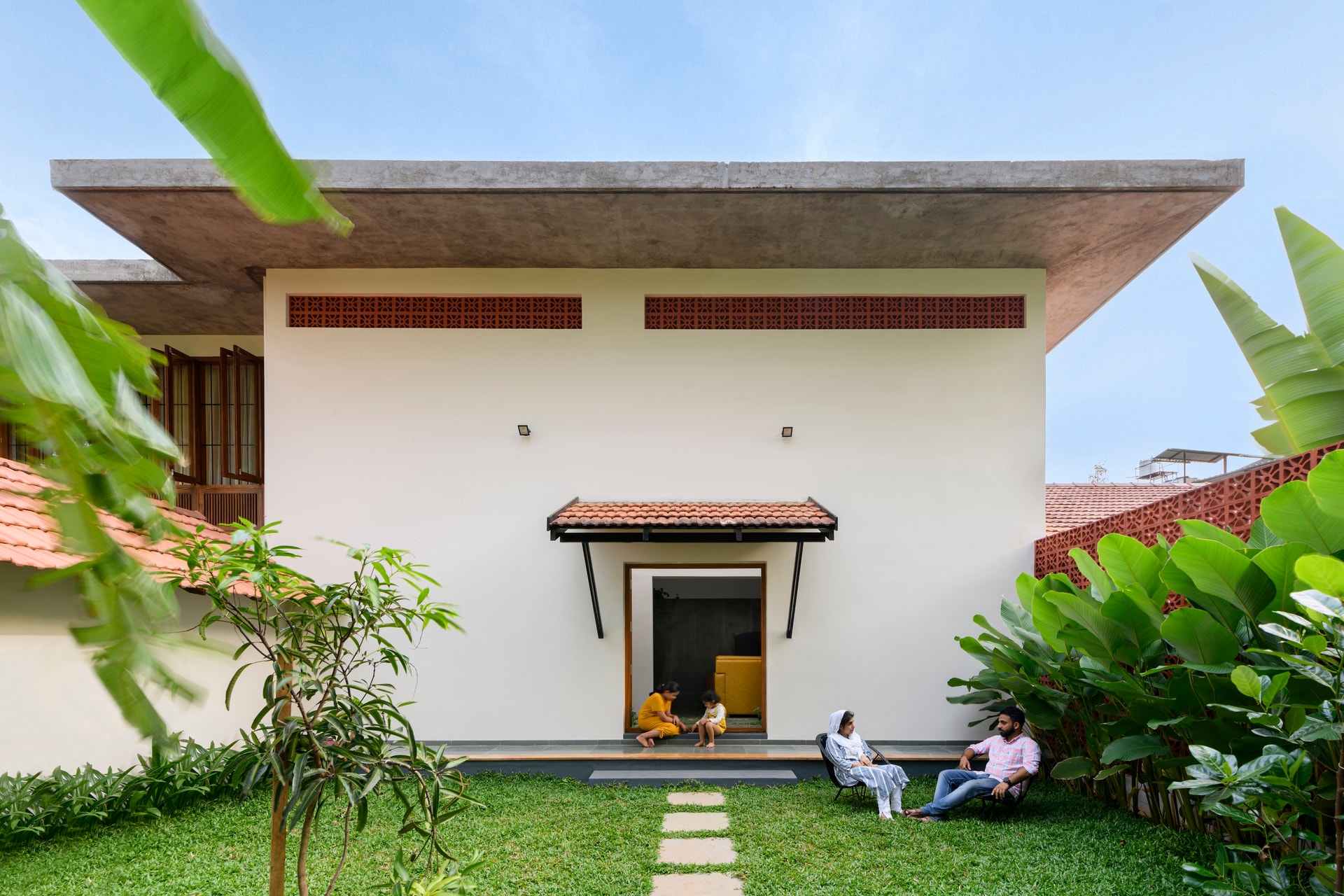
Lael offers a thoughtful model for contemporary living in a small Kerala town, one that draws from local architectural traditions without becoming nostalgic, and embraces modernity without disconnecting from its context. Pitched roofs, Kadappa stone floors, patterned tilework, and perforated brick screens root the house in its regional setting, while slender steel columns, exposed concrete surfaces, and expansive open-plan spaces introduce a distinctly contemporary sensibility. Basil and Partners balance these influences with a clarity that allows neither to overpower the other.
What ultimately distinguishes the residence is its understanding of landscape as architecture. Courtyards, planted edges, and internal gardens are not treated as decorative additions but as essential spatial devices that shape light, movement, and atmosphere throughout the home. The result is a house that feels less assembled than grown into its site, offering its residents a calm and deeply connected way of living, where the presence of the tropics is woven into everyday life rather than simply framed as a view.