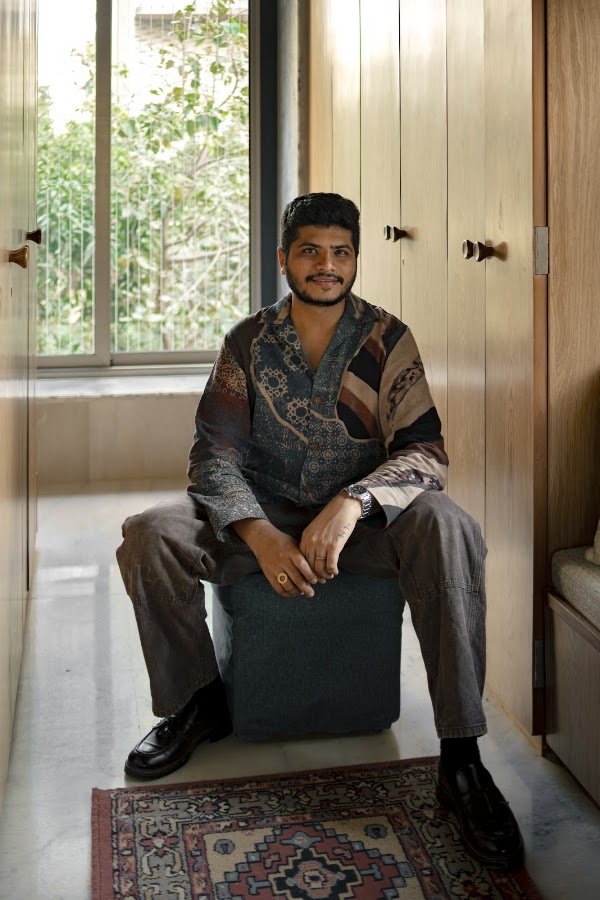
For Jay Shah, architecture begins with the hand. Not with a mood board, not with a reference image, not with a fully articulated brief, but with pen touching paper, a gesture at once instinctive and rigorous, in which thinking and making are inseparable. It is a way of working that resists the visual homogenisation of contemporary design, where references circulate so freely that projects begin to feel interchangeable. At DR&W, the Mumbai studio Shah founded roughly two years ago, drawing is treated less as a tool of communication than as a form of inquiry.
That belief runs through everything the practice makes, from a recently completed high-end jewellery store in Mumbai to a series of architectural commissions currently underway on ecologically sensitive sites outside the city. Across scales and typologies, Shah and his team return to the same principle: instinct sets the direction, and rigour builds the response.
Design Philosophy
Shah is candid about the fact that architecture was not an early calling. He was originally set to study forensic science, a discipline rooted in biology and method, and found his way to design almost by accident. What began as a compromise, however, revealed something he had long been doing instinctively: responding to spaces on an intuitive, almost subconscious level. “Architecture didn’t feel like a choice,” he reflects. “It felt like something that quietly chose me.”
Much of his earliest architectural education happened beyond the classroom. Family travels through the ghats of Varanasi, the stepwells of Rajasthan, and the Sun Temple at Modhera exposed him to spaces where light, water, and temperature shaped experience with remarkable precision, long before he had the language to describe it. Formal education later gave those instincts a framework. Balkrishna Doshi grounded his thinking in an Indian context, Le Corbusier transformed the way he understood space, while Peter Zumthor and Carlo Scarpa revealed architecture as something deeply tactile, where materiality, craftsmanship, and precision carry equal weight.
Rather than subscribing to a fixed design philosophy, DR&W is guided by the interplay of instinct and rigour. Every project begins with an intuitive response to a site, a brief, or a material, before being shaped through careful questioning, iteration, and refinement. Aesthetics, functionality, and experience are never approached as separate pursuits, but as interconnected expressions of a single architectural idea, held together by a clear conceptual foundation.
Process & Practice
The studio’s process is best understood as a cycle of continual refinement. Sketches, models, mock ups, on site trials, and material explorations unfold in parallel, each informing and challenging the next. Ideas are deliberately left open for long stretches, allowing them to gain clarity and depth through constant iteration. Even after a project is complete, Shah believes the process never truly ends. Every commission offers lessons that shape the next.
Much of that rigour is devoted to defining the brief itself. Most projects, Shah observes, do not begin with complete clarity but with uncertainty, making a significant part of the studio’s role one of listening, questioning, and uncovering what a client truly wants. Multiple design directions are explored, with drawings and visual references helping clients articulate their preferences. The brief is therefore developed collaboratively rather than simply received.
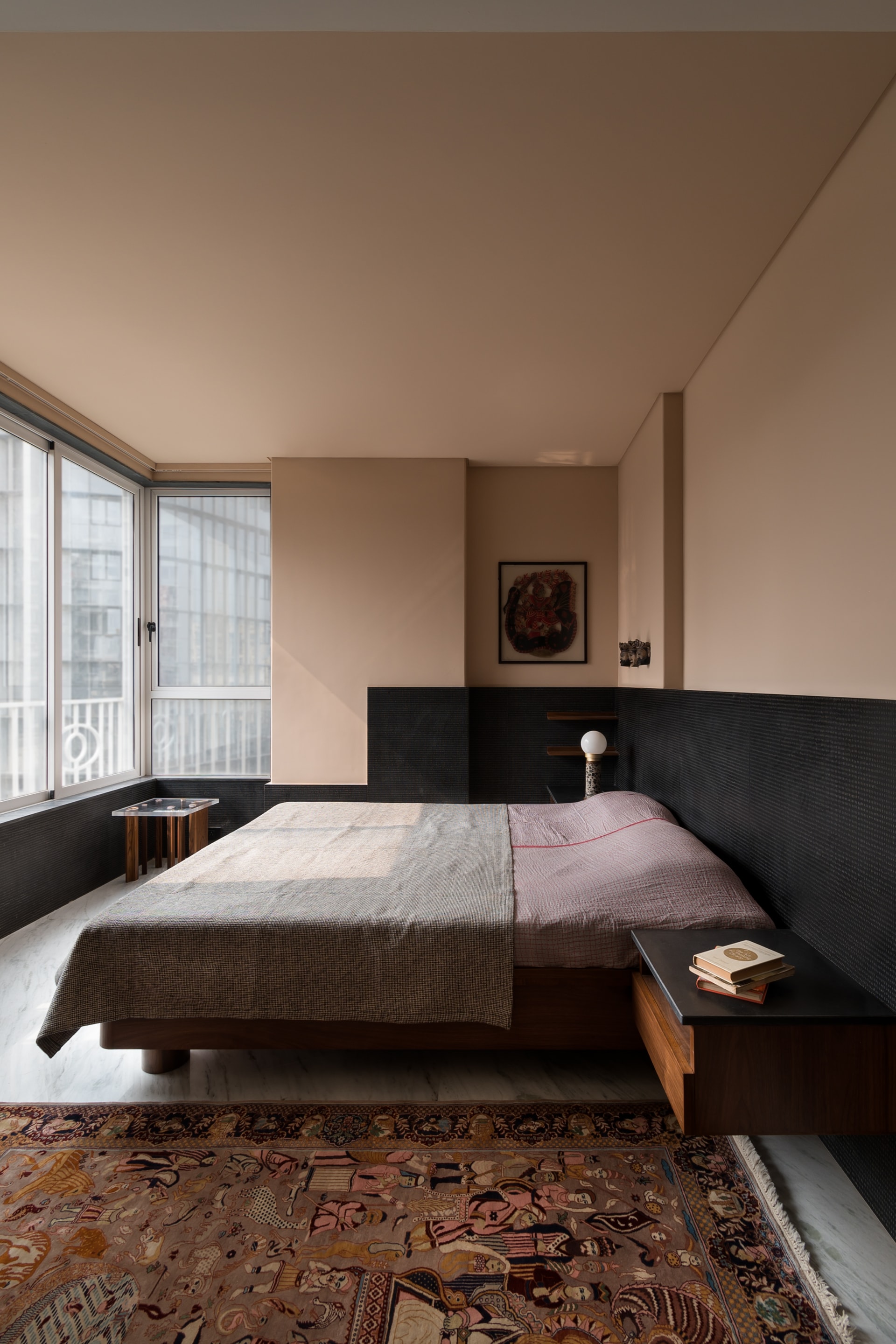
Materials sit alongside light as one of the studio’s primary design considerations. Tactility, texture, and the way elements come together shape every project, with DR&W continually exploring ways to reinterpret familiar materials through local craftsmanship and thoughtful detailing. Site constraints are approached as opportunities for invention rather than limitations, while unexpected discoveries during construction often become defining moments within the design. As Shah puts it,
“Good architecture is never authored alone — it’s assembled through dialogue.”
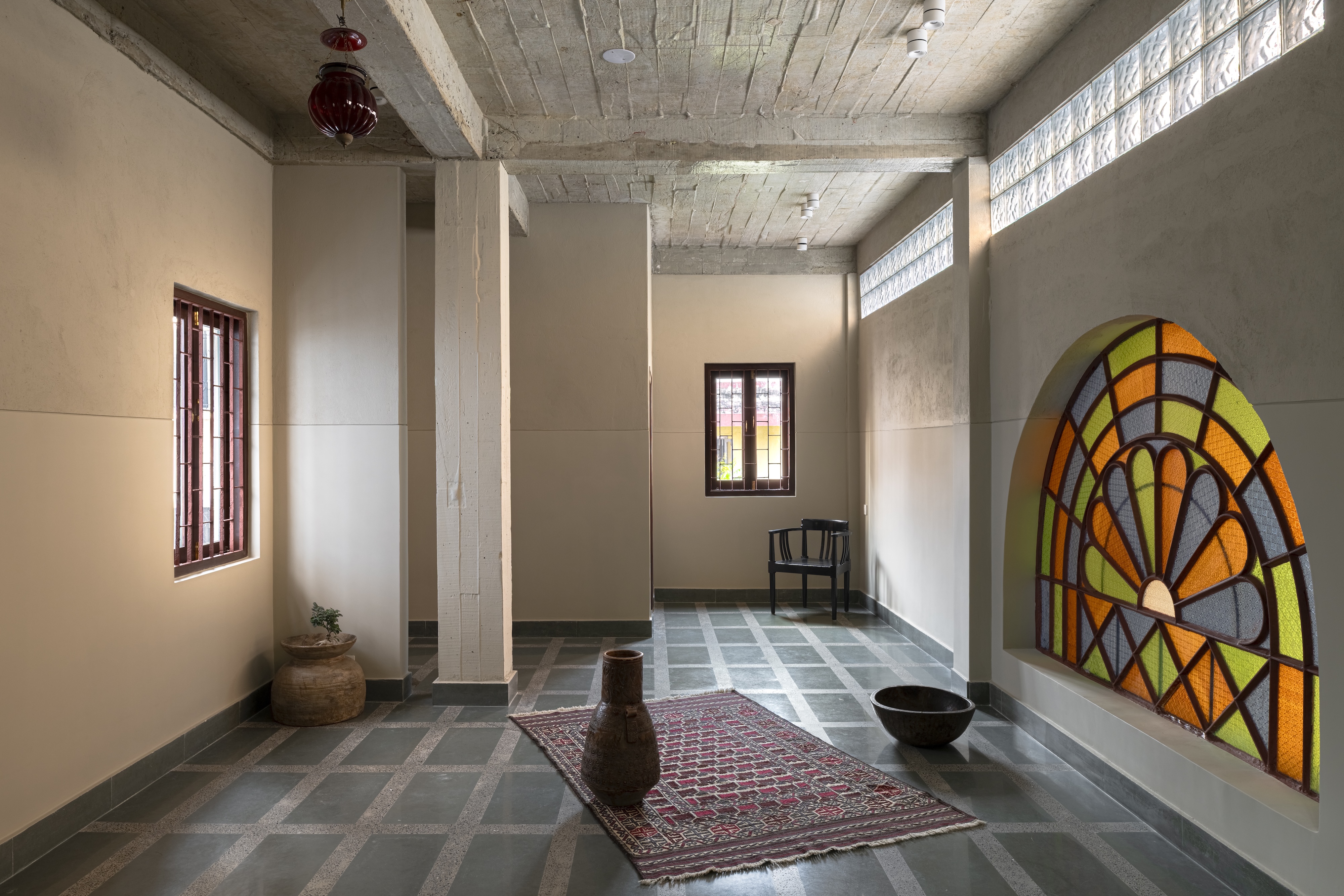
Project Highlight: Reimagining Luxury Through Materiality
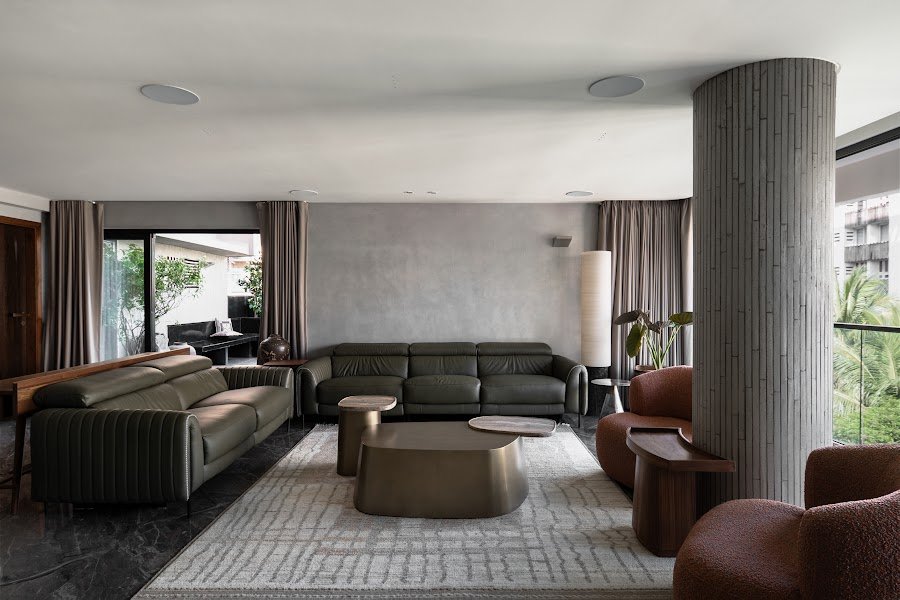
One of the studio’s most recently completed projects is a high end residence in Mumbai, a commission shaped by an unusually demanding brief. At its centre was a generously proportioned living space anchored by a substantial structural column that resisted conventional planning. DR&W responded by organising the layout into a clear primary seating area and a series of layered secondary settings around the column, treating the intervention less as an interior fit out and more as an architectural exercise. The envelope was carefully reworked, structural elements were integrated into the design, and every component, from lighting and drapery to finishes and detailing, was approached with an architectural rather than decorative sensibility.
What defines the project most clearly is its restrained material palette. Despite being conceived as a luxurious residence, the interiors rely on terrazzo flooring, IPS walls, and thin slices of Kadappa stone used as cladding, creating an earthy composition rooted in an Indian material language. The intention was to craft a home that feels understated yet enduring, quietly challenging conventional notions of luxury through authenticity, materiality, and restraint.
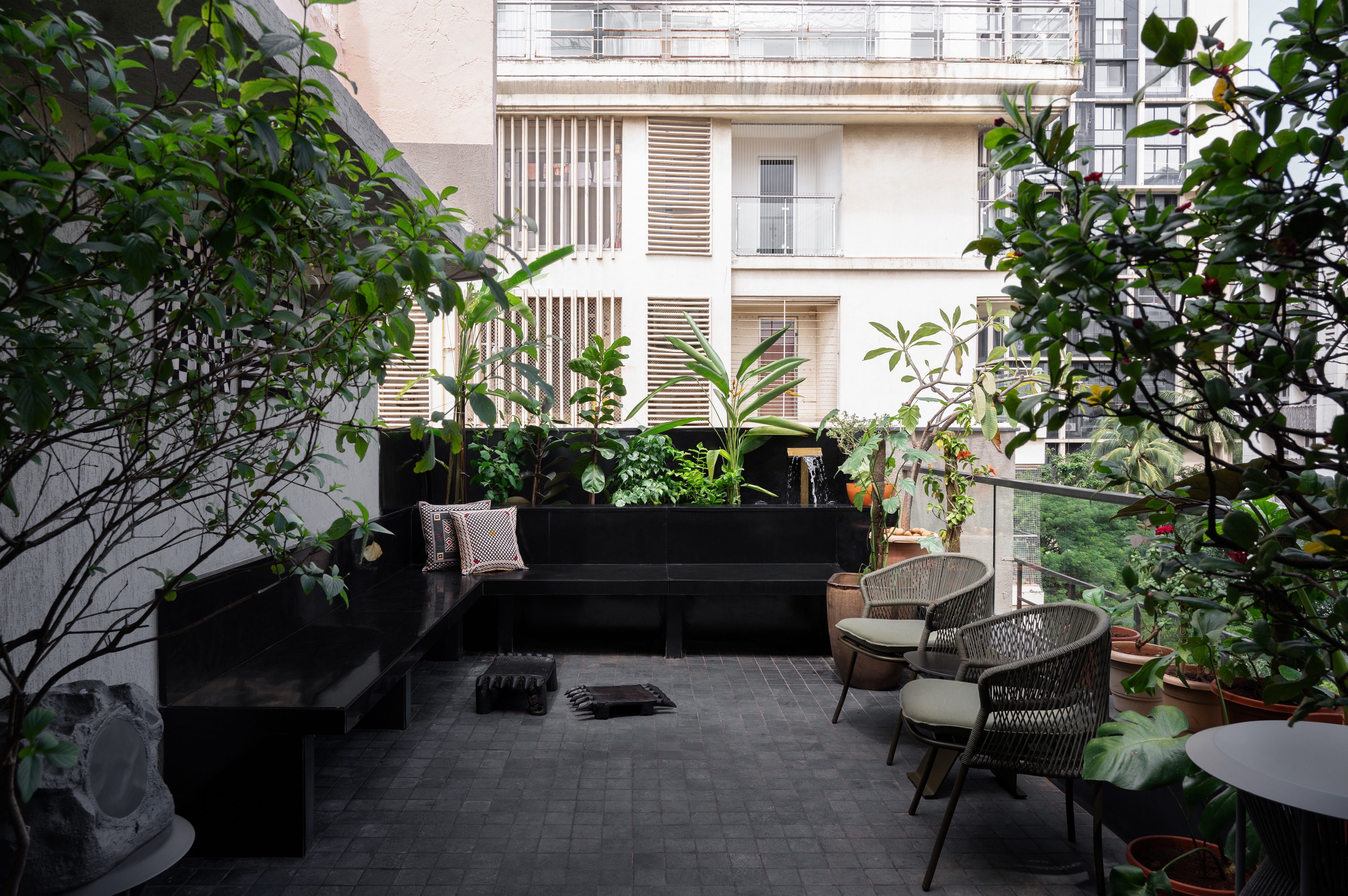
The experience of the home is shaped as much by interaction as by form. Custom designed elements encourage moments of discovery, while carefully considered detailing lends depth and tactility to everyday living. Rather than relying on overt gestures, the project demonstrates how thoughtful planning, material honesty, and meticulous craftsmanship can create spaces that feel both timeless and deeply personal.
Looking Forward
For Shah, sustainability is no longer a discourse but a necessity, one that informs every decision at DR&W rather than existing as a checklist tied to certifications. The environmental footprint of a building, the origin of its materials, the energy invested in its construction, and its long term performance are considered from the earliest stages of every project. For a young practice, he believes this approach is no longer optional but fundamental, reflecting a growing awareness among clients of how the built environment shapes both people and the planet.
Longevity, in his view, is never accidental. It is achieved through adaptable planning that allows spaces to evolve over time, and through material choices rooted in context that respond naturally to climate, use, and ageing. Enduring architecture, he believes, is defined as much by craftsmanship and detailing as by the materials themselves.
Looking ahead, Shah is eager to expand the practice’s work into the public realm, taking on institutional, urban, and landscape projects while maintaining the same level of rigour and attention to detail that defines its private commissions. The studio currently has four architectural projects in progress, three already under construction and a fourth set to break ground, many of them located on steep terrains or within ecologically sensitive sites that demand a thoughtful engagement with landscape, climate, and place.y spaces is also in progress, extending the studio’s interest in tactility and custom-designed furniture.
In Reflection
For a practice barely two years old, DR&W is remarkably clear about what it does not want to become. Shah speaks of the visual homogenisation of contemporary design, where the same references circulate with increasing ease, creating projects that often feel interchangeable. In response, the studio has built a process centred on drawing, model making, and continual iteration, allowing ideas to emerge through exploration rather than imitation.
He is equally candid about the realities of running a young practice, chief among them the importance of learning when to say no. In a profession where the boundaries between architect, contractor, and project manager frequently overlap, protecting the integrity of the design process becomes essential. It means declining projects that prioritise ego over context, environment, or purpose. For Shah, success is measured not by the scale of a commission or the visibility it receives, but by the experience of the people who ultimately inhabit the space.
Ultimately, Shah hopes the memory of a project outlives its authorship, that a space is remembered not for its designer but for the way it makes people feel. His advice to emerging architects reflects the same philosophy that guides his practice: keep drawing, keep sketching, and keep exploring. “Every line leads somewhere. Every idea can evolve in multiple directions.” For DR&W, that spirit of continual exploration is more than a design process. It is the foundation of the practice itself.

Editor’s Note
What makes this conversation particularly compelling is Shah’s belief that architecture is never simply authored or completed, but assembled through an ongoing dialogue with clients, craftspeople, materials, and place. His understanding of instinct and rigour as inseparable forces, rather than opposing ideas, offers a thoughtful perspective on contemporary practice. Equally compelling is his interpretation of luxury, one defined by restraint, authenticity, and material honesty rather than excess.
DR&W occupies an interesting position within contemporary Indian architecture. Although still a young practice, the studio is already expanding from private commissions into more civic and ecologically sensitive projects, while maintaining an unwavering focus on craftsmanship, materiality, and detail. For those interested in the evolving language of Indian architecture, particularly its renewed engagement with local craft, contextual materials, and enduring design, DR&W is a practice well worth watching.
You can follow Jay’s work at @drawstudiomumbai and @jayshah1008.