TIn Hêpah, cultural identity is not approached as an aesthetic reference but as part of the home’s spatial logic. Assamese objects, craft traditions and familiar domestic forms are brought into a contemporary setting without being abstracted from their original meaning, establishing a residence where inheritance remains active rather than archival. The distinction is important: this is less a home about preserving the past than about understanding how it continues to participate in the present.
Designed by Two Pickled Studio, this 1,500 sq. ft. residence in Guwahati takes its name from the Assamese word hêpah, which speaks to a deep fondness for something held close to the heart. Principal designers Adrijaa Bhuyan and Shreya Parinam translate this sentiment into a home that sits comfortably between cultural memory and contemporary life. Rather than treating regional identity as a decorative layer, the studio allows Assamese craft, material traditions and familiar domestic forms to become part of the architecture itself, giving them relevance within the routines of a modern family.
Perhaps the home’s most compelling quality lies in what it has gathered rather than what has been newly introduced. Books in Assamese script sit alongside framed handloom punch cards; a bamboo fishing basket becomes part of the interior landscape, while the familiar diwan is reconsidered as a contemporary daybed. These elements carry histories that precede the design itself, and the studio’s role has been to give them space rather than turn them into spectacle. The result is a residence shaped as much by memory as by material, where heritage is not staged for attention but allowed to continue, naturally and intimately, through everyday life.
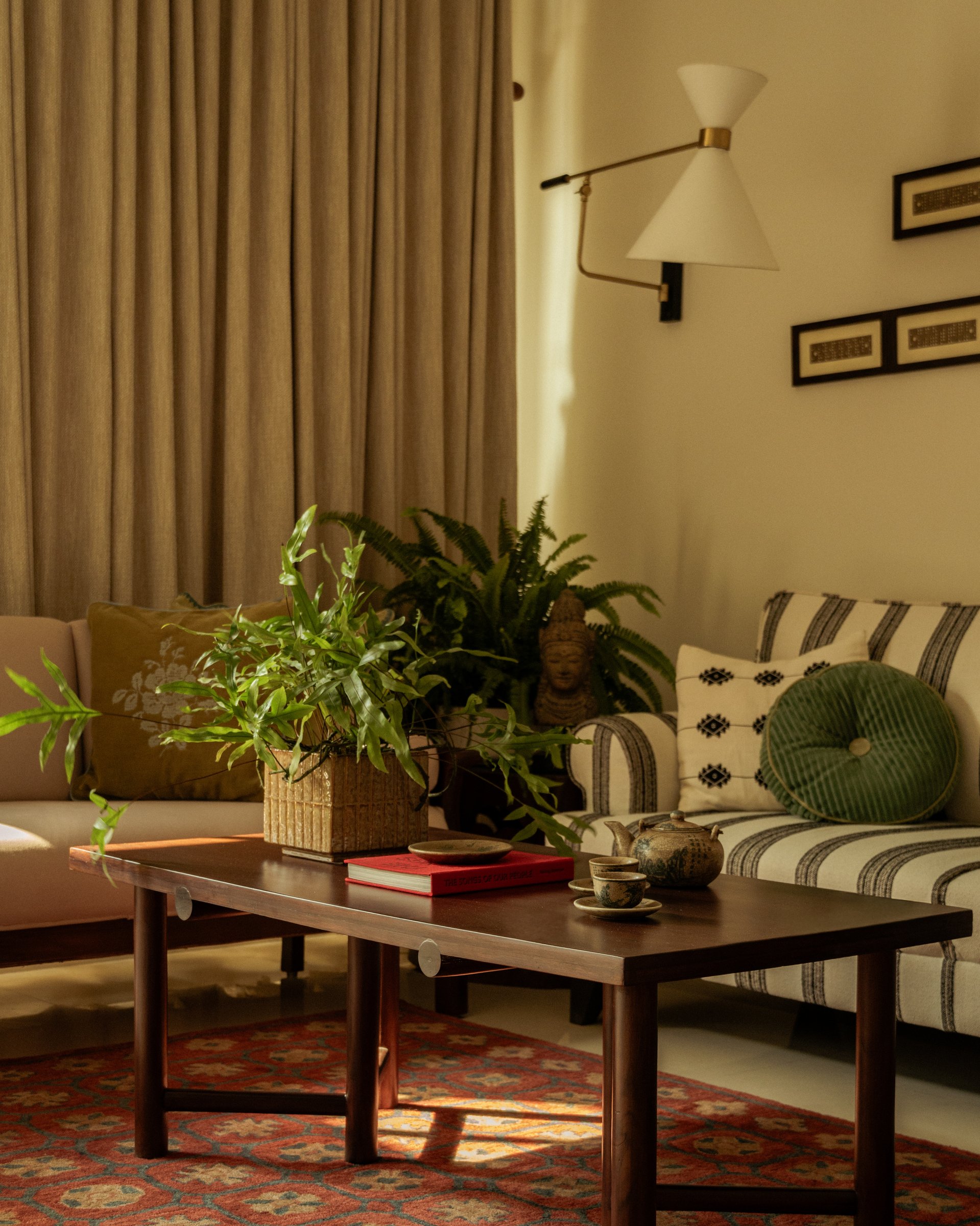
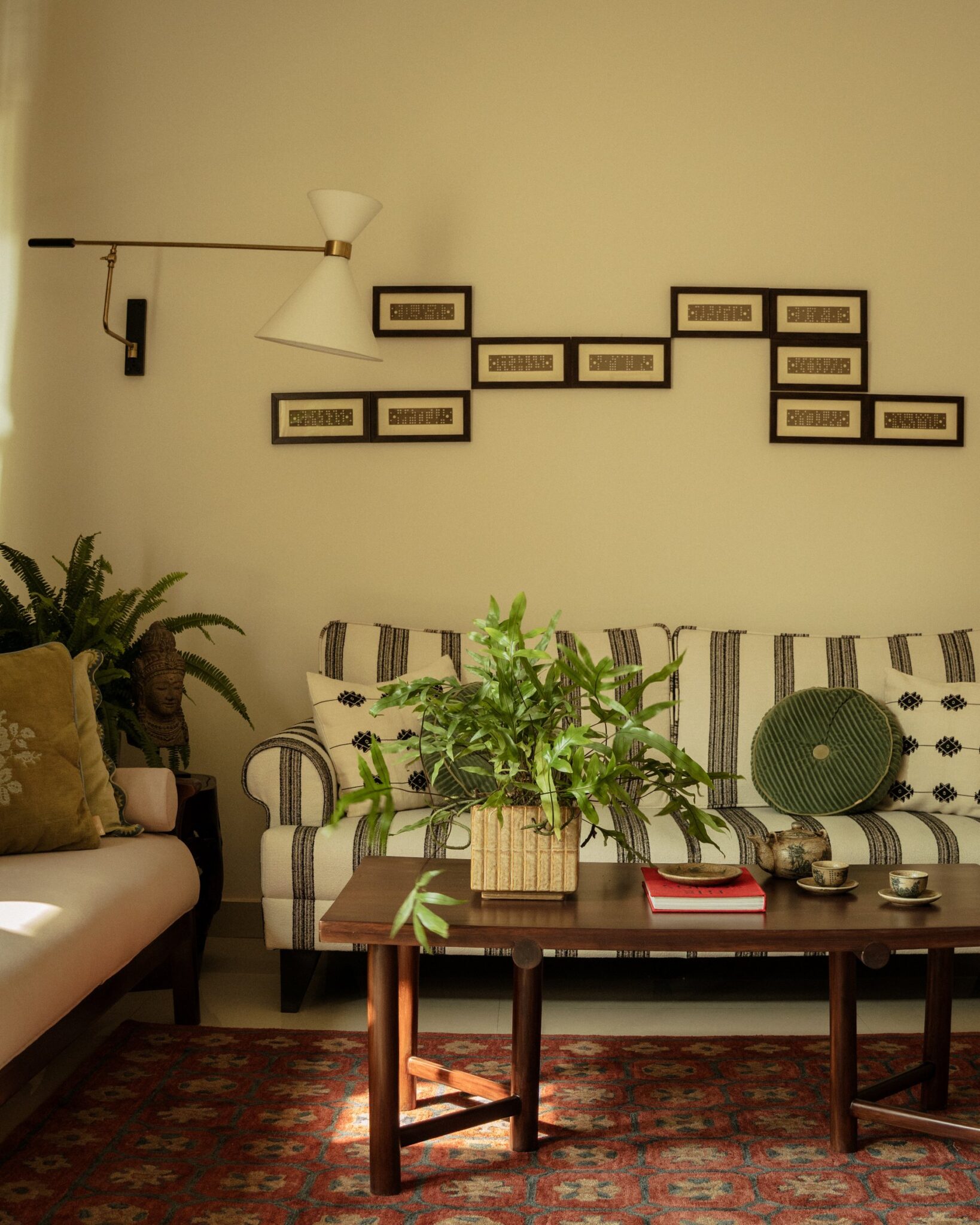
The living room establishes the home’s material vocabulary with restraint. A striped upholstered sofa is paired with a low dark-wood coffee table and a red-toned patterned rug, while a brass double-cone wall sconce with paper shades introduces a more sculptural note. Behind, framed handloom punch cards are arranged in a stepped composition, bringing a distinctly Assamese reference into an otherwise contemporary setting. Tradition and modernity are held within the same sightline, establishing a dialogue that continues throughout the residence.
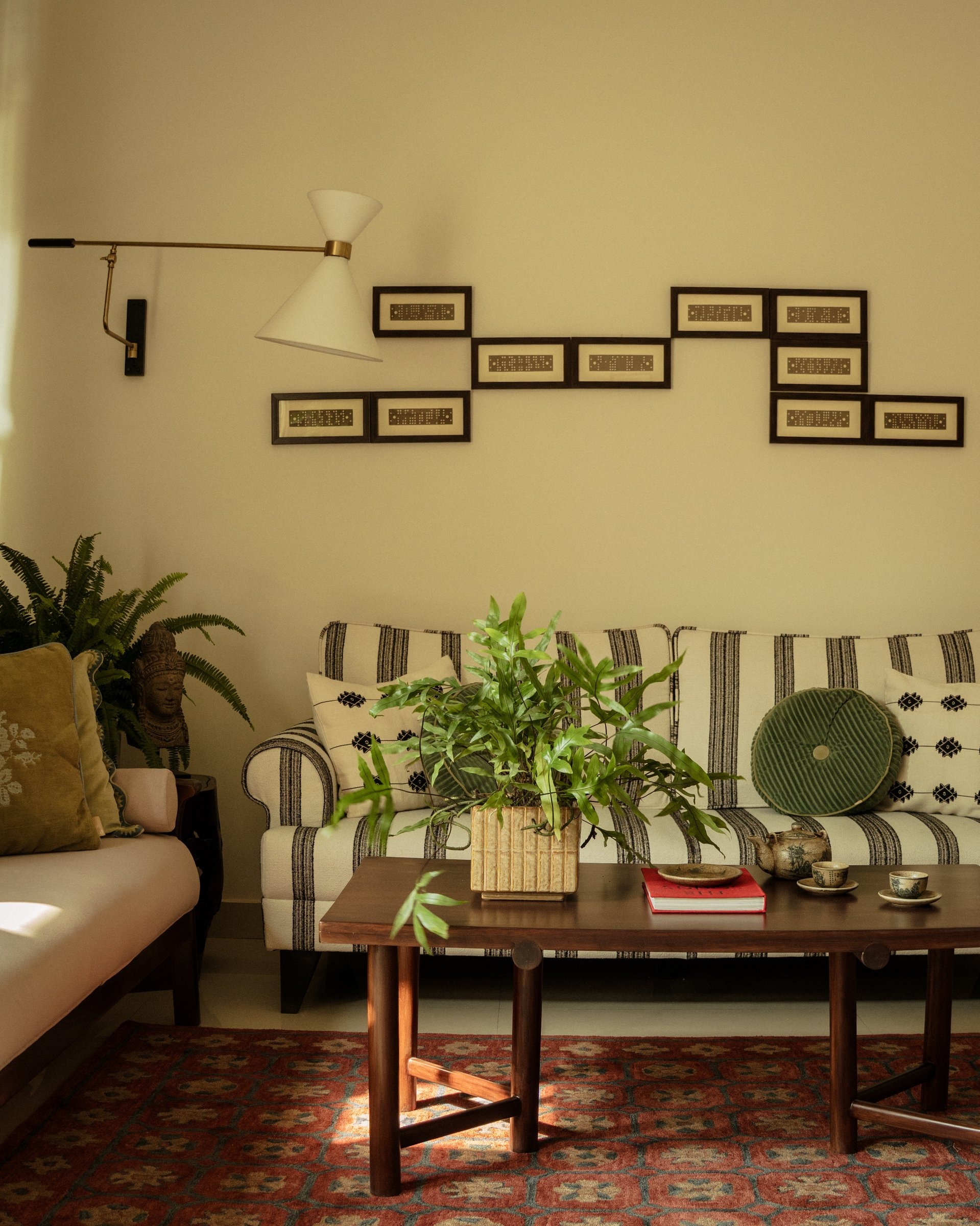
Seen more fully, the living room is conceived as a salon-like gathering space, with the sofa facing a compact daybed across the central coffee table. Along the wall, framed weaving punch cards are reassembled into an evolving composition, shifting between artefact and artwork while referencing Assam’s handloom traditions without turning them into display. A humble moda, used as a footrest, brings another familiar object into the room, recalling the understated character of everyday Assamese life.
Across the room, a low dark-wood console holds books in Assamese and English alongside ceramic vessels and collected objects, giving the interior a more personal register. A teal-upholstered lounge chair and round-topped side table define one end of the composition, while a floor lamp and fig tree soften the corner. Together, these elements give the room its layered character, where regional references sit naturally alongside contemporary furniture rather than being treated as separate gestures.
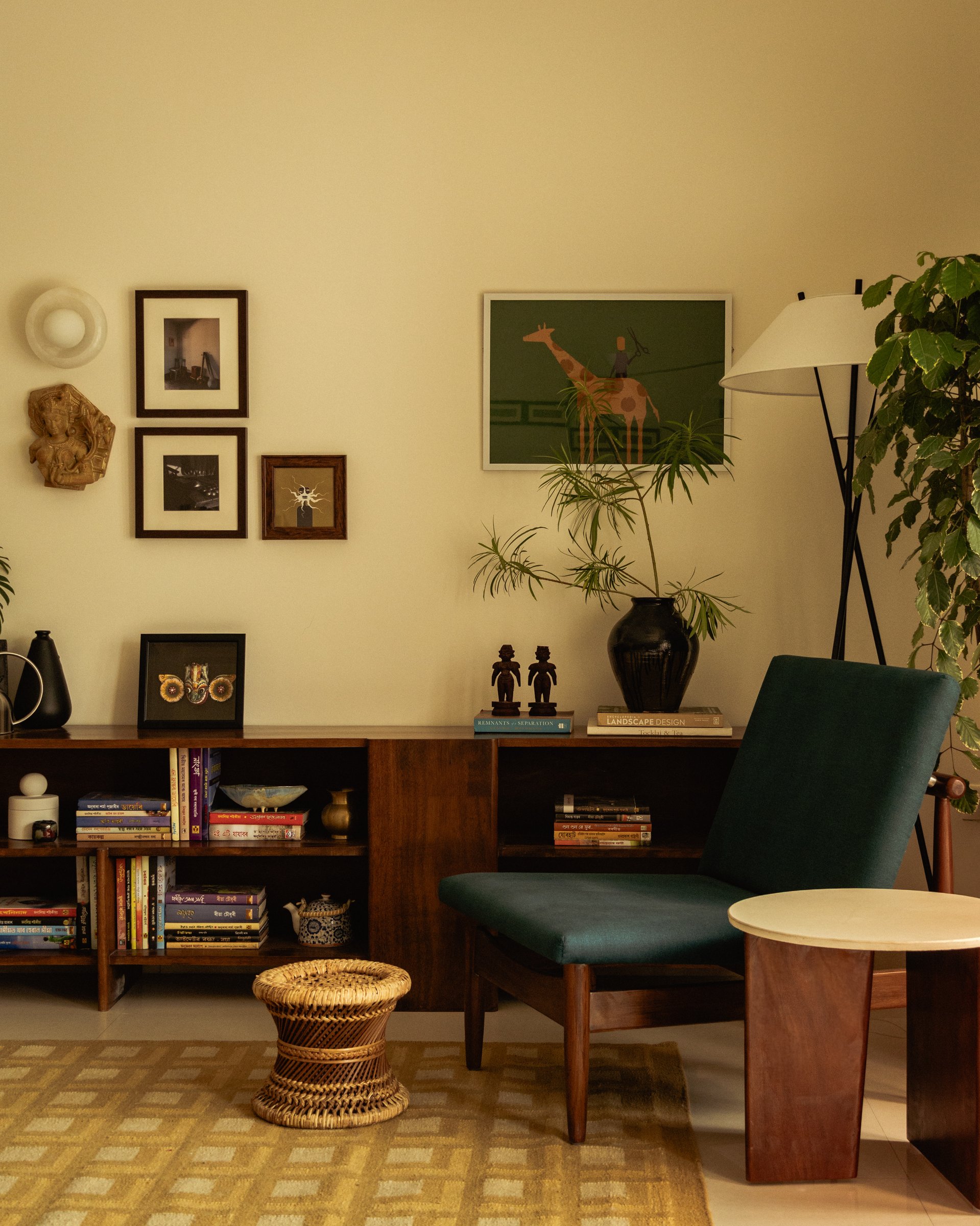
A gallery wall above the low credenza brings together framed photographs, a small carved figure and a green-ground artwork , introducing a playful note. A woven cane moda rests on a mustard geometric rug beside the lounge chair, shifting easily between footrest, side stool and additional seating as the room requires.
What gives this arrangement its strength is the studio’s restraint around it. The wall surface is left largely uninterrupted, allowing photographs, artworks and collected objects to establish their own visual rhythm rather than competing with architectural detailing. It is a subtle decision, but one that reinforces the larger character of Hêpah: family life is allowed to provide the layers, while the architecture gives them room to accumulate.
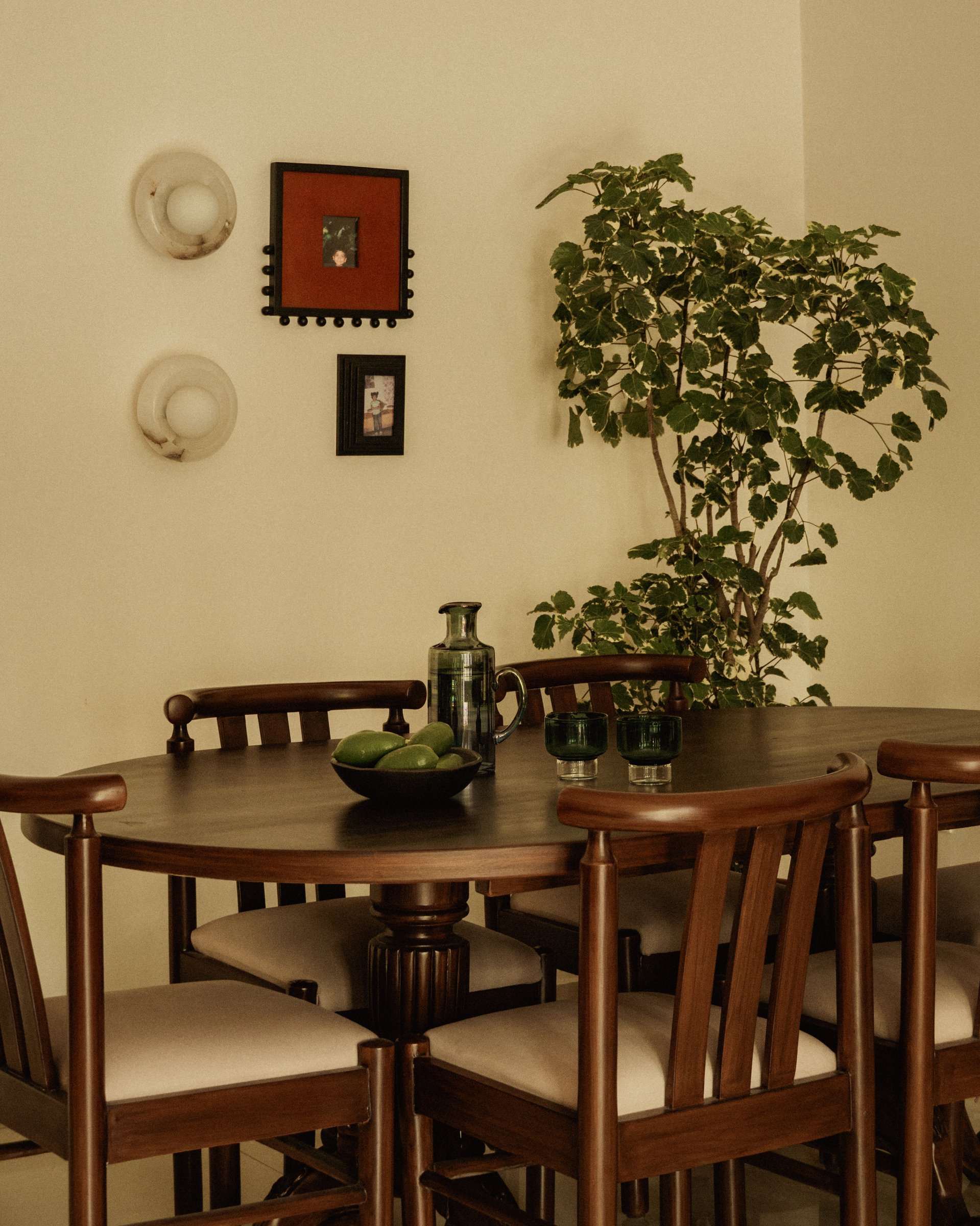
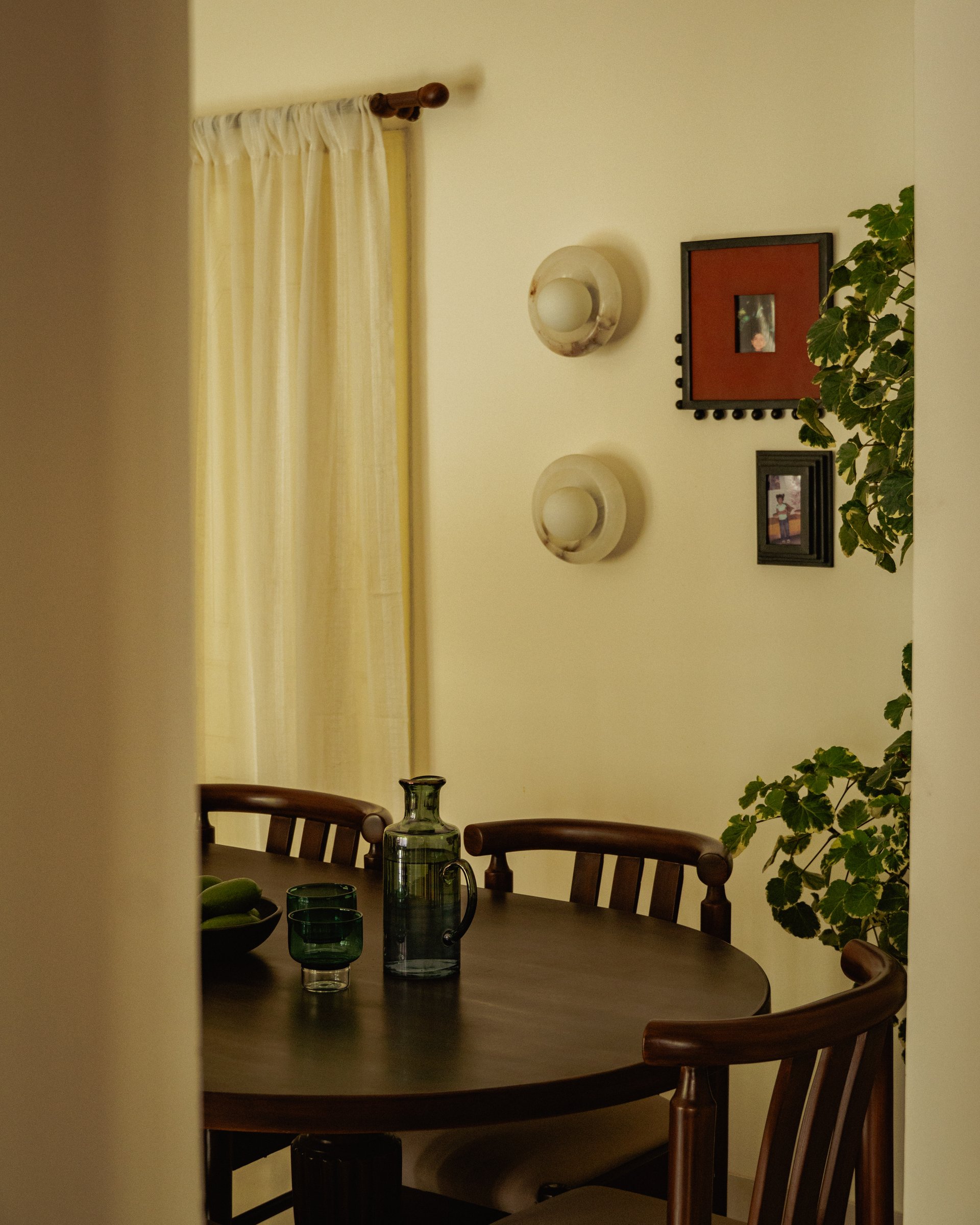
The dining area is anchored by a solid dark-wood table set on a turned central pedestal, surrounded by chairs with curved backrests and cream-upholstered seats. Above, two alabaster wall discs introduce a sculptural counterpoint to a framed photographs, while a variegated plant brings a softer, organic presence to the composition. The arrangement remains deliberately spare, allowing material, form and a handful of personal details to give the space its character.
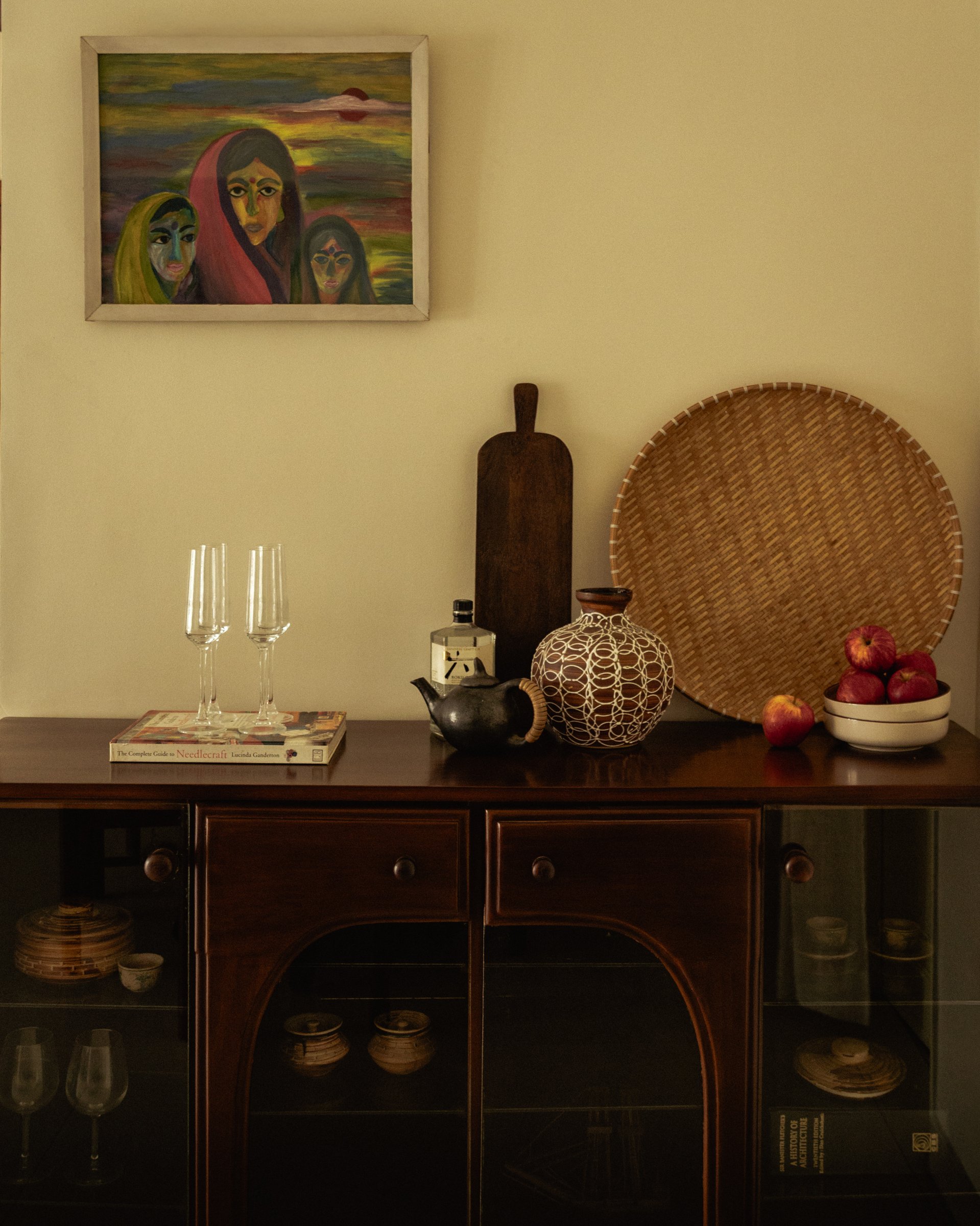
Adjacent to the dining table, a dark-wood sideboard with glass-fronted lower cabinets provides a setting for a more curated collection of objects, creating an arrangement that feels composed without becoming formal. Above, a painted canvas introduces a distinctly regional character, one that is immediately legible without relying on overt cultural symbolism.
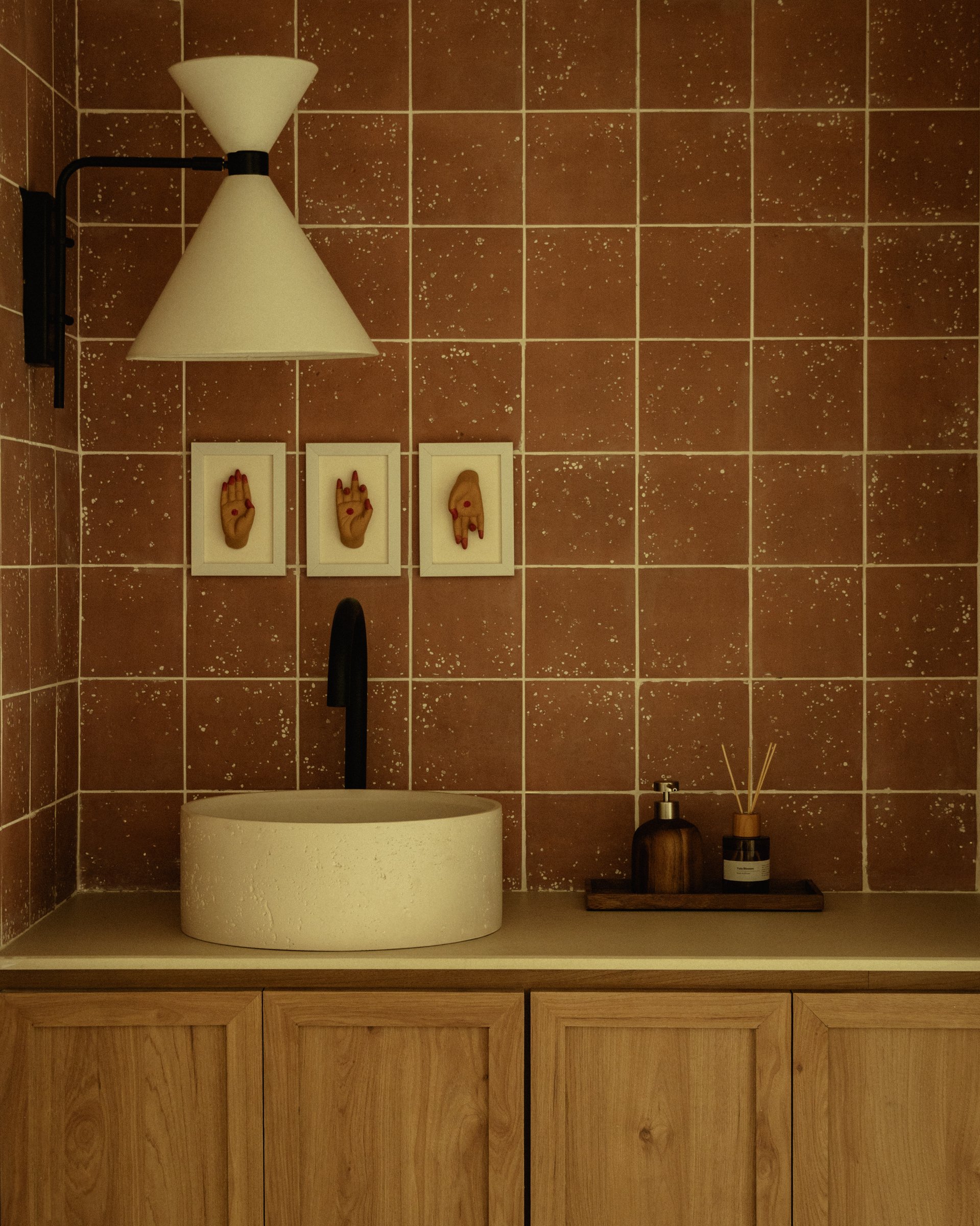
The powder room carries the home’s most assertive material expression. Terracotta-toned speckled tiles envelop the walls, punctuated by three framed sculptural studies of hands depicting Bharatanatyam mudras. A rounded cream basin rests above wood-panelled cabinetry, while black fittings and a black-and-cream double-cone sconce bring graphic definition to the otherwise warm composition.
The reference is also deeply personal, drawing from a family member’s childhood training in classical dance. Yet it is handled with enough restraint to avoid becoming overtly nostalgic: the mudras are integrated as sculptural objects rather than illustrative symbols. Within the home’s smallest room, the gesture becomes a concise expression of Hêpah’s larger idea – that memory can inform an interior without becoming its dominant narrative.
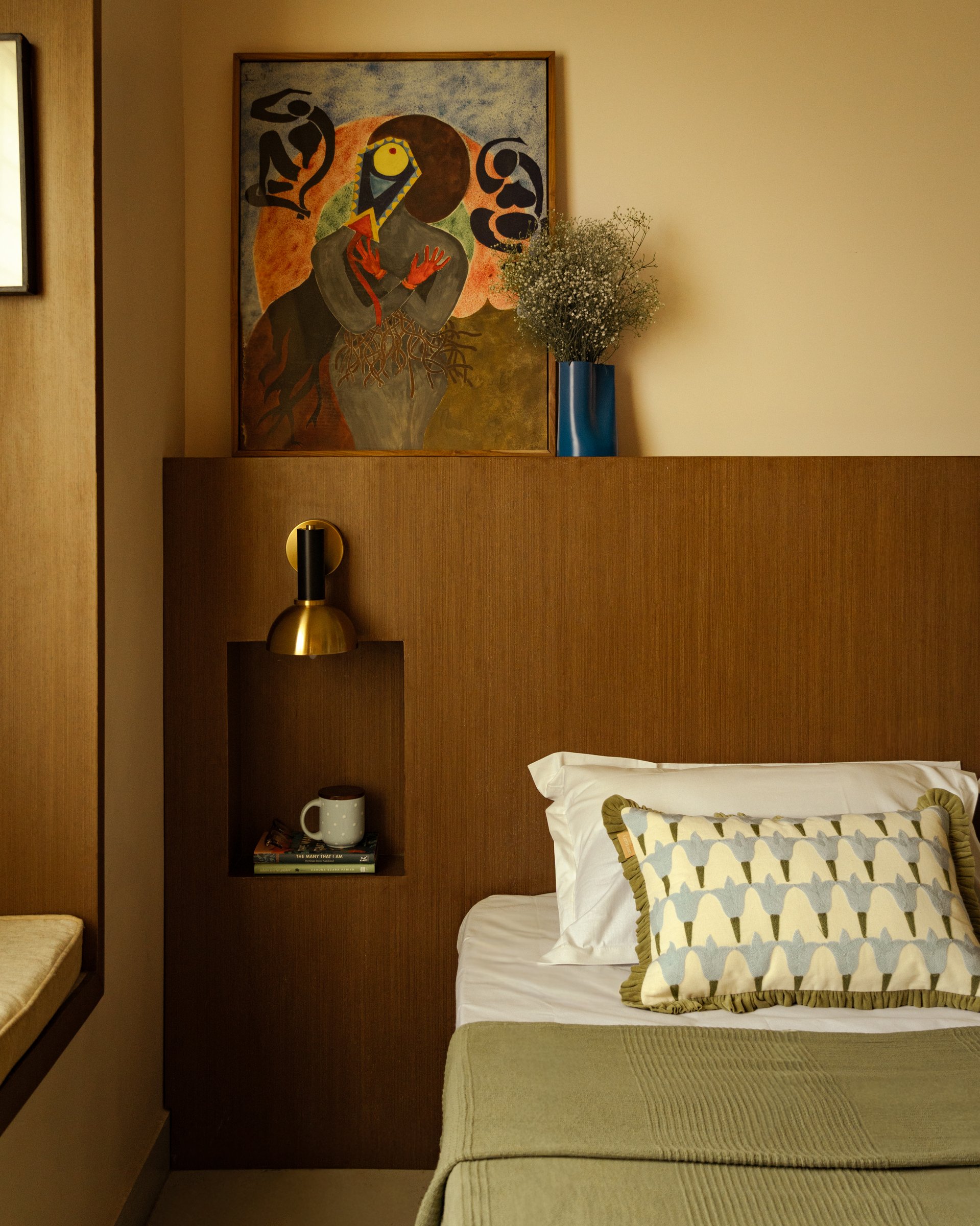
The daughter’s bedroom shifts into a warmer, more enveloping register. A wood-panelled headboard wall gives the room its visual weight, incorporating a recessed shelf with a brass table lamp. Together, the layered timber and textiles create a room that feels intimate and composed without losing the understated character of the wider home.
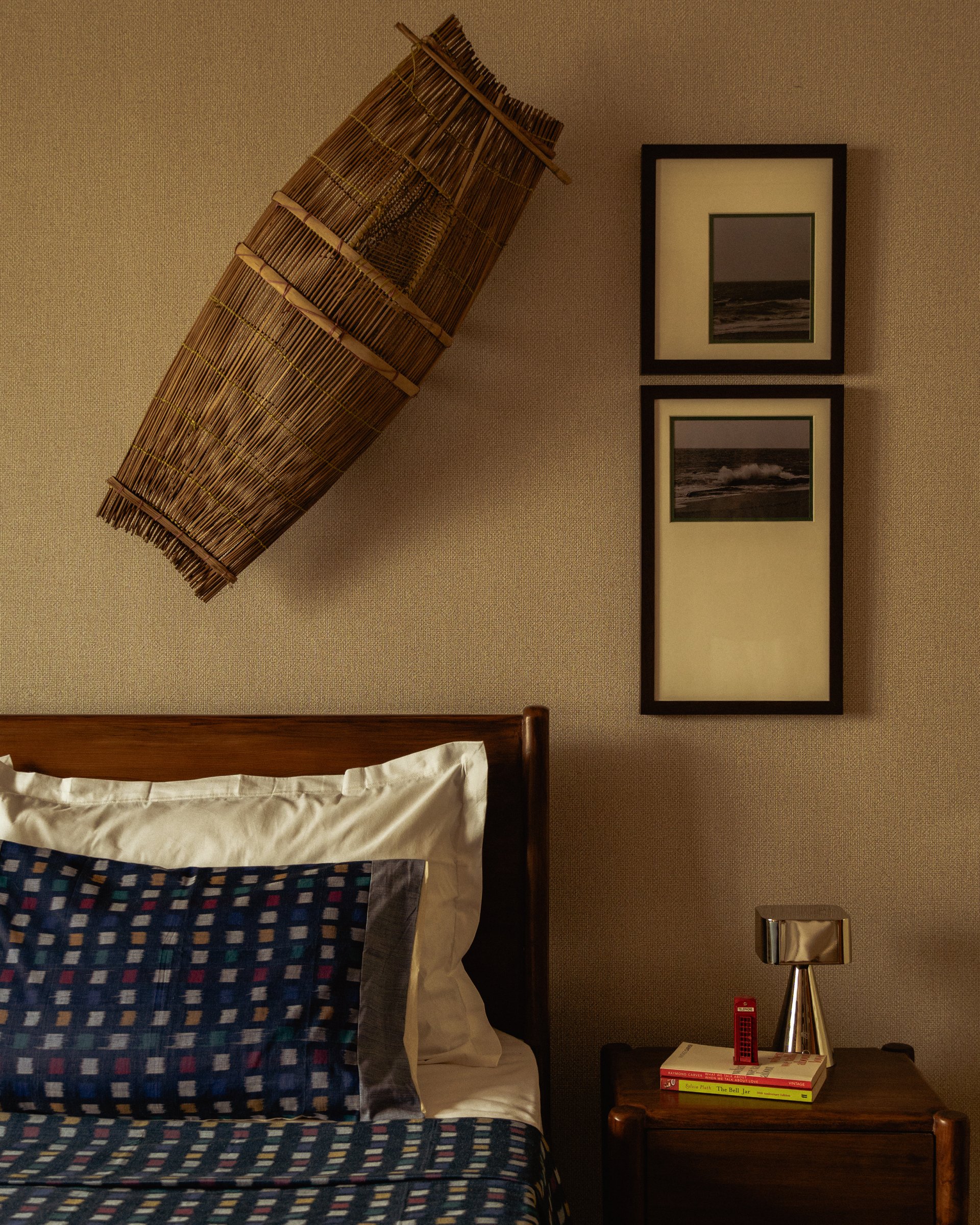
In the parents’ bedroom, a woven bamboo Sepa fishing net is mounted against a fabric-textured wall, flanked by two smaller photographs of coastal landscapes. Below, a dark-wood headboard anchors the bed. Presented intact rather than reinterpreted, the Sepa retains its identity as an object of craft, its significance heightened simply through placement within the room.
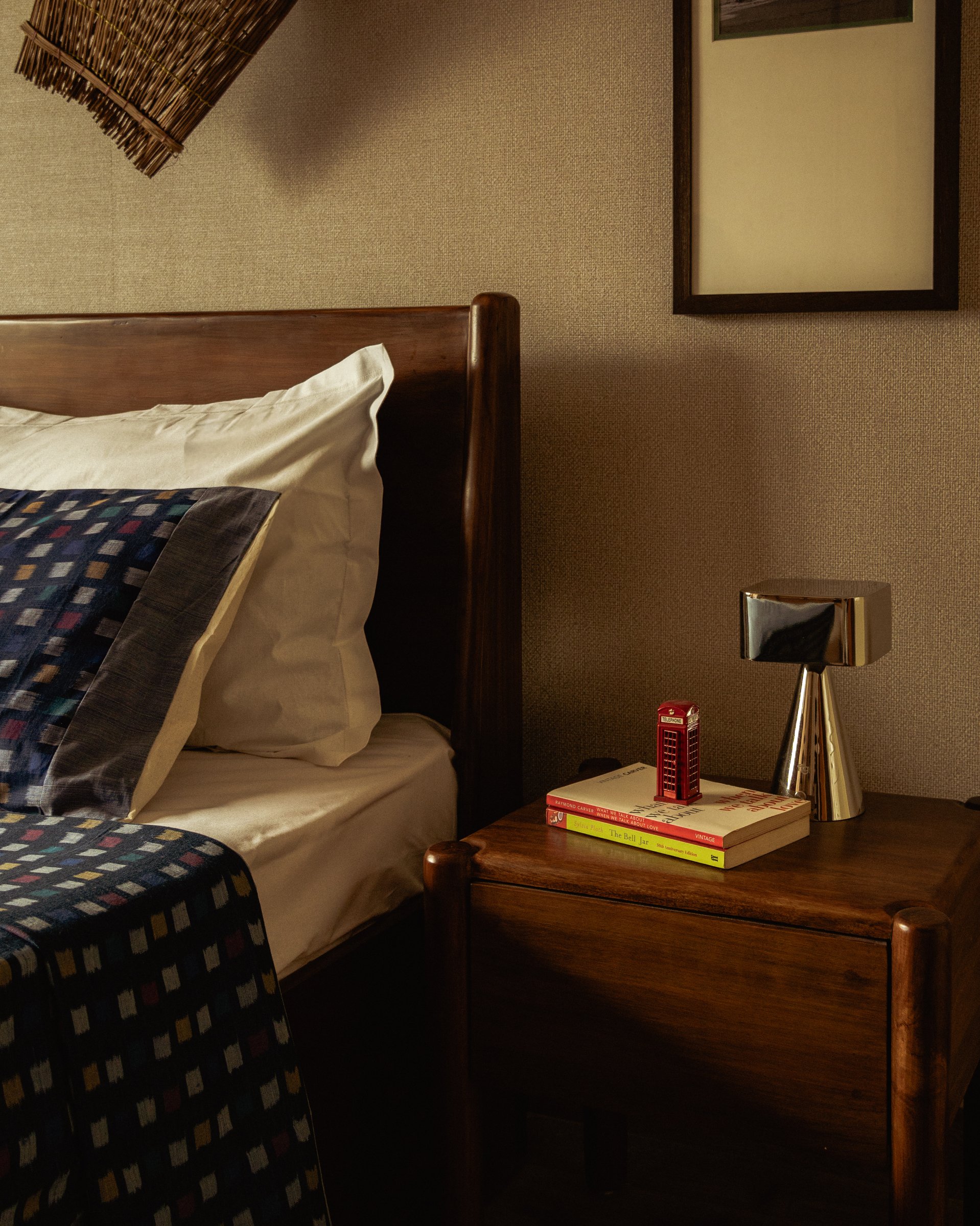
Alongside the bed, a wooden nightstand continues the restrained furniture language seen throughout the residence. Together with the Sepa above the headboard, it allows a distinctly Assamese object to sit within the same contemporary material vocabulary that shapes the rest of the home, connecting heritage and everyday function without forcing a contrast between the two.
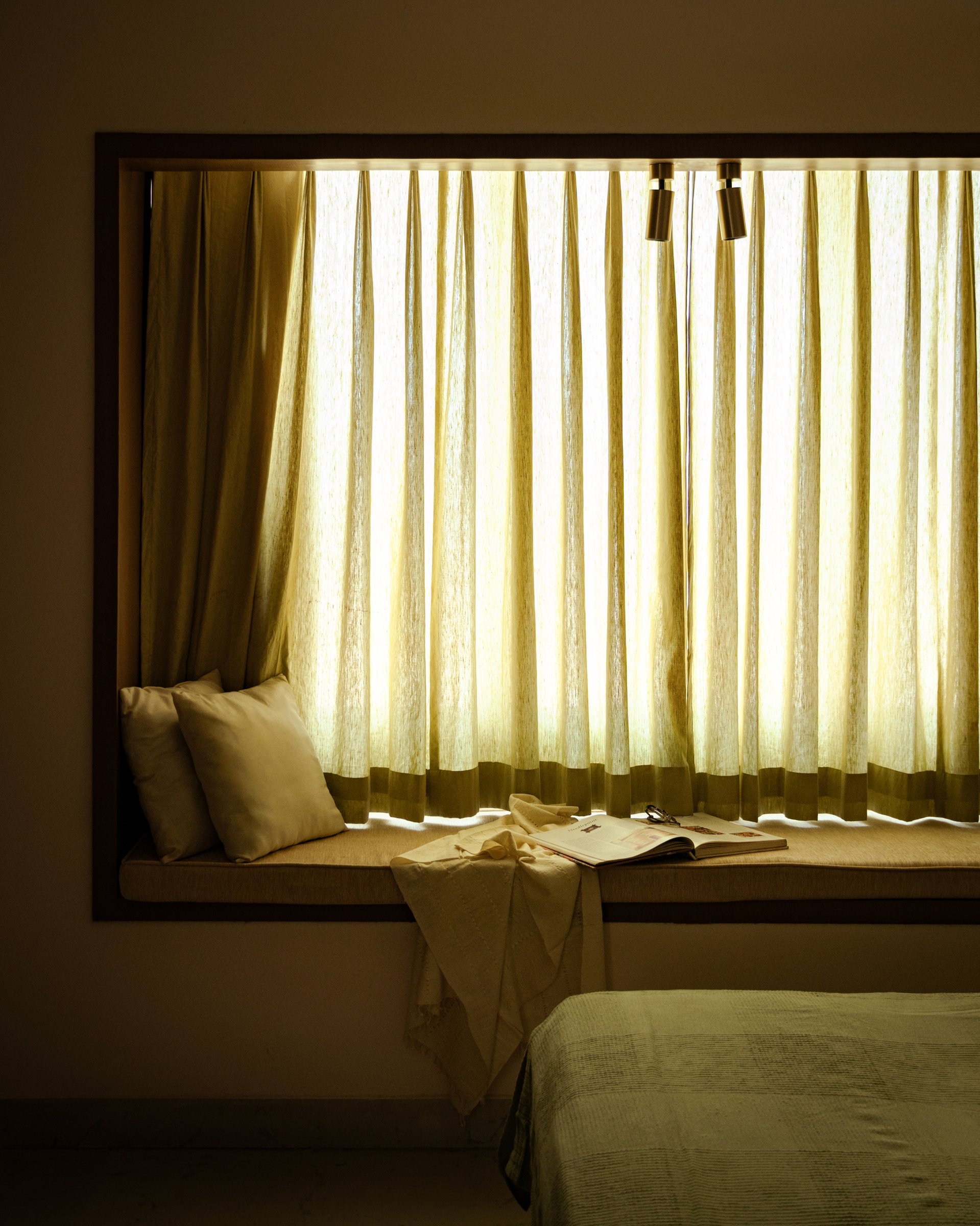
A window seat creates a quieter moment, upholstered in warm beige and layered with cream cushions beneath a broad window framed by golden linen sheers.
What Two Pickled Studio achieves with Hêpah is a more nuanced reading of regional identity, one that treats inheritance as instinct rather than reference. Founded between Chennai and Assam, the young practice resists both the familiar visual shorthand of the ethnic-modern interior and the placelessness of global minimalism. Instead, the home participates in a contemporary design conversation emerging from Guwahati, where Assamese material culture is being reconsidered through the realities of present-day living.
Much of the residence’s strength lies in what it chooses not to over-articulate. Handloom punch cards, a fishing net, a bamboo dola and a moda are given their place without being transformed into decorative motifs or burdened with explanation. For a family negotiating cultural continuity within a contemporary way of life, Hêpah proposes a confident middle ground: one in which memory and the everyday can occupy the same rooms, without either being diminished by the other.