There is a particular kind of interior that refuses to choose between memory and modernity, treating the two not as opposing forces but as instruments tuned to the same room. This Cairo pied-à-terre, conceived by architect Yasmina Makram, belongs to that quieter category. Rather than perform its heritage, it lets it settle into the grain of the walls, the arc of a chair, the reflection caught in a mirrored surface at dusk.
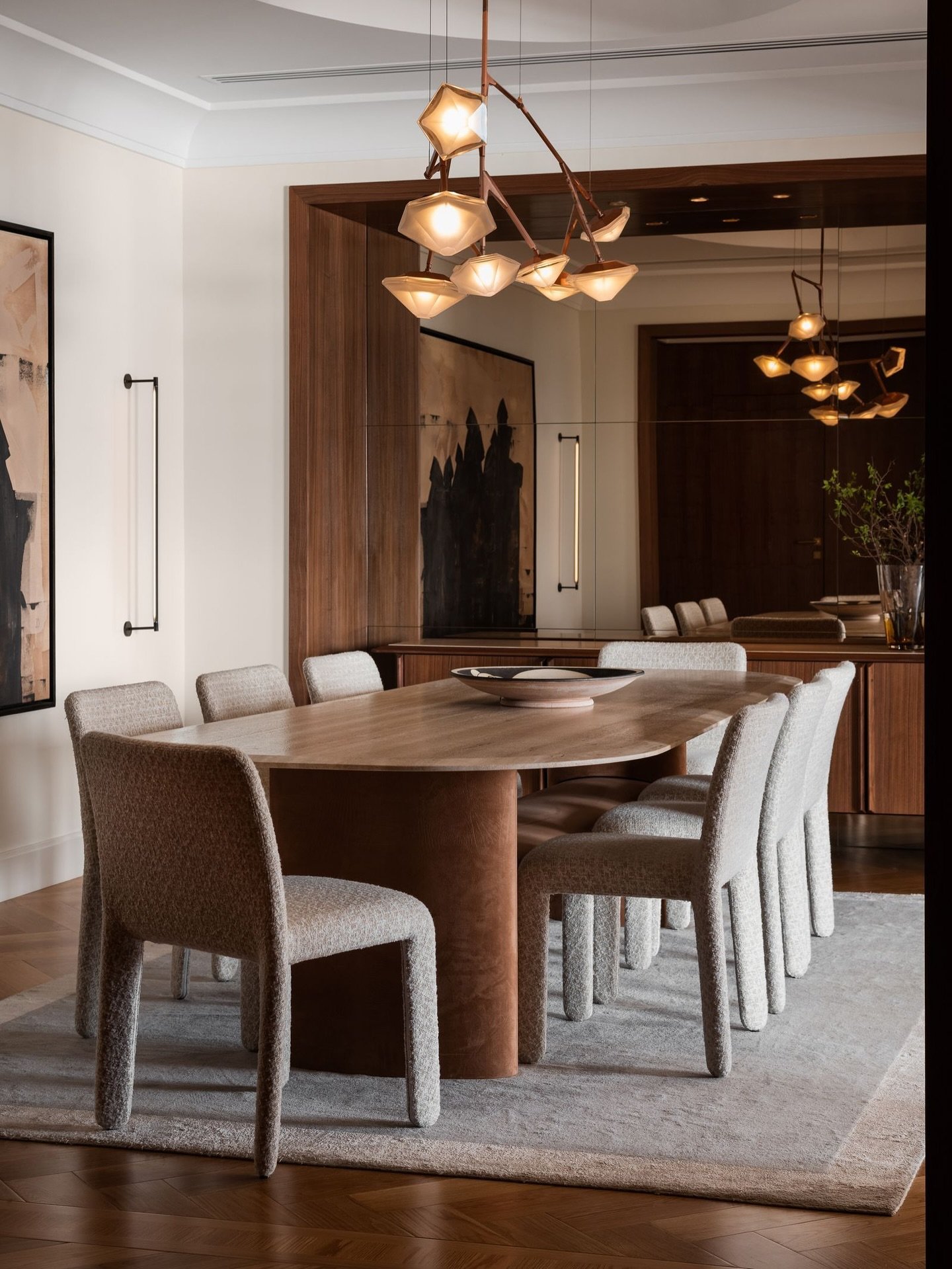
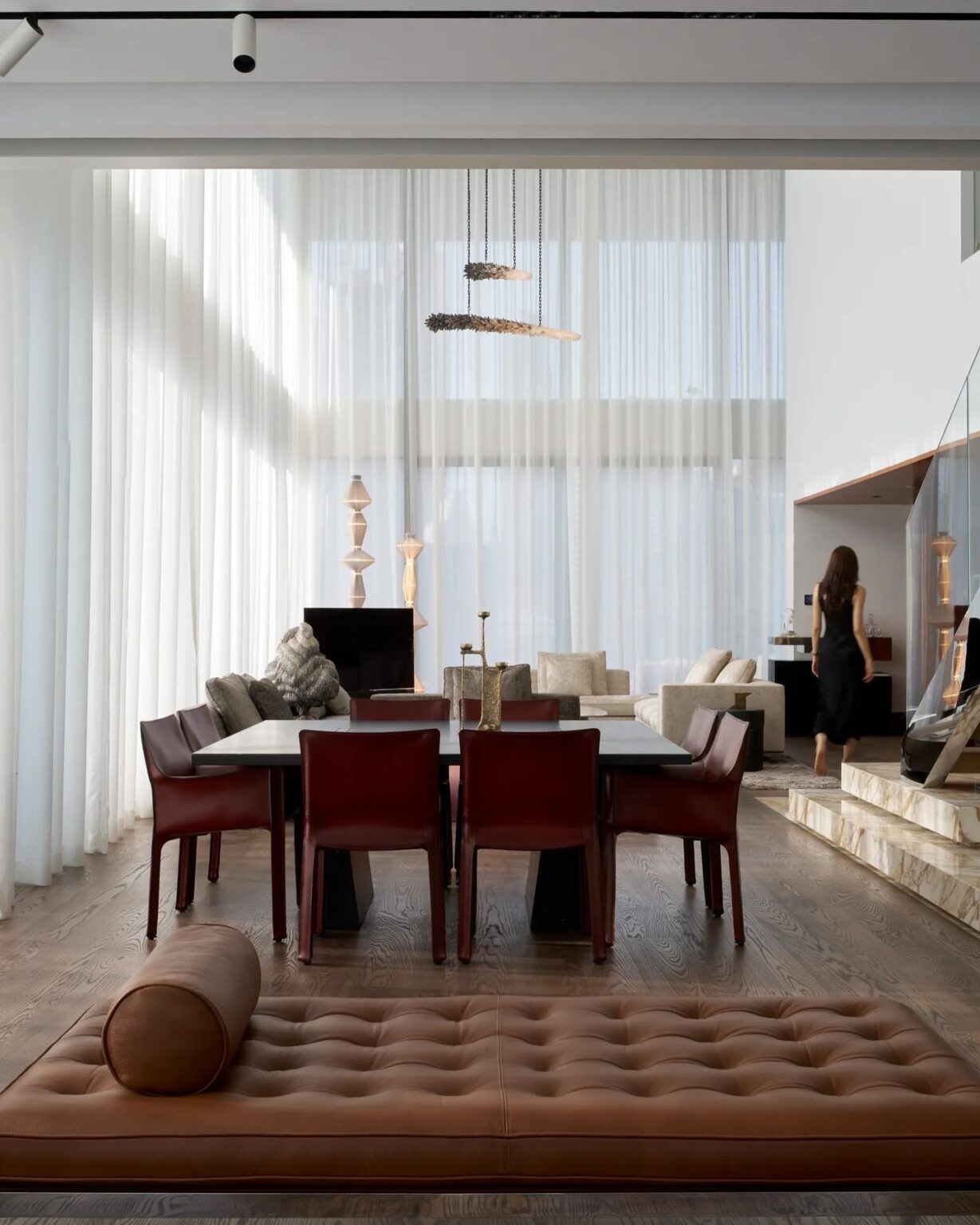
The dining room announces the residence’s governing sensibility with restraint rather than declaration. A long oval walnut table anchors the room on a pale grey rug, its warmth met by eight boucle-upholstered chairs whose curved backs soften the geometry of the space.
Overhead, a branching brass chandelier scatters a warm, faceted light across the surface, echoed by a second fixture glimpsed through a mirrored opening beyond. Walnut panelling and herringbone flooring establish a tonal continuity that feels less like decoration and more like architecture remembering itself.
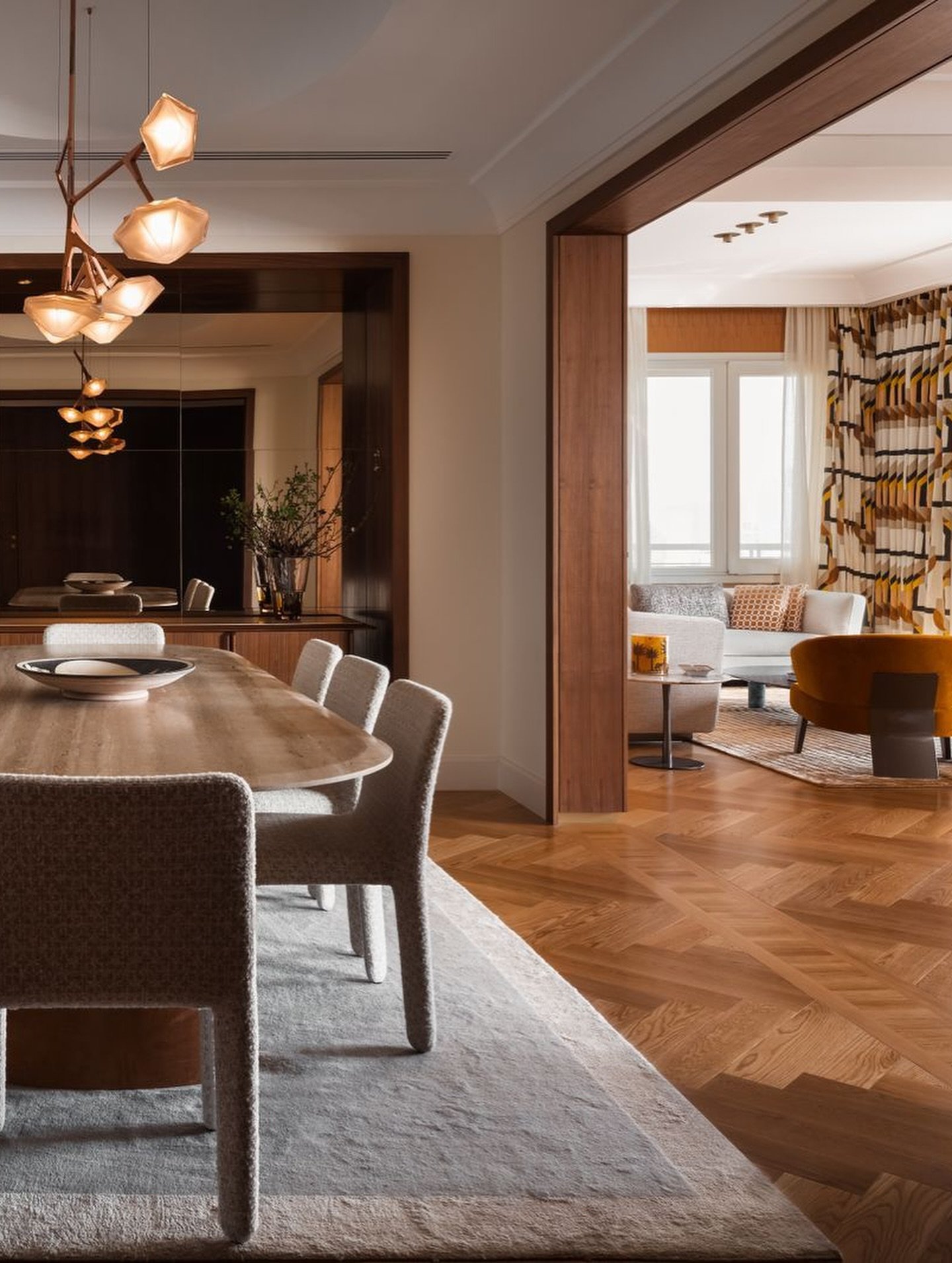
Adjacent to it, a corner vignette makes the apartment’s spatial thinking legible. The dining table is framed by a walnut opening that draws the eye toward a mustard-toned armchair and a boldly patterned curtain in the living room beyond. The mirrored wall on the left doubles the room’s depth, catching a console and a floral arrangement in its reflection, not as spectacle, but as a quiet layering of one room into another. The herringbone floor threads the two zones together with an almost cinematic continuity.
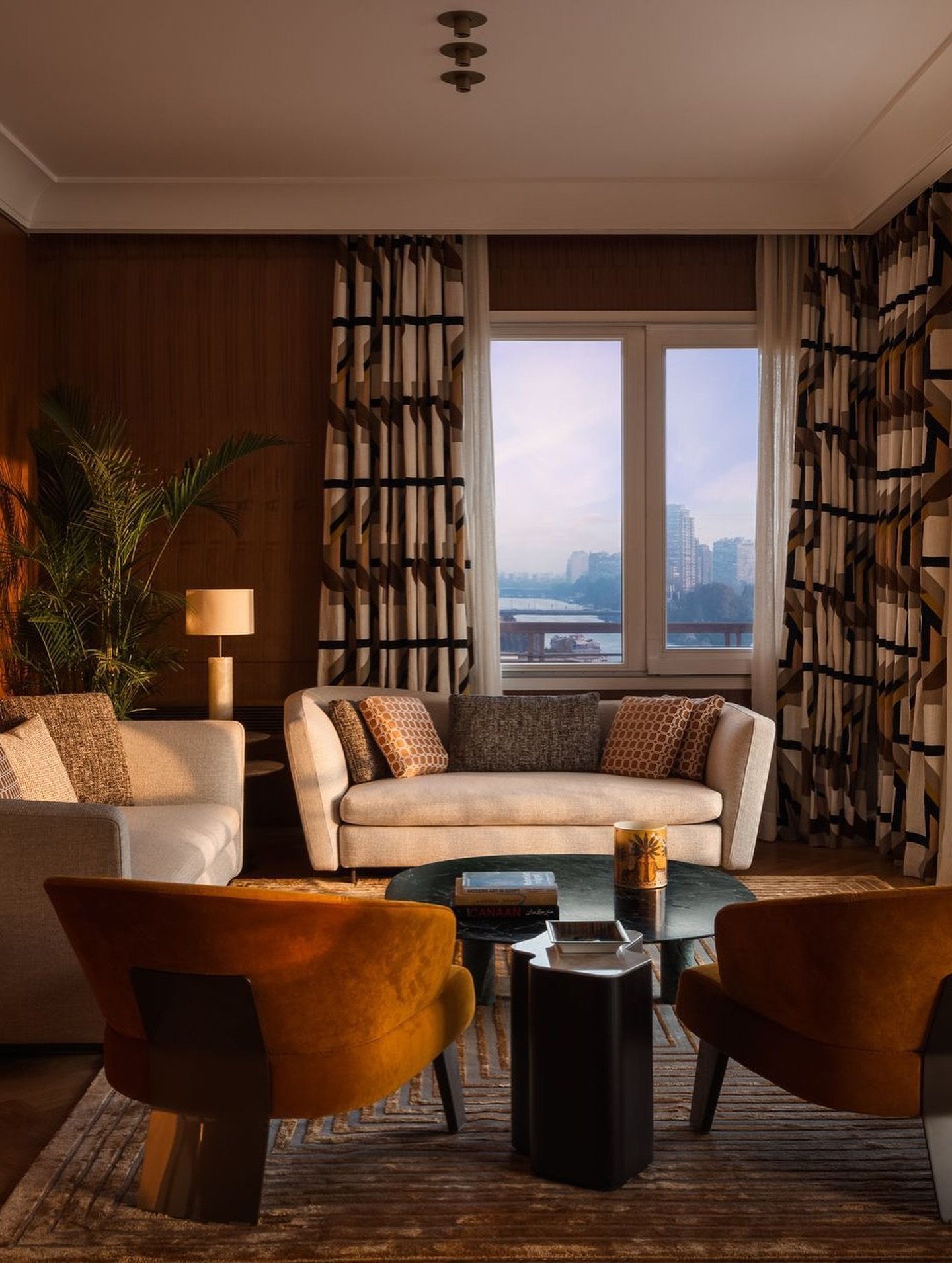
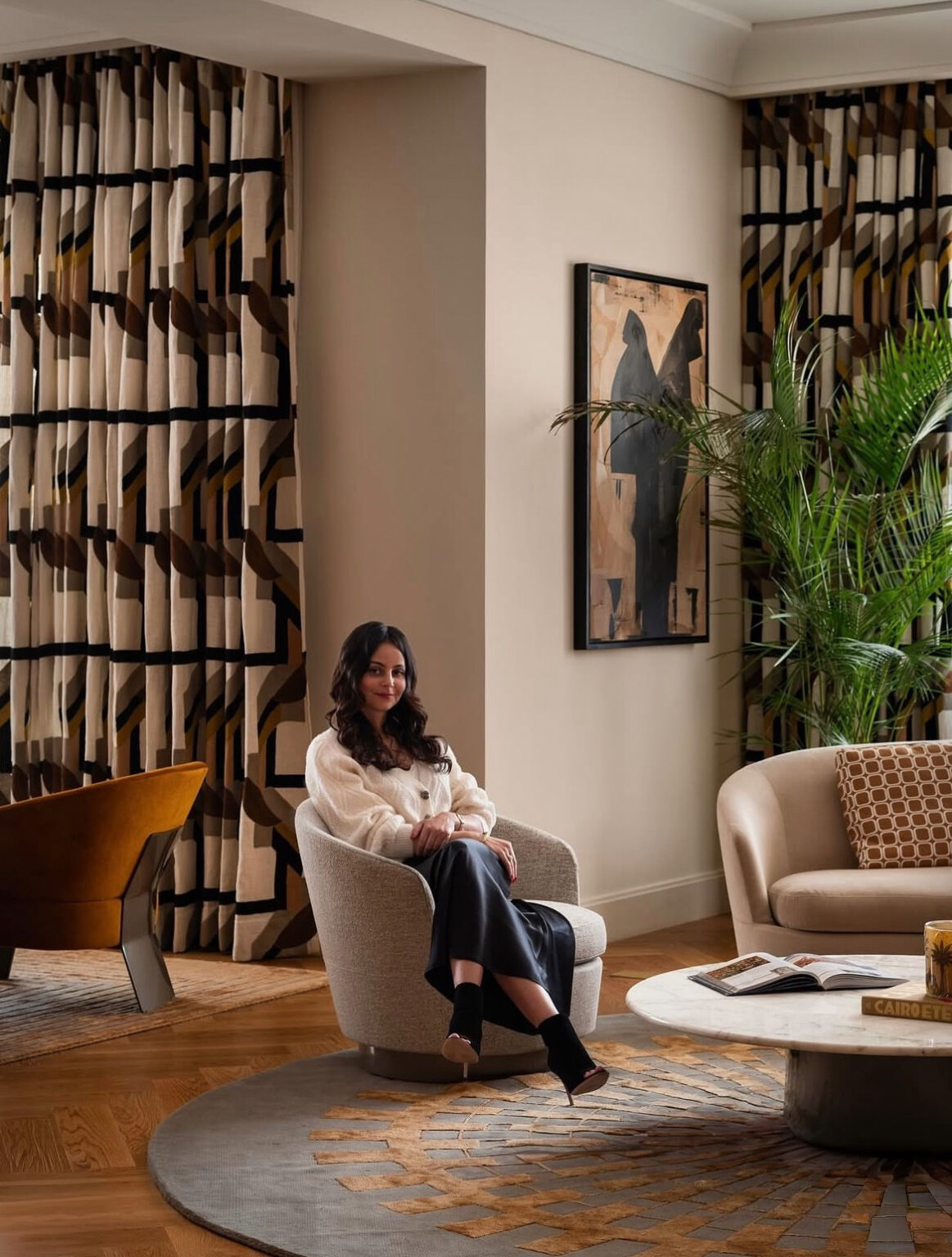
In the living room, the palette warms into dusk. A cream sofa and two curved burnt-orange velvet chairs gather around a dark stone coffee table, while bold geometric curtains in black, cream, and brown frame a hazy view of the Nile. The warm wood-panelled wall and a potted palm give the composition its grounding weight. What could easily tip into drama is instead calibrated, the graphic curtain answered by the softness of upholstery, the cool blue of the evening sky by the interior’s amber glow.
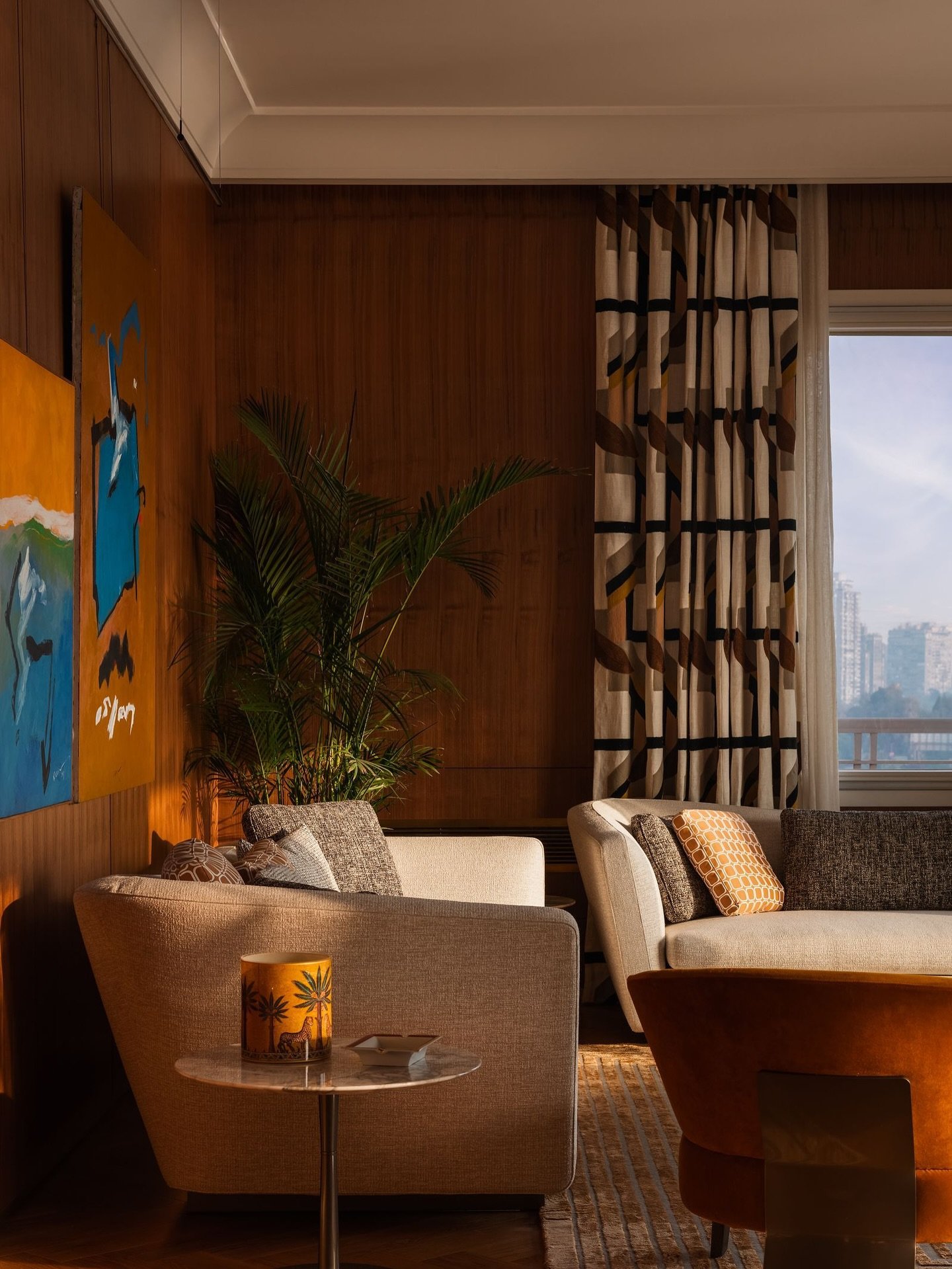
A quieter corner of the same room shows the design’s patience with atmosphere. Low sun rakes across wood-panelled walls, where two abstract paintings hang between a cream sofa and a rust-velvet armchair. A potted palm mediates the composition, and the patterned curtain returns as a graphic counterpoint. Here, the architecture is not asked to perform; it is asked to hold light.
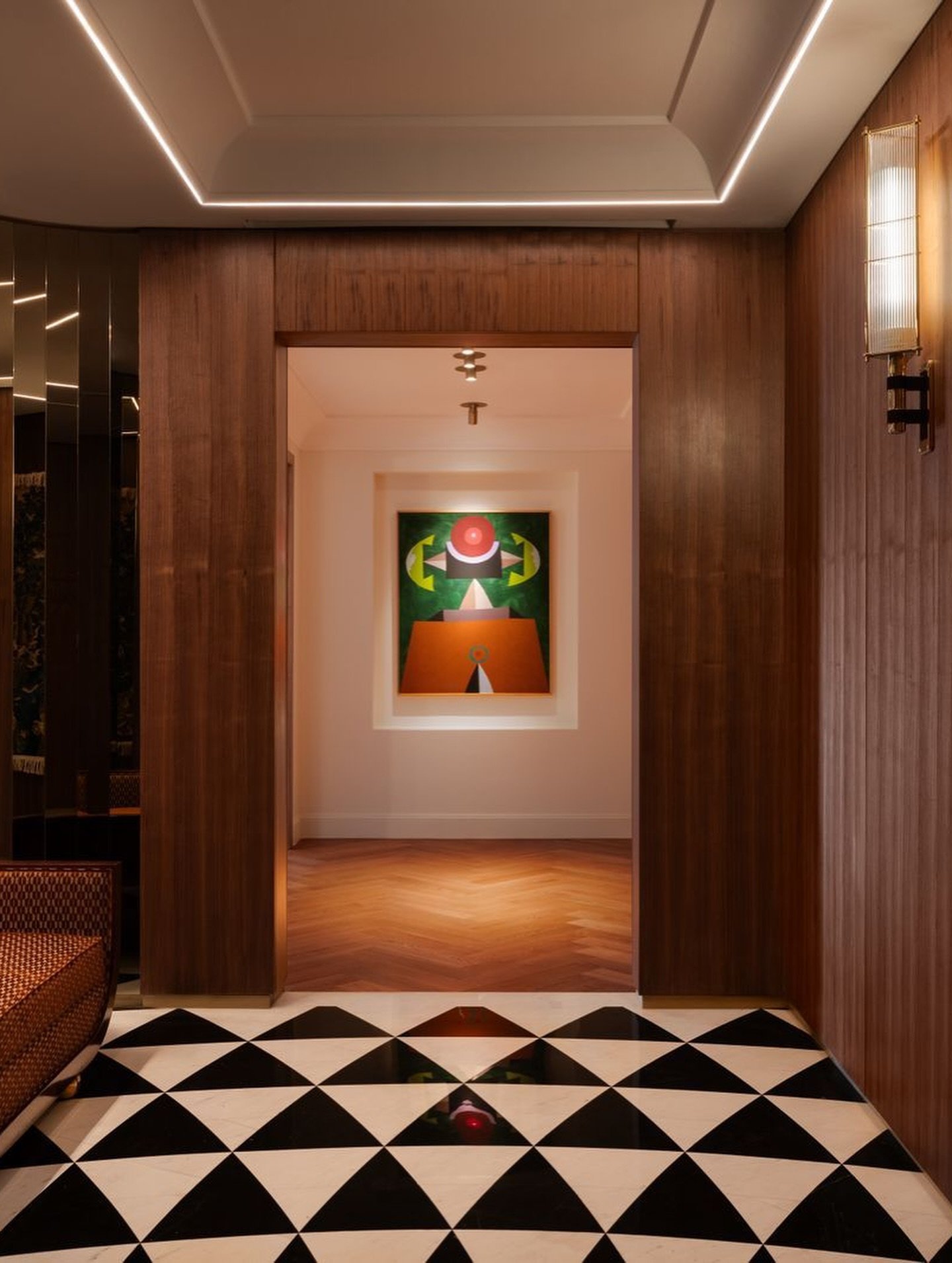
Between rooms, a wood-clad corridor stages one of the home’s most deliberate spatial gestures. A bold black-and-white triangular marble floor draws the eye along the axis toward a further room finished in herringbone parquet, where a recessed niche holds a geometric painting. Cove lighting traces the ceiling perimeter and a fluted brass sconce anchors the wall, lending the passage a layered, almost theatrical depth. It is a threshold that behaves like a proposition, a claim that movement through the home is itself part of its material narrative.
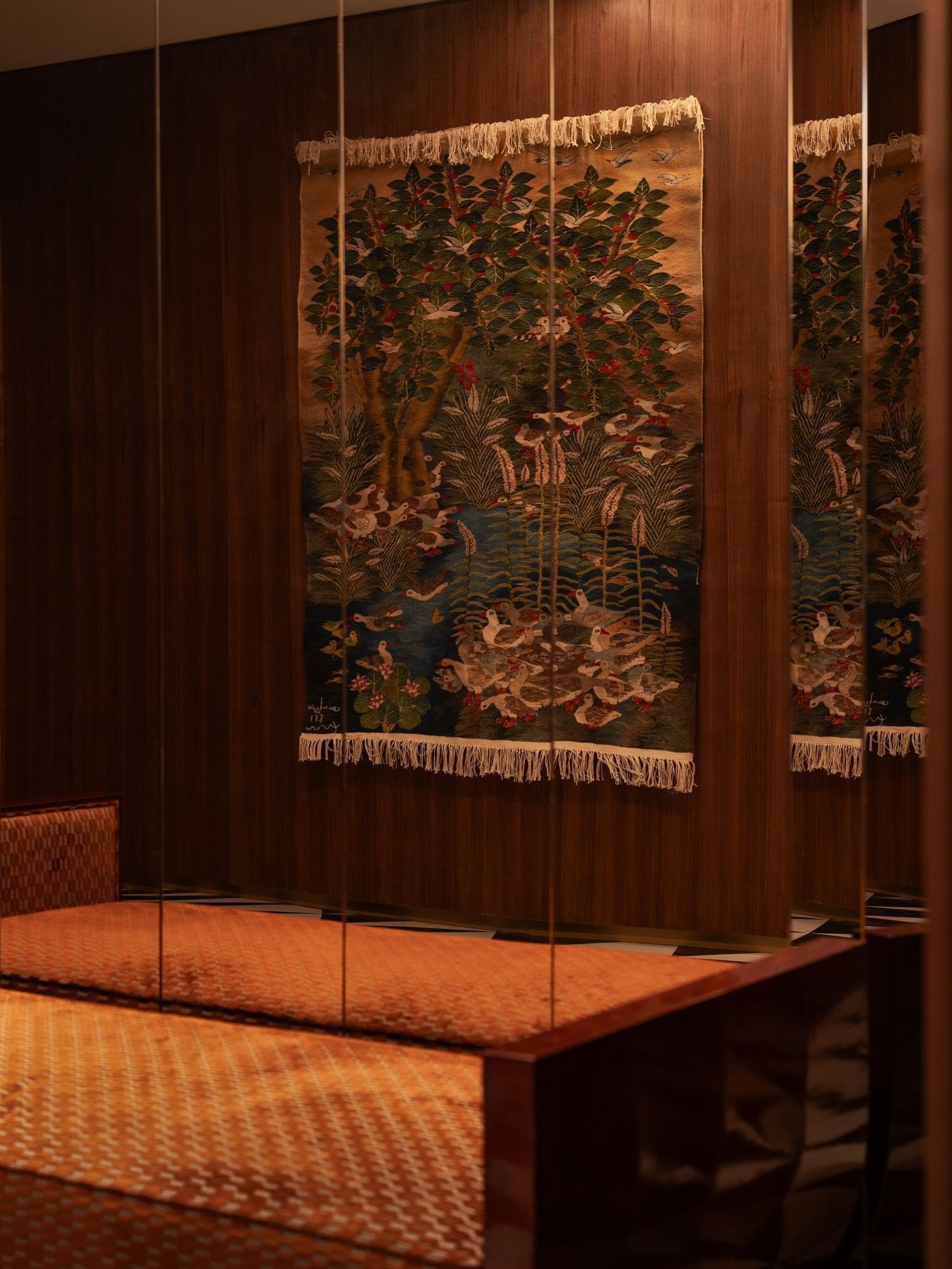
Vertical wood panelling frames a woven tapestry, its muted greens and creams answered by the rust-orange weave of the seating. Thin mirrored strips split the composition into repeated slivers, so that legacy, literal and figurative, is folded into the wall itself. It is here that the apartment’s central idea becomes most explicit: that Egyptian memory need not be quoted to be present. It can be woven, reflected, panelled, lit. What emerges is not a homage to heritage but a home that carries it, dramatic without excess, luxurious without noise.
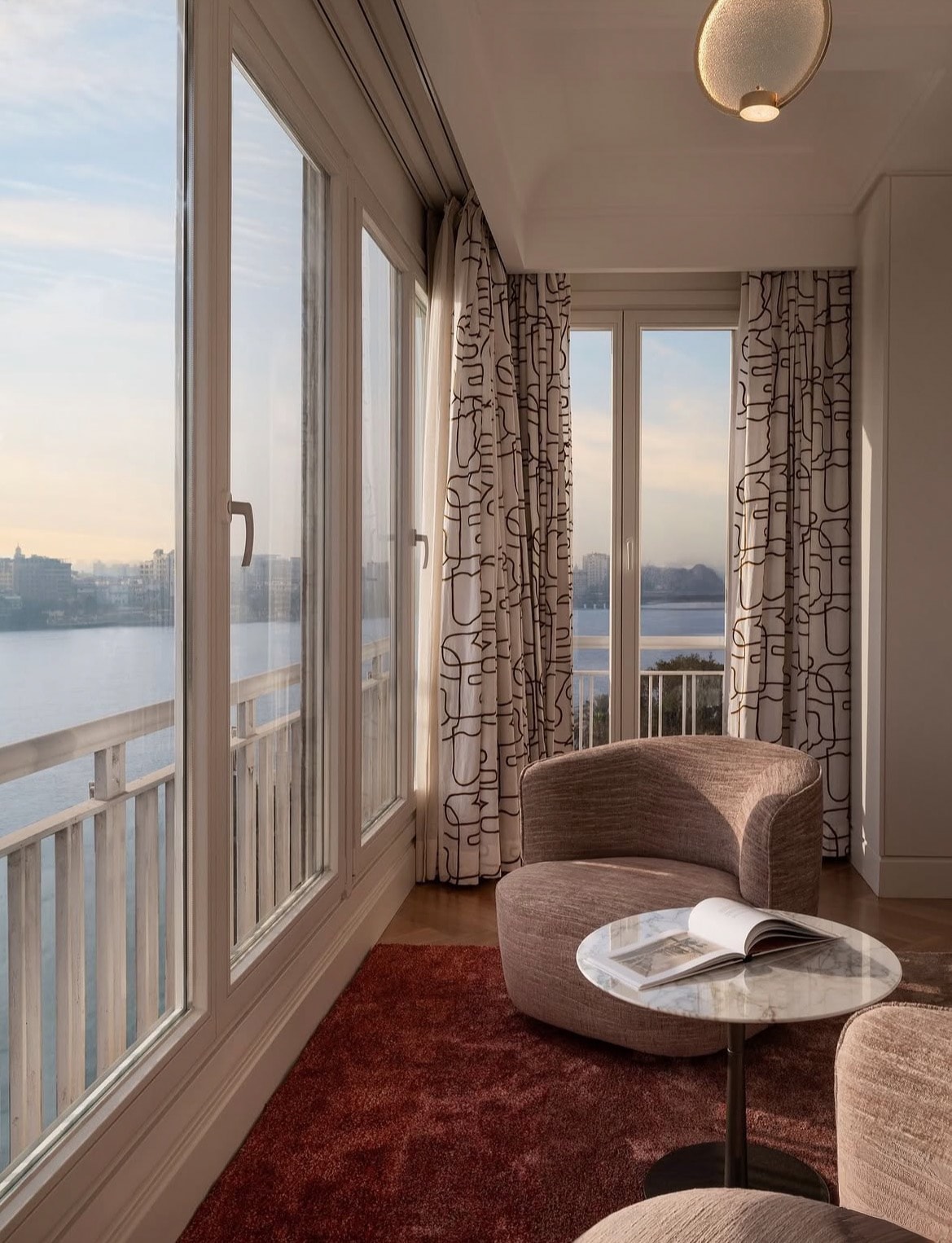
Elsewhere, a seating nook turns toward the river with unhurried composure. A softly curved armchair in warm taupe sits on a deep rust rug, paired with a slender marble-topped side table holding an open book. Patterned drapes soften the light on either side of the floor-to-ceiling window, and afternoon sun casts long reflections across the wood floor. The corner is small but complete, the kind of space that inhabits its occupant rather than the other way around.
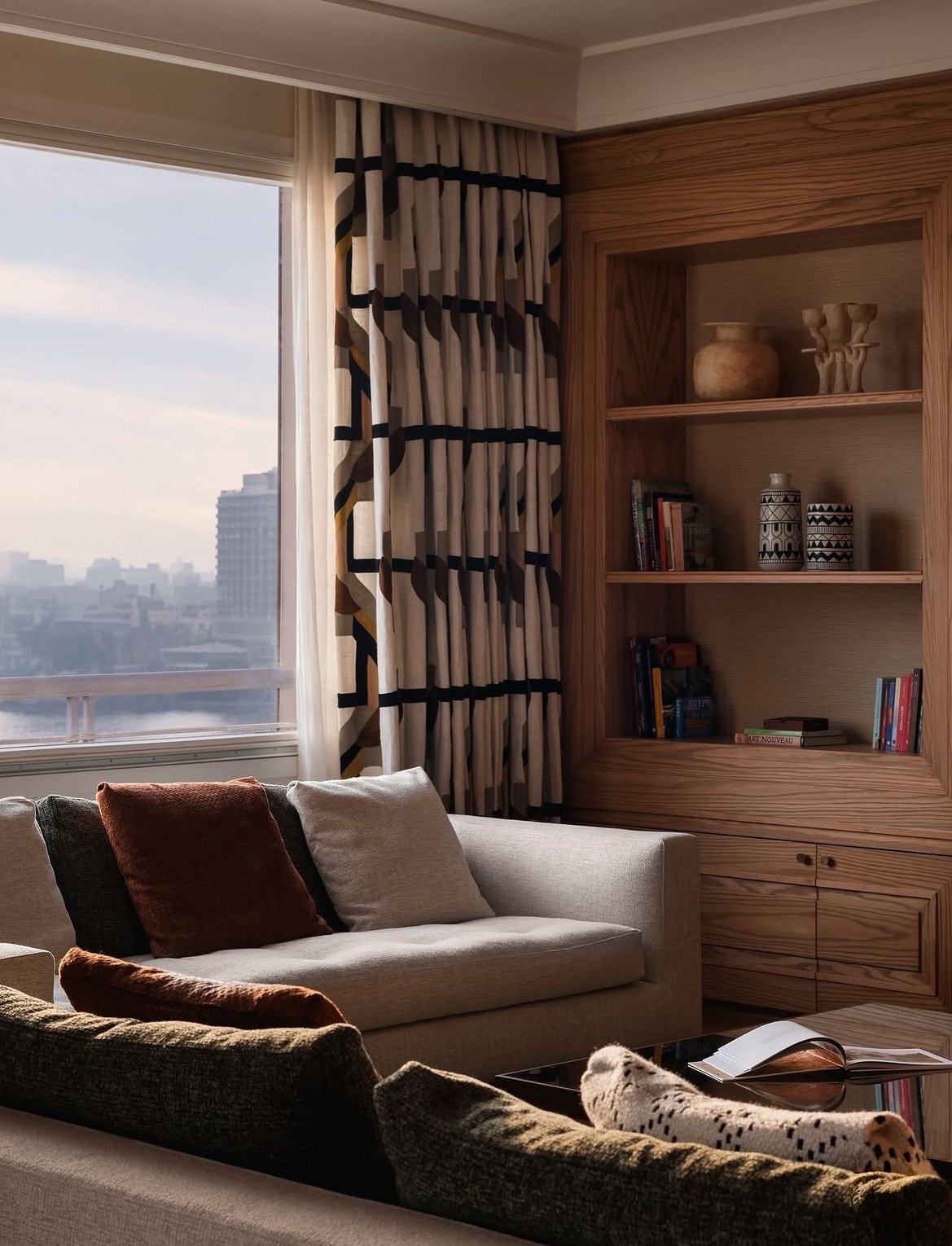
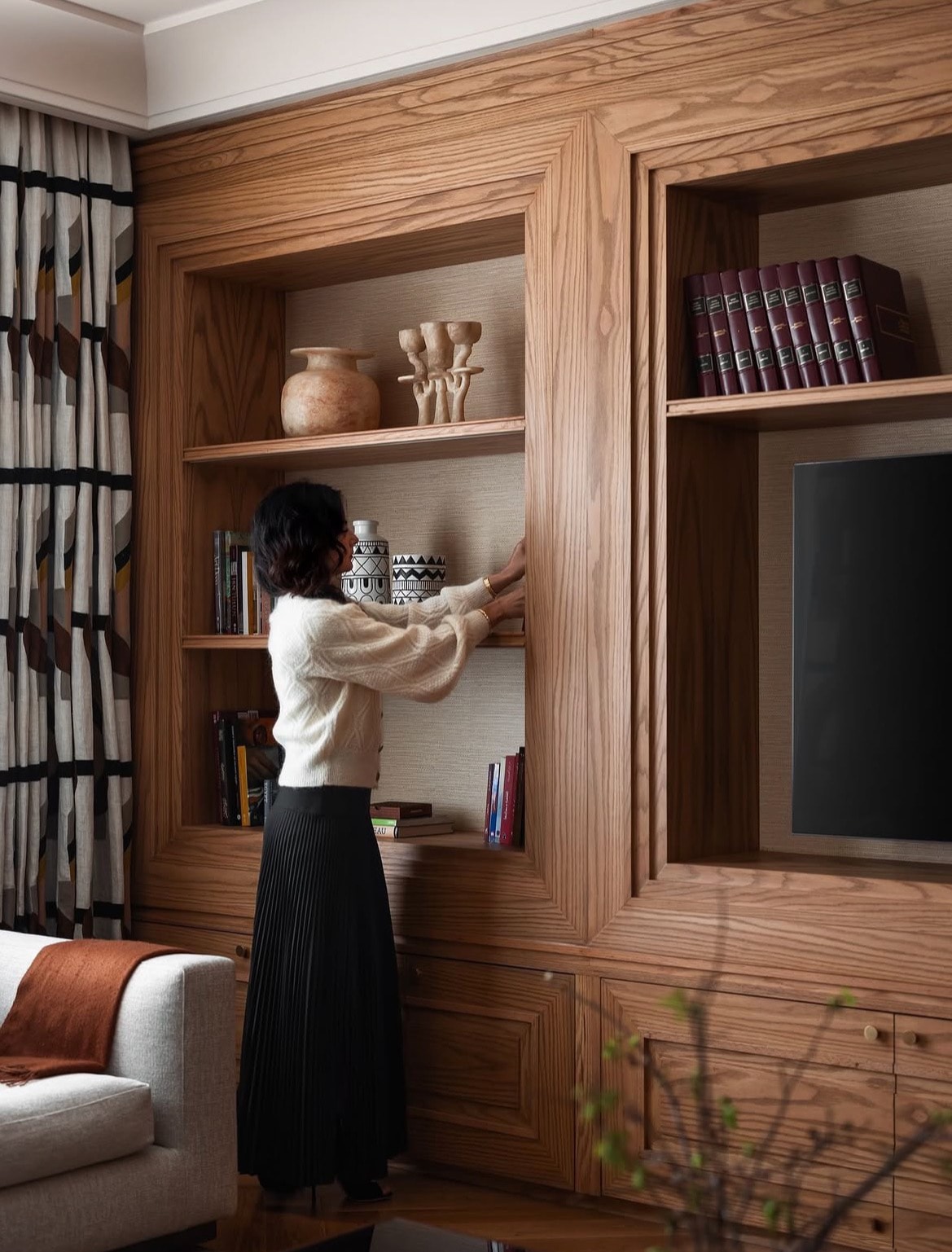
Along one wall of the tv room, floor-to-ceiling walnut joinery turns storage into architecture. Deep, framed niches hold books, ceramics and sculptural objects against textured back panels, while concealed cabinetry below keeps the composition measured and uncluttered. The pronounced grain and stepped detailing give the installation an almost monumental presence, yet its proximity to the window prevents it from feeling heavy. Beside it, graphic Pierre Frey curtains frame the Nile, bringing pattern into dialogue with the warmth and order of the timber.
More than a display wall, the library reveals how Makram uses material continuity to give the apartment its sense of permanence. Walnut moves beyond surface treatment to become an organising device, wrapping walls, defining openings and accommodating the objects of everyday life.
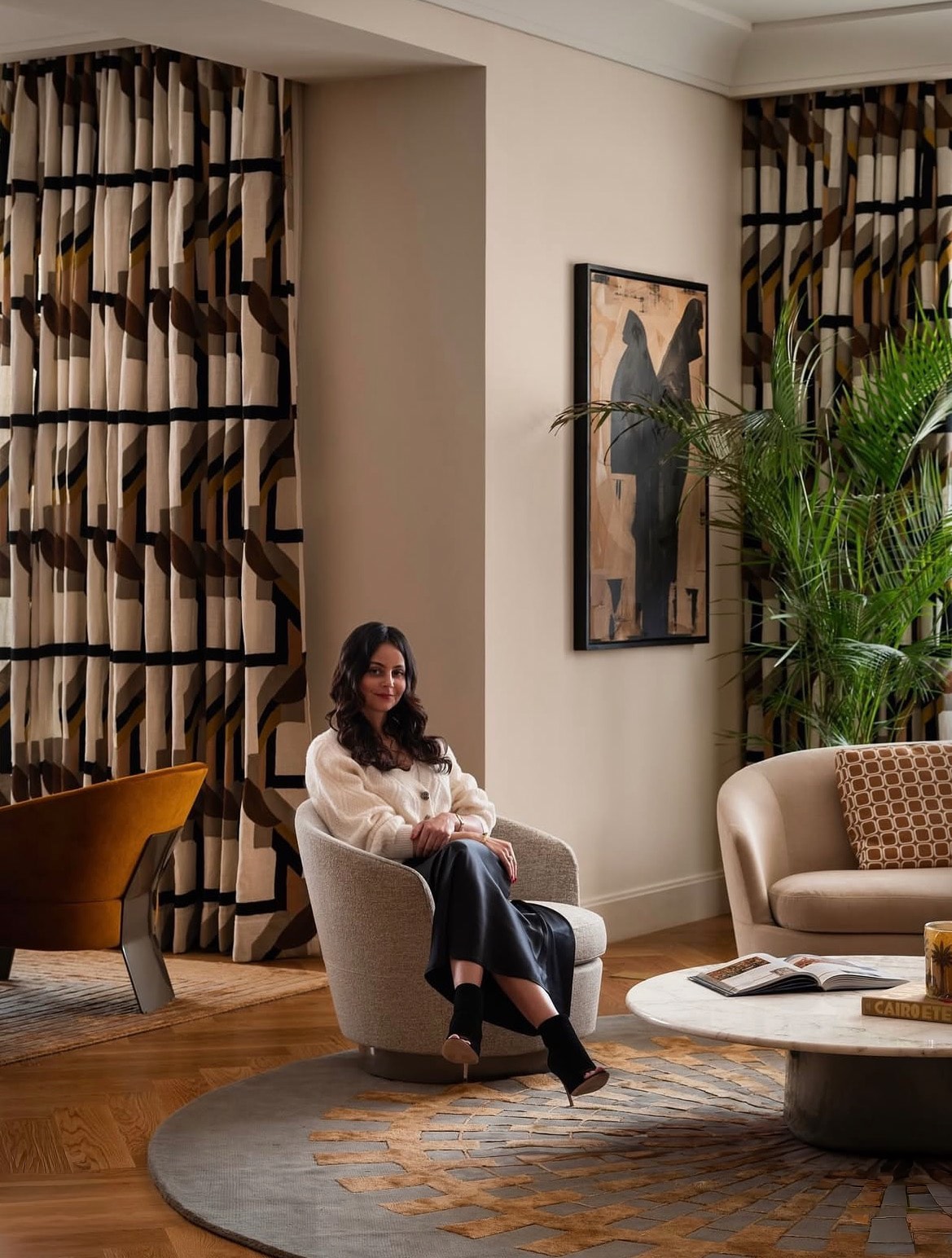
What Yasmina Makram ultimately achieves is a residence that treats heritage not as a visual reference but as an underlying sensibility. Egyptian identity is present without being literal, carried through material, proportion, pattern and atmosphere rather than recognisable motifs. Walnut, brass, marble, velvet and mirrored surfaces build a language that feels rooted yet distinctly contemporary, allowing the apartment to belong as convincingly to present-day Cairo as it does to the longer cultural memory of the city.
In that sense, the pied-à-terre offers a compelling argument for what contemporary luxury in the region can become when it moves beyond both nostalgia and spectacle. Its richness lies not in accumulation, but in the precision with which rooms connect, materials recur and light transforms them over the course of a day. Against the Nile and the shifting Cairo sky, the home feels neither preserved in memory nor determined to escape it. Instead, it occupies the more interesting territory between the two, where history becomes something to live with rather than simply look back upon.