A café is often asked to perform: to signal a brand, to accelerate turnover, to package hospitality into an image. The more interesting brief is quieter, and rarer, which is to slow the visitor down until the meal becomes the reason for the room rather than the room becoming the setting for the meal.
SOLEA, an Ahmedabad café designed by Parekh Architects, takes this second path. Spread across 1,725 sq. ft., the project by Pal Parekh, Vidhi Shah, and Yug Parekh imagines the café as a small building embedded in an arboretum, its walls treated less as barriers than as porous membranes between the diner and the greens outside. The result is an interior conceived around the sensation of an Indian spring, calibrated to encourage slow-paced meals and unhurried conversation.
The studio describes the ambition simply.
““The walls were no longer imagined as barriers, but as portals to connect to the greens.””
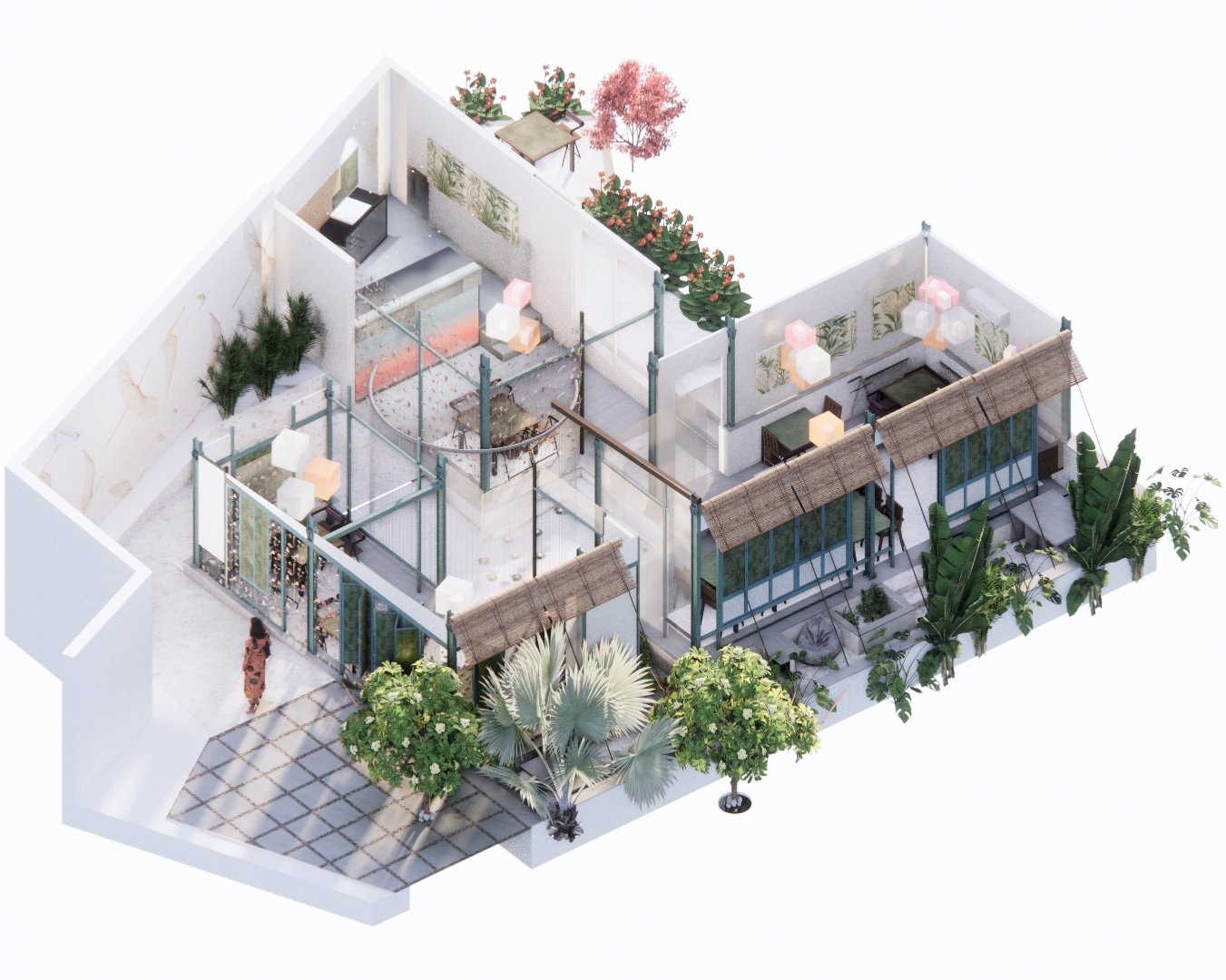
The isometric drawing reveals the choreography behind the project: a compact volume framed in teal-green steel, wrapped by planting on every edge, with a circular water feature at its heart and a series of glazed and screened openings that dissolve the perimeter. Rather than treating landscape as decoration, the plan integrates it as an equal spatial element, blooming beyond every window.
Arrival begins on a note of quiet ceremony.
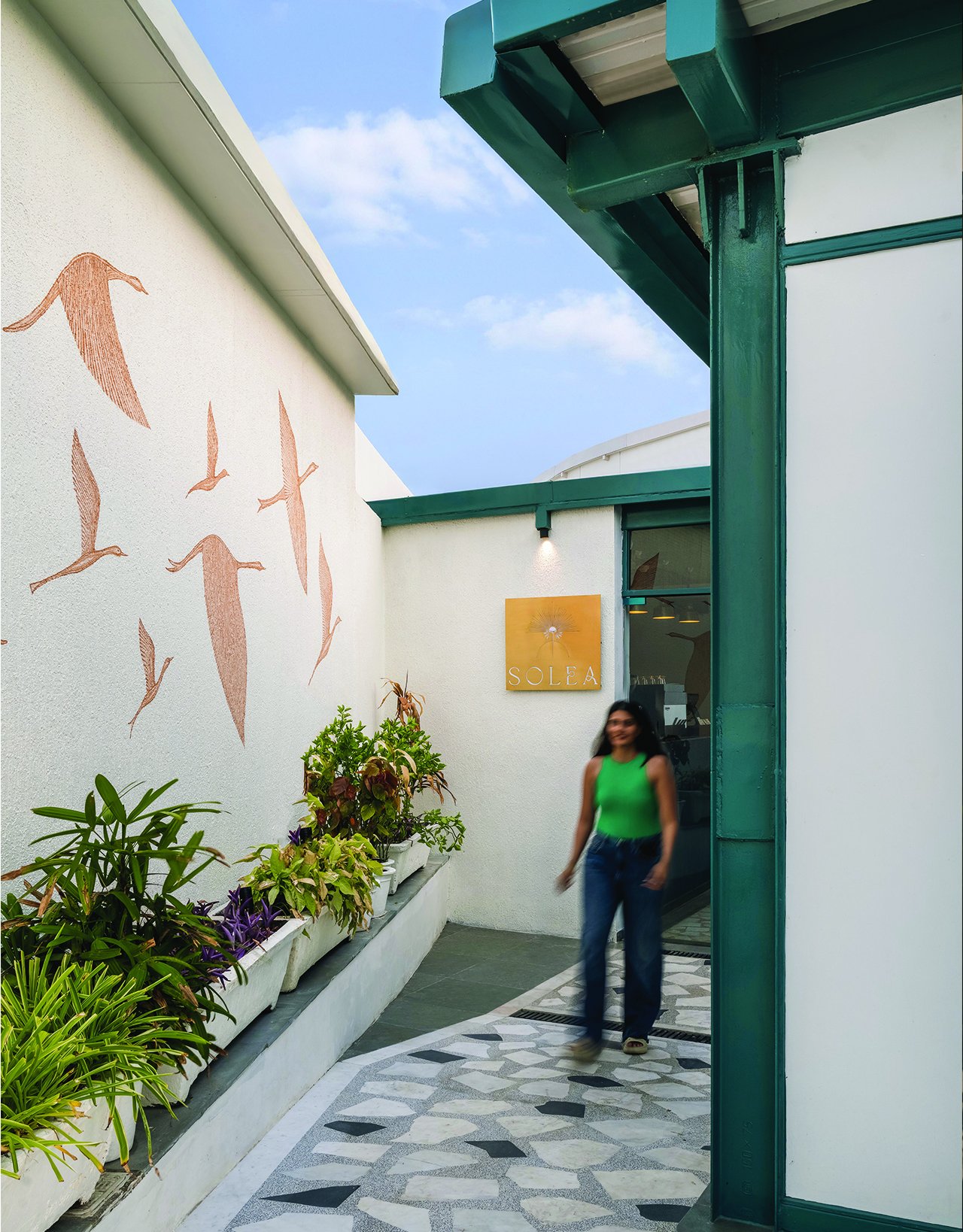
The approach continues through a narrow open-air passage that reinforces the arboretum idea before the café proper is entered. A trough planter runs along one wall, layering foliage , while the mural extends the crane motif overhead.
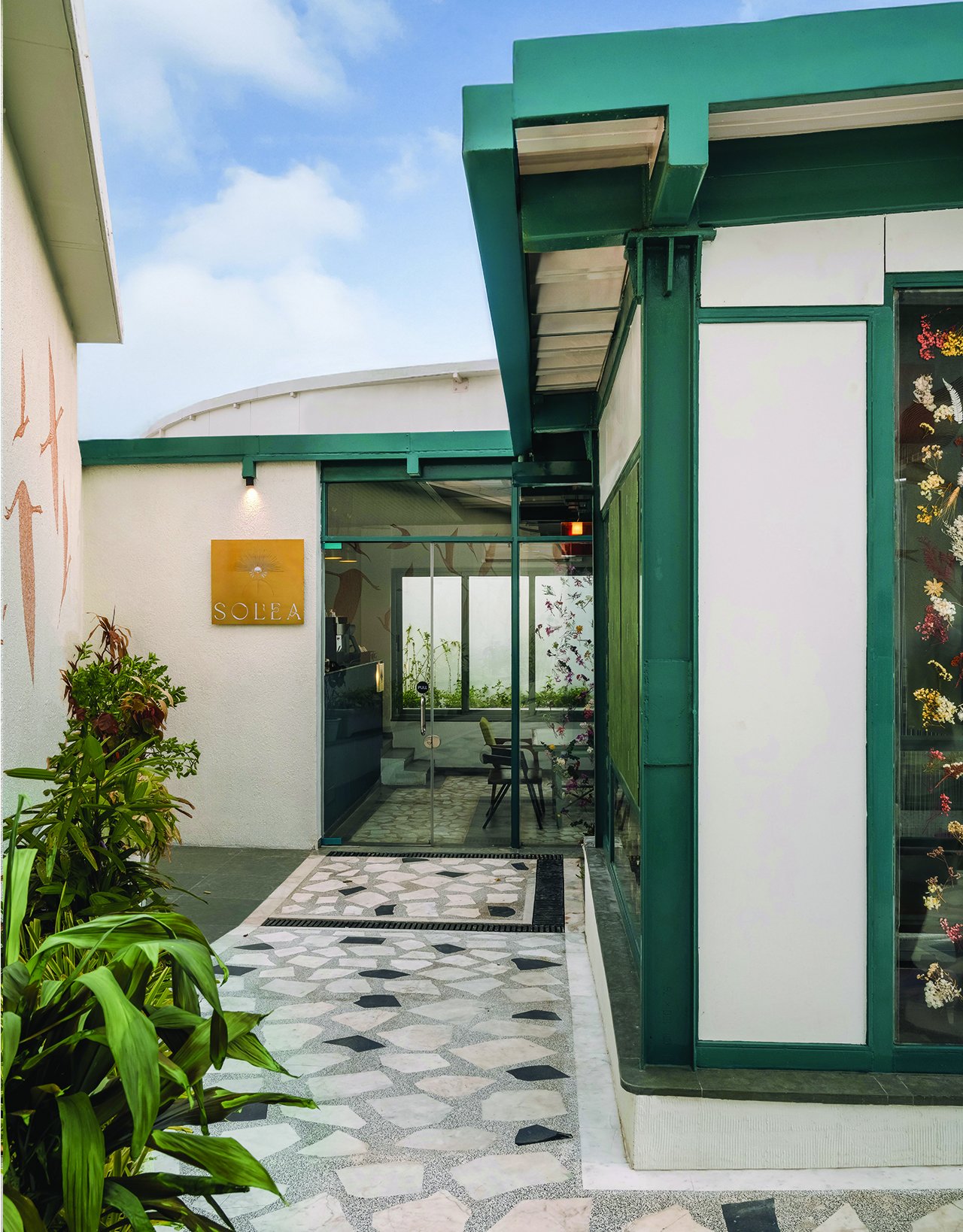
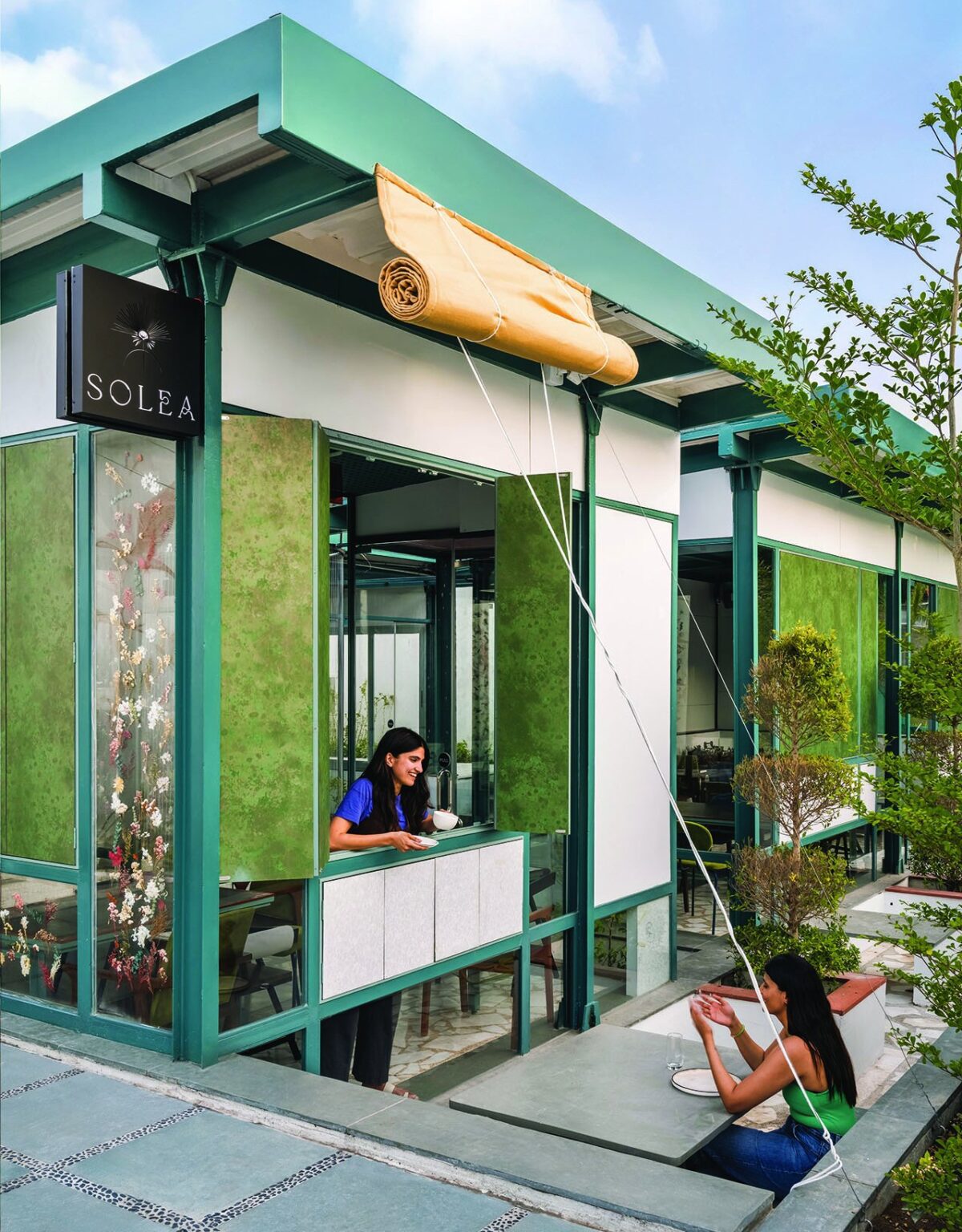
At the threshold, the crazy-paved marble walkway meets the tealed steel-and-glass shell of the café. The signage sits modestly against a plastered wall rather than on the façade itself, allowing the architecture and planting to introduce the space before graphic identity does.
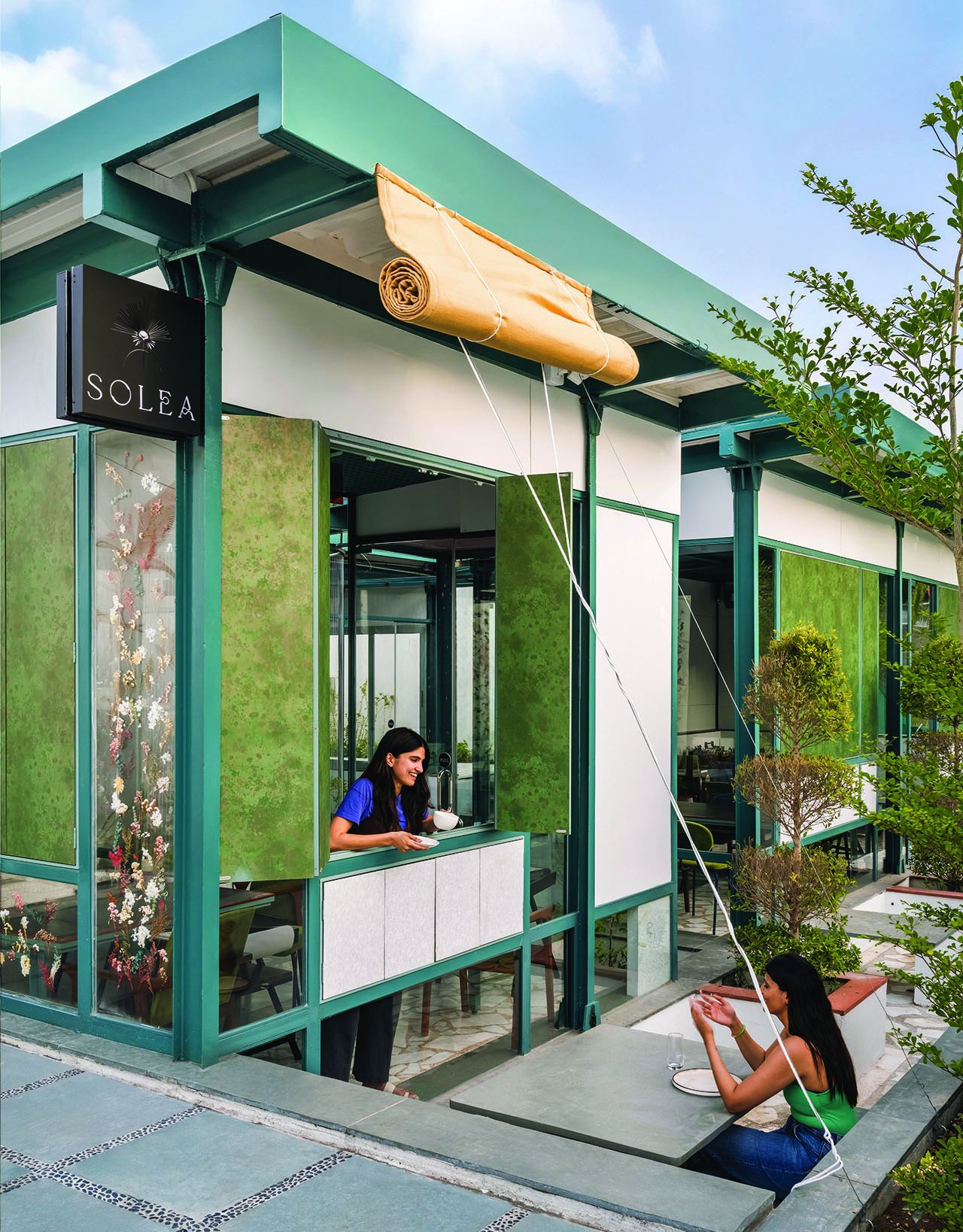
The façade reads as a rhythmic sequence of tealed steel columns framing panels of green-tinted textured glass, dried-flower-embedded glass, and openable windows. A rolled canvas awning suggests the outdoor sit-out can shift with the season, extending the café’s boundary outward whenever the weather allows.
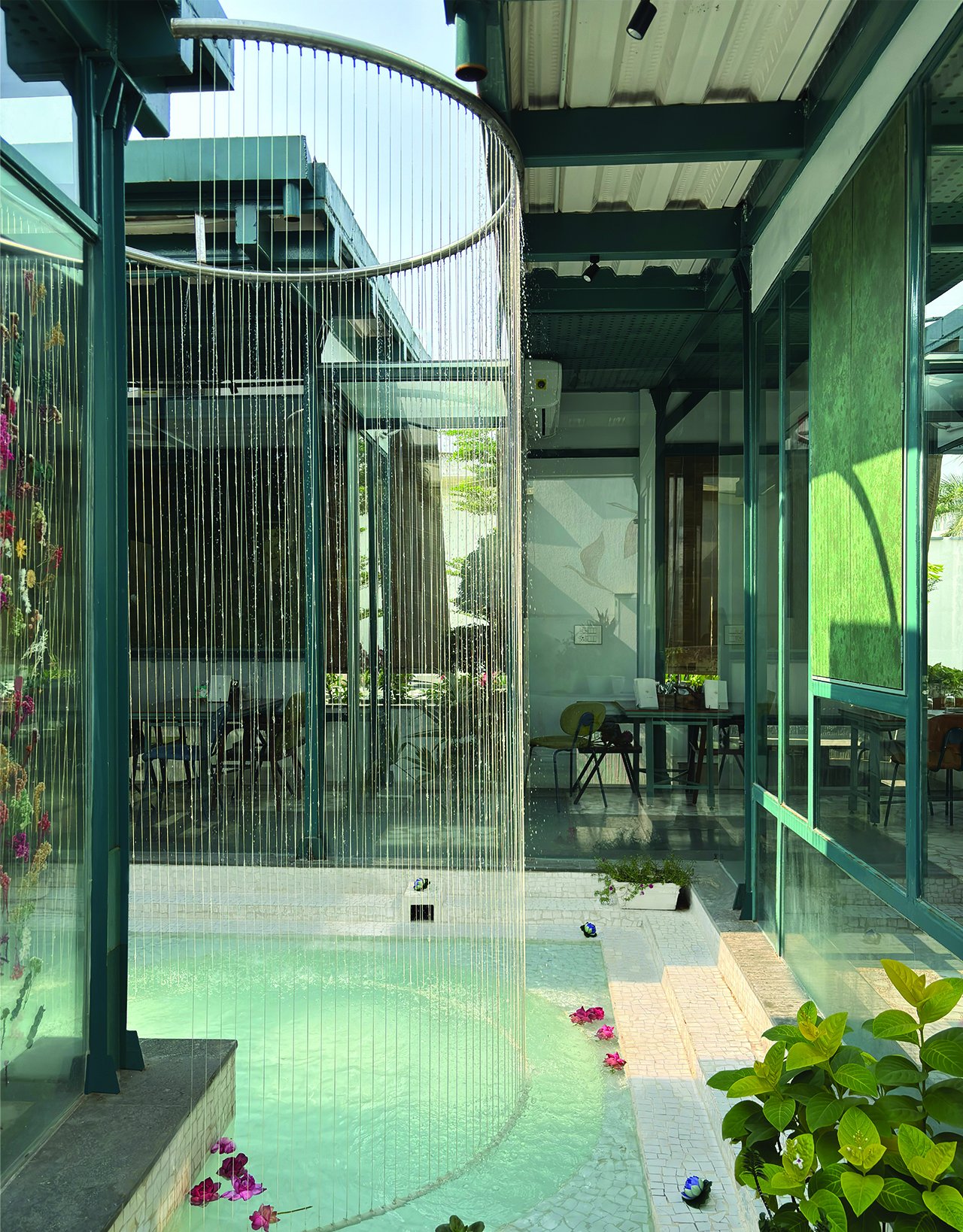
Inside, the room is organised around a small water feature ringed by a curtain of fine vertical water strands that fall from a circular frame overhead. Daylight moves through the strands and reflects off the water, and the tealed steel structure holds the composition together while dried-flower panels in the glazing filter light along the perimeter.
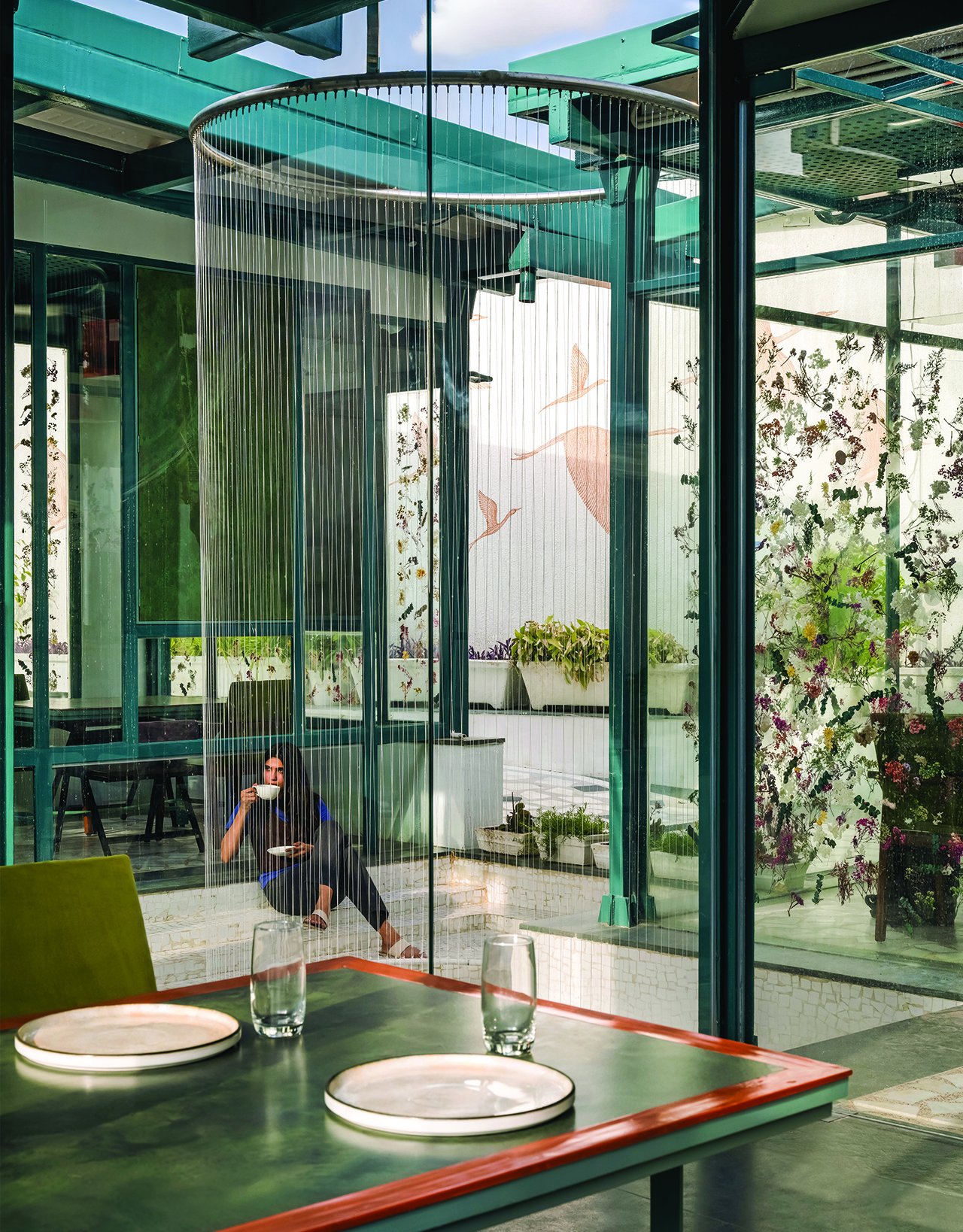
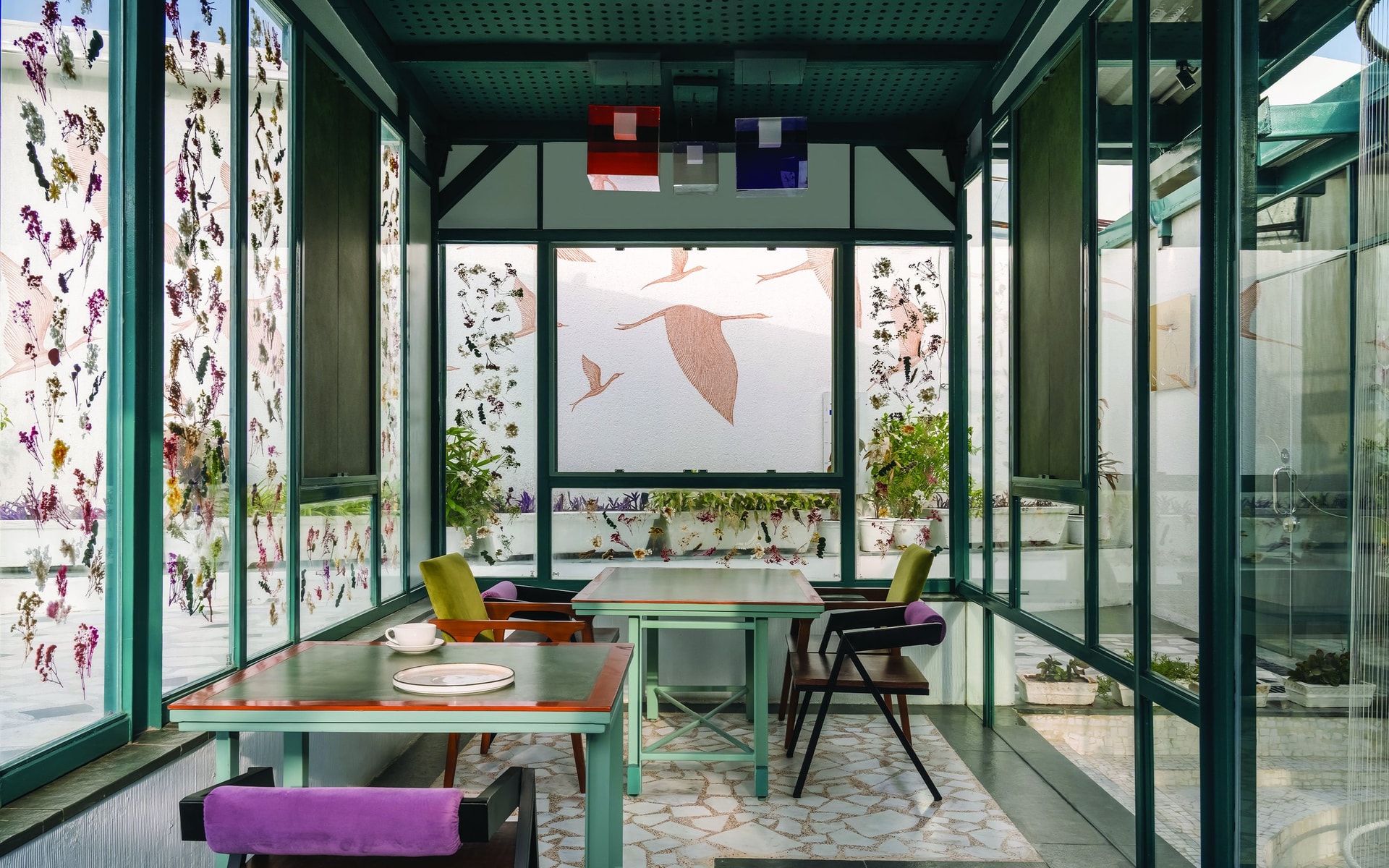
The seating area itself takes the form of a glazed pavilion. Tables with warm-toned tops and painted bases pair with chairs upholstered in mustard and lilac, their scale kept small so that the eye is drawn instead to the surrounding glazing, where pressed botanicals are suspended between panes.
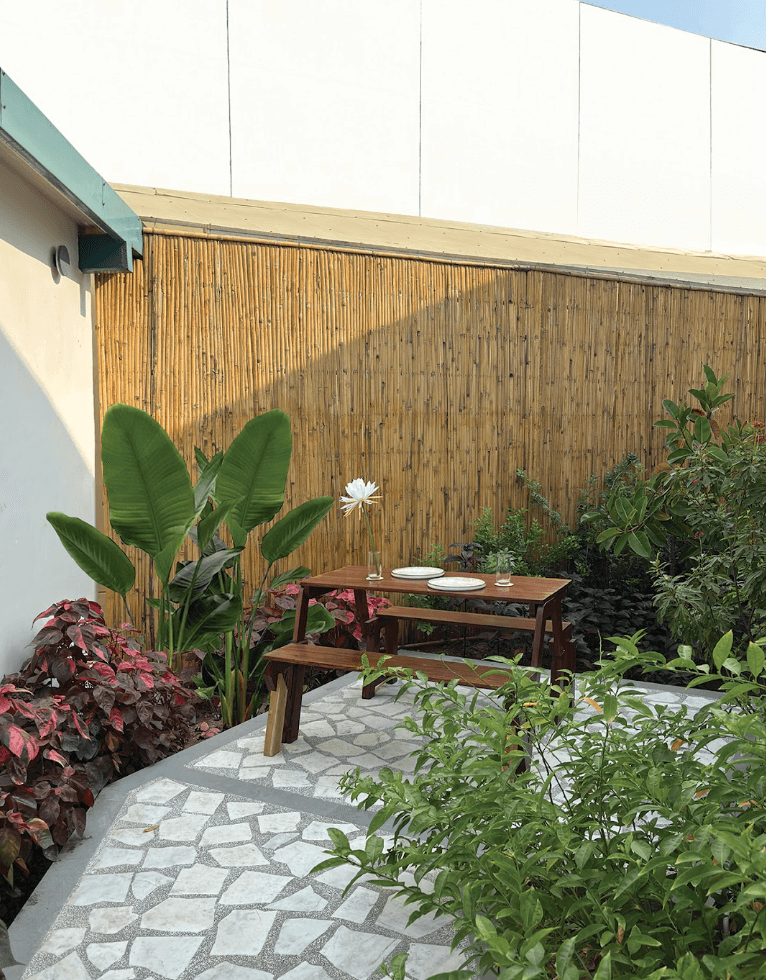
The outdoor sit-out beyond continues the same logic in a more informal register. A simple wooden bench-and-table set rests on paved marble, framed by broad-leaved foliage and a bamboo screen that softens the boundary wall into something closer to a garden edge.
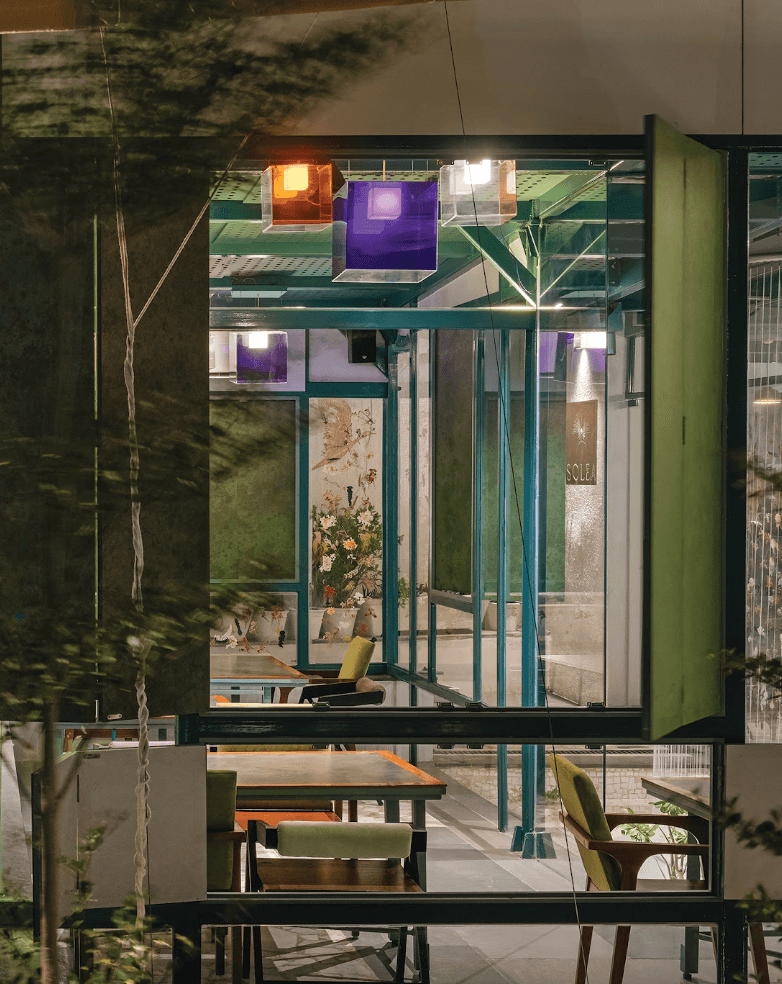
By evening, the café takes on a different atmosphere. Cast-glass cubes in red, blue, and green, suspended within the green steel framework, become the room’s principal light source, projecting soft coloured washes across the ceiling and tables while the pressed-flower glass panels glow faintly against the darker exterior.
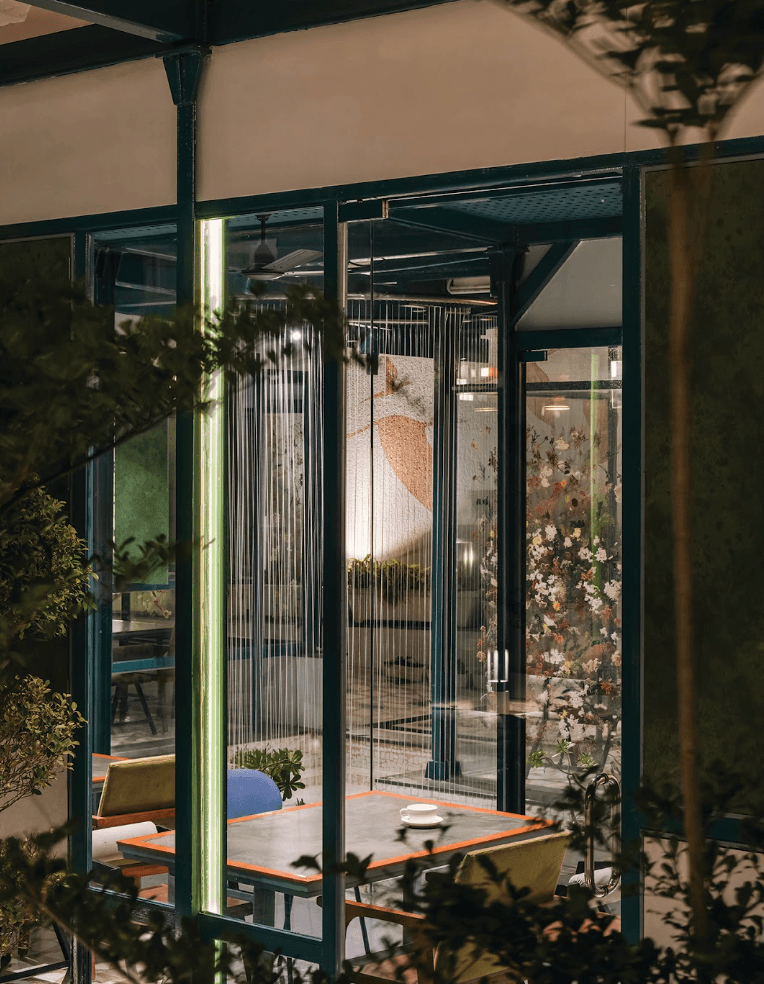
The water court reads differently after dusk. A slim vertical light source runs alongside the strand curtain, and beyond it the pressed-flower panels appear denser and more painterly, holding the room in a green-and-amber register that contrasts with the daylit version of the same view.
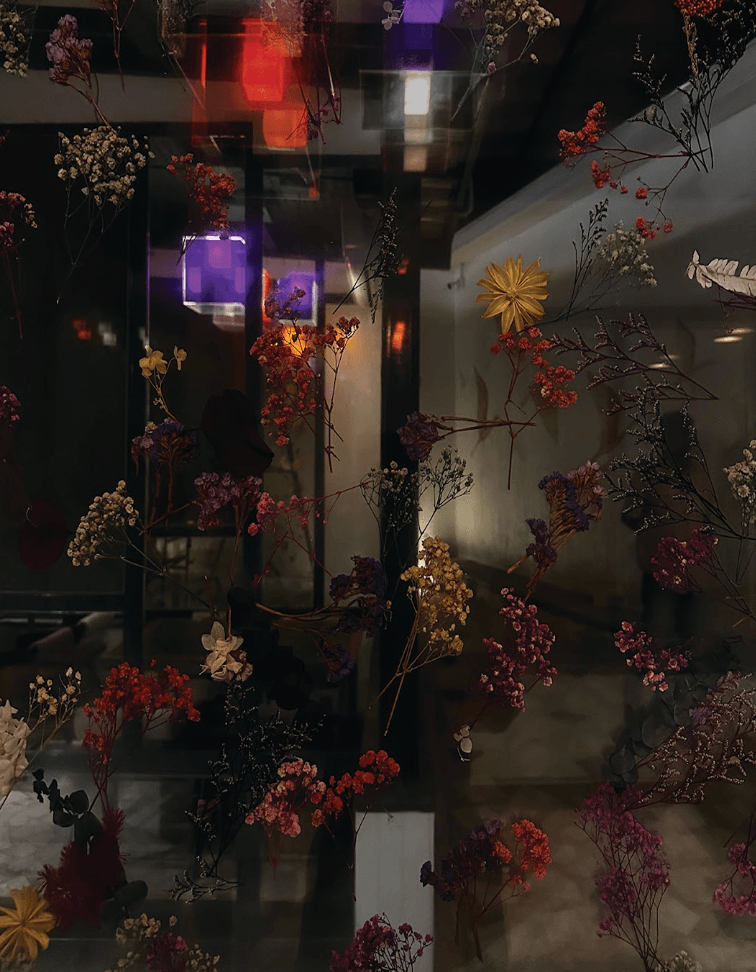
A closer look at the dried-flower glazing shows why the material carries so much of the project’s emotional weight. Blooms, seed heads, and grasses are pressed between panes, catching light differently through the day and turning the wall itself into a living herbarium, layered against reflections of the coloured cubes overhead.
What SOLEA proposes for its context is a hospitality register attuned to slowness rather than spectacle. In a city where new cafés often lean on graphic identity or imported stylistic shorthand, the project draws its material language from an Indian spring, the pressed botanicals, the crane murals, the small pool, the tealed steel that recalls verdant foliage, and asks the room to hold that reference lightly rather than announce it.
The achievement here is one of atmosphere, not statement. The café earns its calm by treating landscape, light, and material as continuous concerns, and by trusting a modest footprint to do the work of a much larger idea about how a meal might unfold.