Few homes strike a balance between cultural heritage and contemporary living without leaning towards nostalgia or overt revivalism. The most thoughtful interiors approach tradition not as a decorative reference, but as an inherent part of everyday life, expressed through familiar rituals, materials, craftsmanship, and the ways in which a family inhabits its spaces. The design challenge lies in translating these cultural influences into a contemporary setting while preserving their authenticity and emotional significance.
Abhinaya, a residence in Bangalore designed by Tesor Designs, draws its name and inspiration from Bharatanatyam, a classical Indian dance form deeply connected to the clients’ lives. Led by Devika Rajeev , the design reinterprets the architectural and material vocabulary of a traditional Tamil home through a contemporary lens. Carved pillars, patterned flooring, brass accents, and handcrafted elements establish a sense of cultural continuity, while thoughtful spatial planning accommodates the needs of modern family life. Rather than recreating a traditional setting, the residence integrates familiar references into a cohesive design language that feels both rooted in heritage and relevant to the present.
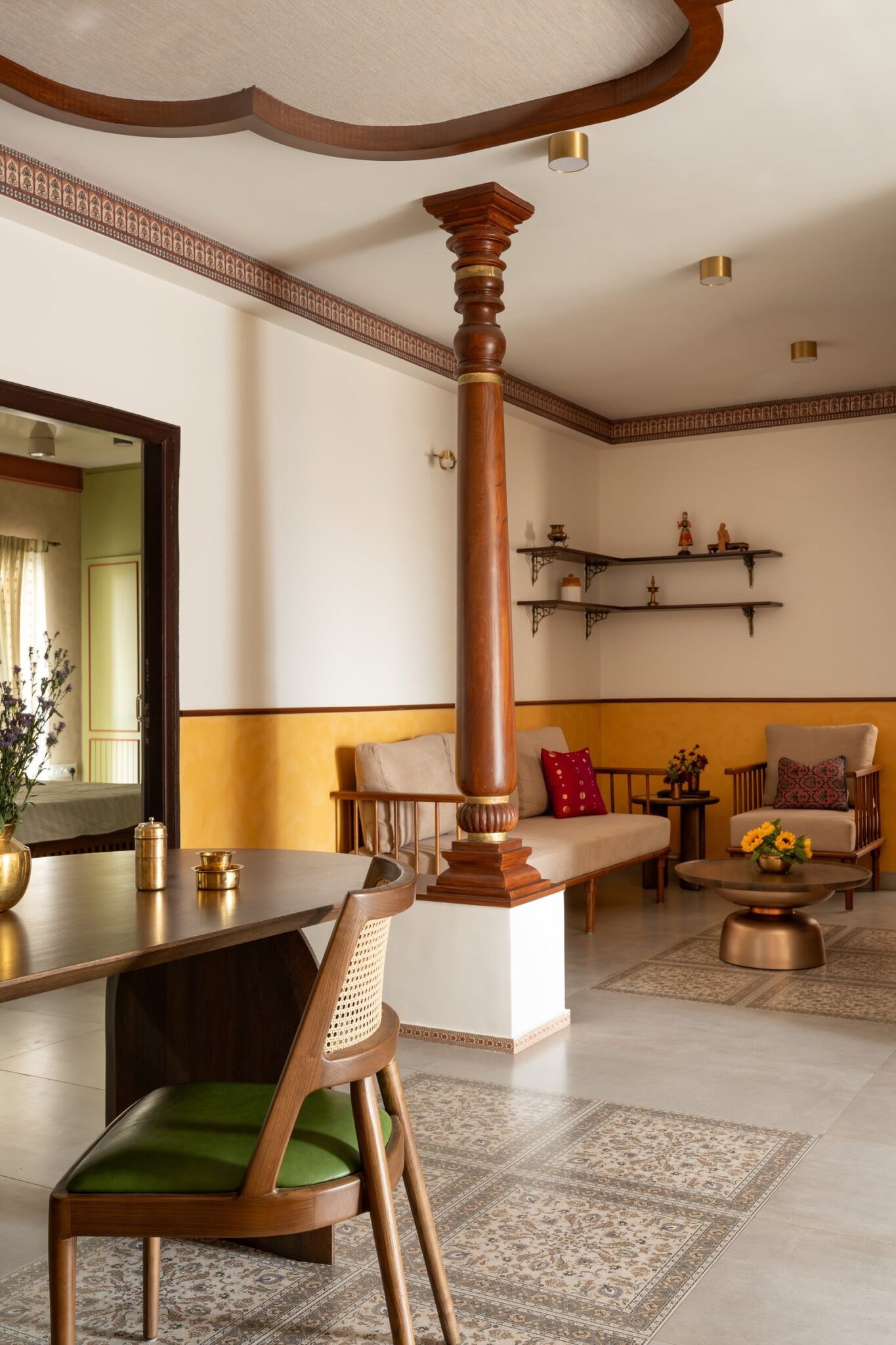
The living room unfolds through a considered interplay of traditional architectural elements and contemporary detailing. A carved wooden pillar anchors the composition, rising from a low plinth that also functions as a console, recalling the distinctive columns of traditional South Indian homes. A restrained material palette provides a cohesive backdrop, while a mustard-yellow dado running along the lower walls introduces warmth and subtle definition. Handcrafted details and patterned flooring inlays lend depth and character to the space, allowing traditional craftsmanship to emerge as an integral part of the design rather than an ornamental addition.
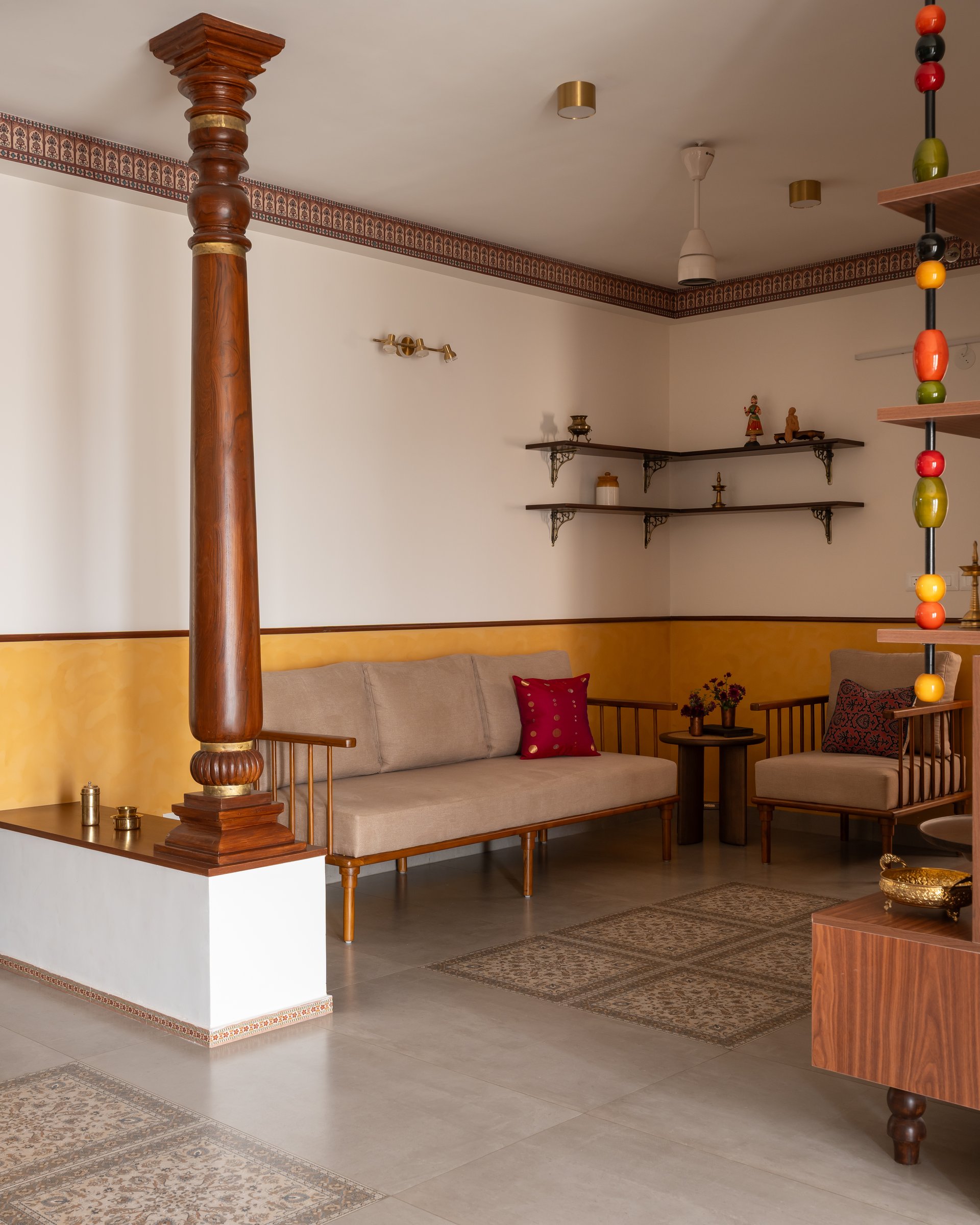
The seating arrangement maintains a sense of openness, allowing the room’s architectural detailing to remain prominent. A low wooden-framed sofa with upholstered cushions is positioned against the mustard-yellow wall, complemented by a matching armchair. The furniture’s slender profiles preserve visual continuity while reinforcing the understated character of the space. A patterned border along the cornice introduces a subtle decorative layer, while corner shelves supported by ornamental brackets display brass vessels and small figurines. These details reference the traditional display niches , integrating elements of cultural familiarity into the contemporary interior.
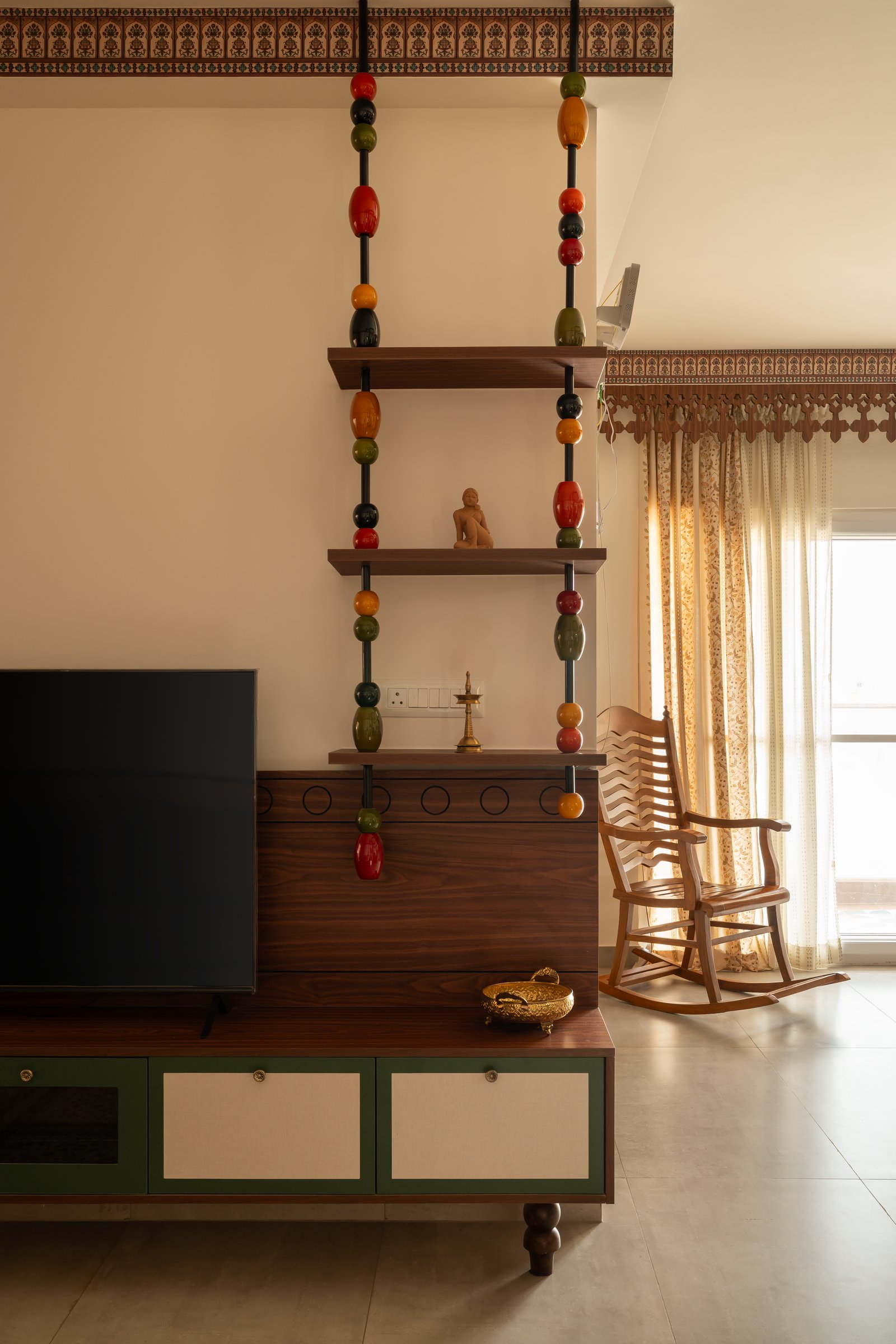
Along the opposite wall, a display unit inspired by traditional Channapatna craftsmanship introduces a distinctive expression of colour and artisanal detail. Lacquered wooden beads in red, mustard, green, and black are arranged along slender vertical rods, interspersed with wooden shelves that accommodate carefully selected decorative objects. Beneath, a muted-green media console with inset panels complements the installation without competing for attention. A wooden rocking chair positioned near the balcony curtains adds a familiar domestic element, reinforcing the home’s connection to traditional Indian living.
““It became a home where their culture was not added as a design layer, but naturally became a part of how the home came together.””
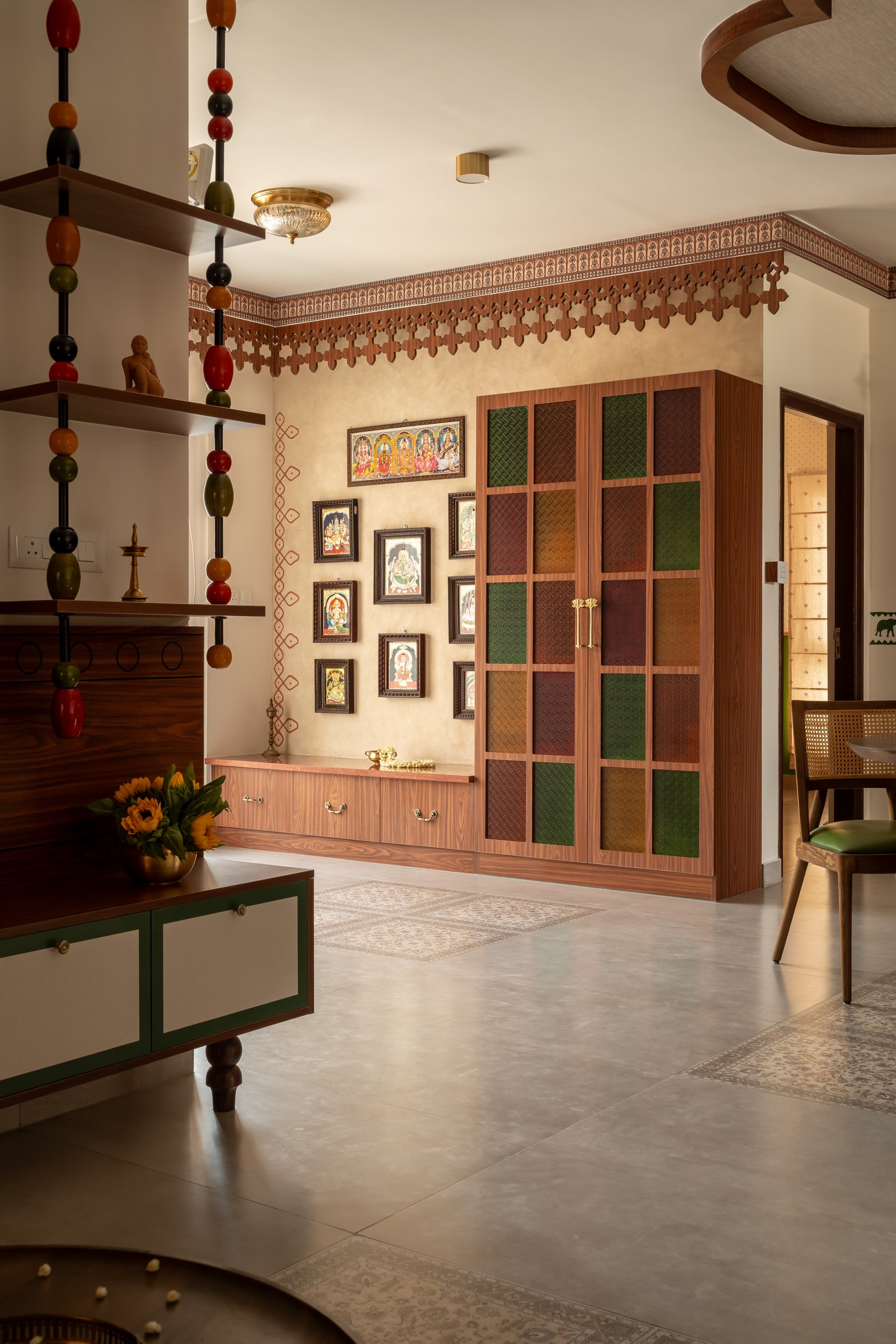
The pooja unit introduces a contemplative space within the home, drawing on traditional South Indian artistic and architectural references. A collection of Tanjore-style devotional paintings is arranged against a textured, earth-toned wall, complemented by a carved wooden pelmet and a hand-painted motif inspired by traditional kolam patterns. An adjoining cabinet features door panels inset with woven fabric in shades of green, maroon, and ochre, introducing colour, texture, and craftsmanship into the composition. Together, these elements establish a devotional setting that feels culturally rooted while remaining consistent with the home’s contemporary design language.
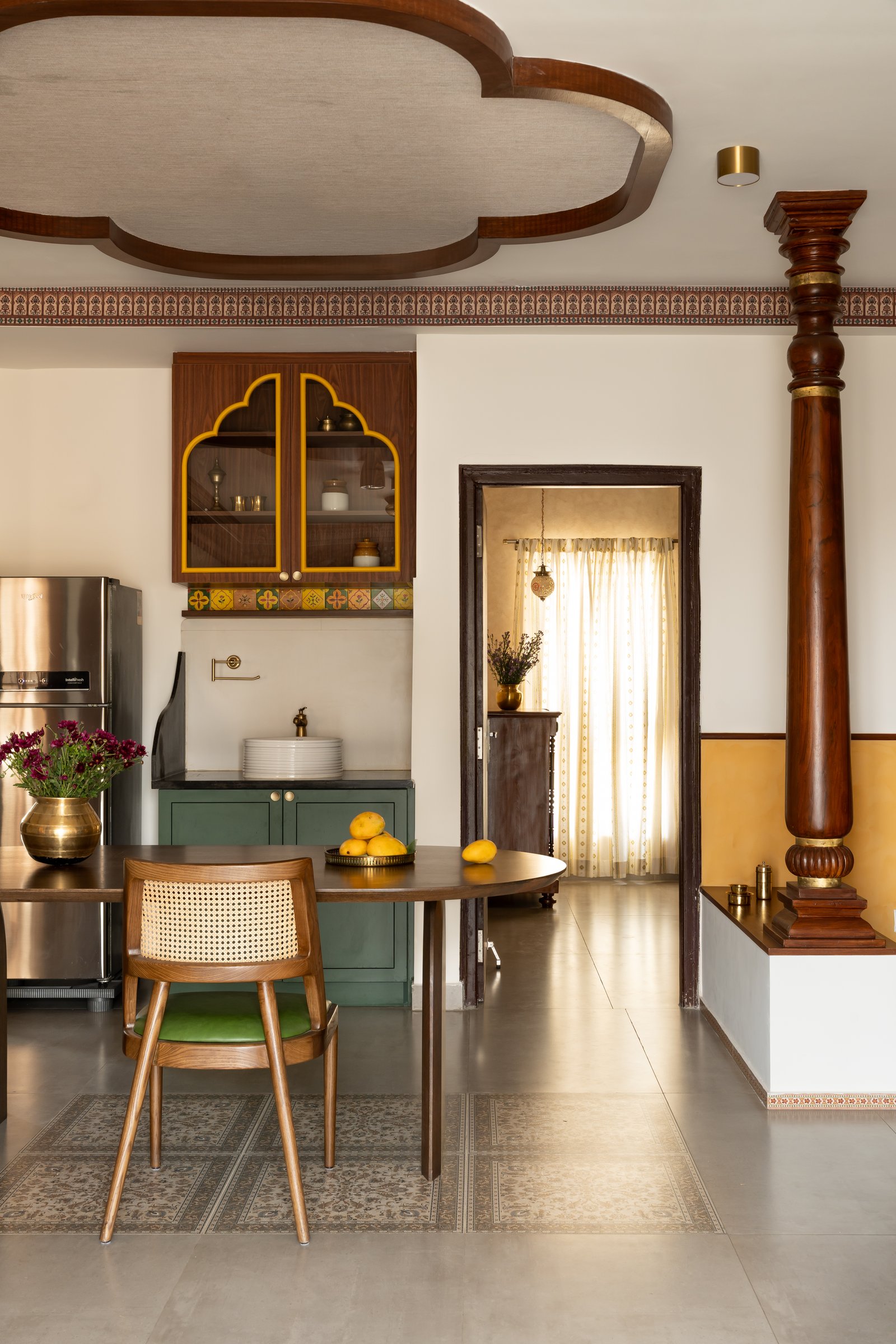
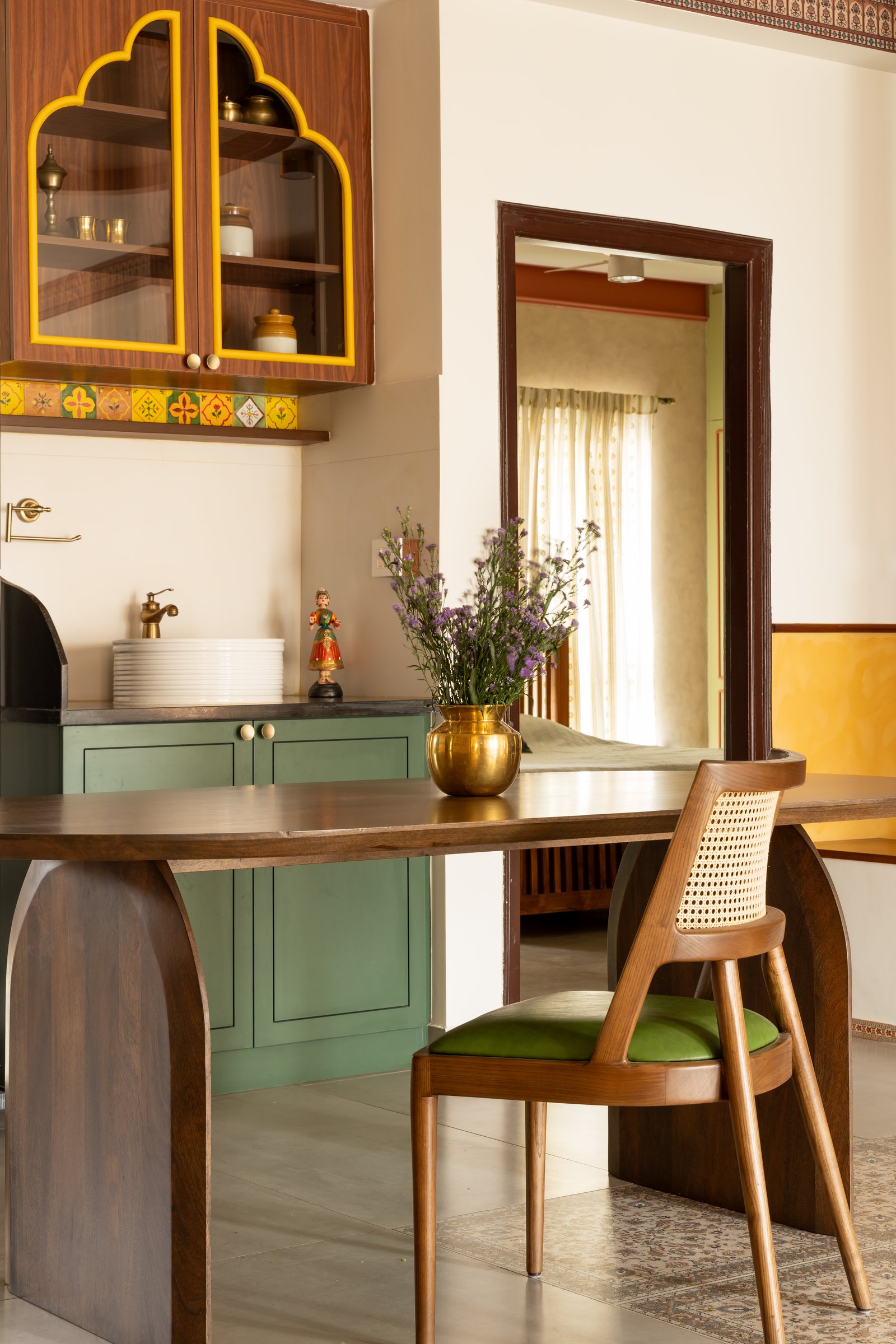
The dining area extends the home’s cohesive material language through a considered combination of timber, cane, and decorative detailing. An oval wooden table, supported by a plank-style base, is paired with a cane-backed chair featuring a green upholstered seat. The furniture’s restrained proportions allow the surrounding architectural elements to remain prominent. Above, a quatrefoil-shaped wooden ceiling panel introduces depth and visual definition, while a patterned flooring inlay subtly delineates the dining zone without interrupting the continuity of the space. Together, these details reinforce the residence’s balance between traditional craftsmanship and contemporary design.
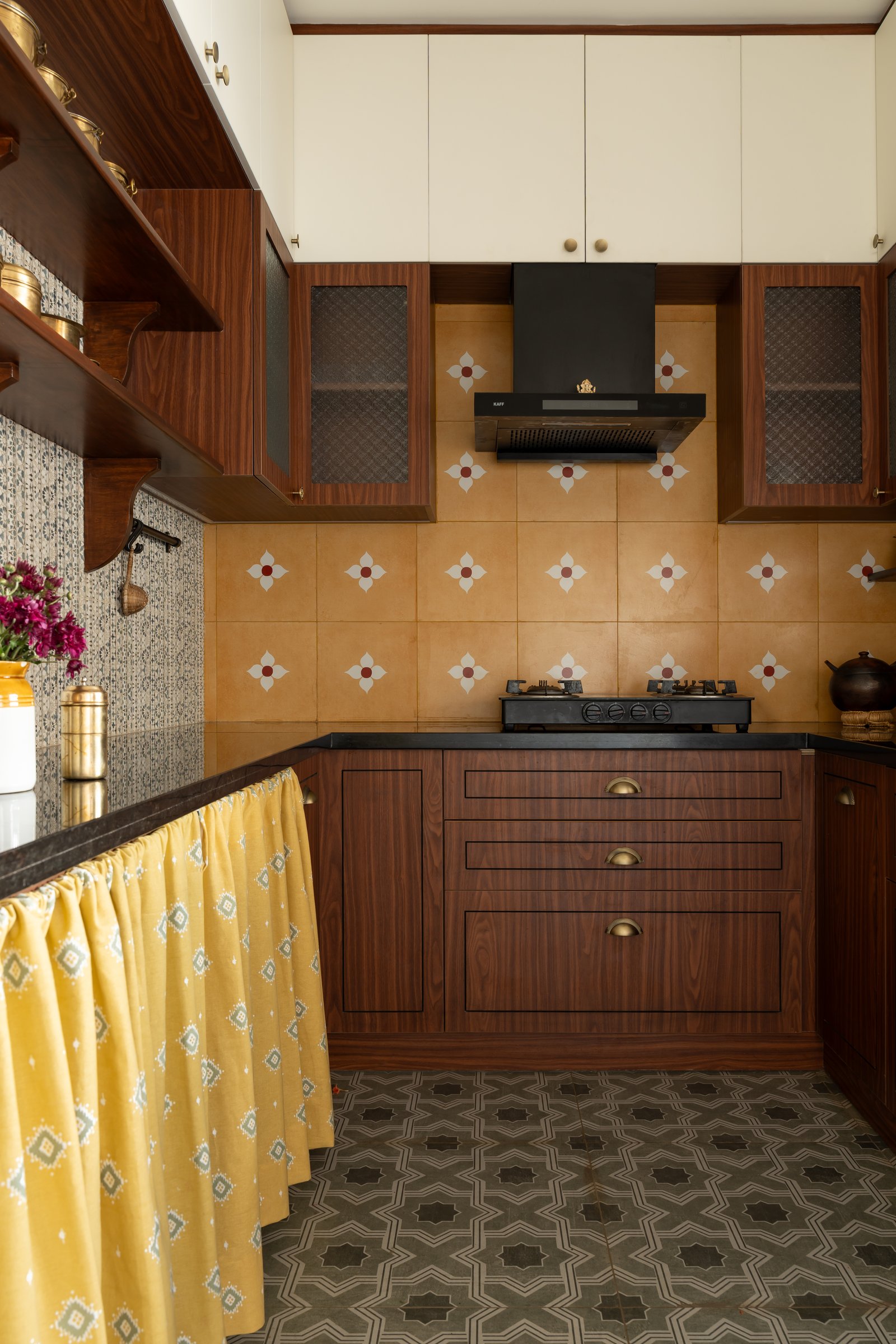
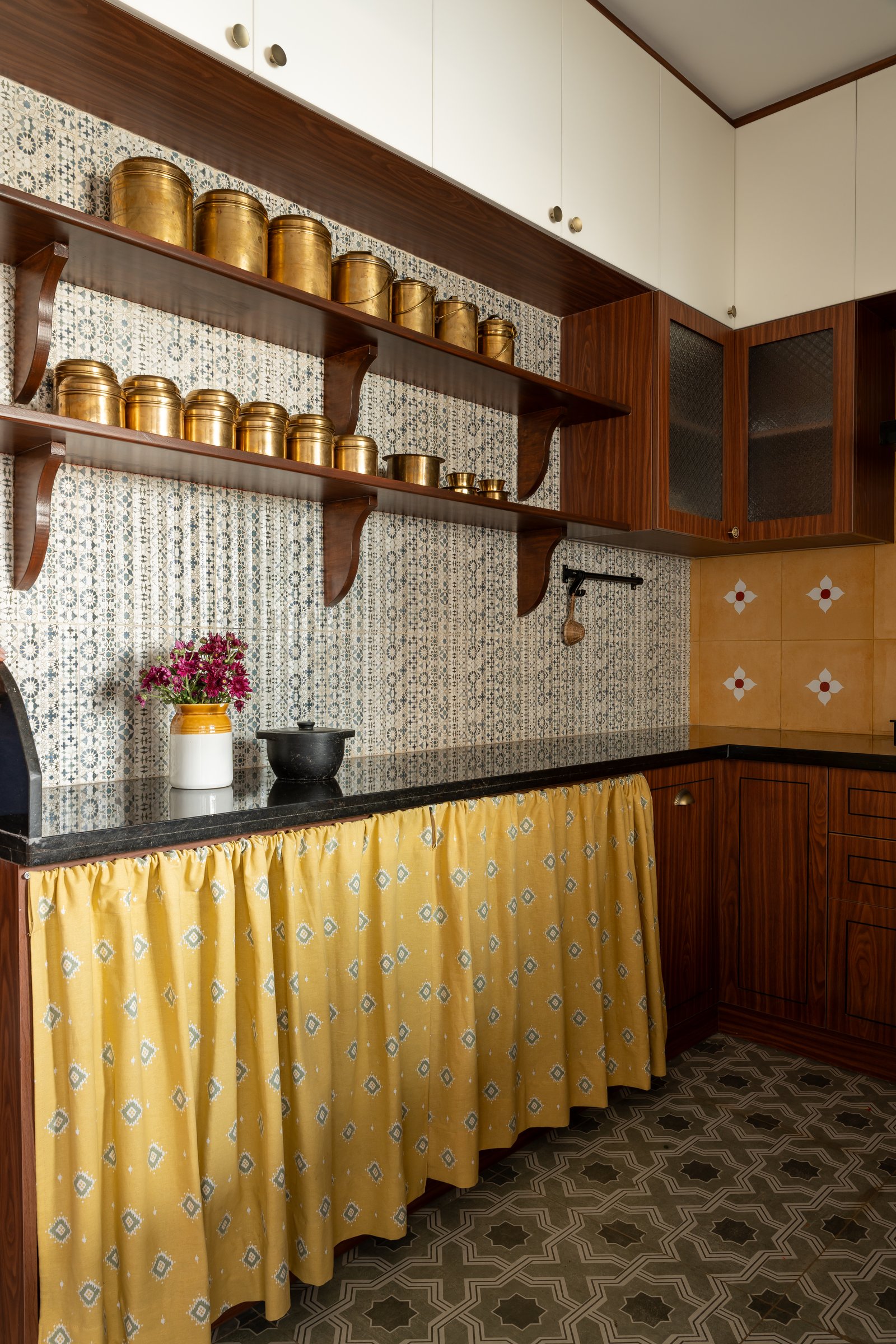
The kitchen draws inspiration from the functional simplicity and material character of traditional South Indian cooking spaces, reinterpreted through a contemporary design approach. A patterned tile backsplash in muted ochre, featuring a repeating four-pointed star motif, introduces a subtle decorative rhythm against warm wooden cabinetry accented with brass cup pulls. Along the island, a patterned fabric skirting conceals the lower storage, softening its architectural profile while adding a layer of texture and traditional familiarity. The resulting composition balances everyday functionality with a carefully considered expression of regional craftsmanship.
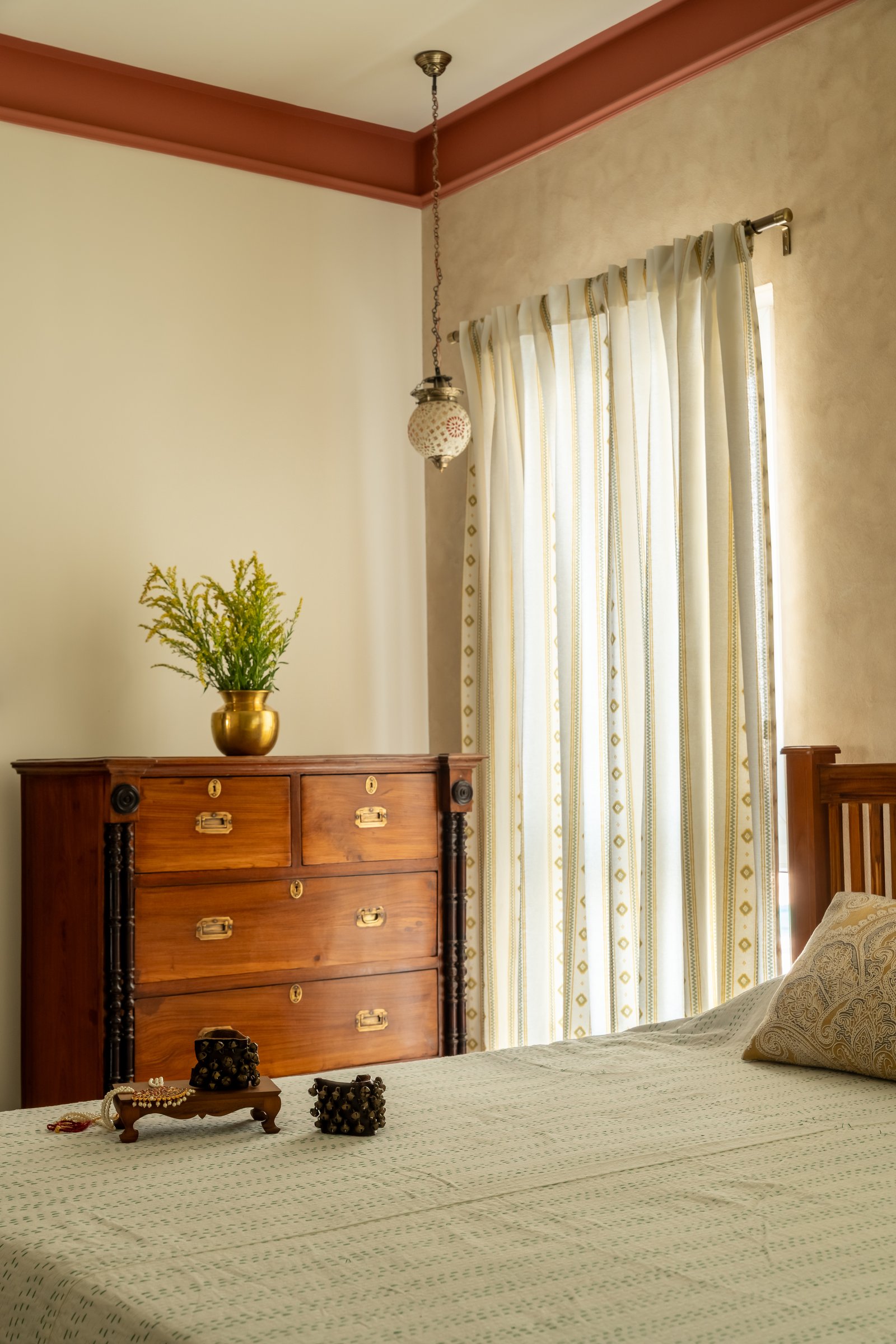
The master bedroom adopts a more contemporary aesthetic while maintaining continuity with the home’s overarching material and design language. A vintage wooden chest of drawers, detailed with brass campaign-style hardware, introduces a sense of history and collected character beside the bed. A Moroccan-inspired pendant light suspended near the window adds a contrasting artisanal influence, while a terracotta-toned cornice band traces the ceiling perimeter, lending warmth and architectural definition to the space.
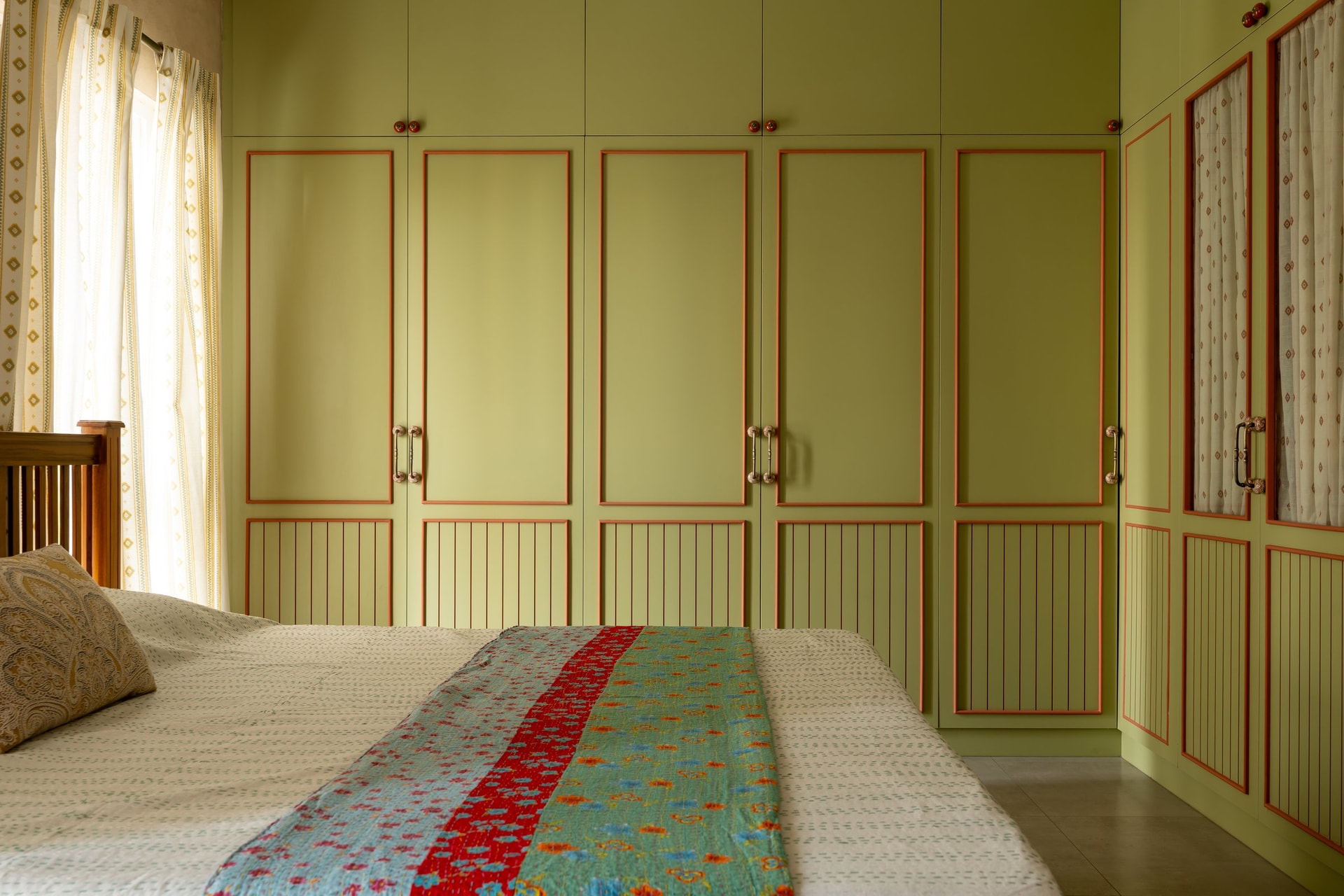
The wardrobe wall forms a defining architectural feature within the bedroom, introducing a considered interplay of colour, proportion, and detailing. Finished in muted sage green, the cabinetry is outlined with terracotta-toned trims that accentuate its panelled composition and lend warmth to the space. Vertical slatted detailing along the lower sections establishes a subtle visual rhythm across the length of the storage, transforming a functional element into an integral part of the room’s design language.
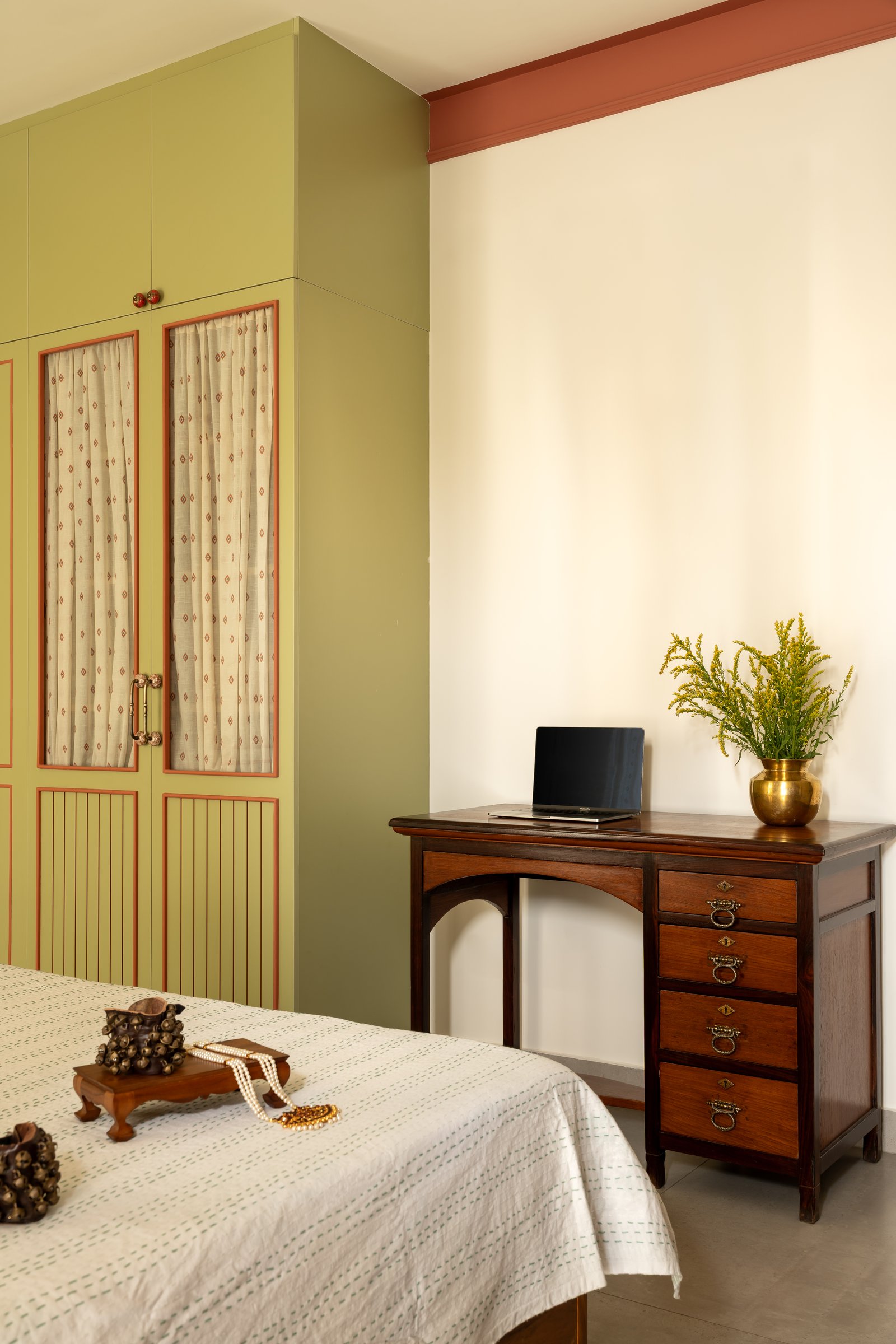
In a quieter corner of the room, a vintage wooden study table with ring-pull drawers sits against the plain wall, offering a working surface that feels collected rather than purpose-built.
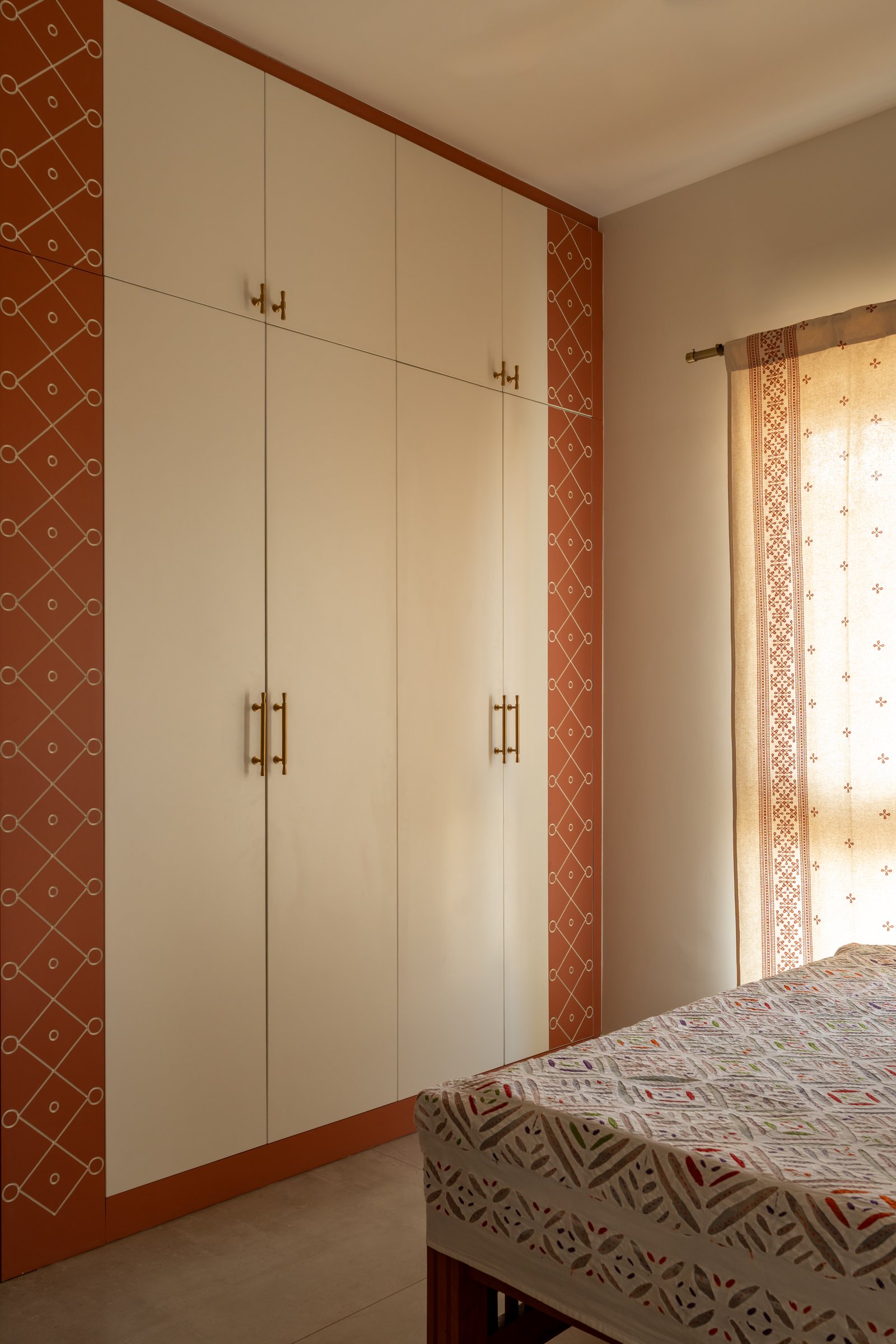
The guest bedroom draws inspiration from Virundhombal, the Tamil tradition of hospitality, reflecting the cultural importance of welcoming guests into the home. A restrained palette lends the space a sense of warmth and comfort, while the wardrobe introduces a subtle expression of regional craftsmanship. Ivory shutters framed by terracotta-toned borders feature delicate white linework inspired by traditional kolam patterns. The detailing is thoughtfully integrated into the cabinetry, allowing the cultural reference to emerge through pattern and material rather than overt ornamentation.
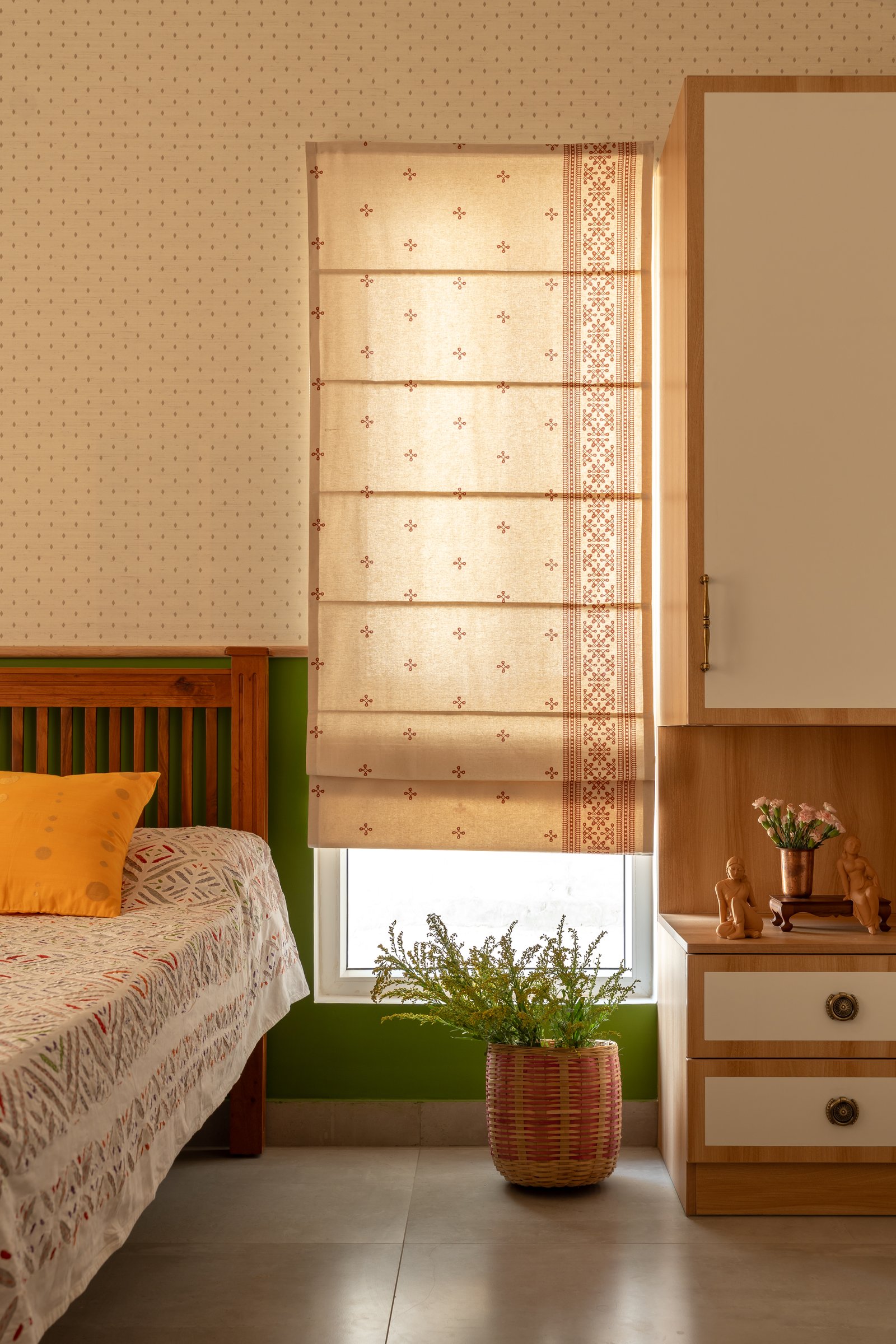
The bed is positioned against a patterned wallpaper backdrop, with a slatted wooden headboard that echoes the material and detailing of the living room furniture. A patterned fabric blind filters natural light through an adjoining narrow window, introducing softness and texture to the space.
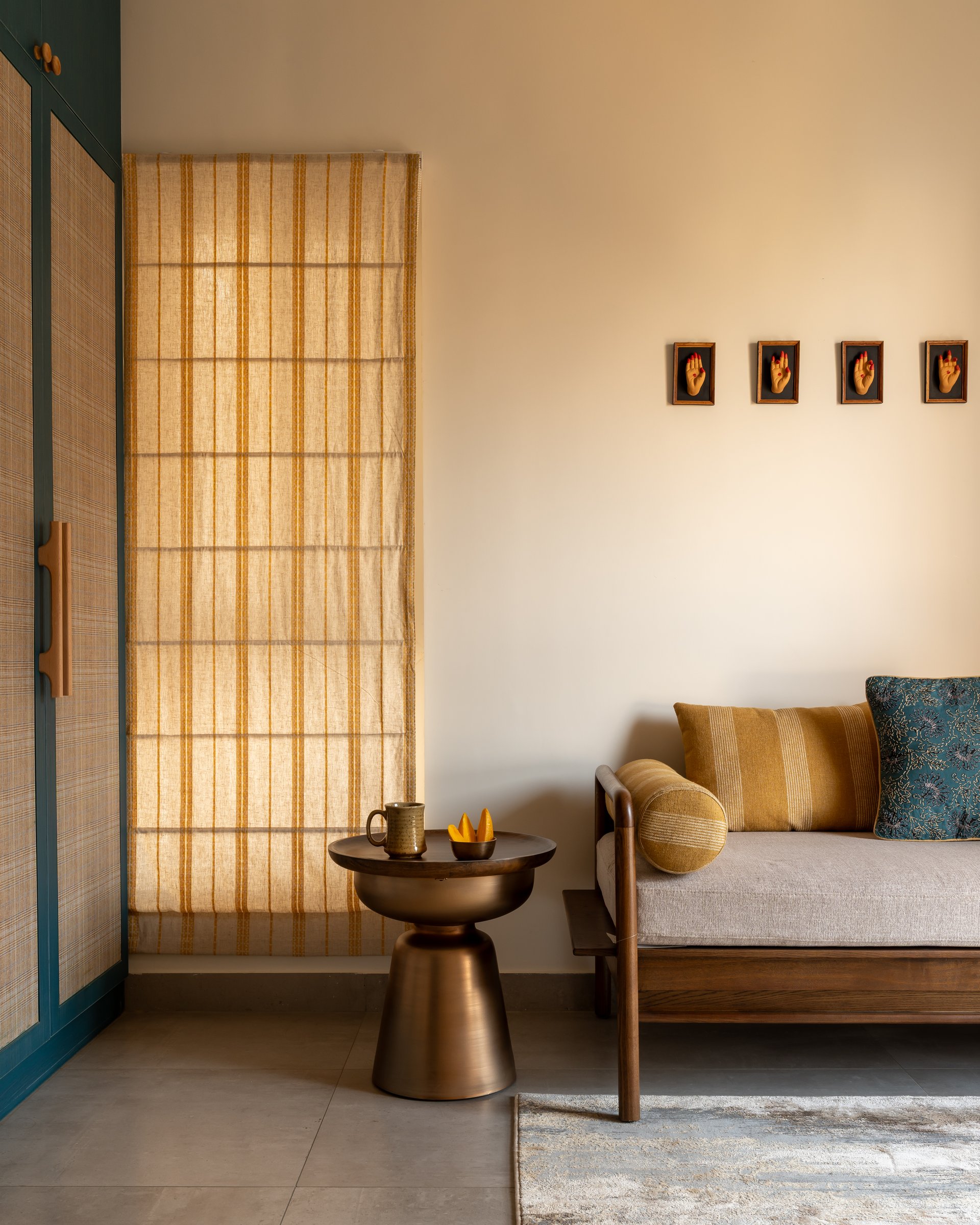
A quiet corner of the residence is designed as an informal lounging space, featuring a wooden daybed with understated upholstery. Above it, four framed relief artworks depicting Bharatanatyam hand gestures establish a direct connection to the artistic inspiration behind the home. A striped linen curtain gently filters natural light, introducing softness to the composition, while a brass side table adds a subtle metallic accent. The arrangement brings together art, materiality, and everyday comfort, reinforcing the home’s cultural narrative through thoughtfully curated details.
Within Bangalore’s evolving residential design landscape, where contemporary interiors often favour neutral palettes and minimalist expressions, Abhinaya presents a distinctive interpretation of cultural continuity. Rooted in the architectural traditions and artistic heritage of Tamil Nadu, the residence integrates regional influences without resorting to literal historical recreation. Traditional craftsmanship, familiar materials, and culturally significant details are thoughtfully incorporated into a contemporary spatial framework, creating an interior that feels both authentic and relevant to modern living.
Through Abhinaya, Tesor Designs demonstrates how cultural identity can inform contemporary residential design without compromising functionality or aesthetic clarity. From carved wooden elements and patterned surfaces to artisanal furnishings and subtle references to Bharatanatyam, each detail contributes to a cohesive architectural narrative. The result is a home where heritage is not simply represented through decorative elements but becomes an integral part of the living environment, reflecting the family’s memories, traditions, and everyday rituals.