There is a particular discipline required to design a home that reads as effortless. The Mediterranean idiom, with its olive trees, its washed linens and pale woods, is among the most counterfeited languages in contemporary interiors, and its imitations rarely survive the scrutiny of a second glance. To compose it without lapsing into pastiche is a question of editing, not arrangement.
The Villa, designed by Studio Van Oliver, is a family residence that takes that risk and resolves it with unusual clarity. The home was conceived as a quiet retreat for its owners, a place where the sea-light could settle gently into an interior built for everyday domestic life. What the studio has produced is less a stylistic homage than a study in atmosphere, where the palette stays narrow, the materials stay honest, and the rooms are allowed to do very little so that they may do it well.
The light here is the protagonist. A linen Roman shade trimmed in olive green filters the window without erasing it, and the single sculptural bowl on the counter performs the only ornament the space requires.
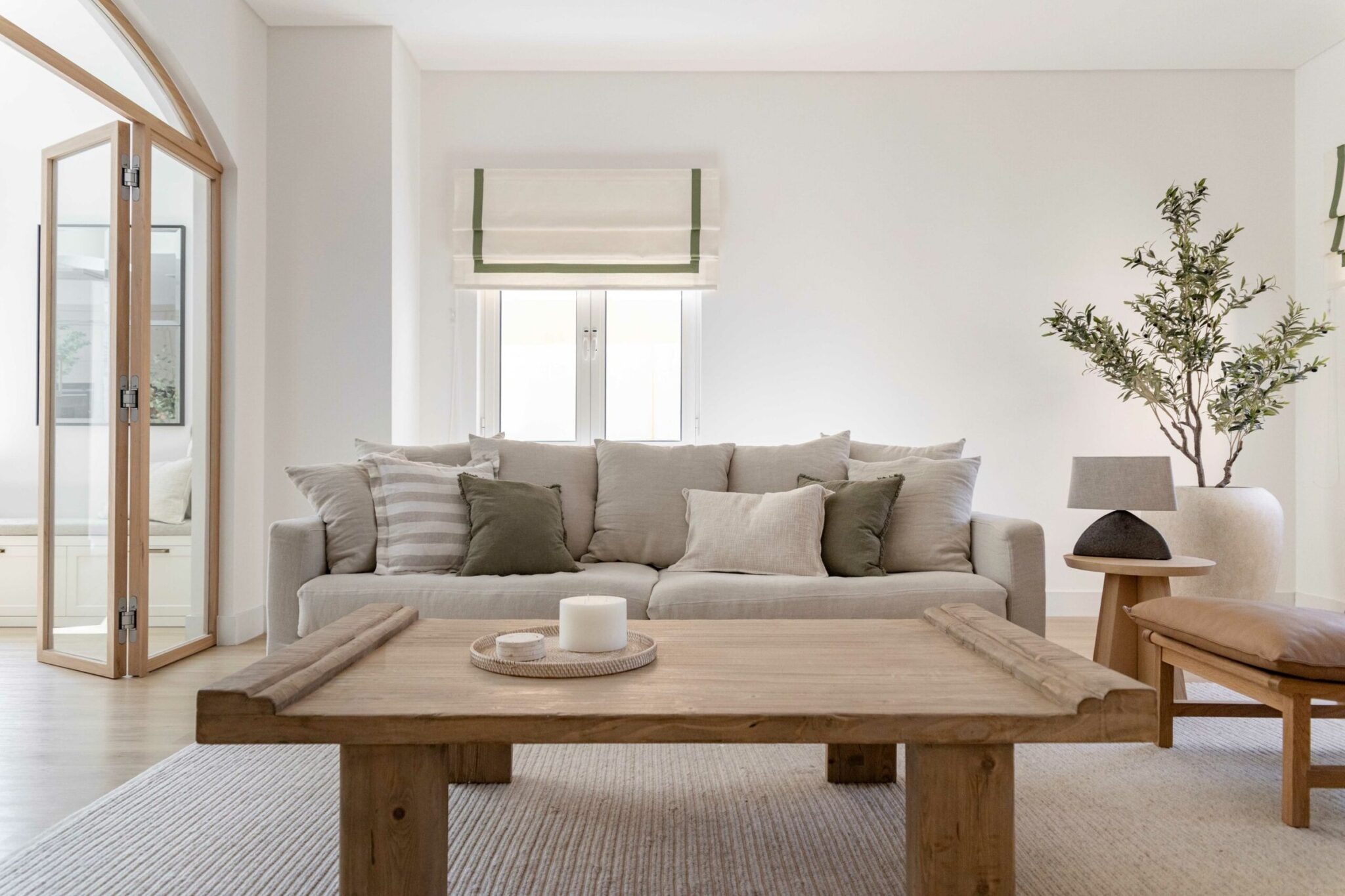
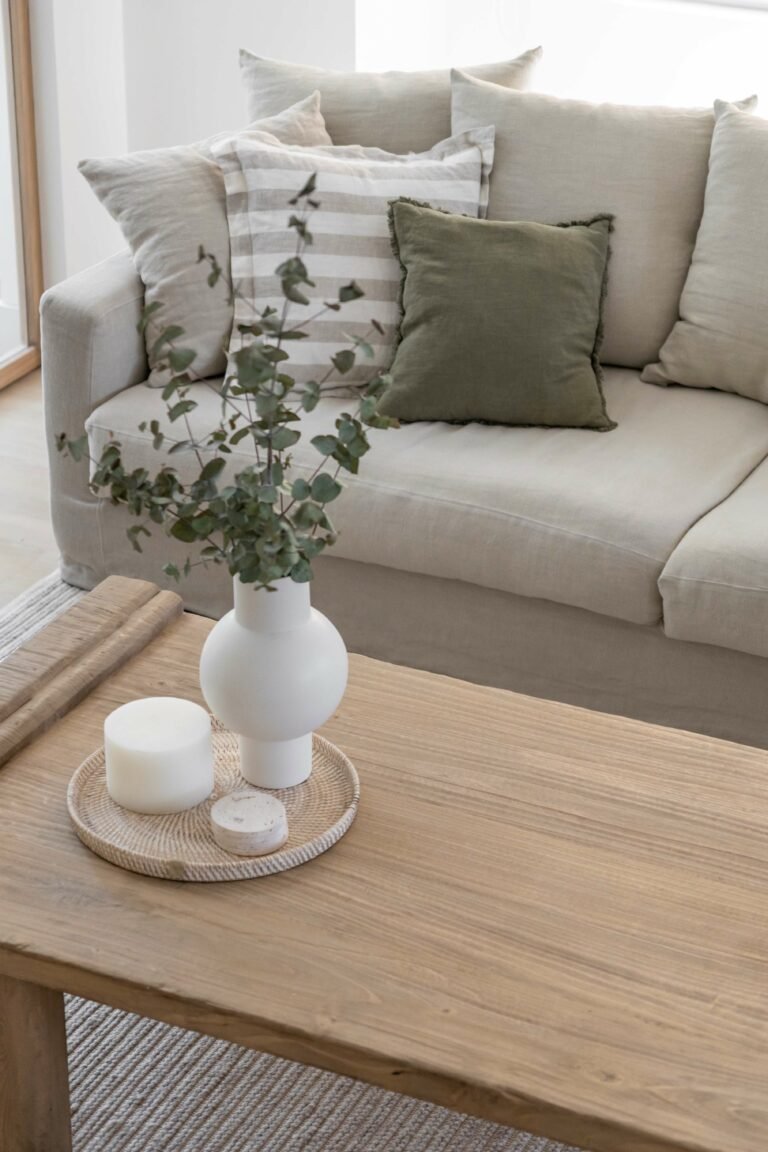
The living room is where the studio’s restraint becomes most legible. A generously upholstered linen sofa, anchors the room without dominating it, and the low reclaimed wood coffee table provides the weight that a paler palette would otherwise lack.
What makes the composition work is the refusal to over-furnish.
The room reveals an arched glazed door in pale oak that opens onto an adjoining space, a gesture that quietly signals the home’s Mediterranean lineage without descending into mimicry.
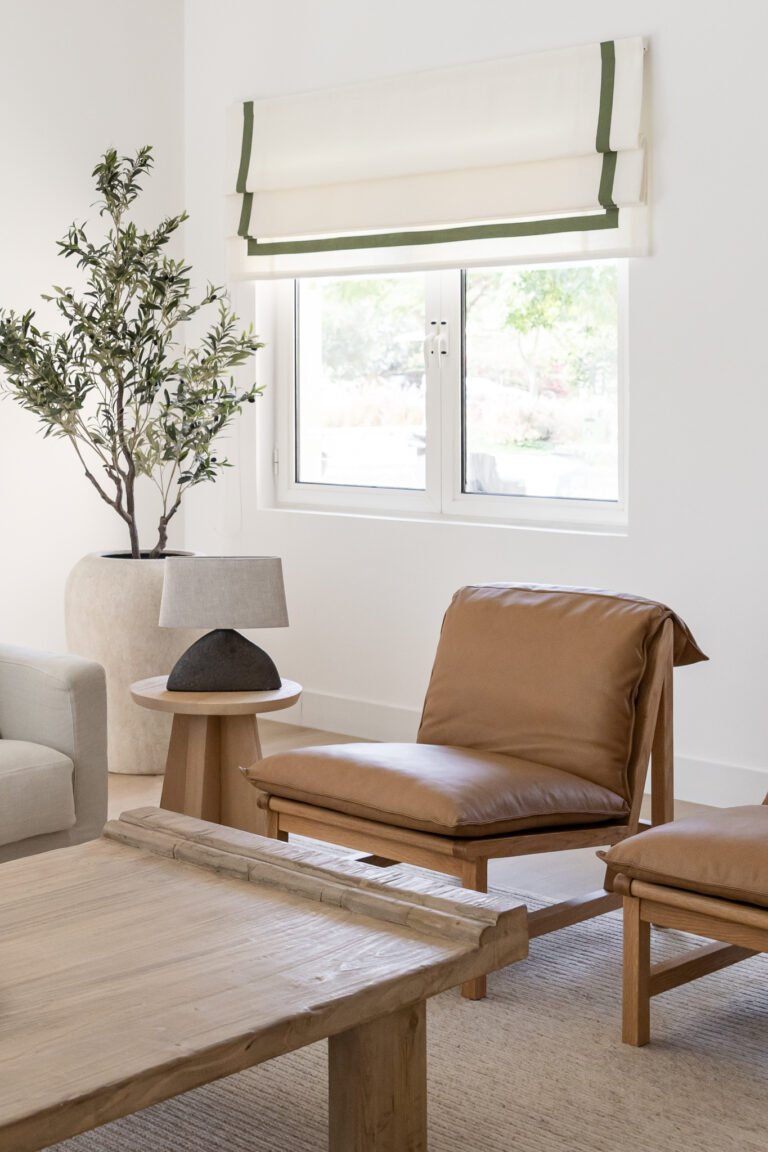
The seating arrangement opposite the sofa is where the studio permits itself a slightly bolder note. A pair of tan leather lounge chairs on light oak frames brings a different temperature into the room, warmer, more saddle-coloured, and the pottery lamp on its rounded wood base introduces a small piece of sculptural weight against the surrounding softness.
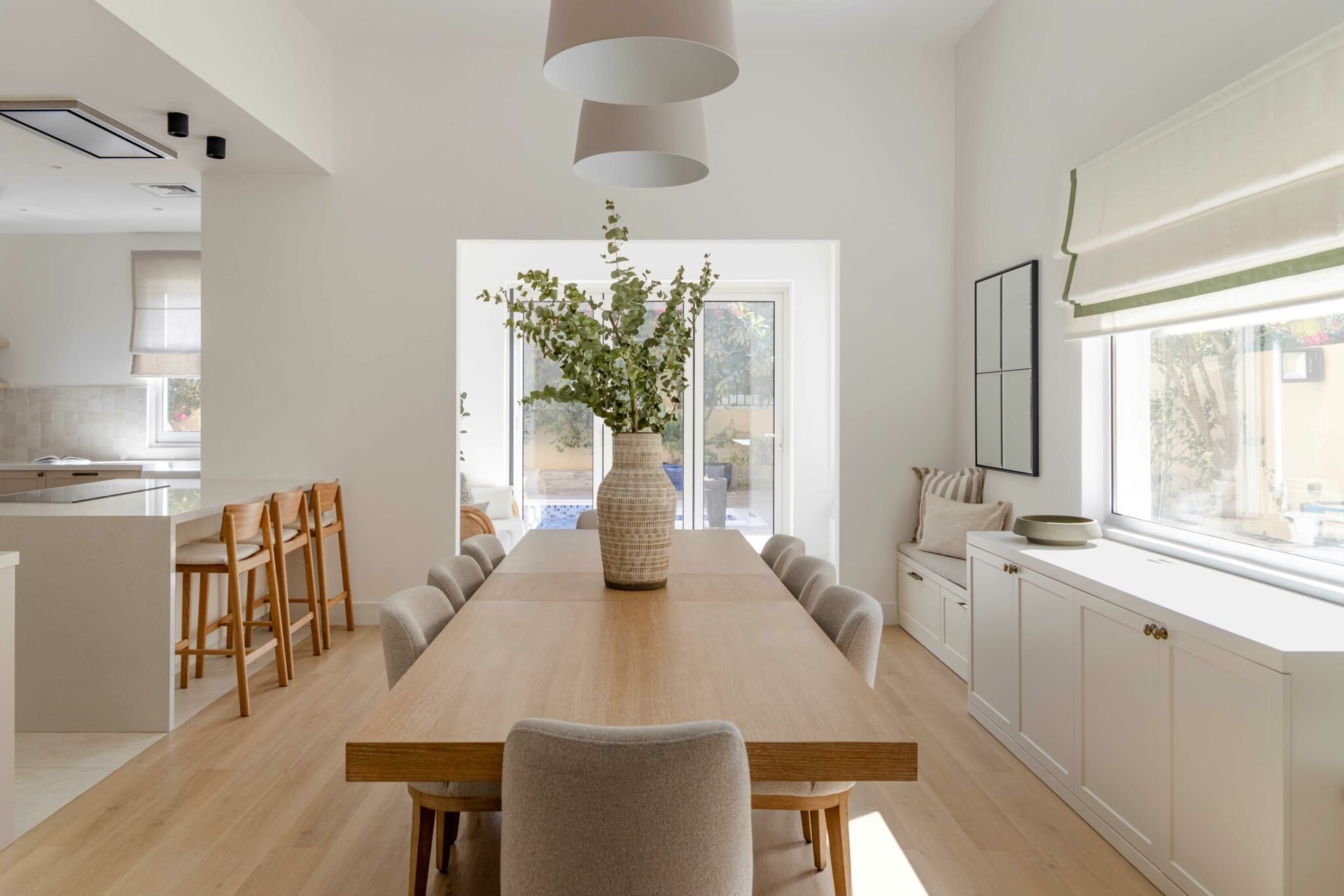
The dining room opens directly onto the kitchen and, beyond it, the garden, an arrangement that allows the room to breathe in two directions at once. A long oak table seats eight in pale upholstered chairs, and twin fabric pendants in a chalky neutral hang above it like quiet punctuation.
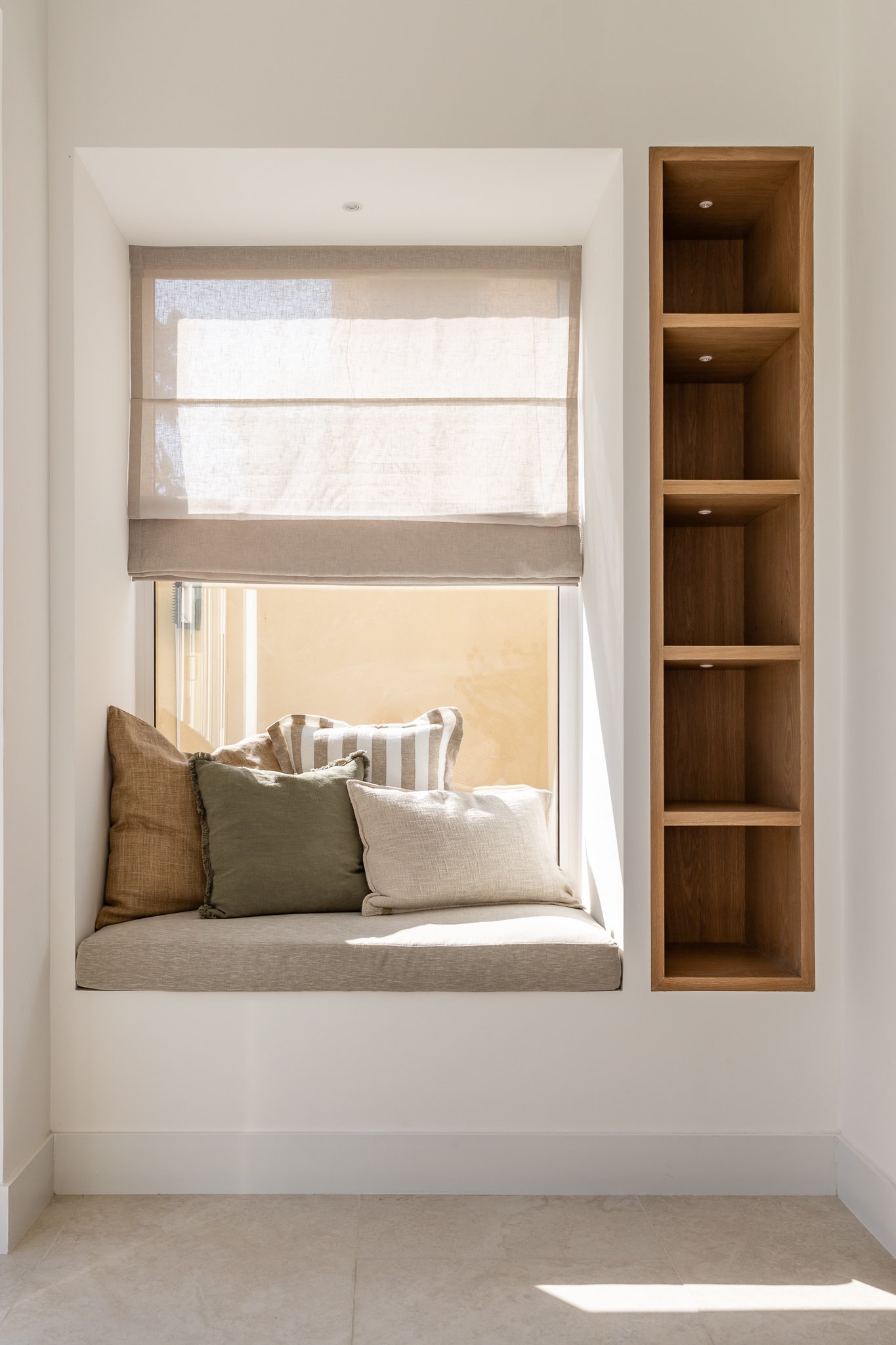
A built-in window seat tucked under the side window doubles the room’s social capacity without crowding it, while the kitchen island and its three counter stools sit just beyond the table’s reach. The space refuses the formality of a separate dining room without losing the gravity of a proper one.
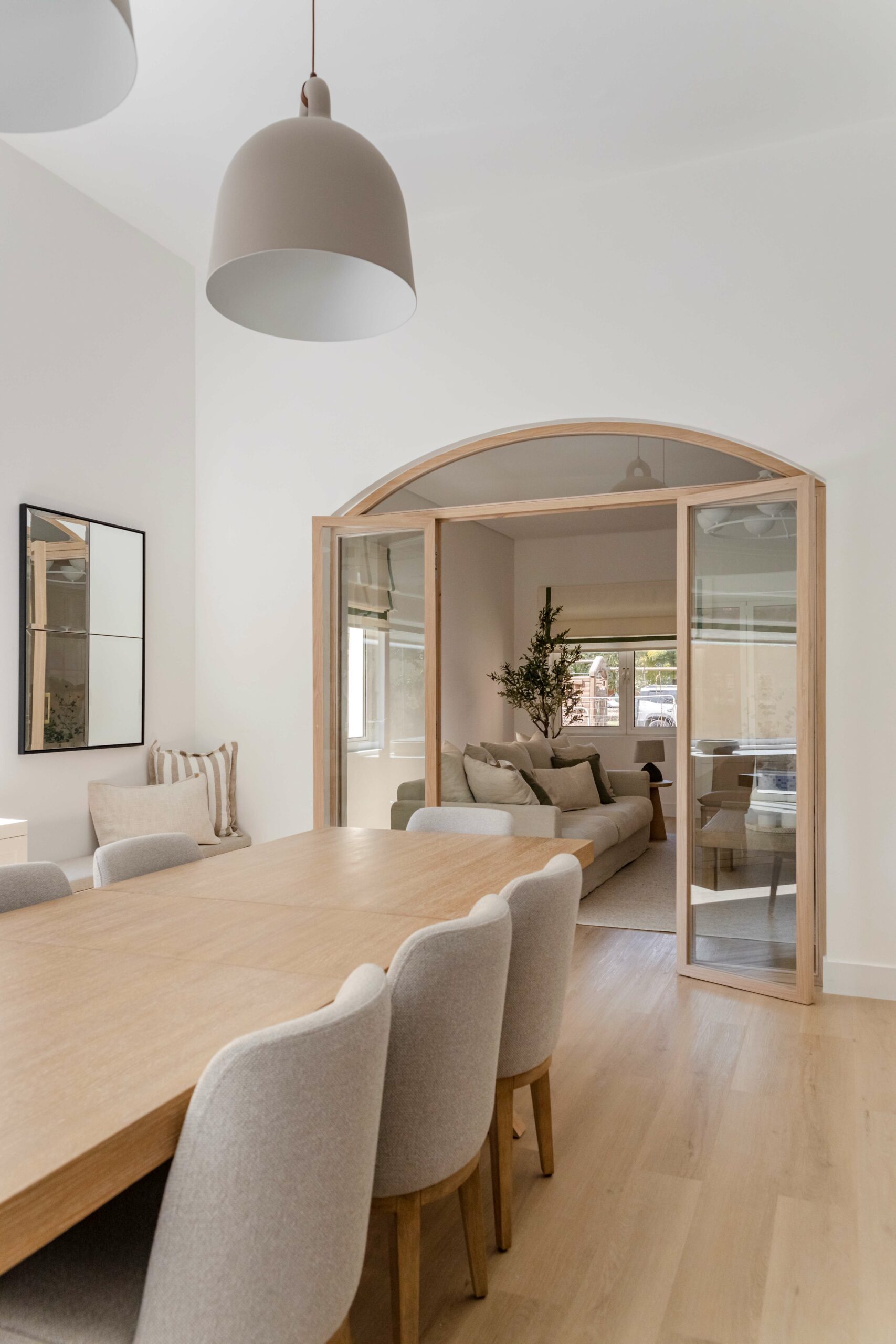
The relationship between the dining room and the living room becomes clear: the arched glazed door connects the two without dissolving the wall between them, allowing each room to keep its own atmosphere while sharing light.
It is a piece of planning that recognises how a family actually lives, with the social rooms close enough to remain a single conversation and distinct enough to permit retreat.
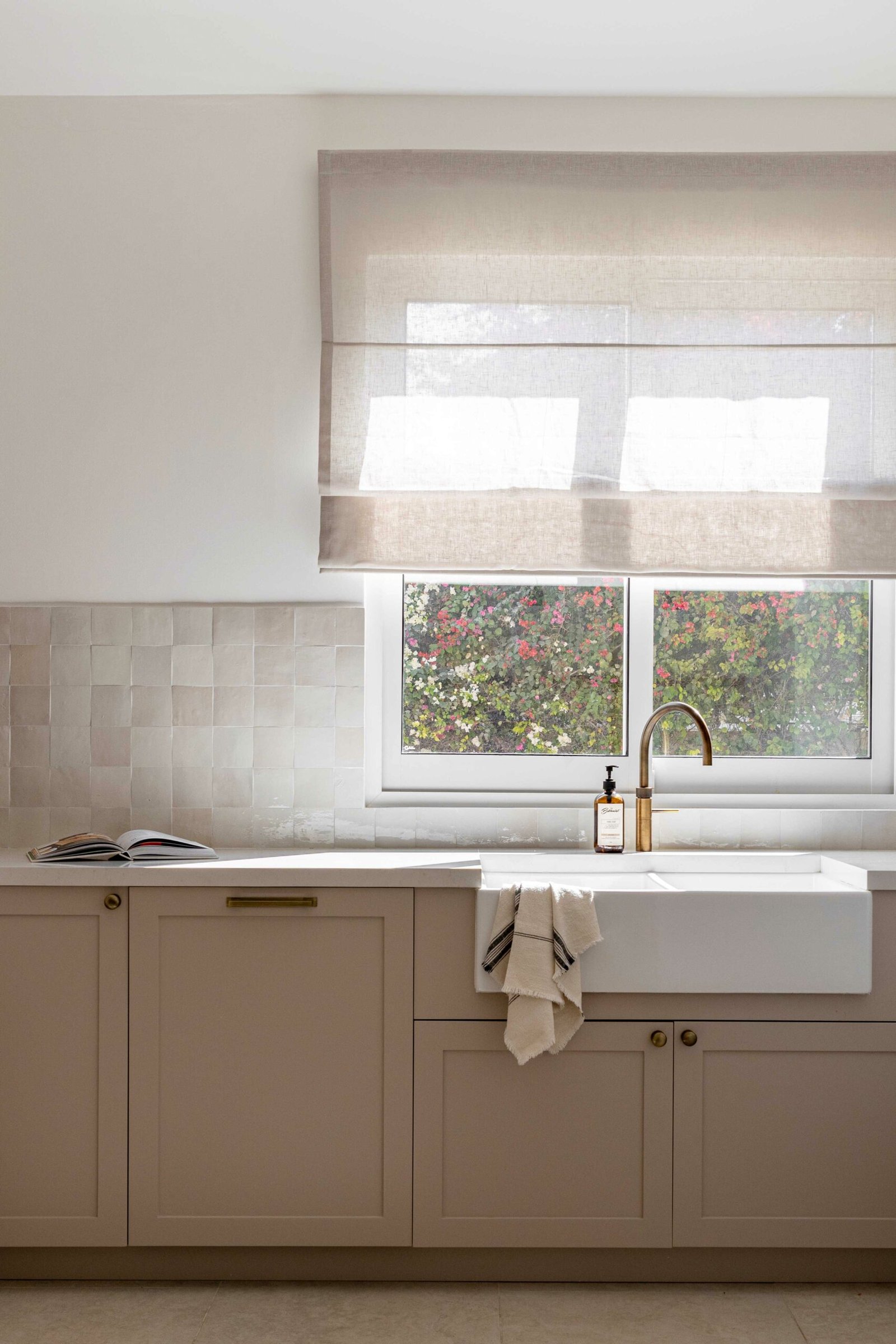
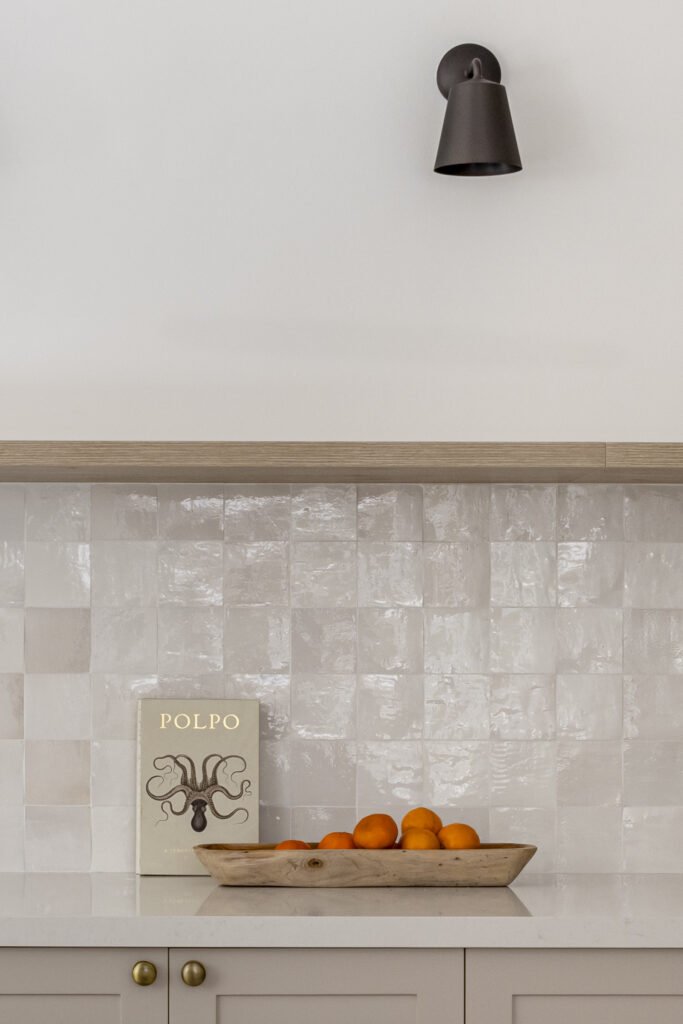
Hand-glazed zellige tiles in a pale, slightly irregular finish run as the backsplash above a quartz counter, their imperfection deliberate against the precision of the joinery.
The cabinetry below, in a muted putty tone with slim brass pulls and a farmhouse sink, sits in deliberate conversation with the tile, and the linen Roman shade above the window completes a colour story that has been held at exactly three notes.
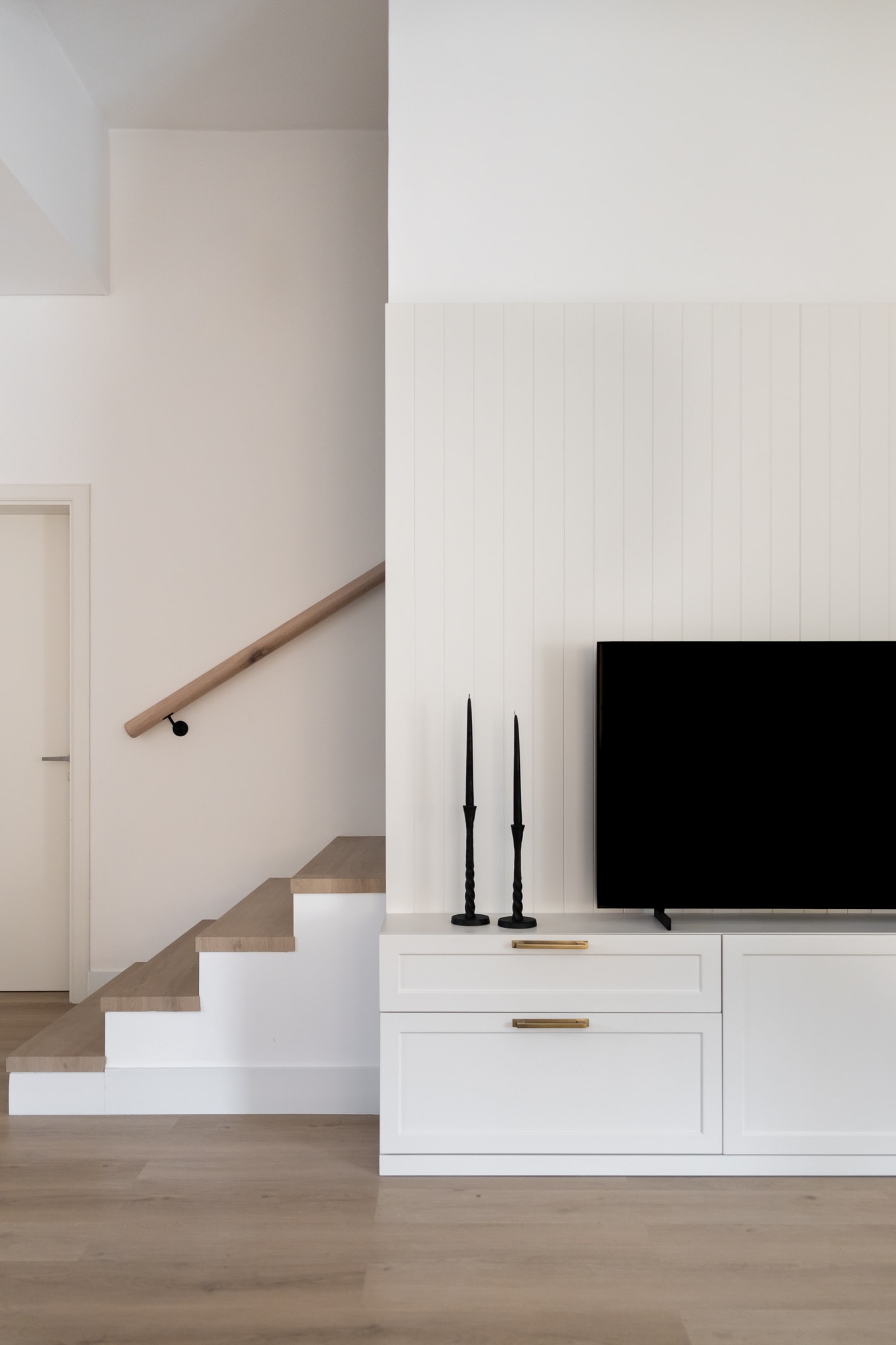
A panelled media unit in white with slim brass pulls sits beside a staircase finished in pale wood treads against white risers, and a simple turned hardwood handrail runs along the wall in lieu of a balustrade.
The vertical wall panelling behind the television is the kind of decision that earns its place by repetition rather than flourish, lending rhythm to a surface that might otherwise have read as flat.
The Mediterranean register, when imported into a contemporary urban context, often suffers from a kind of over-articulation, an anxiety to perform its origins. The Villa avoids this by treating the idiom as a temperature rather than a costume, drawing on its restraint and its tonal economy without resorting to the obvious markers of place.
What lingers, finally, is the quality of attention the studio has brought to a vocabulary that is so easily diluted. The Villa is a measured piece of domestic design, one that understands that the difference between calm and bland lies almost entirely in the editing.