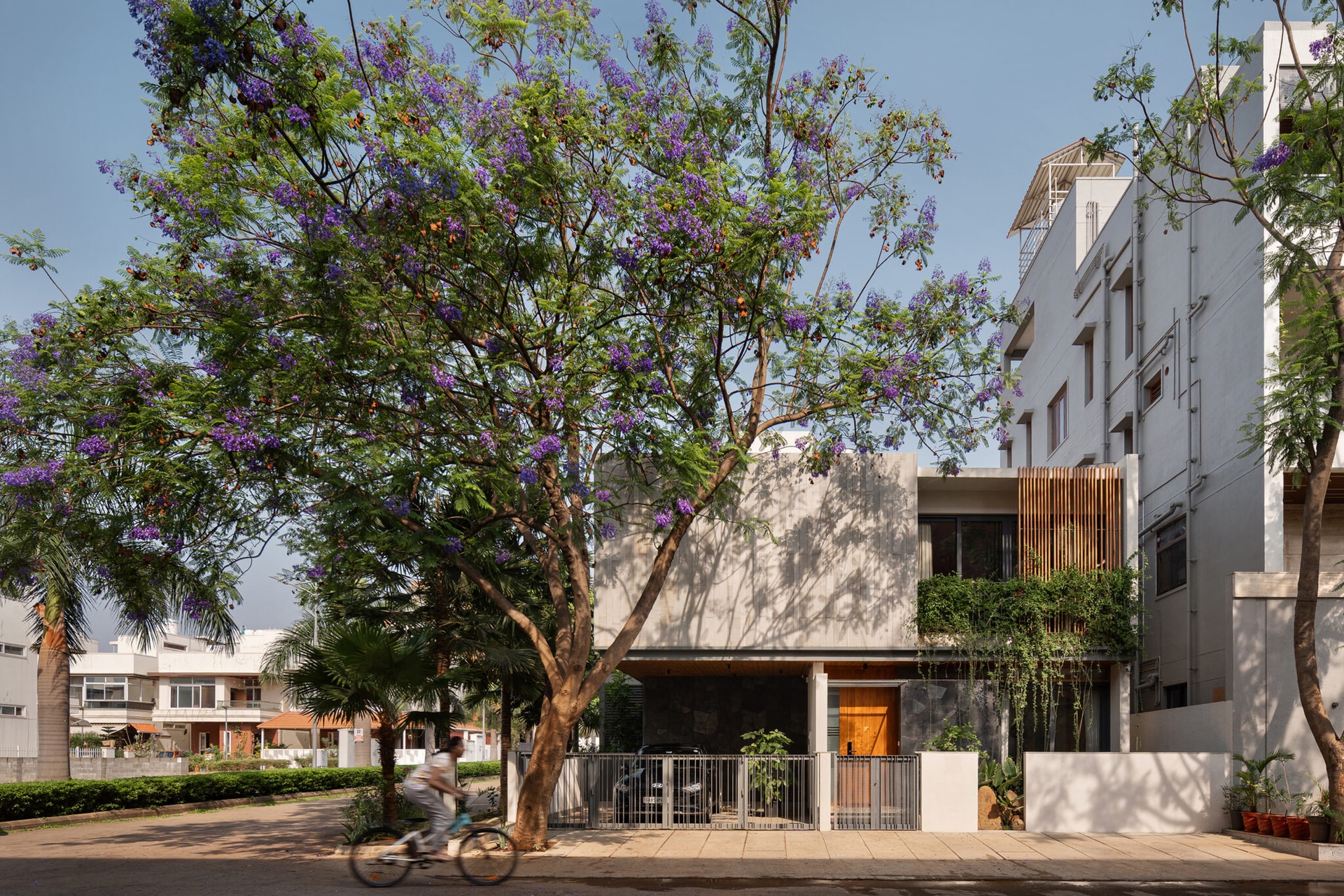
For years, contemporary Indian interiors have largely been defined by a restrained, global minimalism. The Indian Chitra offers a different perspective, one that is equally considered but far richer in cultural expression. Here, folk art, handwoven textiles, handcrafted brass accents, and traditional craftsmanship are not confined to decorative moments but form the very foundation of the home’s design language.
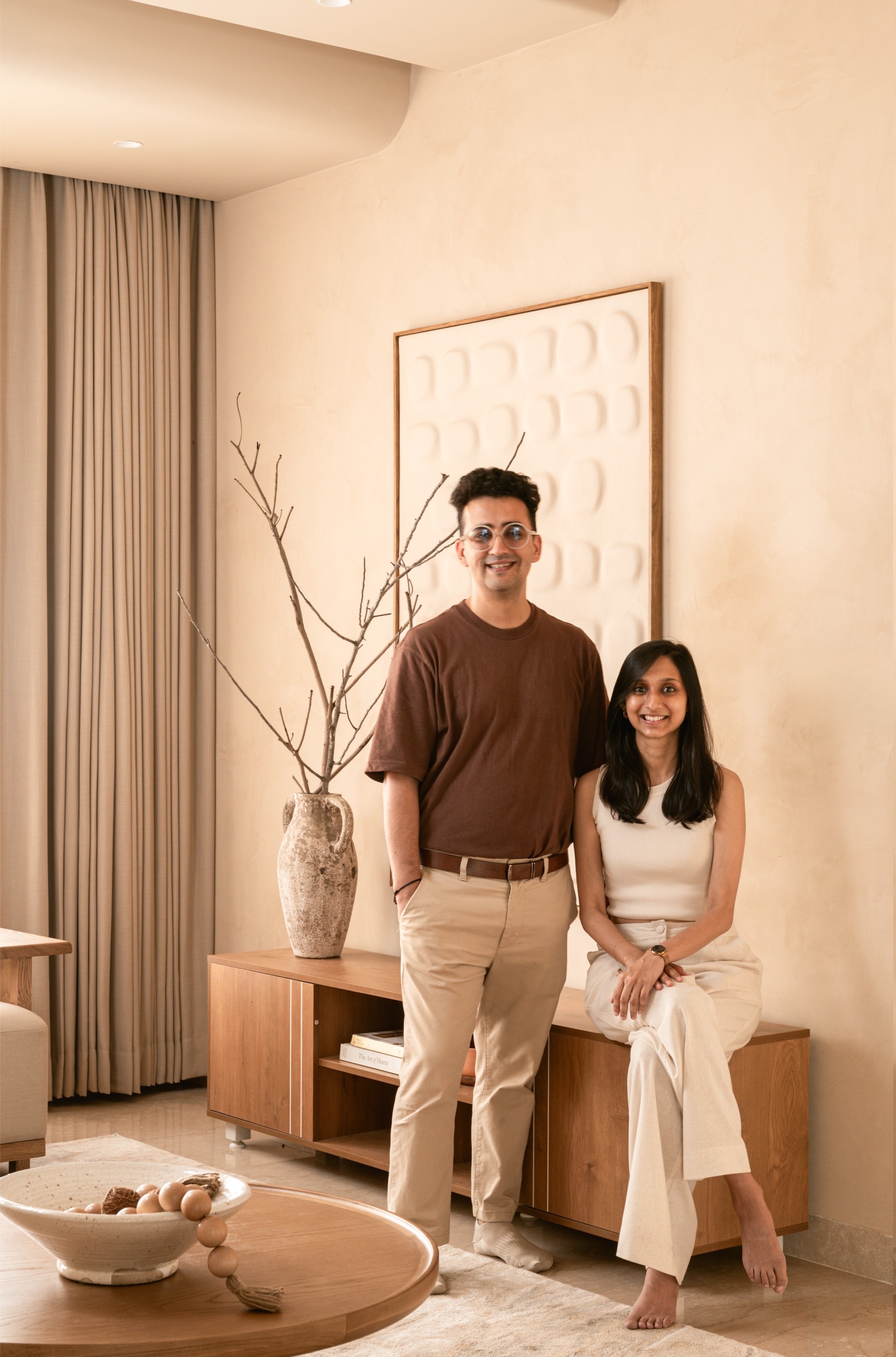
Located in Bengaluru, the residence is designed by Aantrik Interiors, led by principal architects Vedika Modi and Aman Thakur. The clients envisioned a home where traditional craft and contemporary living could coexist seamlessly, without one overshadowing the other. In response, the studio approached the project as a carefully curated environment, where every archway, niche, surface, and piece of joinery was designed to celebrate handcrafted objects and artistic traditions with the same importance often reserved for fine art.
The result is a home that feels thoughtful, layered, and deeply personal. Rather than treating craft as an embellishment, The Indian Chitra integrates it into the architecture itself, creating spaces where culture, memory, and everyday living intersect naturally. It is a project that demonstrates how contemporary Indian homes can embrace heritage not as nostalgia, but as a living and evolving part of modern life.
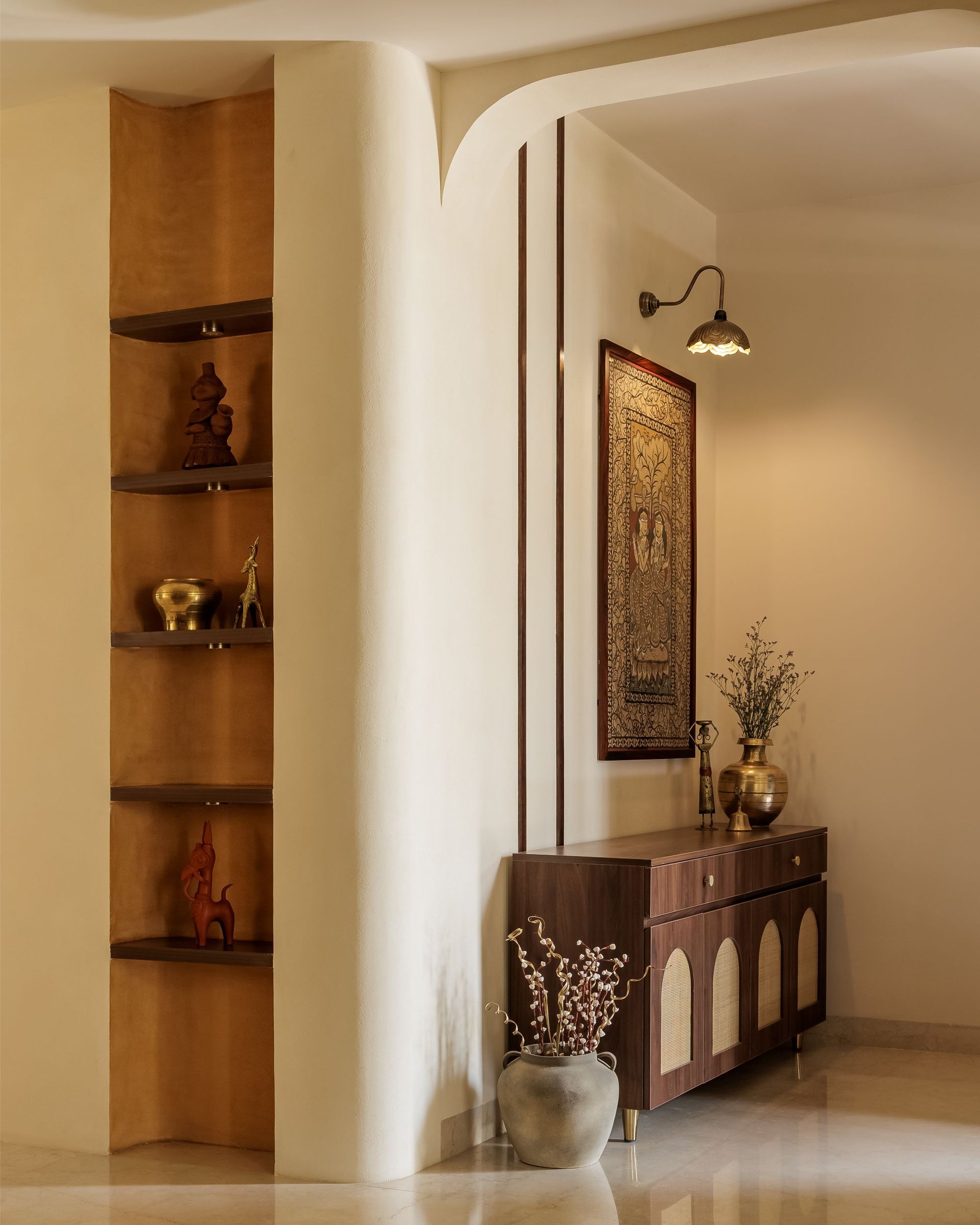
The entry sets the tone immediately. A rounded plaster pier in a soft ochre wash carries an inset run of recessed shelves. Opposite, a walnut-toned console with cane-fronted arched doors anchors a framed Indian artwork lit by a small wall sconce.
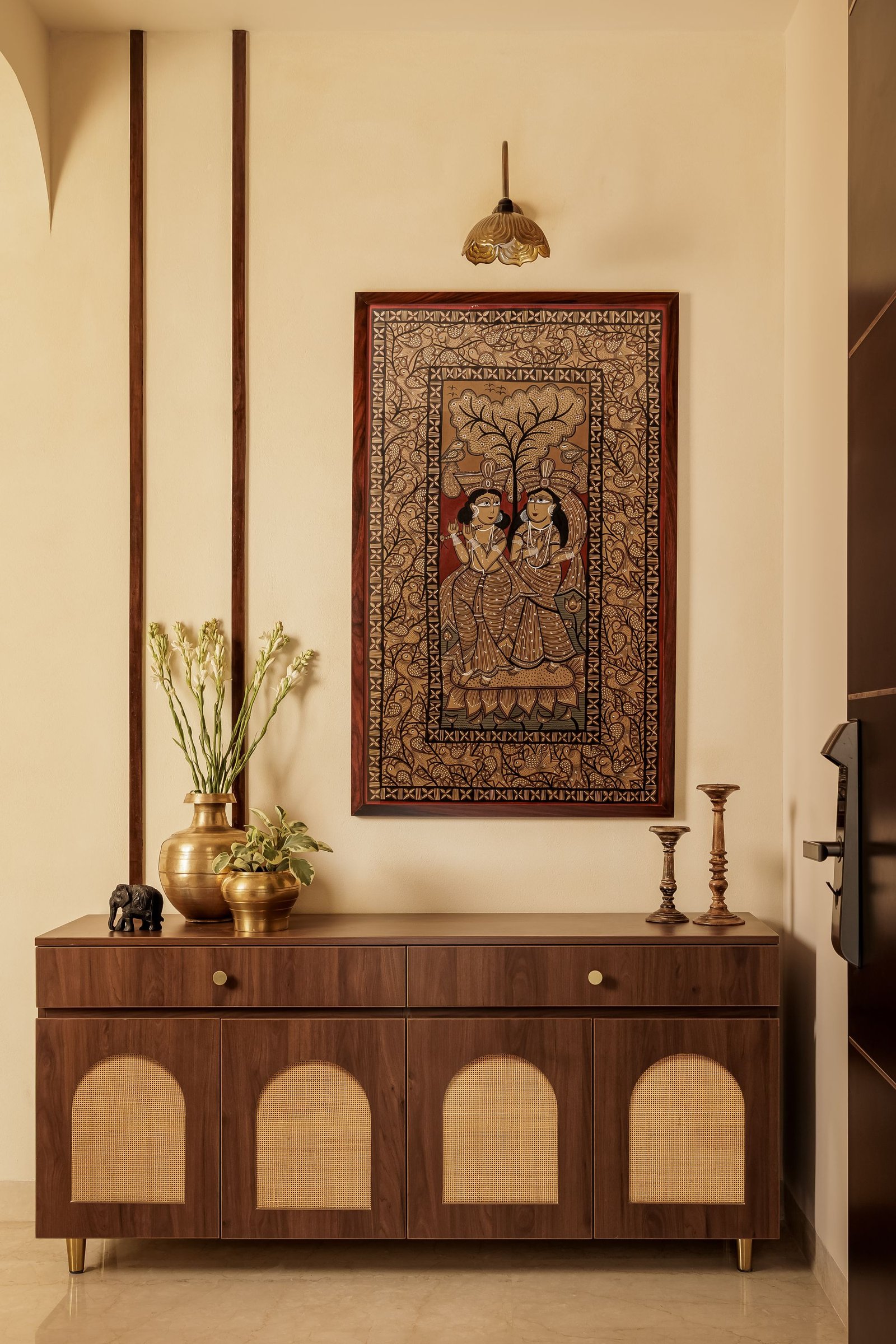
Two slender wooden strips run floor to ceiling alongside the artwork, an architectural device that recurs through the home as a kind of quiet rhythm. The console itself, with its arched cane panels and brass pulls, distills the project’s grammar in a single piece of joinery: warm wood, traditional silhouette, contemporary proportion.
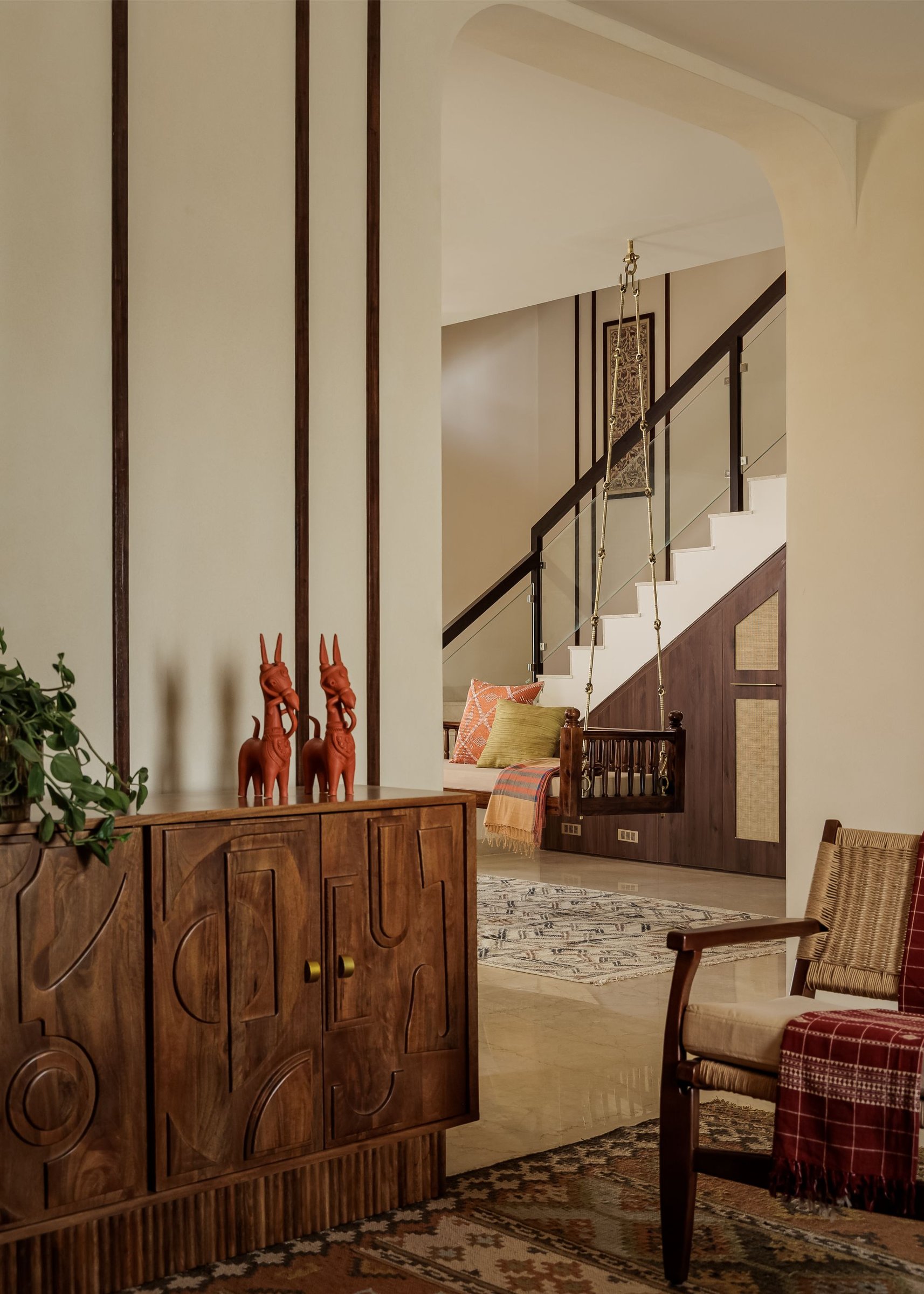
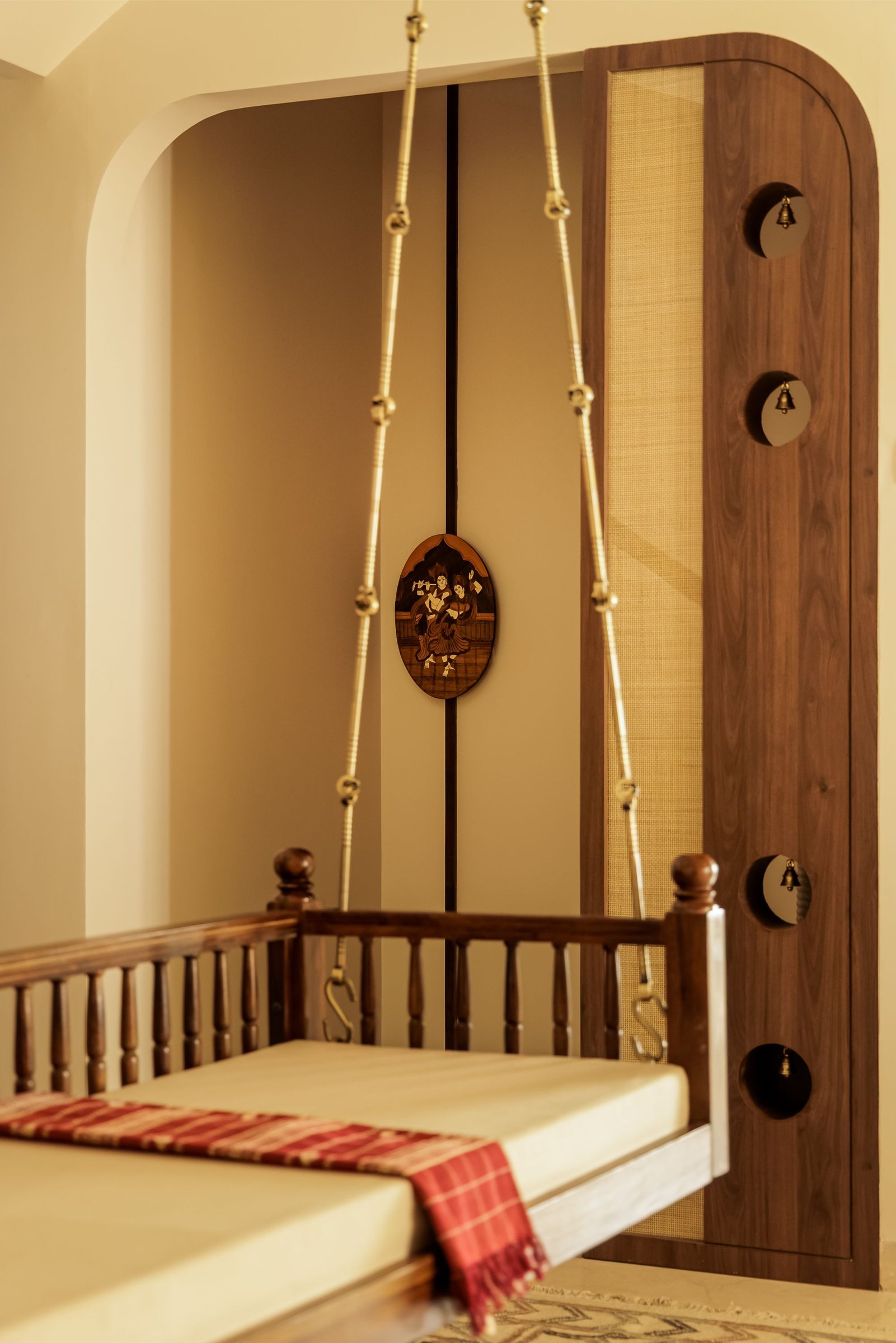
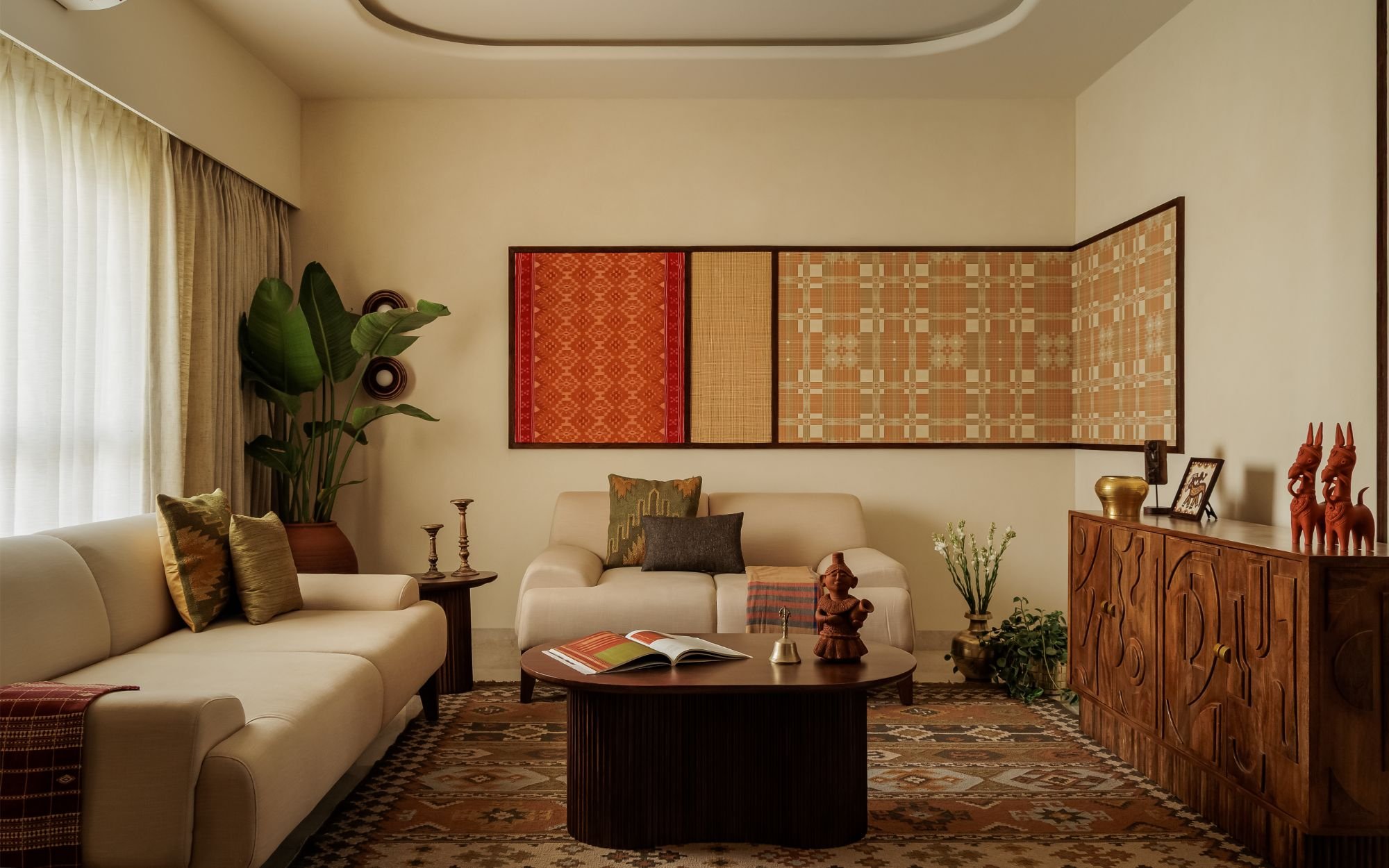
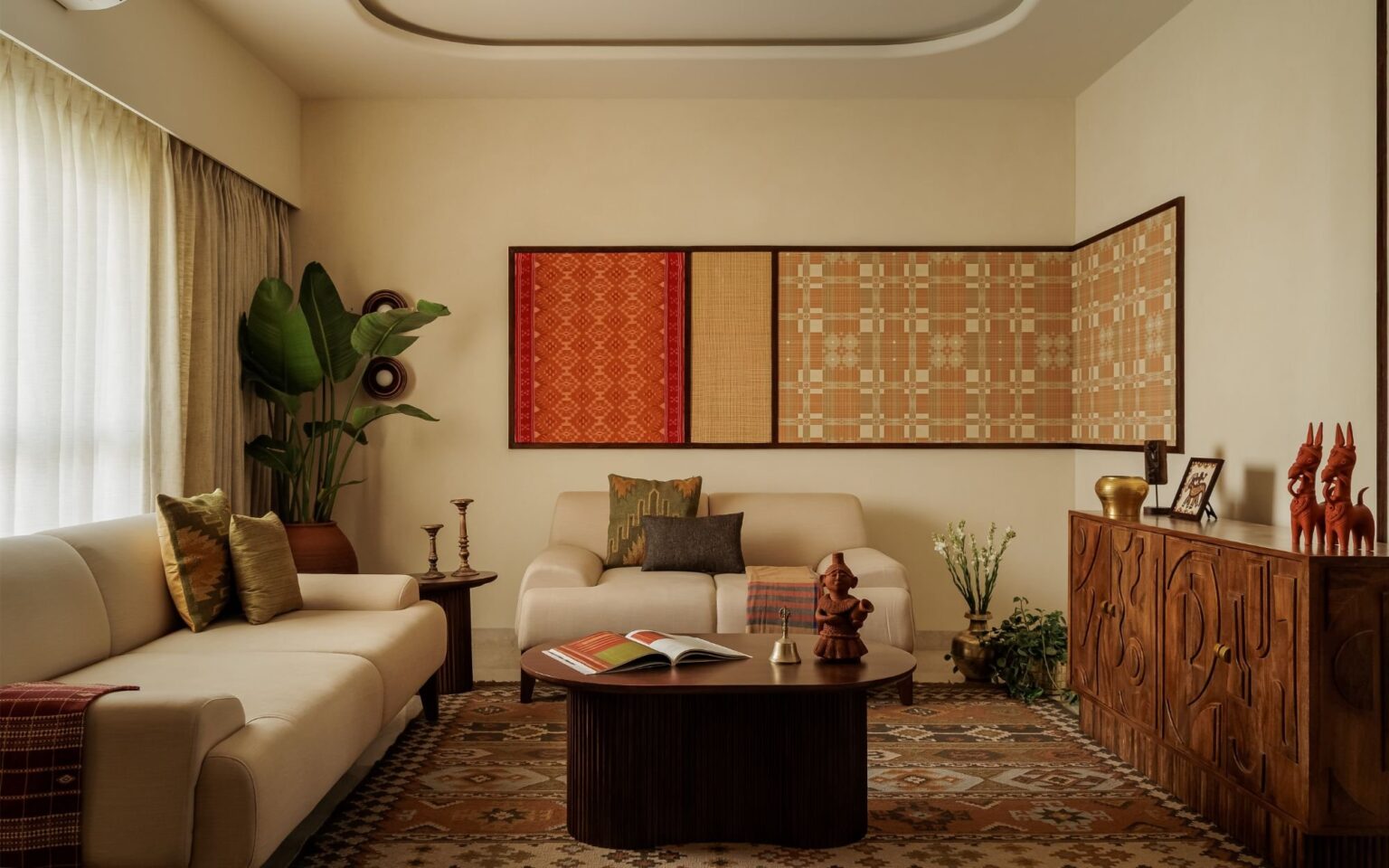
The living room unfolds with a quiet sense of restraint. Cream linen sofas with soft, rounded profiles gather around a fluted wooden coffee table, while a muted kilim in earthy tones anchors the arrangement. Layered with texture rather than excess, the space exudes a deliberate sense of calm, where every element contributes to an atmosphere of warmth, balance, and understated elegance.
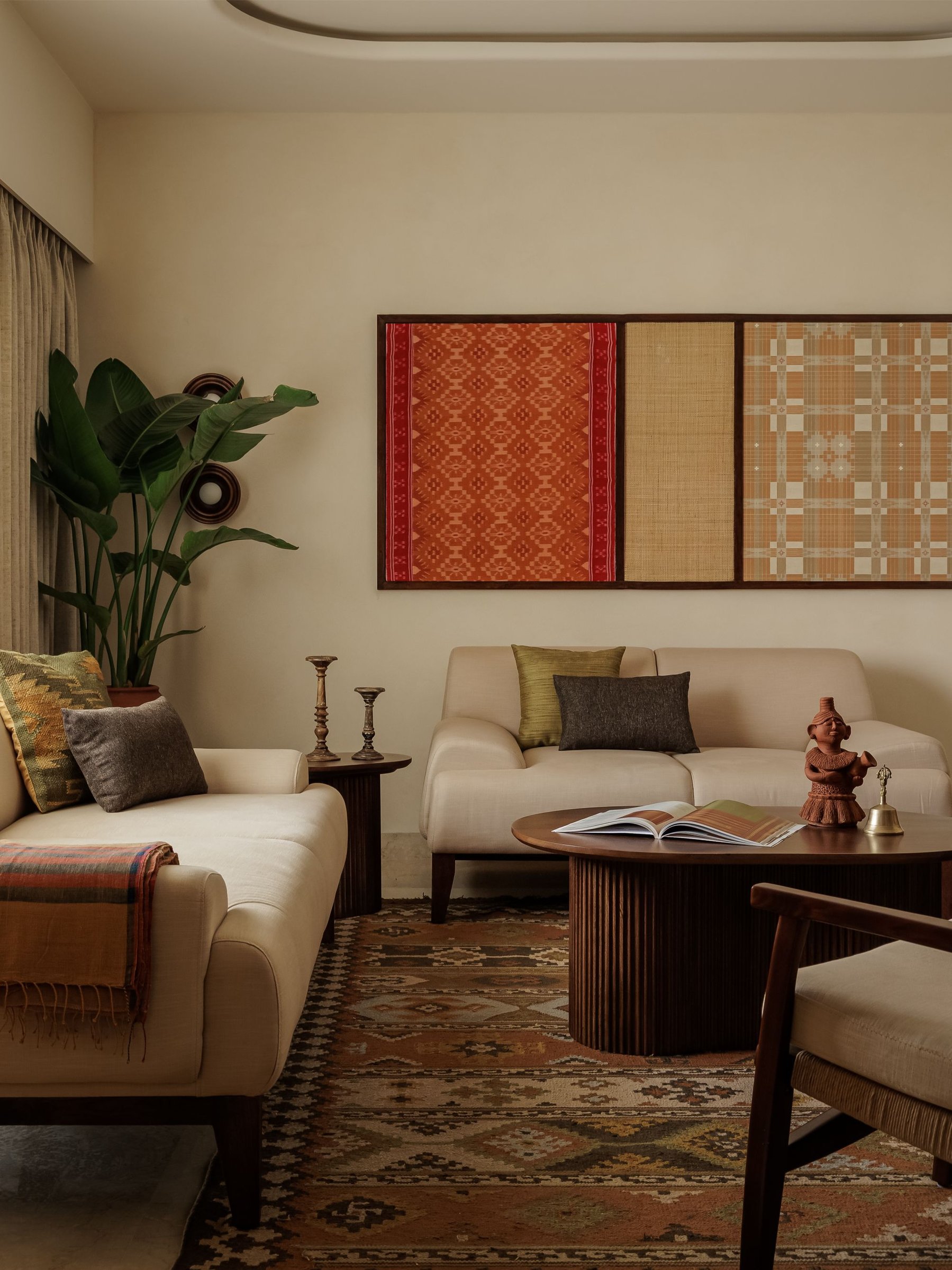
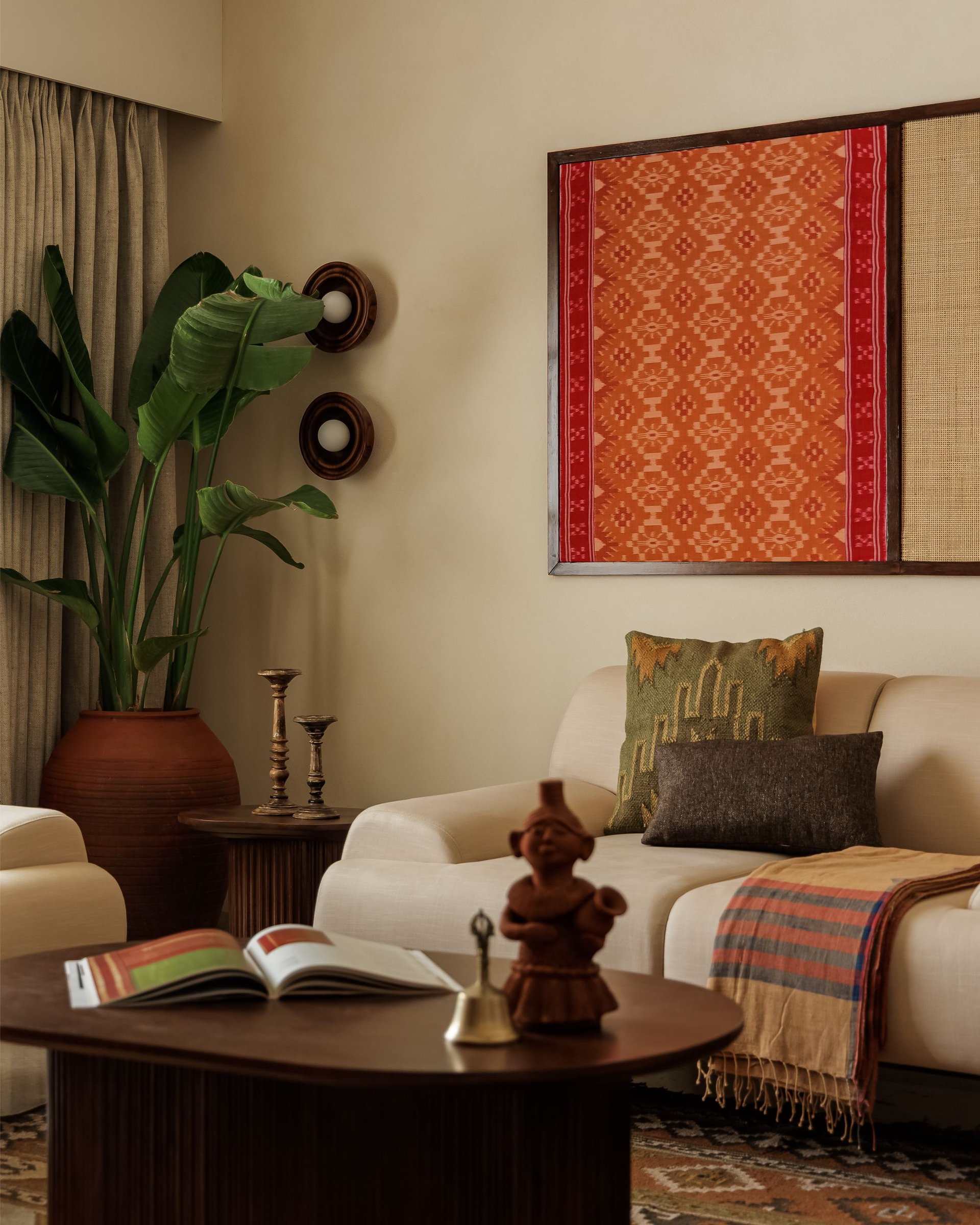
Above the seating, a carefully composed triptych of framed handwoven textiles serves as the room’s focal artwork. Featuring an Ikat weave in warm red and orange hues, a neutral grass weave, and a checked cotton textile, the installation celebrates the beauty of craft through a contemporary lens. This reflects one of the studio’s defining gestures: elevating traditional textiles beyond their functional role and presenting them as works of art, with the same visual presence and significance as a painting.
““A home where traditional Indian soul and fine art are seamlessly integrated into a contemporary lifestyle.””
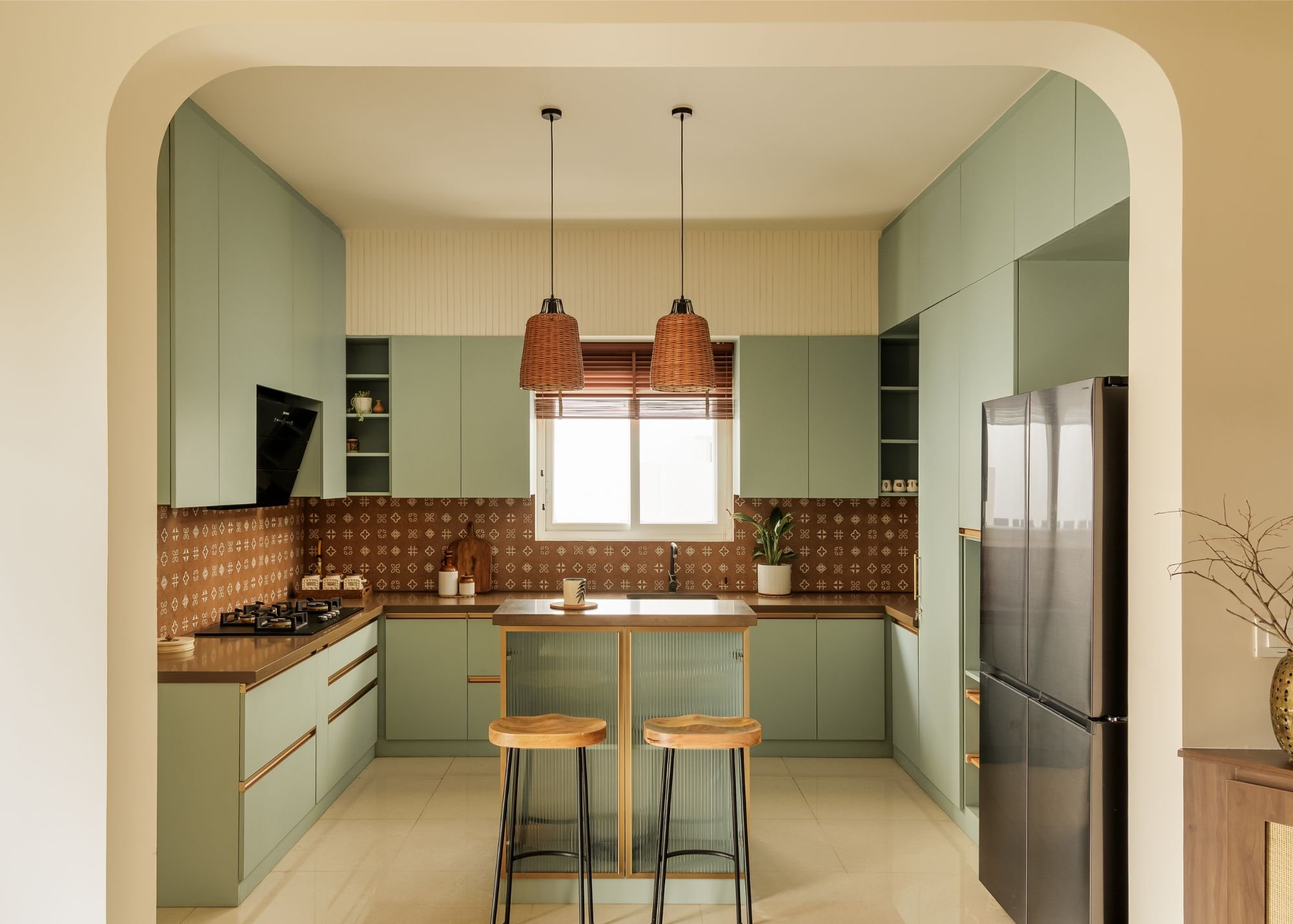
The kitchen is revealed through an arched opening, where a subtle shift in palette signals a distinct yet harmonious character. Floor-to-ceiling sage-green cabinetry wraps three sides of the space, complemented by a patterned terracotta backsplash whose delicate geometric motifs introduce a layer of warmth and cultural familiarity. At the centre, a compact island with fluted glass detailing and a wooden countertop is illuminated by a pair of woven cane pendants, adding texture and softness to the composition.
What makes the space particularly compelling is its sense of balance. The architectural shell remains intentionally restrained, allowing the terracotta backsplash to emerge as the room’s defining feature without overwhelming it. The interplay of sage green and earthy terracotta feels natural and measured, creating a kitchen that is contemporary in function yet deeply rooted in material warmth and craft. Rather than relying on overt references, the space achieves its character through thoughtful contrasts, resulting in an environment that feels both refreshed and timeless.
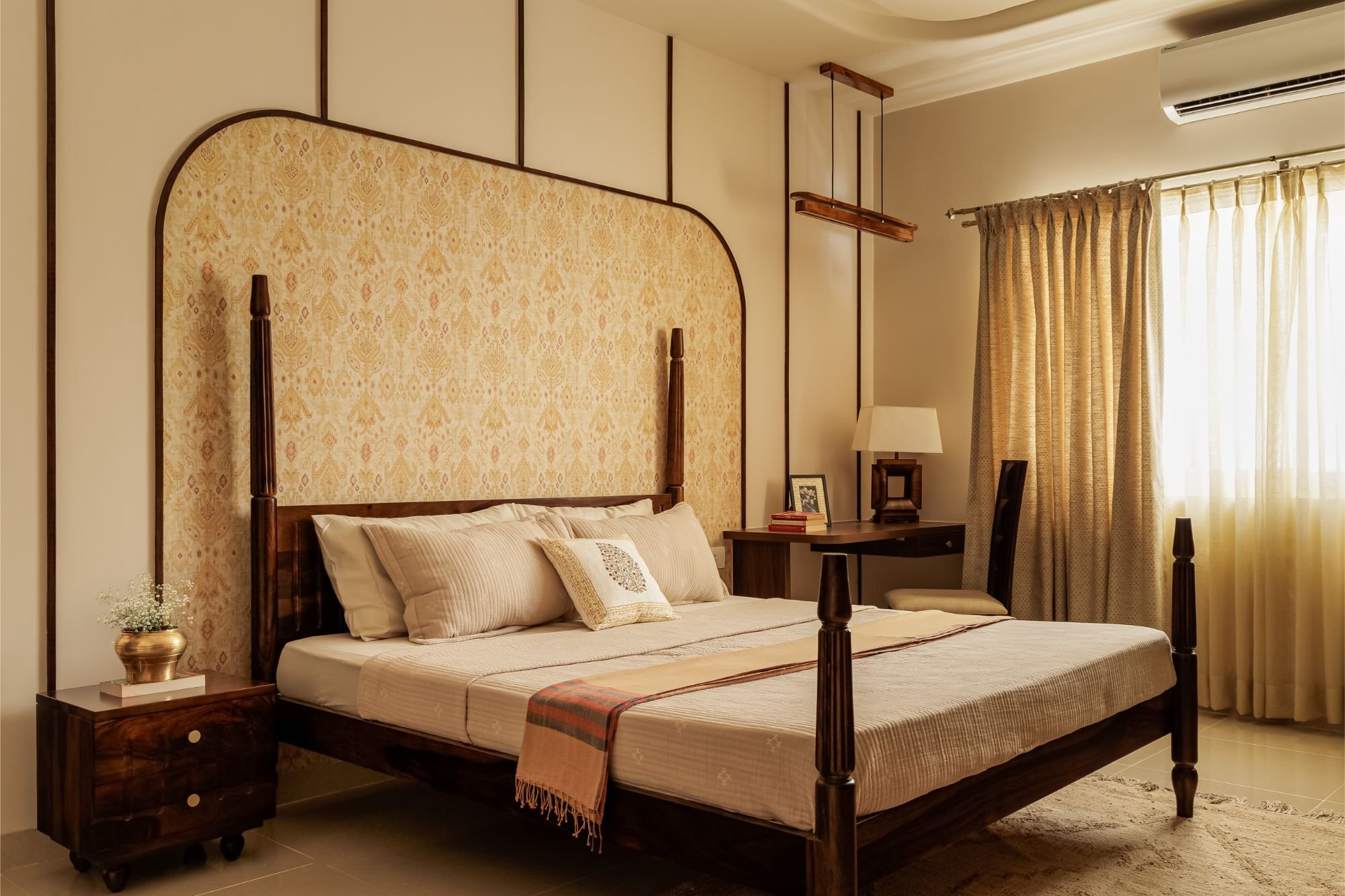
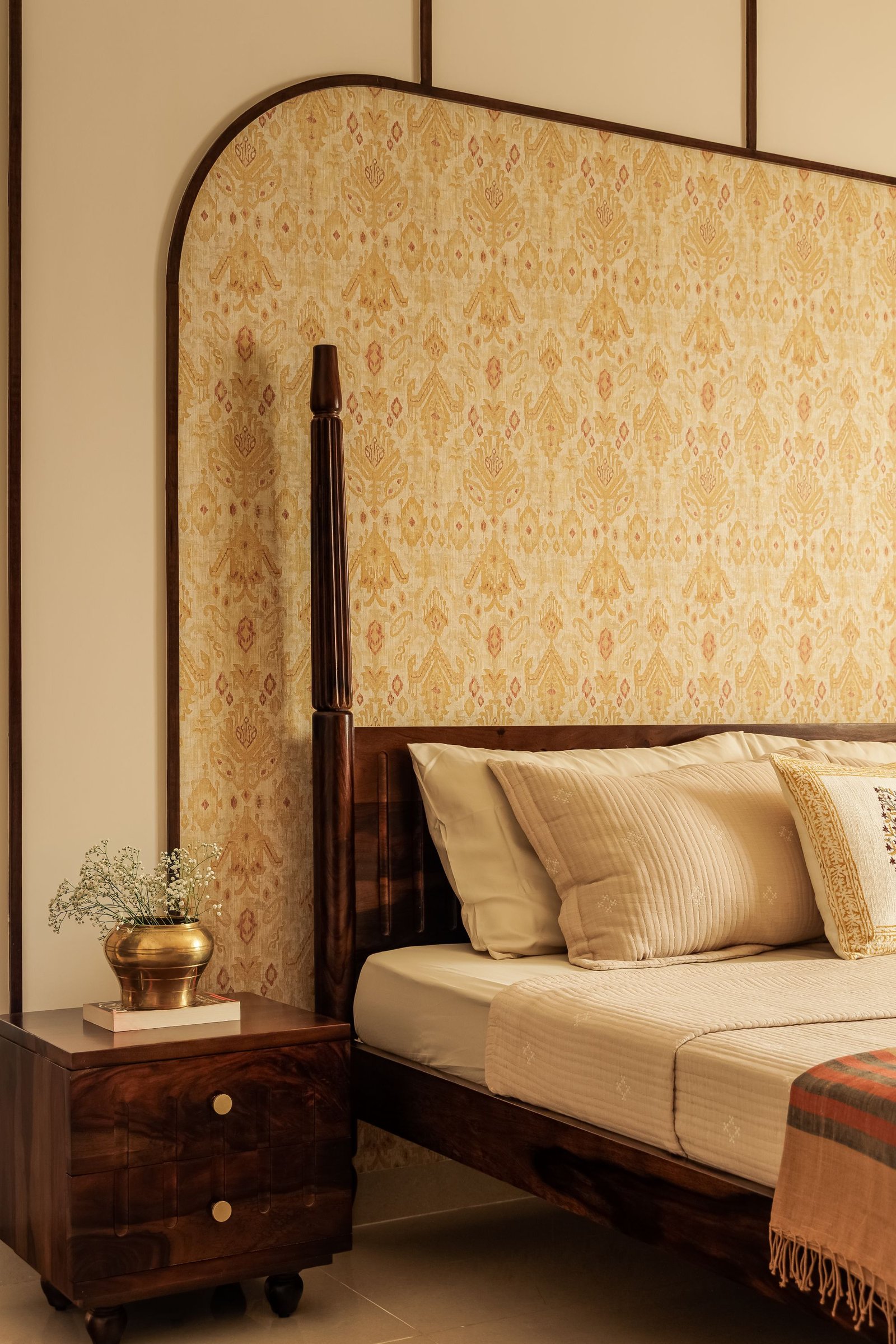
The master bedroom is anchored by a handcrafted Sheesham wood four poster bed, whose turned posts and panelled headboard lend the space a sense of timeless character. Behind it, a tall arched inset clad in saffron patterned wallpaper creates a warm and elegant backdrop, drawing the eye upward while subtly framing the bed. Defined by a slender wooden border and flanked by the vertical detailing that recurs throughout the home, the composition introduces a quiet symmetry that feels both considered and effortless.
Rather than relying on ornamentation, the room derives its richness from materiality, proportion, and craft. The warmth of the Sheesham wood paired with the soft patterning of the wallpaper creates a layered yet restrained atmosphere, one that feels deeply rooted in tradition while remaining calm, contemporary, and enduring.
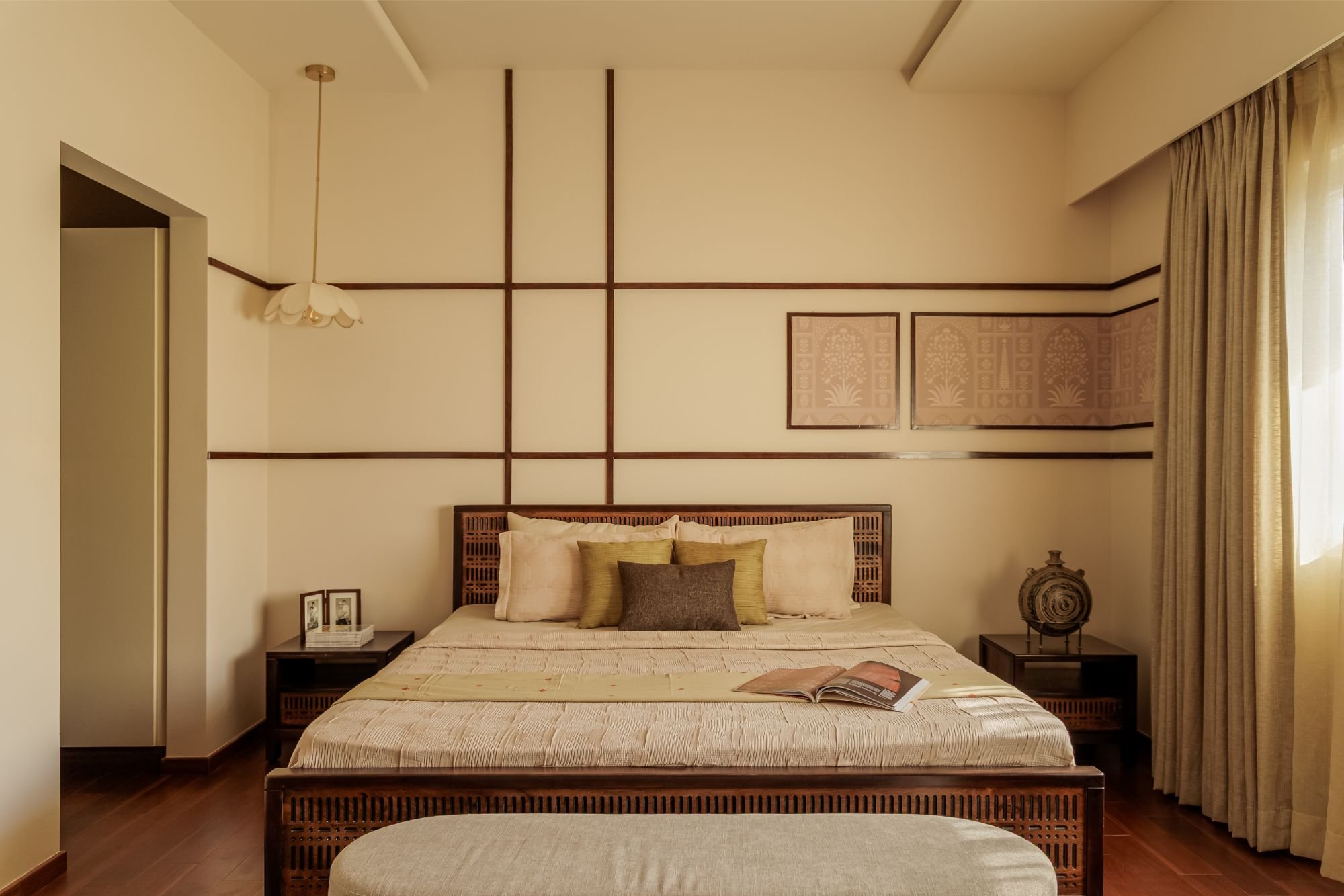
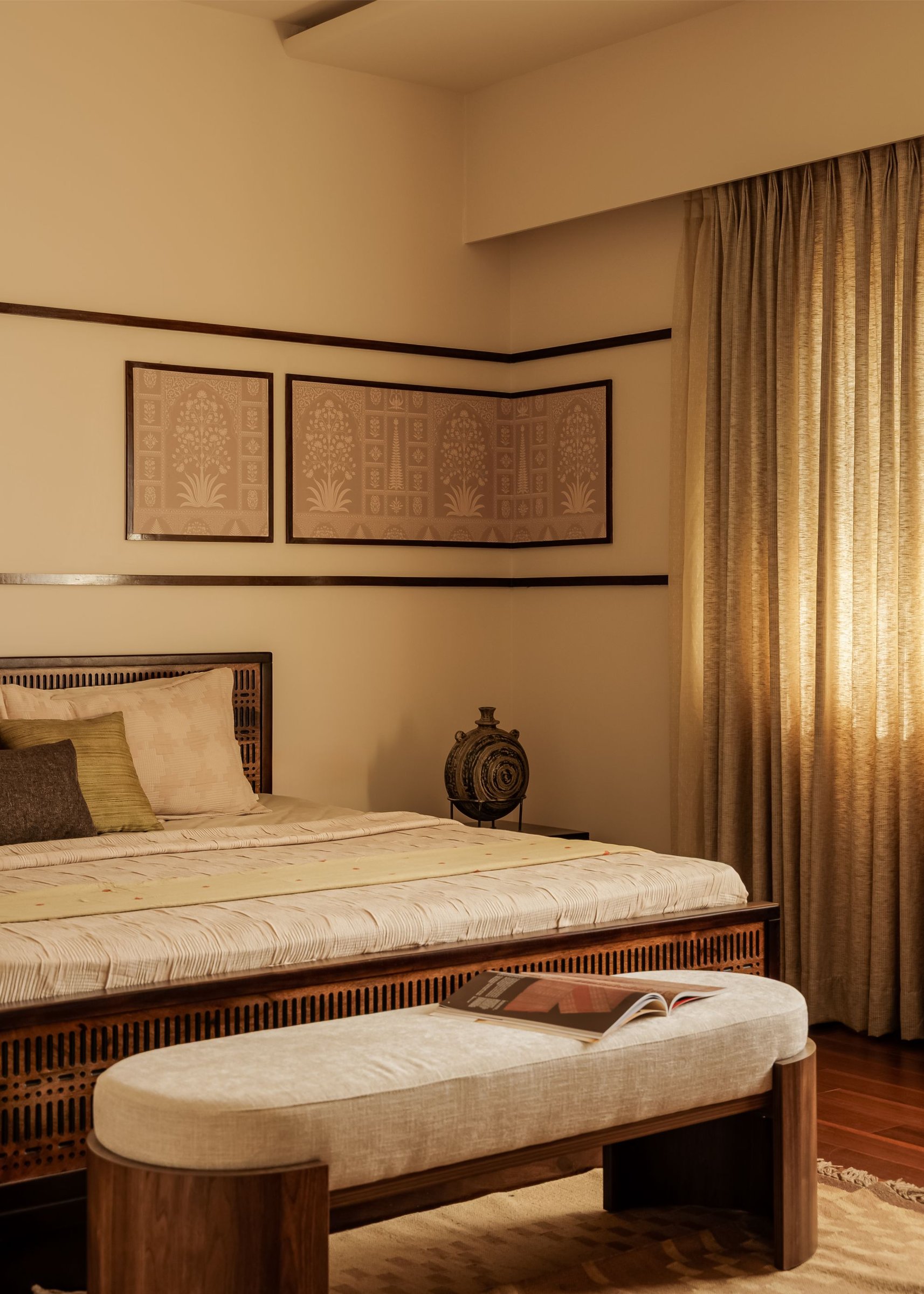
The second bedroom adopts a more contemporary expression while remaining rooted in the home’s material language. Dark wooden strips are arranged across a cream wall in a carefully composed geometric grid, creating a play of intersecting horizontal and vertical lines that lend the space structure and visual rhythm. Within this framework, a pair of muted blush block printed artworks introduces a subtle layer of colour and craftsmanship.
Balancing the graphic quality of the wall treatment, the bed features a woven cane headboard and turned wooden posts that bring warmth and tactility to the room. The interplay between clean geometry and handcrafted detailing creates a space that feels both refined and inviting, where contemporary design is softened by the presence of traditional craft.
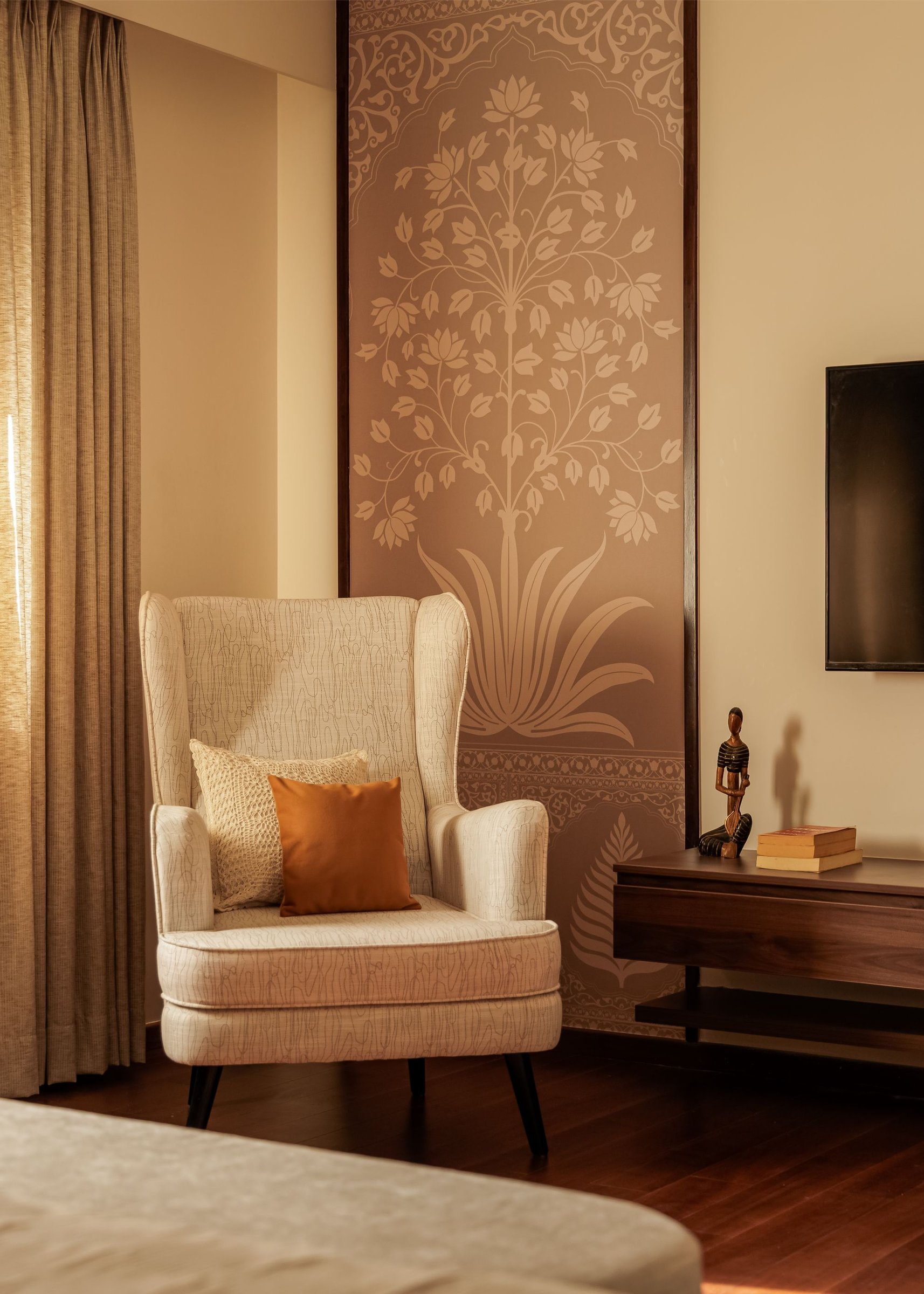
A thoughtfully designed reading nook beside the bed introduces a quieter, more intimate layer to the room. A cream wingback chair is positioned against a tall wallpaper panel adorned with a stylised lotus and vine motif in warm taupe tones, creating a gentle visual backdrop that evokes a sense of calm. The composition is both elegant and inviting, encouraging moments of rest and reflection.
Beneath the wall mounted television, a media console styled with a small carved figure and a curated stack of books adds warmth and personality to the setting. Together, these elements transform what might otherwise have been a transitional corner into a purposeful retreat, demonstrating the home’s emphasis on creating meaningful spaces for everyday rituals.
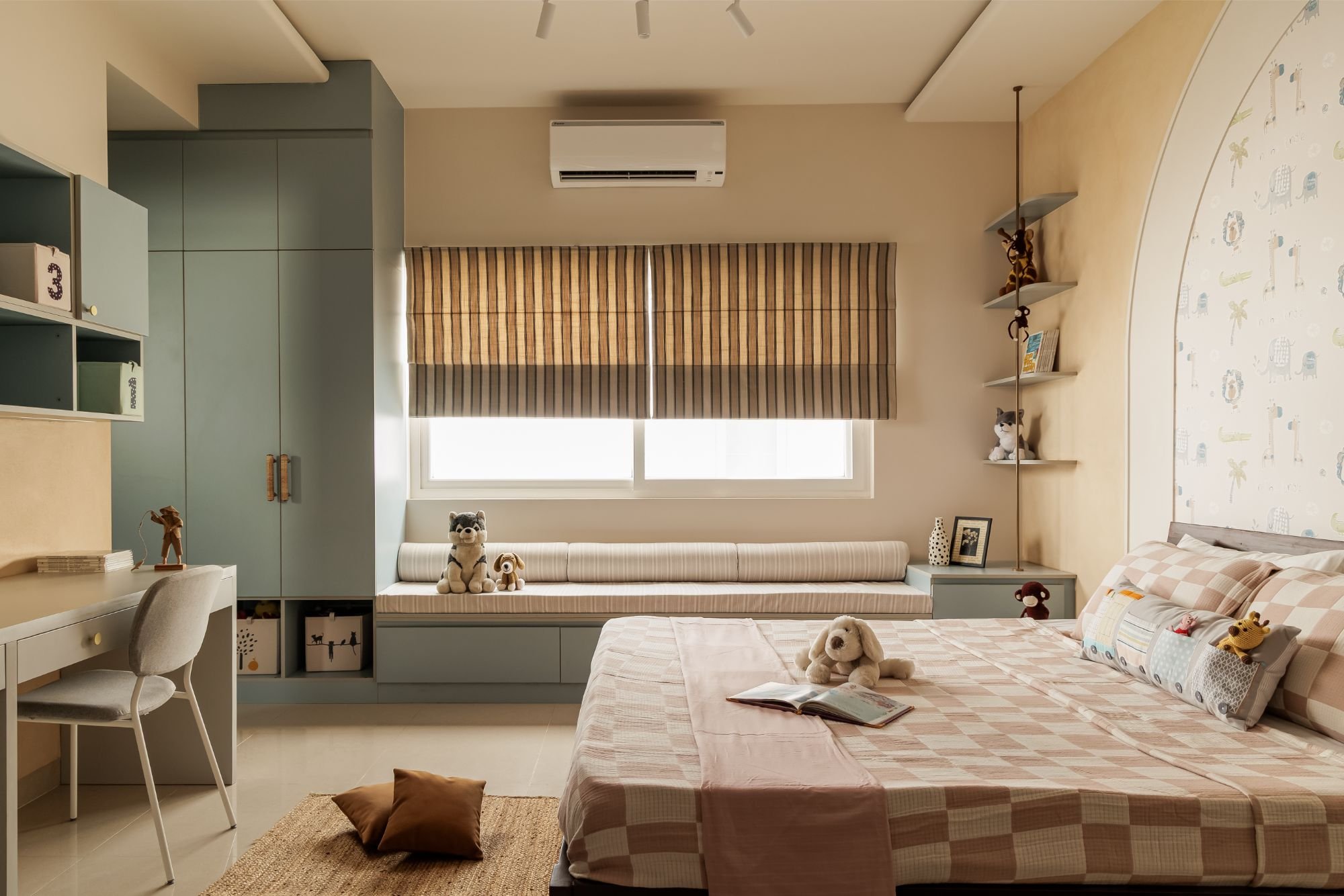
The children’s room introduces a lighter and more playful expression while remaining aligned with the home’s overall design language. Sage green wardrobes extend along one wall alongside a built in window seat upholstered in a soft striped fabric, creating a cosy corner for reading, play, or quiet moments. A compact study desk is thoughtfully integrated into the layout, ensuring the room supports both creativity and everyday routines.
Opposite, an arched feature wall clad in whimsical animal print wallpaper forms a charming backdrop to the bed. Layered with checkered linens and a gentle palette of soft pinks, the room strikes a careful balance between playfulness and longevity. Rather than relying on overtly themed elements, the design embraces timeless colours, natural materials, and subtle storytelling, creating a space that can comfortably evolve alongside its young occupant.
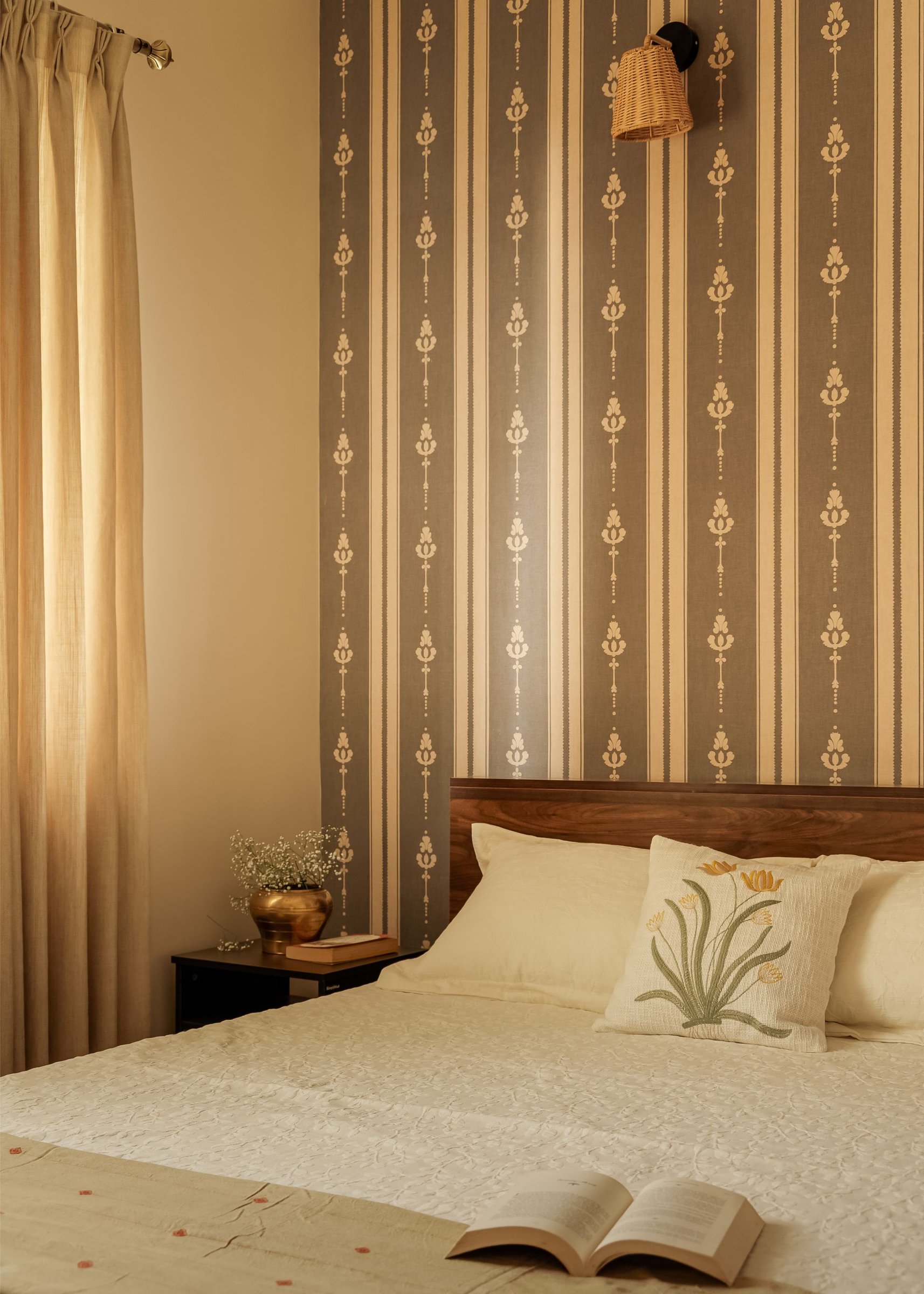
The guest bedroom adopts a quieter and more understated character, offering a sense of comfort that feels both refined and welcoming. A wallpaper featuring delicate vertical stripes and small repeating floral motifs in muted shades of grey and cream rises behind a low wooden headboard, adding depth and subtle pattern to the space without overwhelming it. The restrained palette lends the room a timeless quality, creating an atmosphere of calm and ease.
A woven wall sconce introduces a handcrafted touch, its natural texture gently contrasting with the patterned backdrop. Thoughtfully composed and free from excess, the room embodies the quiet confidence of a well designed guest retreat. Every element feels considered, resulting in a space that is warm, restful, and effortlessly inviting.
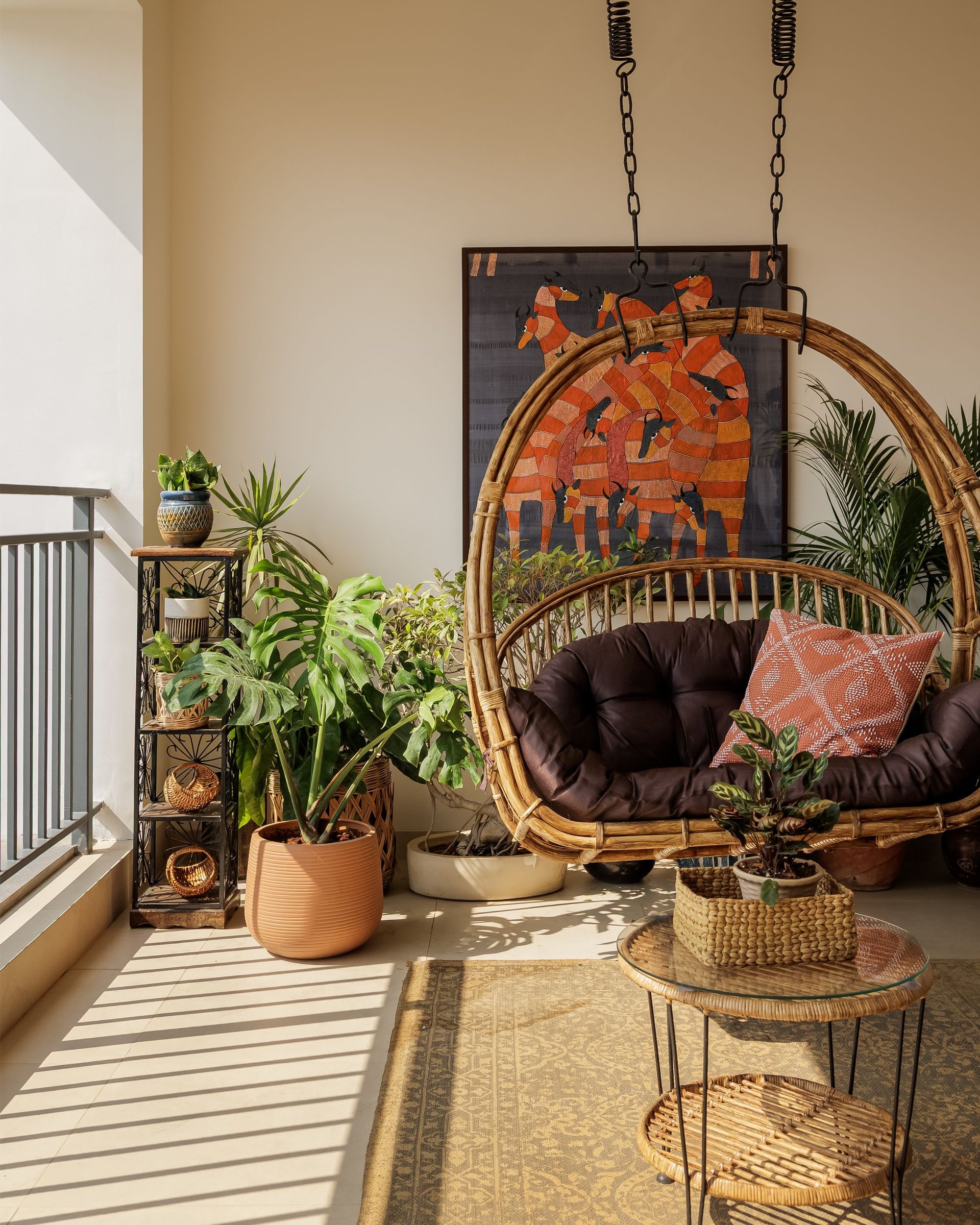
The balcony concludes the journey through the home with a sense of lightness and ease. A generously cushioned rattan hanging swing anchors one end of the space, positioned against a vibrant folk inspired artwork depicting striped cattle in warm shades of orange against a dark backdrop.
At its core, The Indian Chitra presents a thoughtful reimagining of how traditional craft can inhabit a contemporary home. Handwoven textiles, folk art, natural materials, and artisanal detailing are not treated as decorative additions but as integral elements of the design language itself. The cultural references are woven seamlessly into the architecture and interiors, creating a narrative that feels authentic, cohesive, and deeply rooted in place.
In a city like Bengaluru, where contemporary homes often gravitate towards a more globalised aesthetic, the project offers a compelling alternative. It demonstrates that tradition need not be preserved behind glass or introduced as an accent. Instead, it can confidently shape the character of a home when given the space to lead. The Indian Chitra is ultimately a celebration of craft, proving that timeless design emerges not from spectacle, but from trust in the beauty and relevance of cultural heritage.