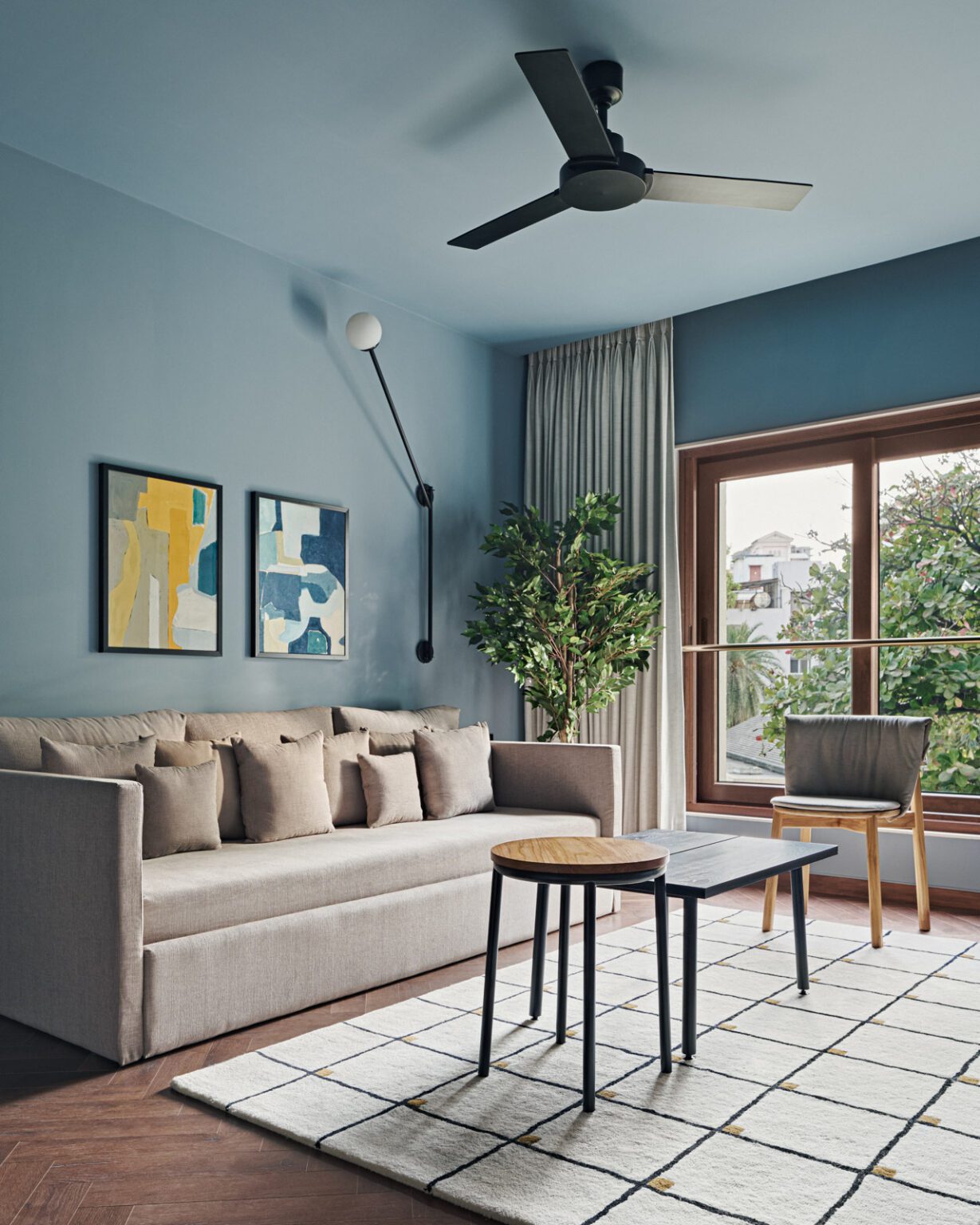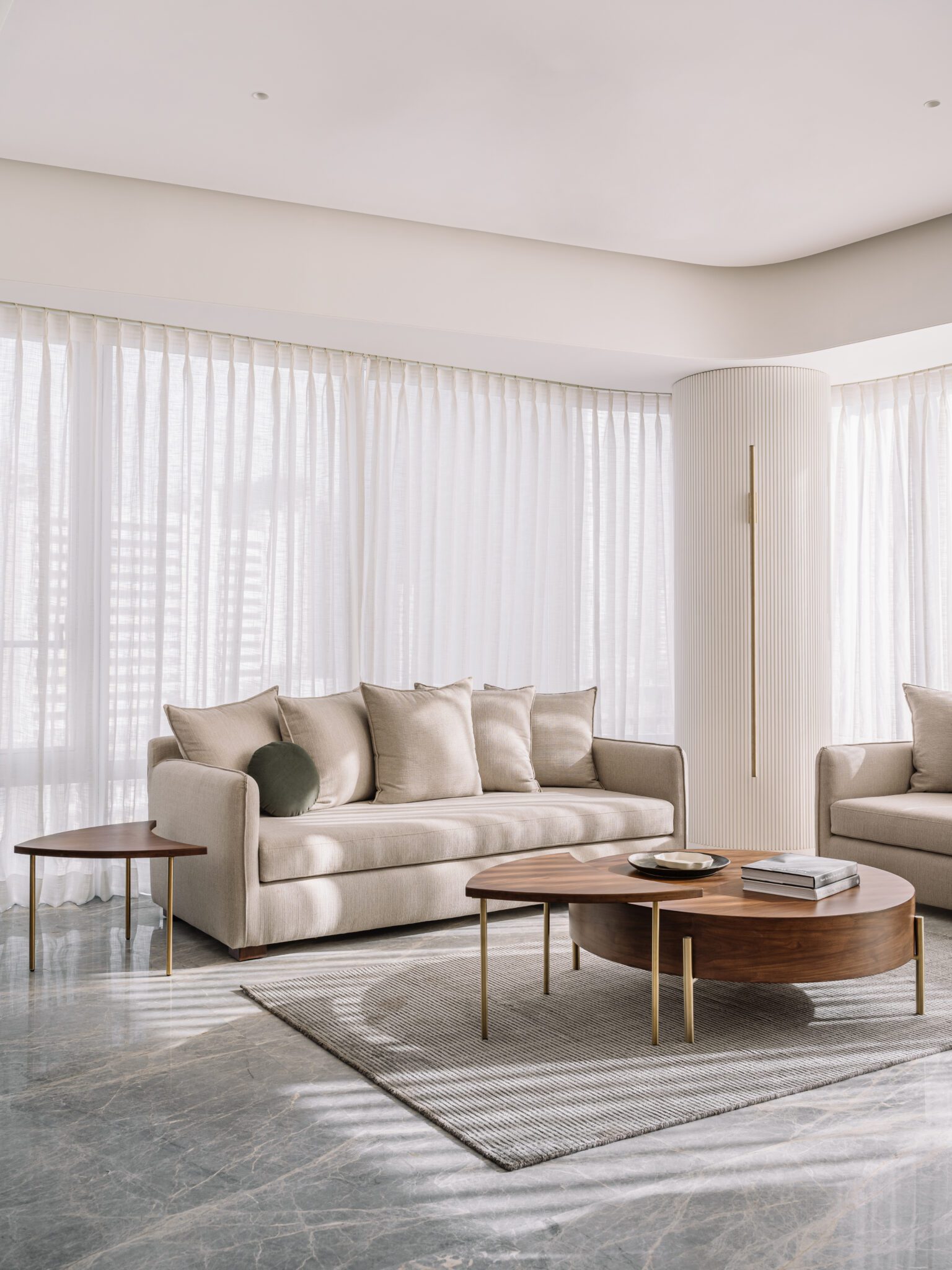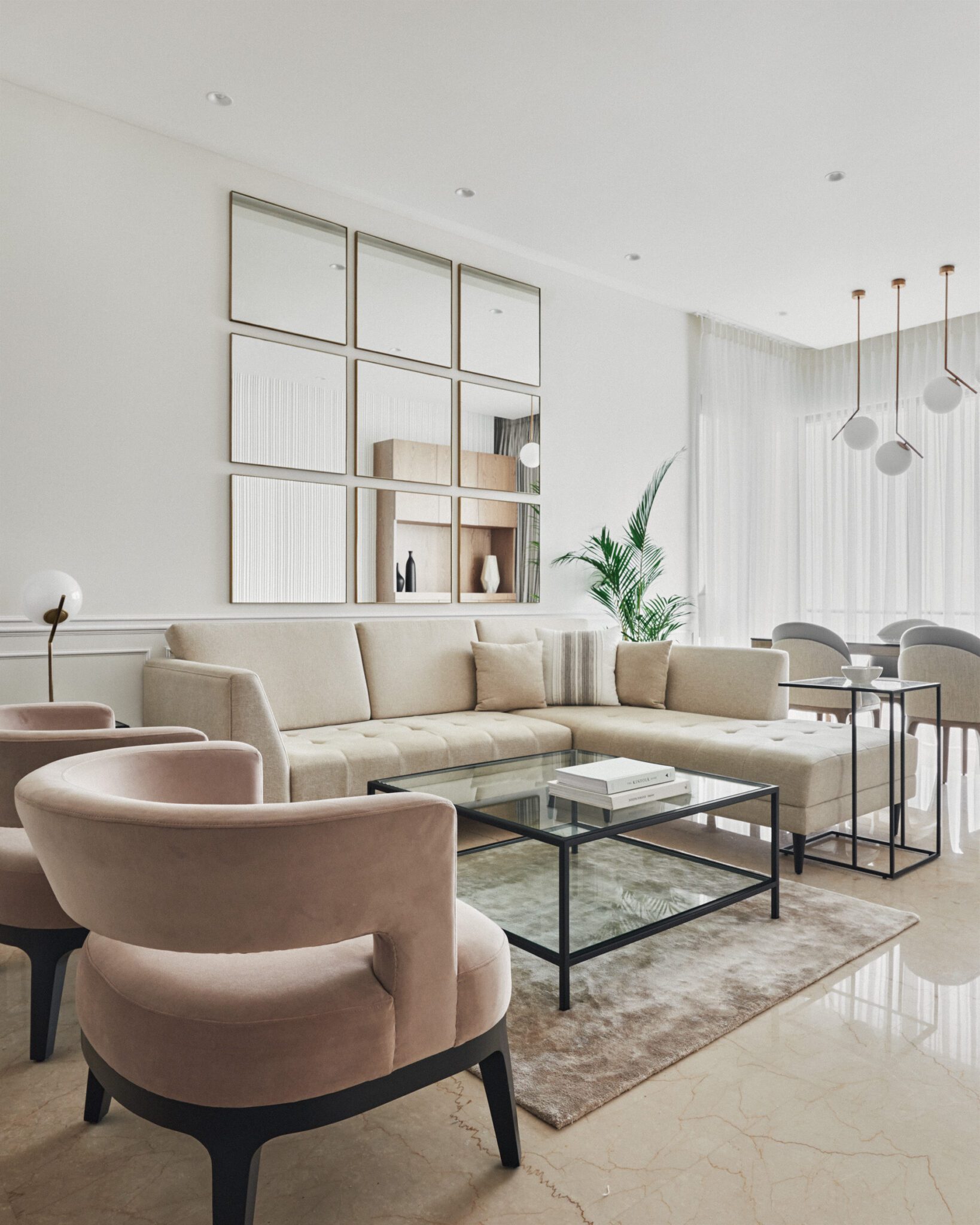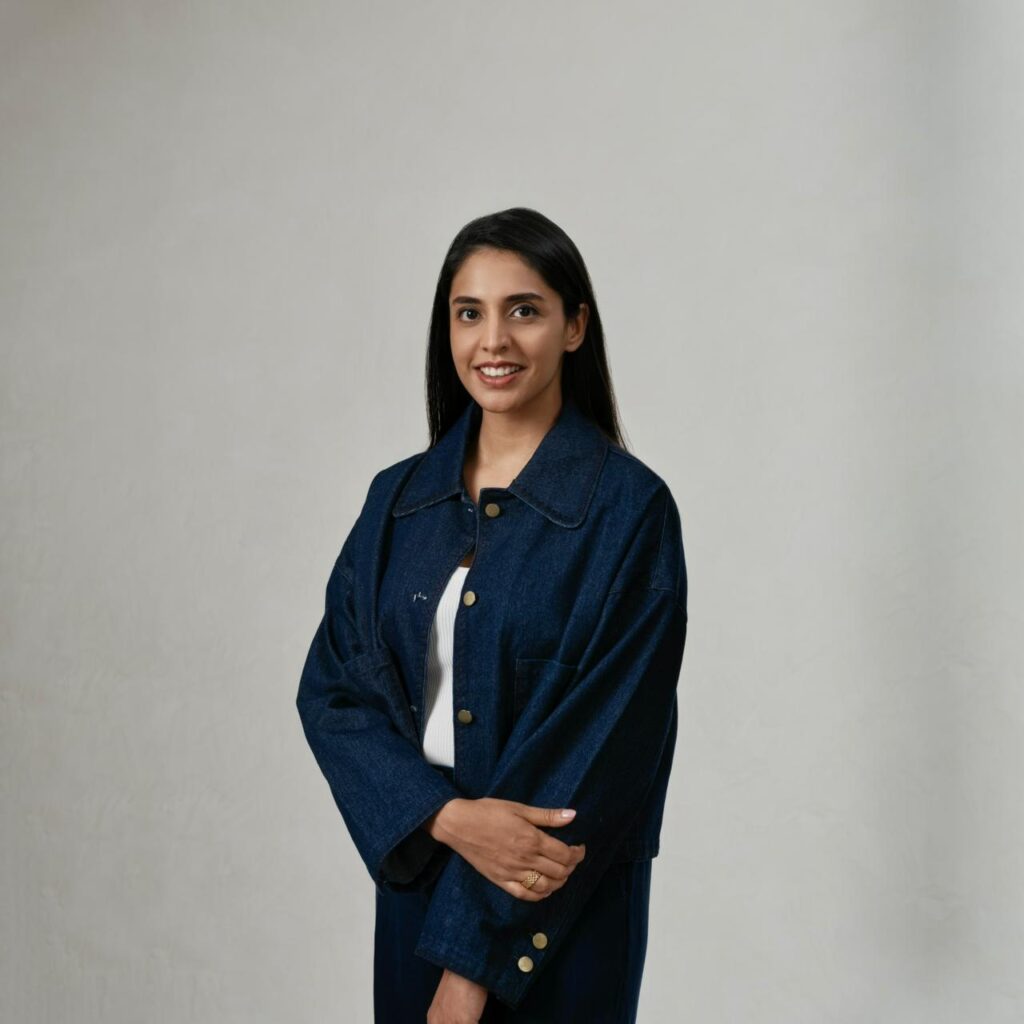
Aashni Kumar begins with the sentence most designers reserve for the conclusion. Ask the founder of her eponymous Mumbai-based studio to distil her design philosophy, and she offers a quiet paradox instead: “A maximal minimal style that can be interpreted as composed freedom.” Two seemingly opposing ideas held in deliberate balance. The phrase becomes an apt introduction to both the designer and her work, where layered materiality, cultural nuance and thoughtful restraint coexist in interiors that resist being reduced to a singular aesthetic or passing trend.
Founded in 2022, Aashni Kumar Studio remains intentionally boutique, a conscious decision that allows its founder to remain closely engaged at every stage of a project, from the earliest conversations to the final styling. Her path into interior design, however, was anything but conventional. Before establishing the practice, Kumar worked across fashion journalism, publishing and research, experiences that sharpened her ability to observe culture, decode visual narratives and understand the emotional resonance of objects long before she began designing spaces.
That multidisciplinary perspective continues to inform the studio’s work today. Kumar approaches interiors not simply as an exercise in aesthetics, but as a field that exists at the intersection of architecture, psychology, craftsmanship, history and art. The result is a practice shaped as much by curiosity and cultural inquiry as by form, producing homes that feel deeply personal while carrying a broader sense of context and permanence.
Design Philosophy
Every project at the studio begins with the same three questions, Kumar says: How will this space be lived in? How should it make someone feel? And will it still feel relevant twenty years from now? “If those questions are answered properly,” she says simply, “good design follows.” It is a deceptively straightforward framework, one that quietly rejects many of the shortcuts contemporary interior design increasingly rewards.
““Interiors shouldn’t exist for photographs and online mood boards. They should improve with age and become more meaningful through use.””
That philosophy also shapes her understanding of timelessness, a term she believes is too often mistaken for visual neutrality. “Timelessness isn’t about avoiding relevant ideas,” she explains. “It’s about making decisions that continue to feel relevant because they’re rooted in quality, proportion and authenticity rather than trends.” In practice, that means treating aesthetics, function and atmosphere not as competing priorities but as inseparable qualities of the same design decision. As Kumar puts it, “A beautiful room that doesn’t function well eventually becomes frustrating, while a purely functional room without emotional resonance is quickly forgotten.”
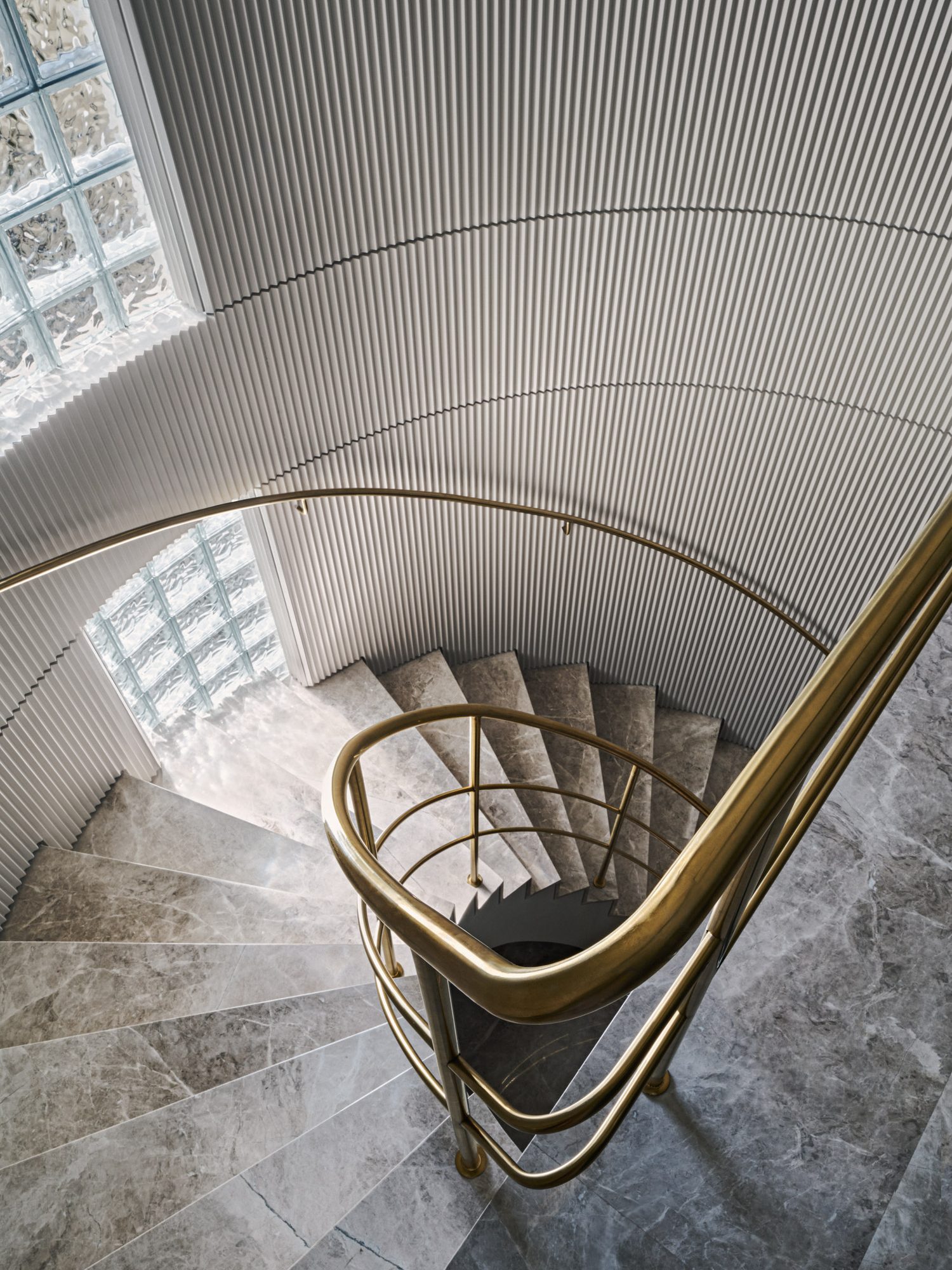
Process & Practice
Every project at the studio begins with listening, Kumar says. Before conversations turn to aesthetics, she takes time to understand how her clients live, entertain, work and unwind. Spatial planning, materiality, mood boards and the broader design language then evolve in parallel, a deliberately integrated process where each decision informs the next rather than being layered on afterwards. Execution, she believes, is where a project’s character is either realised or compromised, which is why she remains closely involved through detailing, site reviews and the final stages of completion.
What distinguishes her approach is the way she interprets a client. “I pay attention to habits more than preferences,” she says. “The way someone hosts friends, enjoys quiet mornings, collects books, or values privacy reveals far more than a Pinterest board ever could.” Only then do materials, textures and lighting begin to take shape. Natural materials are chosen for the patina they acquire over time, texture for the depth and tactility it introduces, and light for its ability to transform the atmosphere of a room throughout the day. Every decision is made in service of how a home is lived rather than how it is photographed.
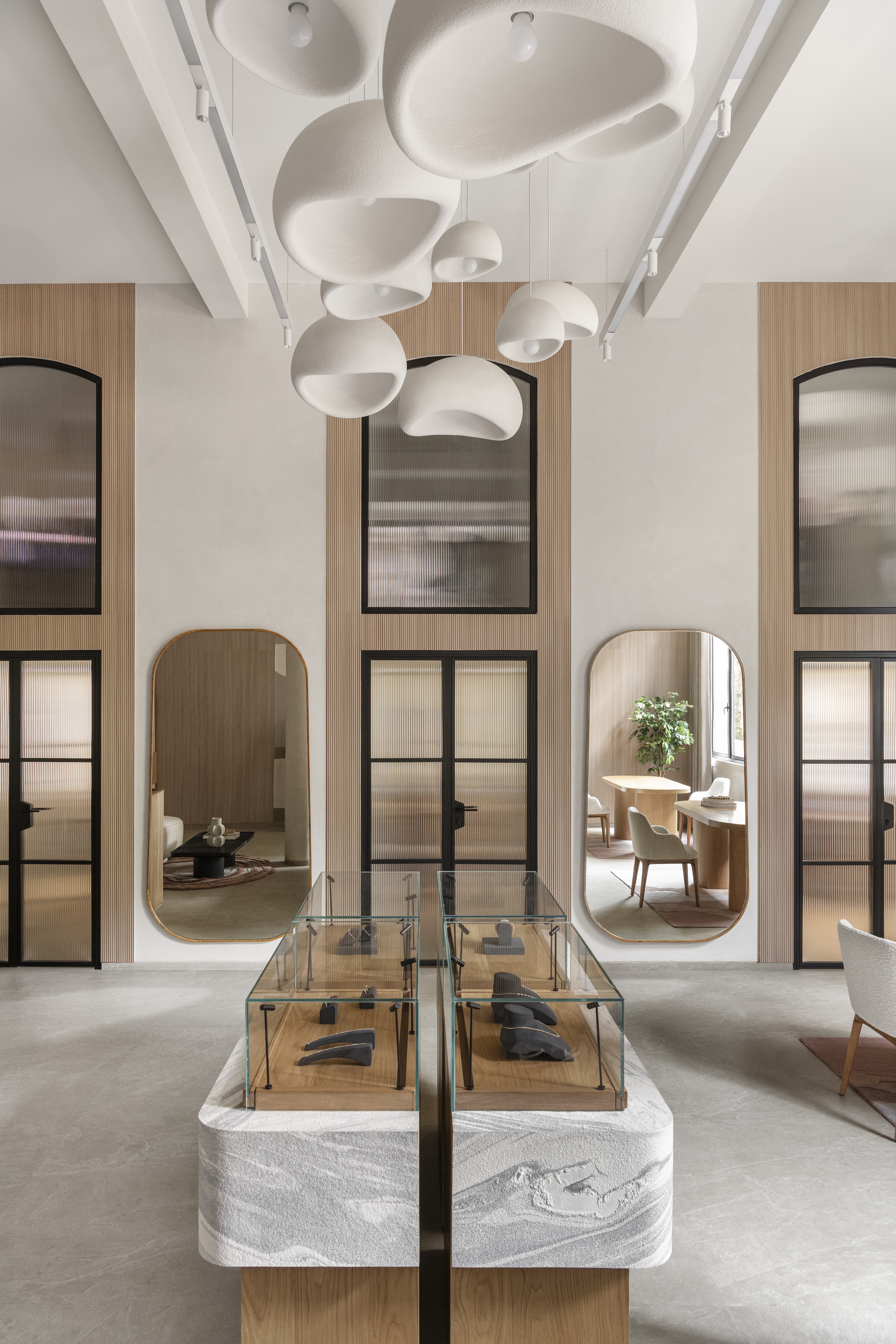
Project Highlight: The Hampstead Home, London
When asked which project she is most proud of, Kumar’s answer lies beyond India. It is a townhouse in Hampstead, London, a long-held ambition realised through her first major international commission. “This was an opportunity that was scratched off my bucket list,” she says, “and it taught me many valuable lessons. The most important one being how to run an international project successfully.”
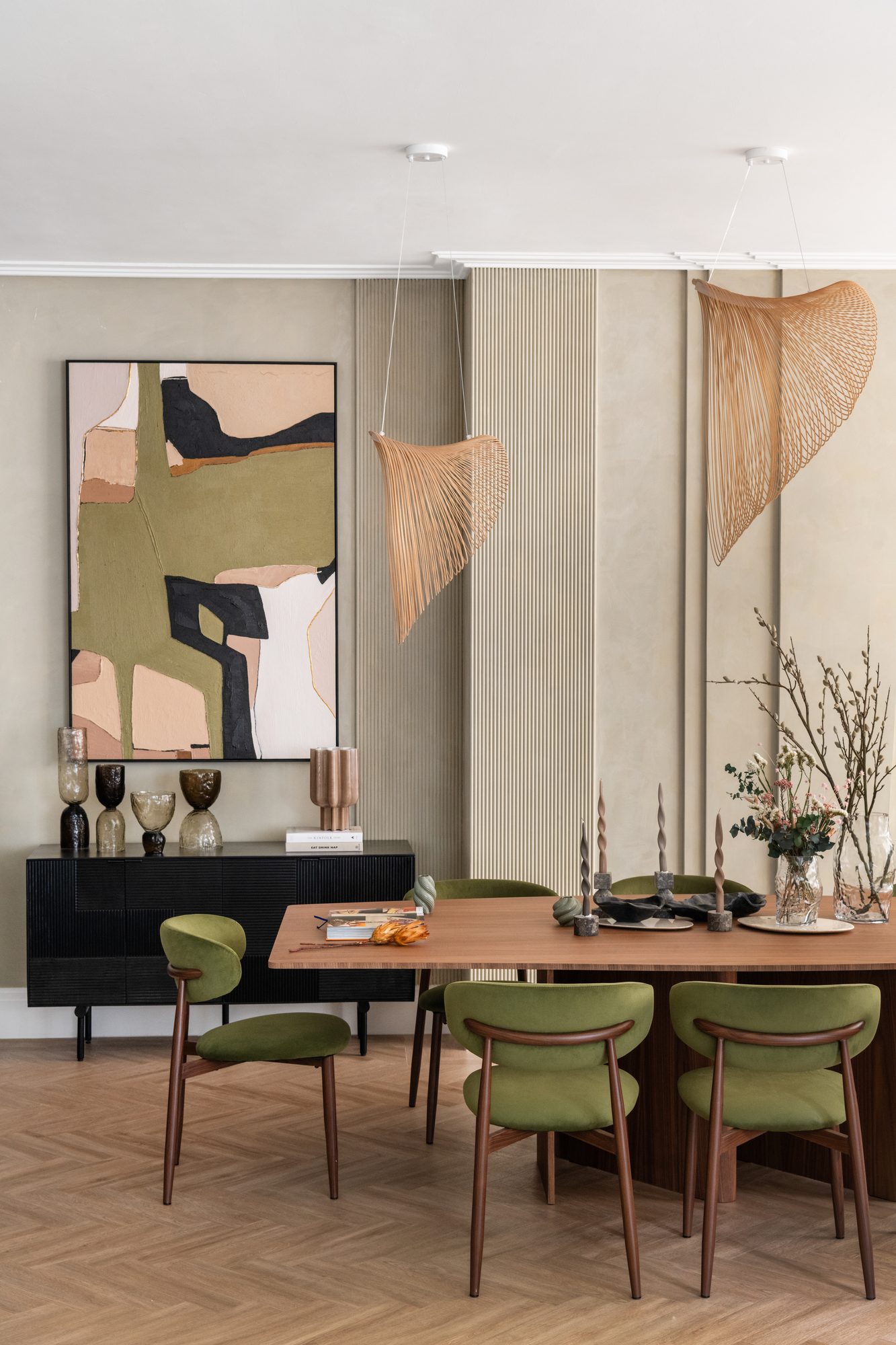
The design brought together seemingly disparate influences with quiet confidence: the restraint of Wabi-Sabi, subtle Indian references and contemporary detailing, all composed within the proportions and period character of a traditional English townhouse. Rather than competing, these layers settle into a measured dialogue. In the dining room, an earthy olive palette responds to London’s muted light, hand-plastered walls introduce gentle rhythm, a black oak sideboard anchors a composition of sculptural glass vessels, and woven pendant lights replace the expected chandelier with a softer, more intimate presence.
The project’s greatest lessons, however, lay beyond the interiors themselves. “Working in a new city brought with it a completely different set of expectations, from understanding the quality of London light to navigating local regulations, construction practices and timelines,” Kumar reflects. Coordinating across time zones demanded rigorous communication, swift decision-making and a clear understanding of which aspects of the design could adapt without compromising the overall vision. “In many ways,” she says, “it set the stage for our future global projects.”
Looking Forward
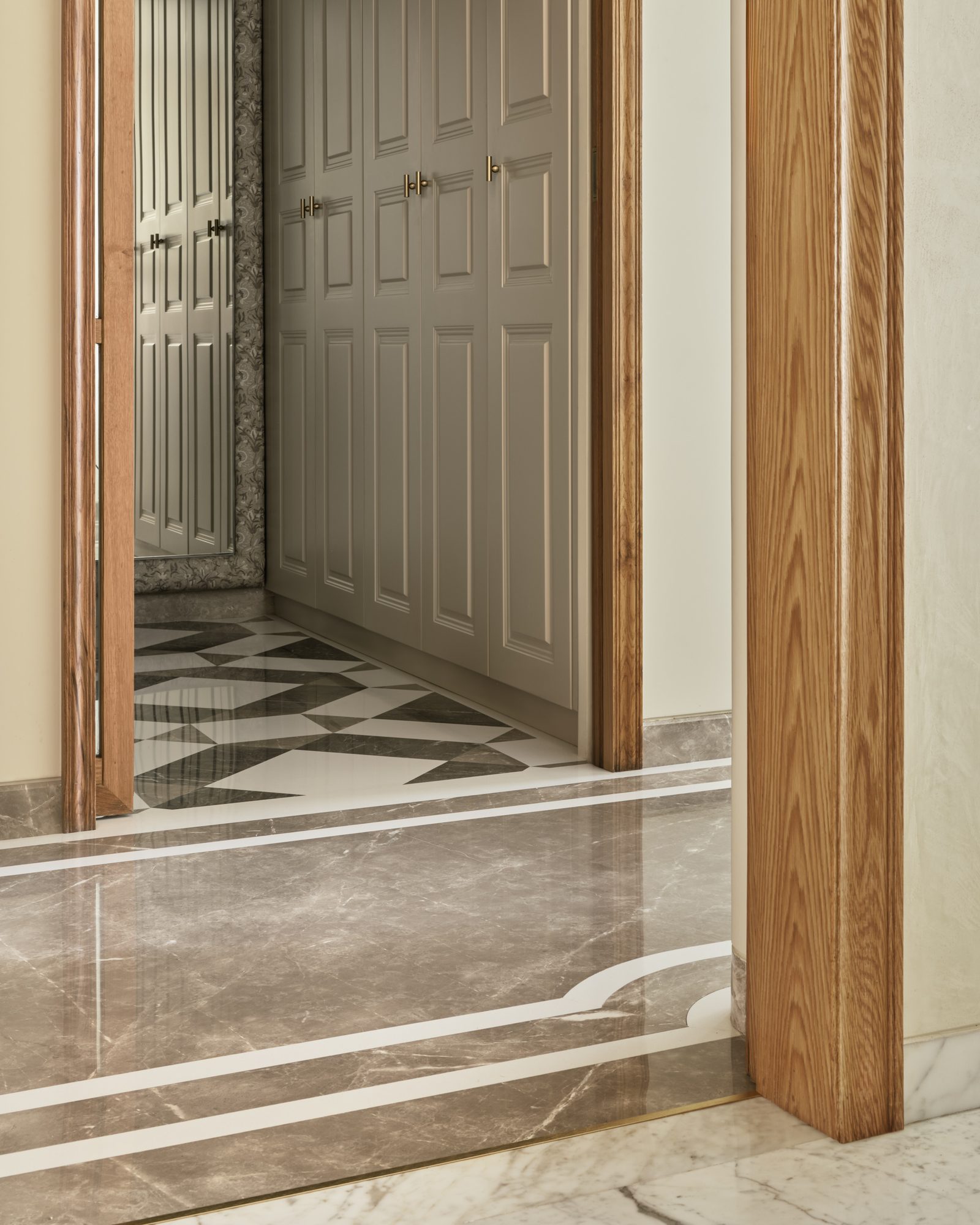
If Hampstead marked the studio’s international expansion, The Heritage House became a turning point in its design thinking. “It returned me to fundamentals I learned in Florence such as proportion, materiality, and careful attention to detail, while requiring a sensitive approach that respected what already existed,” Kumar reflects. More than any single aesthetic outcome, the project reaffirmed the value of restraint, reminding her that thoughtful intervention often demands as much discipline as invention.
That philosophy is now being tested at an entirely different scale. Alongside its residential commissions, the studio is designing a 20,000-square-foot clubhouse for a developer, encompassing entrance and lift lobbies, a spa, yoga studio, gym, café, banquet hall and mini auditorium. “Creating spaces at this scale, experienced by many people, is especially rewarding,” Kumar says. Boutique, in her definition, describes a way of practising rather than the size of a commission. The studio’s trajectory now extends beyond private homes towards hospitality and collectible design, with an ambition to continue building a body of work across both India and international markets.
In Reflection
Two ideas surface repeatedly over the course of a conversation with Kumar: Florence and craft. Living and studying in Florence, she says, shaped her understanding of timelessness as something rooted in “proportion, materiality, and patience,” while teaching her that beauty belongs in the rituals of everyday life rather than moments of spectacle. Alongside that European education sits an equally formative Indian inheritance. “I’m equally inspired by India’s extraordinary craft traditions,” she says. “I believe that our heritage is something to be interpreted thoughtfully rather than replicated literally.” Together, the two influences reveal a practice defined less by style than by discernment.
Curiosity, in turn, is treated as part of the profession itself. Travel, literature, fashion, art, museums and the quiet act of observing cities all feed the studio’s creative process. “Some of my strongest ideas have emerged while walking through cities, visiting markets, or simply noticing how light falls across a building,” Kumar reflects. Asked what she might have pursued had design not found her, the answer arrives without hesitation: a career in a museum. “There’s something about being in front of an old painting or artifact that makes everything feel a bit bigger than myself.”
Perhaps that perspective also explains the measured pace of her practice. For Kumar, lasting work is built through accumulation rather than acceleration. “Success comes from consistent effort, patience, and many years of improvement,” she says. “What appears to be sudden success is often the result of years of failures and persistence.”
Editor’s Note
What lingers after a conversation with Aashni Kumar is not a signature aesthetic but a way of thinking. The vocabulary she returns to, composed freedom, maximal minimalism and habits over preferences, is less a collection of memorable phrases than a coherent design philosophy. Beneath each lies the same conviction: interiors should emerge from the rhythms of everyday life rather than the pursuit of a recognisable style. In Kumar’s work, beauty is not imposed upon a space. It is uncovered through careful observation of the people who inhabit it.
That philosophy travels remarkably well. Whether working within the period architecture of a Hampstead townhouse or the layered history of a heritage home in Delhi, the studio demonstrates a consistent ability to adapt without losing its underlying sensibility. What stands out in the Hampstead project is not simply the aesthetic composition but the discipline behind it. A Wabi Sabi sensibility can only coexist with the proportions and detailing of an English townhouse through careful editing, where every material, texture and object earns its place. The result is an interior that feels composed rather than curated, quietly confident in the knowledge that restraint often leaves the most lasting impression.
Follow the studio’s next projects on Instagram at @aashni.kumar and at aashnikumar.com.