In a design landscape often drawn to spectacle and the constant pursuit of the new, there remains a quieter ambition: to make a home that feels familiar from the first step inside. Not familiar as in derivative, but familiar as in remembered, the kind of room that seems to have been waiting for its occupants rather than performing for them.
Located in Chennai and designed by Concept-D Architects, Project Ākanksha is a 1,900-square-foot residence shaped by this very pursuit. Principal designers Deepthi Balasubramanian and Vasanth K approached the brief not as a question of style but of register, building a home around quiet gestures, restrained detailing, and an atmosphere of warmth that unfolds slowly through everyday living.
The home’s thesis is a measured dialogue between past and present. Cane, teak-toned wood, sage walls, and patterned cement tile borders meet contemporary joinery and clean planar surfaces, and the result is a residence that reads as continuous rather than retrospective, grounded rather than nostalgic.
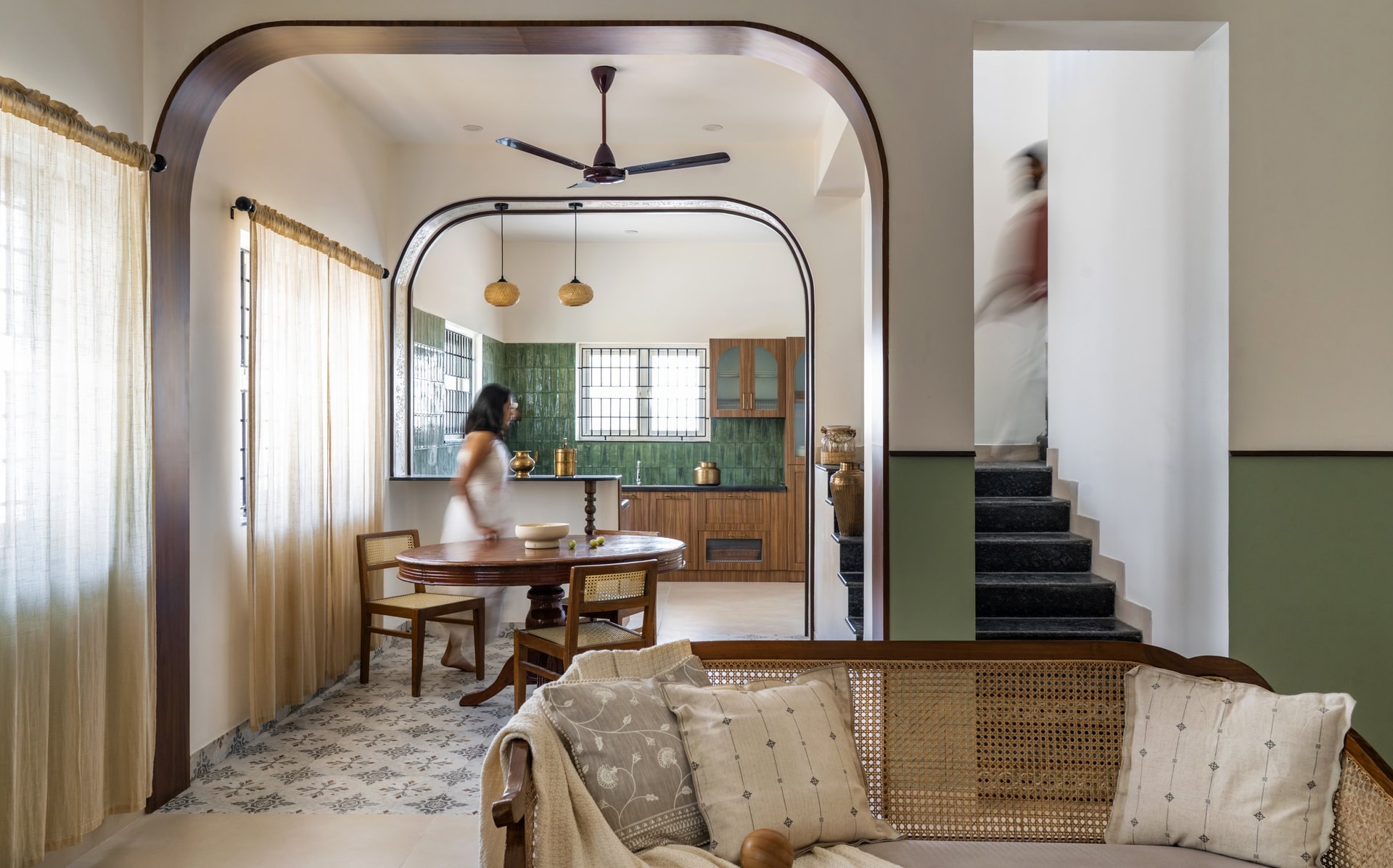
The opening view establishes the home’s design language in a single, composed frame. A softly curved timber arch draws the eye toward the dining and kitchen spaces beyond, while a caned settee anchors the living area with quiet warmth. Alongside, a granite-tread staircase rises against a sage-green dado, adding depth and rhythm to the composition. Each material is allowed space to breathe, creating a layered yet effortless dialogue of texture, colour, and form.
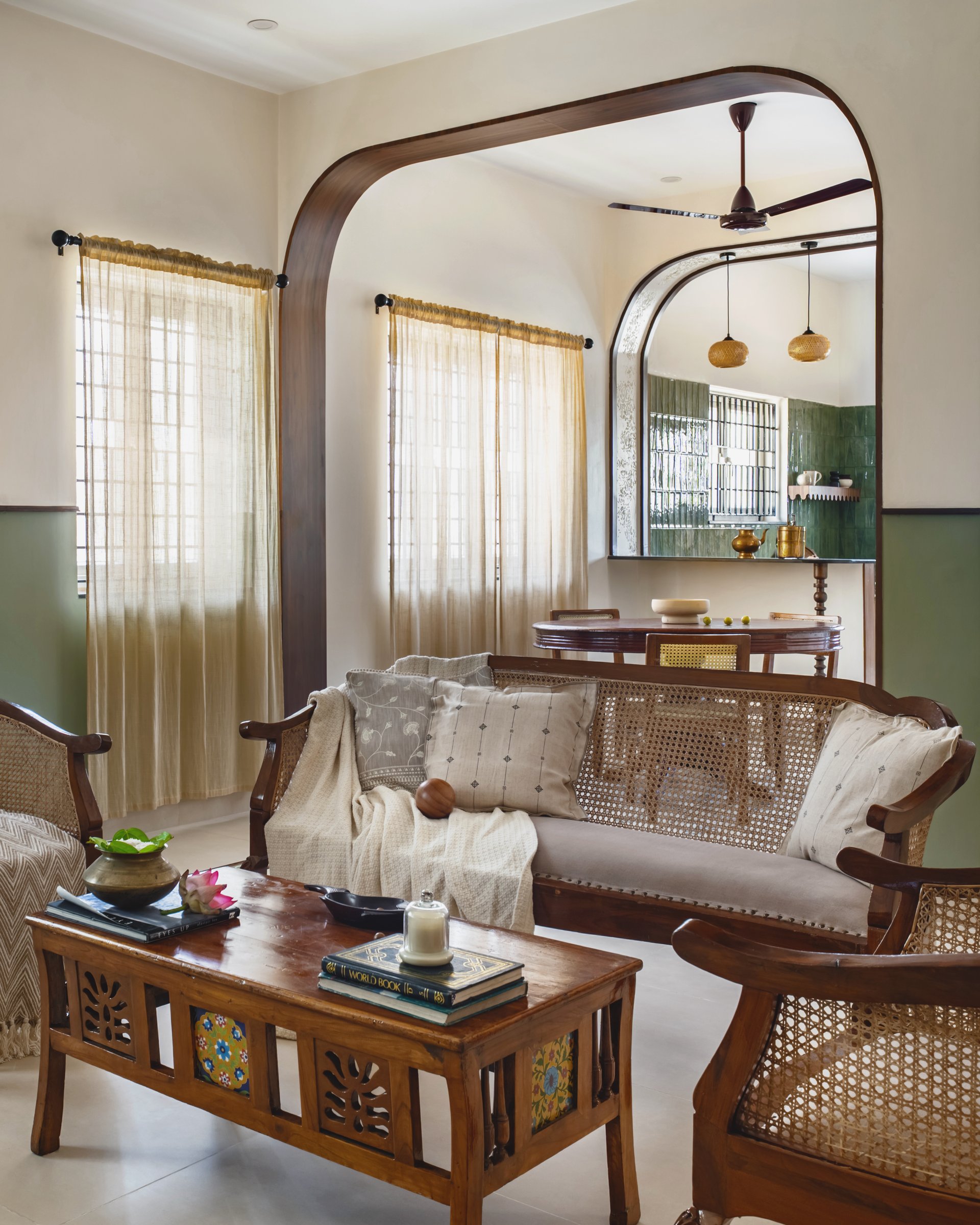
The living room unfolds as a study in light, texture, and quiet craftsmanship. A teak-framed settee with a caned back and woven side panels anchors the space, paired with a low coffee table whose carved apron is detailed with inset hand-painted tiles. The piece introduces a subtle sense of nostalgia, transforming a functional object into a repository of memory and craft.
Daylight filters gently through sheer curtains, softening the atmosphere without diminishing its brightness. A sage-green dado wraps the room, creating a continuous visual line that lends balance and calm to the composition. Natural materials and muted tones work in concert, allowing texture rather than ornament to define the character of the space.
A dark timber archway frames a generous opening toward the kitchen, maintaining a visual connection between the two spaces. Through it, the kitchen’s green-tiled backdrop becomes part of the living room’s scenery, reinforcing the home’s sense of openness and ensuring that the social and functional zones remain in quiet dialogue with one another.
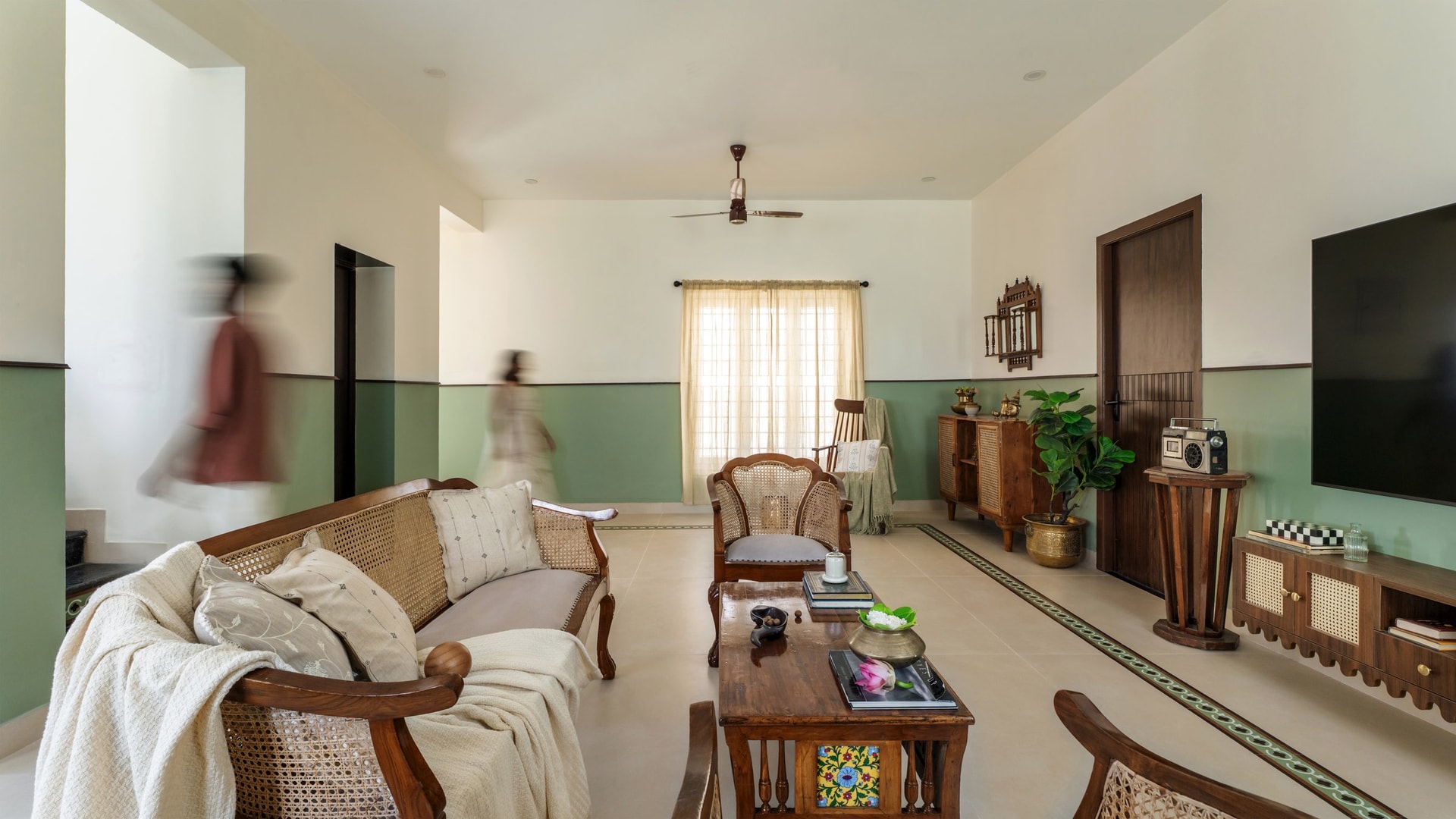
Viewed in its entirety, the living room reveals the clarity of the home’s design language. A sage-green dado wraps the room in an uninterrupted band, grounding the space beneath soft cream walls and pale tiled flooring. A delicate patterned border traces the perimeter, subtly defining the room like an understated rug woven into the architecture itself.
As the designers describe, “Project Ākanksha was envisioned as a home that feels familiar from the moment one enters, a space shaped not by excess but by quiet gestures, thoughtful detailing, and an atmosphere of warmth that unfolds gradually through everyday living.” That sensibility is evident in the restraint of the material palette and the careful balance between function and character.
Opposite the seating area, the media wall is conceived as an extension of the home’s joinery rather than a focal display. A floating timber console, fronted with woven cane panels and finished with a gently scalloped edge, introduces texture and craftsmanship to an otherwise utilitarian element. Set against the sage backdrop, the warm wood tones emerge with quiet confidence, reinforcing the room’s calm and enduring sense of comfort.
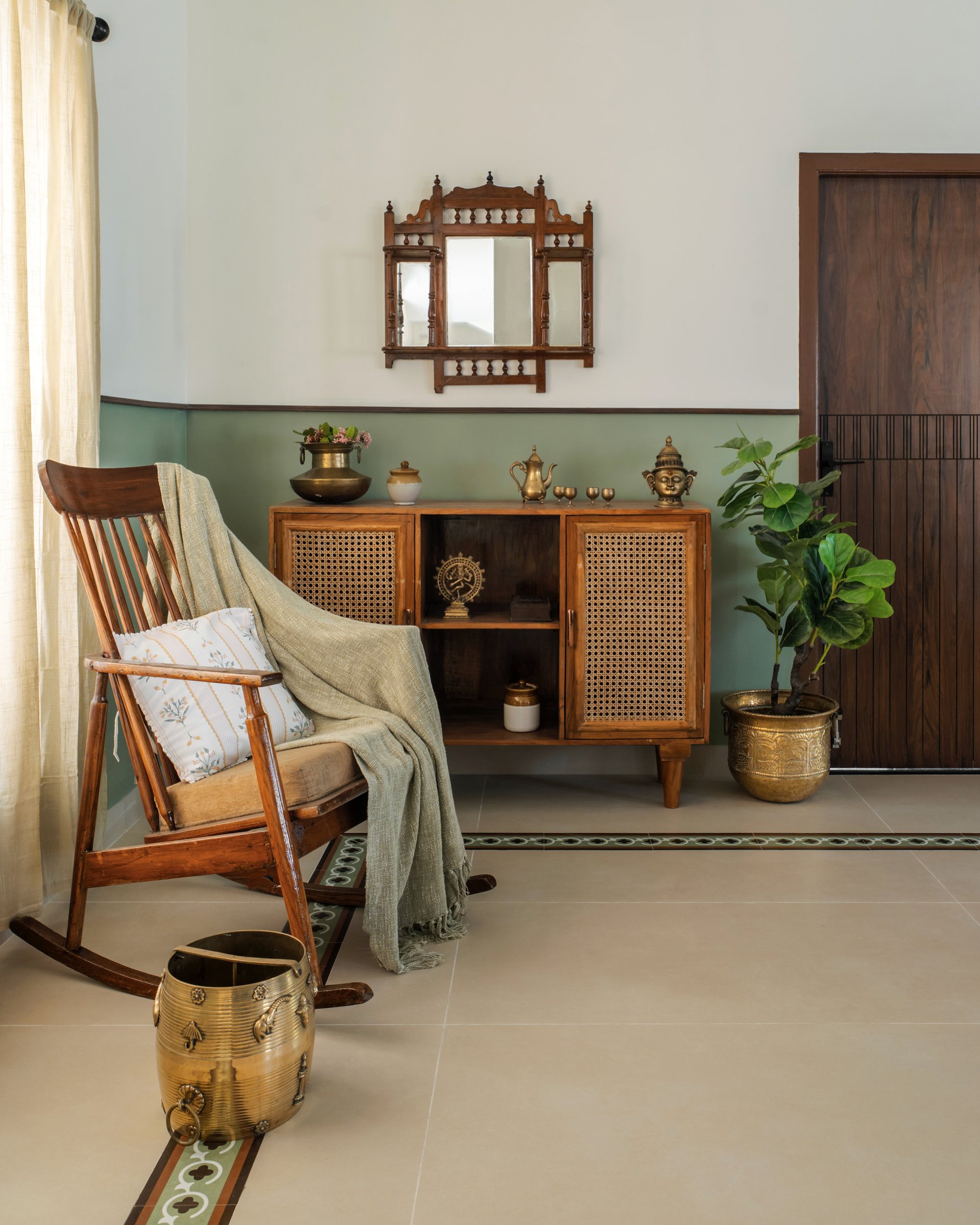
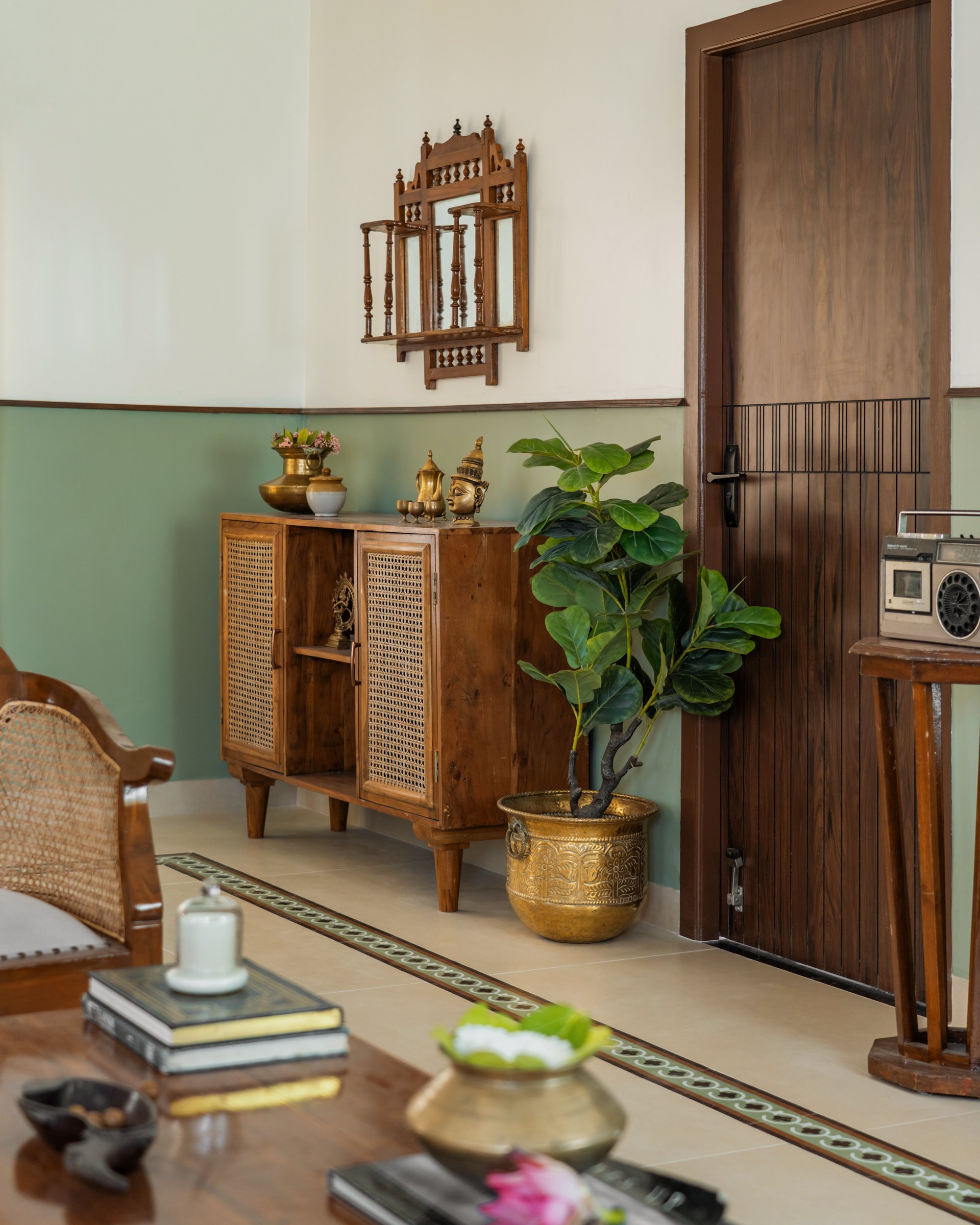
A carefully composed corner brings together many of the home’s recurring themes of craft, memory, and material warmth. A timber rocking chair sits alongside a spindle-framed mirror, while a caned sideboard is styled with brass vessels and a sculptural bronze figure, creating a vignette that feels collected rather than curated. Each piece contributes its own texture and history, lending the space a quiet sense of permanence.
Beneath, a patterned tile inlay traces the edge of the floor like a subtle architectural marker. More than a decorative detail, it gently delineates one zone from the next, allowing transitions to occur naturally while reinforcing the home’s layered and thoughtful spatial rhythm.
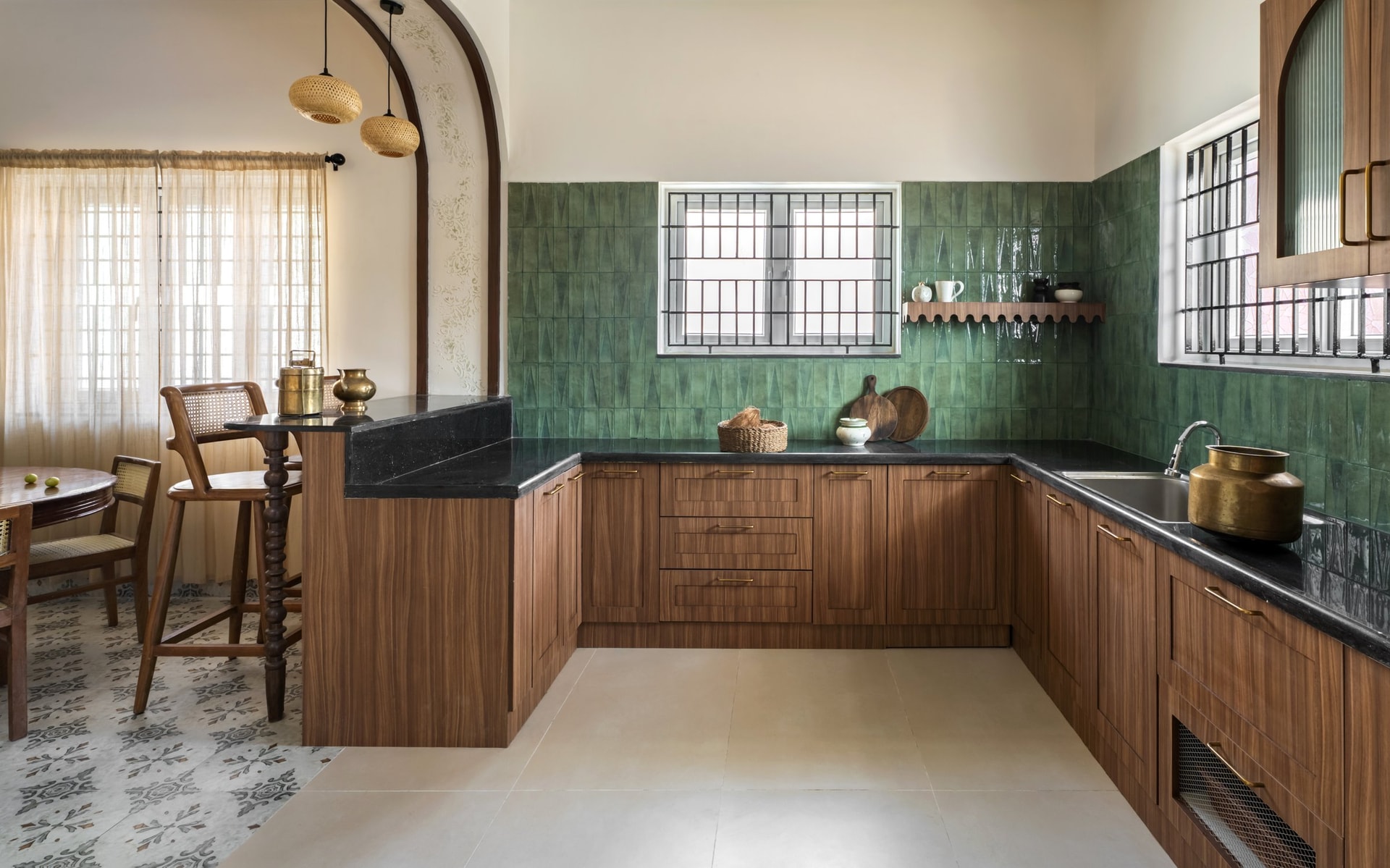
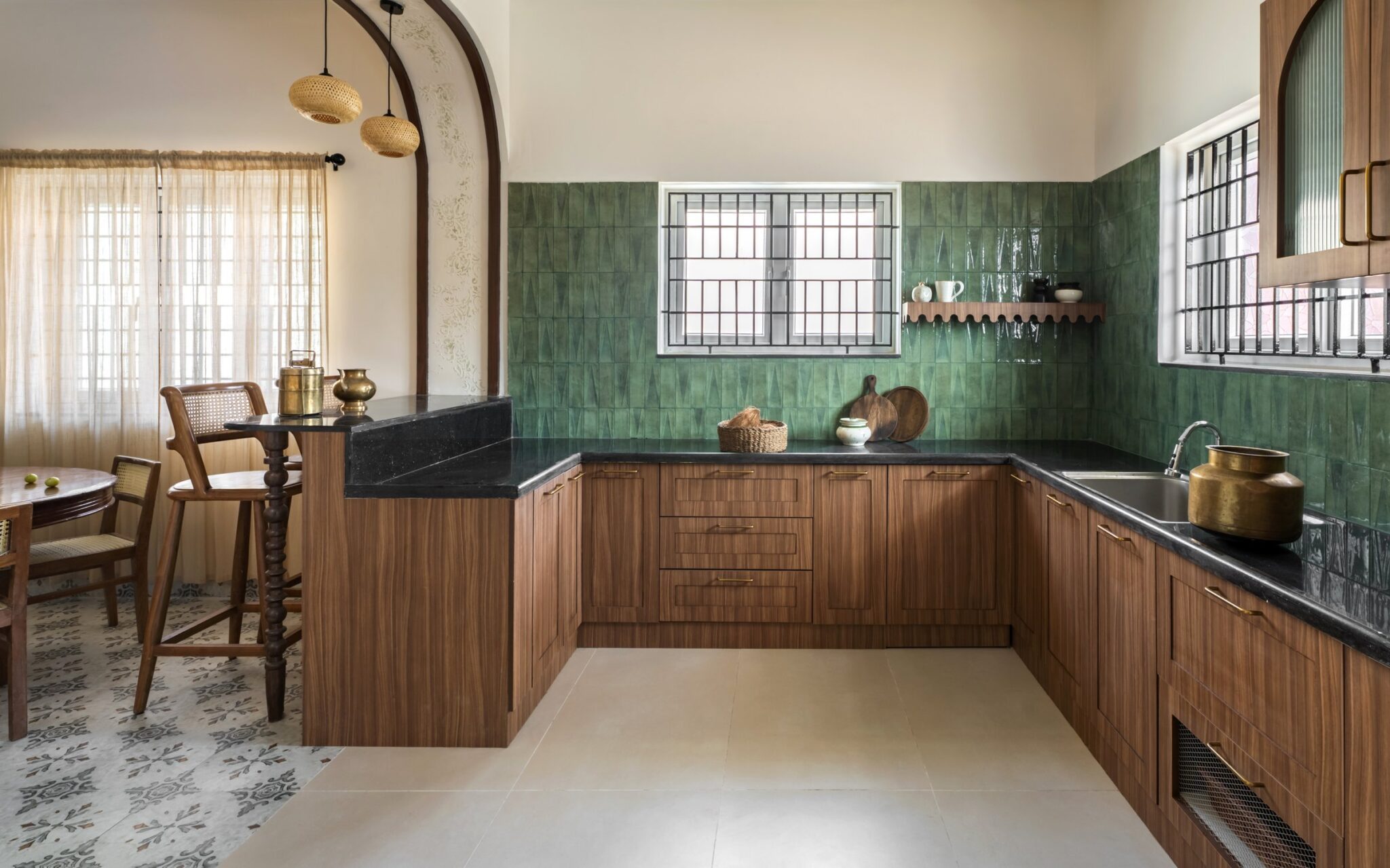
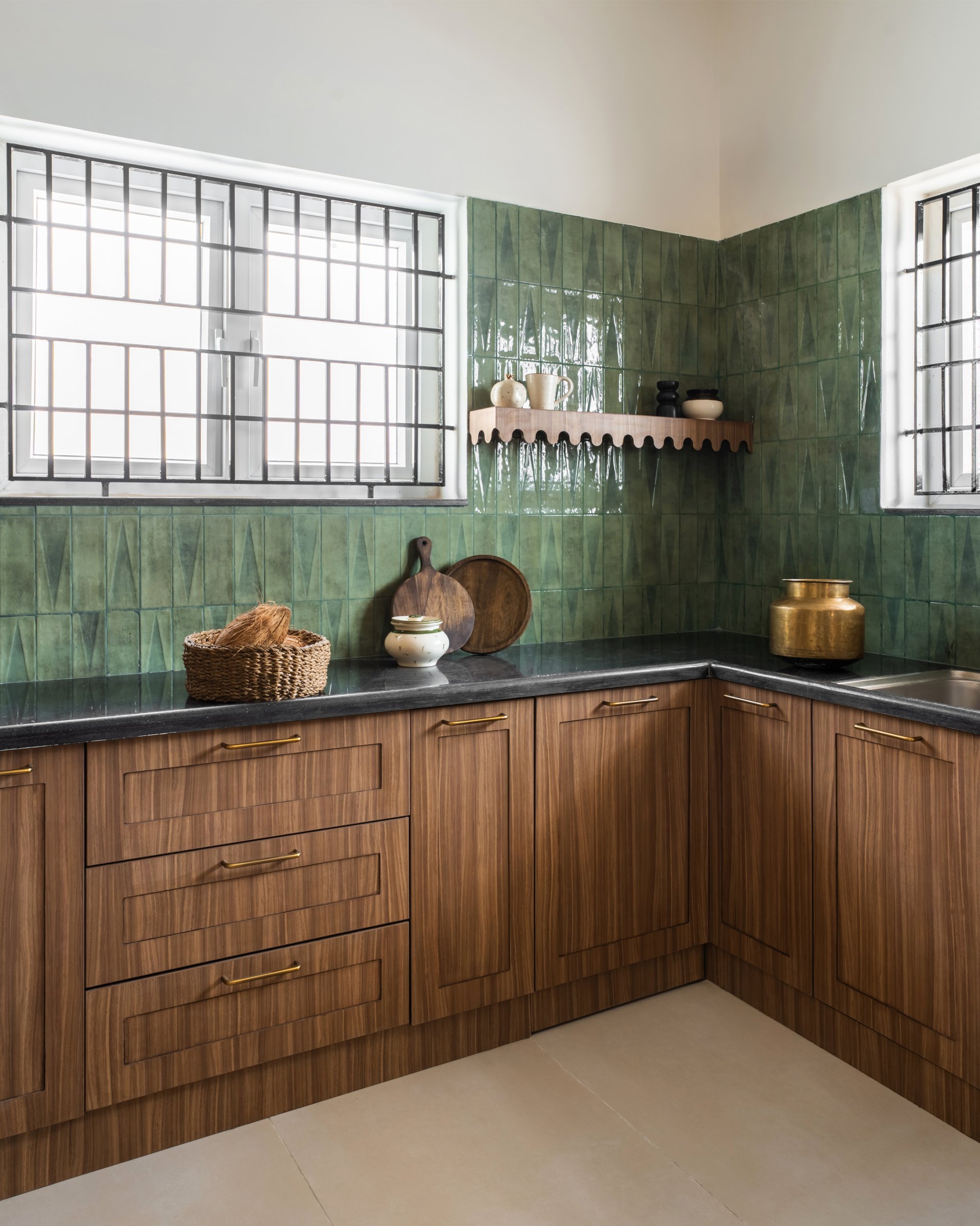
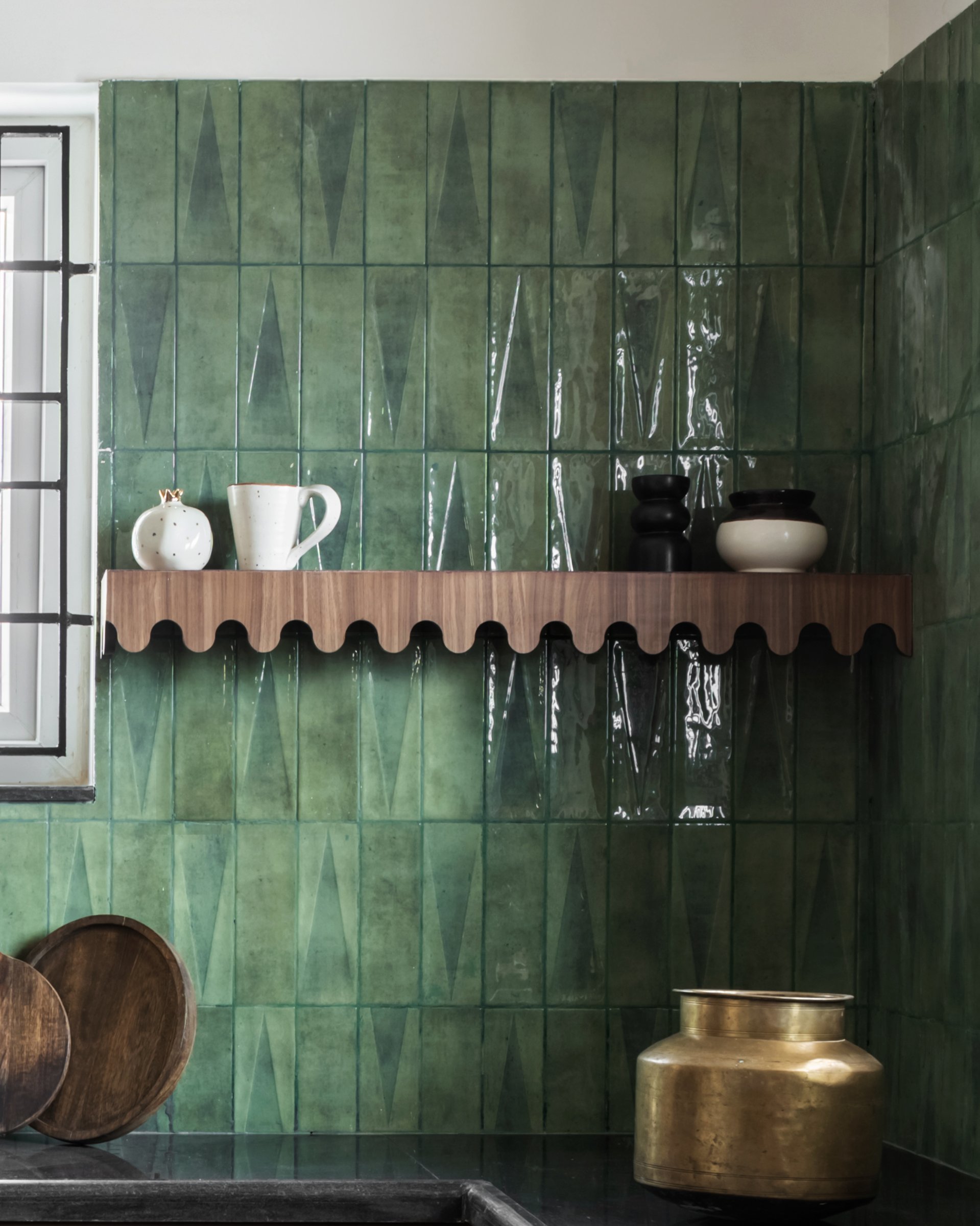
The kitchen carries forward the home’s language of warmth, restraint, and craftsmanship. Walnut-toned cabinetry fitted with slender brass pulls lines the space beneath a dark stone countertop, while a backdrop of glossy green tiles arranged in an elongated diamond pattern rises from counter to ceiling. The rich material palette lends depth and character without overwhelming the room’s calm, understated aesthetic.
Extending from the cabinetry, a breakfast counter supported by carved timber legs creates a natural bridge between the kitchen and dining areas. Paired with a caned bar stool, it encourages casual interaction while maintaining visual continuity with the home’s recurring use of woven textures and handcrafted details. Underfoot, patterned cement tiles distinguish the dining zone from the kitchen’s simpler flooring, subtly defining each function without disrupting the openness of the plan.
Overhead, a softly rounded arch frames the transition between spaces. Rattan pendant lights, delicate stencil detailing along the arch’s inner curve, and the layered interplay of materials transform what could have been a simple passage into a moment of architectural character. Together, these elements soften the boundary between cooking and gathering, allowing the two spaces to remain connected both visually and socially.
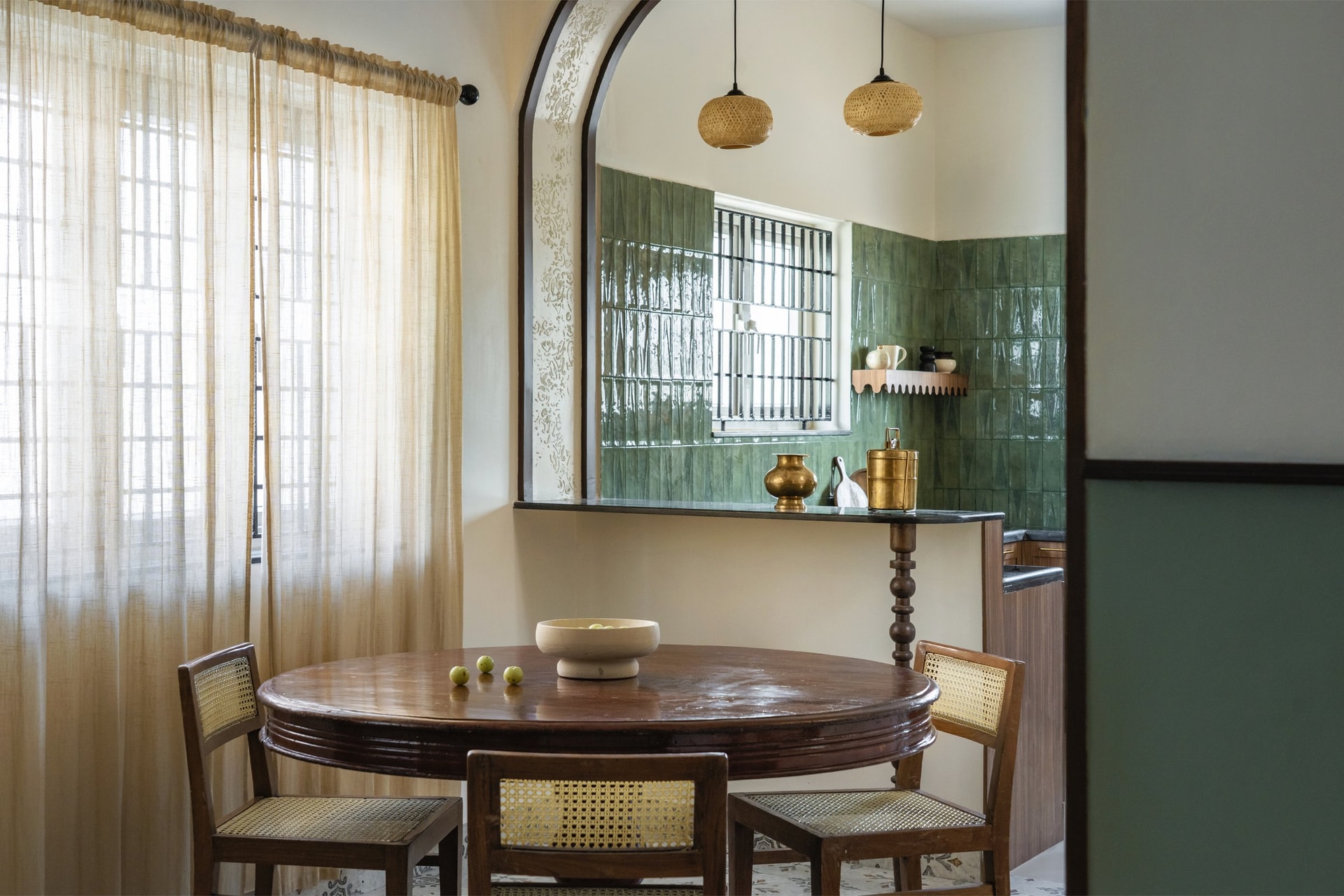
The dining area is conceived as an intimate gathering space, centred around a round timber table encircled by caned dining chairs. Positioned beneath a pair of woven rattan pendants, the setting is bathed in a warm, diffused glow that enhances the natural textures and lends a sense of quiet conviviality to everyday meals.
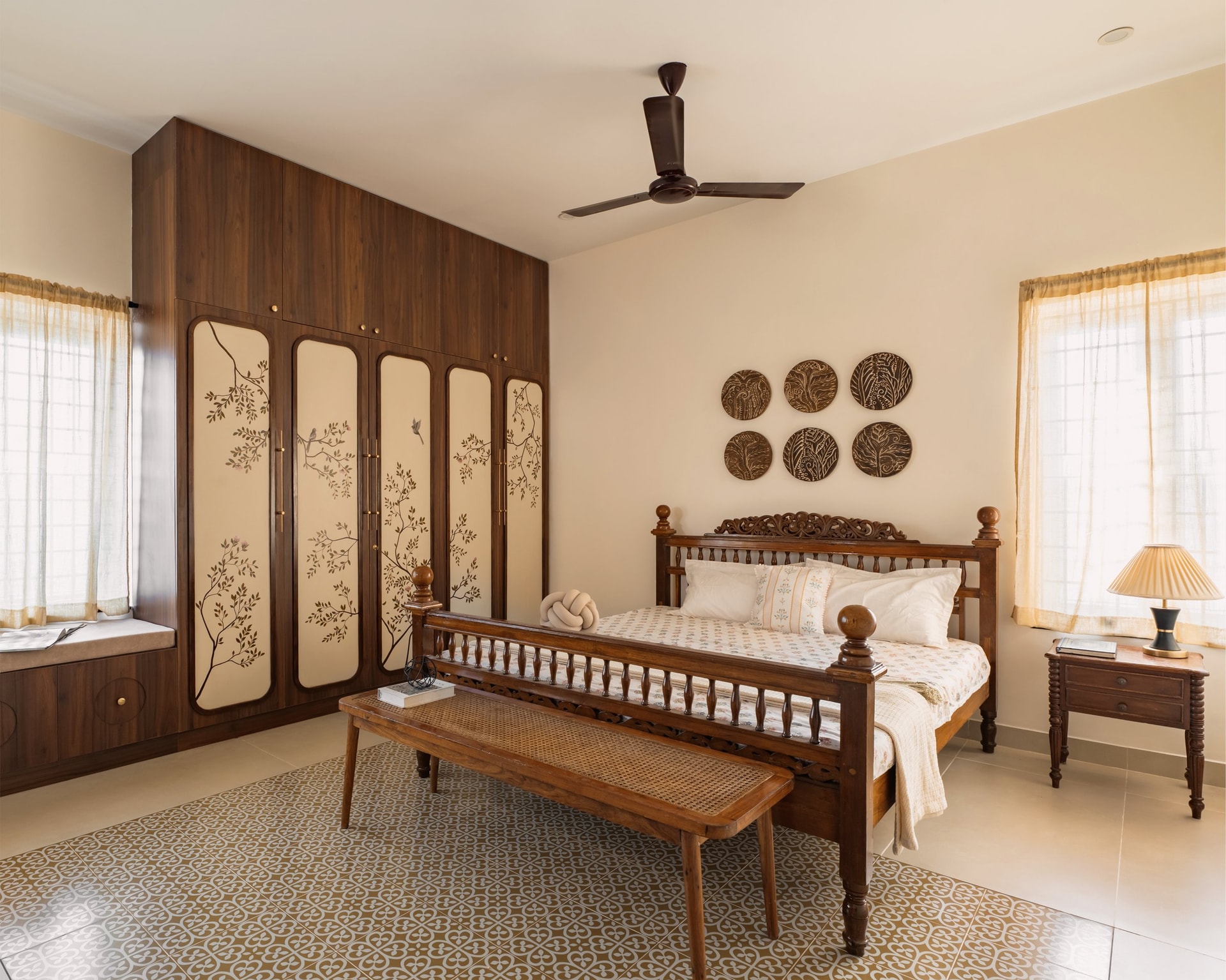
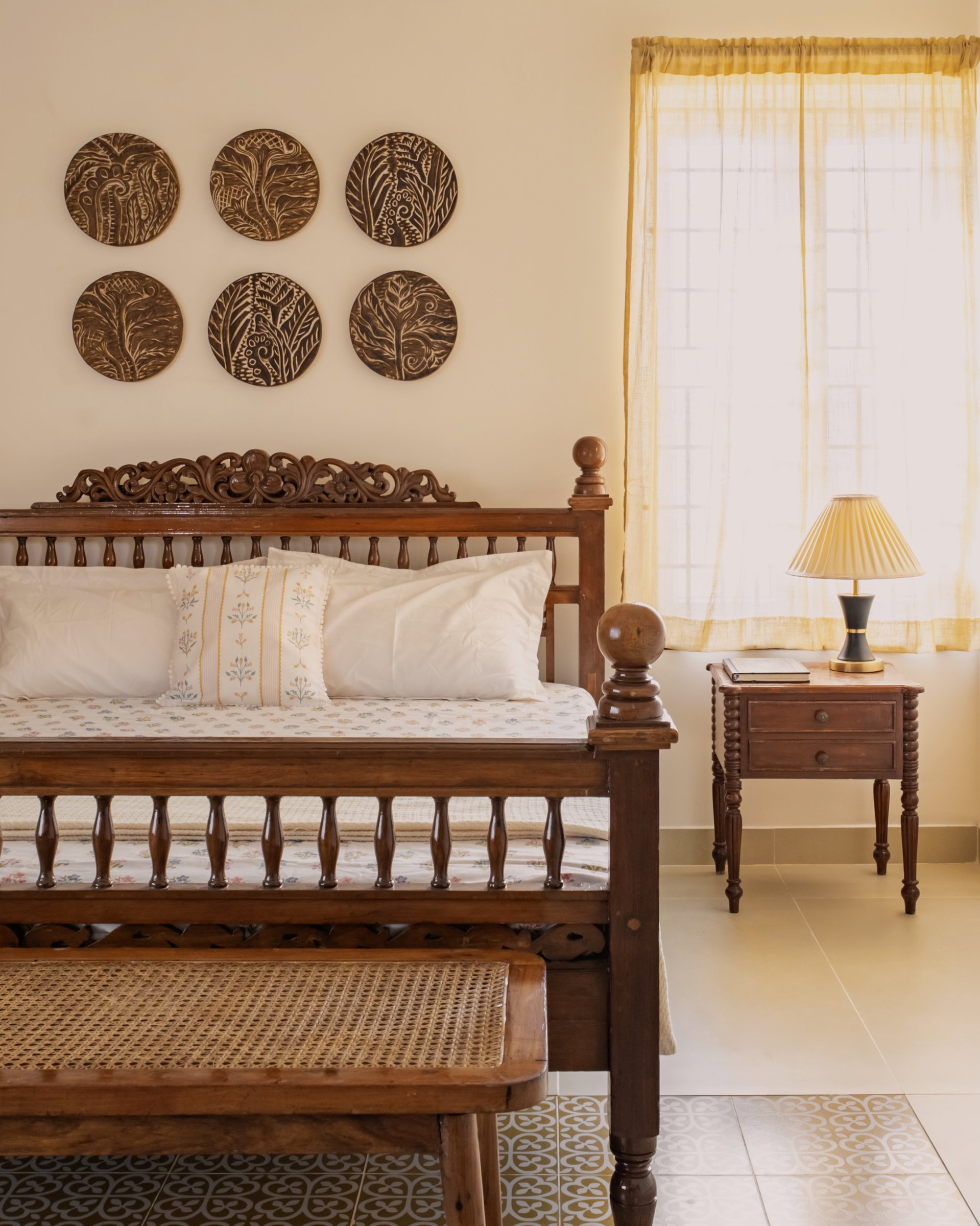
The master bedroom translates the home’s design language into a softer, more intimate setting. A spindle-back timber bed crowned with a delicately carved crest forms the focal point of the room, accompanied by a caned bench at its foot. Beneath, patterned cement tiles are laid in a rug-like composition, introducing texture and visual warmth while reinforcing the handcrafted character that runs throughout the home.
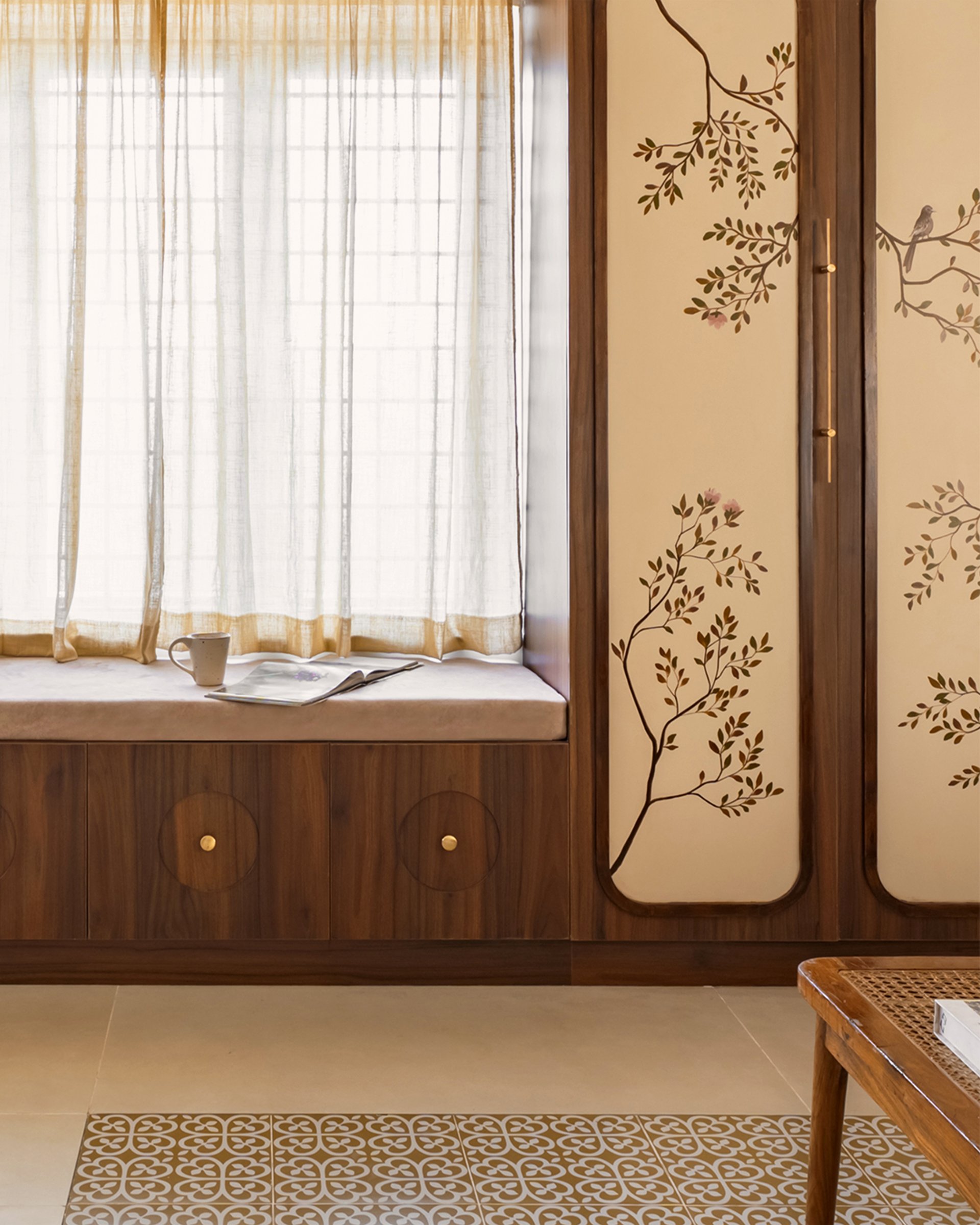
The room’s most distinctive feature is a full-height wardrobe whose hand-painted panels transform a functional element into a work of art. Delicate branches, foliage, and perched birds unfold across a cream backdrop, framed by warm timber detailing that lends depth and refinement. Rather than standing apart as an accent, the wardrobe becomes an integral part of the room’s narrative, celebrating craftsmanship through everyday use.
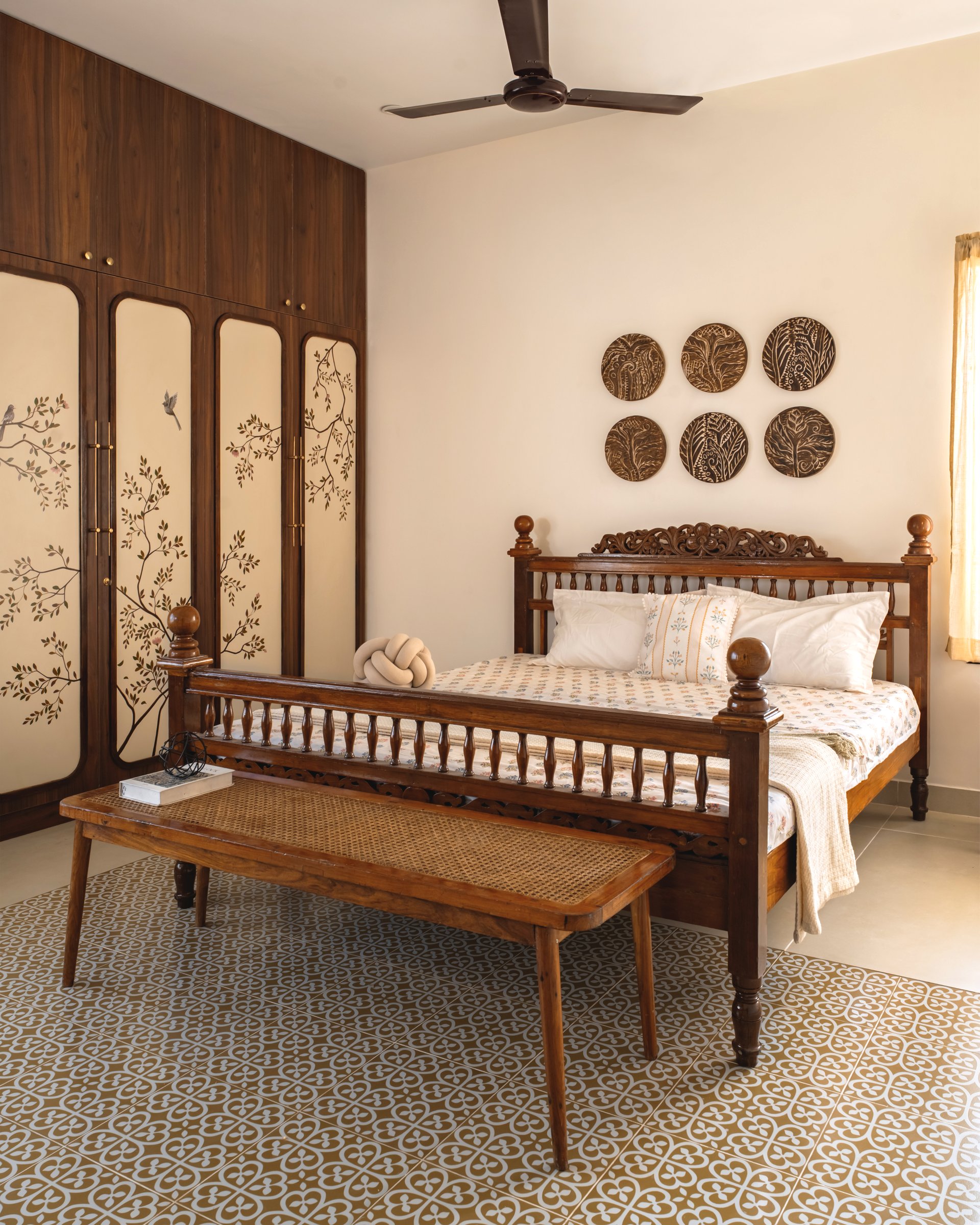
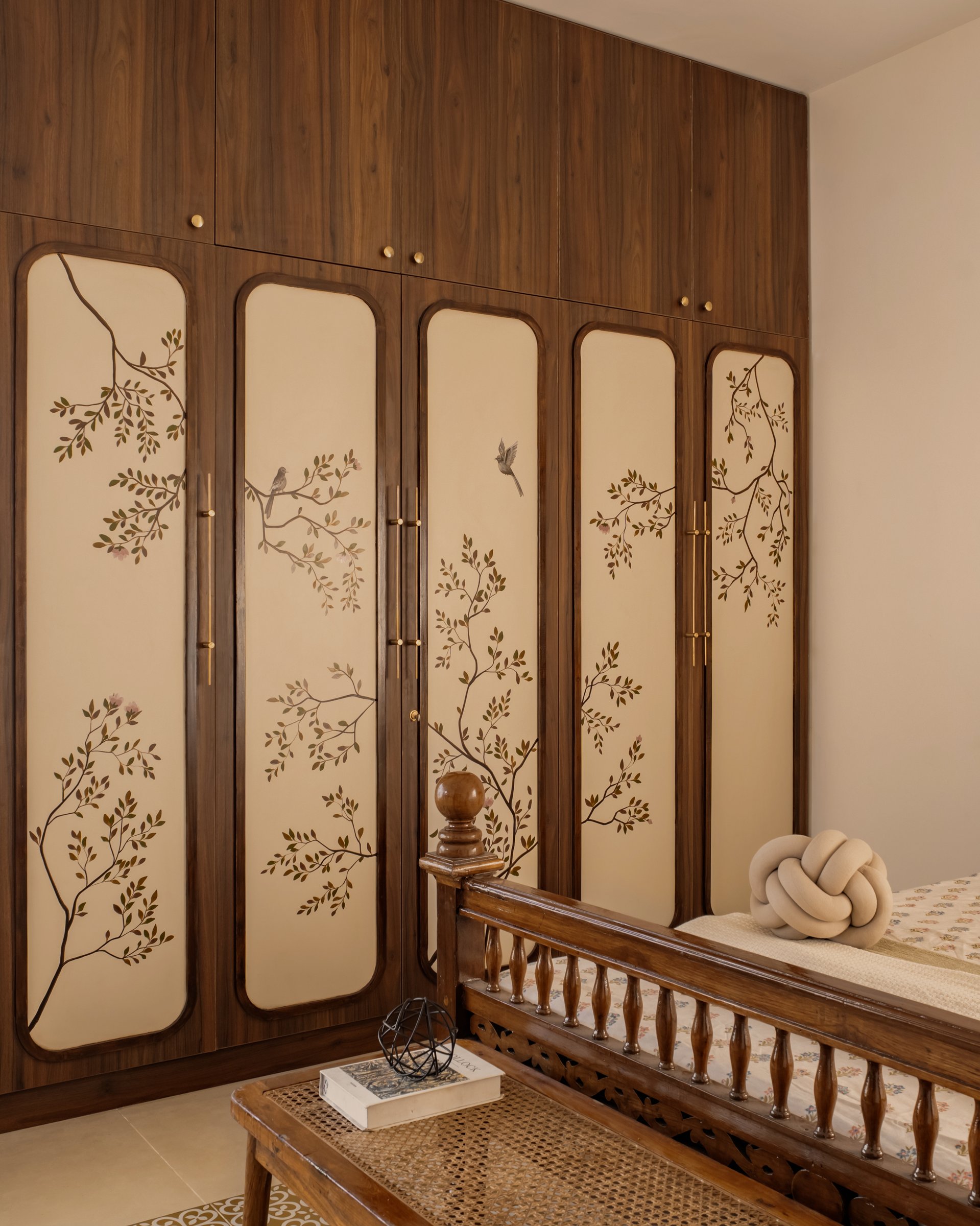
The wardrobe rewards closer attention. Five tall arched panels, set within a warm timber framework, are individually hand-painted with delicate compositions of branching foliage, flowering buds, and the occasional perched bird. Finished in soft cream tones and detailed with slender brass pulls, the cabinet balances functionality with an extraordinary level of craftsmanship.
What distinguishes the piece is the restraint of its artistry. Rather than reading as a decorative mural, the hand-painted surface evokes the precision and delicacy of botanical illustration, each panel unfolding as its own carefully composed study of nature.
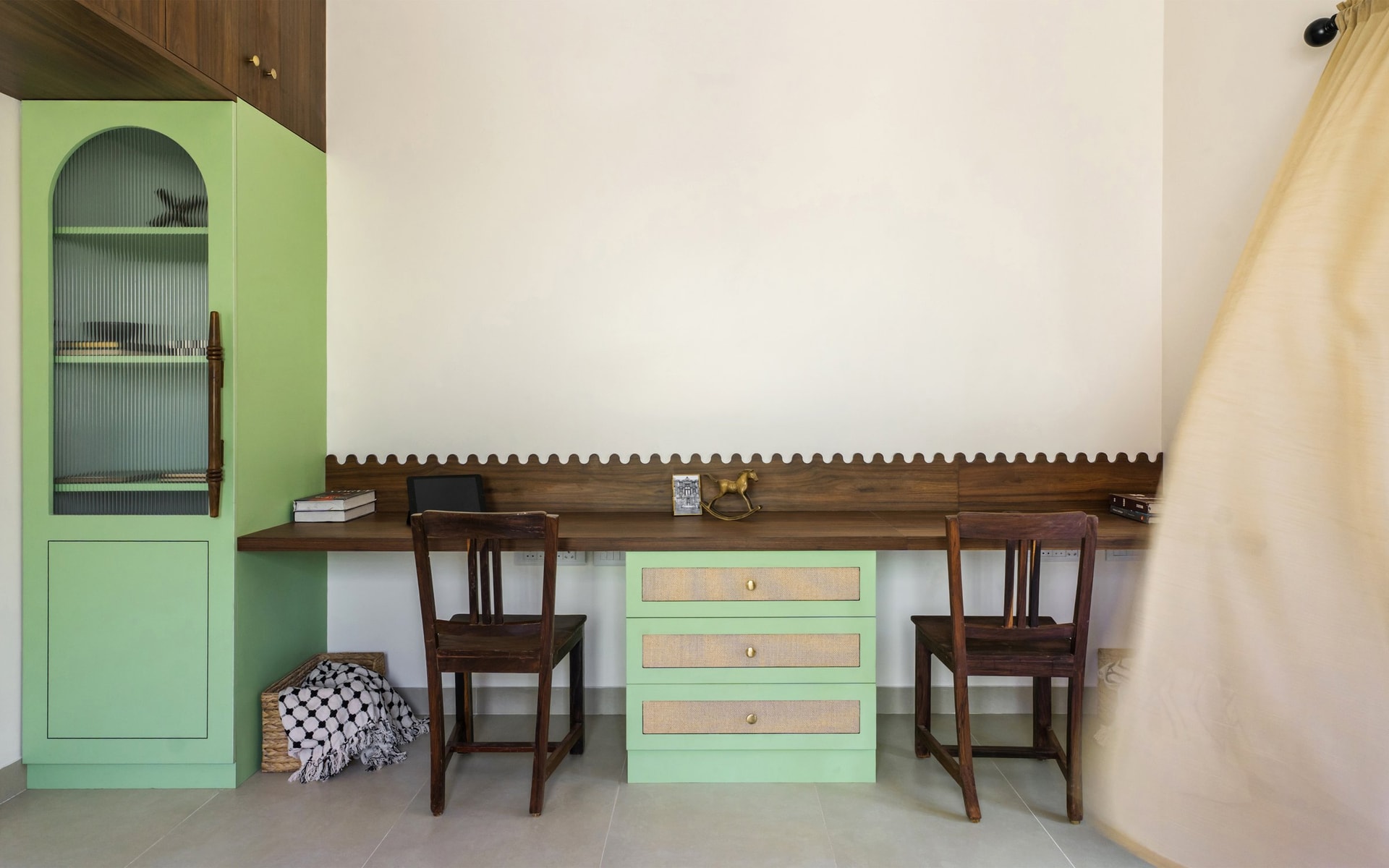
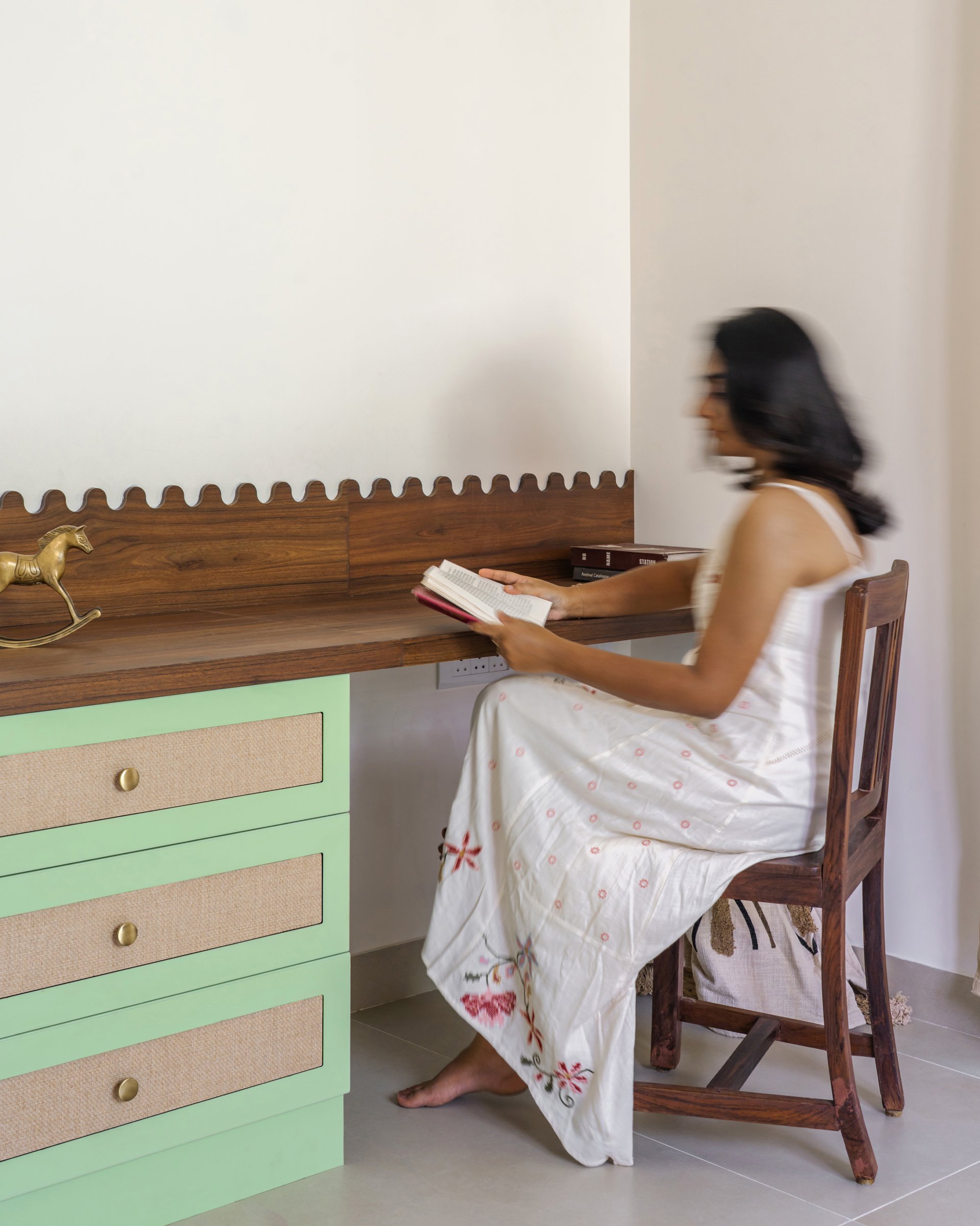
A custom study unit stretches along one wall, accompanied by a tall arched cabinet with glazed fronts, both finished in a soft mint-green hue that brings freshness and character to the space while remaining in harmony with the home’s overall restraint.
Designed as both a workspace and a place for display, the joinery balances practicality with crafted detail.
At a time when Chennai’s residential interiors often gravitate either toward overt heritage revival or pared-back contemporary minimalism, Project Ākanksha occupies a thoughtful middle ground. Cane, brass, patterned cement tiles, hand-painted surfaces, and crafted timber details are woven into the architecture not as nostalgic references or decorative embellishments, but as a consistent design language. Drawing from familiar regional traditions, Concept-D Architects reinterpret these elements with restraint, creating spaces that feel rooted in place while remaining unmistakably contemporary.
What lingers after experiencing the home is not a singular statement piece or dramatic gesture, but an enduring sense of comfort and belonging. Every detail, from the painted joinery and woven textures to the carefully framed transitions between rooms, contributes to an atmosphere that feels lived-in rather than staged. In Project Ākanksha, familiarity becomes the central design ambition, and its success lies in how naturally and effortlessly that ambition is realised.