Simplicity is one of design’s most misunderstood ambitions. Too often, it is mistaken for absence, the cold precision of empty rooms or the discipline of reduction for its own sake. Yet true simplicity is far more demanding. It requires a careful balance between restraint and warmth, where every element earns its place. Rooted in the Japanese principle of Kanso, which advocates clarity through thoughtful elimination, the goal is not to remove endlessly, but to distill a space to what is essential and meaningful.
Designed by Tesor Designs for a 1,300 sq. ft. three bedroom apartment at Keya Around the Life in Whitefield, Bengaluru, the residence embraces a refined Japandi sensibility to translate this philosophy into everyday living. The design prioritises atmosphere over ornament, shaping the home as a series of calm, interconnected spaces attuned to the rhythms of family life rather than the display of objects.
A restrained material palette lends the project its quiet character. Pale timber, woven cane, softly lime washed walls in muted butter and apricot hues, and gently curved forms create a sense of warmth and continuity throughout. The spaces flow seamlessly into one another, unified by texture, proportion, and light. Nothing seeks attention, yet every detail contributes to a home that feels composed, grounded, and effortlessly lived in.
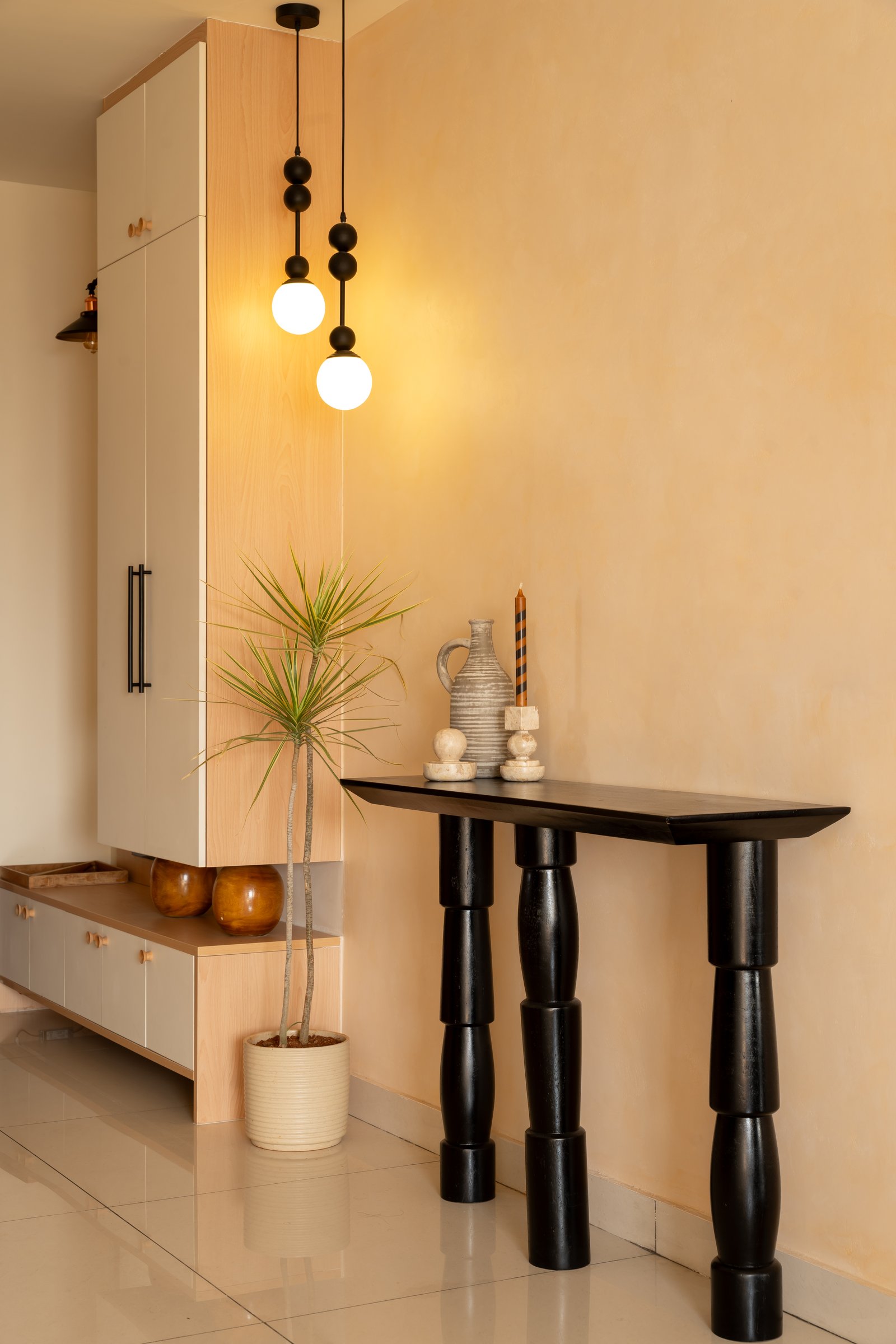
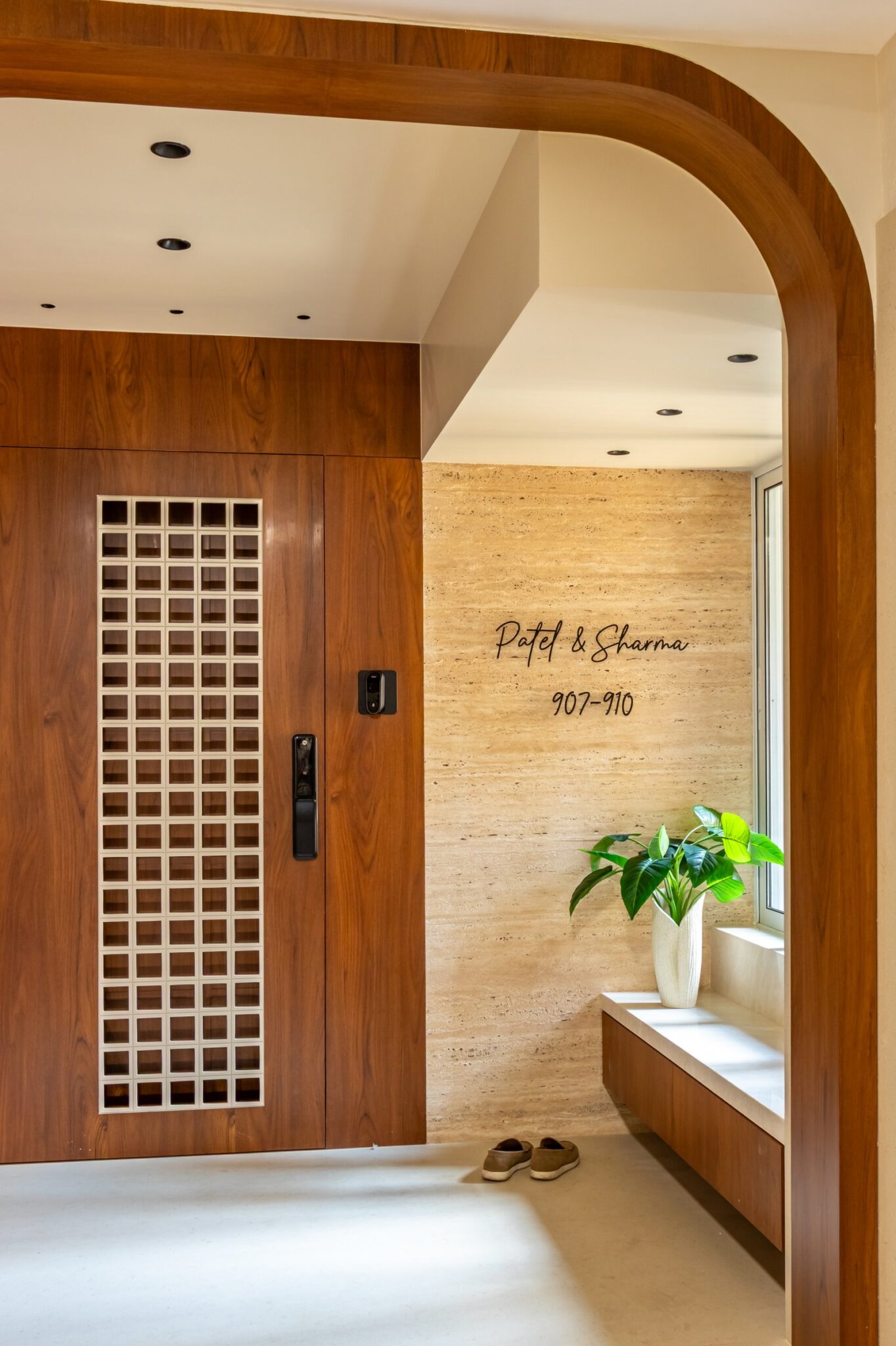
The foyer is deliberately modest in scale, setting the tone for the home’s understated elegance. A blackened timber console with sculptural turned legs rests against an apricot lime washed wall, while a pair of globe pendants cast a soft, ambient glow across the surface. Integrated storage within the adjoining pale wood and cream cabinetry keeps everyday essentials discreetly concealed, allowing the entry sequence to feel calm, organised, and welcoming rather than overtly styled.
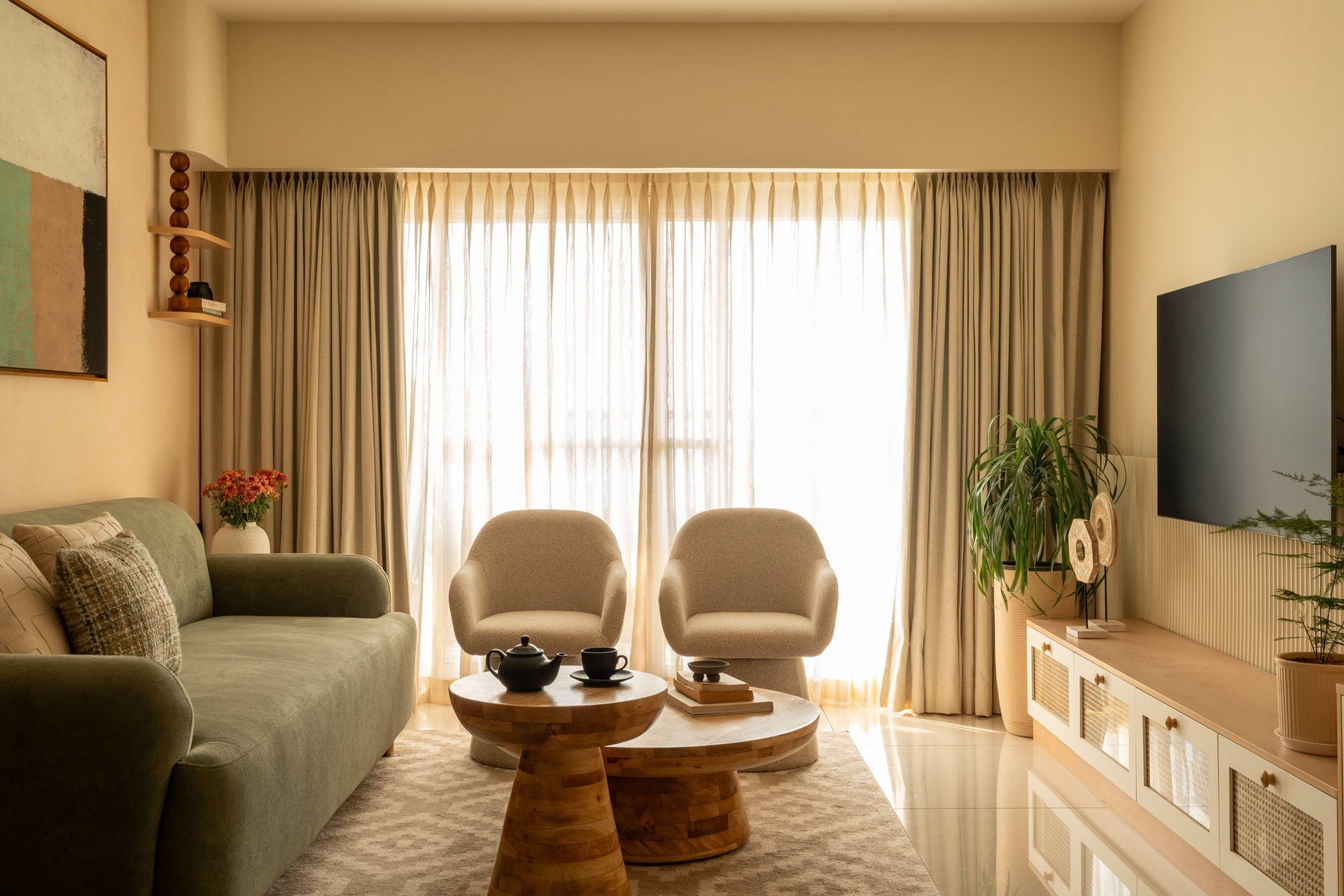
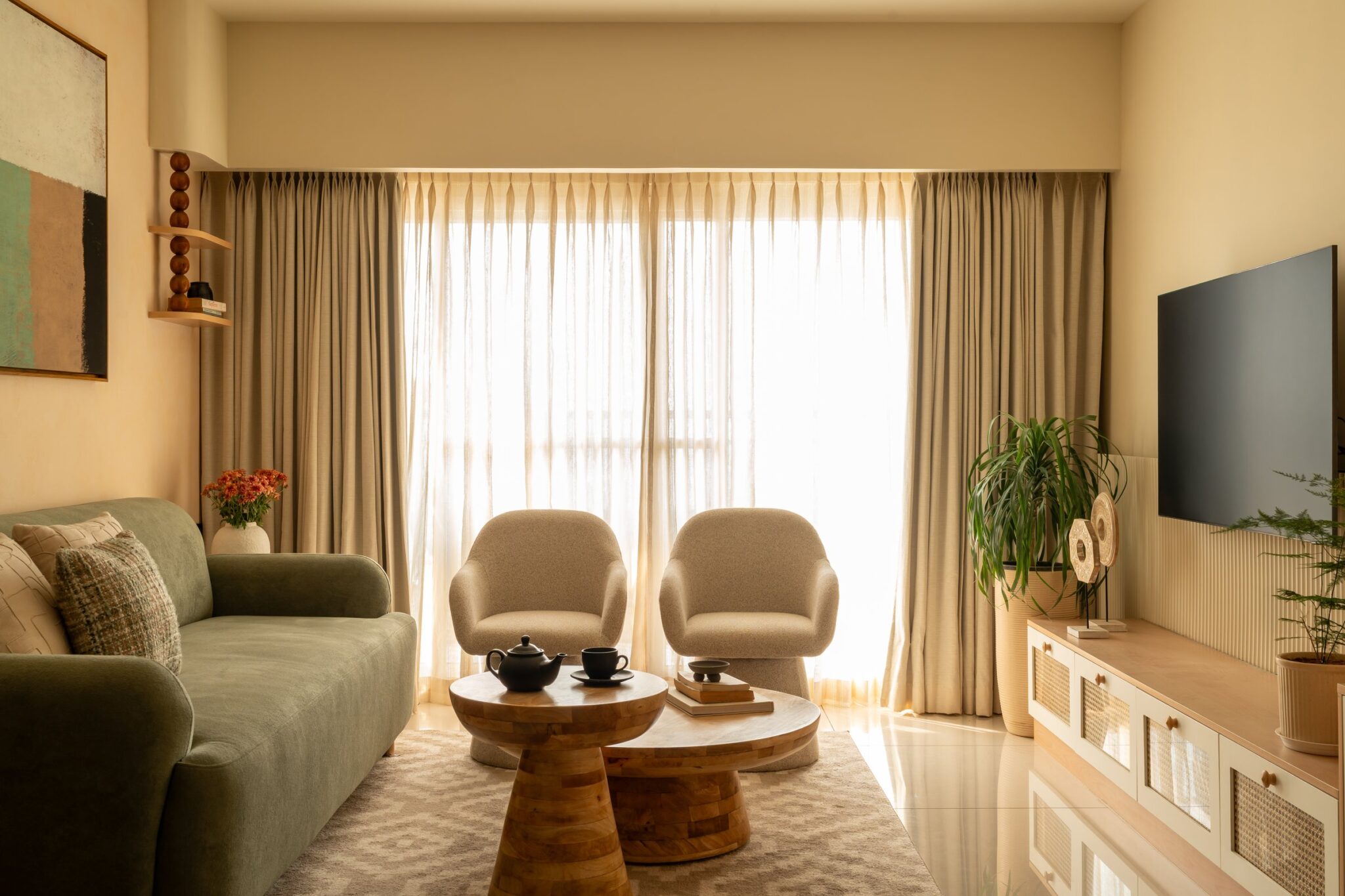
The living room unfolds through a carefully layered composition of soft textures and muted tones. A sage green sofa is paired with curved bouclé armchairs, while sheer curtains layered with full height drapes filter daylight into a gentle, diffused glow. Warm timber finishes, oat toned upholstery, and subtle green accents sit comfortably within the home’s restrained palette, creating a sense of cohesion and balance. Rather than relying on a singular focal point, the room derives its character from the harmony of its materials, colours, and proportions.
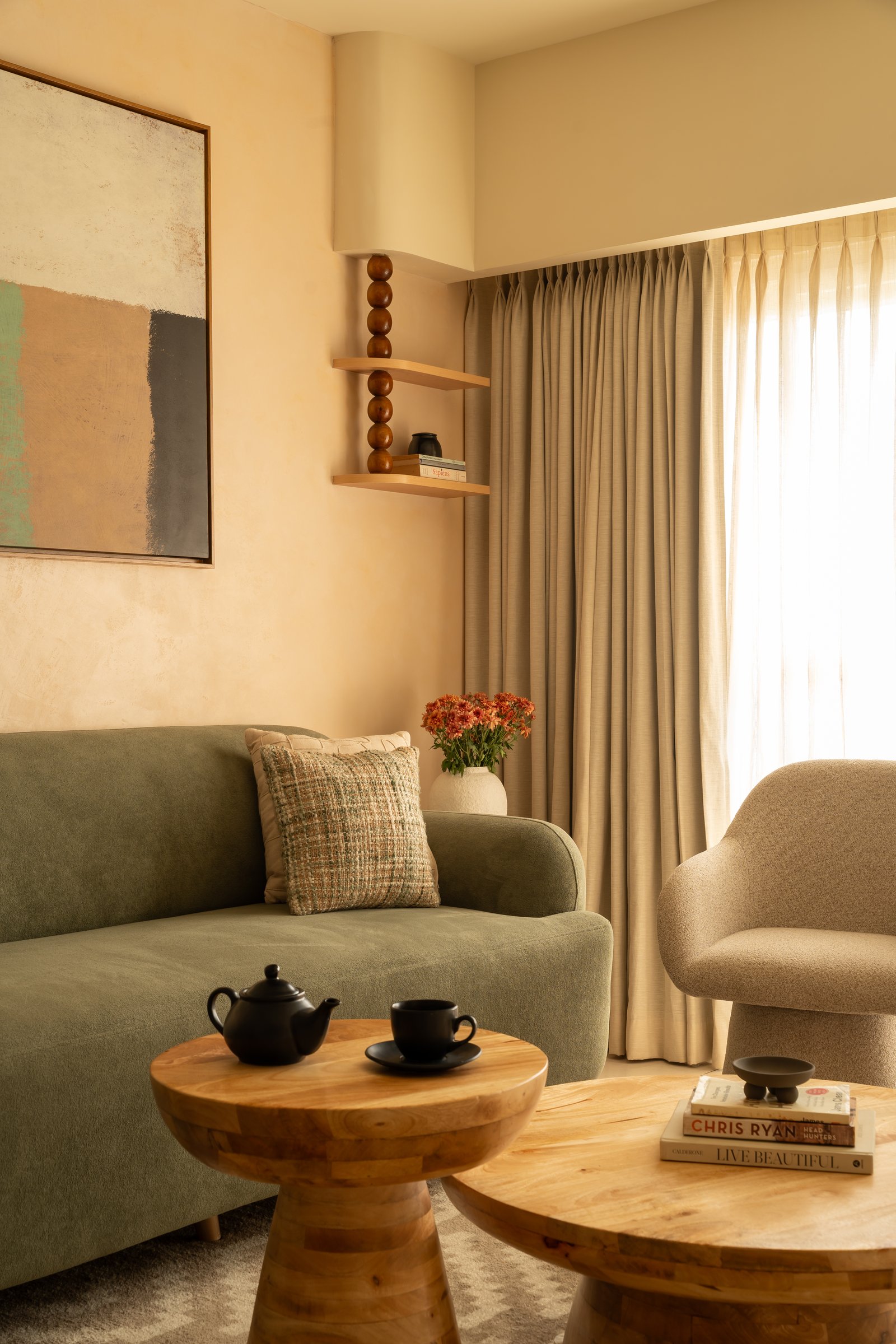
““We wanted the room to feel composed without feeling overly designed.””
Curves play a subtle but significant role in shaping the character of the space. They appear in the softly rolled arms of the sofa, the enveloping form of the armchairs, and the nested mango wood coffee tables that introduce rhythm and softness to the seating arrangement. A compact corner shelf detailed with turned wooden spheres adds a sculptural presence, balancing the abstract artwork nearby. Together, these elements contribute to a composition that feels cohesive and inviting, united by a shared palette of warm, natural tones.
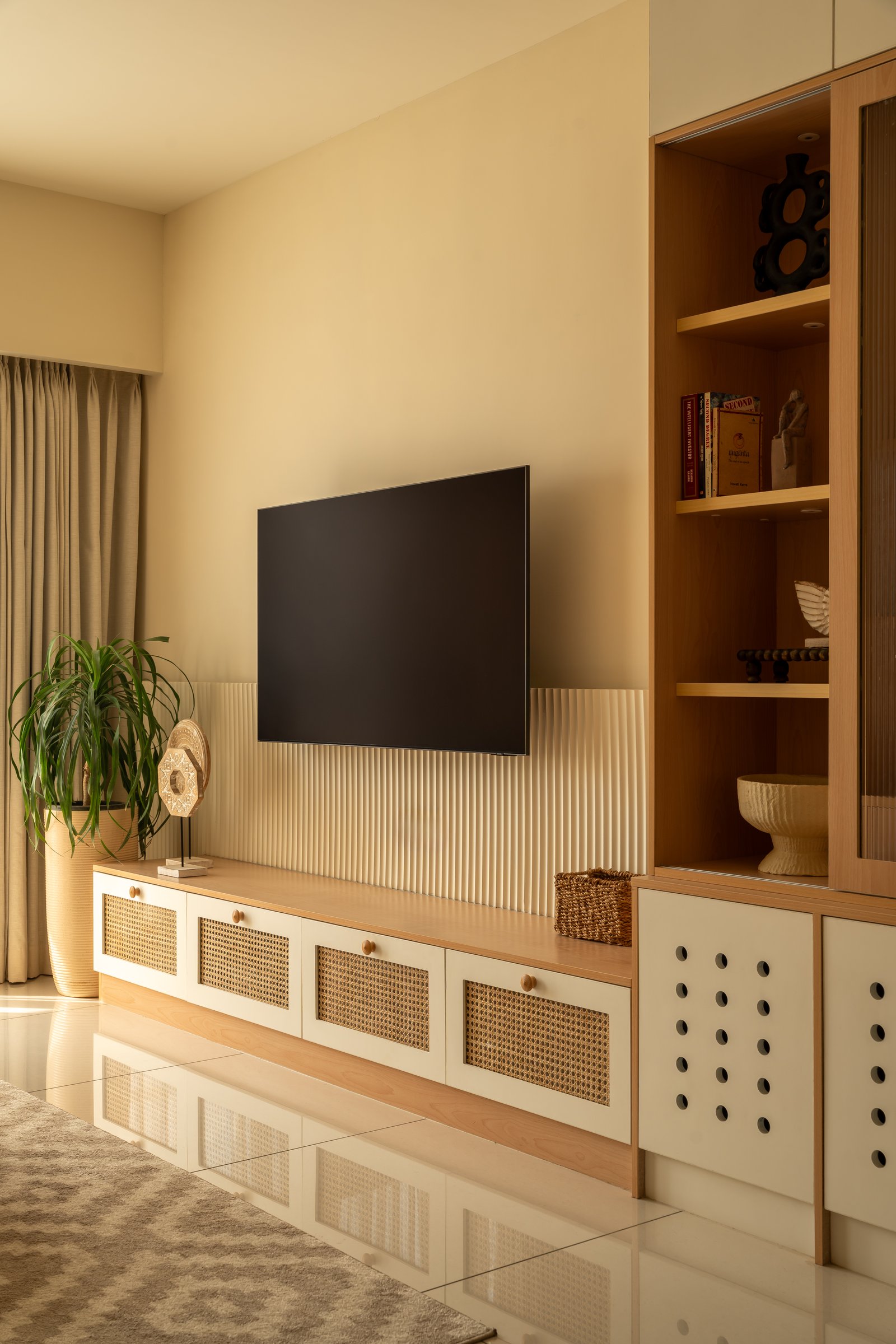
Opposite the seating area, a low media unit with cane fronted shutters extends across the wall, providing a grounded and understated backdrop. The television is mounted against a vertically reeded panel that introduces texture and rhythm without disrupting the room’s calm visual language. Adjacent to it, a pale timber display cabinet combines open shelving, glass fronted sections, and perforated cream panels to accommodate books, ceramics, and the family’s puja requirements. Thoughtfully integrated into the overall composition, these functions feel naturally embedded within the space rather than set apart as separate design gestures.
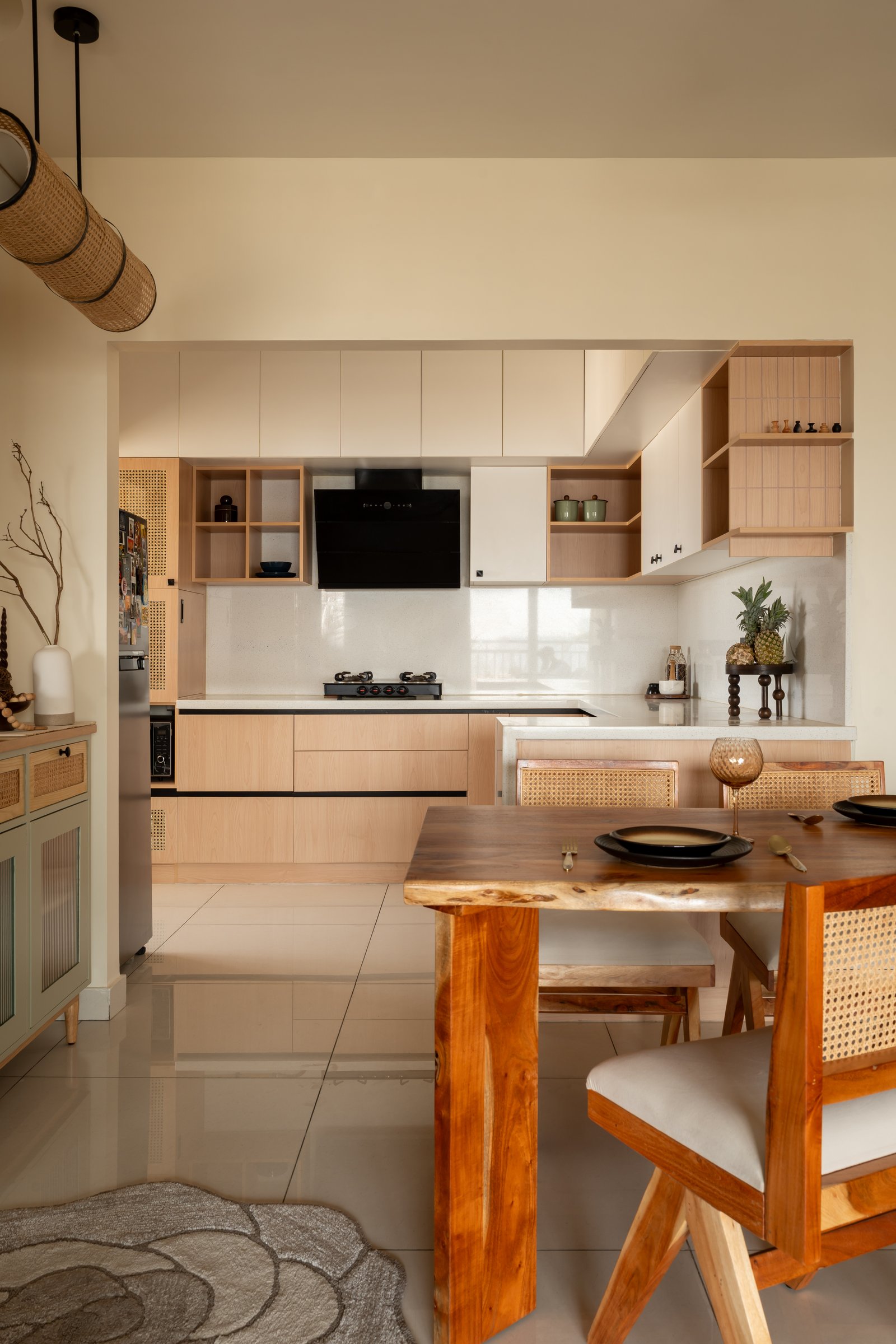
The dining area extends naturally from the living room, reinforcing the home’s sense of openness and continuity. Anchored by a solid wood dining table with a live edge profile, the space is furnished with cane and timber chairs inspired by the timeless Chandigarh design language. Above, a cylindrical woven pendant echoes the texture of the chair backs, while the open kitchen beyond maintains an uninterrupted visual connection between the spaces.
A sage green sideboard positioned along the wall introduces a subtle shift in tone within the otherwise neutral public zone. Detailed with cane fronted drawers and reeded glass cabinets, it balances utility with visual warmth. Styled sparingly with a ceramic vase and a single sculptural branch, the composition remains intentionally restrained, allowing the material palette and textured wall surfaces to take centre stage.
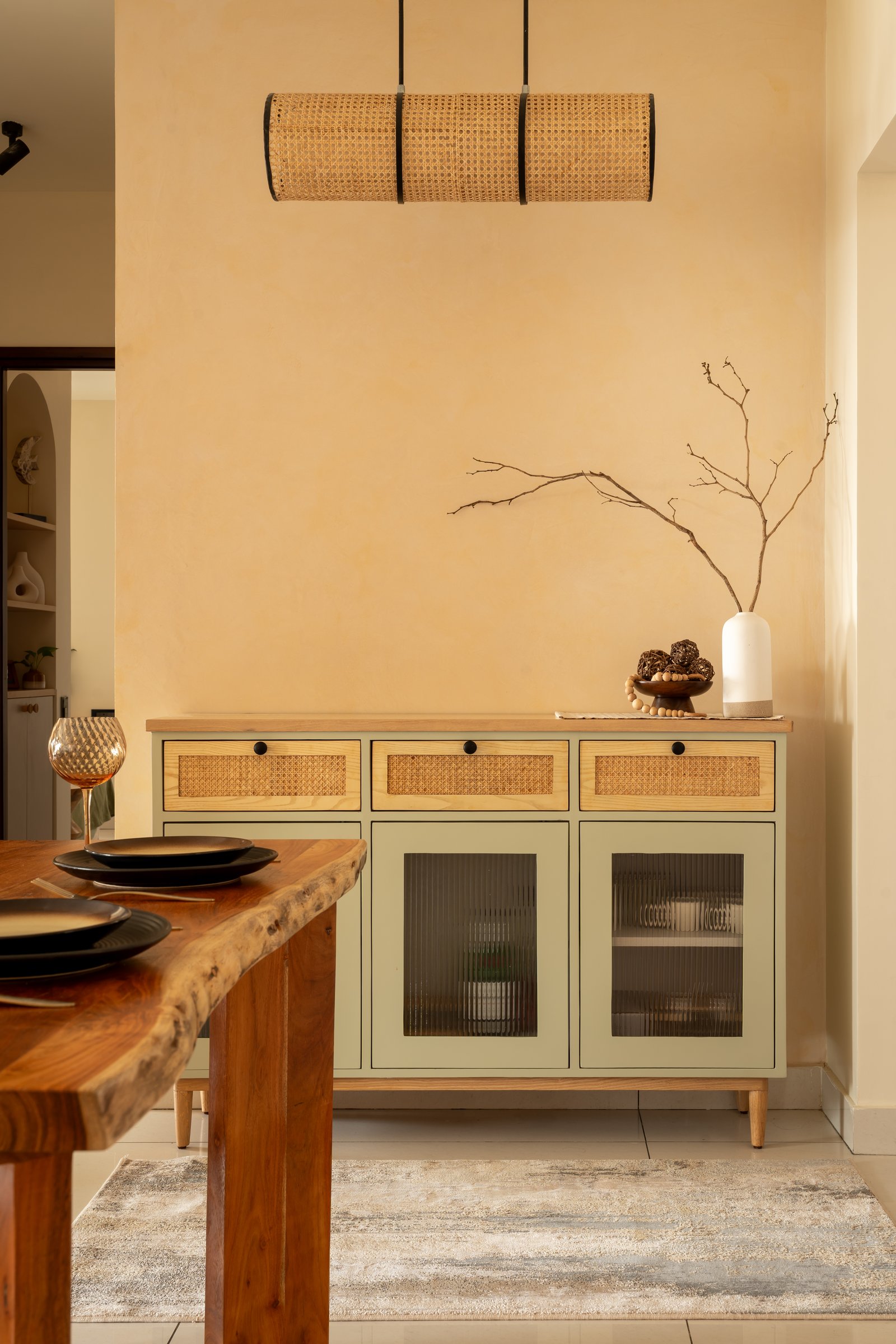
The dining area is anchored by a sage green sideboard with rattan cane drawer fronts and fluted glass cabinet doors, set against a warm ochre plastered wall.
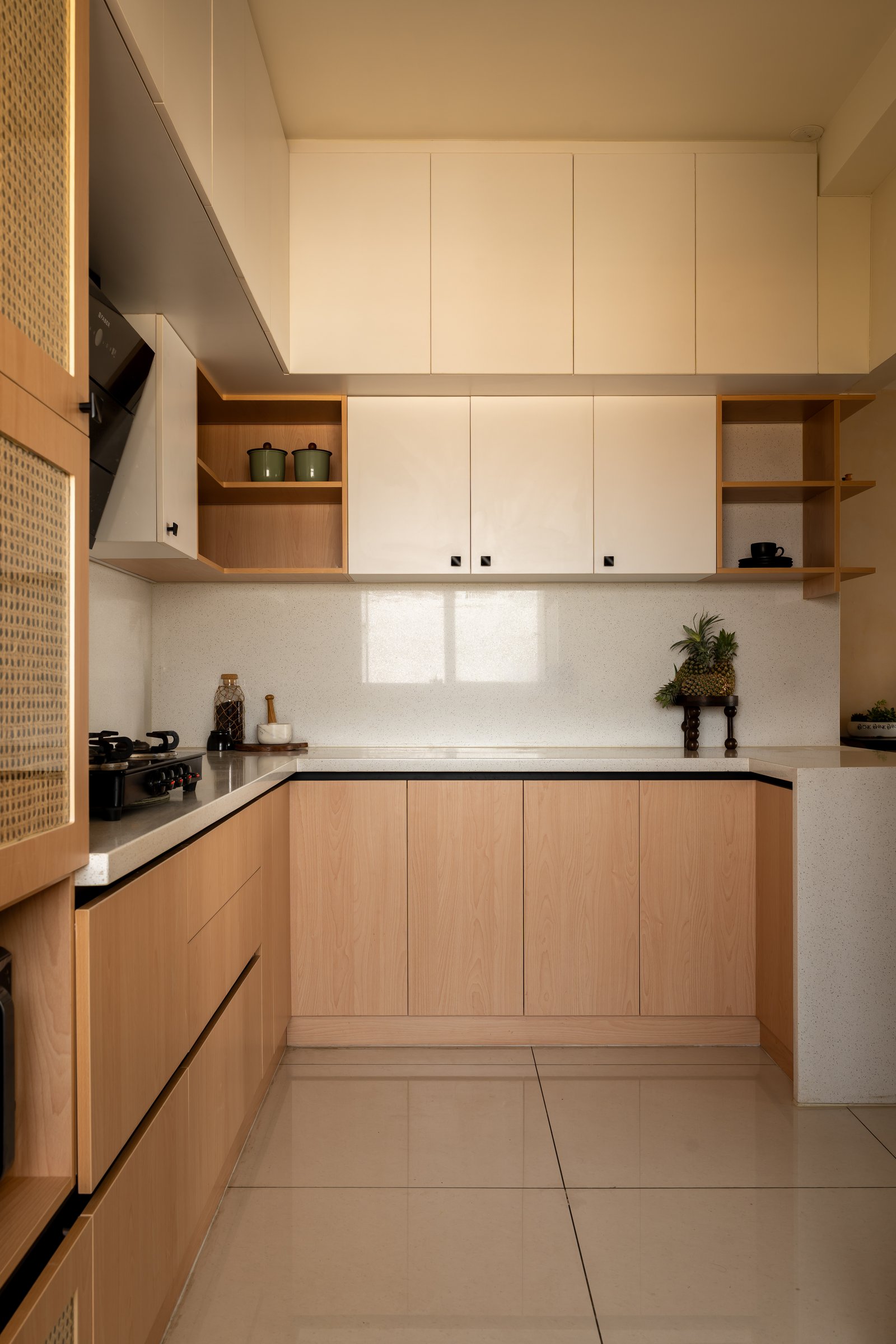
The cane-fronted tall unit at the left edge nods back to the dining sideboard, keeping the material vocabulary consistent across the open plan. The kitchen reads as quiet because it has been organised, not because it has been styled down.
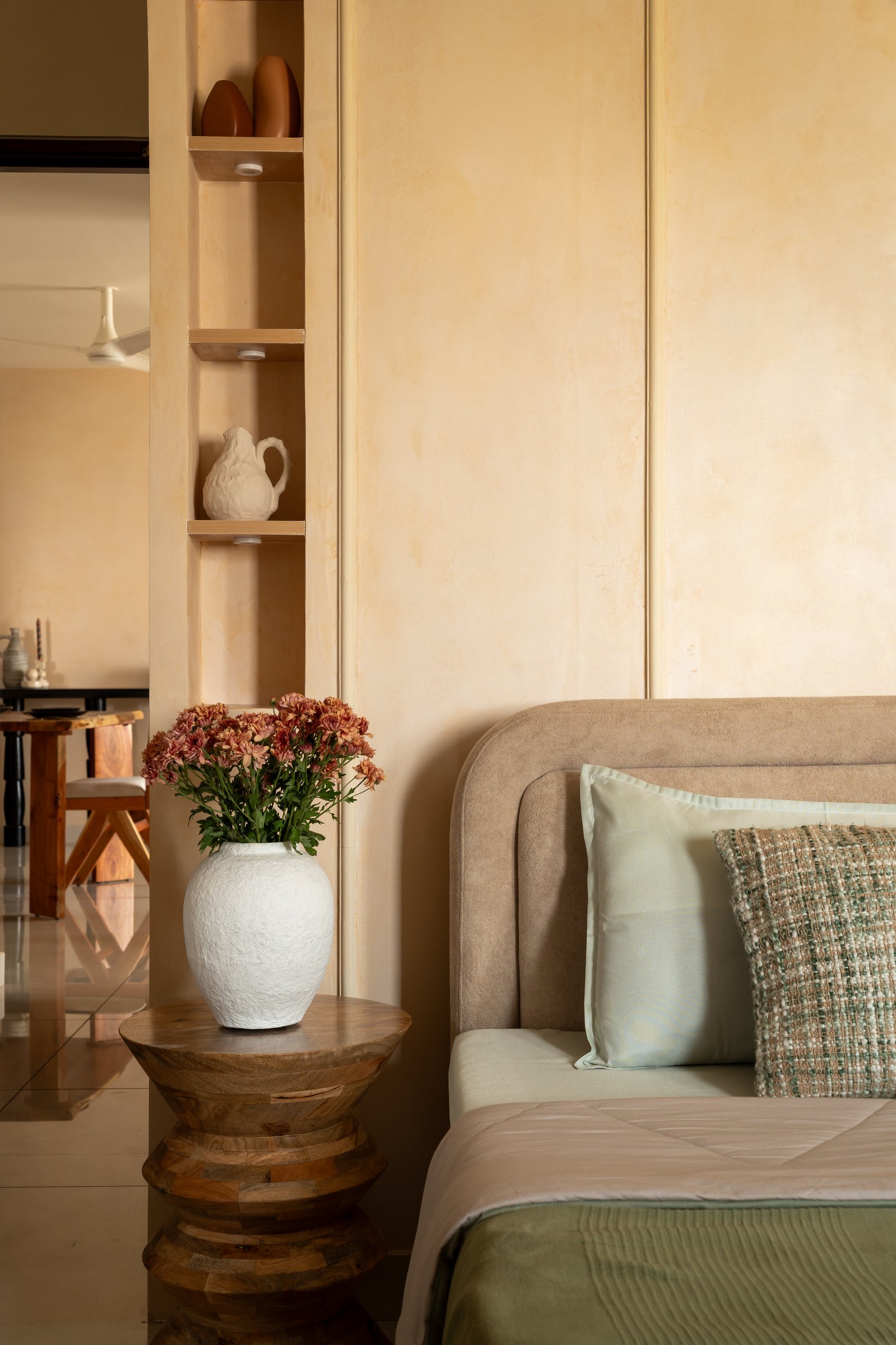
The master bedroom continues the home’s restrained material language while introducing a slightly warmer mood. Behind the bed, a lime washed feature wall deepens into a soft apricot hue, articulated with slender recessed channels that lend the surface a subtle architectural rhythm. To one side, a built in niche with staggered timber shelves provides a quiet setting for ceramics and personal objects, adding depth without visual clutter. A gently curved suede upholstered headboard softens the linearity of the wall, bringing warmth and tactility to the composition.
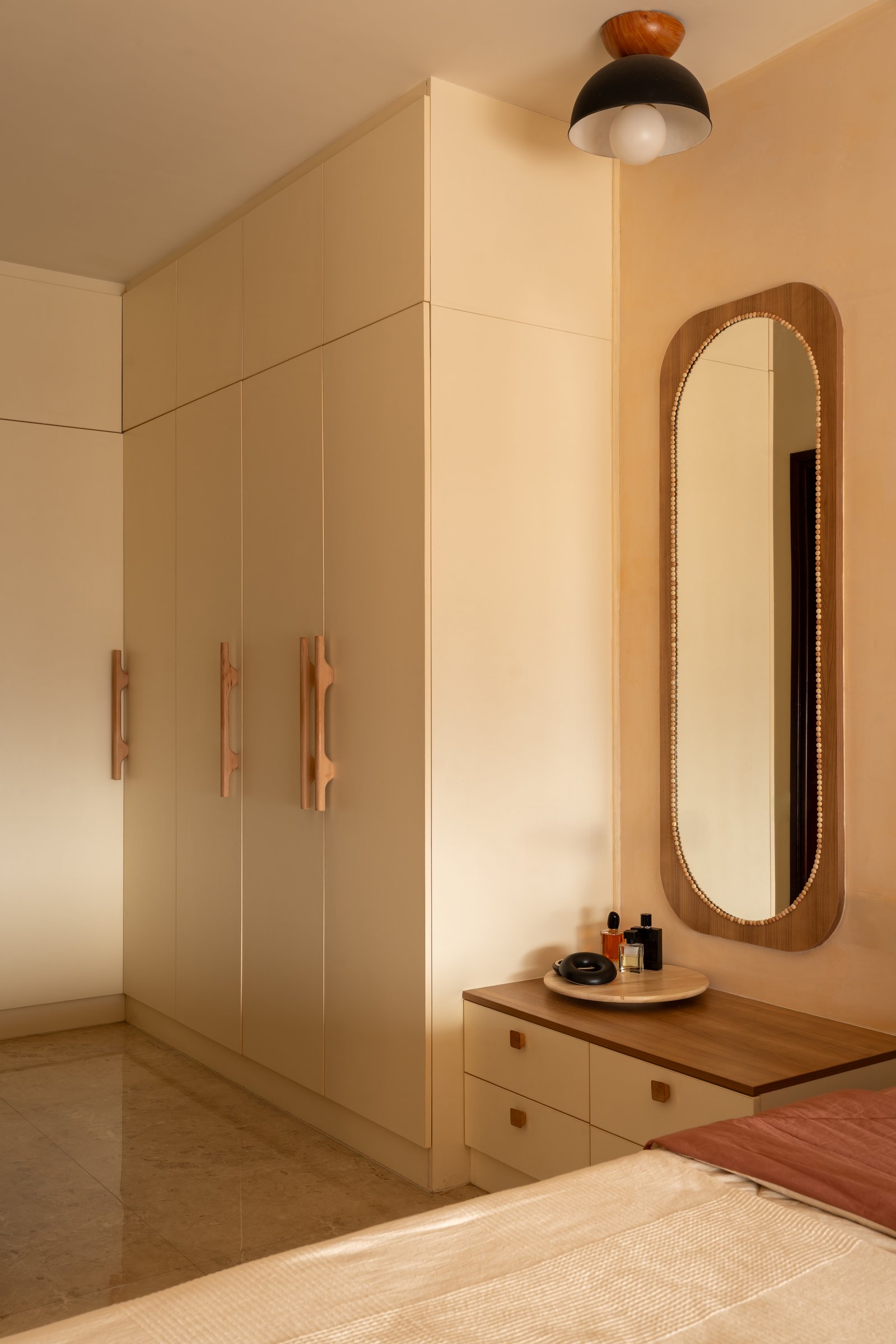
The dressing area carries forward the same sense of calm restraint that defines the rest of the home. A continuous run of cream wardrobes transforms the wall into a seamless architectural surface, detailed only with sculpted timber handles that introduce a subtle layer of craftsmanship. The composition is punctuated by an oval mirror framed in beaded wood and a compact dressing unit in pale timber and cream, creating a functional yet understated corner that feels integrated rather than separate from the room.
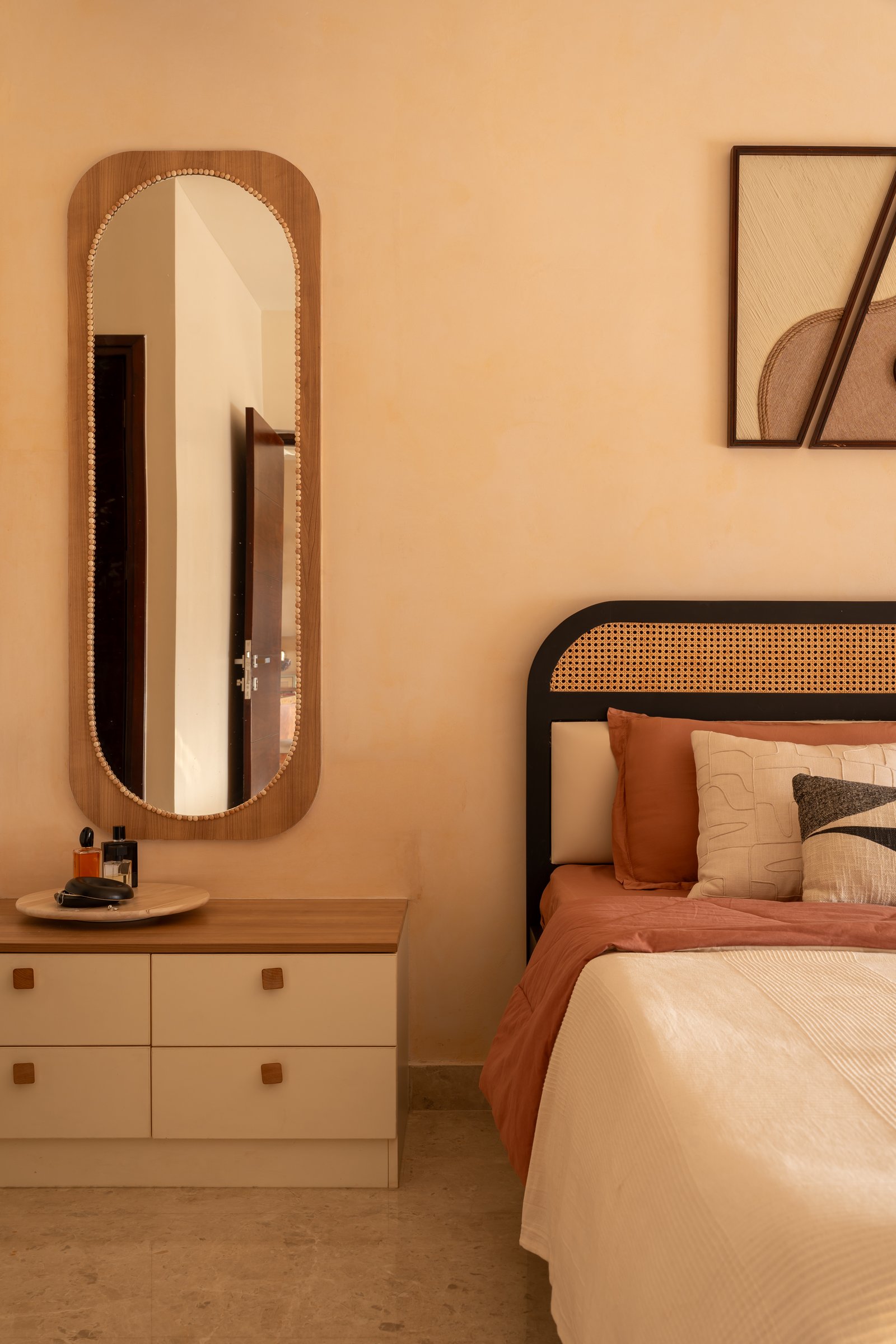
The parents’ bedroom interprets the home’s design language through a lens of comfort and familiarity. Anchored by a black framed bed with a woven cane headboard, the room is set against a softly lime washed apricot wall that lends warmth and depth to the space. Layers of rust, oat, and cream textiles enrich the palette, creating an atmosphere that feels inviting and restful without becoming visually heavy.
Suspended above a rounded mango wood bedside table, a pair of fabric pendants in an elongated lantern form introduce a gentle, ambient glow. Cane detailed drawer fronts and softly curved furniture edges reinforce the room’s tactile quality, while the combination of black timber and woven cane subtly echoes elements found elsewhere in the home. These recurring details establish a sense of continuity, allowing the home’s material and visual language to extend seamlessly into its most private spaces.
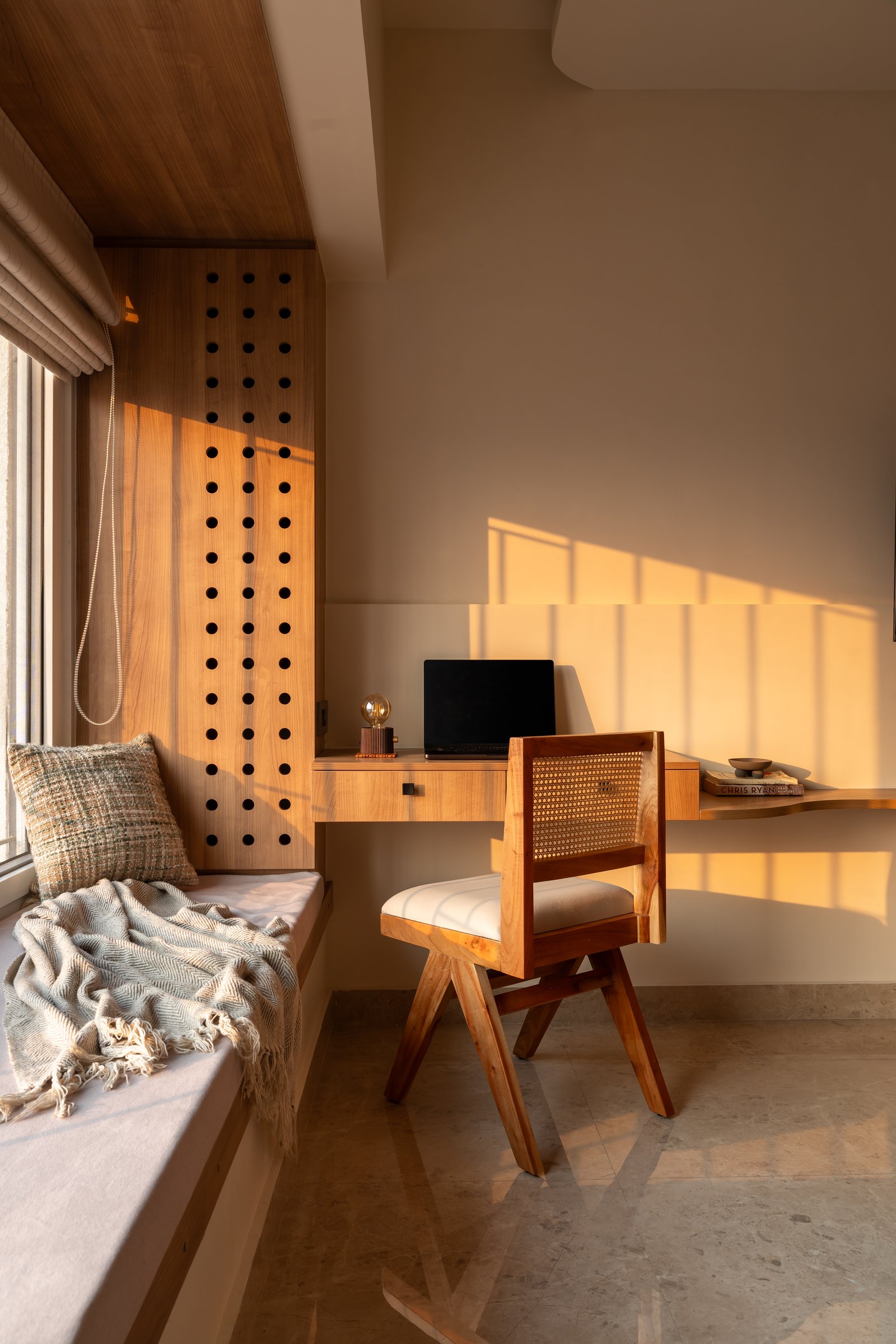
A study nook positioned beside the window offers a quiet retreat for reading and focused work. Comprising a built in bench, a wall mounted timber desk, and a cane backed chair, the space maintains the home’s restrained material palette while introducing a greater engagement with natural light. A perforated timber screen filters the afternoon sun, casting shifting patterns of light and shadow across the surfaces. It is one of the few moments in the home where light becomes an active design element, adding depth and atmosphere without disrupting the calm character of the surrounding spaces.
In a city where contemporary apartments often arrive with a predetermined visual vocabulary, Kanso distinguishes itself through restraint rather than novelty. Its Japandi influences are interpreted as a design approach rather than a stylistic exercise, resulting in interiors that feel rooted in everyday living rather than shaped by trend. The emphasis remains on proportion, material honesty, and the creation of spaces that age gracefully with their occupants.
What Tesor Designs has achieved is a home defined by consistency and clarity. Across every room, the palette, material language, and spatial sensibility remain remarkably disciplined, creating a sense of cohesion that feels effortless rather than prescribed. The project’s strength lies not in what has been removed, but in the confidence with which every remaining element has been considered, resulting in a residence that feels calm, purposeful, and enduring.