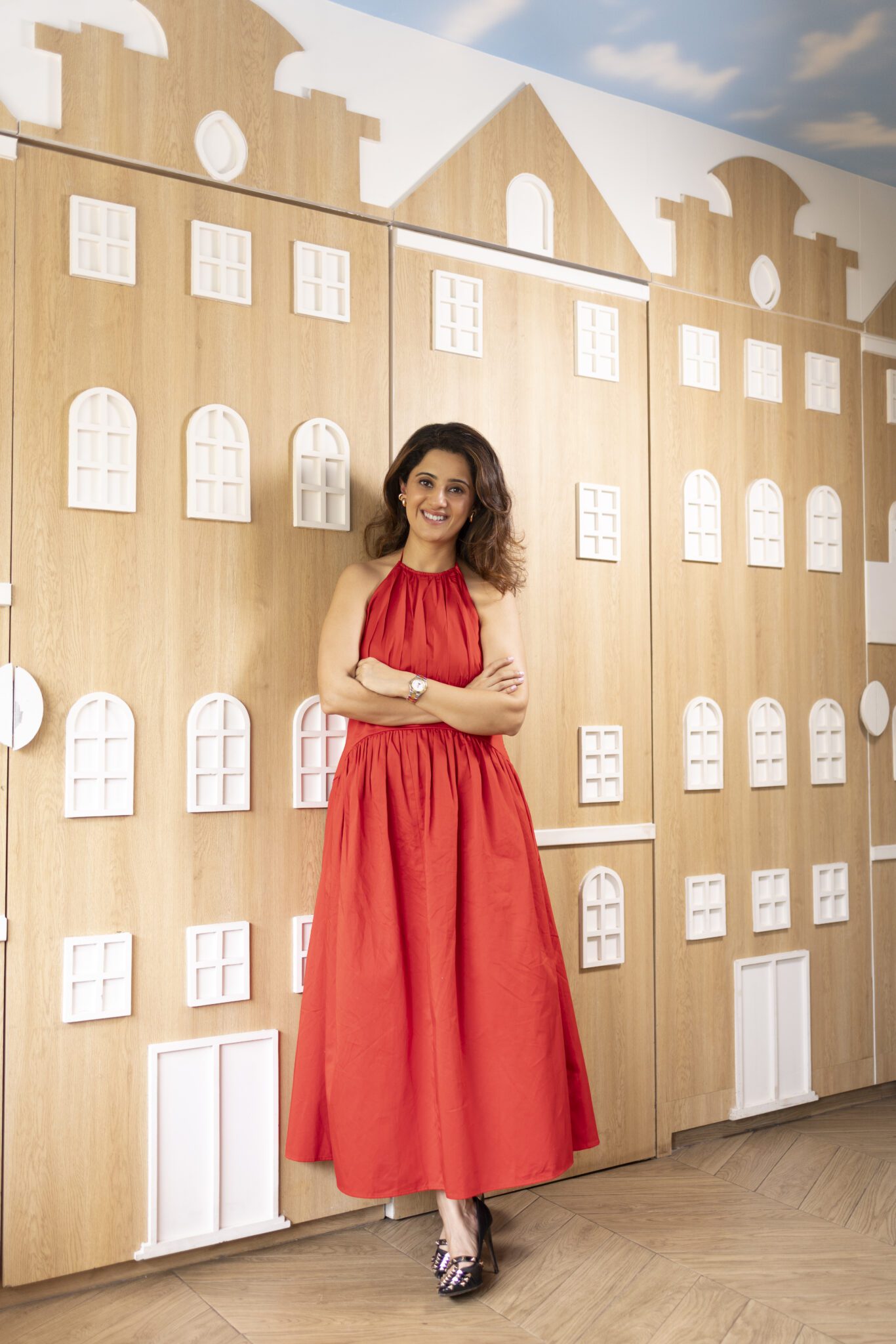
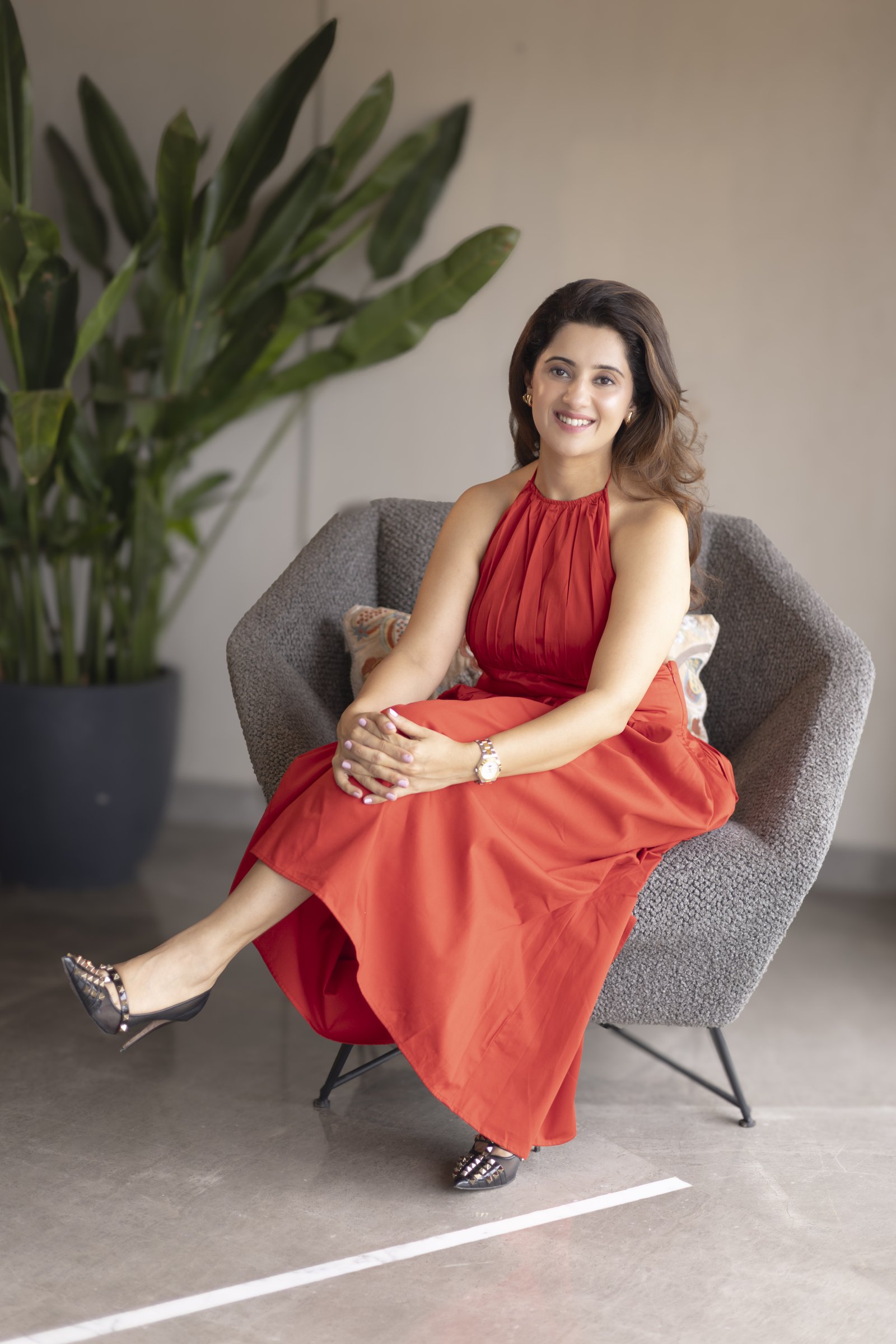
Arshiya Chadha believes a home should soothe the nervous system before it ever satisfies a trend. It is a quiet conviction, but one that reorganises the usual priorities of high-end residential design. Aesthetics, in her practice, are not the starting point; they are the final layer applied only after emotion and function have been resolved. The result is a body of work that resists the visual urgency of contemporary luxury, choosing instead a register that grows on its inhabitants rather than impresses its visitors.
Chadha founded The Green Houz in Mumbai in 2019, after a decade spent inside two of India’s larger architectural practices. The studio’s name carries the philosophy in miniature: a greenhouse, she says, traps natural warmth to keep what lives inside it safe and thriving. That image, first encountered during a school science lesson, became the foundation for a practice she now describes as the engineering of warmth, executed through architectural continuity and bespoke interior detail.
Design Philosophy
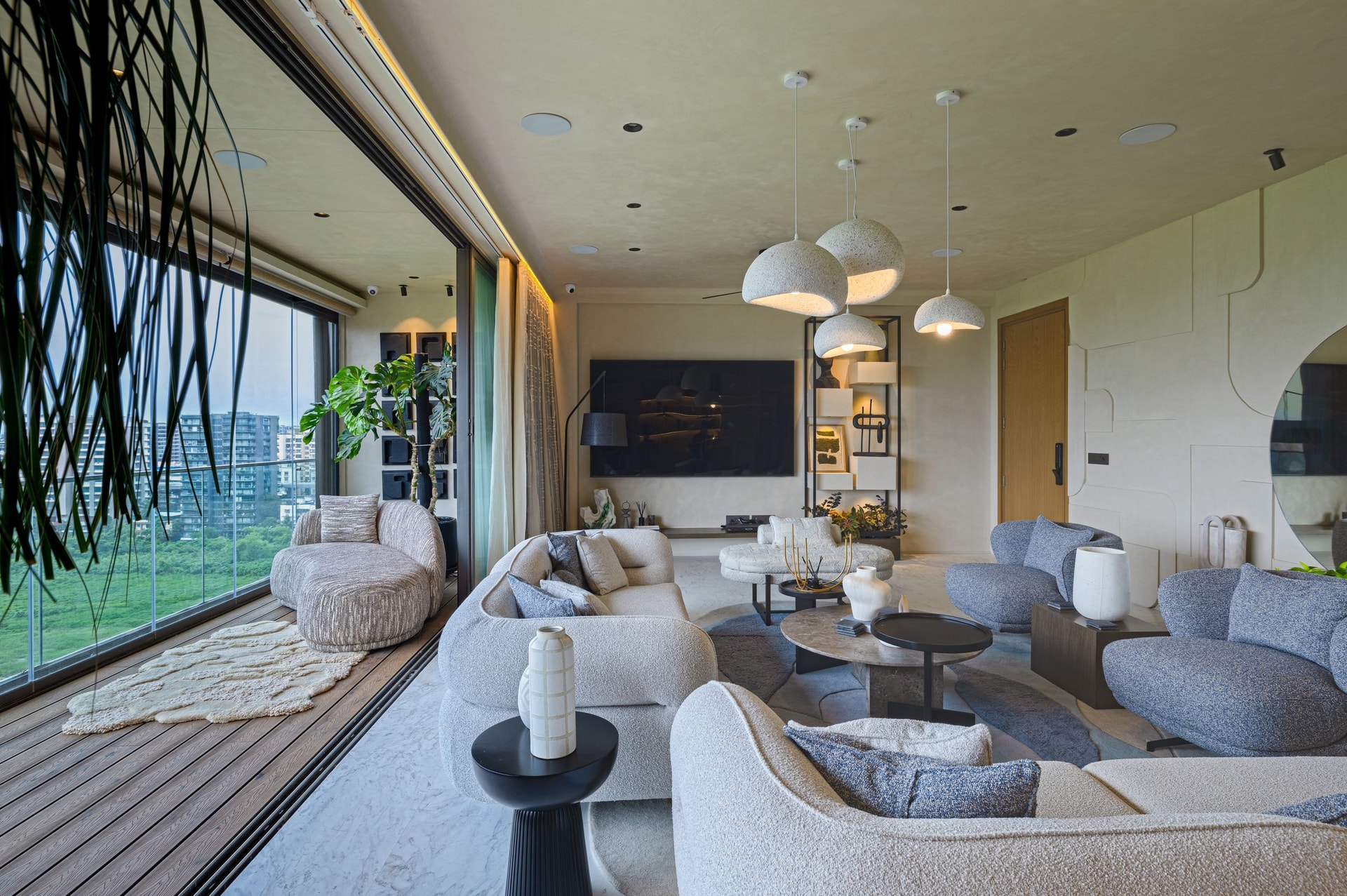
Chadha’s term for her approach is soft modernism, a sensibility she pairs with what she calls a pinch of wabi-sabi. The combination produces interiors that read as composed rather than performed: clean lines, restrained material palettes, and a deliberate acceptance of organic imperfection. The work is not minimal in the austere sense; it is calibrated, with comfort treated as a non-negotiable companion to clarity.
Her formative years in the industry were shaped by mentors she names with care. “I owe a special mention to Amrish Arora and Sidharth Talwar under whose guidance I truly discovered my niche in residential design,” she says, crediting her time at Studio Lotus with giving her the foundational confidence to eventually build her own practice. What she carried forward from that period was less a stylistic vocabulary than a working principle: that luxury, when done with intention, does not need to raise its voice.
It is a philosophy rooted, in her words, in visual ergonomics, the belief that a well-made room registers first as a feeling rather than an image. The metric of success she returns to is longevity: a client who, ten years in, finds themselves falling deeper in love with a space rather than wanting to renovate it.
Process & Practice
Chadha’s design process begins not with a layout but with a conversation about feeling. She avoids reference images at the outset, preferring to translate the client’s emotional brief into a bespoke mood board that captures atmosphere before it captures form. The aim is what she calls a 95 percent alignment from the start, a deliberate refusal of the copy-paste mindset she sees as one of the industry’s quieter ailments.
That refusal extends to her client meetings, where she sketches details by hand in real time.
“When you sketch a custom detail right in front of them, you are showing them a piece of art created exclusively for them,” she explains.
“It proves that design isn’t a Google search; it’s an active, human process.” Her own analogy is sharper still: the clients have access to all the ingredients, but the designer is still the chef.
Her method privileges an inverted hierarchy: emotion first, function second, aesthetic last, and treats the project as a long-form relationship rather than a transaction. Materials, textures, and light are the instruments through which the emotional brief becomes physical. “Without materials, texture, and light, a space is just a skeleton,” she says.
“Light is the ultimate director, harnessing the brilliance of daytime sun, the theatrical drama of decorative fixtures, and the quiet intimacy of mood lighting.”
Project Highlight: A Mumbai Beachfront Residence
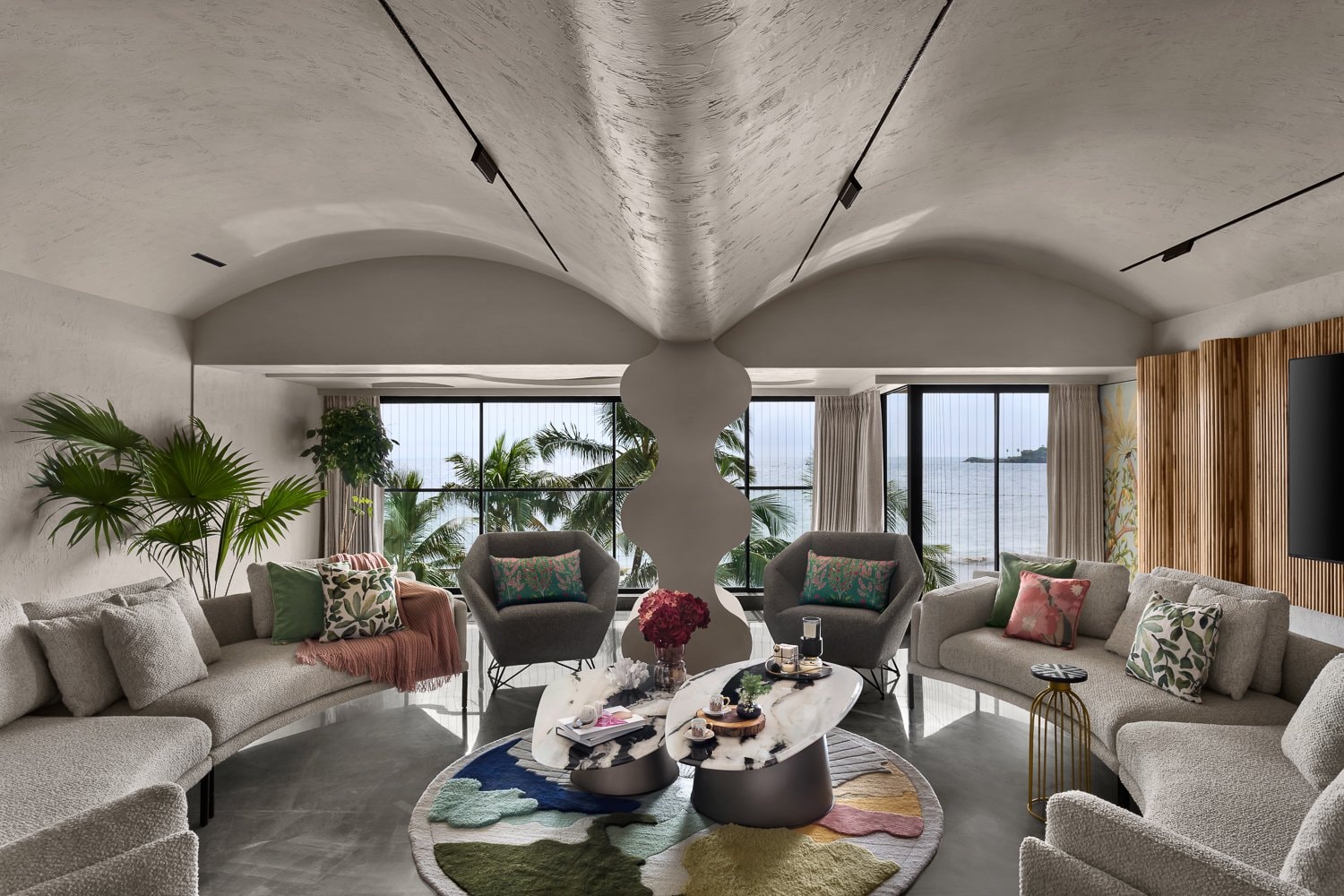
Of the projects in The Green Houz portfolio, the one Chadha returns to most often is a beachfront residence completed in 2022, a rare opportunity, she says, to design from the horizon out rather than the city in. The brief was emotional in nature: the clients wanted to distill the slow, tranquil essence of a Sunday morning into their everyday life. The architectural response is fluid, curvilinear, and quietly disciplined.
Vaulted ceilings, a sculptural wave column, and arched entrances echo the ocean’s gentle rhythm. The walls carry a bespoke sand-mimicking texture that captures the soft, shifting morning light, and the palette is engineered to hold a paradox: a visual coolness that counters the tropical climate, balanced by a warm, nurturing register that prevents the interior from reading as austere.
The technical demands were considerable. Coastal conditions required absolute material honesty, every finish, wood, and metal specified not only for immediate beauty but for the ability to age gracefully against corrosive sea air. The project also marked a turning point in her thinking.
“In my early years, my instinct was to design every surface and to treat every wall as a canvas demanding an answer,” she reflects.
“But true luxury isn’t about noise; it’s about clarity.” Today, every Green Houz project is built around a single undisputed star, a view, a sculpted wall, a rare piece of furniture, with everything else composed to serve it.
Designing for Longevity
For Chadha, sustainability begins less with material sourcing than with the lifespan of the space itself. “The greatest threat to the environment in interior design isn’t just the production of materials,” she argues, “it’s the culture of disposable trends.” A space designed to be torn out every few years is, in her view, inherently unsustainable, regardless of how green its specifications appear on paper.
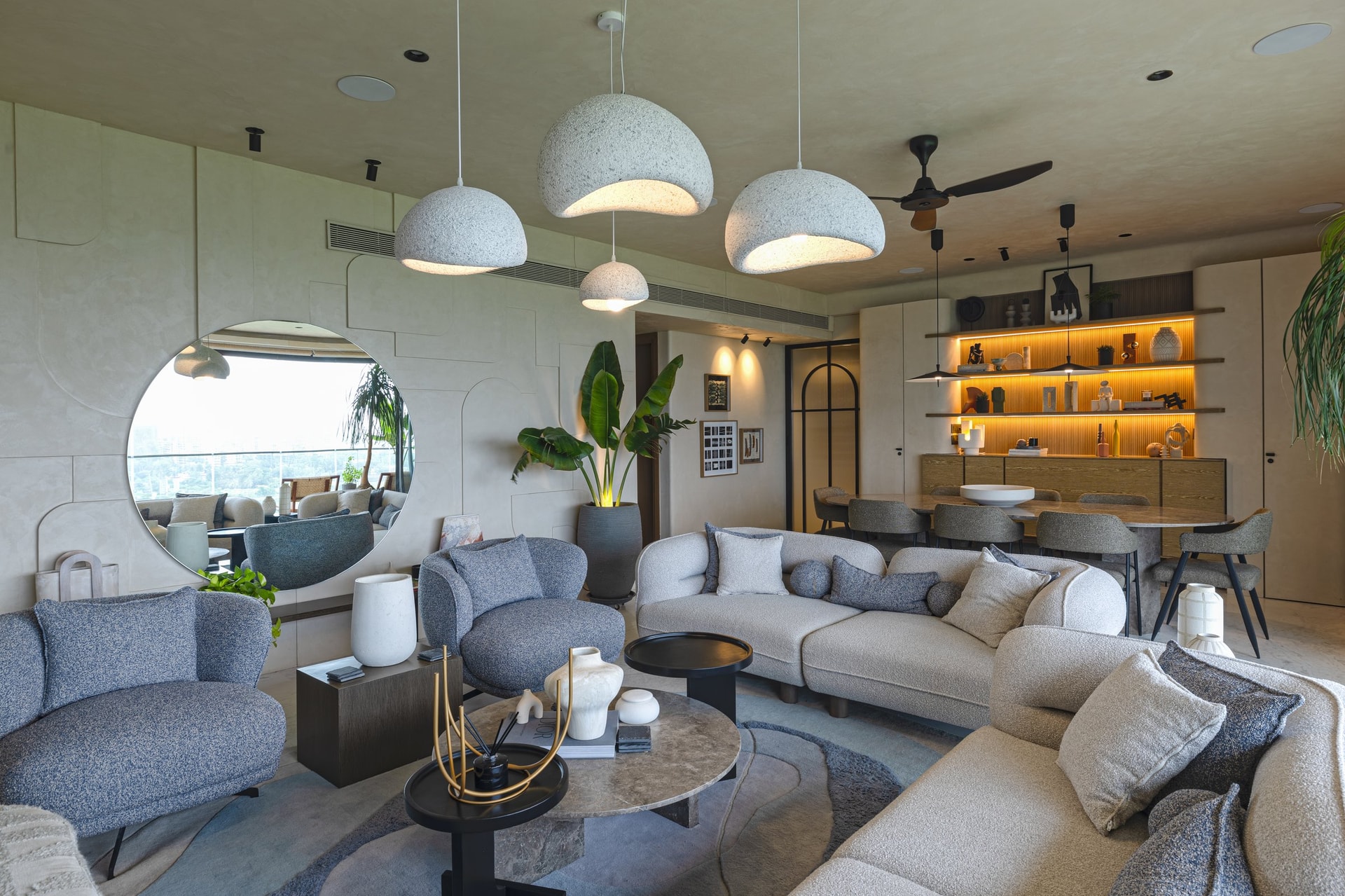
She sees clients moving in the same direction, away from performative gestures, toward what she calls a fewer, better things philosophy. The focus has shifted to non-toxic paints, natural finishes, smart lighting, automated shading, and high-performance glass that integrates quietly into the architecture. The conversation is no longer about which materials look sustainable but about which decisions allow a home to remain inhabited, unchanged, and loved across decades.
Her view of the broader Indian design conversation tracks the same arc. “Indian design is undergoing a quiet revolution,” she observes. The era of loud luxury, mirror-polished imported stones, object-heavy interiors, is, she believes, giving way to a deeper appreciation for tactile minimalism, where local materials like sandstone and textured limestone are detailed with crisp, modern lines. Luxury, in this register, is measured not by how much is spent but by how beautifully a space breathes.
In Reflection
Chadha is candid about the slowness of the work, and the patience it asks of those entering the profession. “In this industry, success is a slow burn,” she says. “It often arrives later in your journey, but when it does, it is the most deeply soul-satisfying experience you can have.” The advice she offers younger designers is grounded in the same temperament that shapes her interiors, restraint, humility, and a refusal to rush the process.
The greatest lesson of her own career, she says, has been the discipline of staying curious. The moment a designer believes they have arrived is the moment they stop evolving. Success, in her current definition, is the hard-earned luxury of selectivity, the autonomy to turn down work that does not align with one’s purpose, leaving room only for projects where something extraordinary can be made.
Her closing thought returns to where her practice began: the relationship between the inhabitant and the space.
Editor’s Note
What distinguishes this conversation is the inversion at its centre. Most designers describe their process as moving from concept to function to finish; Chadha describes hers as moving from feeling to function to finish, and treats aesthetics as the last act rather than the first. That sequence is unusual in a market increasingly shaped by the image rather than the experience, and it produces interiors that read very differently in person than they do on a feed.
The Green Houz is now seven years into its practice, with a 7,000-square-foot Orlando showroom marking its international debut and three bespoke residential handovers scheduled over the next six months. The studio’s trajectory suggests a clearer interest in slow, high-conviction residential work than in scale for its own sake, a direction worth watching as Indian luxury design continues its quiet recalibration away from spectacle.
You can follow Arshiya’s work at @the_green_houz on Instagram.