A clubhouse is one of architecture’s more complex assignments. It is expected to accommodate a wide spectrum of activities and users, shifting seamlessly between moments of recreation, wellness, work, and community. Yet many such spaces fall into the trap of generic design, relying on safe neutrality that prioritises uniformity over character. This 8,000 sq. ft. clubhouse in Chennai takes a more deliberate approach, embracing the diversity of its programme while ensuring a clear and cohesive design narrative.
Designed by Kebani The Design Studio, the project serves as the social heart of a residential community, bringing together two lobbies, a multipurpose hall, a mini theatre, a gymnasium, yoga and indoor games rooms, a business centre, and a series of shared circulation spaces. Rather than imposing a singular aesthetic across every function, the design allows each space to respond to its purpose and atmosphere. What binds the project together is a consistent design language rooted in thoughtful materiality, carefully calibrated lighting, and a confident use of colour. The result is a clubhouse that feels varied yet connected, offering residents a sequence of spaces that are both distinct in character and unified in experience.
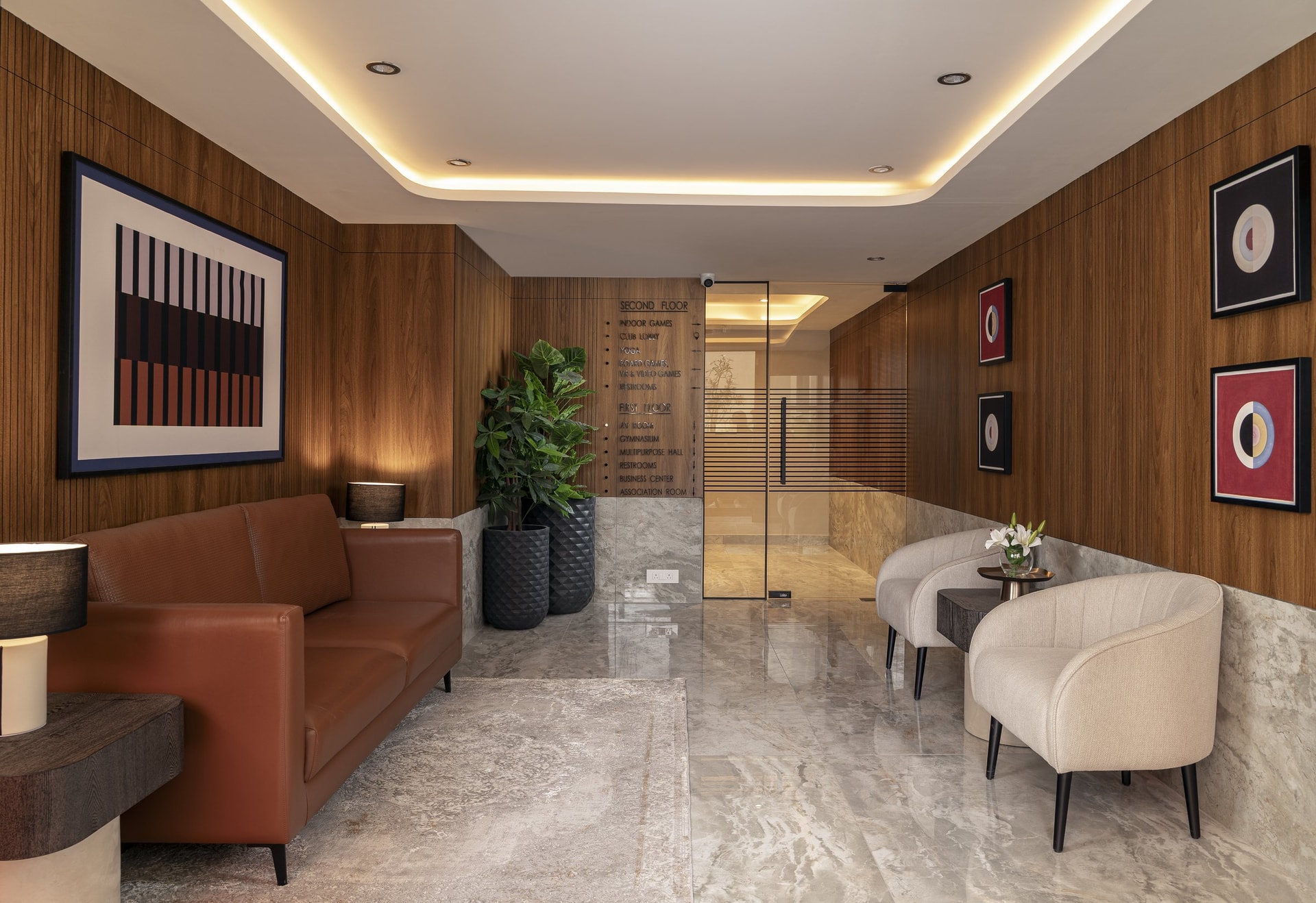
The lower club lobby is conceived as a warm and welcoming point of arrival, defined by wood-grain panelling, a tan leather sofa, and a carefully integrated directory that introduces visitors to the building’s various amenities. The material composition is deliberately layered, with textured stone wainscoting grounding the space below and finely detailed panelled surfaces extending upward. This balanced interplay of materials lends the lobby a quiet sense of authority and permanence, reinforcing its role as the clubhouse’s primary orientation space. More than a transitional area, it serves as the first introduction to the building’s identity, establishing a tone of understated sophistication from the moment one enters.
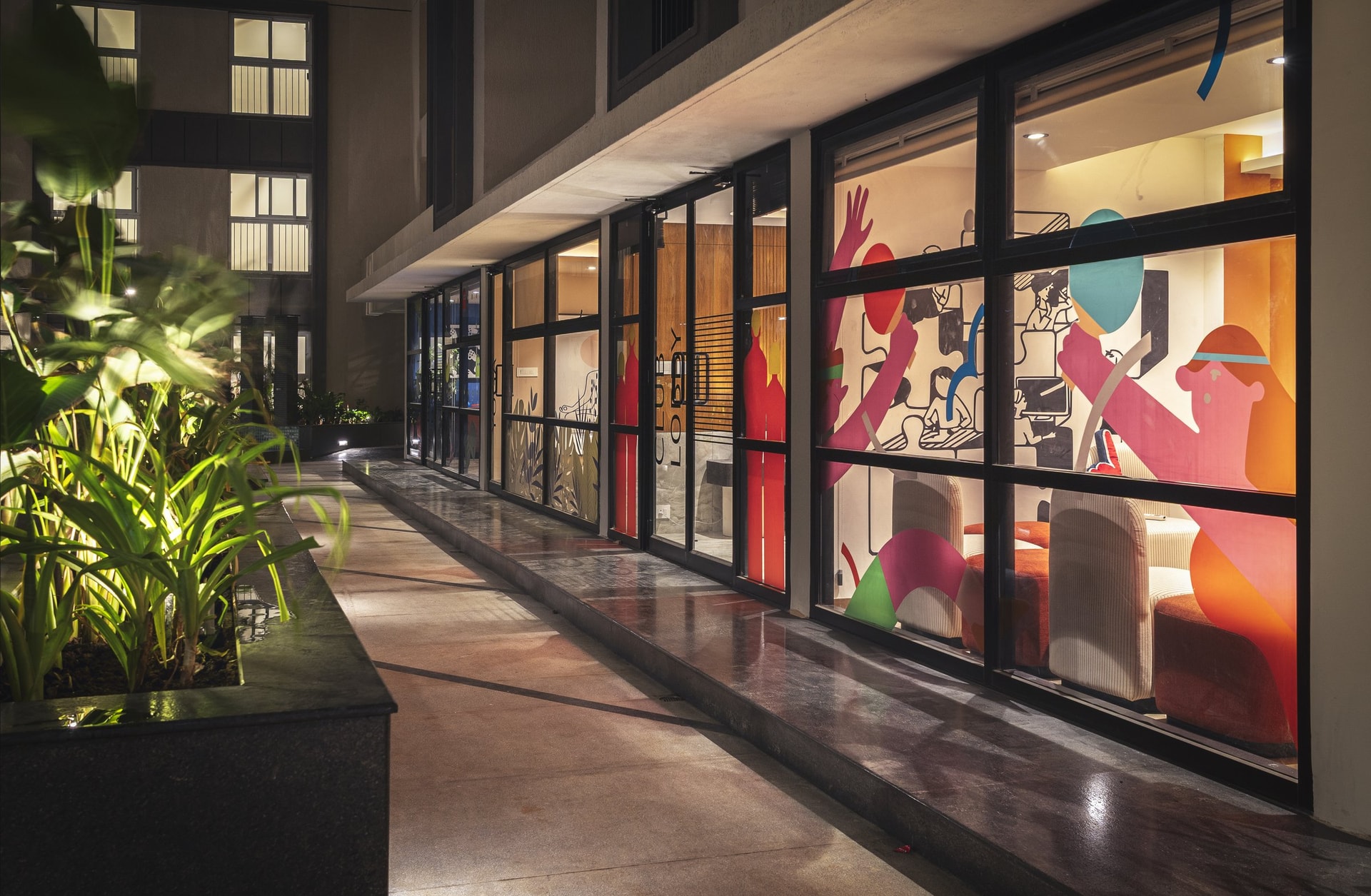
From the exterior at night, the building reveals its other ambition. A run of full-height glazing along the corridor is treated with vivid sun-film artwork, abstract figures, bold blocks of red, orange and cyan, that turn the facade into a quiet announcement of what happens inside. It is the project’s loudest gesture, and it works precisely because the interior rooms know when to whisper.
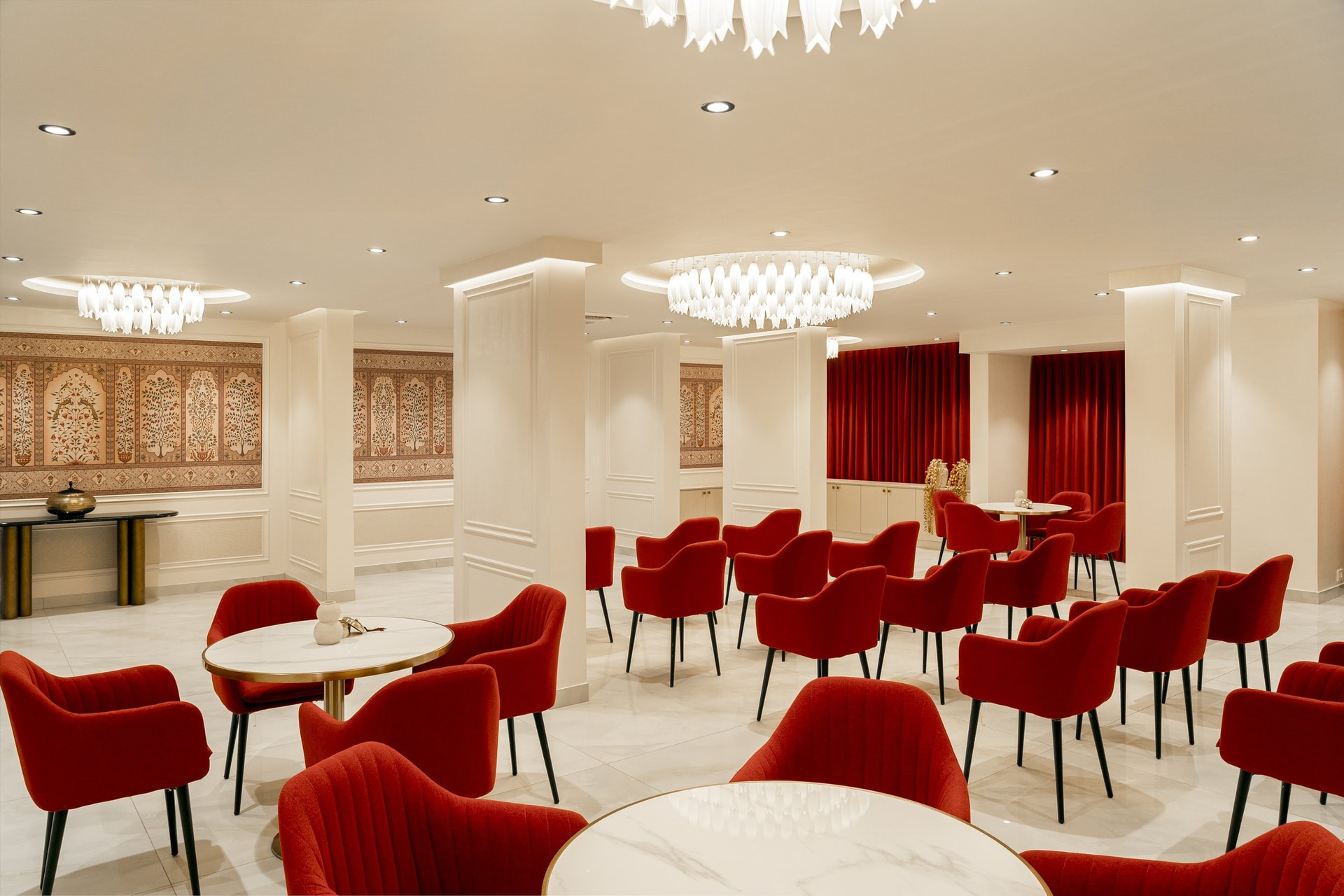
The multipurpose hall emerges as the clubhouse’s most expressive and visually immersive space, embracing a richer and more theatrical design language. Deep red velvet armchairs are arranged in a combination of intimate conversational groupings and forward-facing configurations, allowing the room to adapt effortlessly to a variety of gatherings and events. The walls become a defining feature, adorned with a panelled mural depicting stylised flowering trees rendered in muted pinks, ochres, and greens. The artwork strikes a careful balance between classical elegance and contemporary interpretation, lending the space a distinctive sense of character.
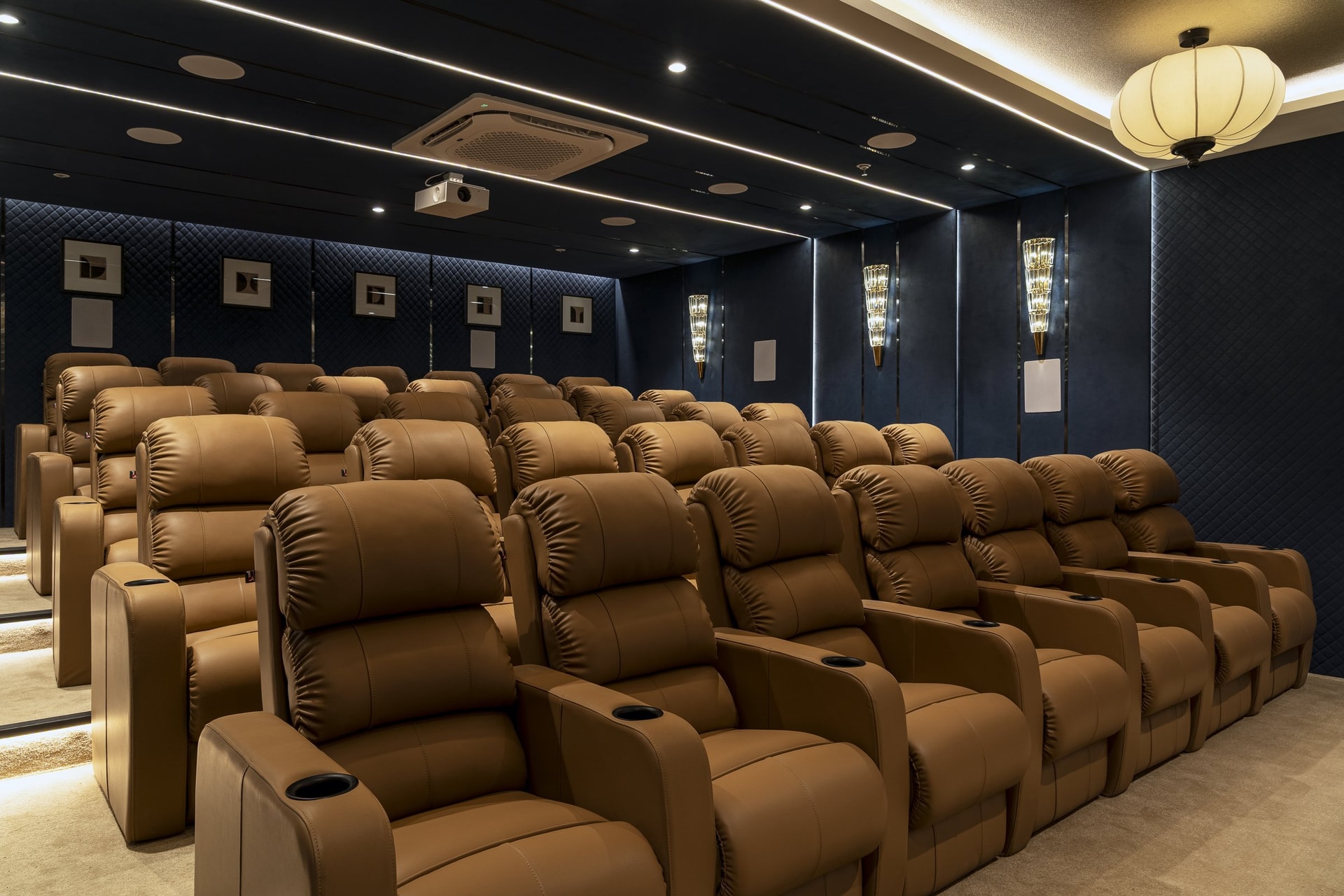
The mini theatre is a complete tonal pivot. Walls in deep midnight blue with a quilted texture absorb light; rows of tan recliners face forward in disciplined ranks; ribbed wall sconces in brushed metal flank the seating like sentries. A single lantern-form pendant at the entrance softens the seriousness of the room.
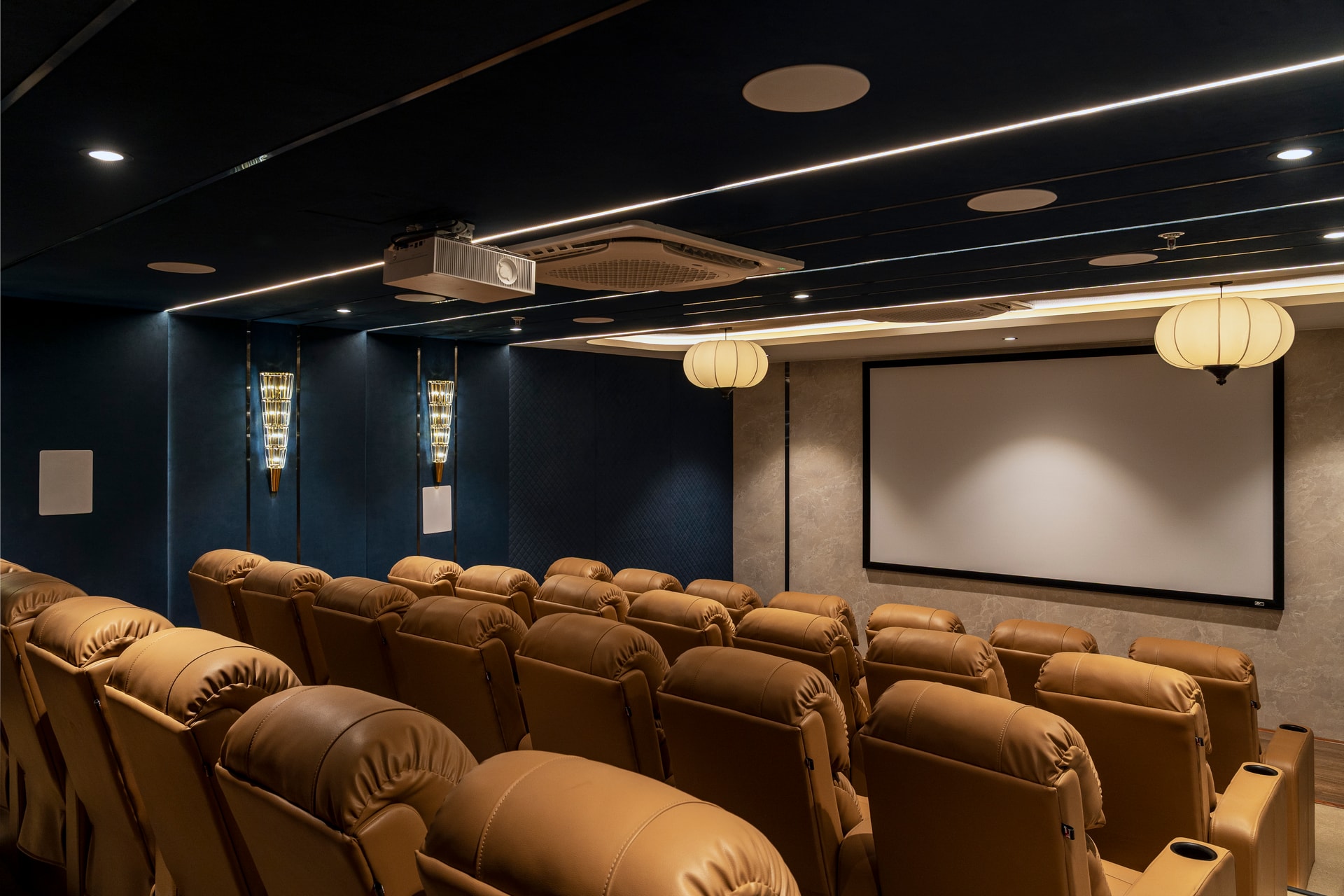
From the rear of the theatre, the projection screen comes into view against a panel of pale stone, the only light surface in an otherwise enveloping interior. The contrast is the point: the dark walls and ceiling collapse around the screen, leaving the eye nowhere to wander.
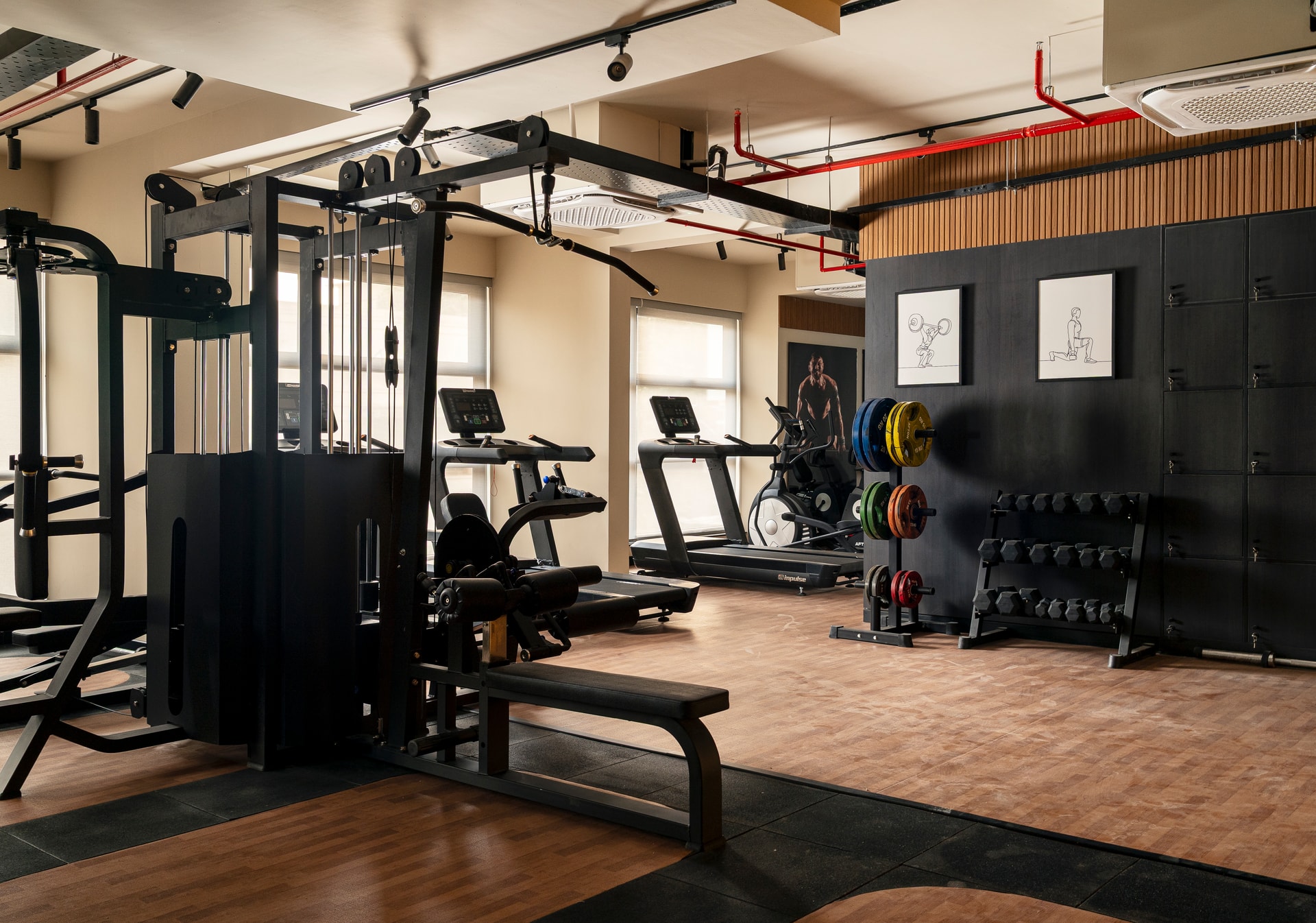
The gymnasium takes the opposite approach to the theatre, exposing rather than concealing. Red service piping runs visibly across the ceiling, track lighting hangs from black rails, and a wall of slatted wood softens what would otherwise read as purely utilitarian.
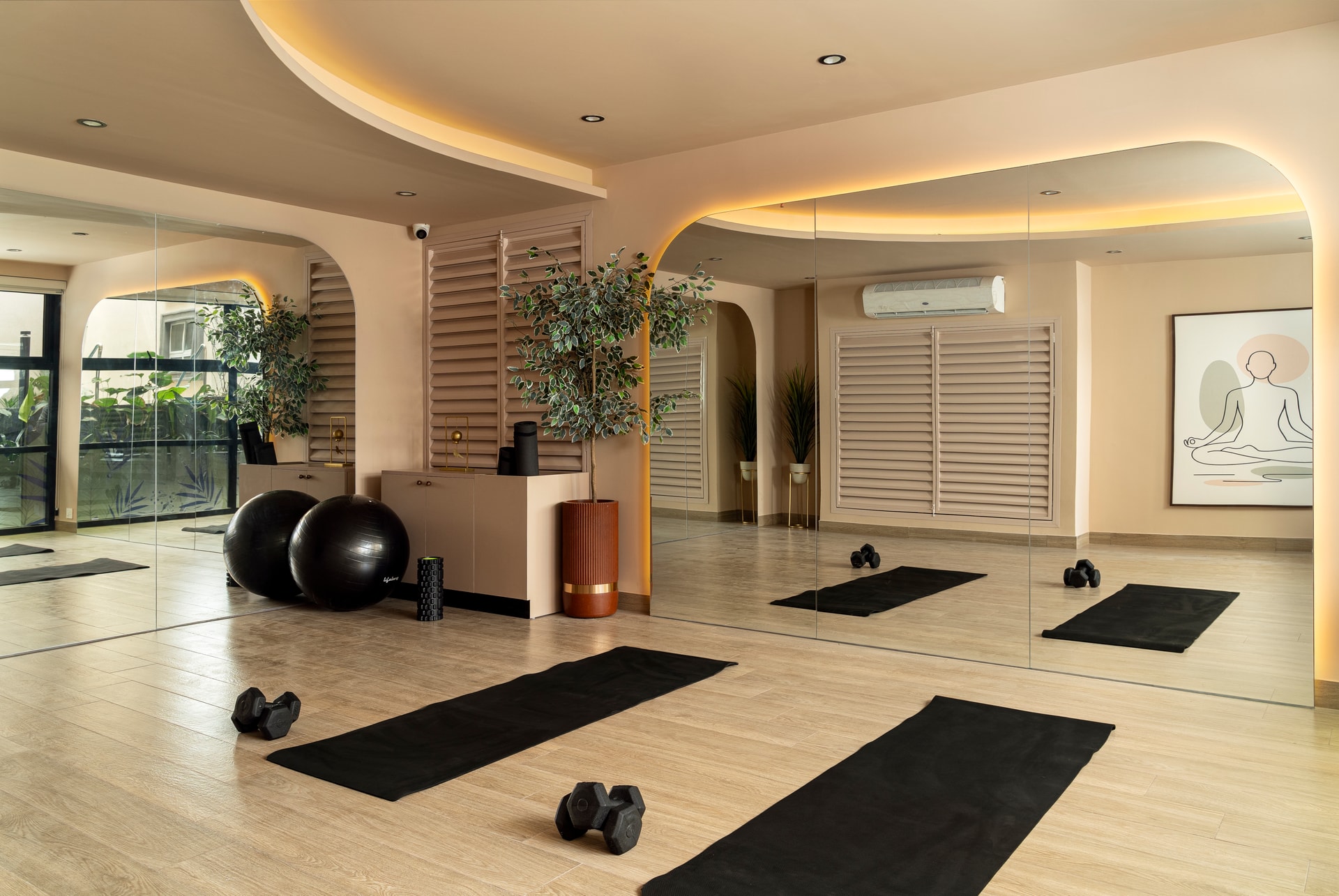
The yoga studio is, deliberately, the quietest room in the building. Curved arches frame mirrored walls; louvred shutters in a chalky beige filter daylight to a diffused glow; the floor is a pale, broad-plank wood-look tile. The architecture itself is asked to do the work of stillness, and it does.
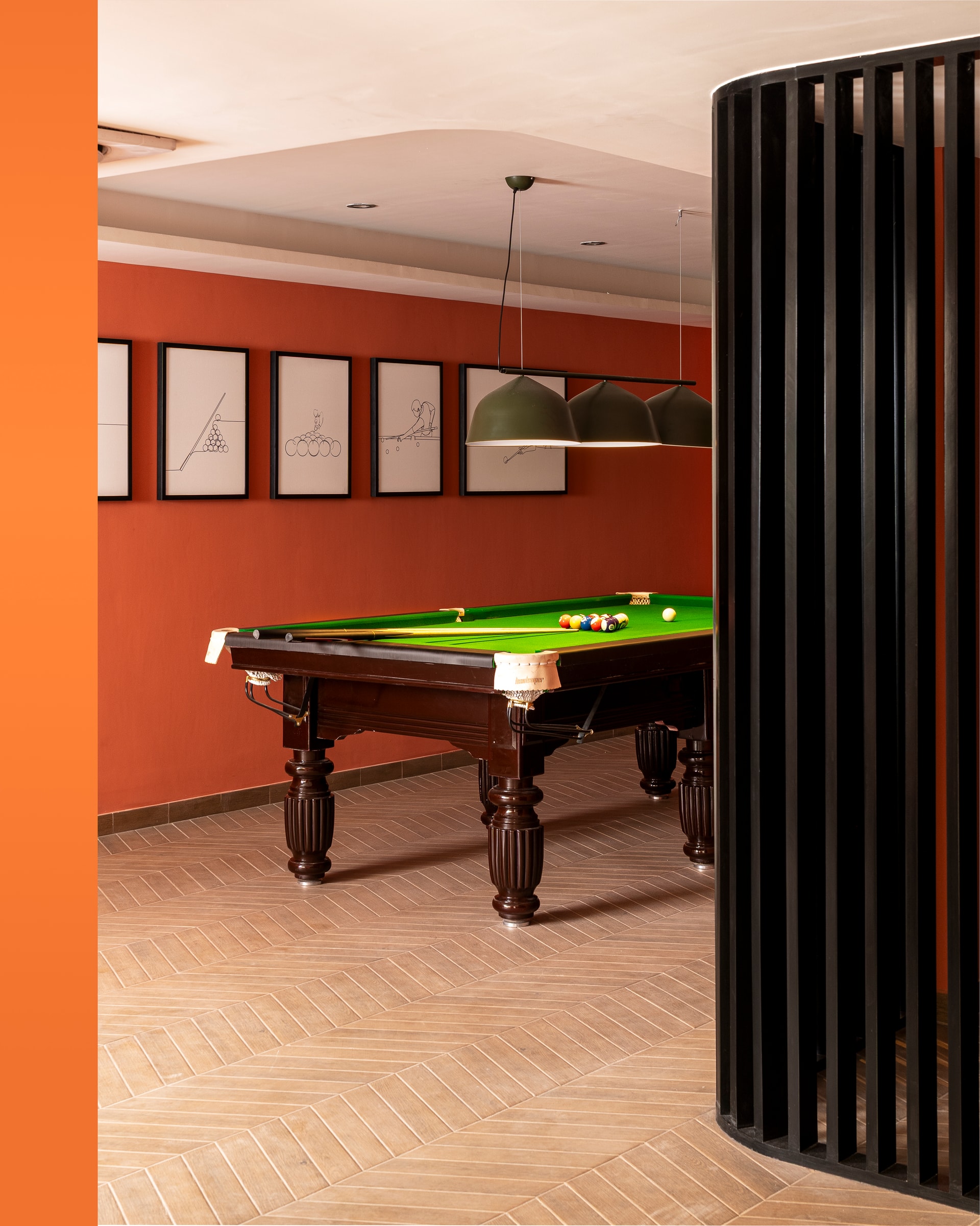
The indoor games room arrives as a small jolt of colour. A wall in warm terracotta backs the pool table, the green baize of which is the room’s strongest visual note. A row of dome pendants in dark green hangs over the table, and a trio of line-drawn artworks of players mid-game provides a quiet humour the space needs.
From the entry threshold, the games room is glimpsed through a black slatted screen, the curved fluting of which creates a sense of arrival without enclosing the space. The terracotta wall extends, the herringbone tile floor runs uninterrupted, and the room reveals itself in stages rather than all at once.
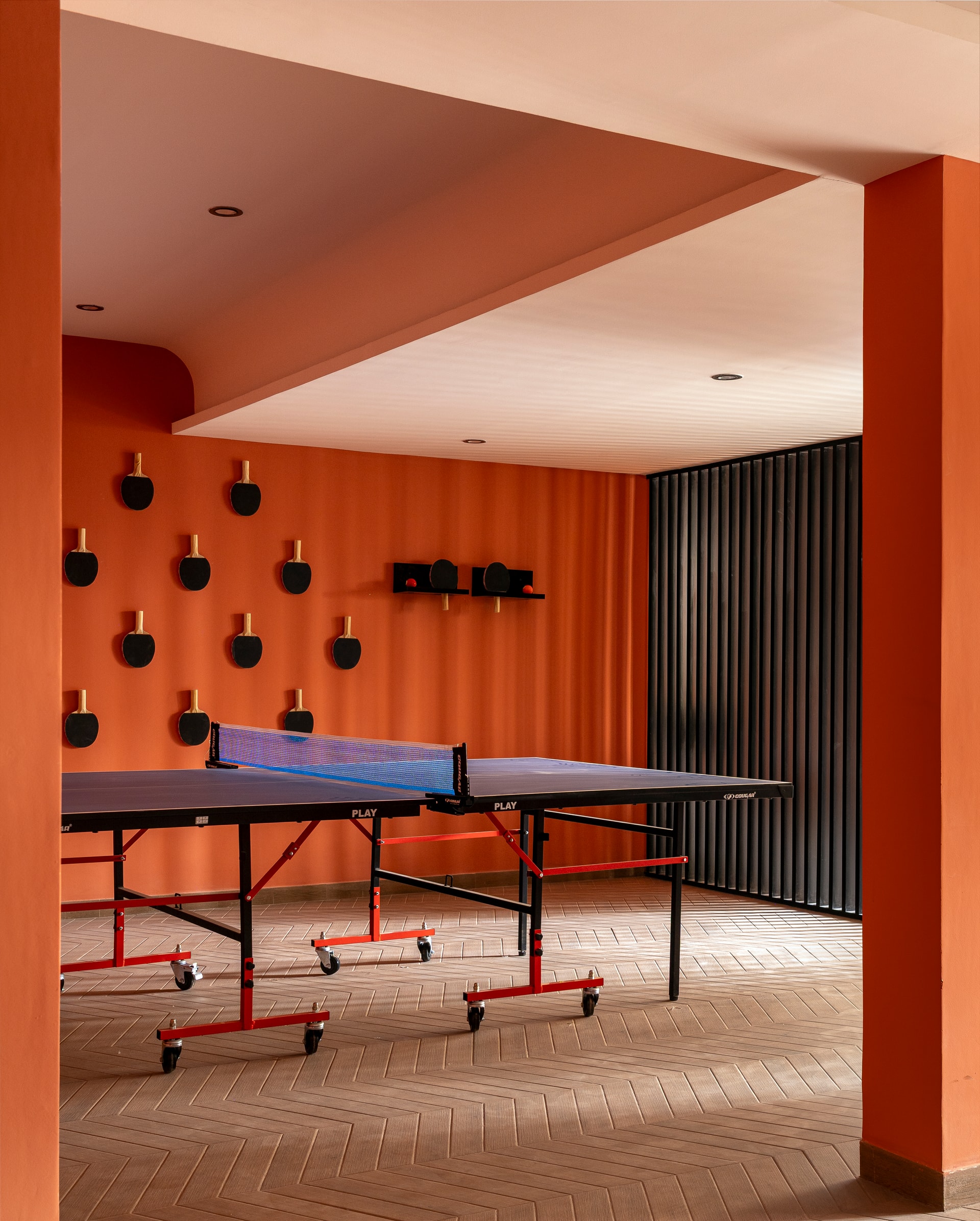
An adjacent zone holds the table tennis setup, and the design moves the terracotta from background to foreground. A grid of paddles is mounted directly onto a saturated orange wall as both storage and ornament, a clever inversion of the usual logic.
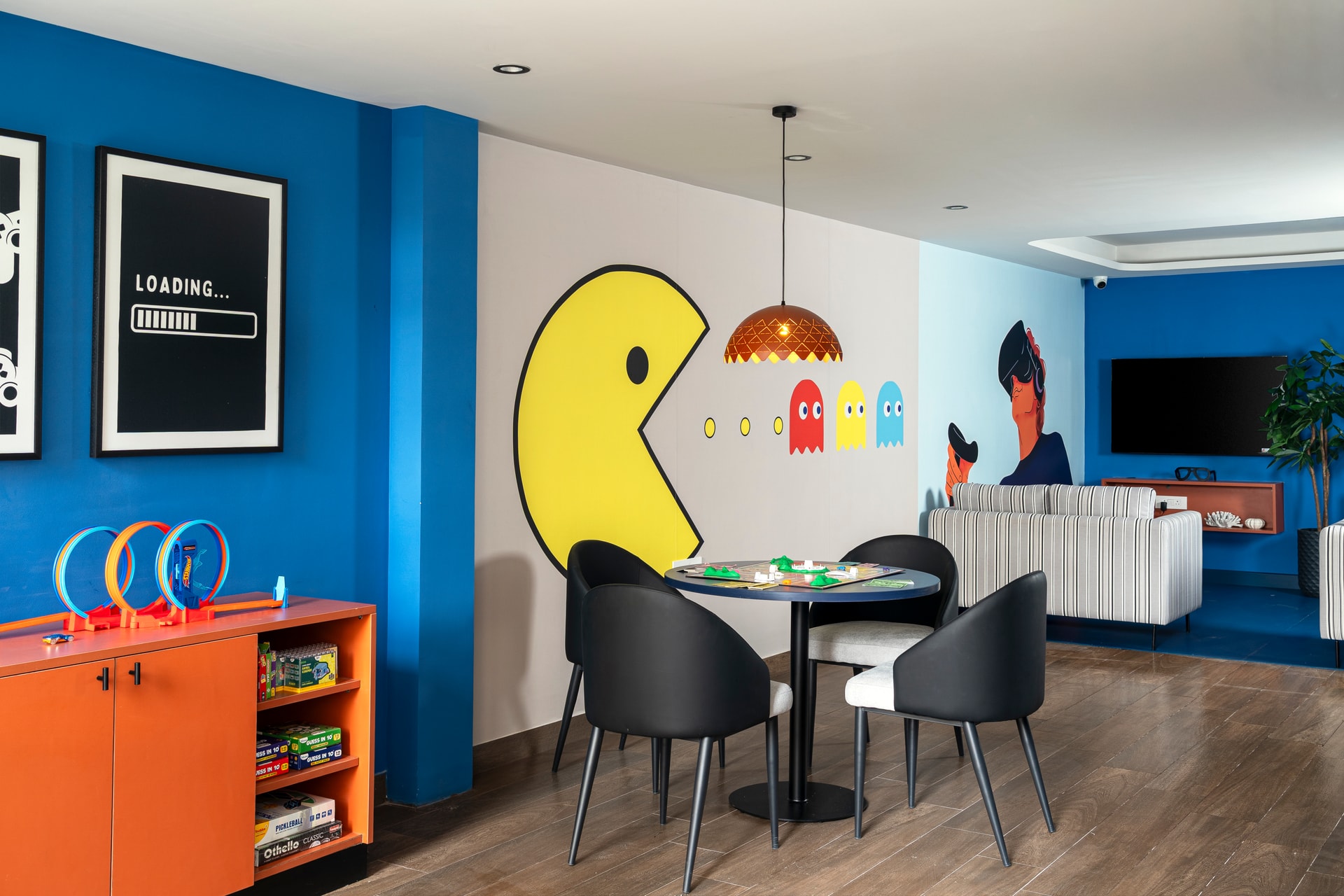
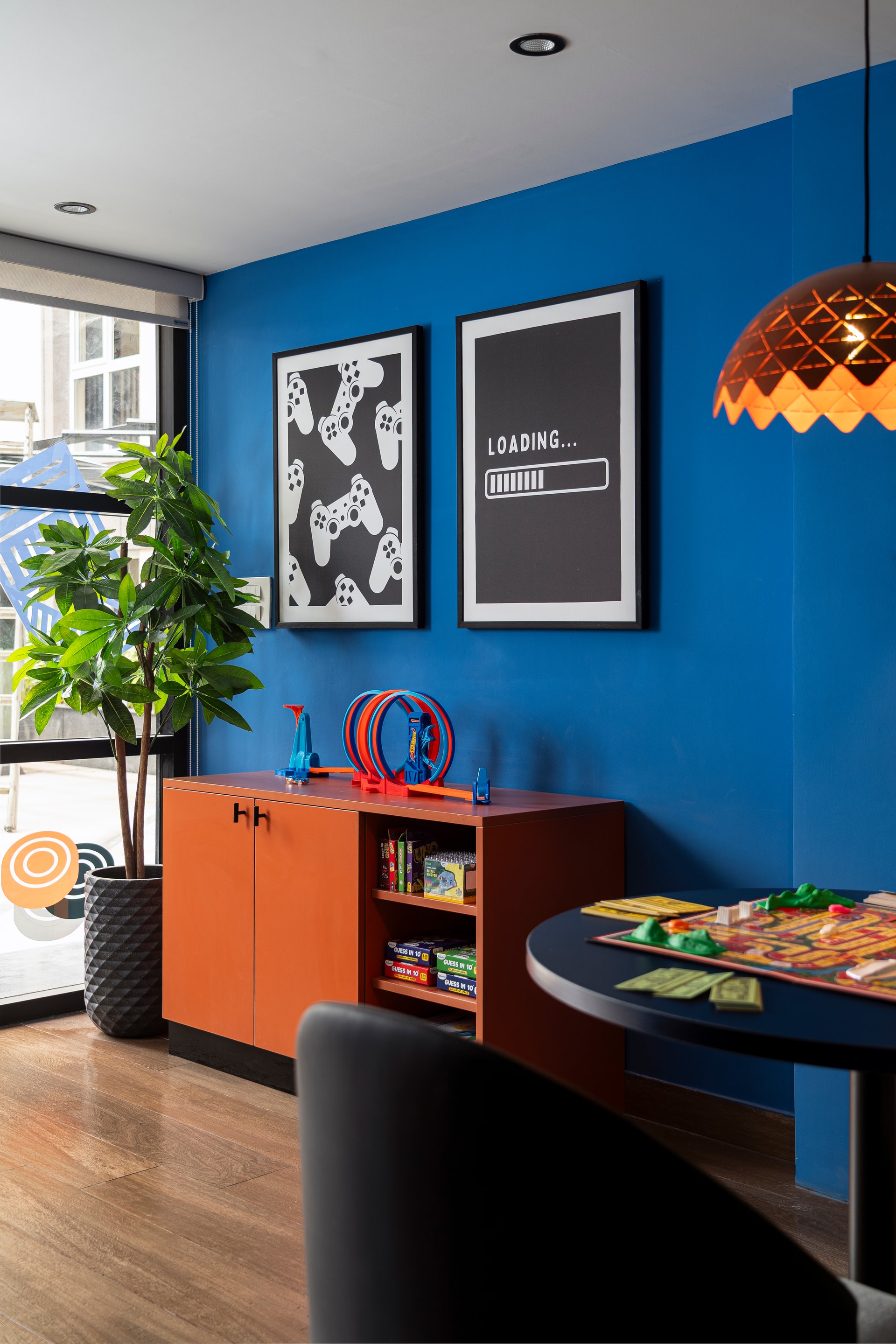
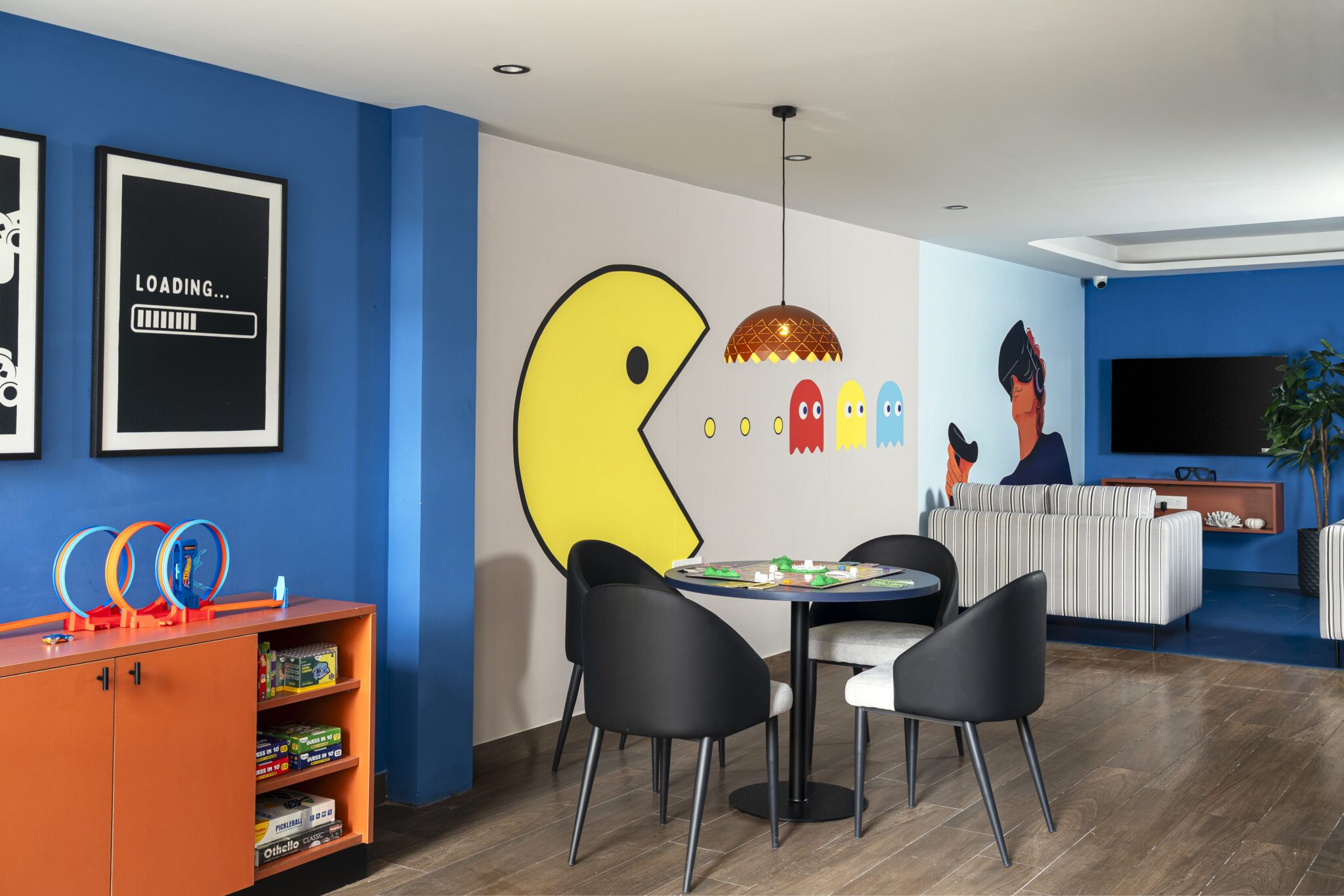
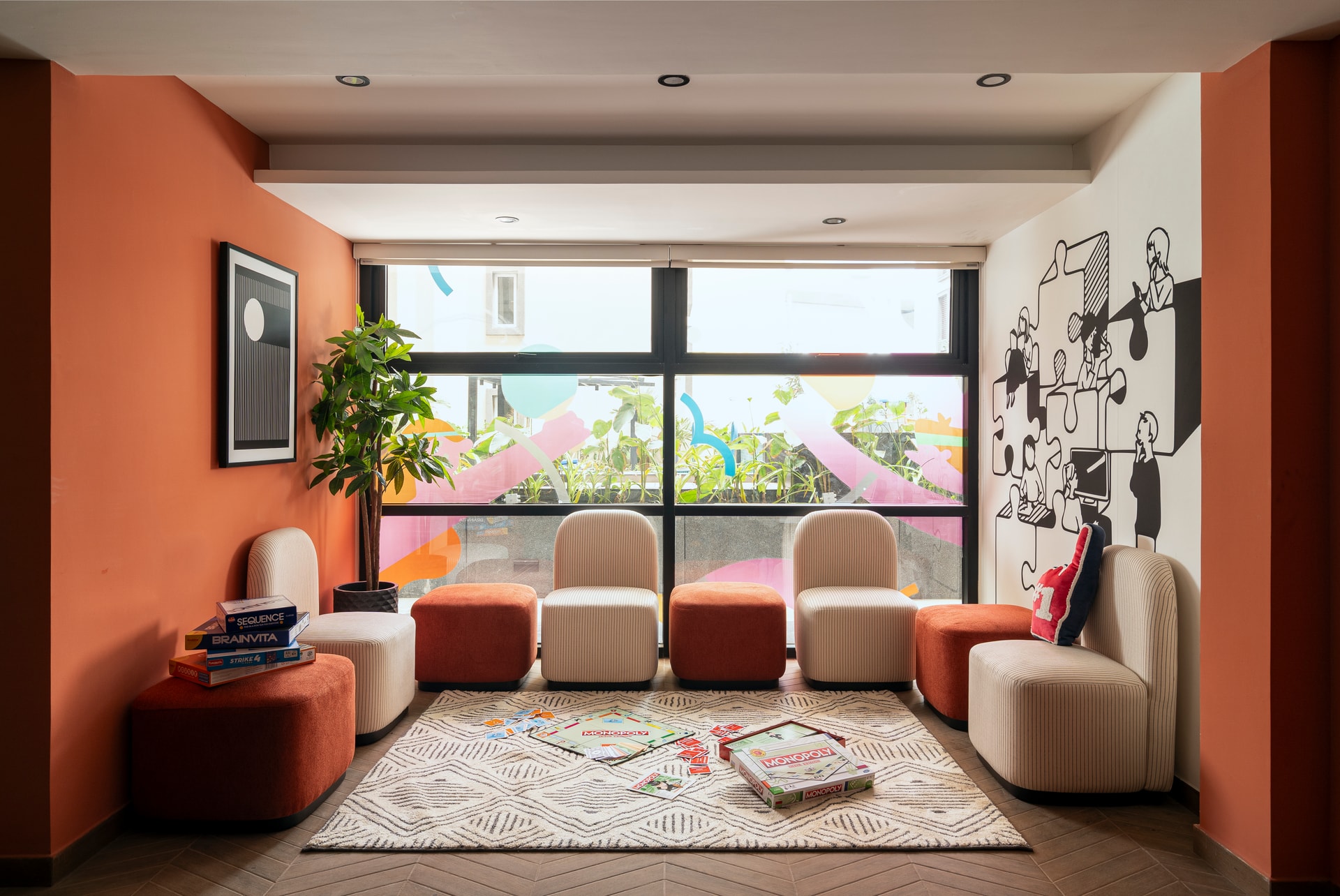
The board games and play lounge is where Kebani permits itself the most fun. A wall mural of Pac-Man and the four ghosts sits next to a graphic illustration of a VR-headset gamer; the cabinetry is in a vivid orange, the walls in a strong cobalt blue. A round games table with a light top and black pedestal base sits between, with black accent chairs pulled around it.
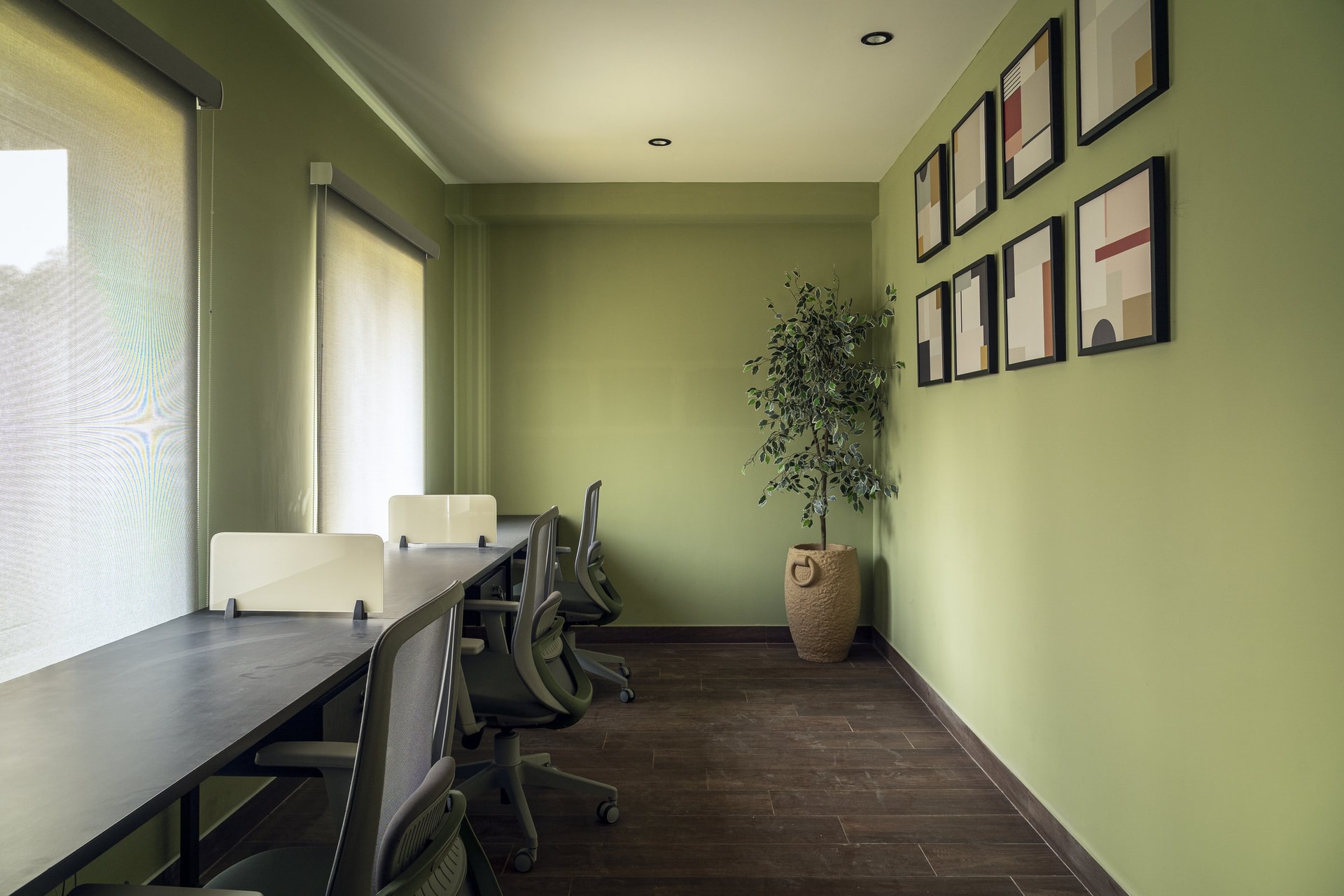
The business centre is conceived as a calm and purposeful workspace, anchored by a sophisticated sage green palette and a long shared worktable that encourages both concentration and collaboration.Among the clubhouse’s more expressive spaces, this is perhaps the most restrained, a deliberate choice that allows functionality to take precedence. The result is an environment that supports productivity through simplicity, balance, and thoughtful design rather than visual distraction.
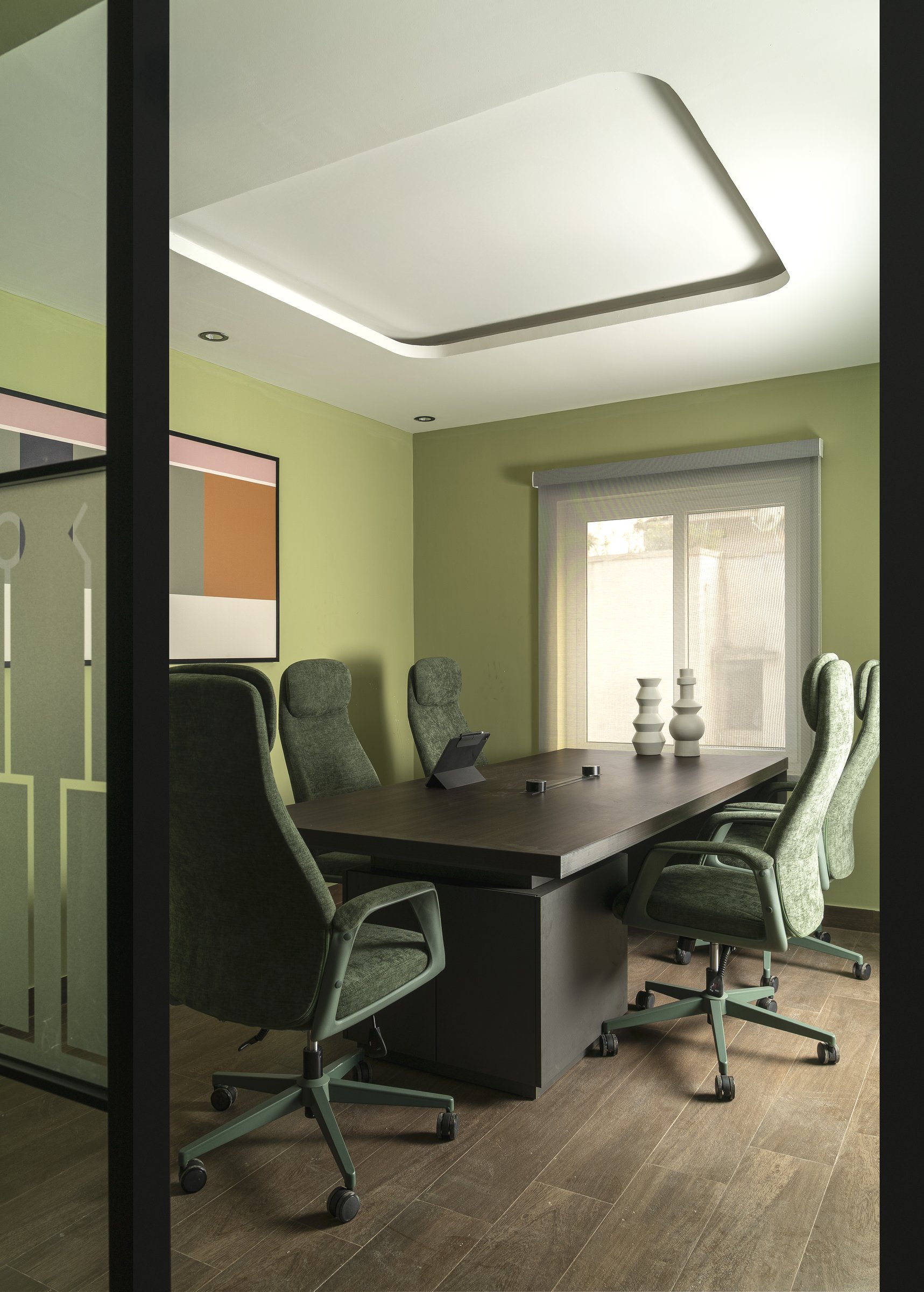
The adjacent meeting room carries forward the sage green palette, enriched through a recessed ceiling cove that introduces depth and atmosphere. Moss-toned upholstered chairs gather around a dark wood conference table, creating a setting that feels both refined and approachable. A carefully positioned geometric abstract artwork lends visual interest, while the restrained material composition establishes a sense of quiet authority. Rather than relying on the familiar corporate vocabulary of glass partitions and chrome finishes, the space achieves its executive character through warmth, texture, and considered detailing.
Taken as a whole, the project demonstrates that a clubhouse does not need to reduce its diverse functions into a singular aesthetic expression. Instead, each space is allowed its own identity and atmosphere. The yoga studio embraces calm and introspection, while the gaming lounge introduces a more energetic and social character. What unites them is not visual uniformity, but a shared design discipline rooted in thoughtful lighting, a coherent material palette, and the confidence to use colour with intention rather than restraint. In a category often defined by predictable neutrality, the project presents a compelling case for specificity and character.
Within the context of Chennai’s rapidly expanding residential landscape, the significance of such projects extends beyond the boundaries of a single development. It reflects a growing recognition that communal spaces deserve the same level of architectural consideration as private residences. By treating each programme with clarity and purpose, the clubhouse becomes more than an amenity, it evolves into a meaningful extension of everyday life, offering residents spaces that are distinct, engaging, and thoughtfully attuned to their intended use.