Adaptive reuse is rarely an act of erasure. The more considered projects in this register understand that the existing structure is not a constraint to be overcome but a set of conditions to be read carefully, then edited. What emerges from such a process is not nostalgia for the old building, nor a clean break from it, but a third position: continuity through precise intervention.
USC House, designed by Robust Neev in Vadodara, demonstrates this approach within a four-storey residential structure reimagined as a hybrid corporate and residential environment. The building occupies a compact 2,410 sq. ft. plot in a dense urban neighbourhood, and the brief asked for both workspace and living to coexist within an inherited spatial logic that had divided each floor into two apartments connected by a narrow passageway. The studio’s response was to consolidate services along one edge, streamline circulation around the existing core, and liberate the remaining floor area into flexible zones, an organisational principle guided by reducing spatial friction while keeping the building adaptable over time.
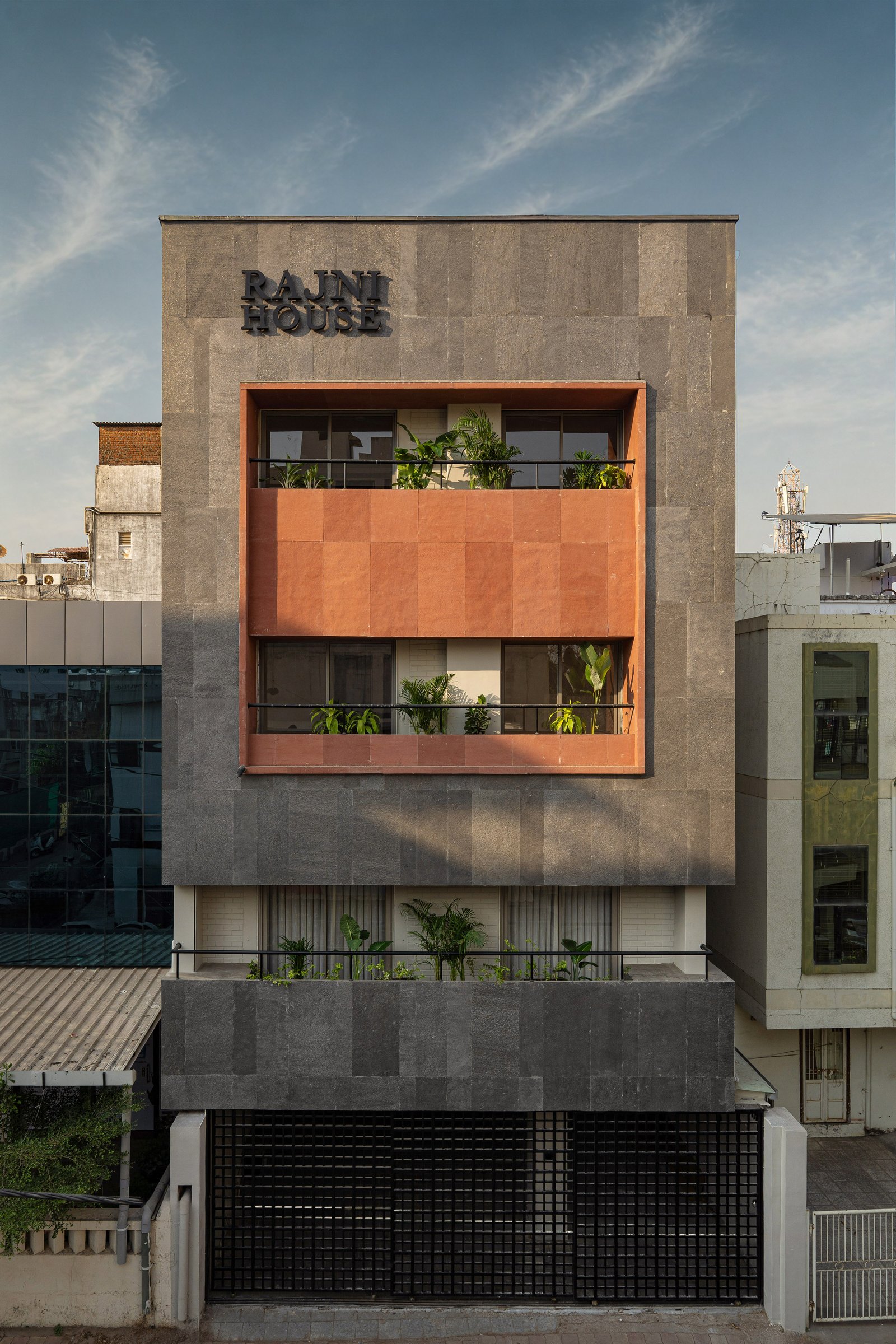
The renewed facade establishes the project’s design language at once. A field of grey stone cladding frames a recessed volume rendered in warm terracotta-toned plaster, the contrast giving the building a clear identity within its mixed urban context. The planting along the lower terrace and the recessed window niches signal that the architecture intends to remain porous to landscape and air rather than sealed against them.
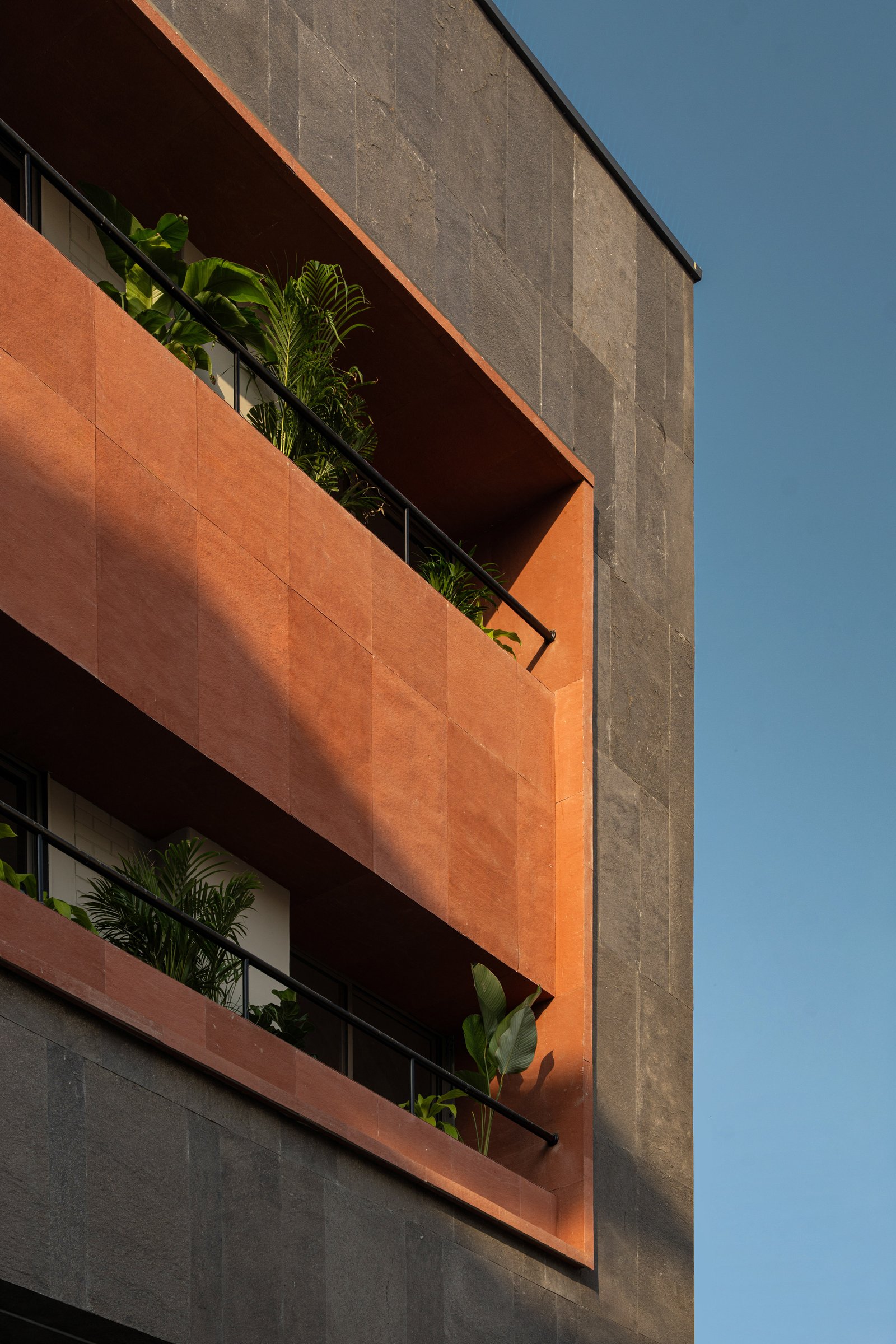
Seen closer, the facade reveals the care with which the terracotta volume has been articulated. The two recessed balcony bands carry tropical foliage, softening the geometry of the stone surround and introducing a living register to an otherwise architectural composition. The detailing of the slim metal railings keeps the focus on the material exchange between the two cladding tones.
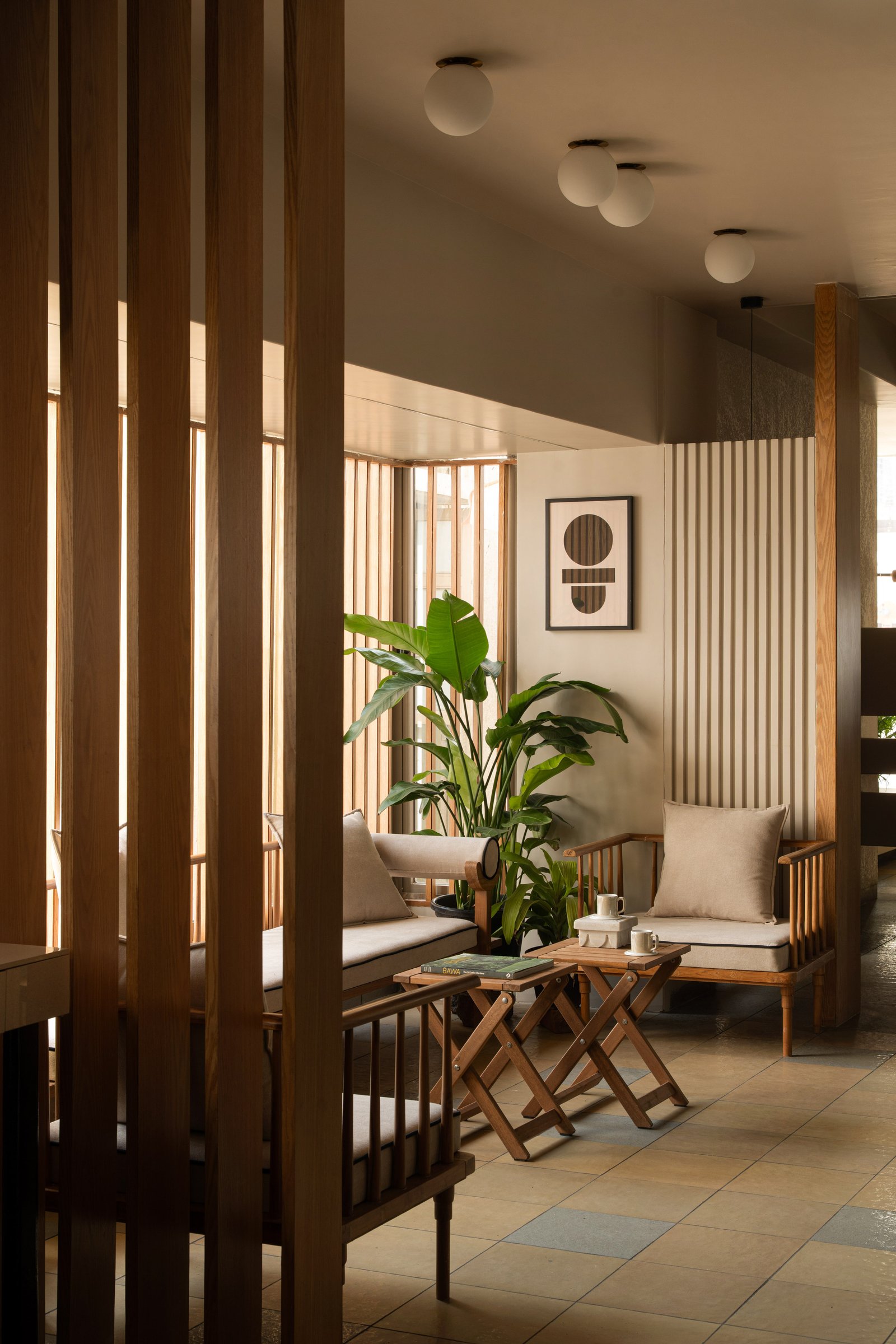
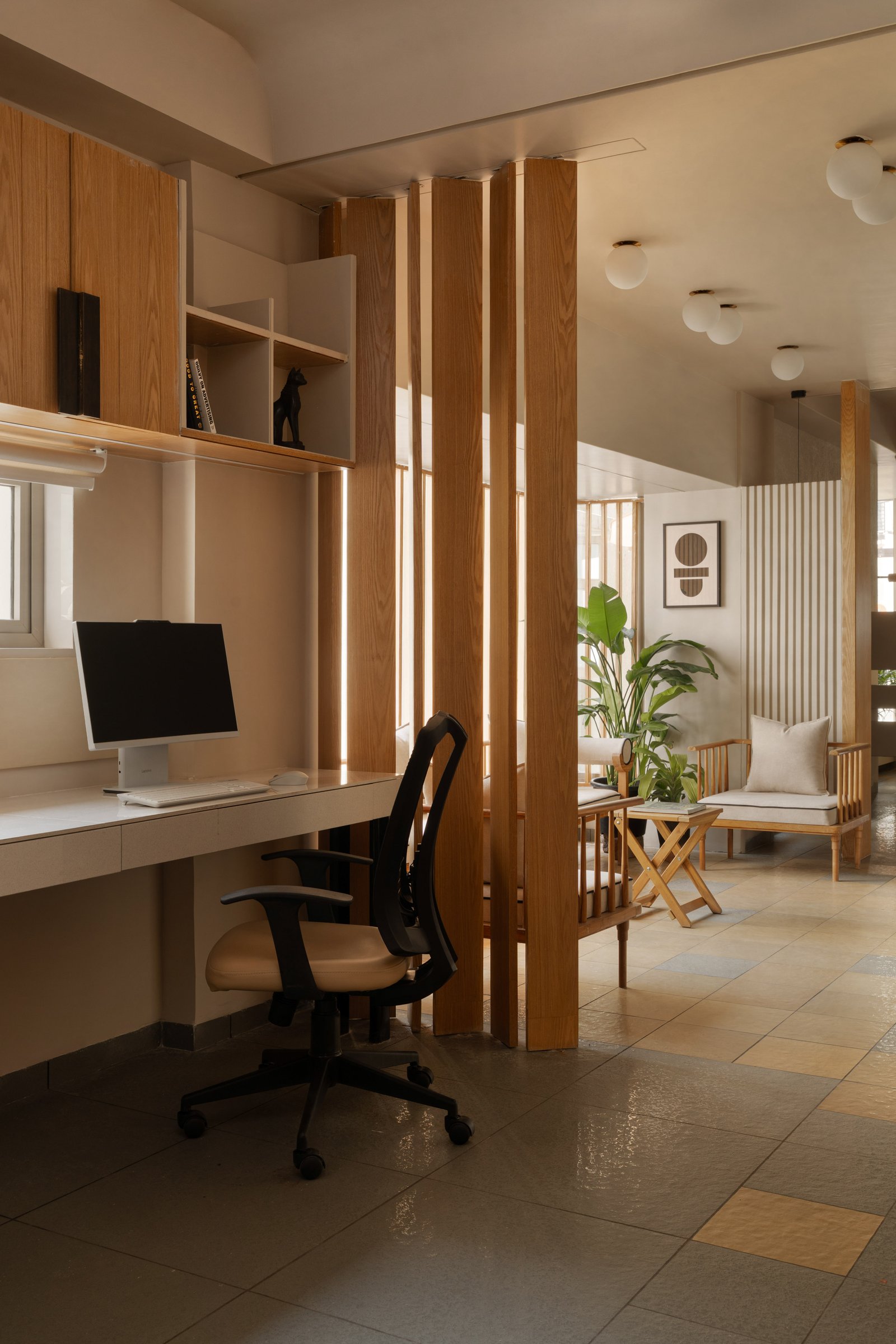
Inside, the reception establishes a quieter atmosphere. A pair of cane-and-wood settees frame a low folding side table, while vertical wood fins filter daylight from the recessed window beyond and a planted corner introduces a sense of calm at the threshold. The composition is restrained and tactile, with globe ceiling lights and a graphic framed print reinforcing the architectural continuity between hard and soft surfaces.
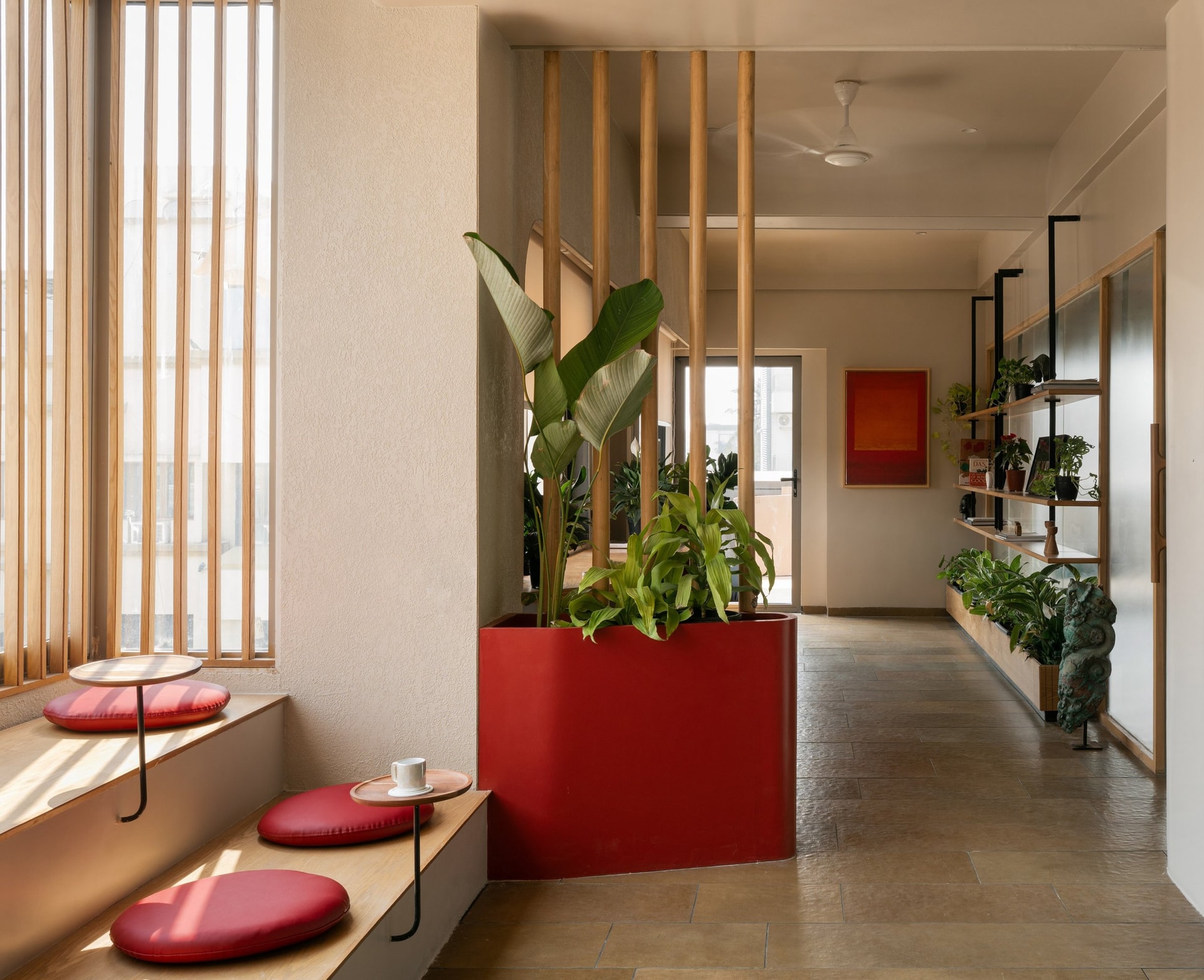
The transition corridor that follows extends this same restraint into a working zone. A built-in window bench with red cushions runs alongside a tall window screen of vertical wood members, while a deep red planter anchors the centre of the passage and a long shelving system on the opposite wall holds plants and small objects.
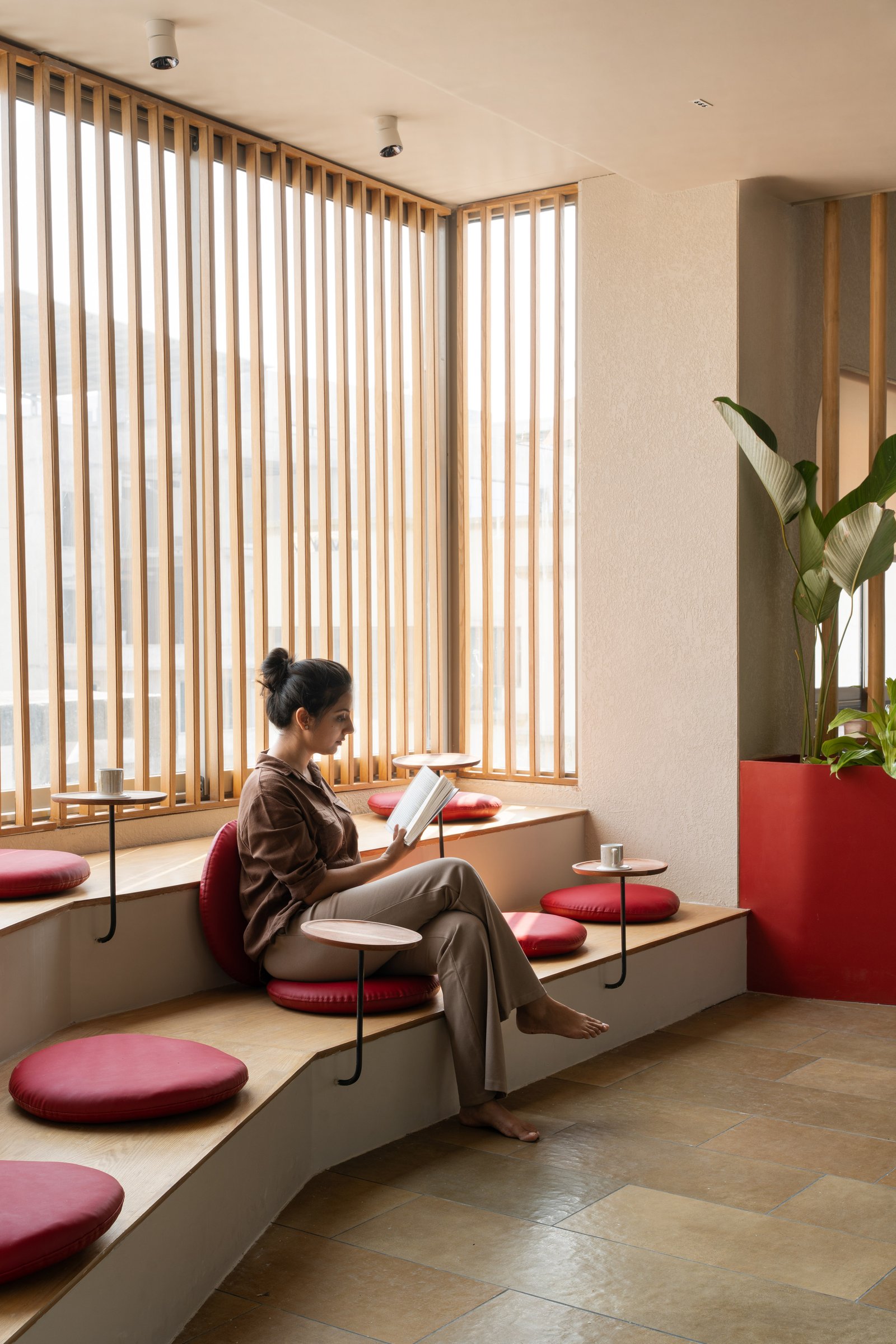
The window bench is intended as a place of pause and reflection rather than a circulation device. Its stepped profile and small side tables allow staff to read, write, or simply slow down within the working day, and the screen of vertical wood members admits filtered daylight without exposing the interior to the street.
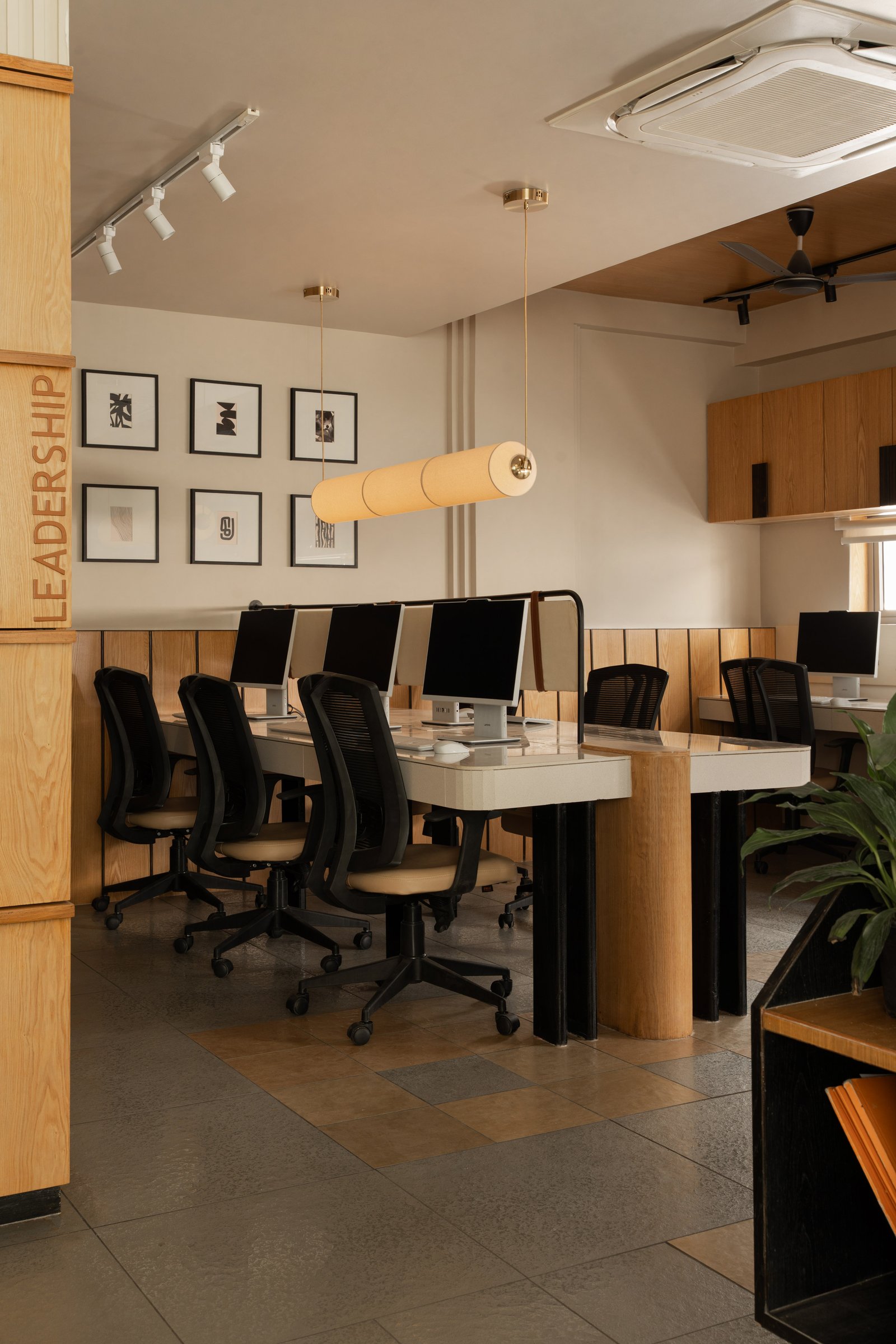
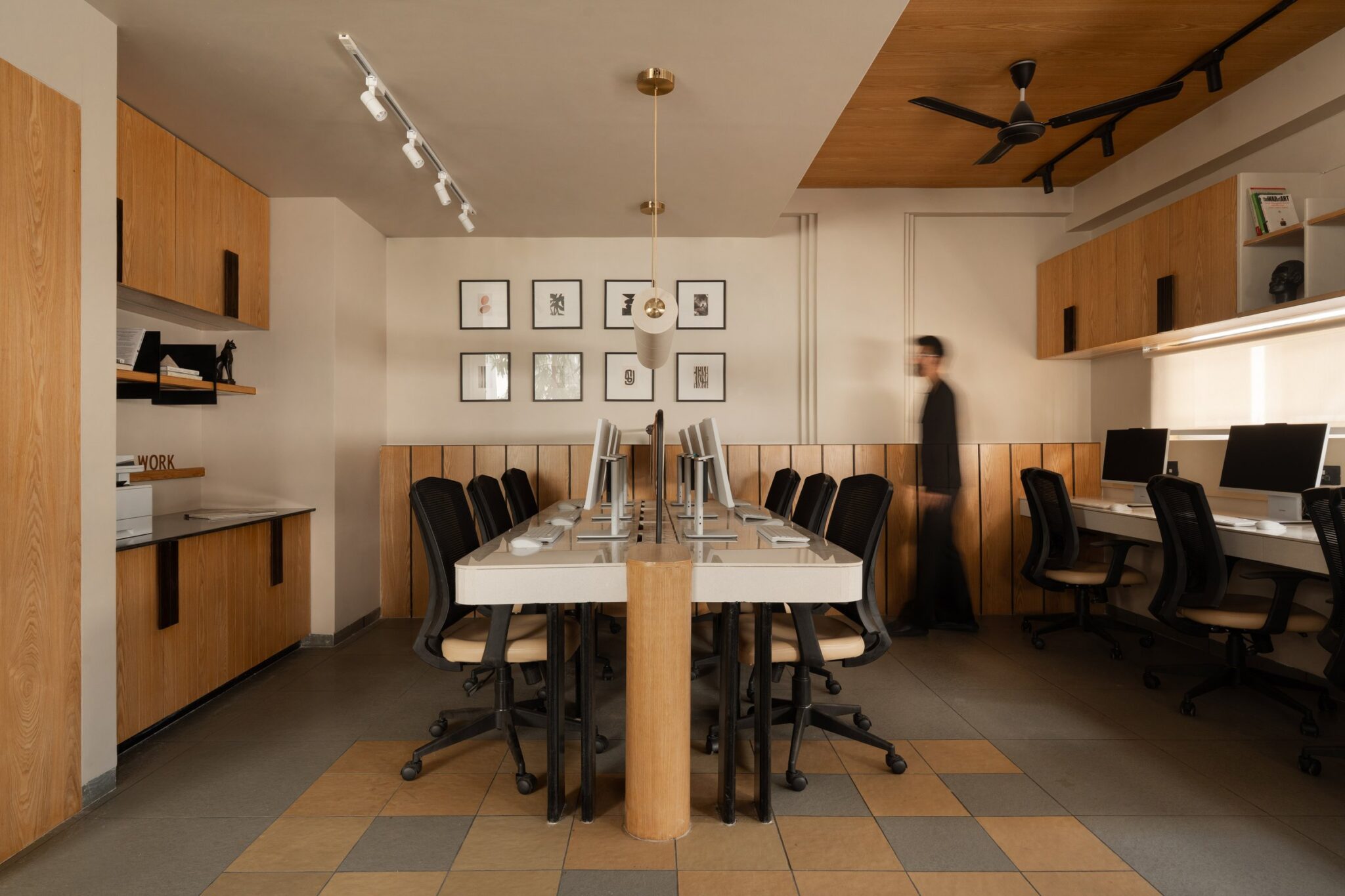
The first-floor workspace embodies the more formal register the studio describes. A shared desk with computer workstations sits beneath a cylindrical pendant, framed by a column carrying the word Leadership routed vertically into its wood face. The wood-panelled dado and the grid of framed prints on the side wall establish a workplace that is composed rather than sparse, warm rather than decorative.
““The architecture is guided by a simple organisational principle: reducing spatial friction while allowing the building to remain adaptable over time.””
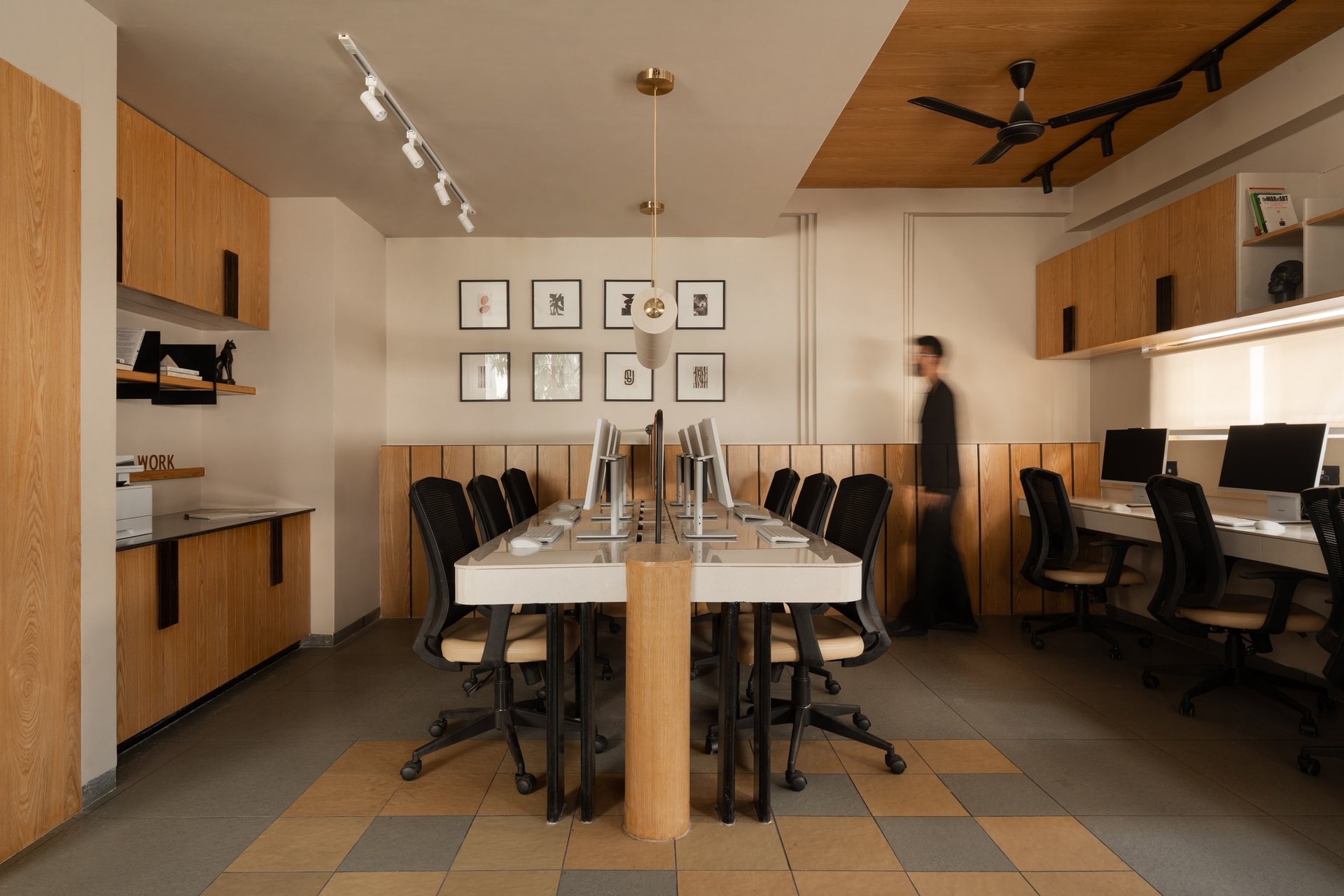
From the opposite end, the same room reads as a measured working hall. A printer counter and pinboards line one wall while a secondary run of desks along the window edge benefits from the daylight admitted through the eastern facade. The chequered tile floor stitches the two zones together without insisting on a single circulation axis.
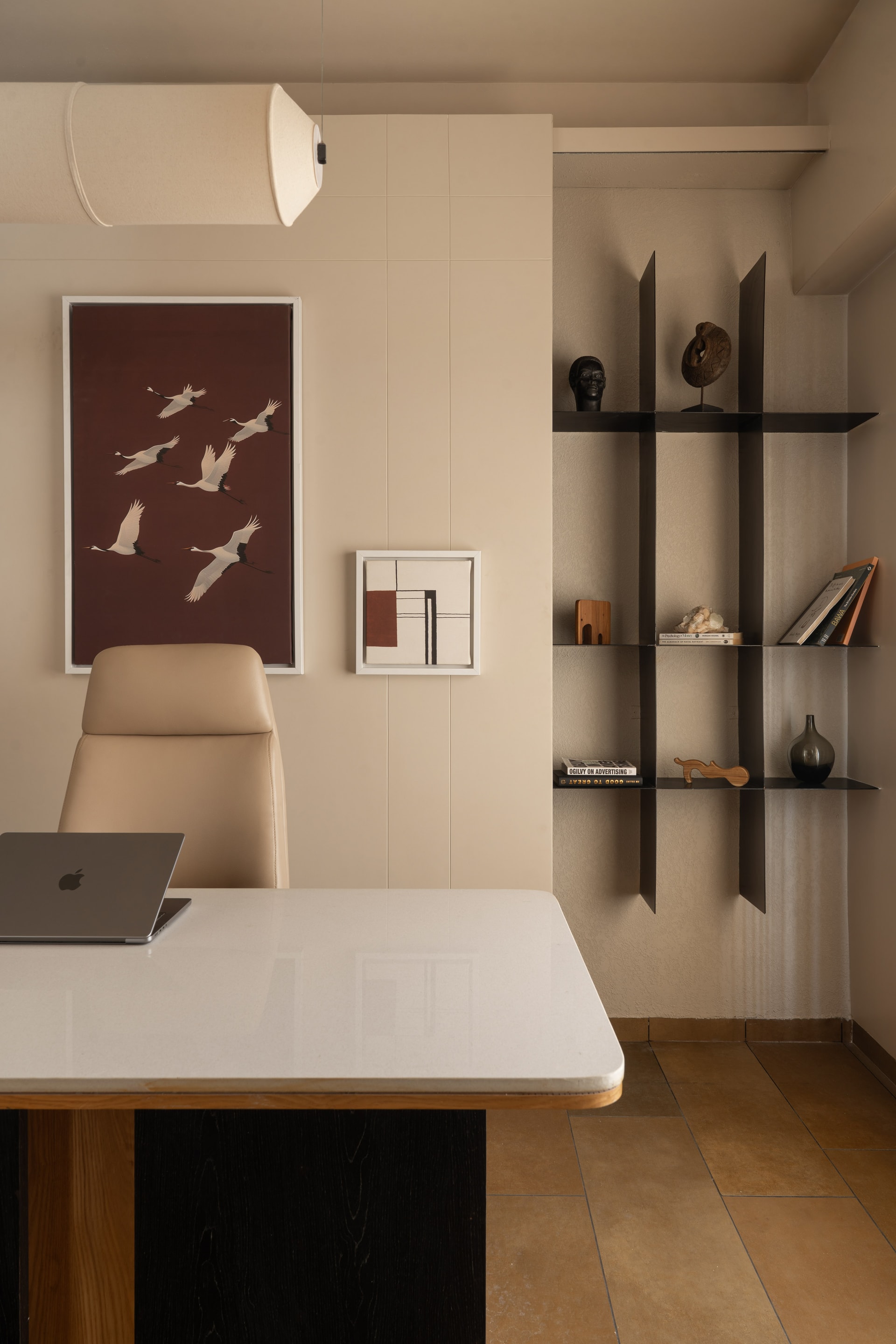
The director’s cabin shifts the tonal register further. Pale panelled walls, and a sculptural shelving system carrying produce a workspace whose authority is communicated through restraint rather than ornament. The desk in the foreground, with its pale top and dark base, anchors the room without dominating it
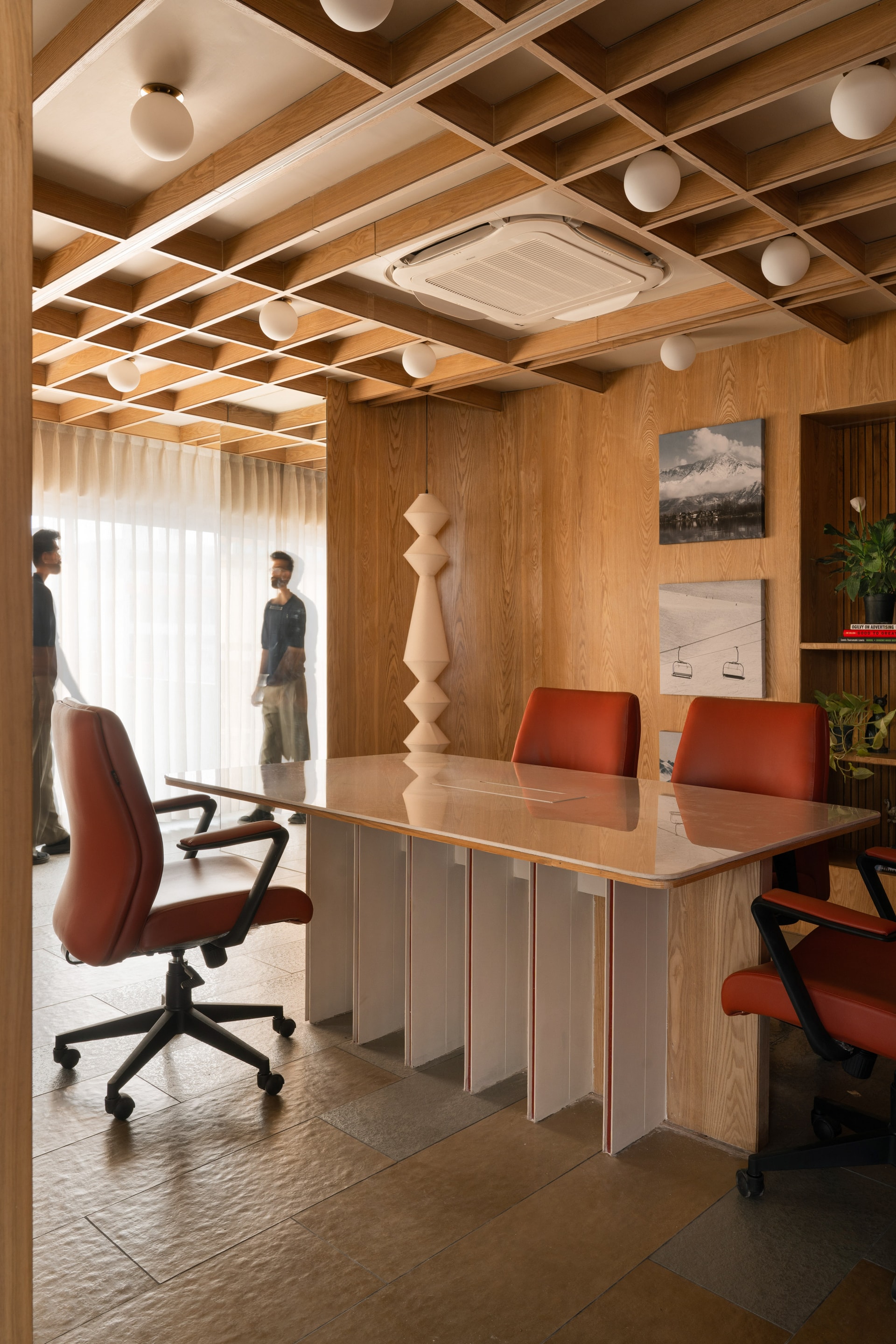
The fourth-floor workspace adopts the lighter, more contemporary atmosphere the studio describes. A glossy red wall behind a wall-mounted screen carries handwritten notes in marker, doubling as a working surface for ideation, while a coffered ceiling of wood beams and globe lights establishes a strong overhead geometry. The chequered floor in ochre and grey ties this room back to the building’s broader material language.
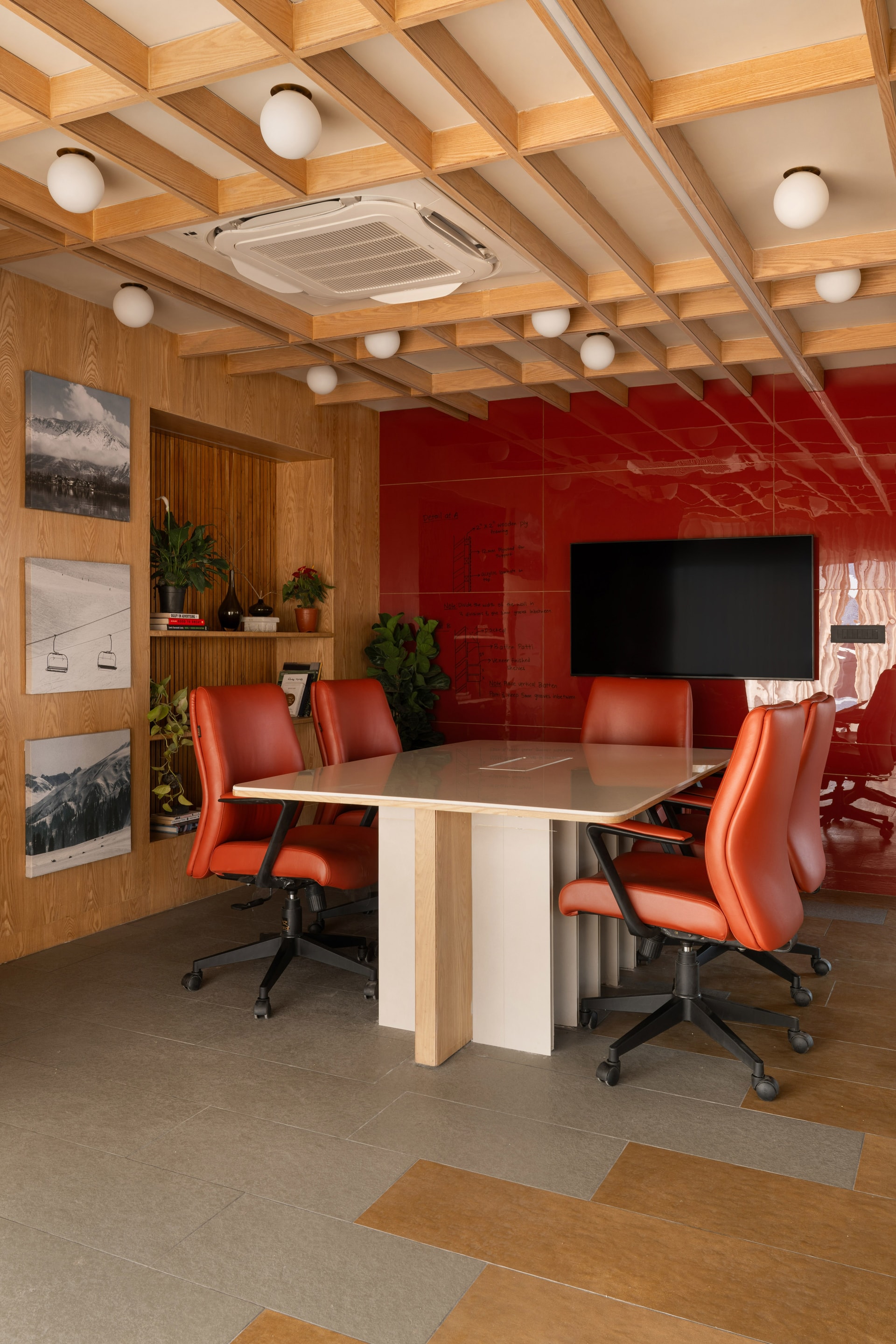
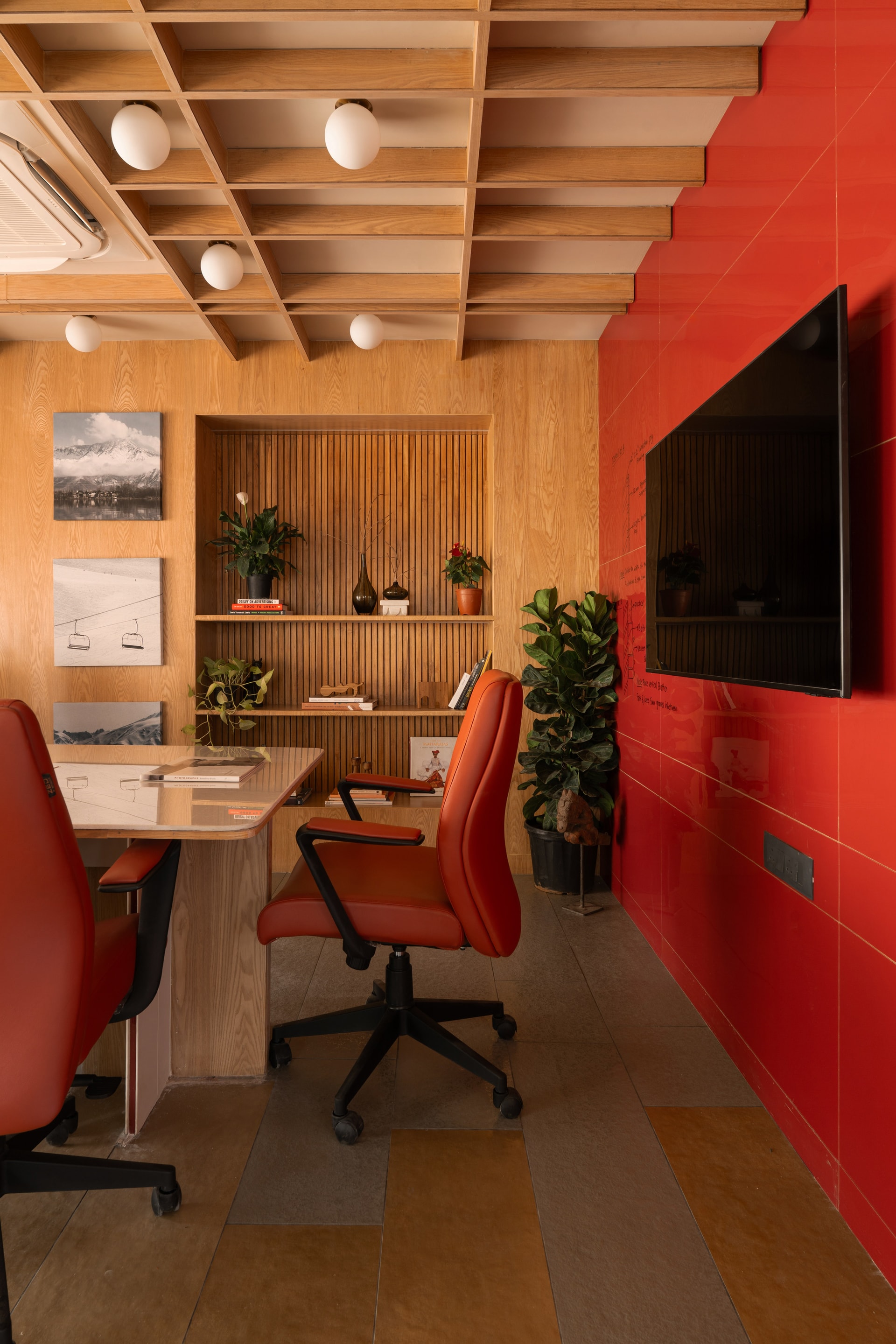
The same floor’s discussion table sits within this coffered ceiling and red-clad wall. Red task chairs around a pale-topped table align the room’s accent palette, while the wood-lined recess to the left holds plants and small objects against a ribbed back panel. The result is an atmosphere that feels generous and unhurried within a compact footprint.
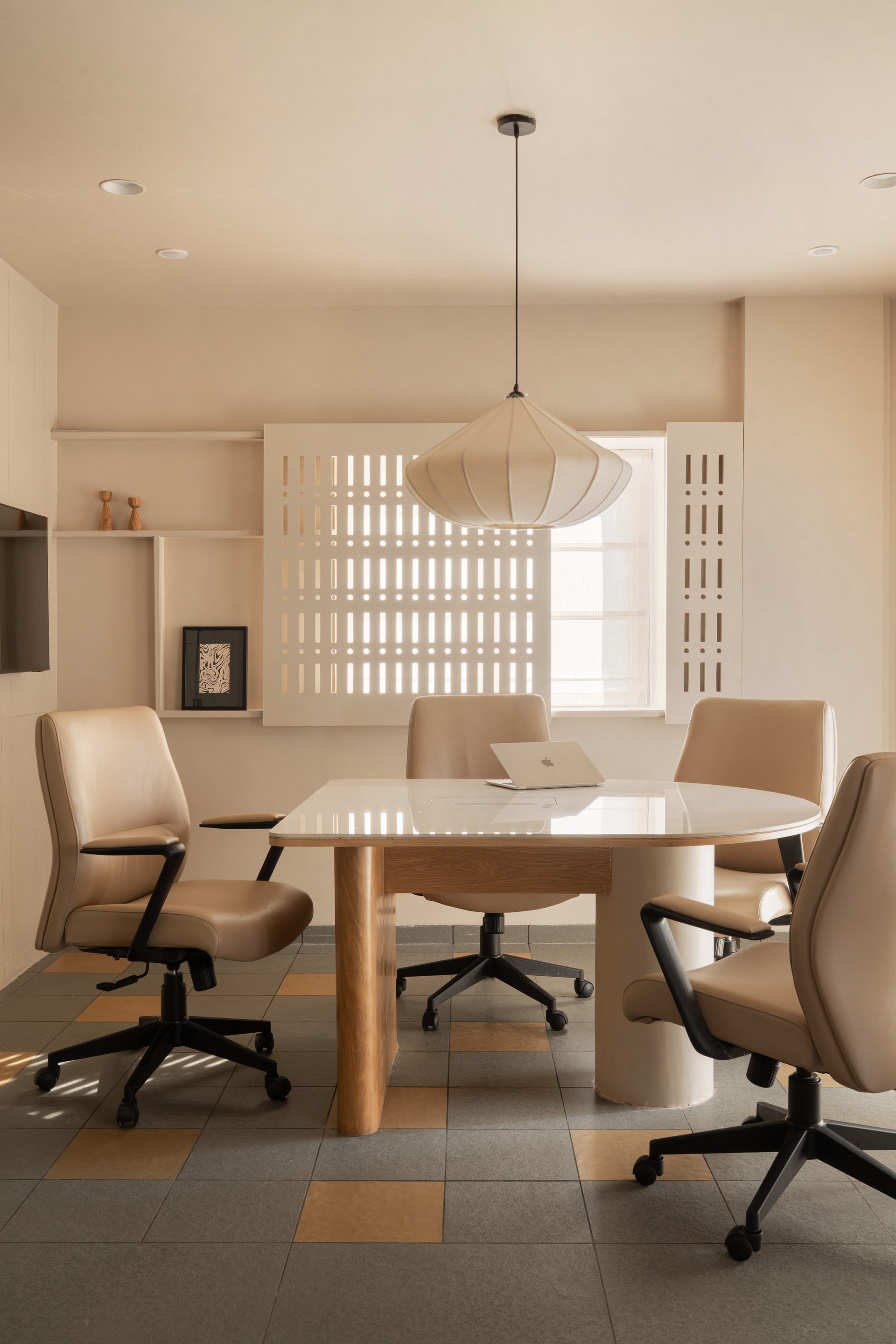
A meeting room on this level shows the project’s quieter side. A pendant lantern hangs above an oval-ended table on a wood-and-rendered base, and a perforated screen panel filters daylight from the window beyond. The palette of warm neutrals creates a sense of cohesion and balance with the surrounding workspace.
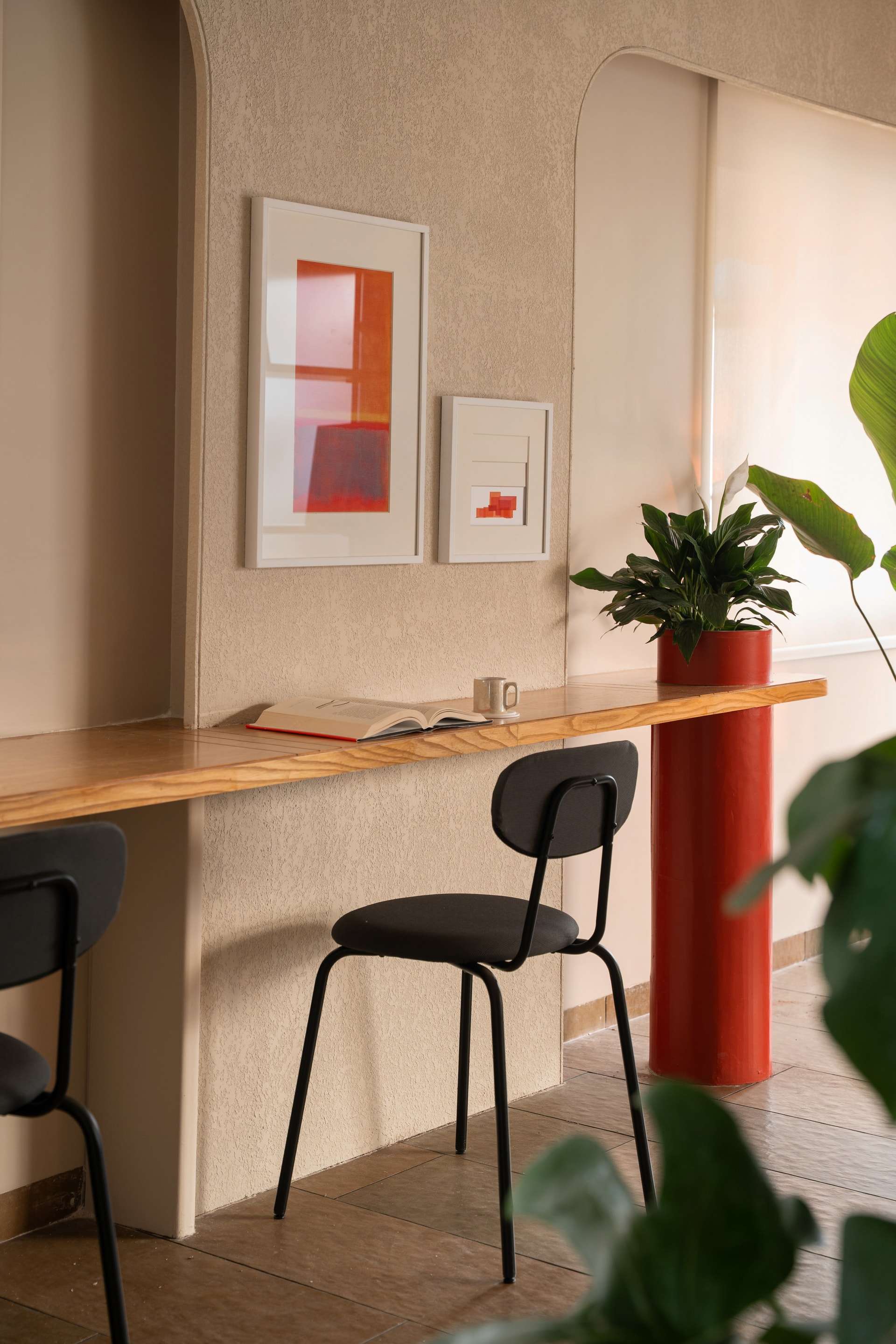
A working ledge along an arched opening pairs a wood counter with a tall red cylindrical planter base. Two framed prints in red and orange establish the colour conversation that runs across the floor, and the chair pulled up to the ledge suggests the kind of informal working posture the building has been designed to support throughout.
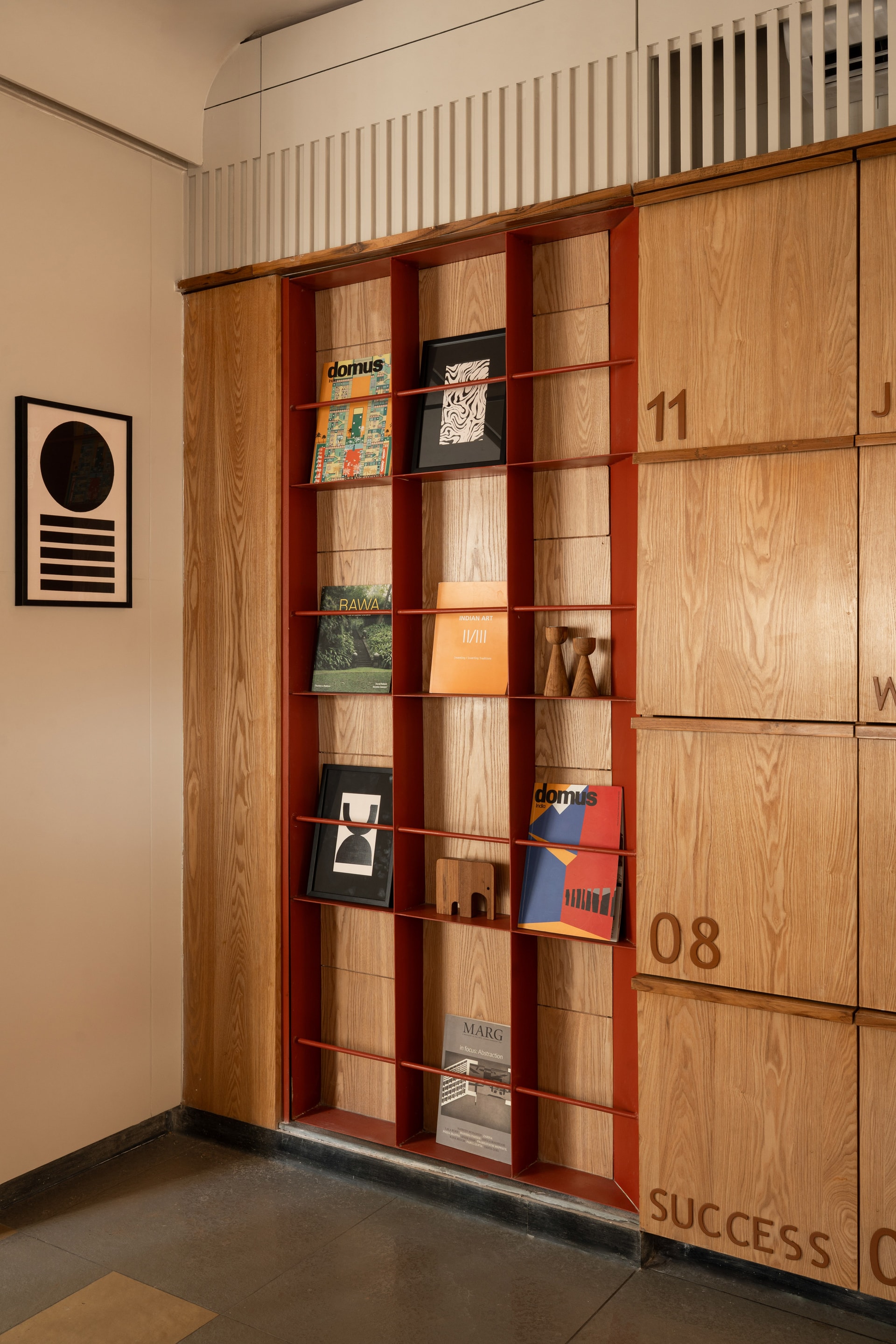
USC House sits within a broader conversation about how Indian Tier-2 cities might absorb new programmes without resorting to demolition. By organising workspaces along the daylit eastern facade, locating services on the western edge, and lining enclosed functions such as conference rooms and director cabins along the southern edge with deep overhangs to temper solar heat gain, the studio has tied climate response and adaptive reuse into a single methodology. The 26-foot corner opening cut into the existing masonry, stabilised with an inserted metal frame, transforms the perception of the previously dark north-facing floor plate and demonstrates how careful structural intervention can become an interior gesture.
The project demonstrates that meaningful change can arise through careful observation and precise intervention rather than wholesale replacement. As a working building, USC House holds its corporate and residential programmes within a consistent architectural language, and as a piece of urban design thinking, it offers a quieter alternative to the demolition cycles that often shape growing Indian cities.