Some homes rely on visual statements. Others build their identity through materiality, proportion, and atmosphere. Walnut and Earth belongs firmly to the latter. Designed by Studio Sketch 24 LLP under principal designers Susanna Eapen and Jinson Abraham, the Mumbai residence explores a quieter interpretation of contemporary living, one shaped by rich walnut finishes, woven cane detailing, and an earthy palette that balances warmth with restraint.
While the home draws from the enduring clarity of mid-century modern design, it avoids nostalgia. Instead, the language of clean lines, natural materials, and functional elegance is reinterpreted through an Indian lens, creating interiors that feel rooted, tactile, and deeply livable. Terracotta, sage green, cream, and charcoal unfold across the spaces with measured confidence, allowing texture and craftsmanship to take precedence over ornament.
The result is a home that feels timeless without appearing retrospective. Every room reflects a careful balance between refinement and comfort, where contemporary sensibilities meet the warmth of handcrafted details, creating an environment that is both sophisticated and effortlessly welcoming..
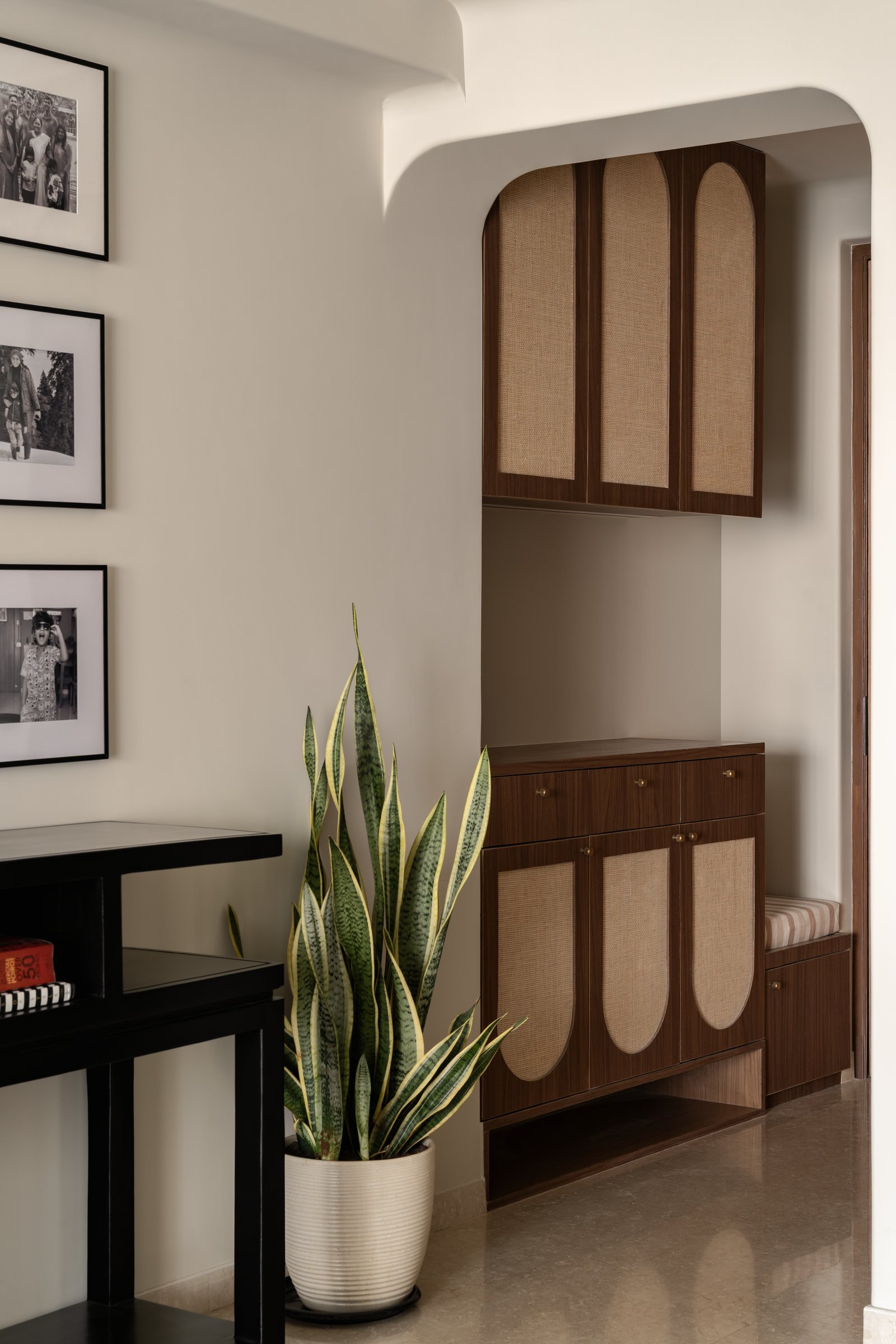
The entry establishes the home’s design language before a single room fully unfolds. A recessed niche frames a walnut storage unit with woven cane fronts, its gently arched panels echoed by the curved plaster reveal surrounding it. The composition is understated yet deliberate, balancing warmth, texture, and proportion in a way that immediately signals the home’s sensibility. I
t is an introduction rooted in craftsmanship and restraint, setting the tone for the spaces that follow.
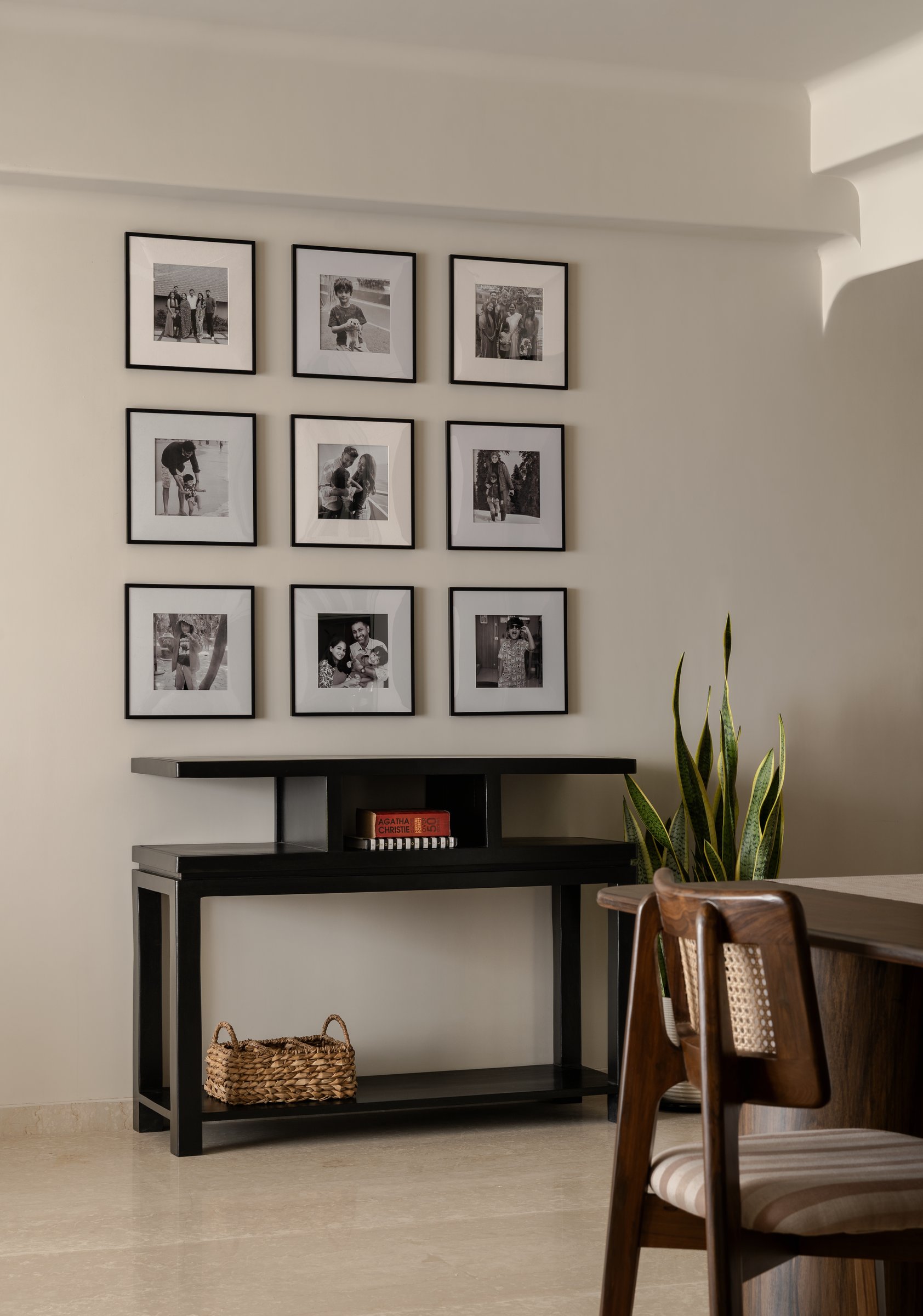
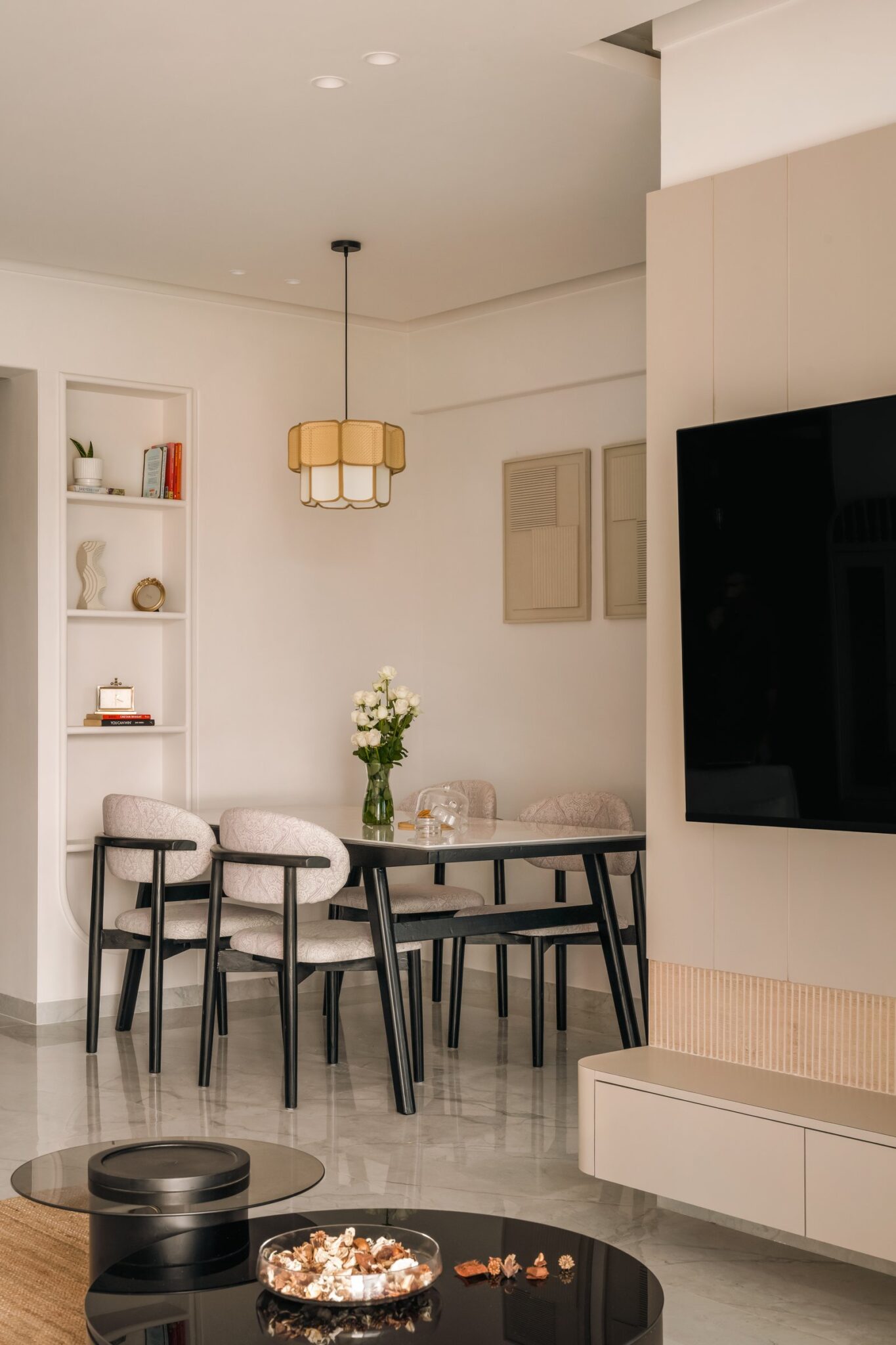
Adjacent to the dining area, a carefully composed gallery of monochrome family photographs anchors a slim black console. Arranged in a disciplined grid, the display introduces a personal layer to the interiors while maintaining the home’s sense of order and restraint. Set against the warmth of walnut and cane, the composition reflects a defining quality of the residence: an ability to balance emotional familiarity with thoughtful design, allowing memory and materiality to coexist with quiet elegance.
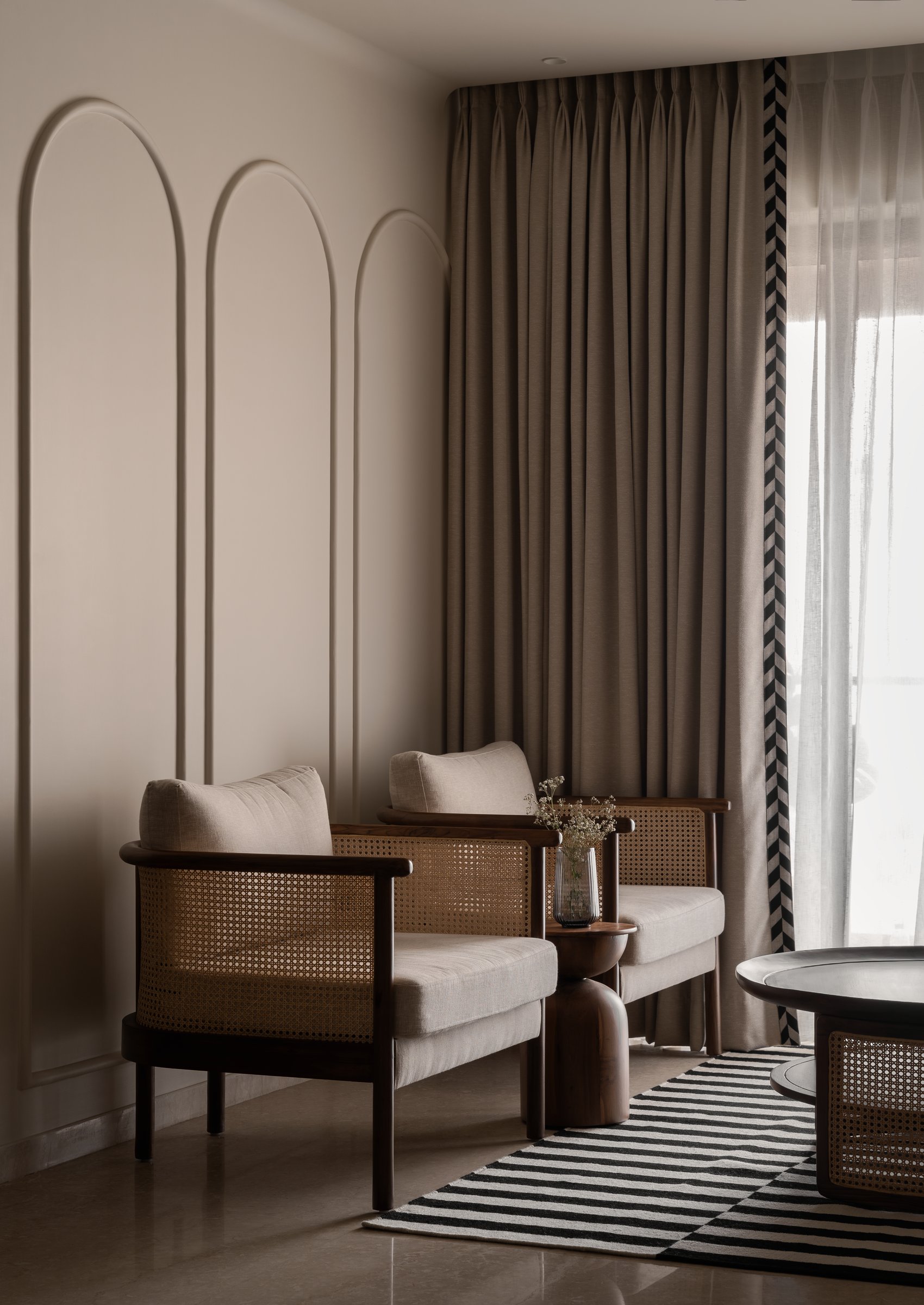
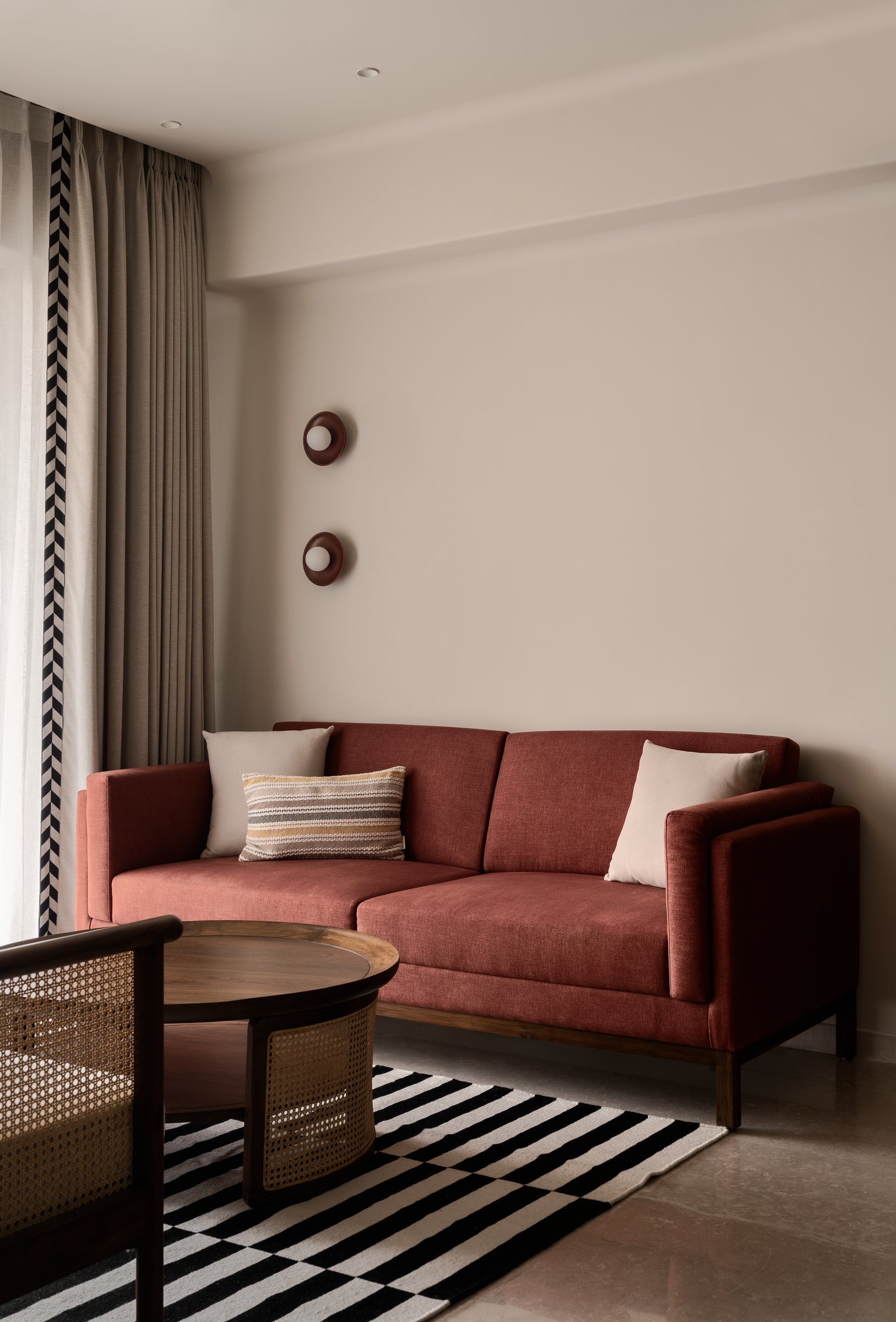
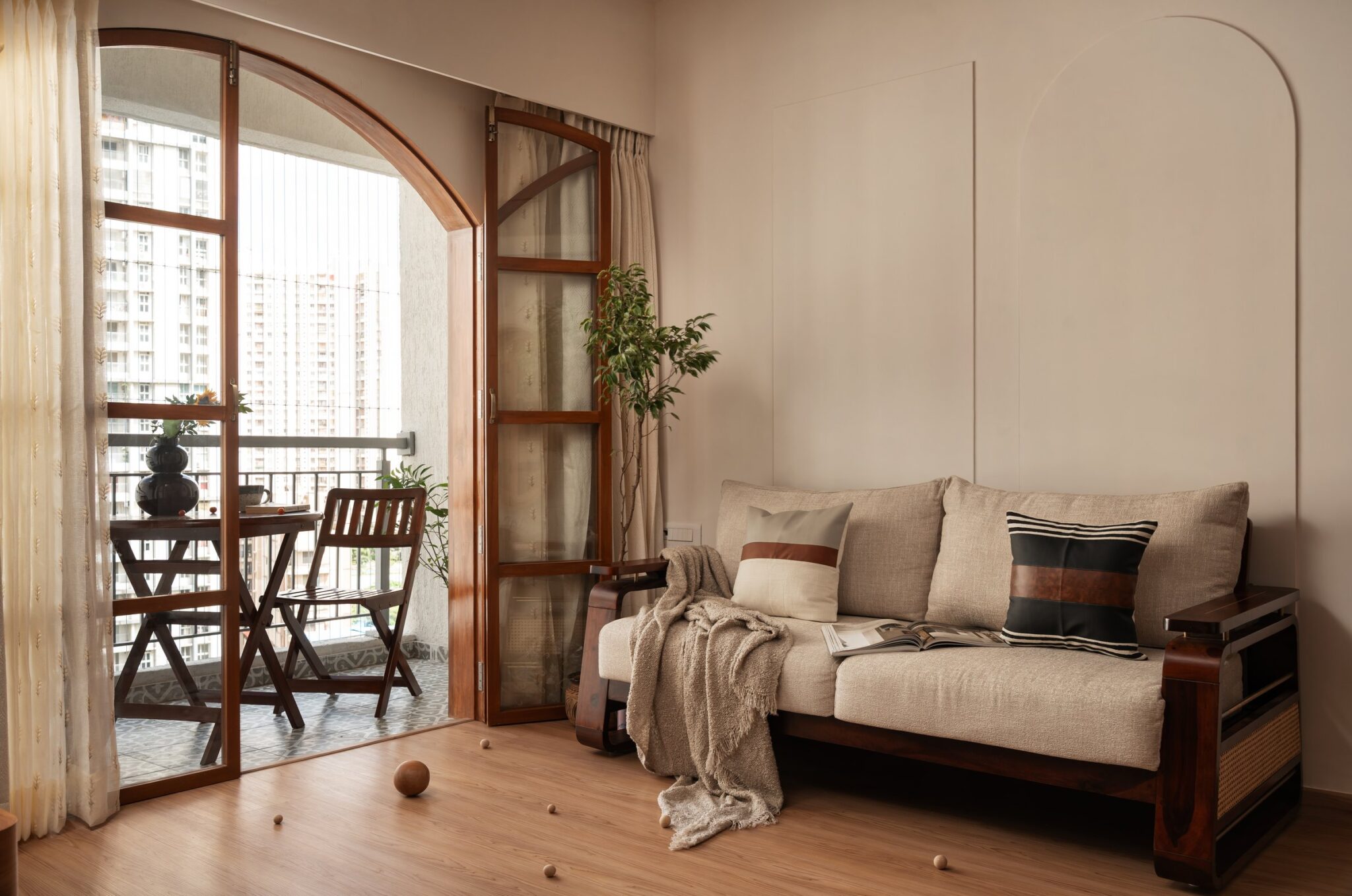
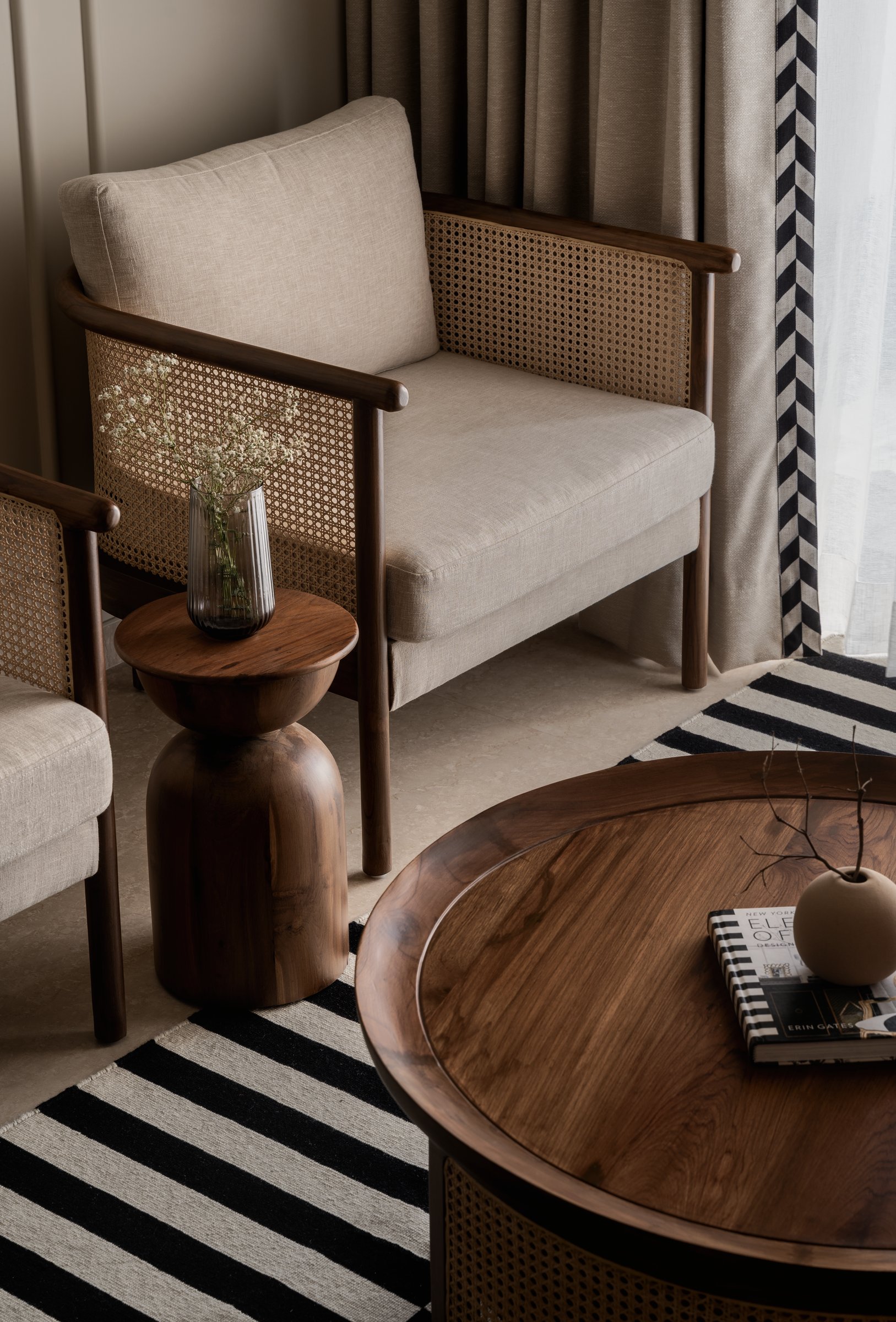
The living room unfolds through a careful orchestration of form, texture, and proportion. A wall of slender arched mouldings, rendered in low relief, quietly reprises the cane-arch motif introduced at the entrance, creating a subtle thread of continuity across the home. In front of full-height drapery, cane-and-wood armchairs bring lightness and texture to the space, while layered sheers trimmed with graphic black detailing add a measured sense of contrast.
Rather than relying on singular gestures, the room derives its character from balance. A terracotta-toned sofa introduces warmth against a restrained backdrop, becoming the visual anchor of the space without overwhelming it. Burnished wooden wall sconces punctuate the walls with understated presence, their sculptural simplicity reinforcing the room’s quiet confidence.
Underfoot, a black-and-white striped rug lends graphic clarity to the composition, grounding the softer textures and earthy tones that surround it. The result is a living space that feels composed rather than curated, where every element contributes to an atmosphere of calm sophistication and enduring comfort.
““Rather than relying on overt traditional motifs, the Indian essence of the home emerges through craftsmanship, materiality, and a strong emphasis on warmth and livability.””
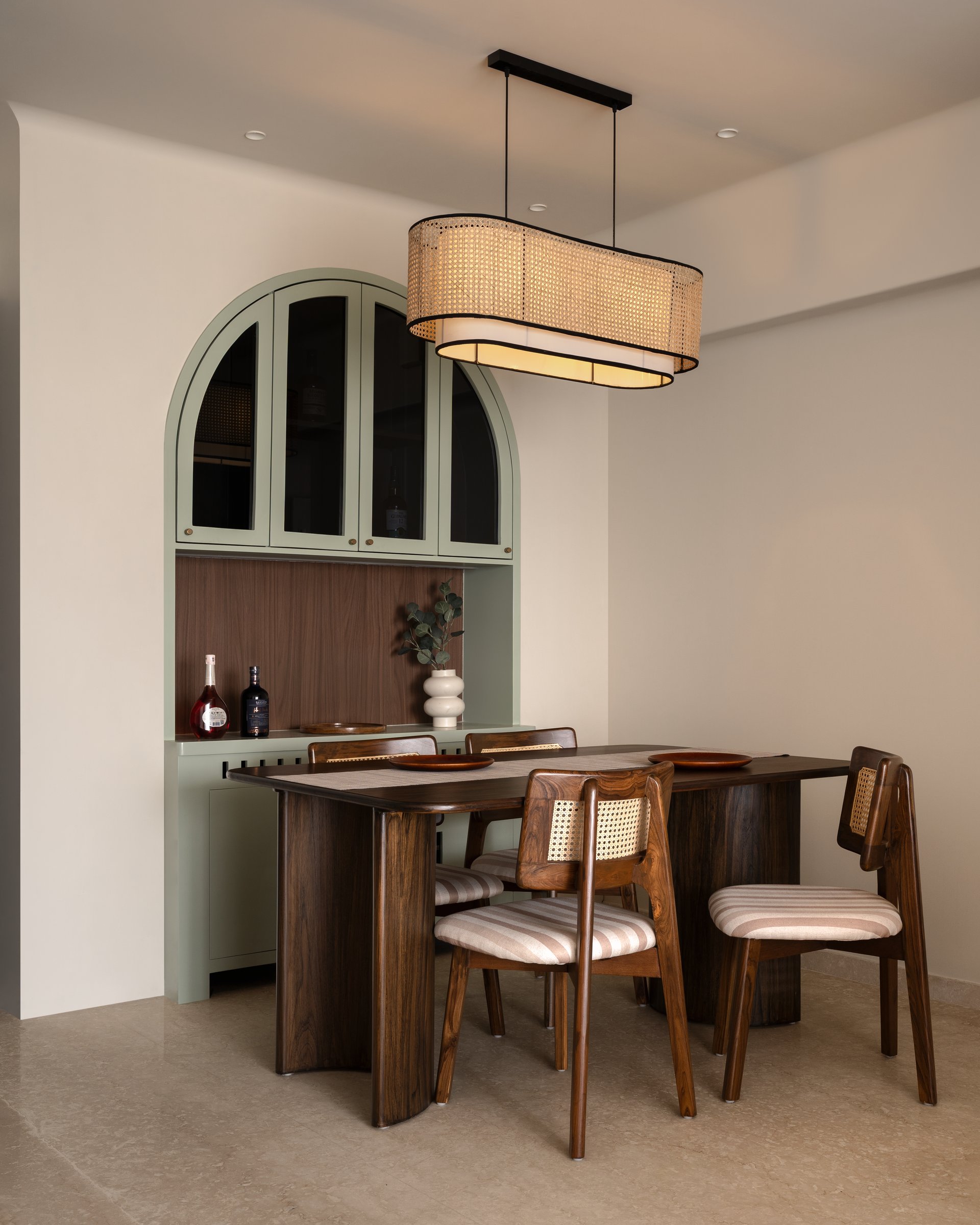
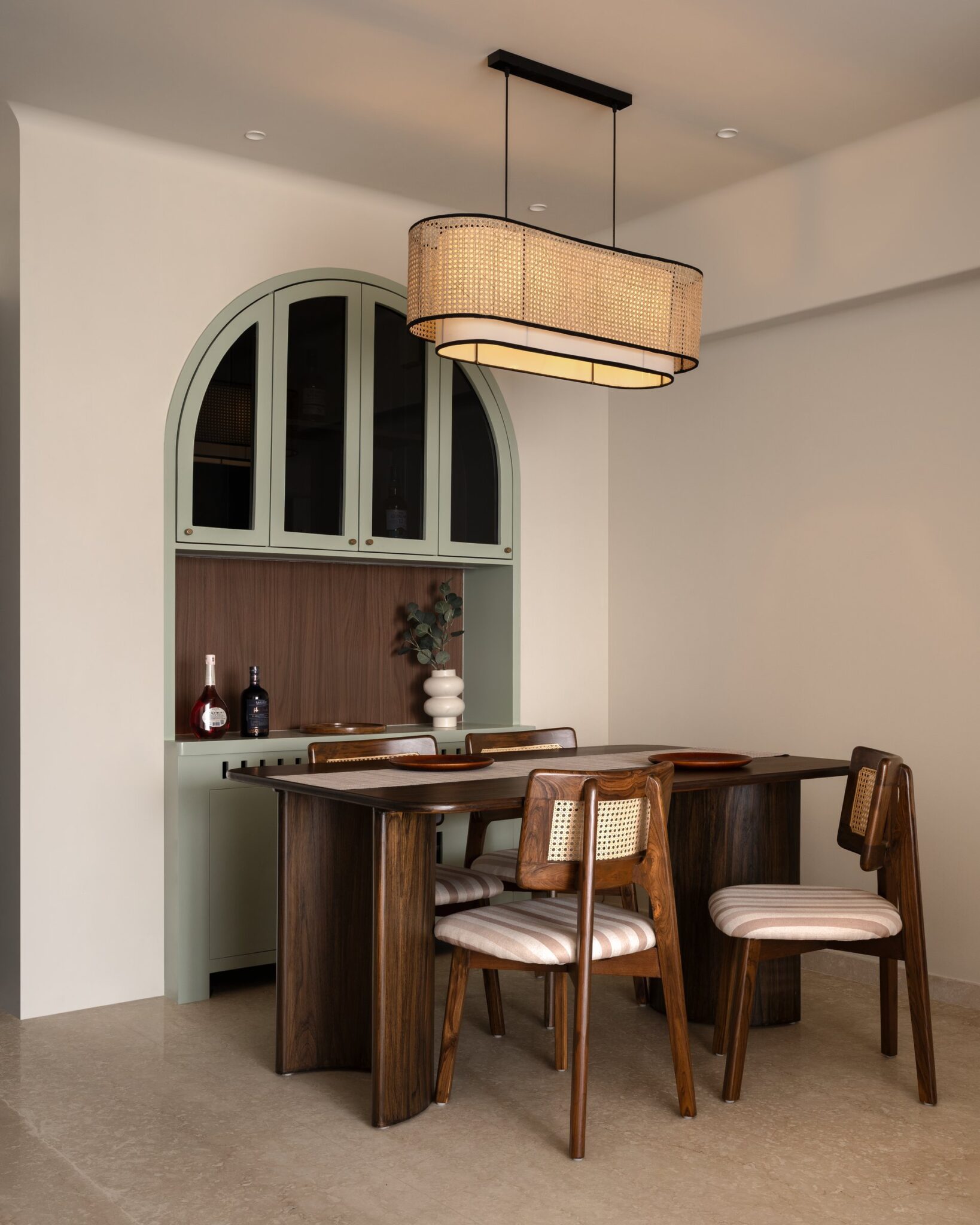
The dining area introduces a gentle shift in the home’s palette through a sage green arched cabinet that serves as both focal point and functional storage. Its glass-fronted upper section accommodates a compact bar display, while the enclosed lower cabinetry maintains a sense of visual calm. The arched silhouette echoes forms seen elsewhere in the home, reinforcing a consistent architectural language without resorting to repetition.
At the centre, a walnut dining table with sculptural plank legs anchors the space with warmth and solidity. Above, a rattan-shaded pendant diffuses light softly across the room, lending an intimate quality that feels inviting rather than theatrical. Together, the elements create a dining setting that balances utility with character, embodying the home’s preference for quiet sophistication over overt statement-making.
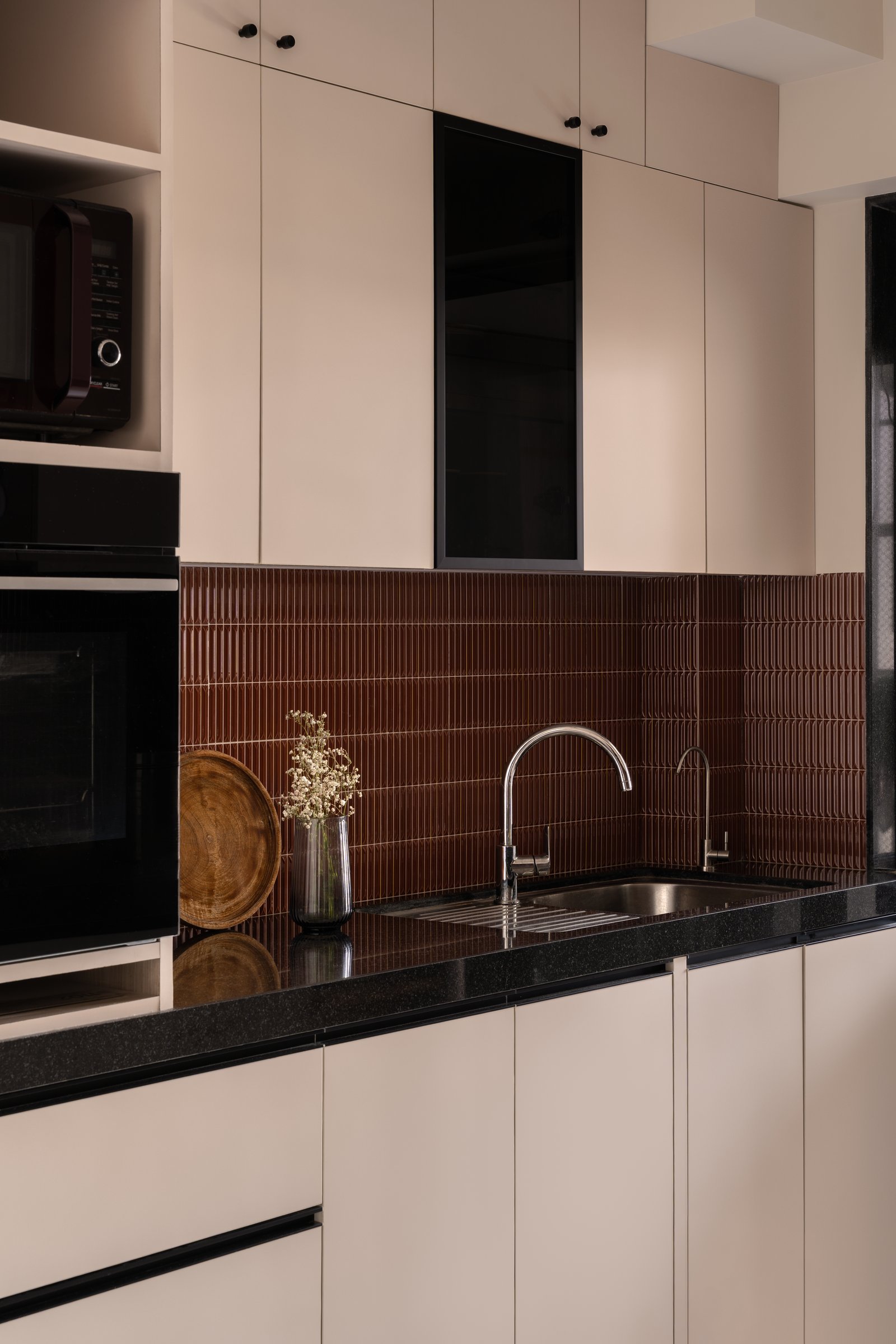
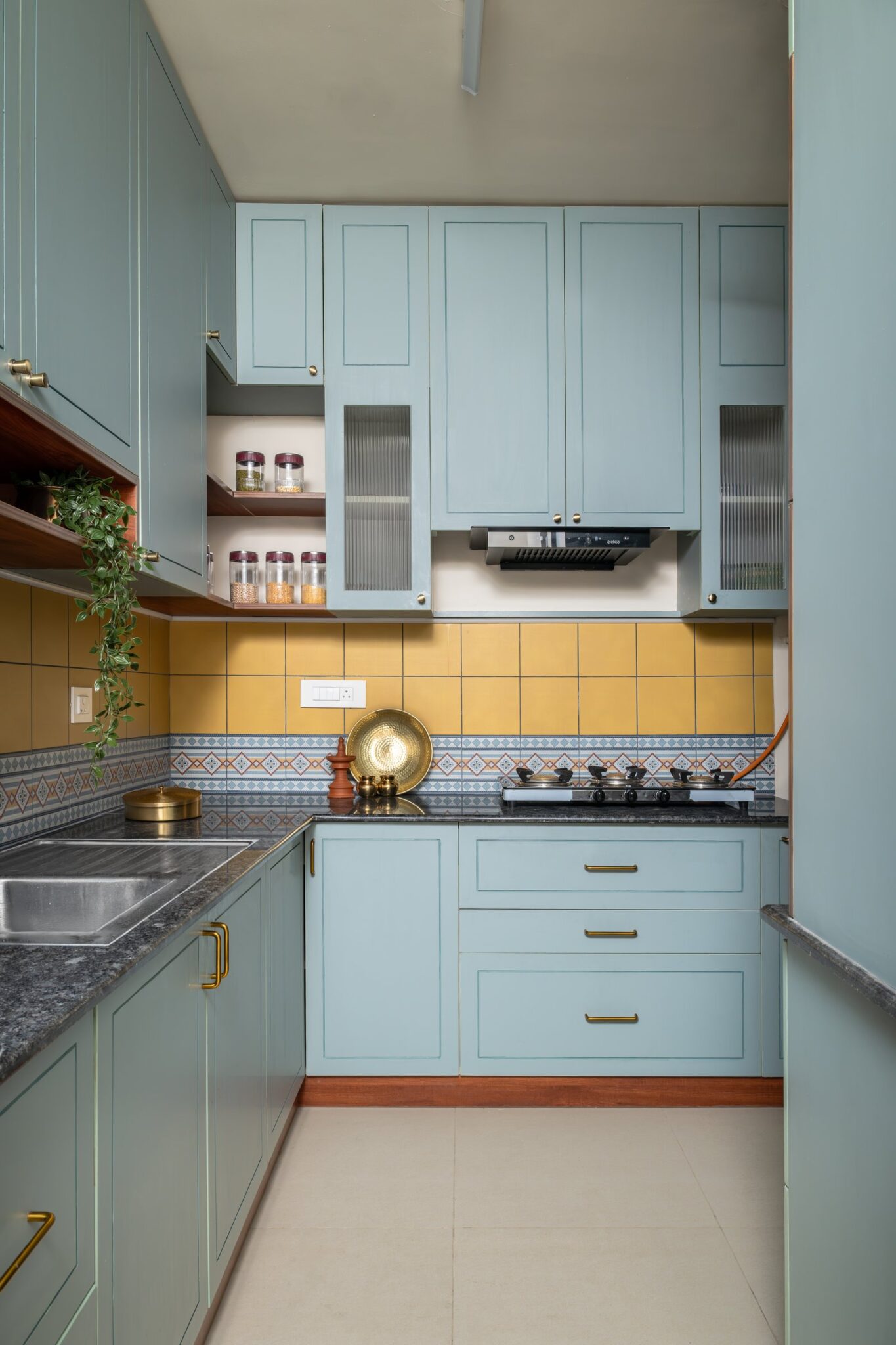
The kitchen translates the home’s design language into a more compact and utilitarian setting. Cream cabinetry is paired with a deep oxblood ribbed backsplash, introducing richness and depth without disrupting the overall restraint of the interiors. The vertical fluting catches and reflects light across the surface, lending texture and subtle movement to the composition.
Set against a black stone countertop, the warm tonal palette brings continuity to the home’s material narrative while maintaining the efficiency expected of a working space. Free from unnecessary embellishment, the kitchen demonstrates how character can emerge through carefully considered material choices, allowing practicality and visual warmth to coexist with ease.
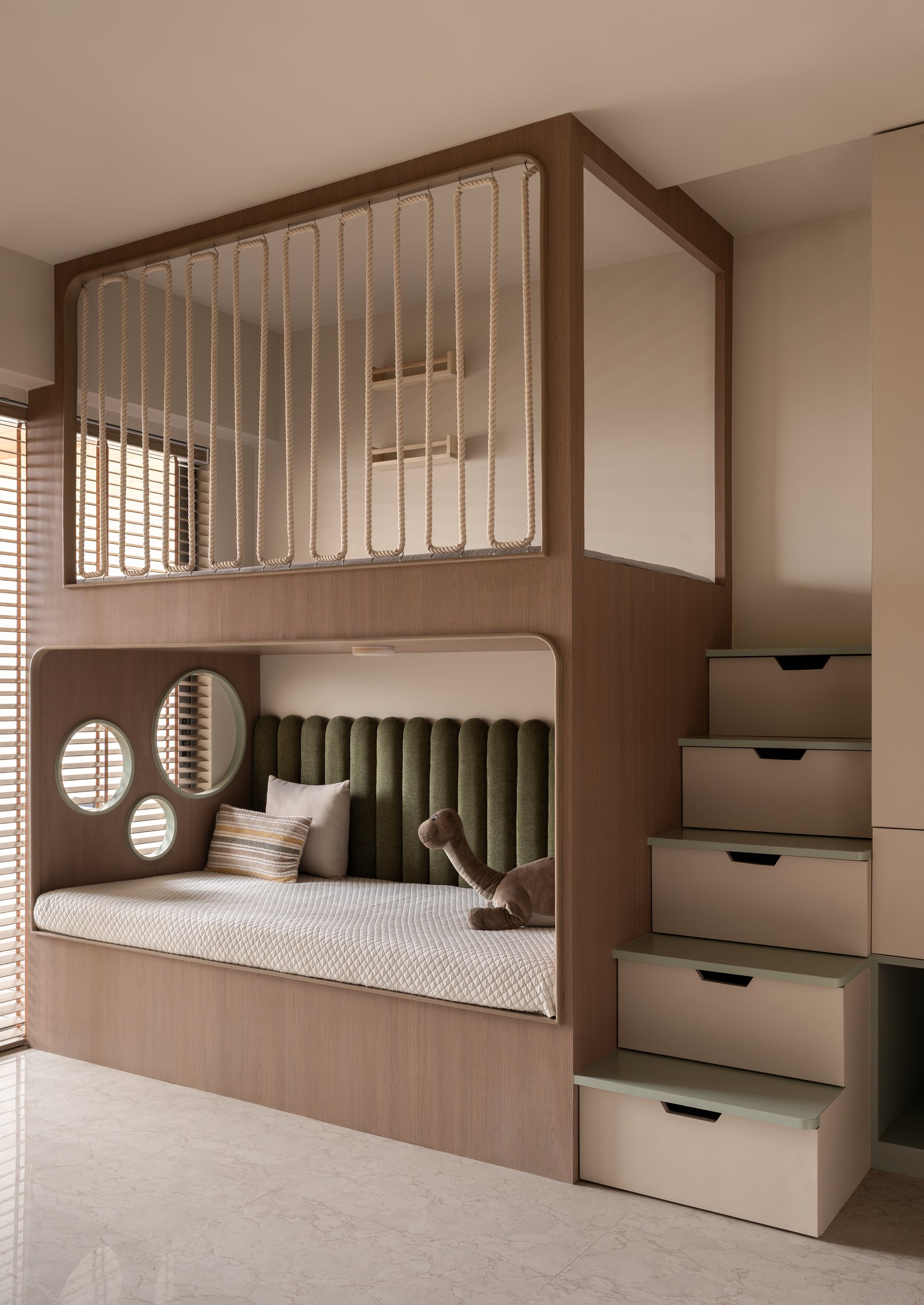
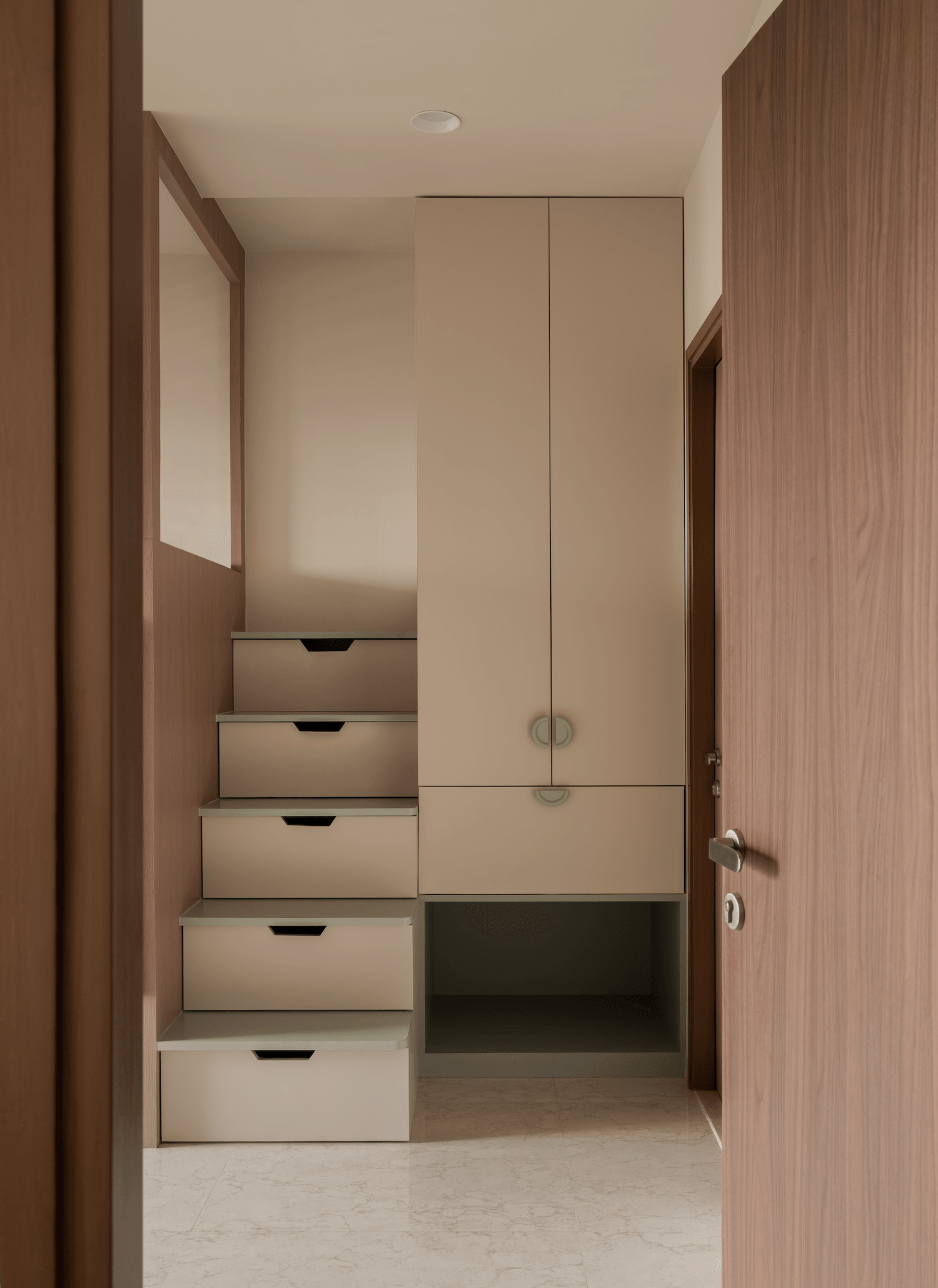
The children’s room marks the home’s most playful expression, introducing a greater sense of invention while remaining aligned with the overall design language. A custom bunk bed, wrapped in warm wood veneer, is conceived as an architectural element rather than a standalone piece of furniture. The upper berth is enclosed with a rope screen, while the lower level forms a cosy retreat framed by circular porthole mirrors, creating a setting that feels both functional and imaginative.
Integrated steps finished in sage and cream double as storage drawers, allowing the structure to absorb multiple functions within a single, cohesive form. By combining sleep, storage, and play into one carefully crafted intervention, the room maximises its footprint without compromising on character. It is a space designed to evolve with its occupants, balancing practicality with a sense of wonder that feels integral rather than imposed.
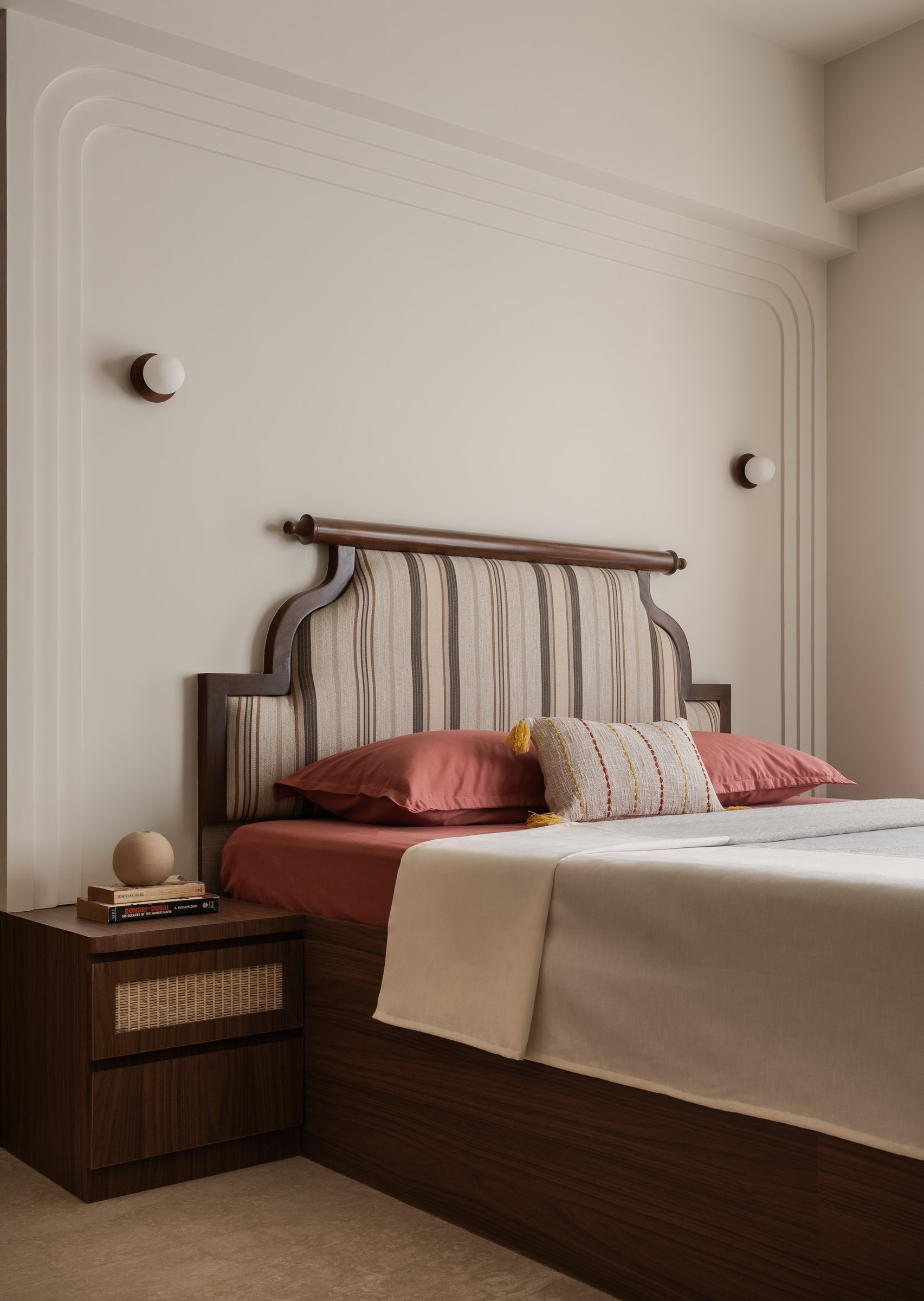
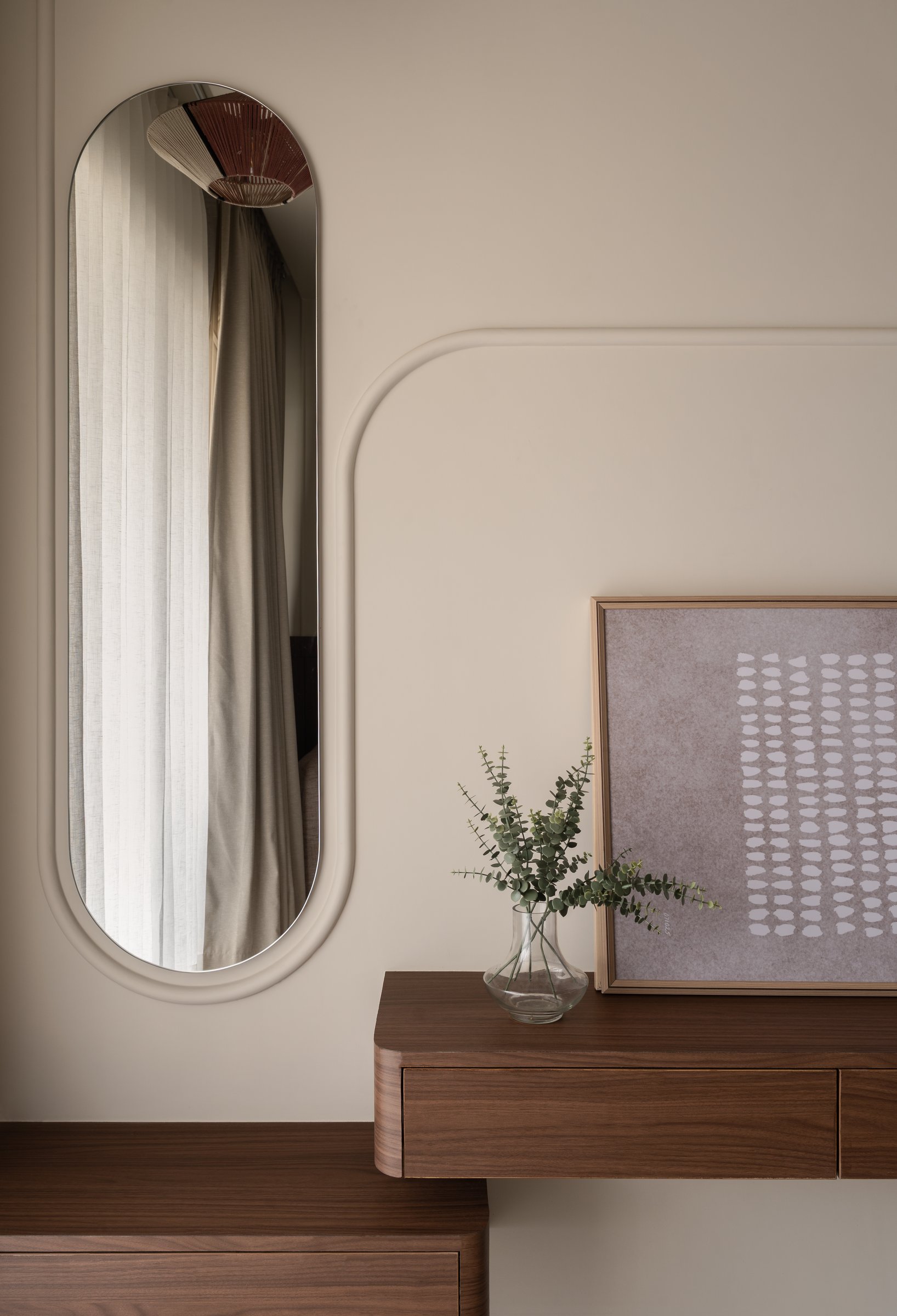
The master bedroom returns to the home’s warmer and more intimate palette. A characterful headboard, upholstered in striped fabric and framed by a turned wooden crest rail, lends the space a subtle sense of tradition while remaining firmly within the home’s contemporary vocabulary. Behind it, a pale wall articulated with softly rounded plaster mouldings introduces depth and texture, quietly echoing the recurring arch motif that threads through the residence.
Terracotta accents reappear in the bedding, creating a visual connection to the living spaces and reinforcing the home’s carefully considered palette. Rather than relying on dramatic gestures, the room draws its appeal from continuity and restraint, layering familiar forms, tactile materials, and warm tones to create an atmosphere that feels calm, cohesive, and deeply restful.
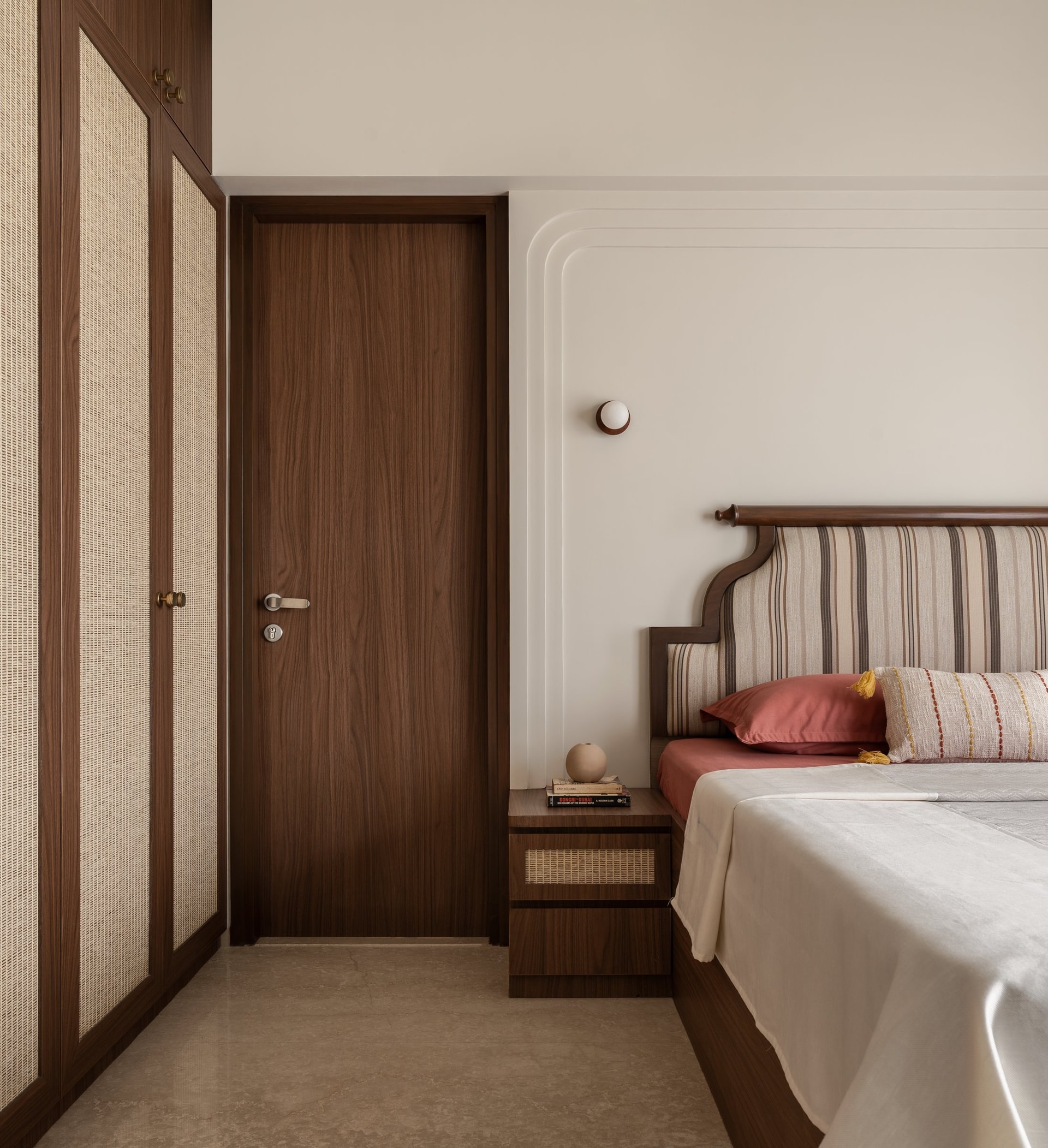
A cane-fronted walnut wardrobe sits seamlessly alongside a flush walnut door, allowing storage and architecture to read as a unified whole. The layered mouldings behind the bed extend gently into the adjoining walls, softening the room’s geometry and reinforcing the sense of continuity that defines the home.
The palette is built through a series of carefully balanced pairings: walnut against cream, cane alongside plaster, and terracotta set against softer neutral tones. These material relationships lend the room depth and warmth without relying on excess, creating a space that feels considered, cohesive, and quietly elegant.
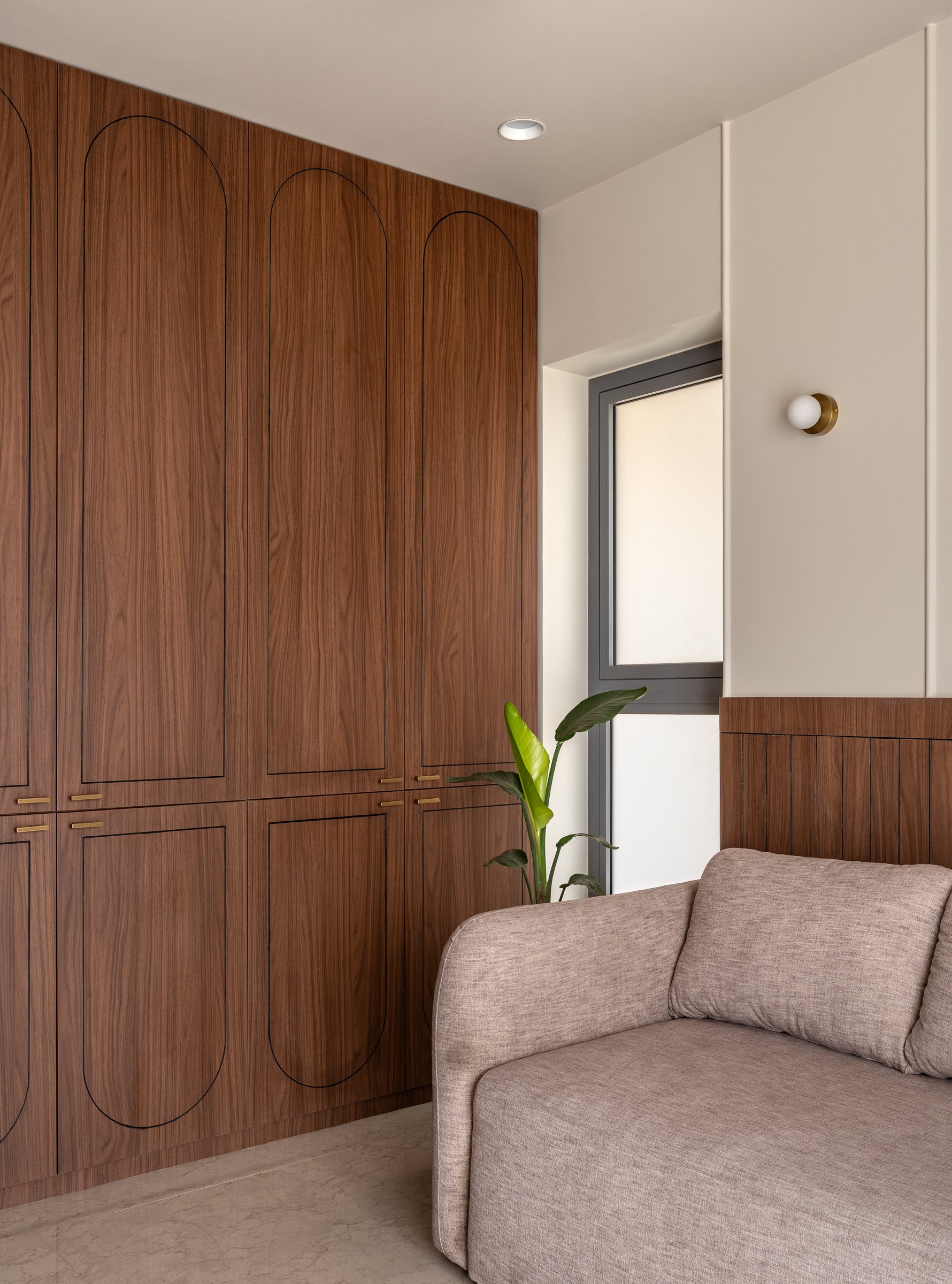
The second bedroom extends the home’s walnut palette in a more understated expression. A full-height wardrobe stretches from floor to ceiling, its surface articulated with slender arched grooves that subtly reference the foyer’s recurring arch motif. Rather than relying on material contrast, the detailing is rendered as a quiet graphic gesture, lending depth and rhythm to the cabinetry without disrupting the room’s calm atmosphere.
A neutral upholstered seat introduces softness to the composition, positioned beneath a brass globe sconce that casts a warm, ambient glow. Together, these elements create a bedroom that feels restrained yet characterful, demonstrating how repetition and refinement can establish continuity without repetition becoming overt.
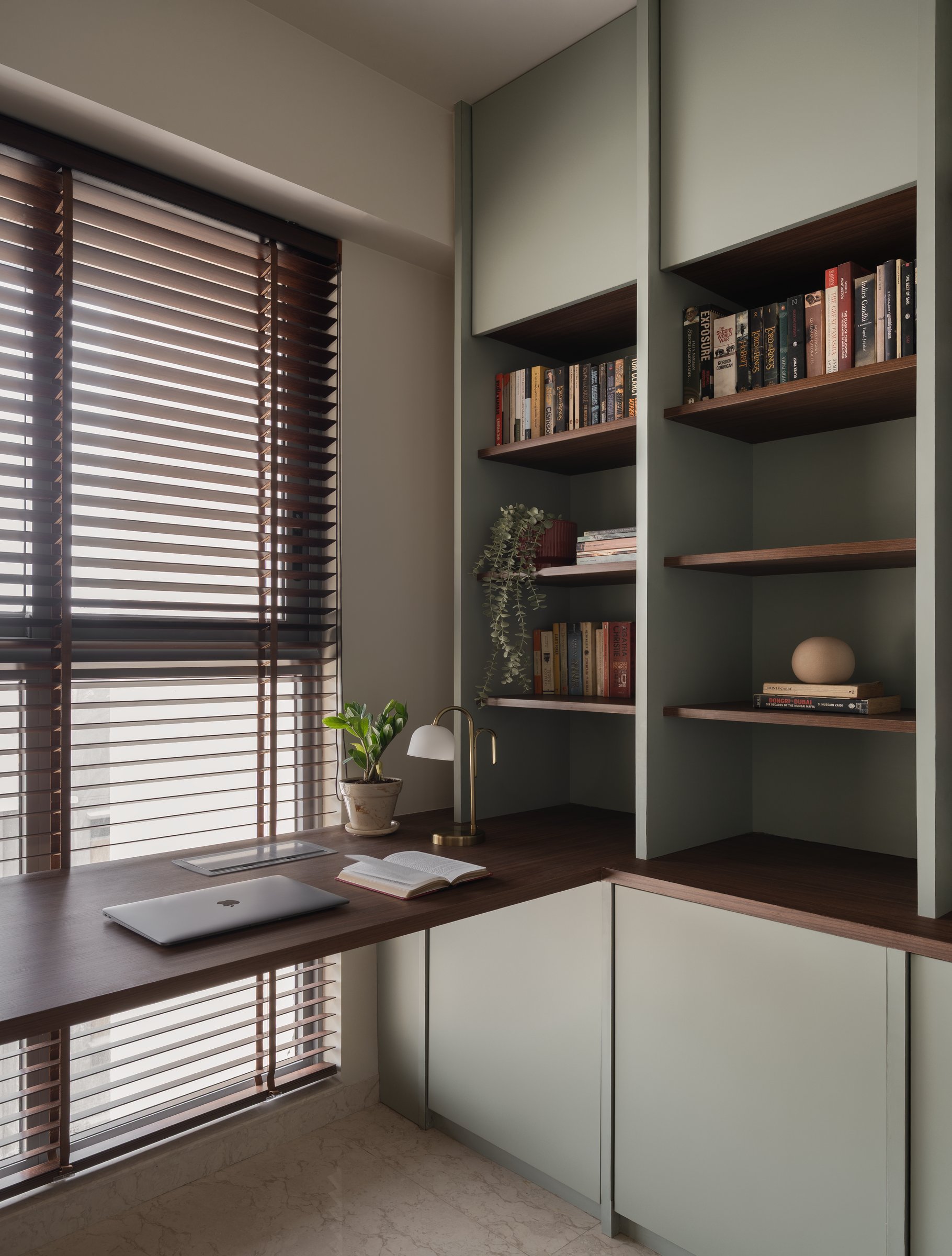
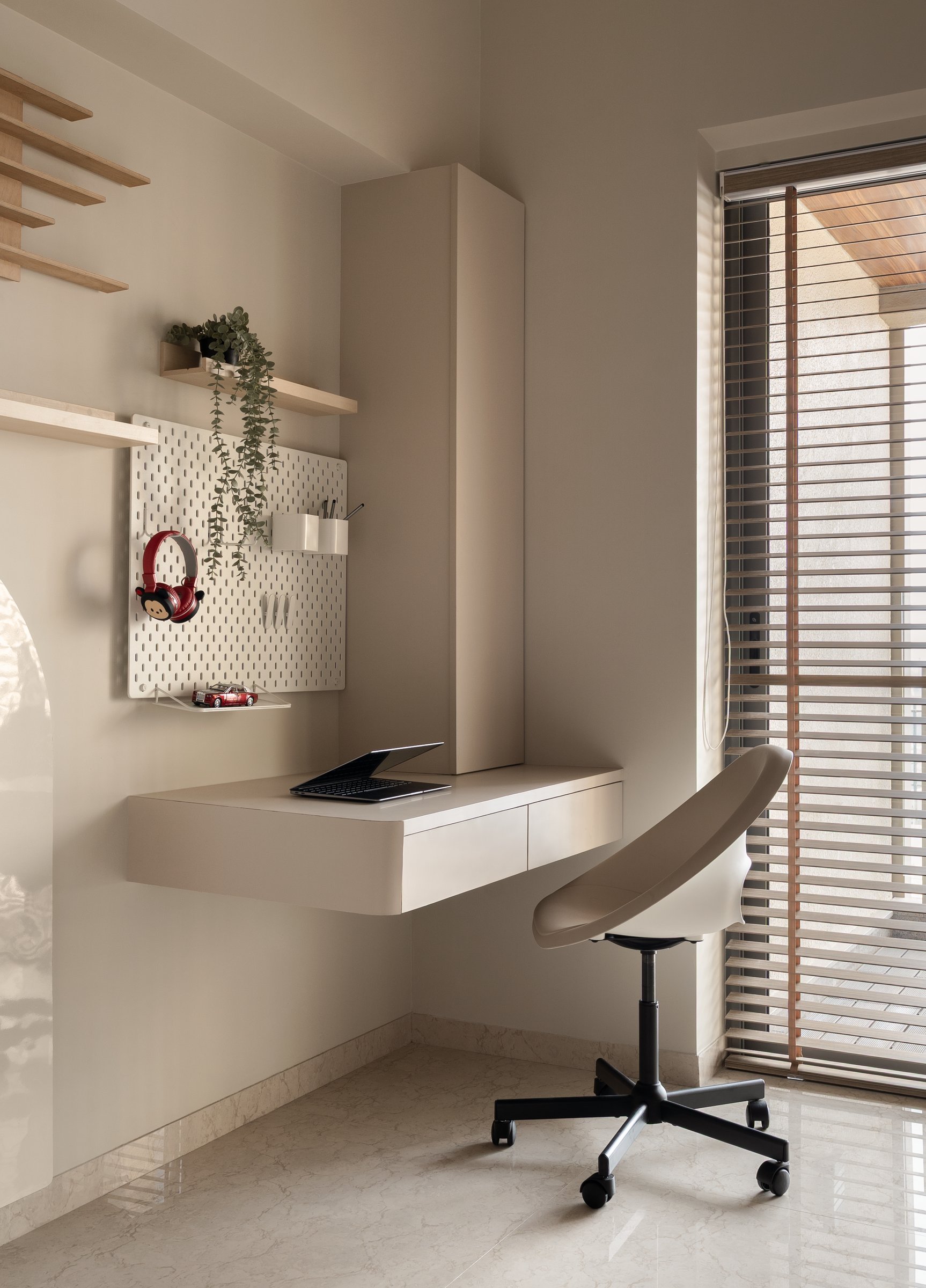
The study corner is among the home’s most finely resolved spaces, demonstrating how function and atmosphere can be woven into a single composition. A walnut desk extends seamlessly into sage-green cabinetry and open shelving, creating a workspace that feels integrated rather than appended. The restrained palette and carefully balanced proportions lend the area a sense of clarity and permanence.
More than a practical workstation, the space reflects a broader philosophy embedded within the home: that areas dedicated to work can be as considered, comfortable, and restorative as those intended for rest.
What Walnut and Earth contributes to Mumbai’s contemporary residential landscape is a quiet sense of assurance. Rather than relying on overt cultural references or iconic mid-century signifiers, the home finds its identity in materiality, craftsmanship, and proportion. Its Indian character emerges organically through cane detailing, earthy hues, tactile surfaces, and a sensitivity to how spaces are inhabited, rather than through decorative symbolism.
In a city where residential interiors often gravitate towards either internationally derived aesthetics or explicit expressions of regional identity, the project occupies a more nuanced position. It demonstrates that contemporary Indian design need not choose between global influences and local sensibilities. Instead, it allows the two to coexist, each enriching the other through thoughtful interpretation.
The result is a home defined by balance. Warmth is tempered by restraint, texture by clarity, and familiarity by refinement. Throughout, Walnut and Earth suggests that the most enduring interiors are not those that declare their influences most loudly, but those that absorb them so completely that they become part of the home’s own natural language.