There is a particular kind of restraint that only becomes visible at scale. In a compact home, neutrality can feel like a default; in a generous one, it is a choice, and a demanding one at that. To hold 2,300 square feet in a muted register, to refuse the obvious theatre that a 36th-floor sea view invites, requires a design conviction that most residential projects never test.
Coastline 36, designed by Mumbai-based Sculpted Living Interiors, is a four-bedroom home in Worli where that conviction is quietly, thoroughly demonstrated. Principal designers Priyal Chopra and Nikita Sagar have built the project around a single proposition: that the Arabian Sea, visible through floor-to-ceiling glazing, should remain the home’s most expressive element, with every interior decision calibrated to defer to it rather than compete.
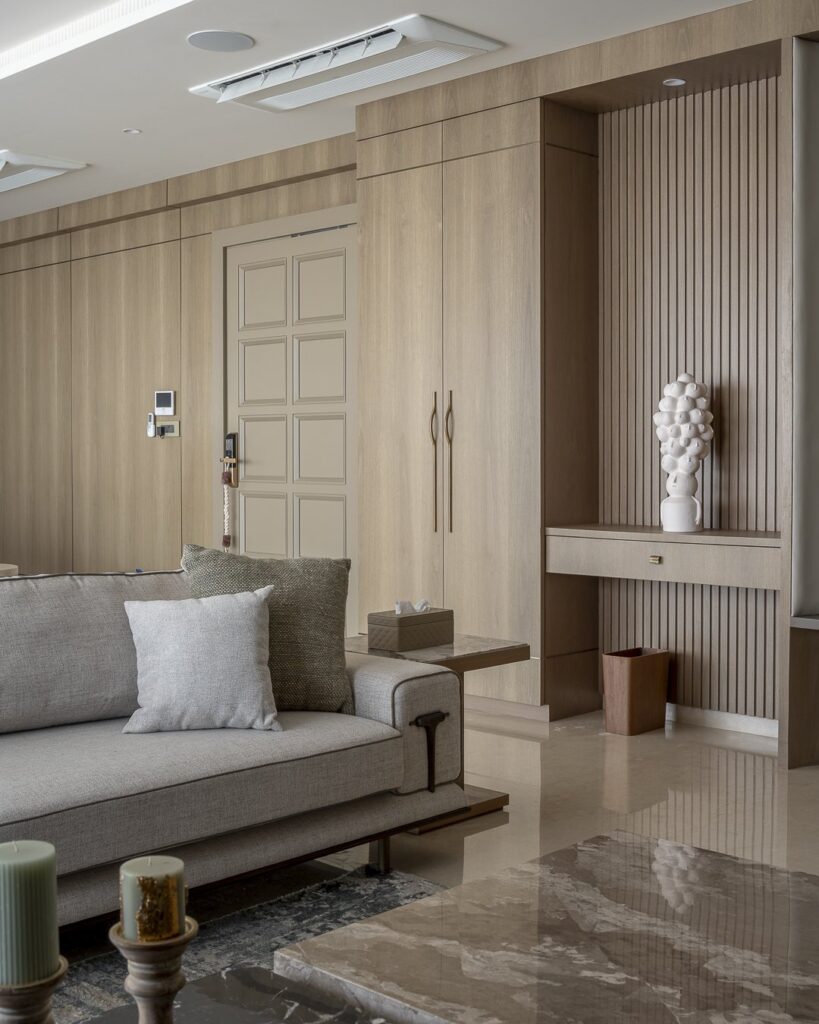
The entry sequence establishes the grammar immediately. A wall of light timber panelling, fluted and flat in alternating registers, wraps the foyer and extends toward the living zone, absorbing the front door, built-in storage, and a display niche into a single continuous surface. The effect is of compression before release: the foyer is intimate, almost corridor-like, before the space opens into the generous proportions beyond.
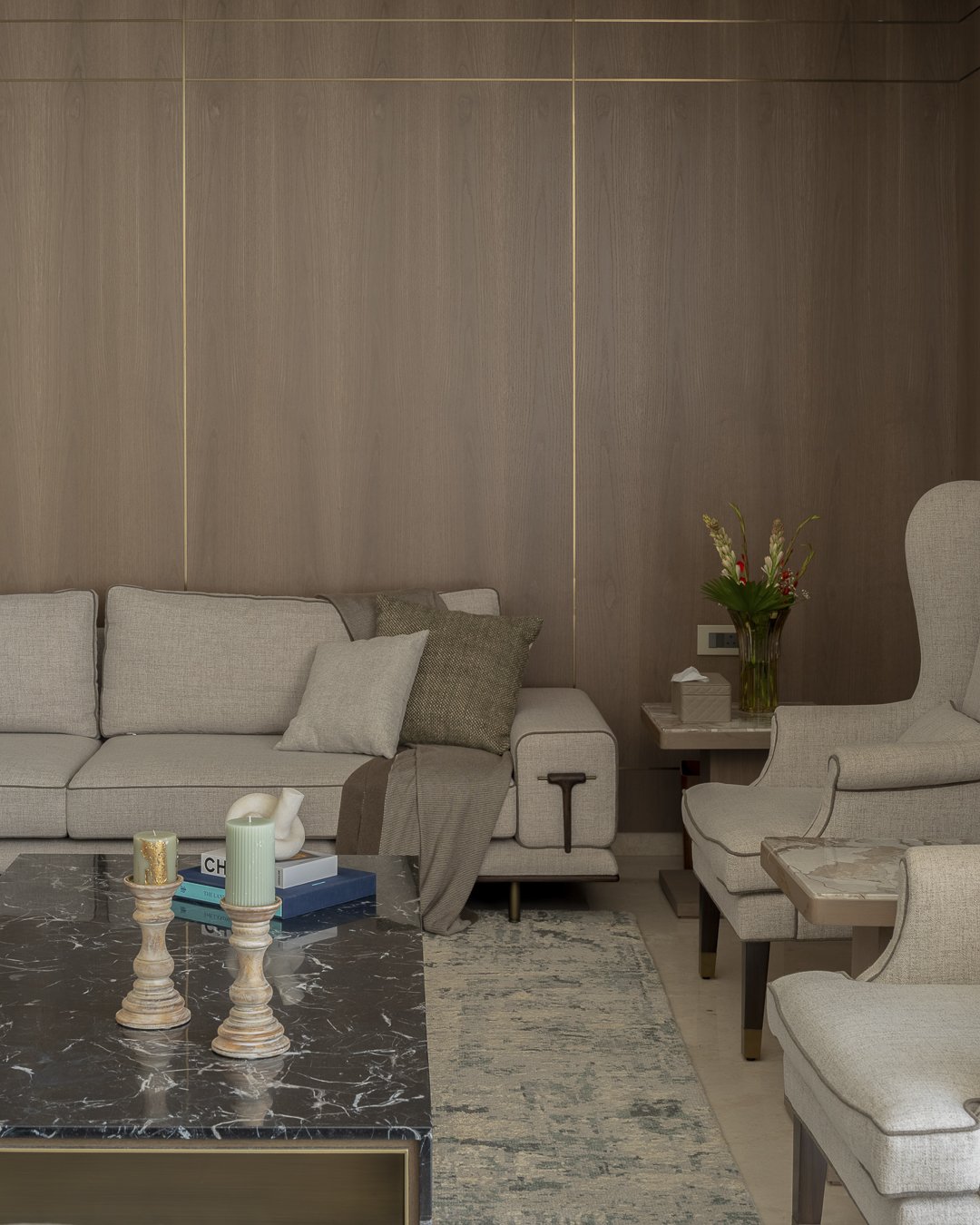
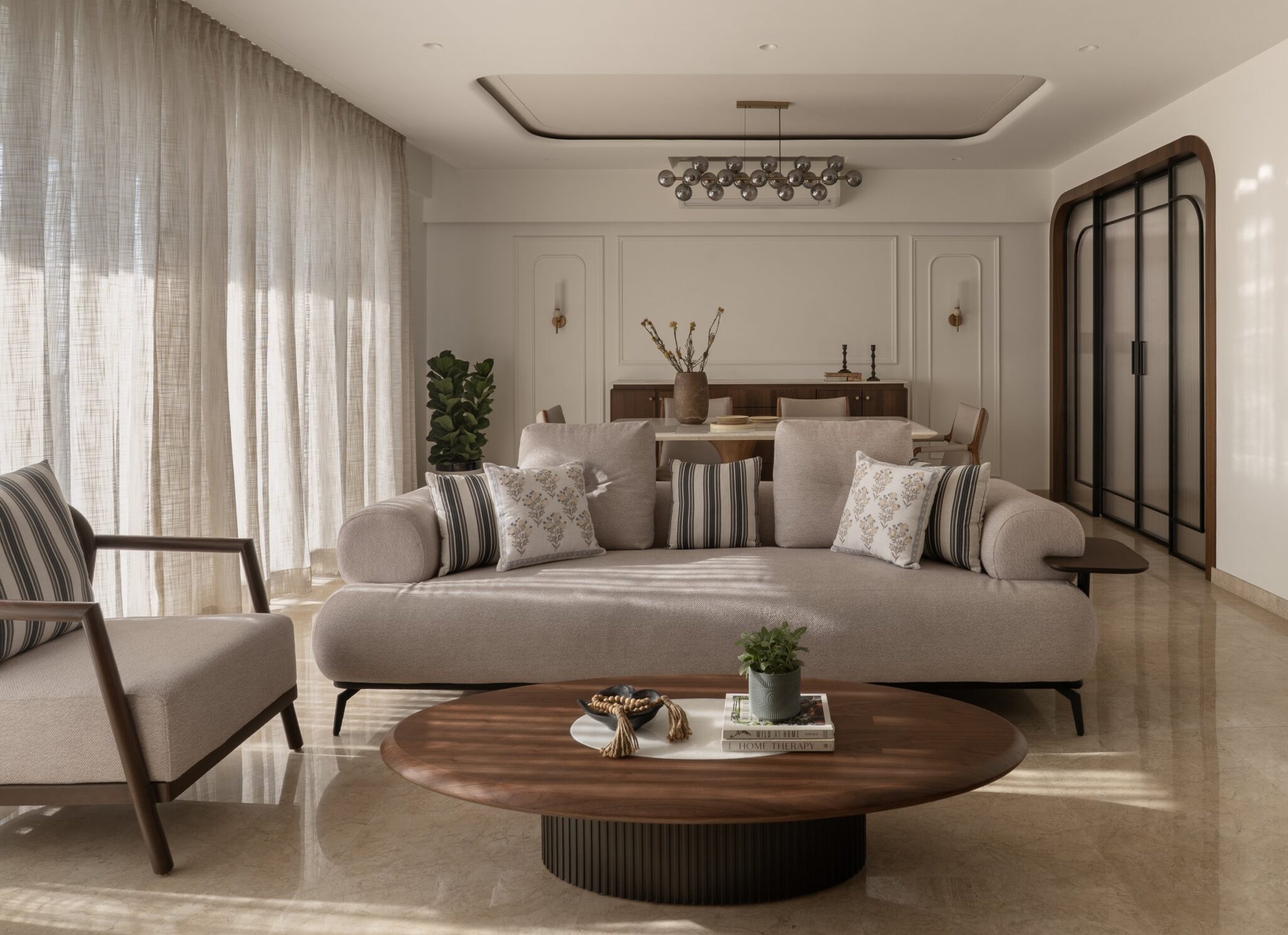
The living room operates on proportion rather than punctuation. Warm timber panels continue from the foyer, now articulated with fine brass inlay lines that catch light without demanding attention. Seating is arranged low and generous, oriented toward the windows, and the room’s discipline lies in what it withholds: there is no accent wall, no statement pendant, no competing focal point.
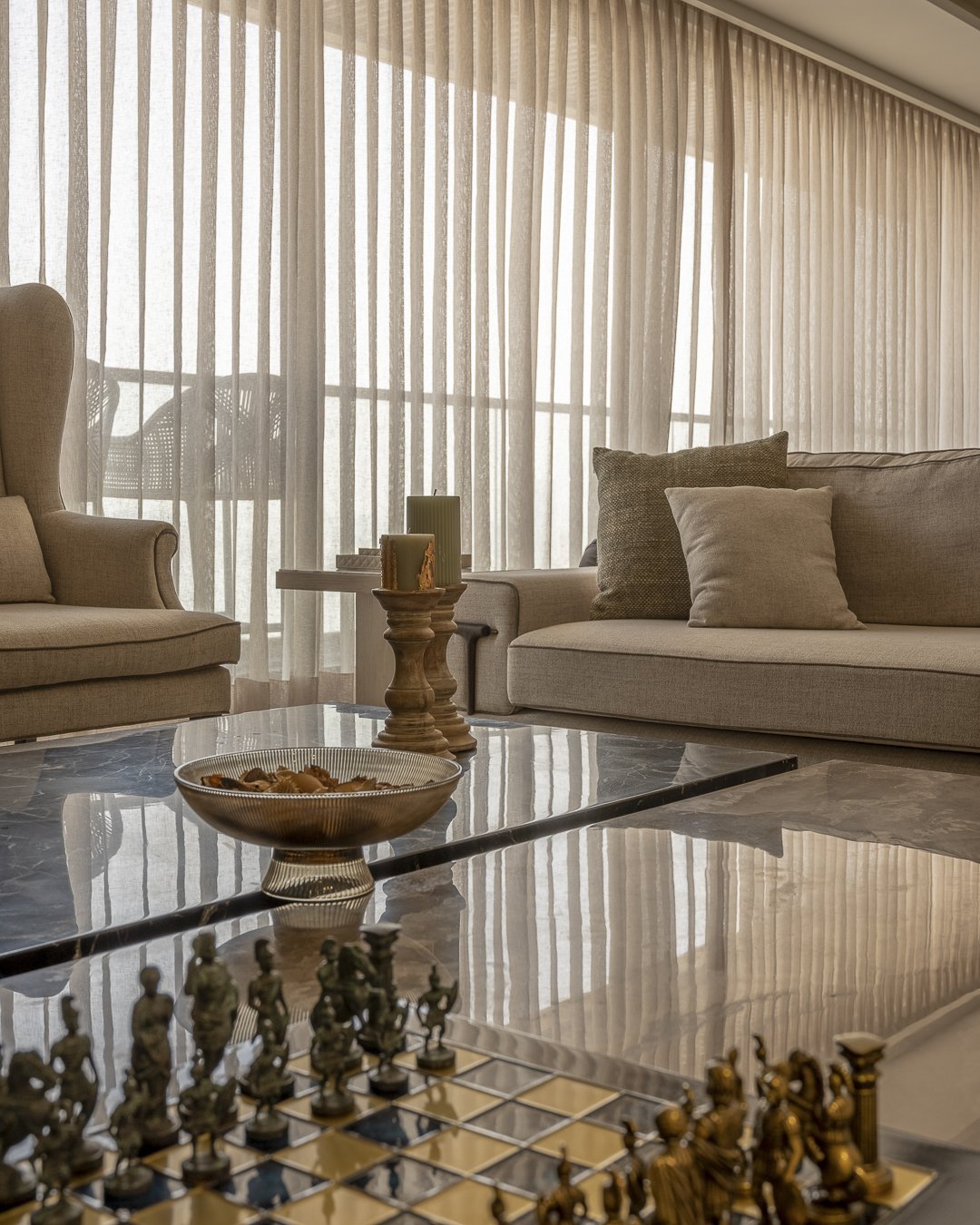
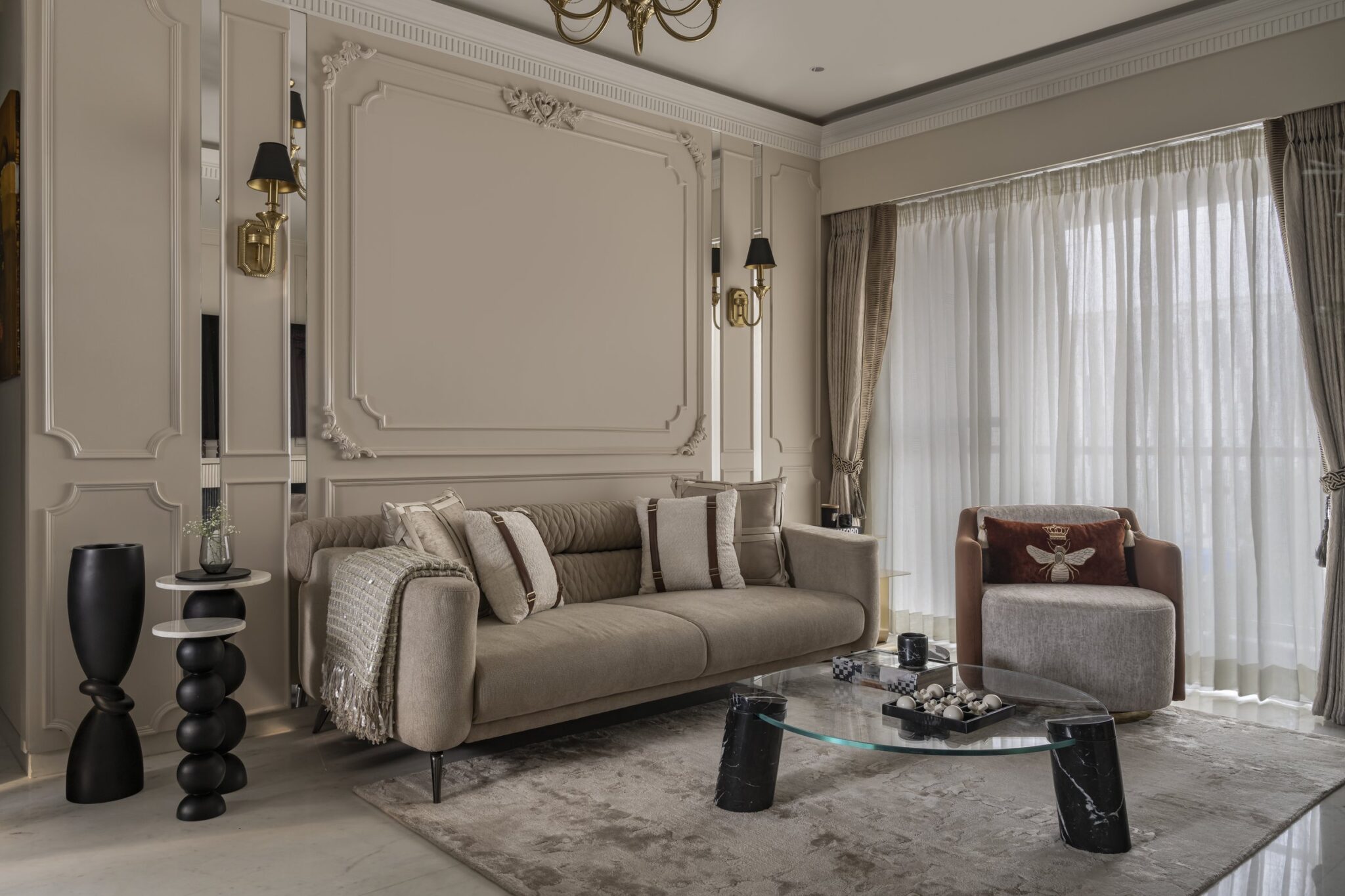
Sheer curtains diffuse the coastal light into a soft, almost milky wash that flattens the distinction between indoor and outdoor planes. The upholstered pieces hold a unified tonal range, while the marble coffee table and its brass chess set anchor the composition with weightier materials, and the sheer curtains veil the view beyond the glass, folding the outside world into the room’s muted palette.
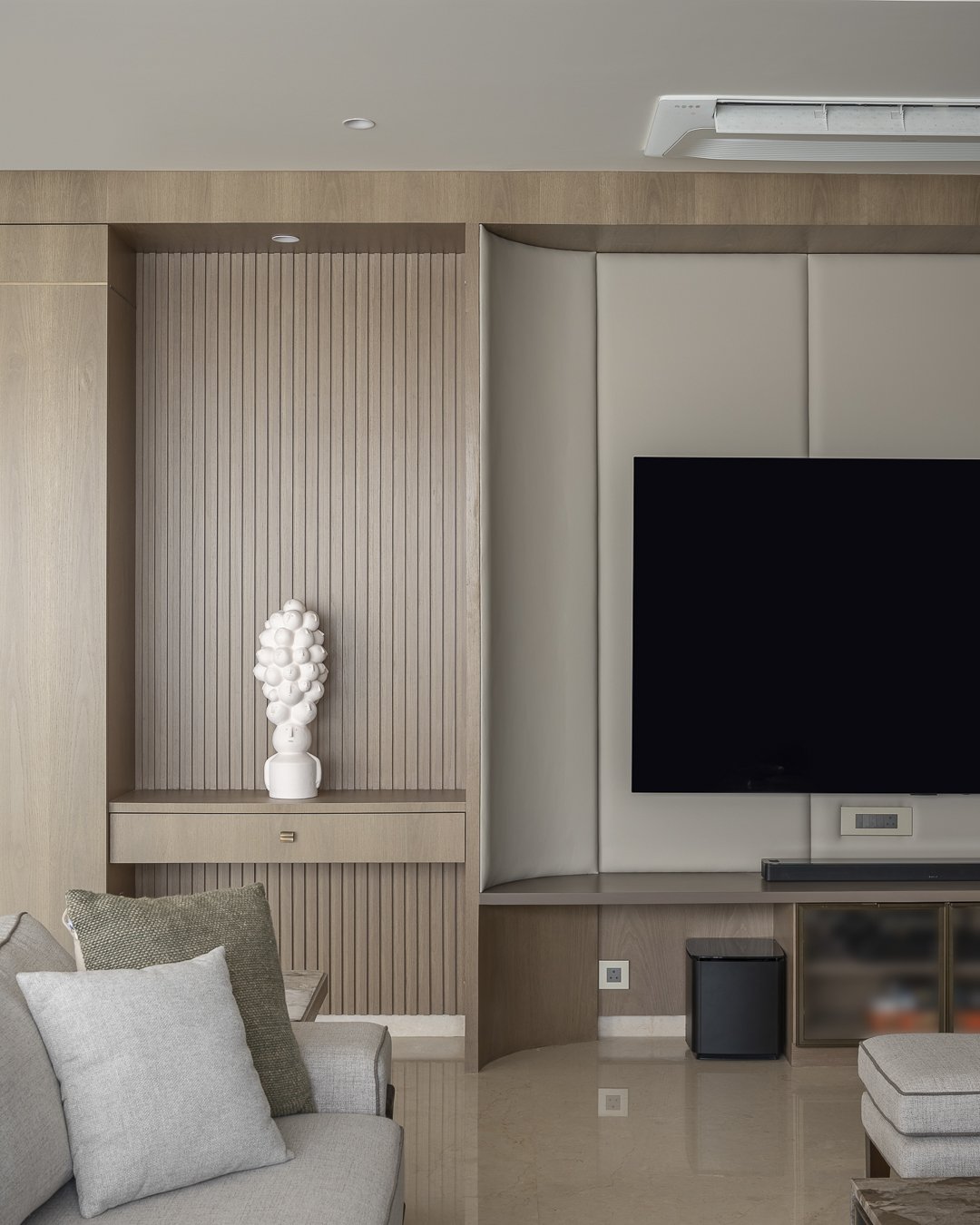
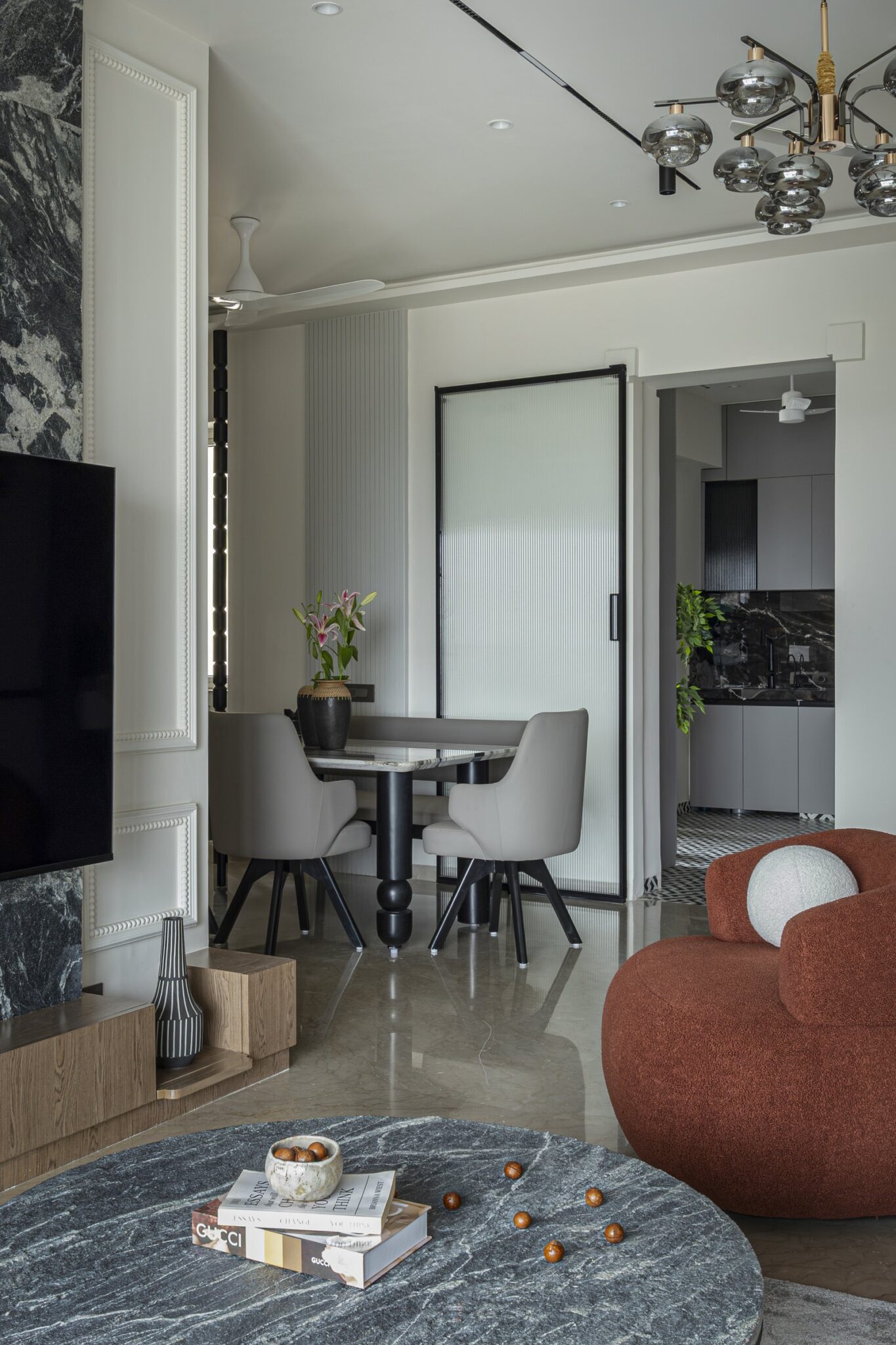
A closer reading of the living room wall reveals the care embedded in the custom joinery. The television is set within a curved, upholstered panel that softens its presence, flanked by fluted timber niches that function as both display and spatial punctuation. It is a wall designed to recede, which is precisely why it works.
““The design avoids excess, instead focusing on proportion, materiality, and precision.””
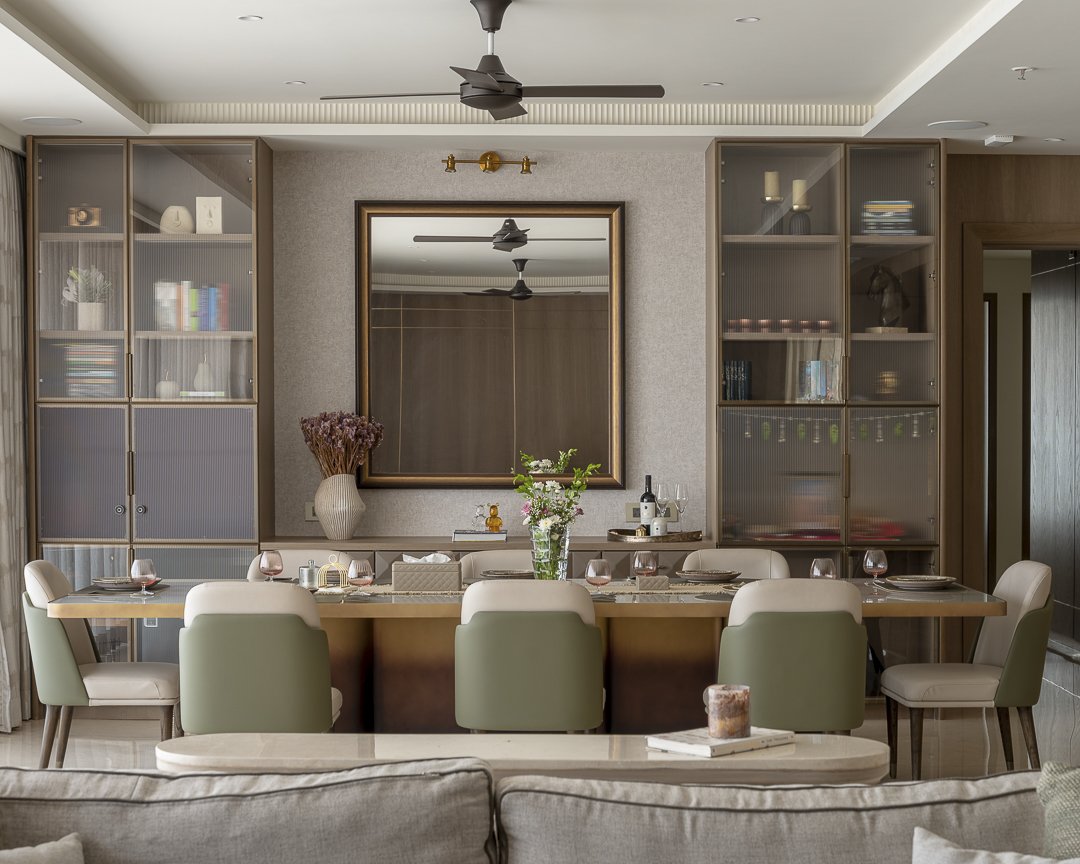
The dining area introduces the home’s first real tonal shift. Sage green upholstered chairs gather around a long stone-topped table, and a pair of glass-fronted display cabinets frame a large mirror on the back wall. The effect is layered and warm, the cabinets revealing glassware and books behind reeded glass panels that echo the fluting found throughout the home.
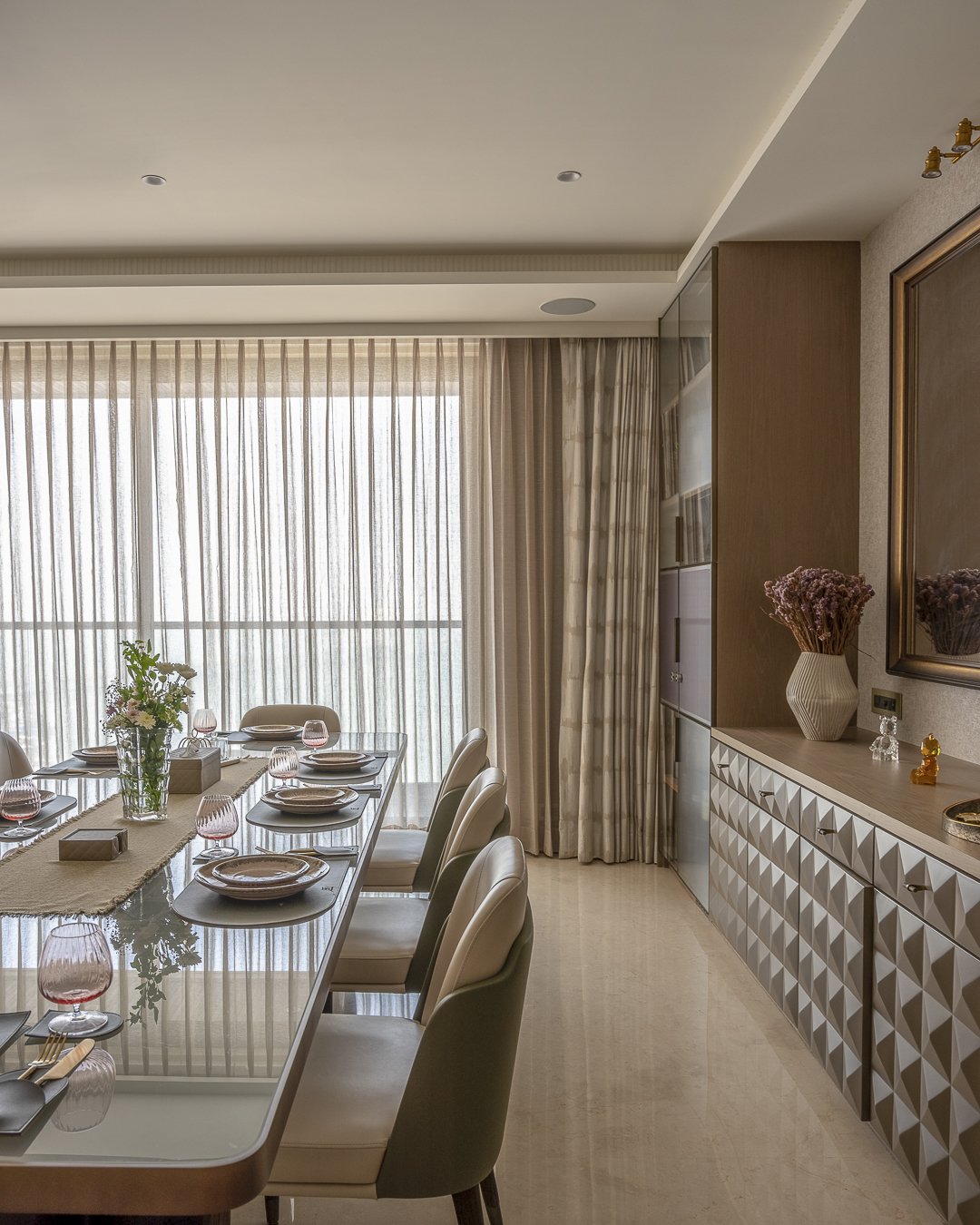
Seen from the window side, the dining zone gains a second dimension. Light pours in through sheers, and a faceted sideboard with a geometric diamond-pattern front introduces a tactile sharpness that the rest of the room deliberately avoids. It is the single assertive gesture in the space, and it earns its presence by standing alone.
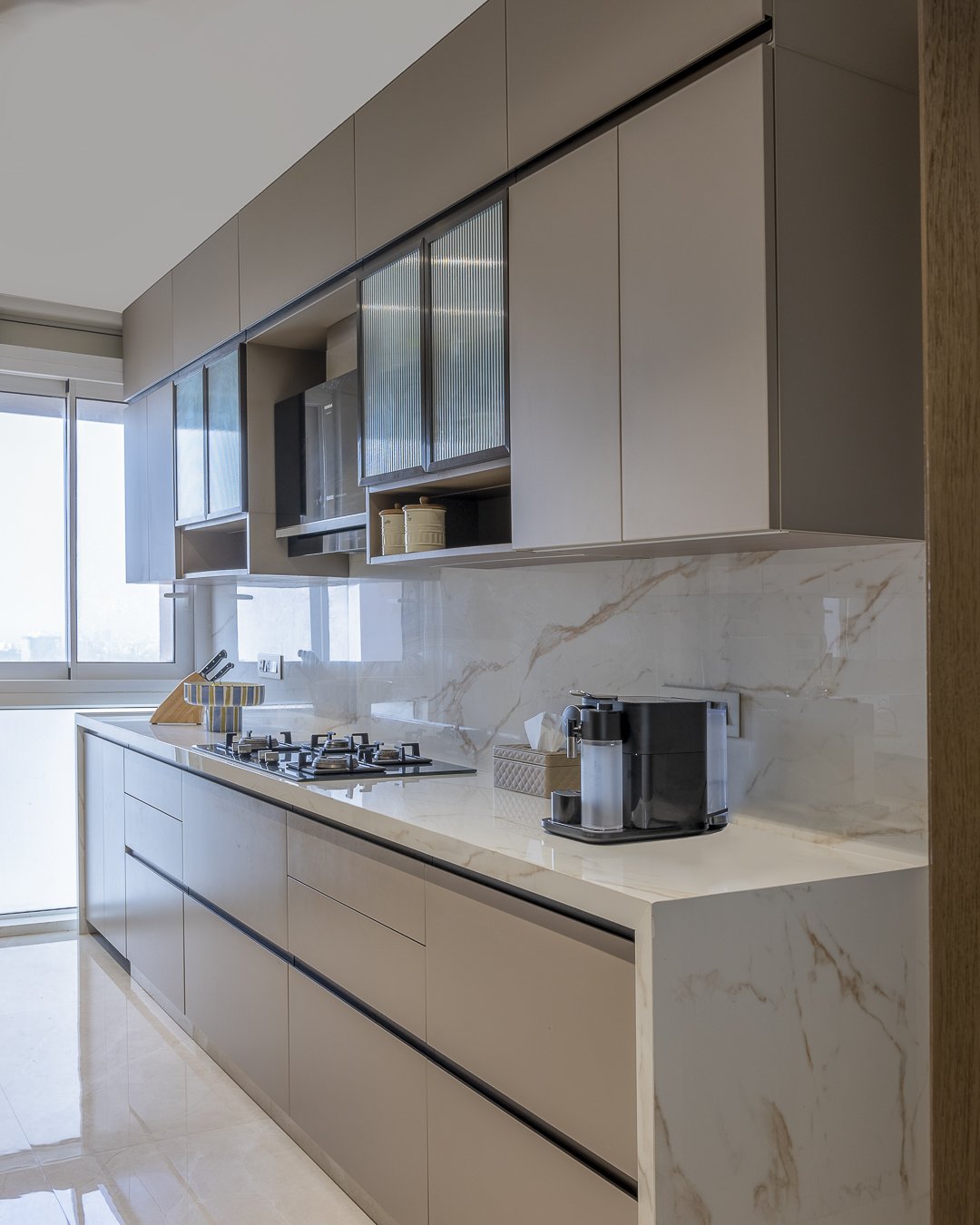
The kitchen continues the home’s commitment to visual quiet. Pale cabinetry and a veined stone backsplash maintain the neutral register, while reeded glass inserts in the upper cabinets carry the fluted motif from the public rooms into the utilitarian zone. The space is functional and crisp, with nothing asked to perform beyond its purpose.
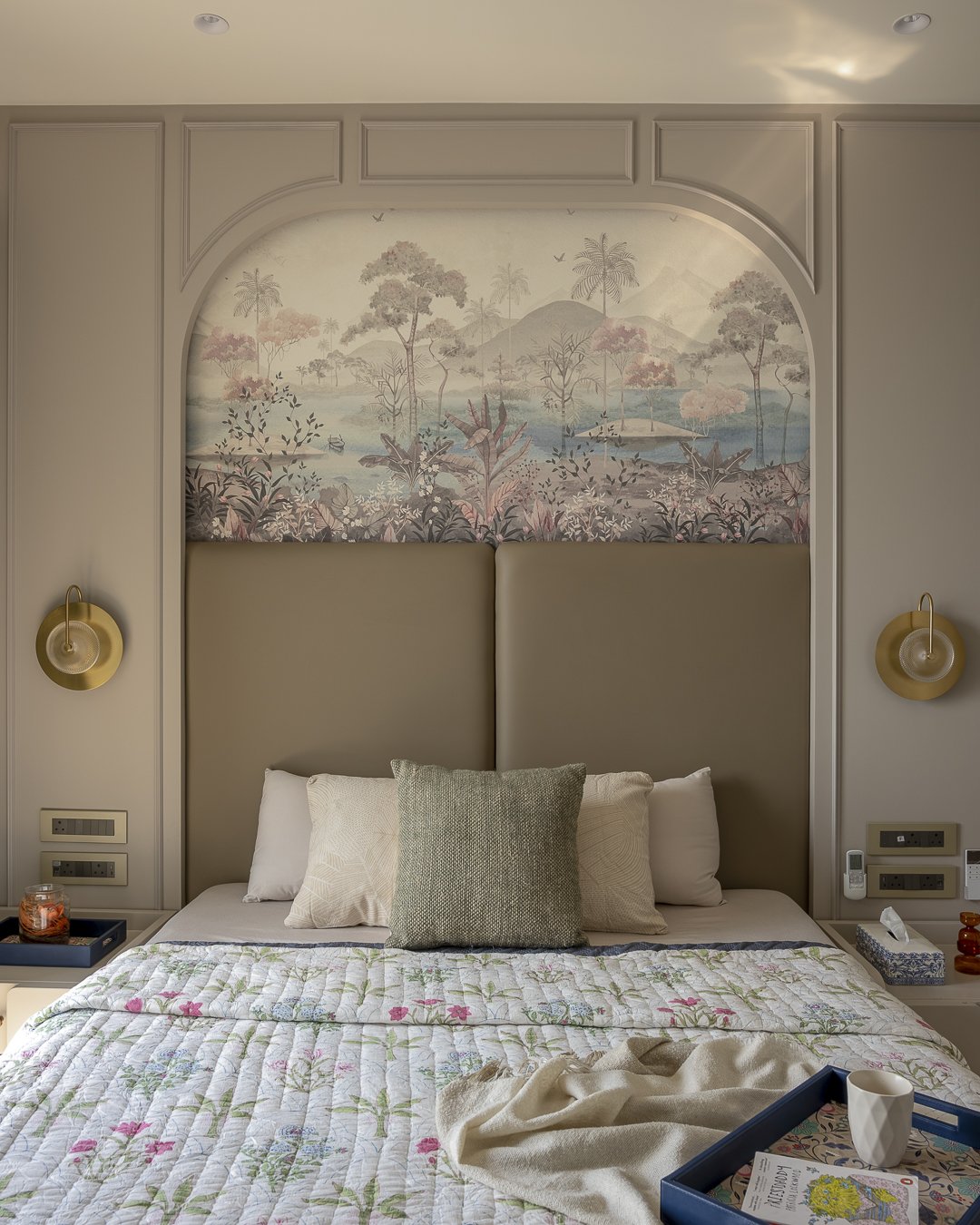
The master bedroom departs most decisively from the home’s tonal discipline, and does so with confidence. An arched headboard wall frames a hand-painted mural of a tropical landscape, rendered in soft pinks, blues, and greens, while moulded wall panels in a warm putty tone lend the room a classical structure. The mural transforms what could have been another exercise in beige into a room with genuine narrative depth.
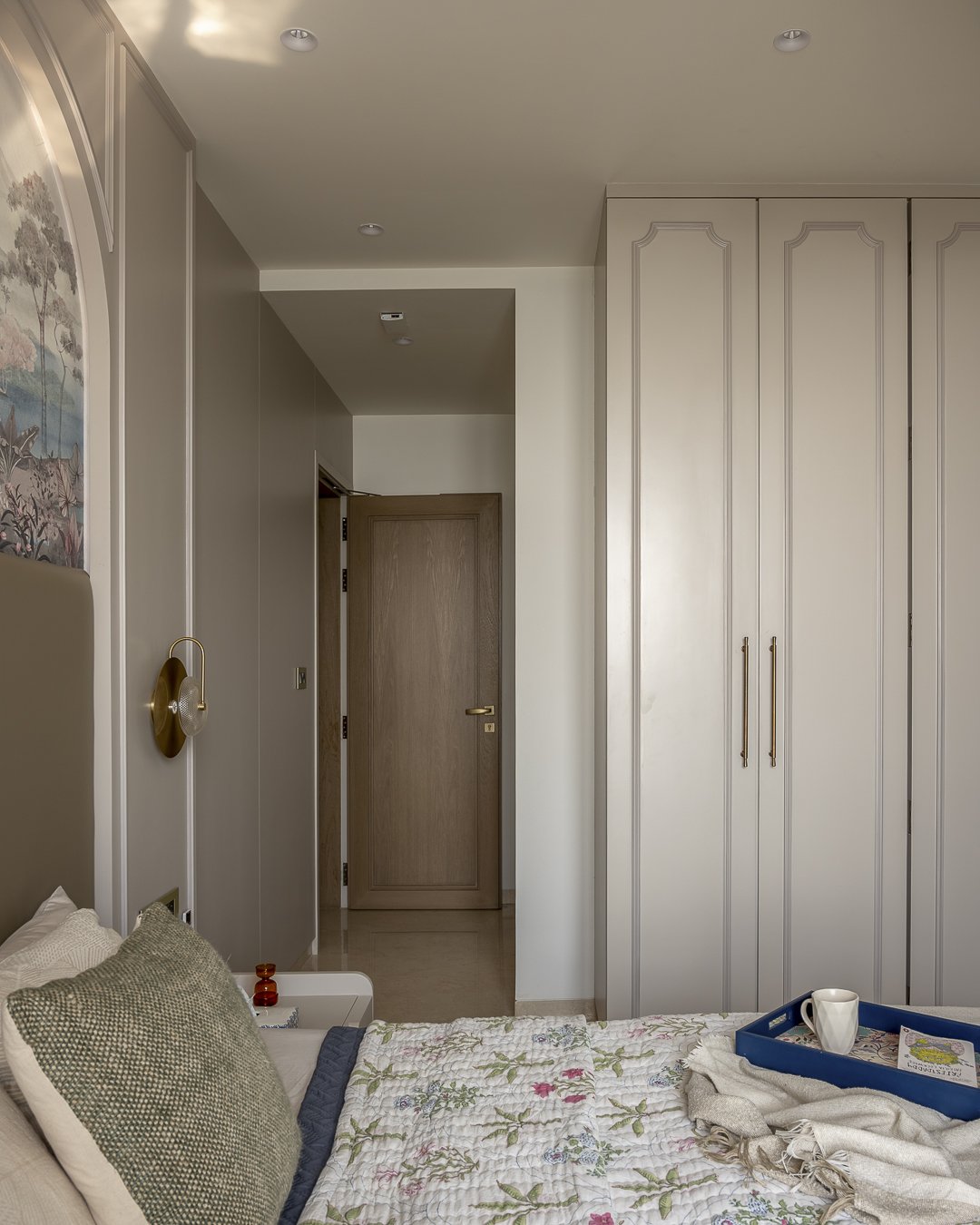
The wider view of the master bedroom reveals how carefully the classical detailing has been handled. Panelled wardrobes with classical mouldings mirror the headboard’s geometry, and a brass sconce provides warm, intimate light. The passage toward the ensuite reads as a continuation of the room rather than a transition away from it.
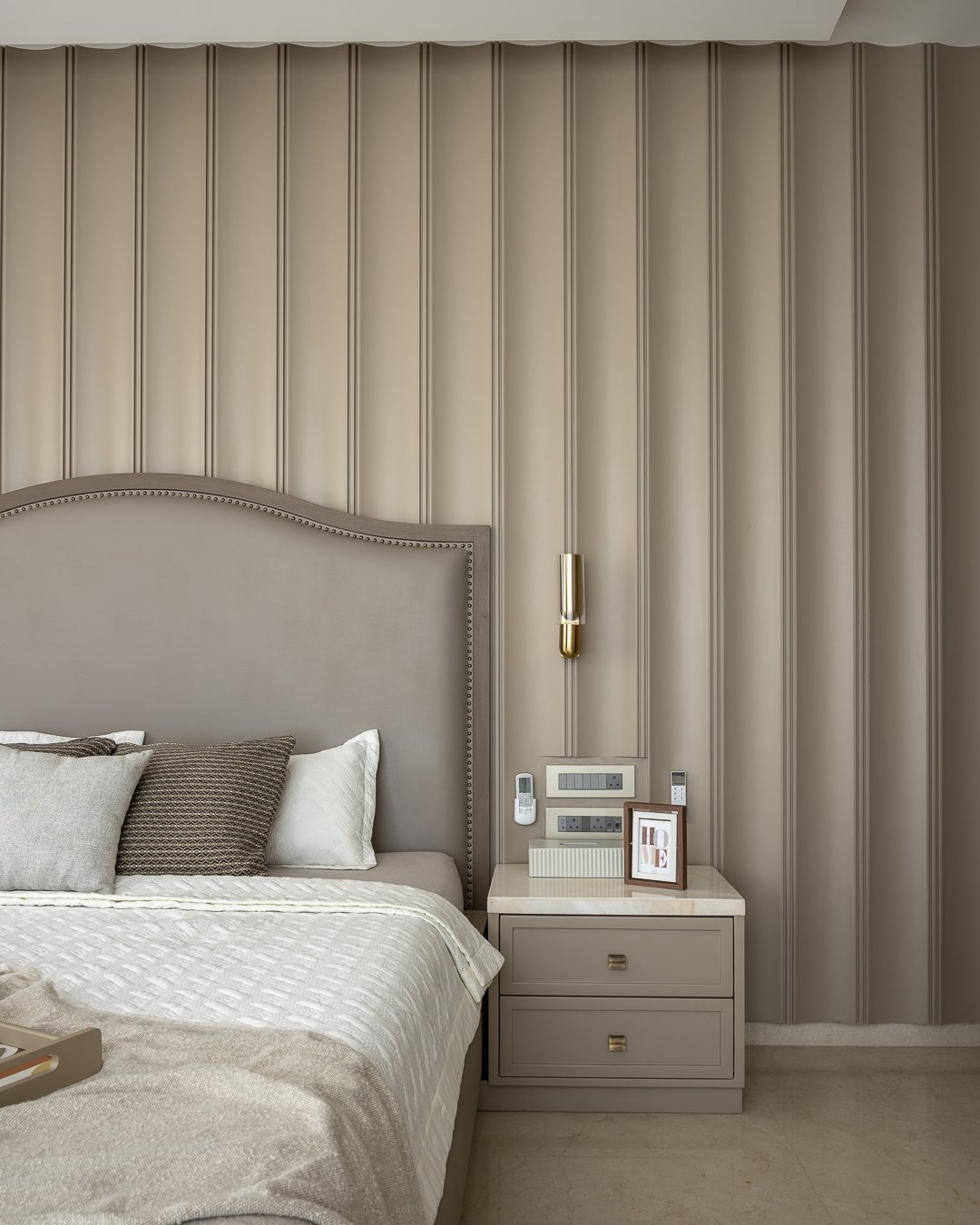
The second bedroom takes a different approach entirely. Full-height fluted wall panelling in a warm taupe wraps the room from floor to ceiling, lending it a cocoon-like softness. A nailhead-trimmed headboard in muted velvet and a slim brass wall sconce are the only departures from the vertical rhythm, and the room achieves a quiet enveloping quality as a result.
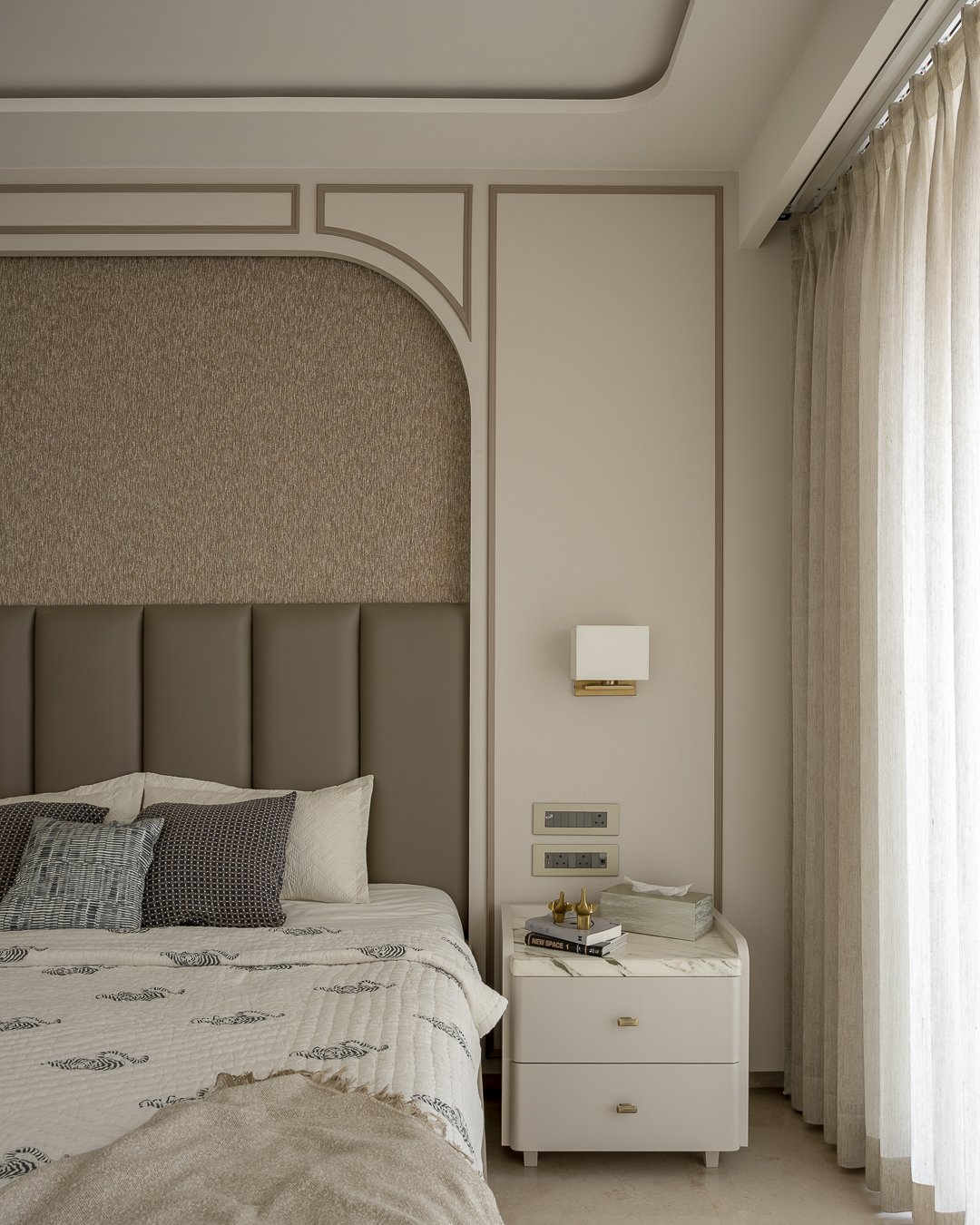
The third bedroom balances classical framing with muted materiality. A large arched headboard panel combines woven fabric in its upper portion with channel-tufted leather below, set within painted moulding that continues across the walls and onto the ceiling. Sheer curtains and a compact bedside unit keep the room grounded, the layered headboard doing all the expressive work the space requires.
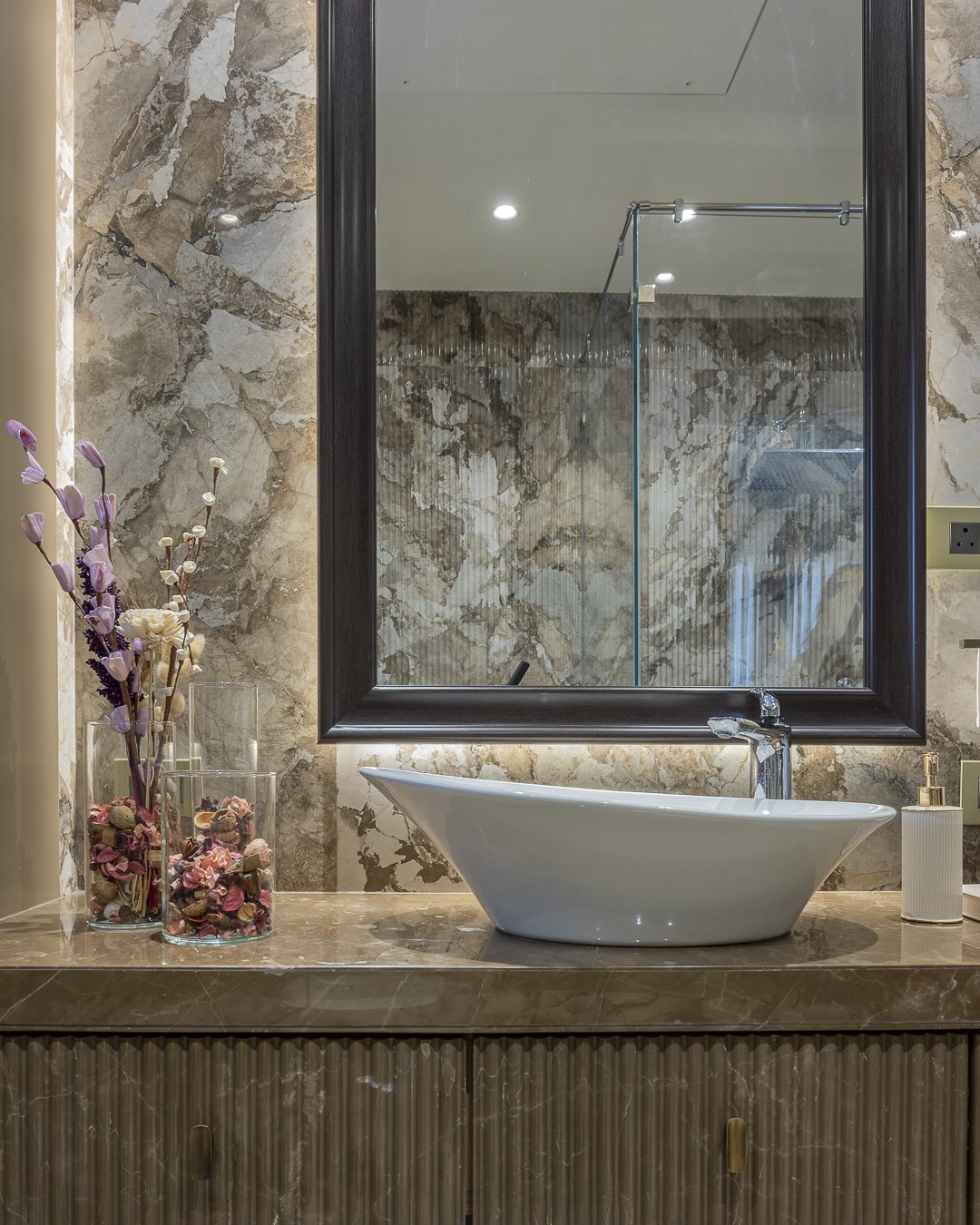
The bathrooms demonstrate that the home’s material confidence extends to its most private spaces. One features a dramatic veined stone that wraps walls and countertop alike, with a fluted vanity base softening the geological intensity of the surface above. The dark timber mirror frame anchors the composition, lending it a gravity that prevents the stone from feeling decorative.
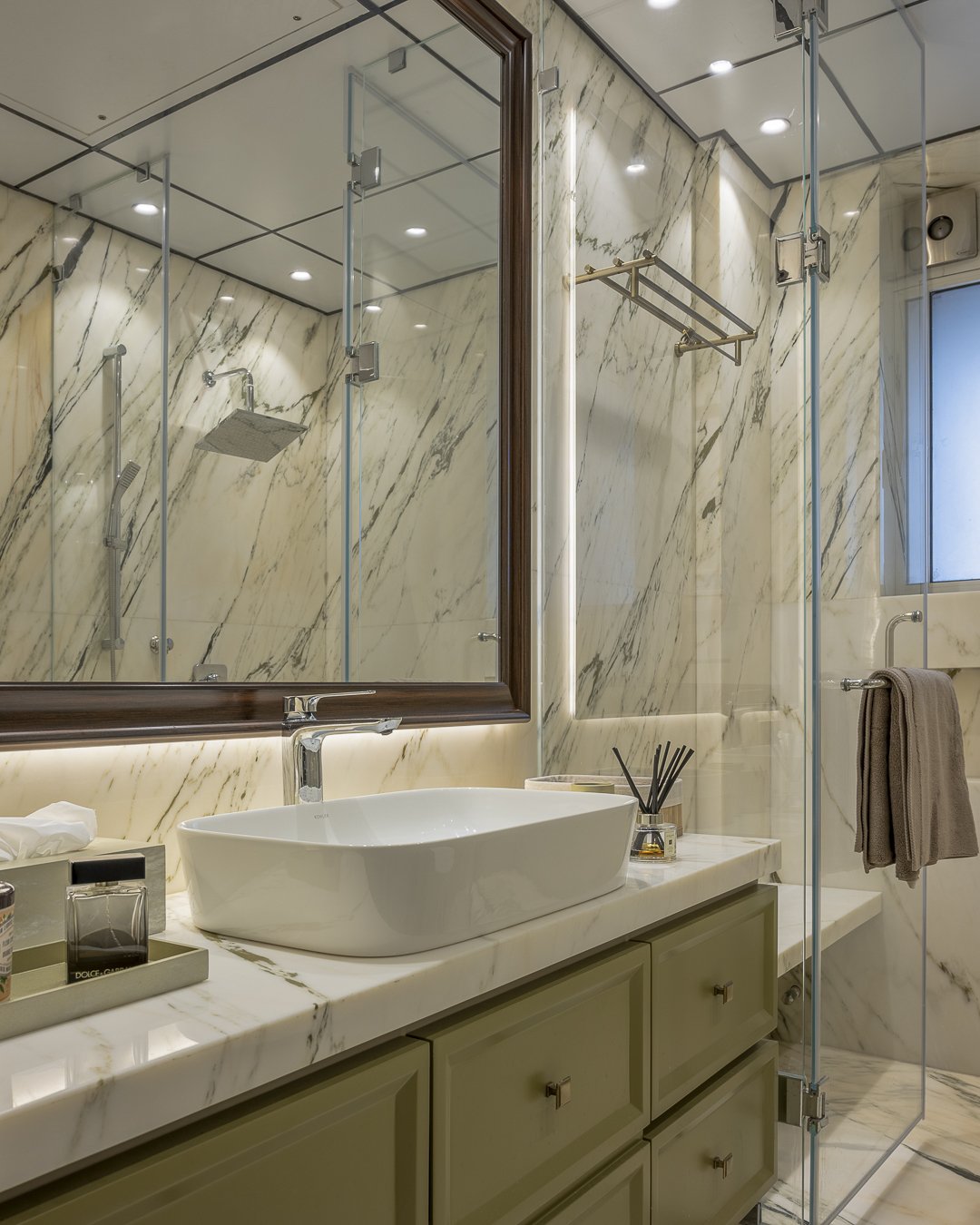
The second bathroom opts for lighter veined marble and a sage green vanity, connecting it back to the dining room’s colour accent. Glass partitions and backlit mirror edges keep the space feeling open despite its compact footprint, and the material choices confirm a design team thinking in terms of a whole-home palette rather than room-by-room decisions.
In a city where high-rise apartments often default to maximalist display or generic luxury templates, Coastline 36 proposes something quieter and more considered. The home trusts its location, its proportions, and its material restraint to carry the weight of its identity, and that trust is what distinguishes it from the standard Worli sea-facing interior.
What Chopra and Sagar have delivered is a home that feels composed rather than decorated, where custom joinery and a disciplined tonal palette allow the city, the light, and the sea to remain active participants in the daily experience of living. It is a project that understands the difference between luxury as accumulation and luxury as editing, and commits entirely to the latter.