TFor years, the contemporary fitness studio has operated within a familiar visual language: black rubber flooring, mirrored walls, exposed ceilings, and the relentless aesthetics of performance. A wellness space that deliberately rejects this vocabulary offers a different proposition entirely, replacing intensity with calm and spectacle with introspection. In doing so, it presents a quieter understanding of strength, one rooted not in display, but in presence.
This philosophy forms the foundation of Pilates For She, a 1,970-square-foot studio in Hyderabad, designed by Indie Living. Conceived for a clientele drawn to Pilates’ mindful and deliberate approach to movement, the brief called for a space that would feel less like a conventional fitness facility and more like a sanctuary. The resulting interior is intentionally restrained, allowing architecture to recede into the background so that focus remains where it belongs: on the body, the breath, and the practice itself.
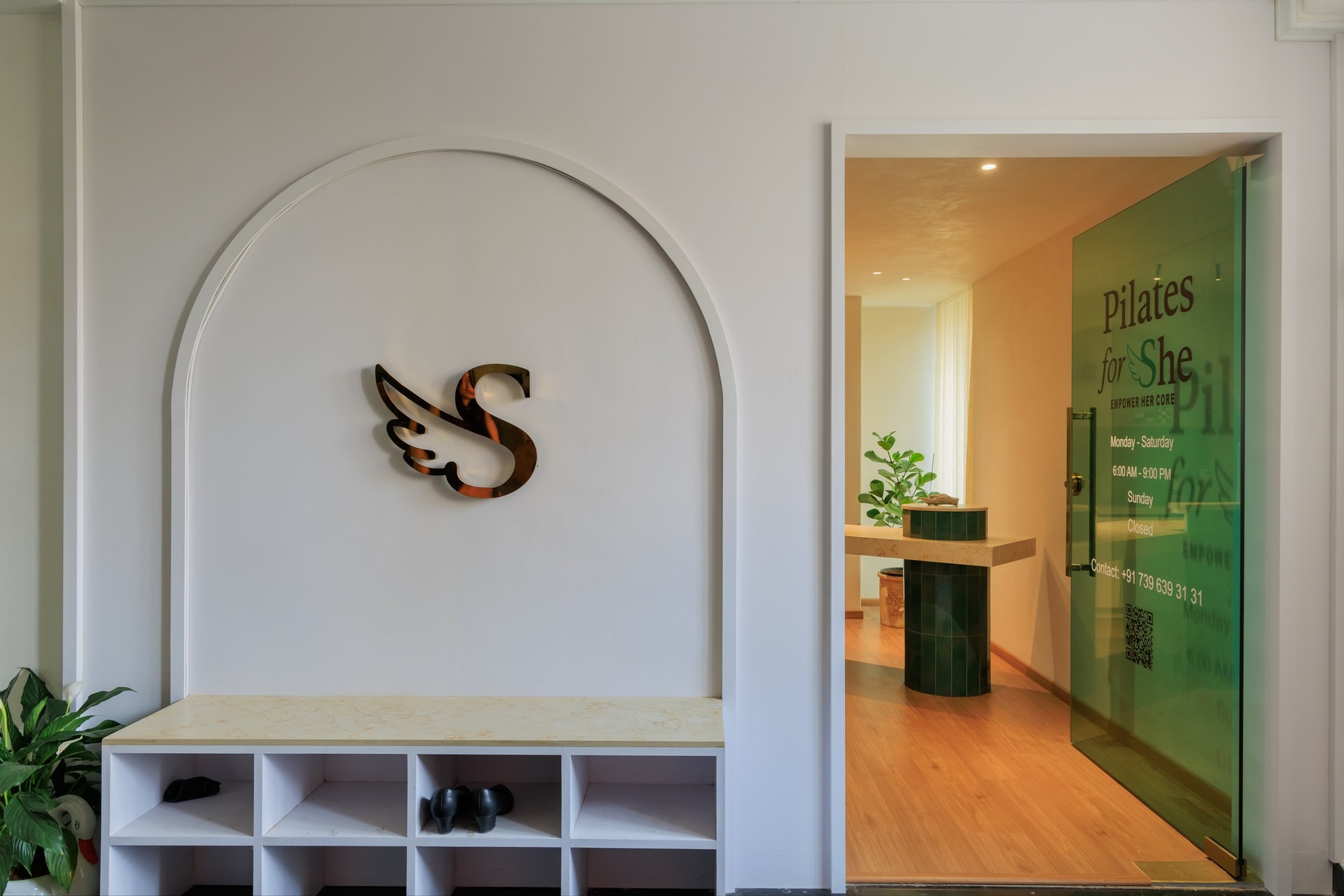
The entry sets the tone before a single class begins. An arched alcove in pale plaster frames a low bench and a grid of shoe cubbies, the studio’s winged-S emblem hung at eye level in a warm, lacquered finish.
Through the glass door beyond, a glimpse of the green-tiled reception column establishes the project’s chromatic thesis: a base of warm neutrals layered with deep, vegetal green. The threshold performs the small, important work of asking visitors to slow down, remove their shoes, and arrive properly.
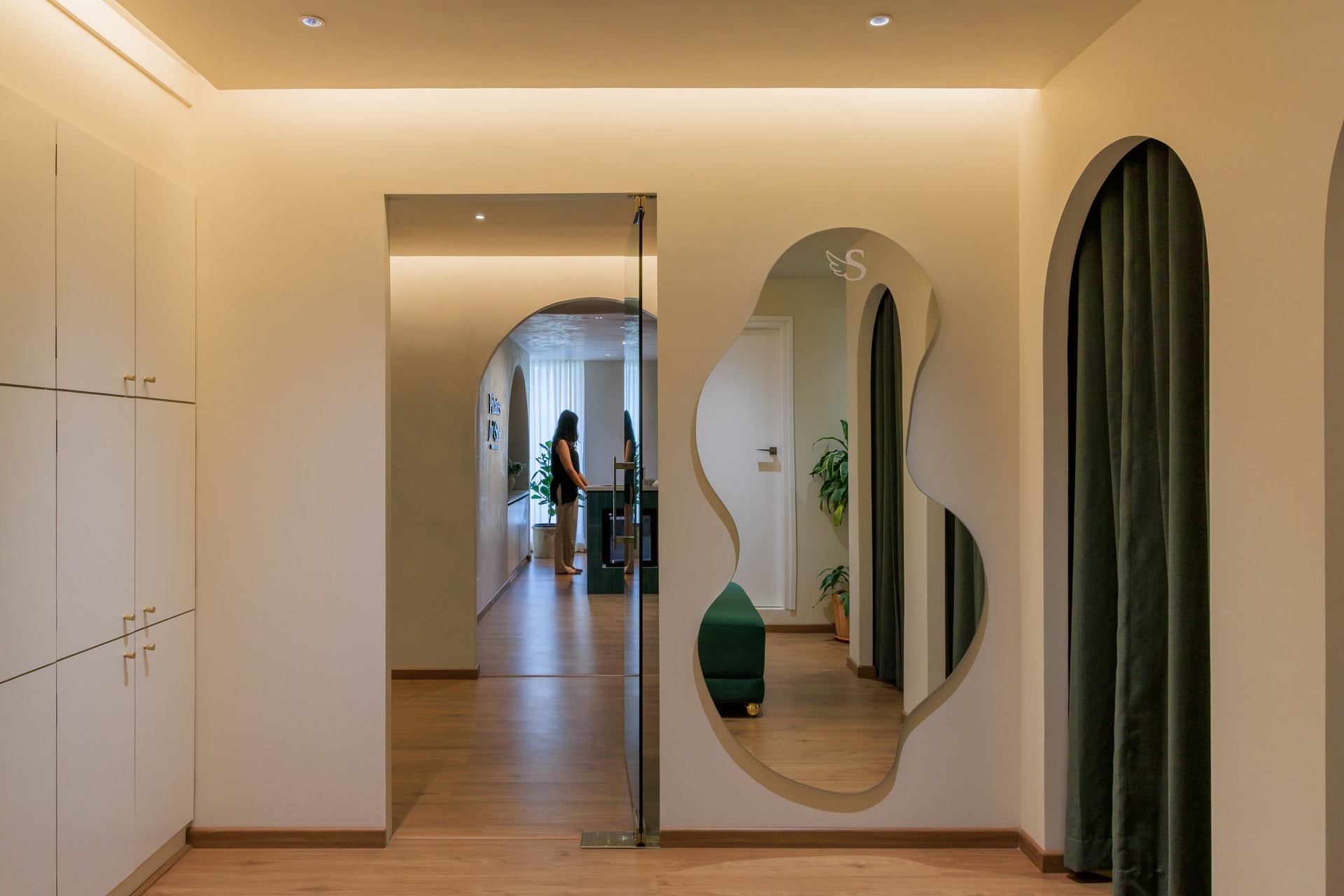
Past the door, the studio’s circulation reveals itself through a sequence of arched openings and a freeform mirror cut into an organic, almost cloud-like silhouette. The mirror is the first signal that this is a space designed around the female body’s encounter with its own reflection, and that the encounter has been made gentler.
Recessed cove lighting traces the ceiling perimeter, washing the plaster walls in a low, honeyed glow rather than the cold overhead light most studios default to. The architecture here treats illumination as atmosphere first, function second.
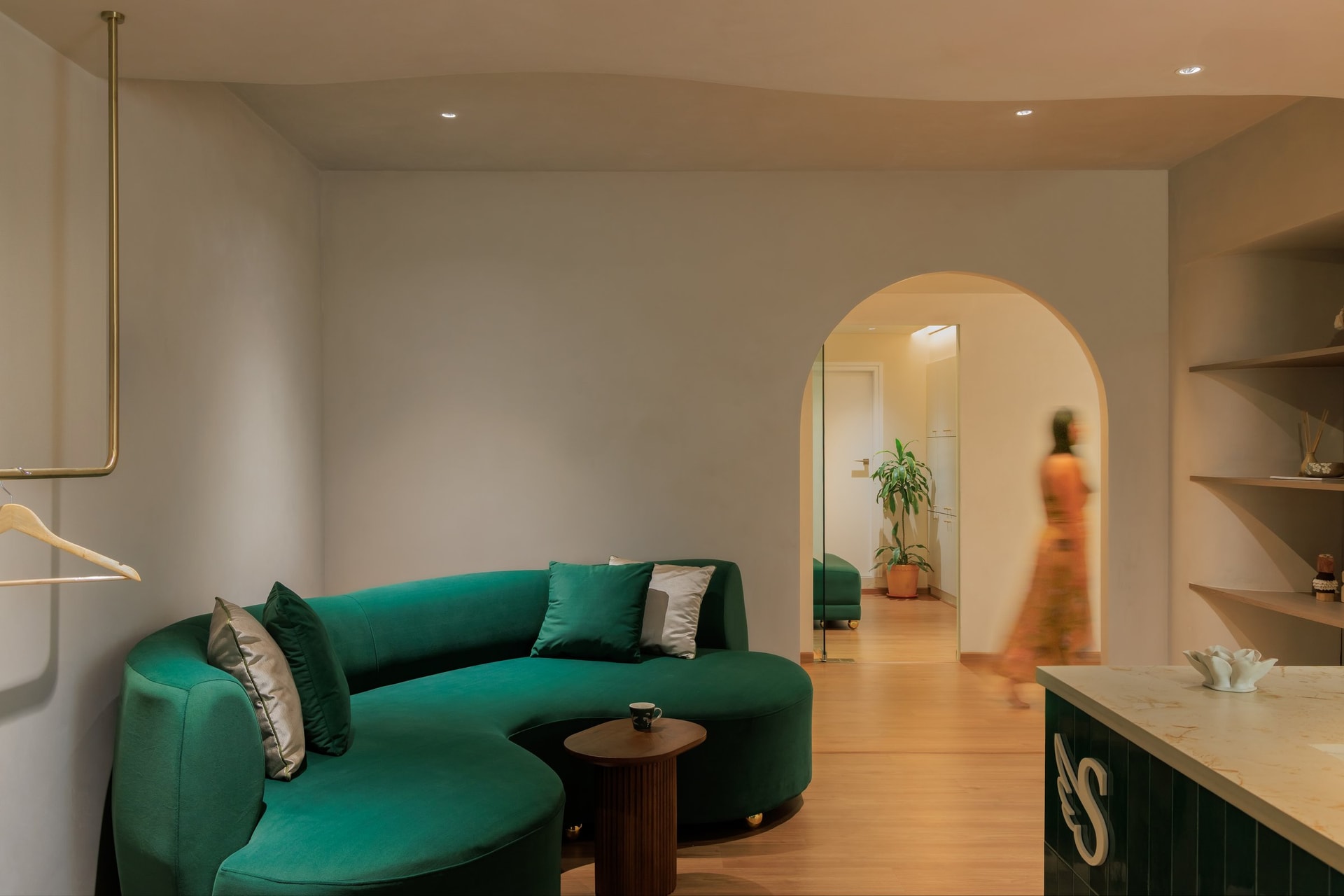
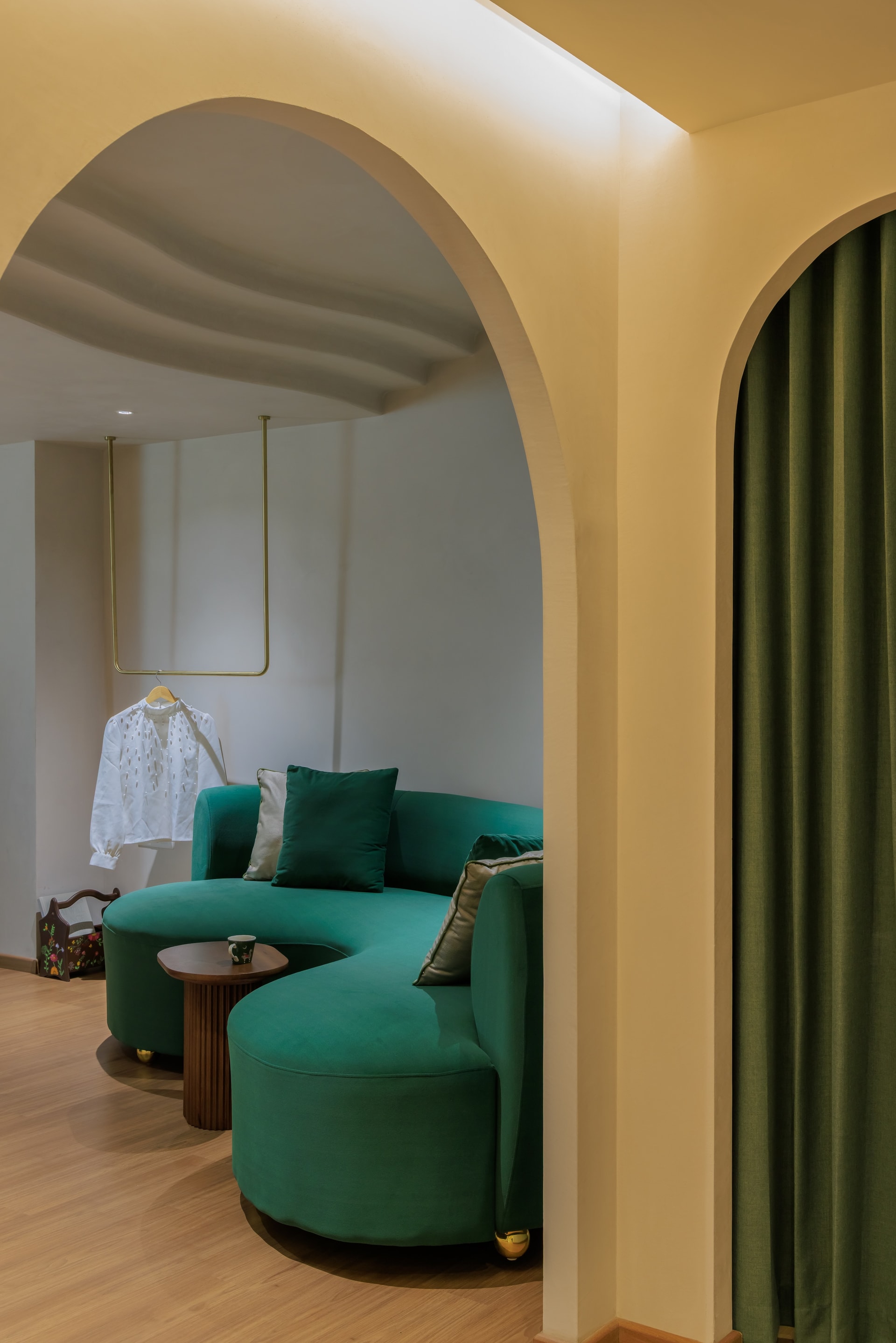
The waiting lounge sits just beyond, anchored by a curved emerald sofa that draws every other element of the room into its orbit. A slim brass clothing rail floats against the wall opposite, holding wooden hangers in a deliberate, almost ceremonial line.
The room rejects the transactional feel of a typical studio reception. It behaves instead like the antechamber of a small spa, the kind of space that suggests one’s appointment has already begun the moment one sits down.
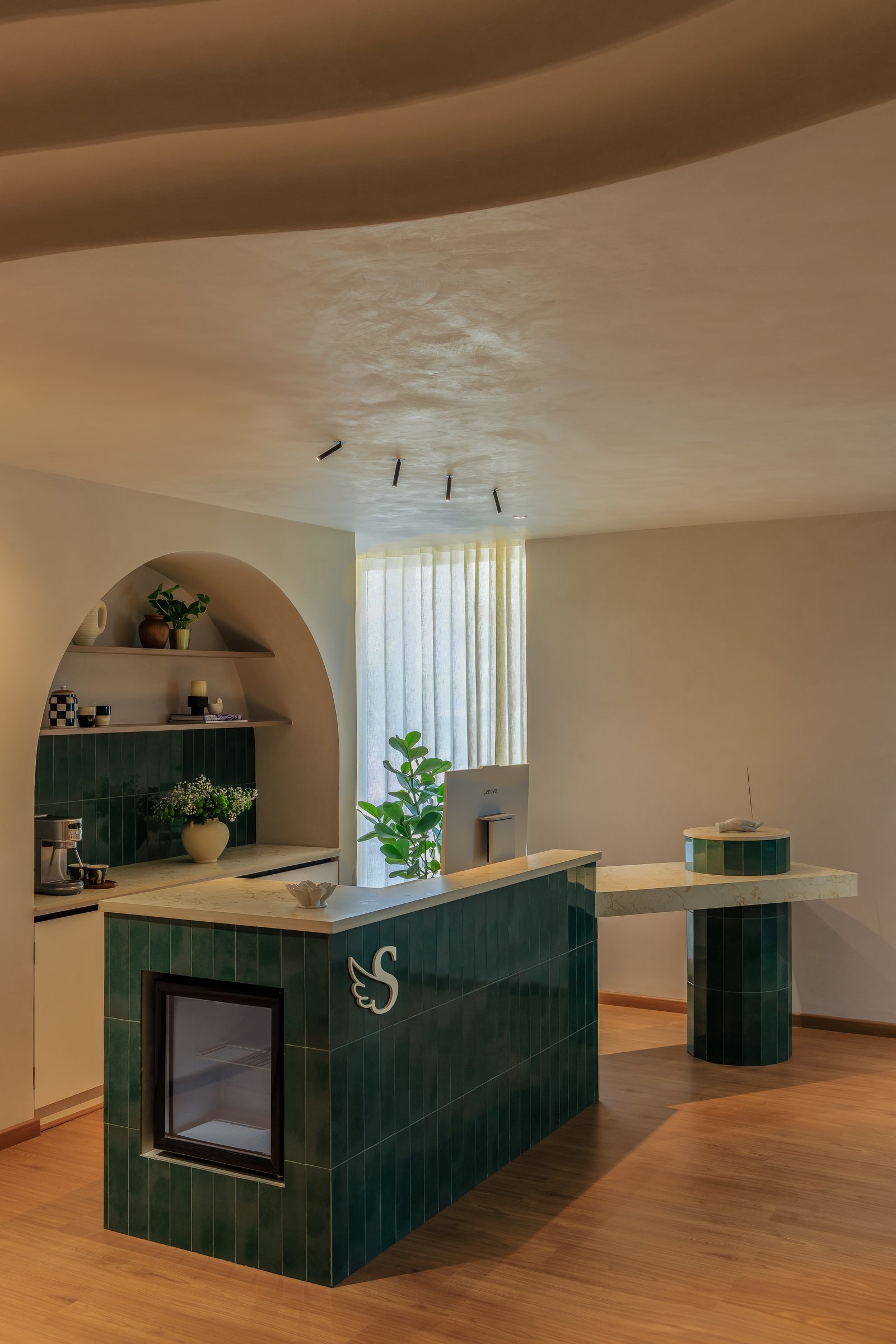
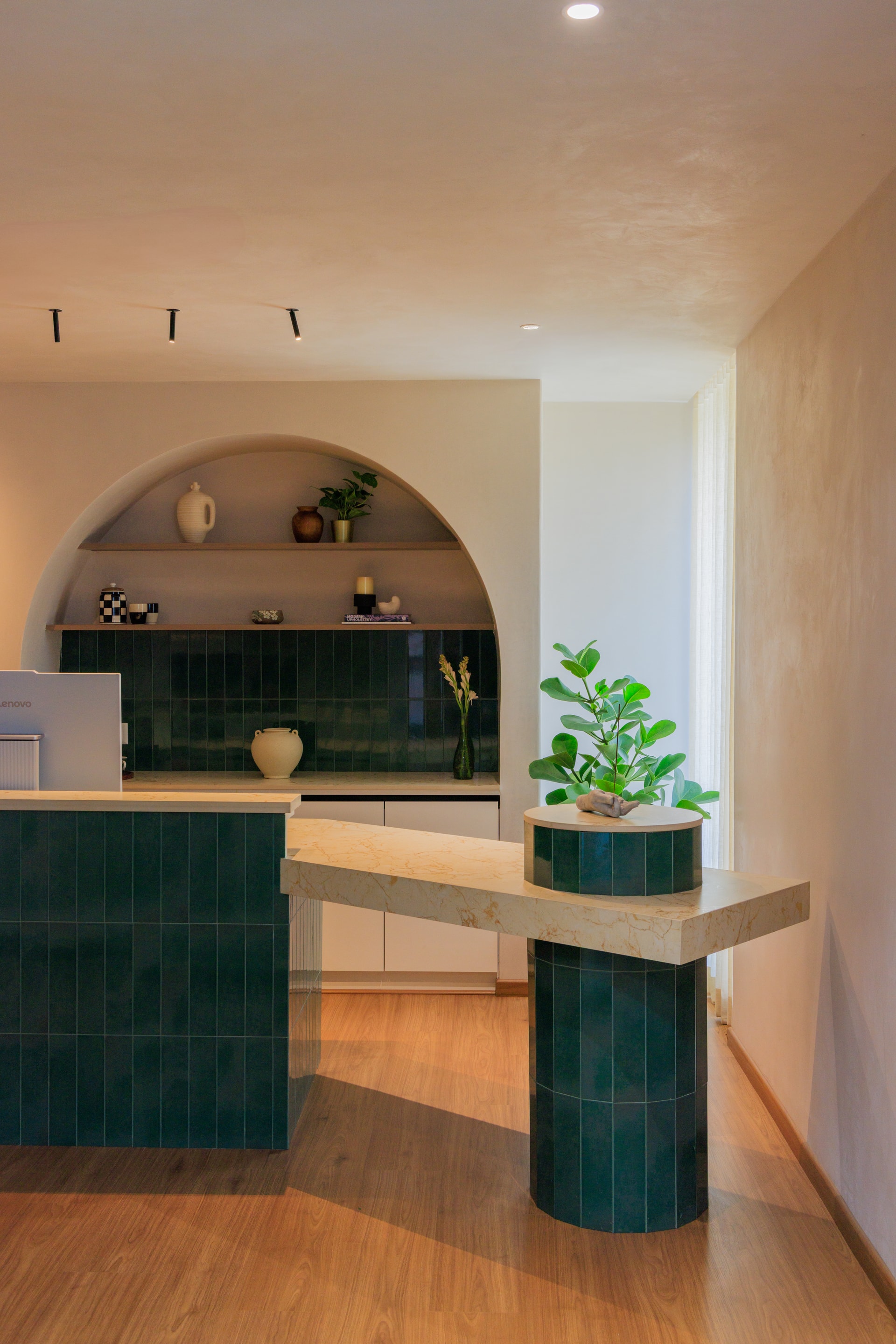
The reception counter emerges as the studio’s defining architectural statement, a monolithic form wrapped in vertically stacked emerald green tiles and crowned with a warm cream stone surface. Beside it, a softly arched coffee niche introduces a note of hospitality, transforming the arrival experience into something more akin to a boutique wellness retreat than a conventional fitness studio. A discreet brass winged S emblem anchors the composition, reinforcing the brand identity with quiet confidence rather than overt display.
As the designers describe it, the project explores the idea of “strength in grace,” a concept that finds expression throughout the interior. Nowhere is this more evident than in the sculpted plaster ceiling overhead, where gentle undulating ridges sweep across the space in a rhythmic gesture. It is the studio’s most expressive architectural element, introducing movement without visual noise and subtly echoing the controlled, fluid motions that define Pilates practice itself.
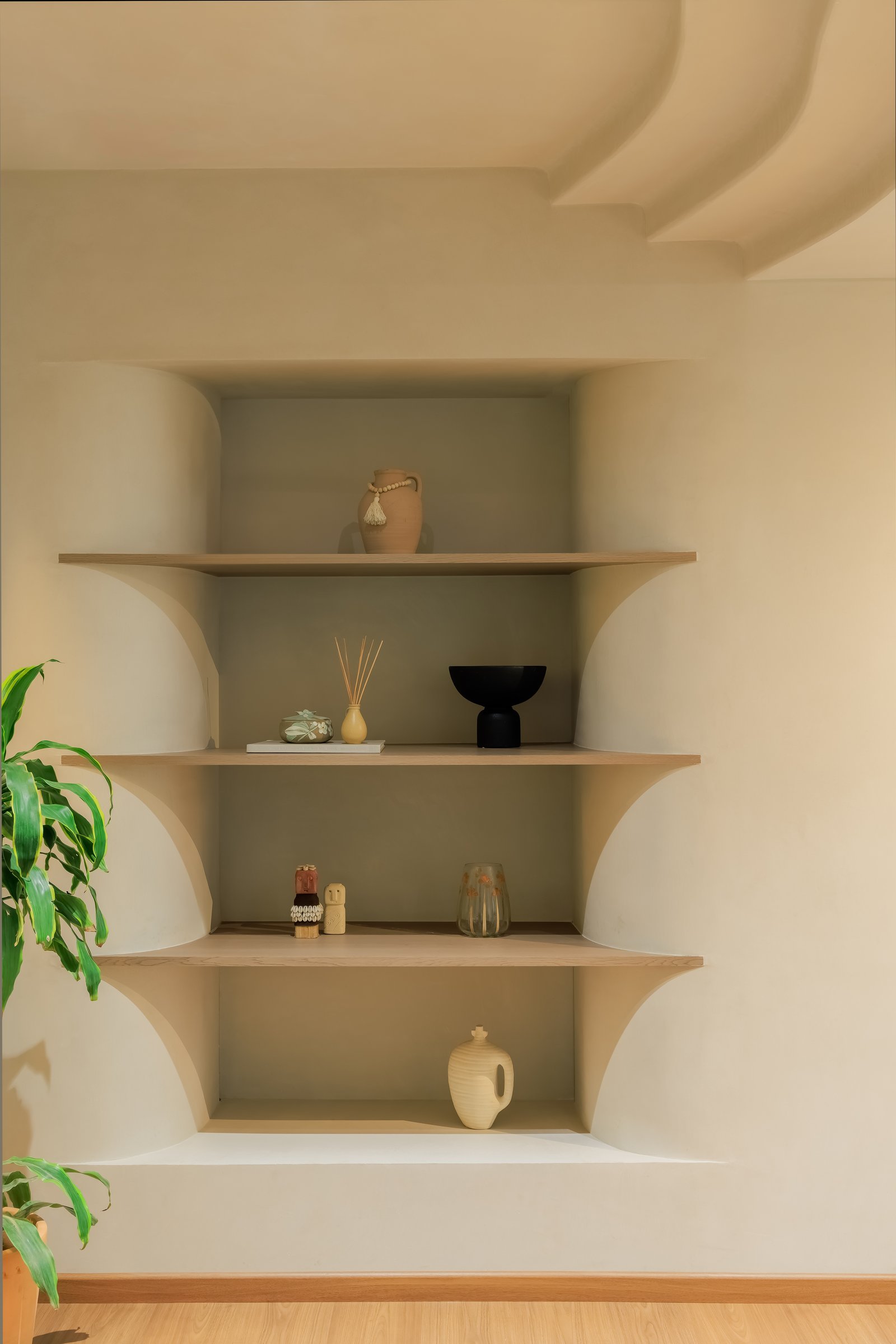
A built-in niche nearby holds a small, curated arrangement of terracotta vessels and ceramic objects on blond wood shelves, framed by the same plaster ridges overhead. It is a quiet pause in the circulation, the visual equivalent of a held breath.
The composition is restrained almost to the point of austerity, but the warmth of the materials prevents it from feeling clinical. This is a studio that understands the power of empty surface.
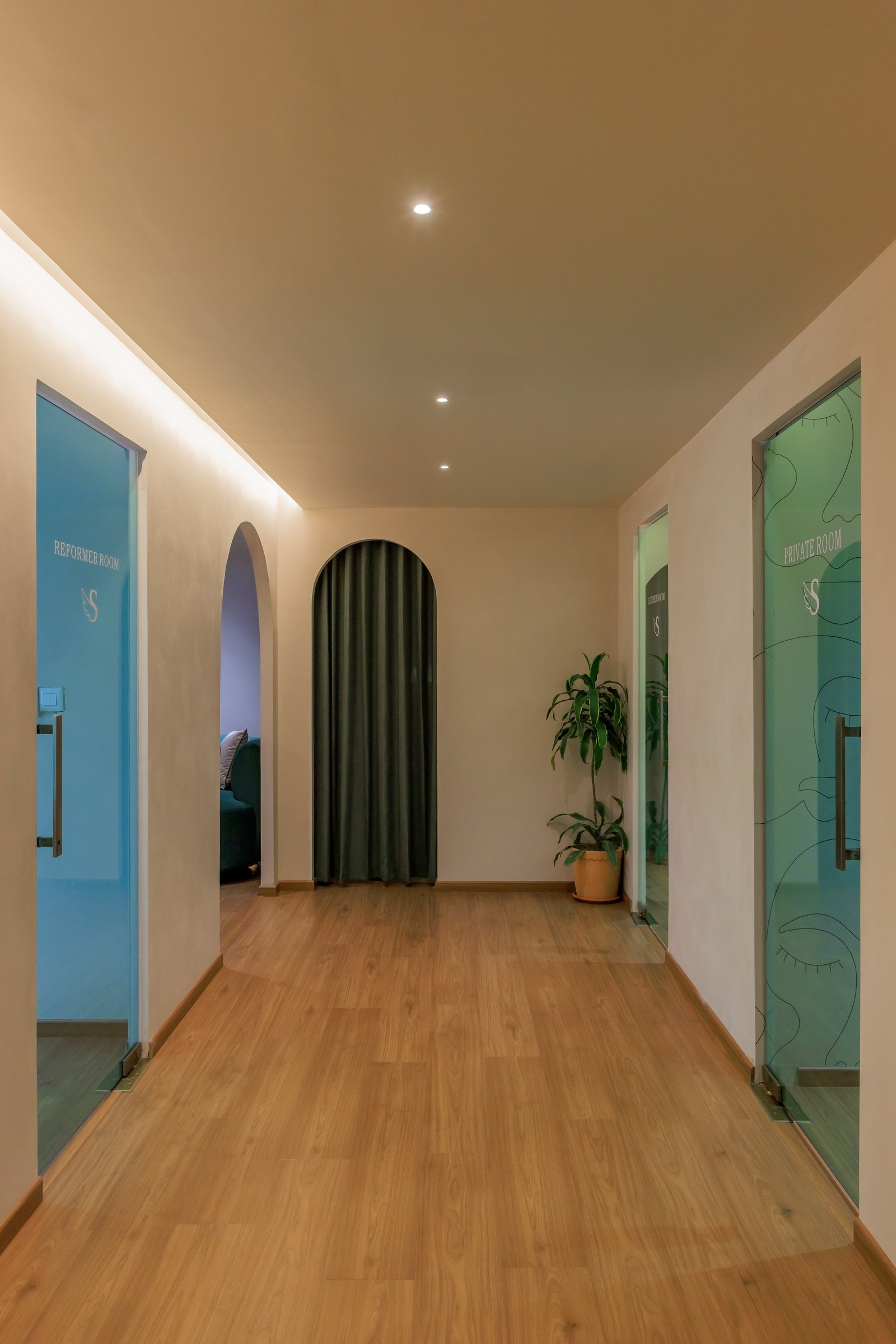
A central corridor organises the plan, lined with frosted glass doors leading to the Reformer Room, Locker Room, and Private Room, each subtly marked with the studio’s emblem. At its end, an arched alcove concealed by soft drapery creates a sense of anticipation, while a side opening offers a carefully framed glimpse back toward the lounge, maintaining a visual connection between spaces.
The corridor functions as more than a passageway. With its muted palette, softened edges, and recurring arches, it adopts the atmosphere of a contemplative retreat rather than a circulation spine. There is a deliberate slowness to the experience, encouraging movement through the space with the same sense of mindfulness that defines the Pilates practice itself.
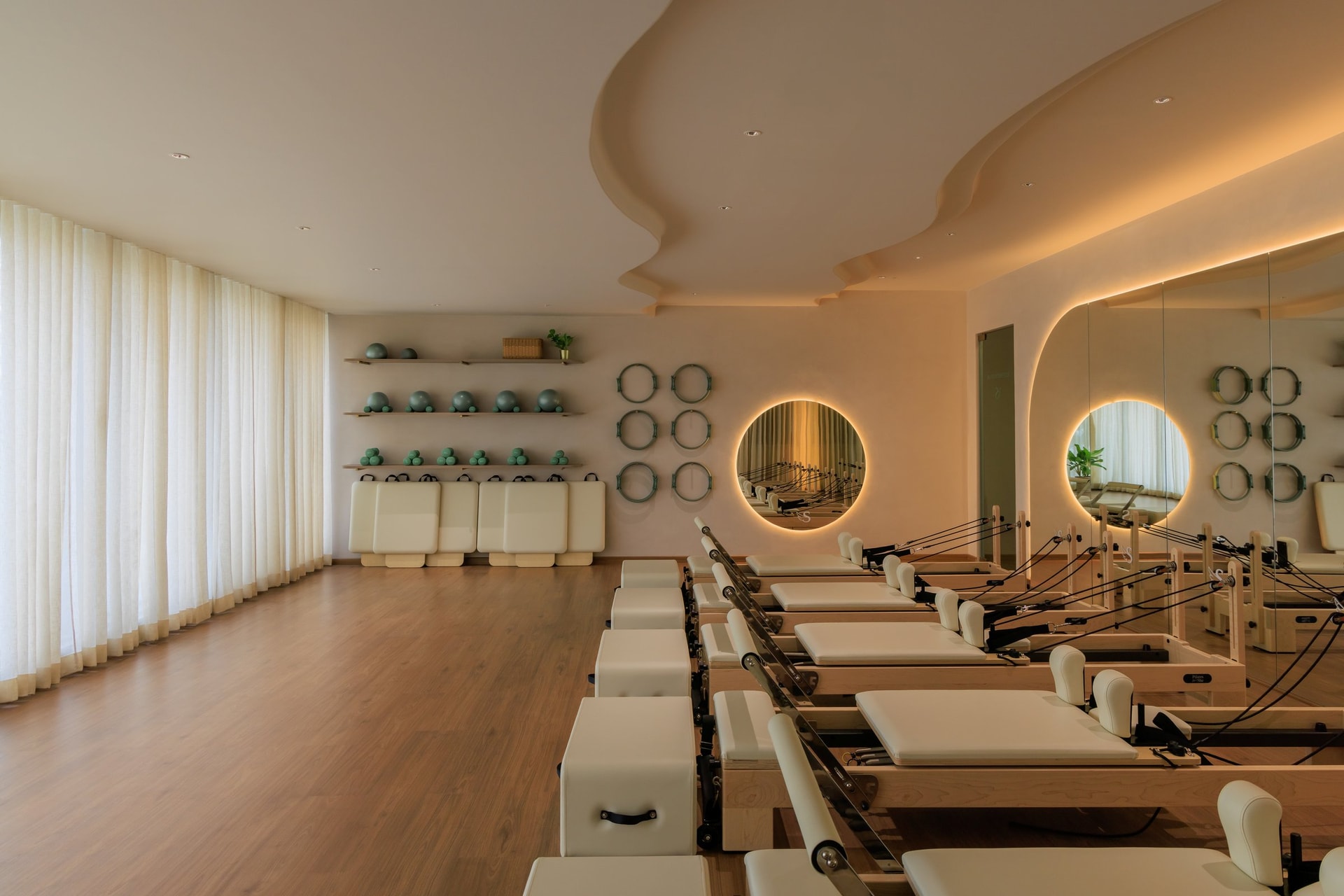
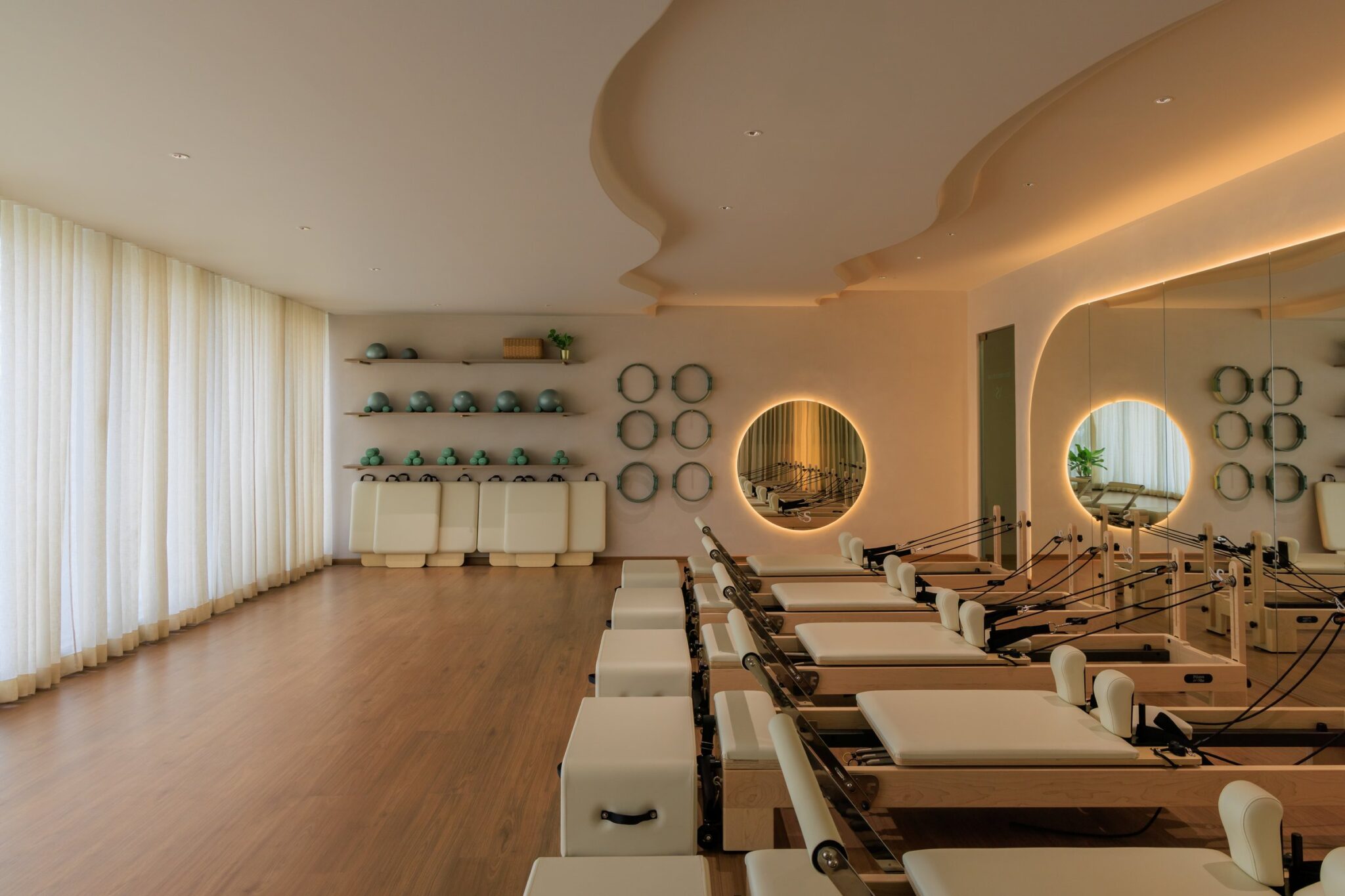
The reformer studio is where the project’s design philosophy finds its clearest expression. A series of pale timber reformers lines the room with measured precision, positioned opposite a mirrored wall punctuated by circular backlit inserts that appear to float above each station like softly glowing discs. The composition introduces rhythm and symmetry without overwhelming the sense of calm that defines the space.
Above, a sculpted plaster ceiling unfolds in gentle, fluid contours, its curves accentuated by warm concealed lighting that washes the surface with a soft glow. The effect is immersive yet understated, transforming what might otherwise be a conventional exercise room into a space of quiet focus and restoration. Finished in cream upholstery and light wood, the reformers blend seamlessly into the material palette, allowing the architecture, rather than the equipment, to shape the atmosphere.
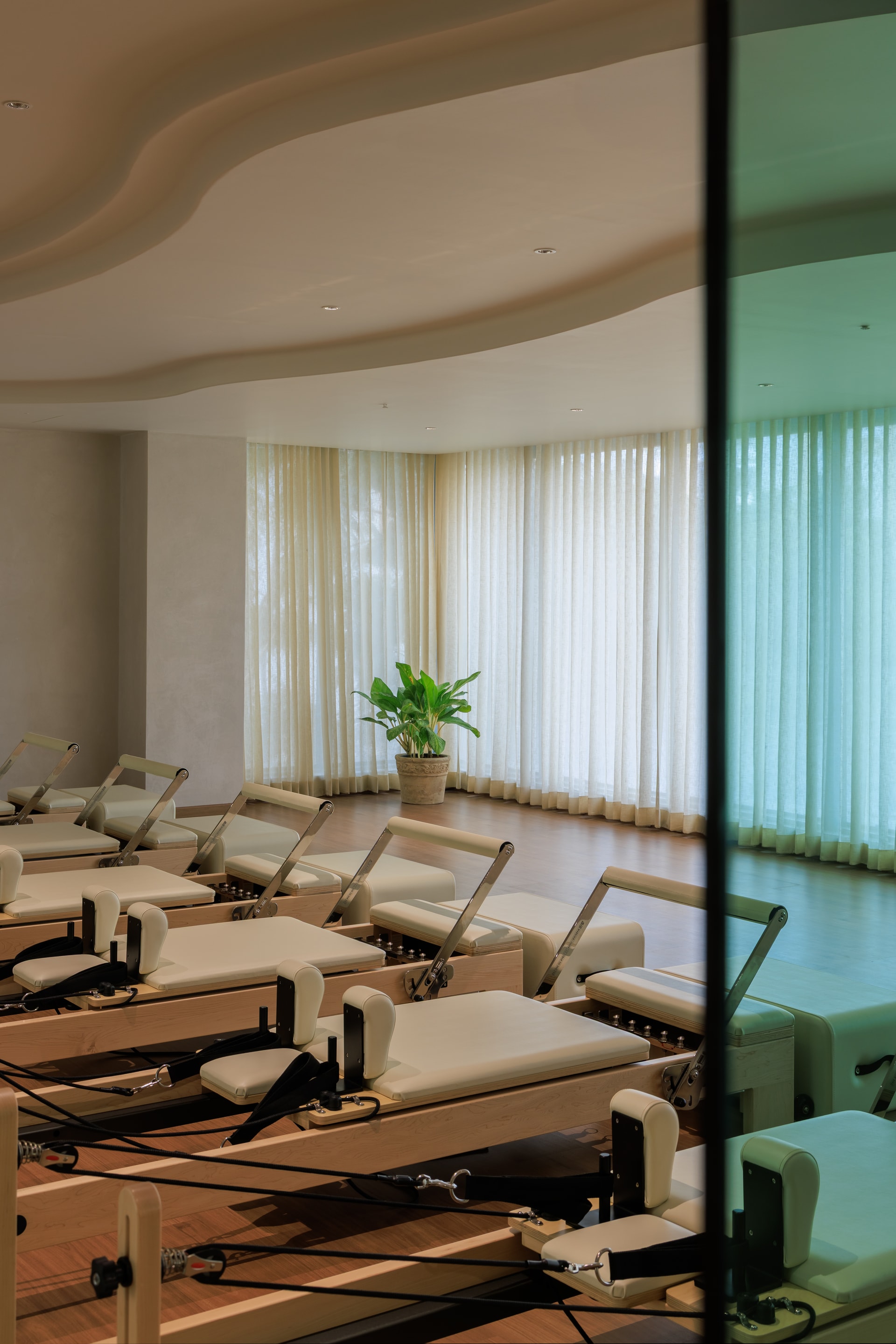
Seen from the opposite end, the reformer room reveals its full proportion: a long, sheer-curtained window draws daylight across the floor, while shelves of muted green exercise balls and pilates rings provide the only sustained chromatic accent in an otherwise neutral envelope.
The sculpted ceiling reads here as a single, continuous gesture, its lobed edges catching the warm light from above. It is rare to see a fitness space designed with this much architectural ambition above the user’s head.
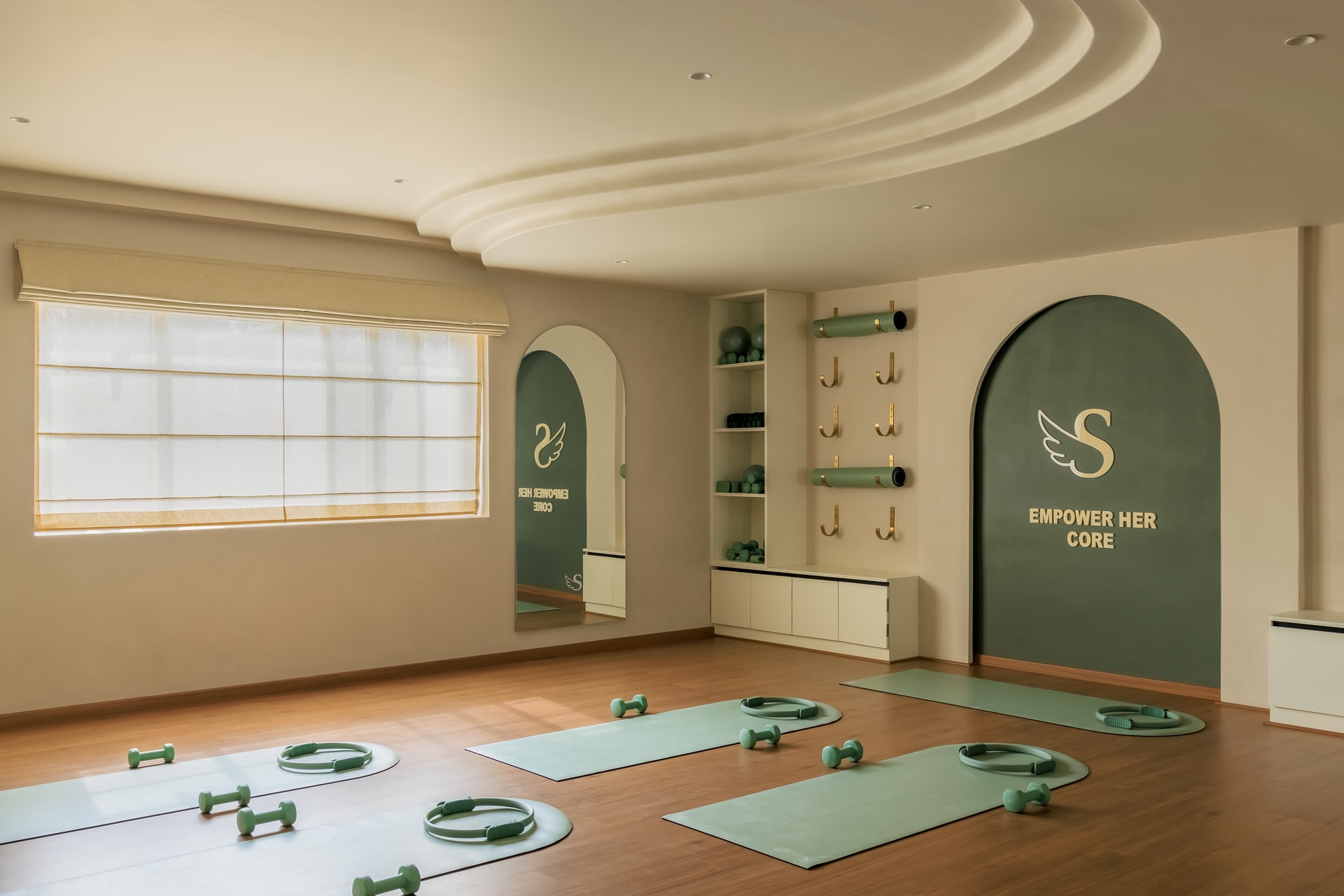
The mat studio adopts a quieter, more contemplative character. Mats, rings, and accessories are arranged with an effortless sense of order across the timber floor, while a deep green arched feature panel, inscribed with the studio’s guiding mantra, provides a focal point at one end of the room. Opposite, a full-height arched mirror echoes the geometry, reinforcing the symmetry and visual calm that define the space.
Throughout the studio, functional elements are treated with the same attention as architectural details. Brass wall hooks, neatly integrated storage niches, and carefully stacked foam rollers and weights contribute to the composition rather than interrupting it. The result is a room where equipment feels fully embedded within the design language, allowing practicality and aesthetics to operate as one.
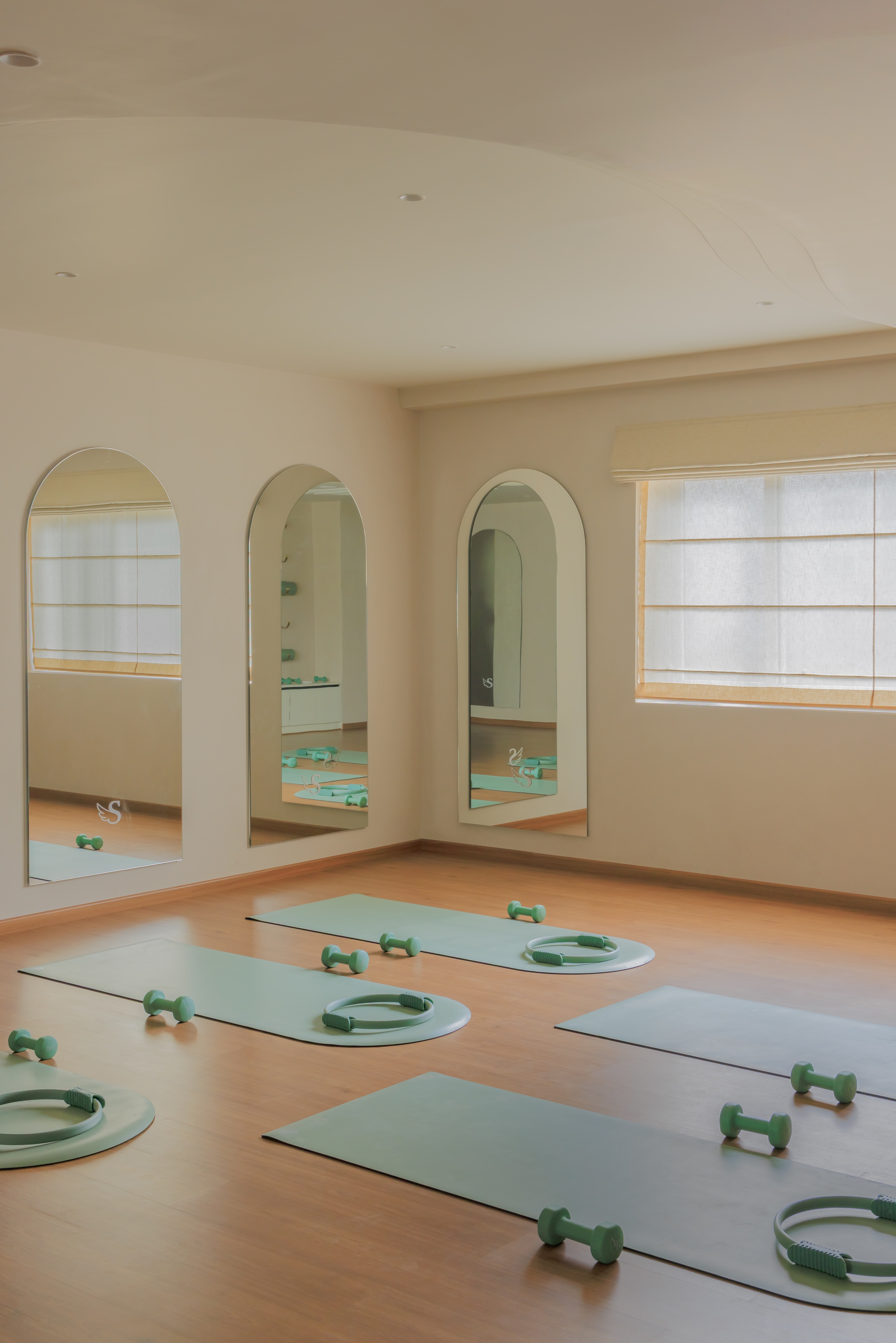
The studio’s colour palette is built upon a foundation of warm creams layered with measured accents of sage and emerald green. Rather than relying on contrast or visual drama, the scheme unfolds with quiet consistency, creating a sense of continuity across the various spaces. It is a palette defined by restraint, one that feels considered rather than decorative and reveals the discipline of careful curation.
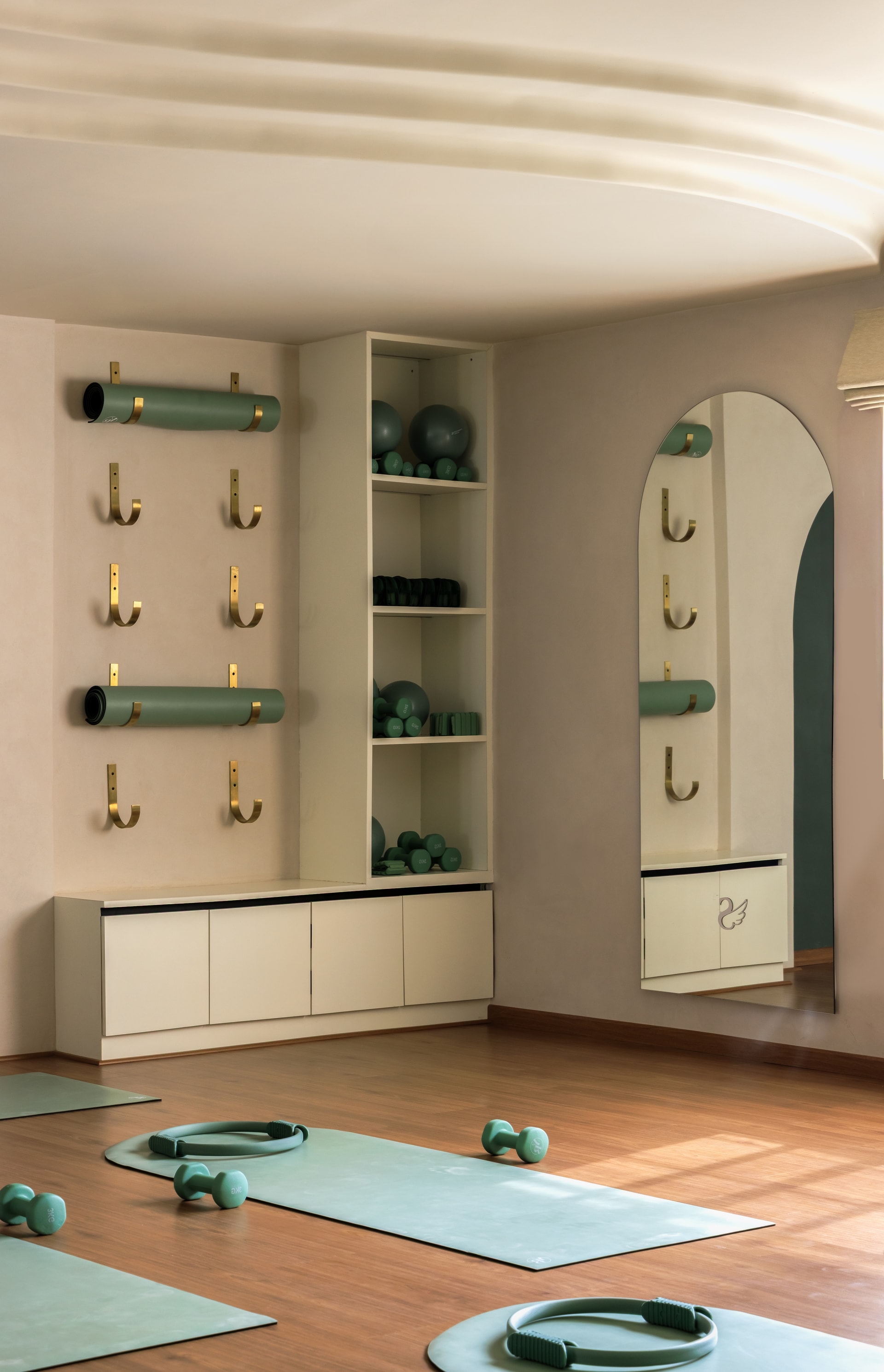
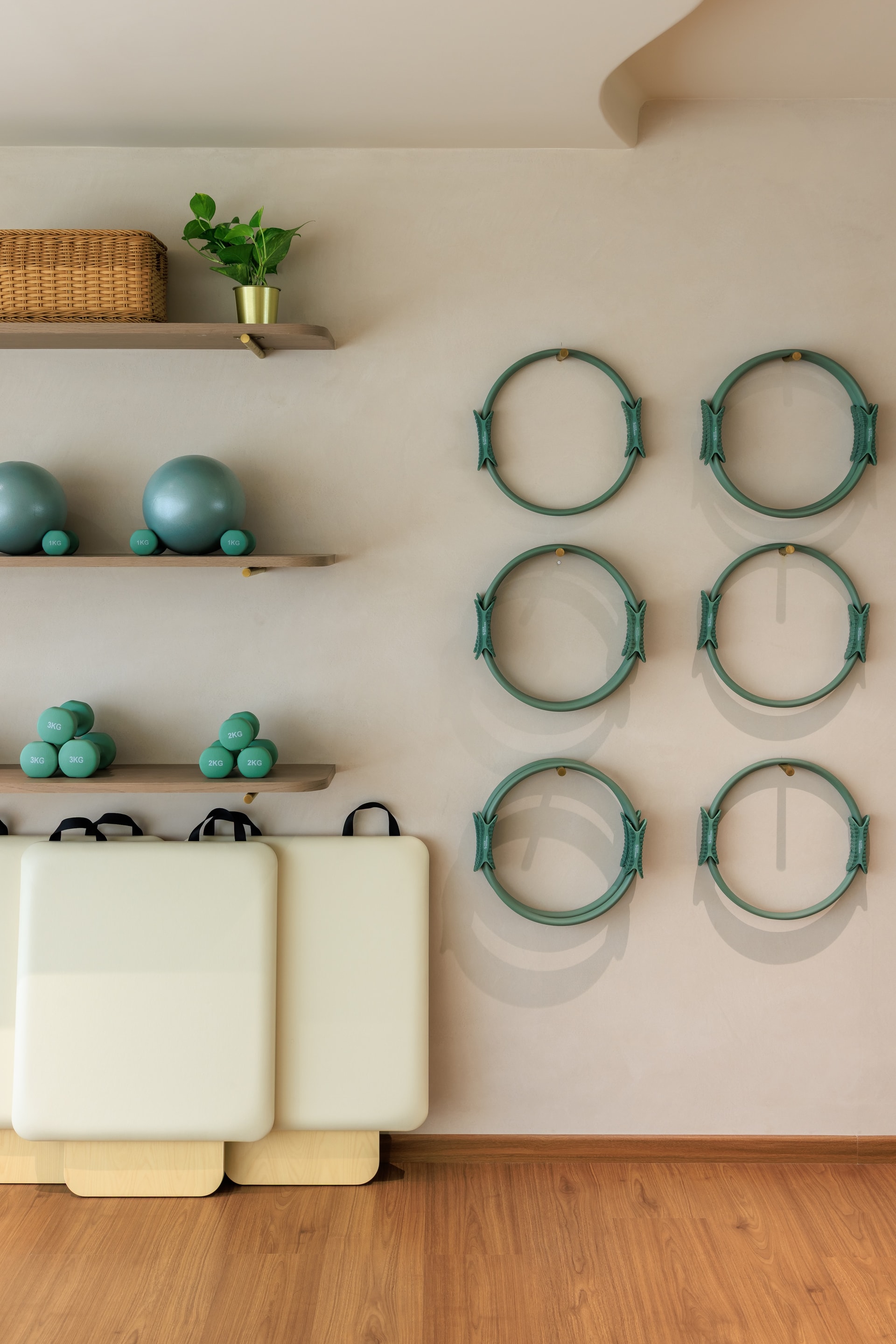
This attention to composition extends to the treatment of equipment and storage. Along one wall, Pilates rings are arranged in a precise grid, transforming a functional requirement into a graphic installation. Floating timber shelves display weights and accessories in carefully calibrated groupings, lending the room the composed quality of a still life. Throughout the studio, utility is elevated through thoughtful presentation, ensuring that every element contributes to the overall atmosphere of order and calm.
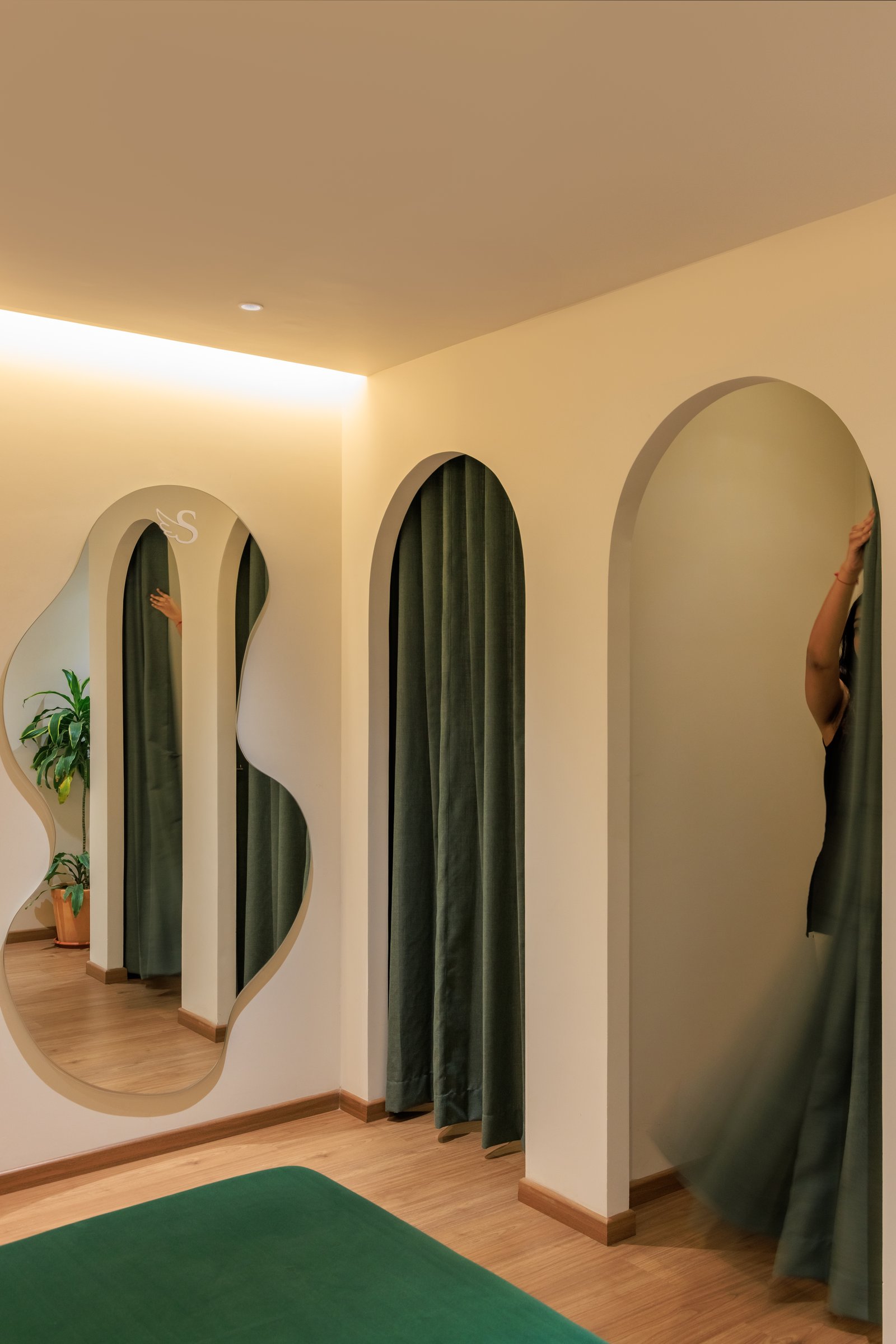
The locker and changing area carries the studio’s gentle design language into its most intimate space. Deep green curtains are set within a series of tall arched recesses, creating a sense of privacy while maintaining the softness that characterises the interiors. A freeform mirror with an organic silhouette introduces a sculptural note, its fluid outline echoing the cloud-like forms and curved details that recur throughout the studio.
The space is designed around quiet rituals rather than mere function. Here, moments of transition are given the same consideration as moments of movement.
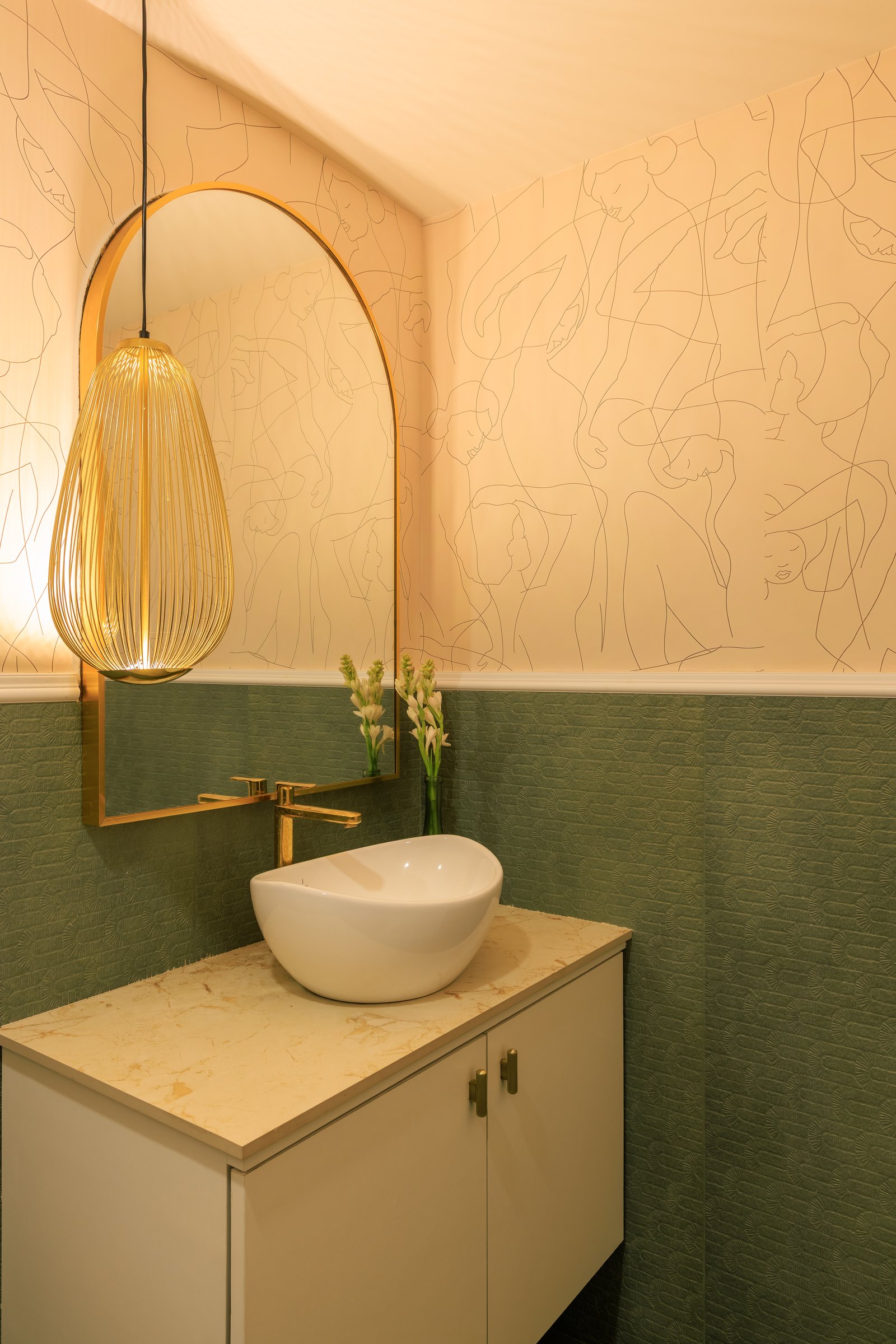
The powder room distils the studio’s design language into a single, carefully composed space. A deep green tiled dado meets pale walls adorned with a continuous line drawing of feminine forms, while a brass framed arched mirror, ribbed brass pendant, and sculptural vessel basin add warmth and refinement.
More than a decorative gesture, the room reflects the project’s consistency of thought. The same attention to detail and restraint found throughout the studio is carried into one of its most intimate spaces, reinforcing the idea that good design reveals itself in the smallest moments.
At a time when many wellness spaces gravitate toward industrial minimalism or biophilic excess, Pilates For She offers a more nuanced alternative. Drawing inspiration from the fluidity of the body and the deliberate pace of Pilates practice, the studio creates an atmosphere that feels calm, intimate, and distinctly human. In doing so, it contributes to a growing shift in wellness design that places the user’s experience at the centre of the spatial narrative.
What ultimately distinguishes the project is its restraint. Indie Living has resisted unnecessary gestures, allowing the architecture to support rather than overshadow the practice it accommodates. The result is a studio that feels thoughtful, focused, and enduring, designed not to impress at first glance, but to reveal its qualities over time.