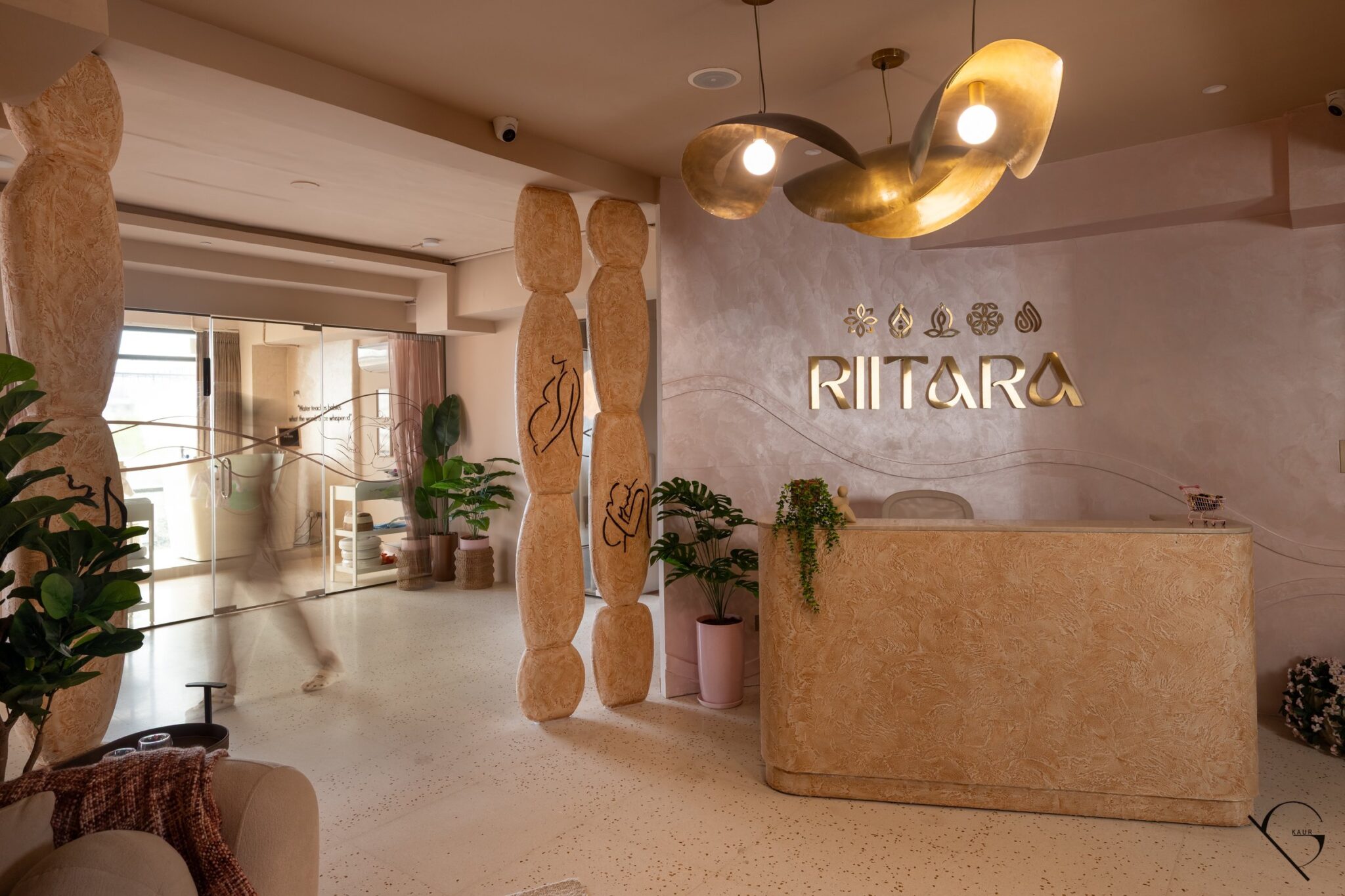
Wellness interiors in India tend to default to two registers: the clinical white of the medical-adjacent, or the saturated saffron of the spiritually performative. Riitara, on Golf Course Road in Gurugram, refuses both. It proposes instead a third language, one built from blush plaster, draped linen, and the unhurried geometry of the female form.
The 4,000-square-foot sanctuary is the work of Gunpreet Kaur Designs, conceived for Dr. Anjali Vyas as a wellness centre devoted to the cycles of pregnancy, postpartum, and the longer arc of the feminine body. The brief was unusual, and the response is unusually specific: every threshold, surface, and lighting decision is keyed to a particular emotional season the visitor might be passing through.
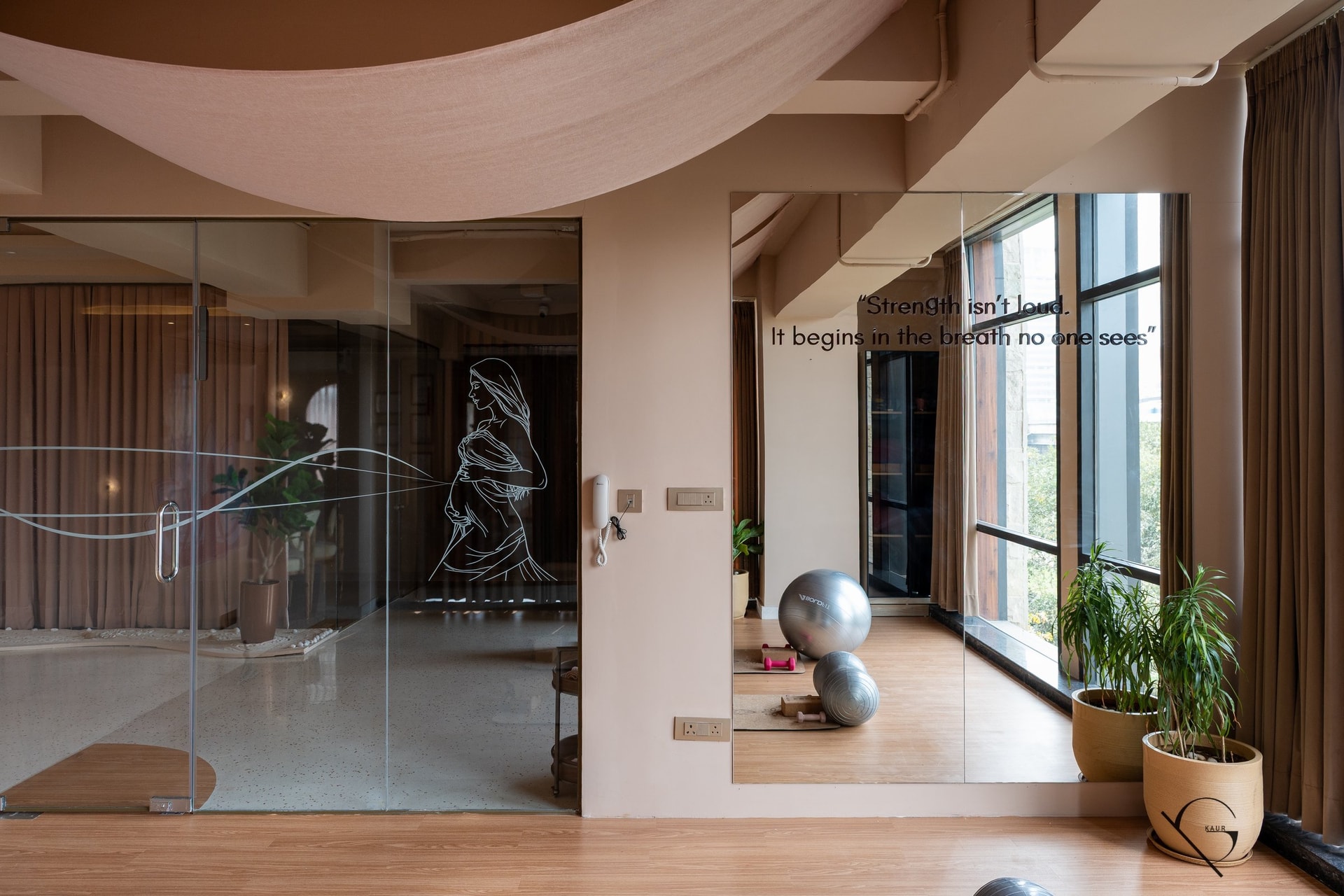
The movement studio sets the tone for the entire project. A canopy of dusty-pink linen is suspended in soft folds above the floor, softening the rigid bones of the ceiling and the visible services that come with an older commercial shell. The decision to drape rather than conceal is the thesis of Riitara in miniature, an acceptance of what is structurally there, gentled by something tactile and human-scaled.
A mirrored wall opposite carries the quiet declaration that strength begins in the breath no one sees. The room asks its occupants to look at themselves, but generously, through pink-toned light rather than fluorescent honesty.
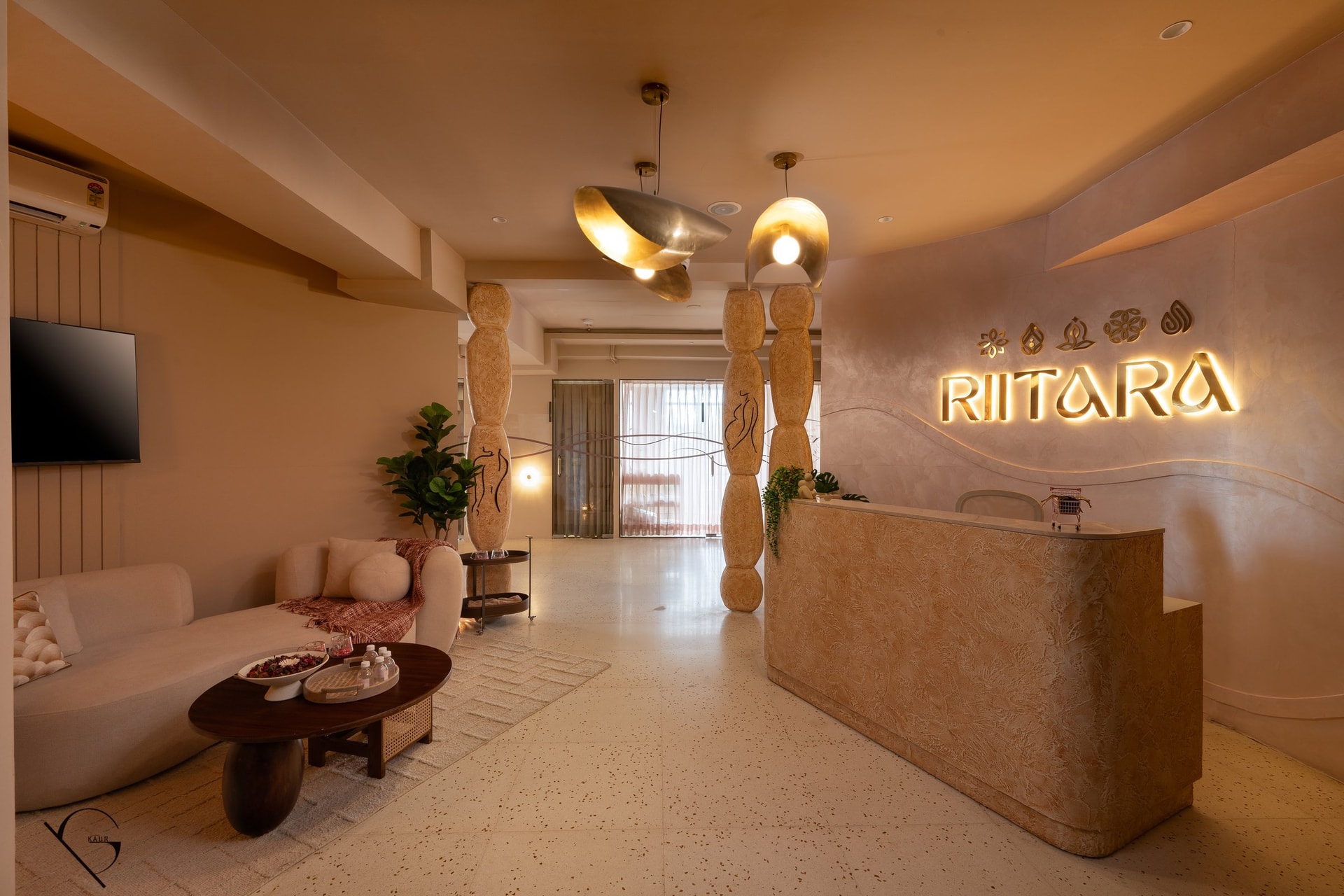
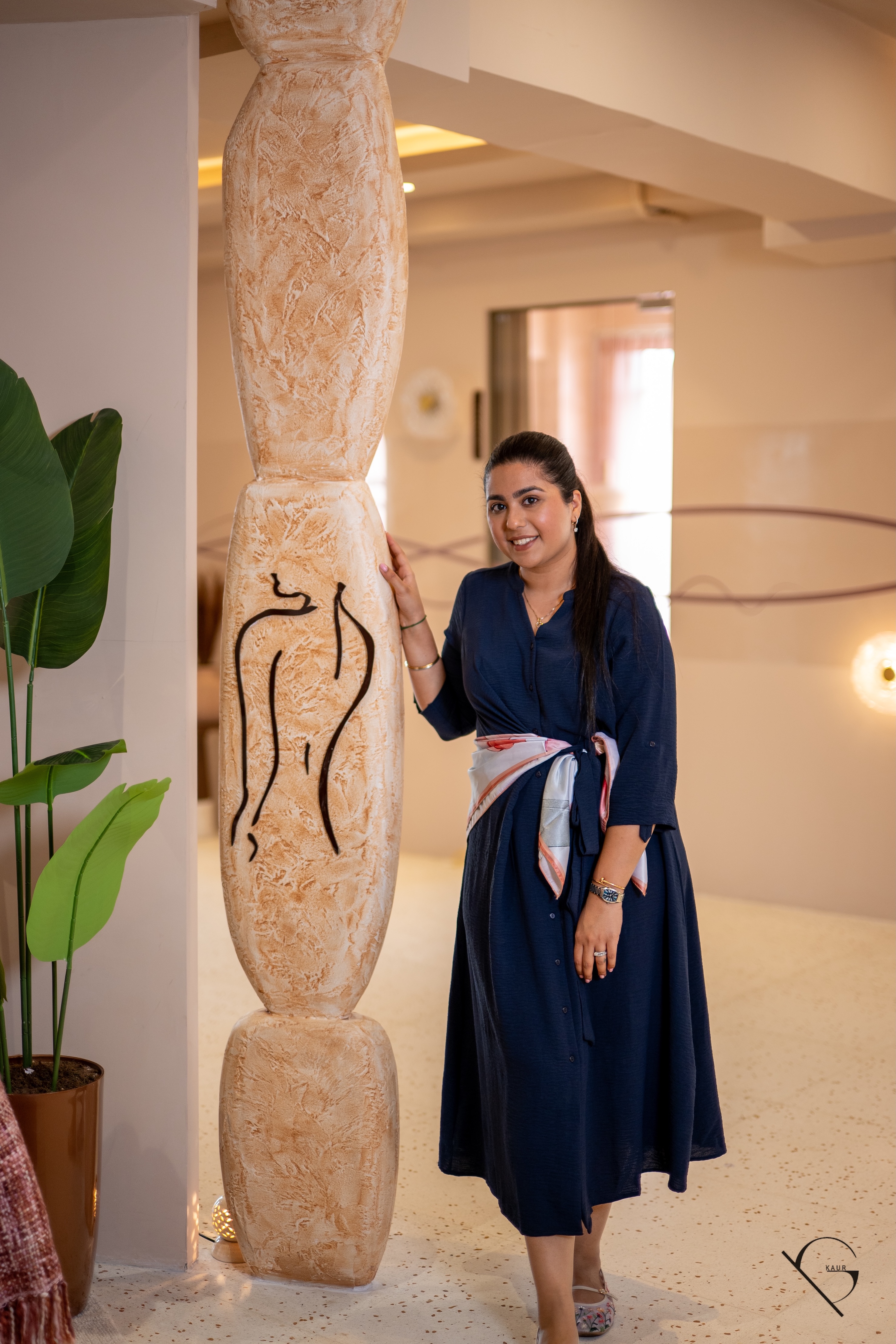
The reception arrives as the project’s most concentrated statement. Two sculptural totems, hand-finished in textured ochre plaster and etched with the silhouettes of the feminine form, frame the approach to a curved welcome desk finished in the same tactile material.
““Riitara is more than a wellness spa; it is a bespoke narrative told through plaster, light, and linen.””
Above the desk, a pair of brass pendants in a soft, scooped form cast a low golden wash across the blush walls. The lighting choice matters: the room is lit to flatter, not to inspect, which is itself a radical decision for a space adjacent to medicine.
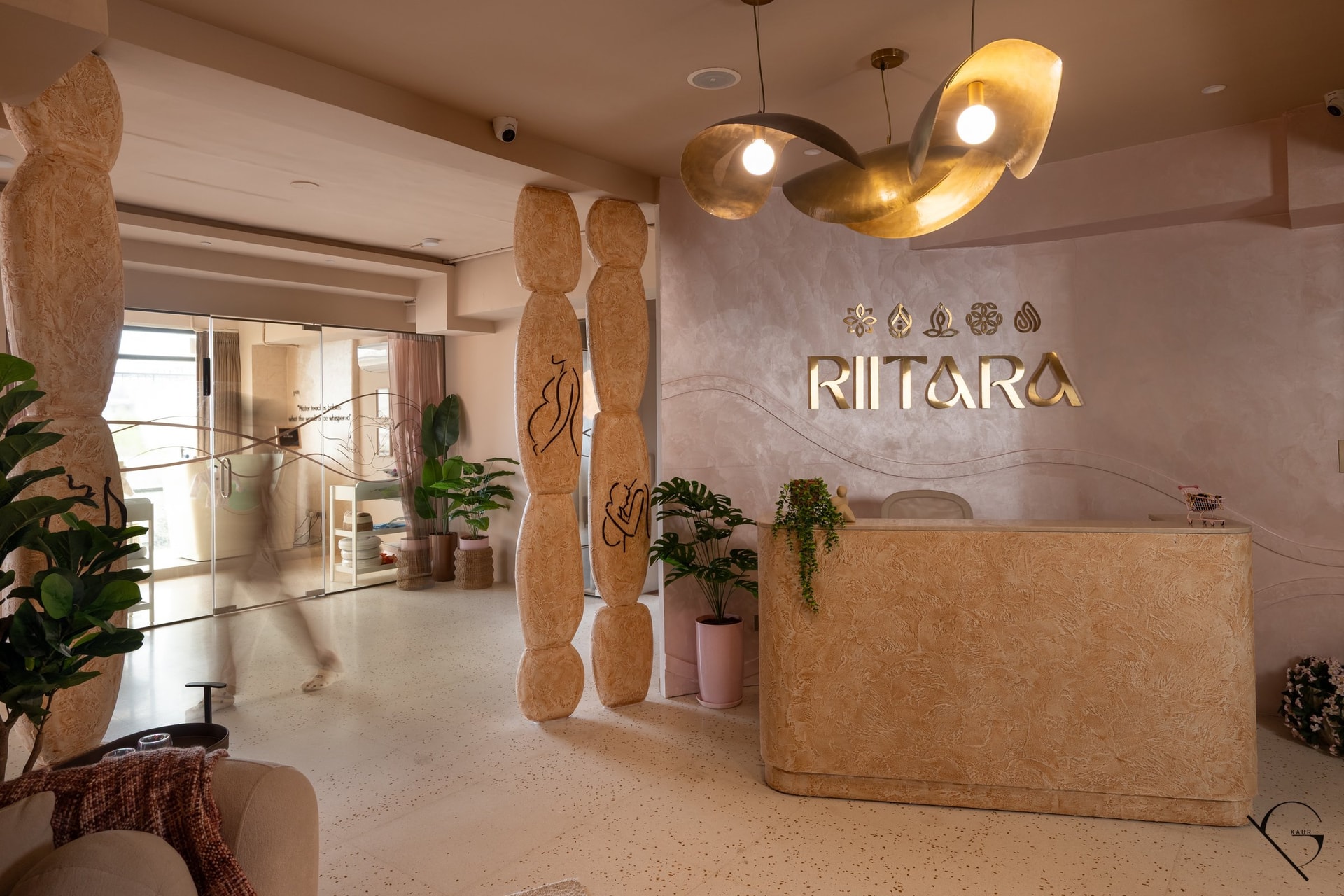
From a second angle, the totems read more clearly as guardians of the threshold, their proportions deliberately generous, their finish handworked rather than smooth. The terrazzo floor, warm beige flecked with darker aggregate, continues underfoot from the entry through to the consultation zones, a single continuous ground that lets the rooms differentiate themselves through colour and texture rather than through changes in level or material.
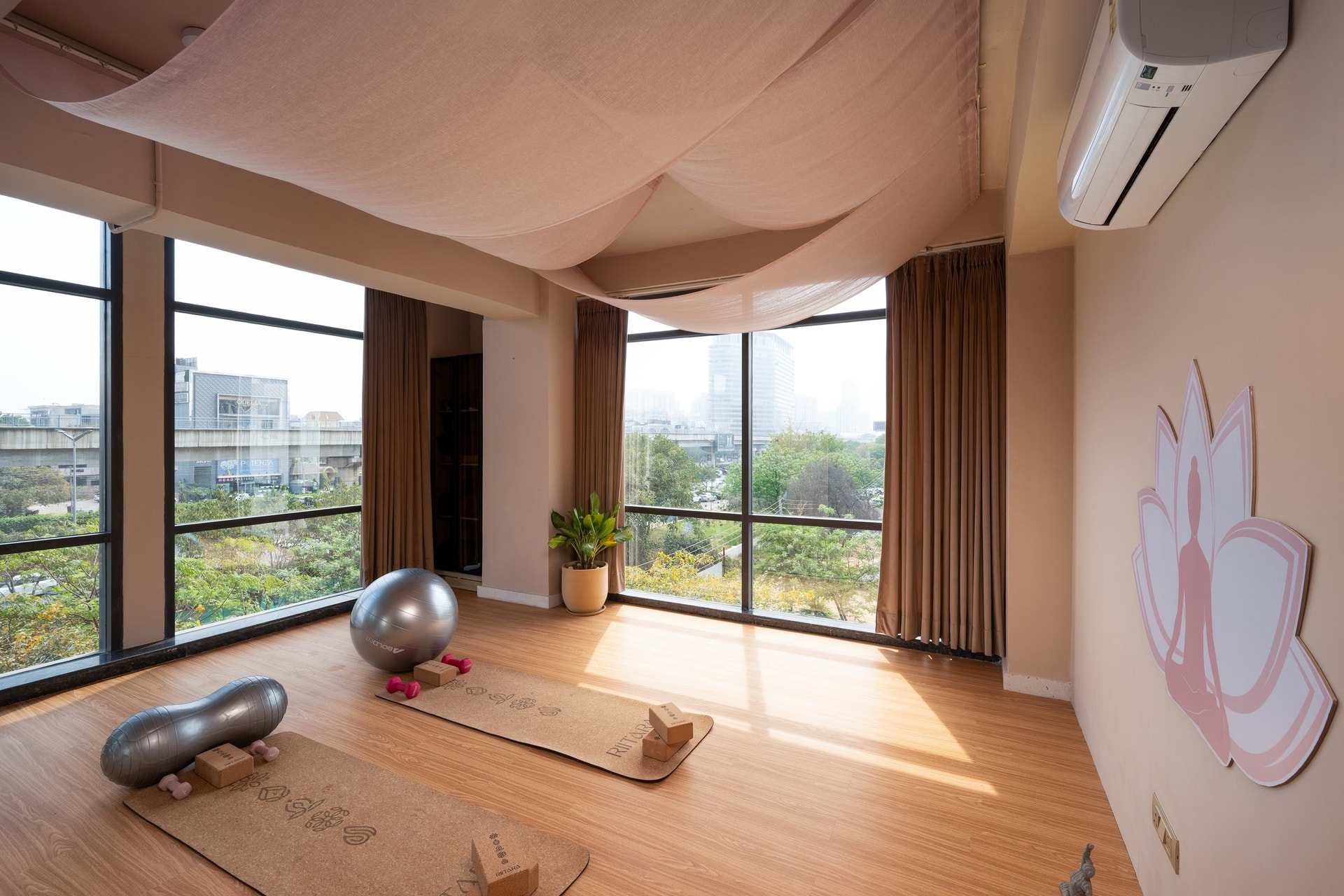
Returning to the movement studio in daylight reveals the strategy more fully. Two corner walls of glazing pull in views of the elevated road and the tree canopy beyond, and the linen ceiling filters that light into something diffused and forgiving.
A lotus motif on the adjacent wall, painted in the same blush palette, completes the room’s quiet insistence that physical work and softness are not opposed.
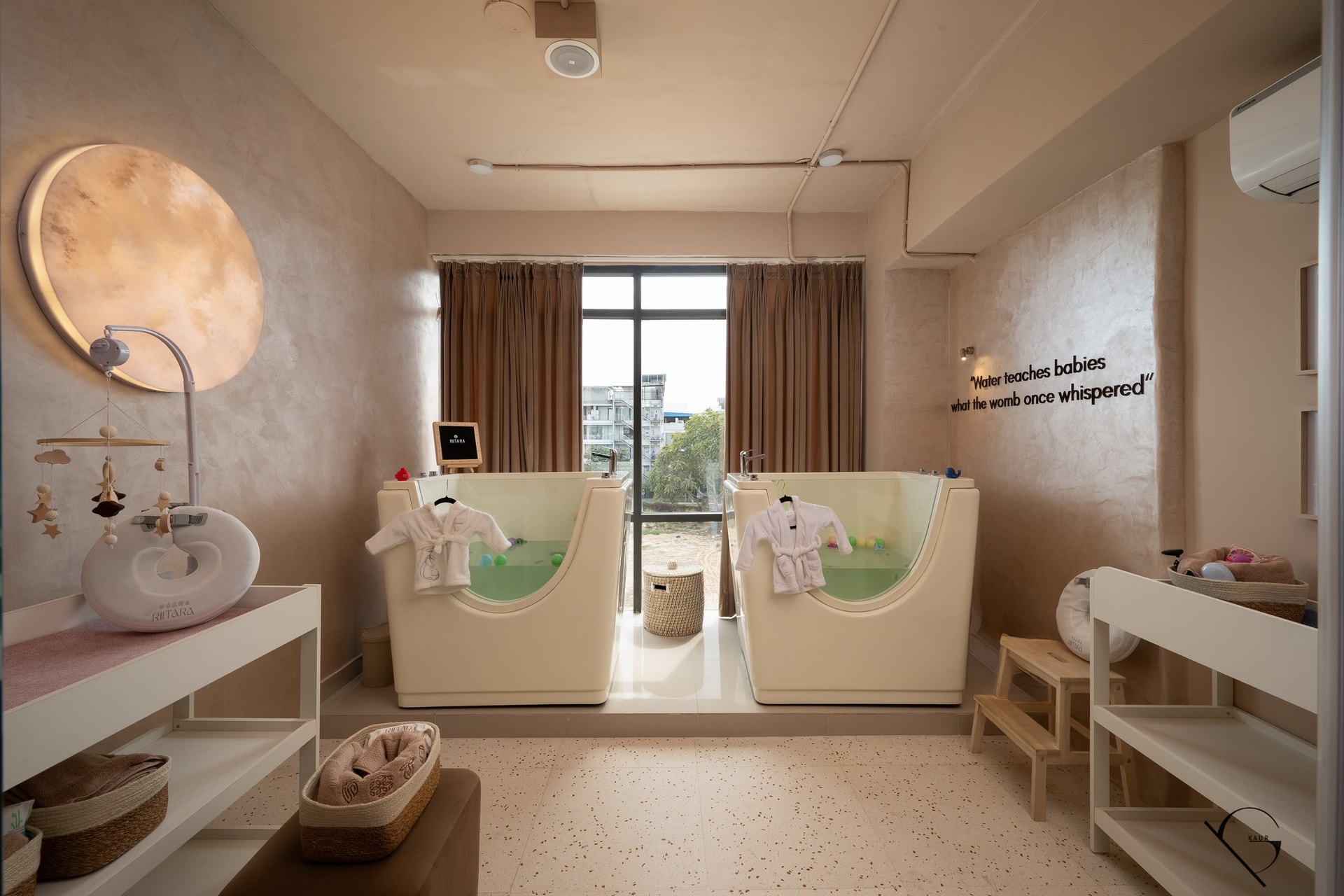
The Aqua Nest, devoted to infant hydrotherapy, is where the project’s tenderness becomes most architecturally specific. Two cream-shelled baby pools sit on a low plinth before a tall window beside a softly glowing moon-like disc, their pale green water glowing against the dusty beige plaster walls.
An illuminated disc on the side wall, finished to resemble a clouded moon, is the room’s considered gesture. It hangs above a mobile of soft pastel shapes and a feeding nest, anchoring what could have been a clinical room in something closer to a nursery imagined as ritual space.
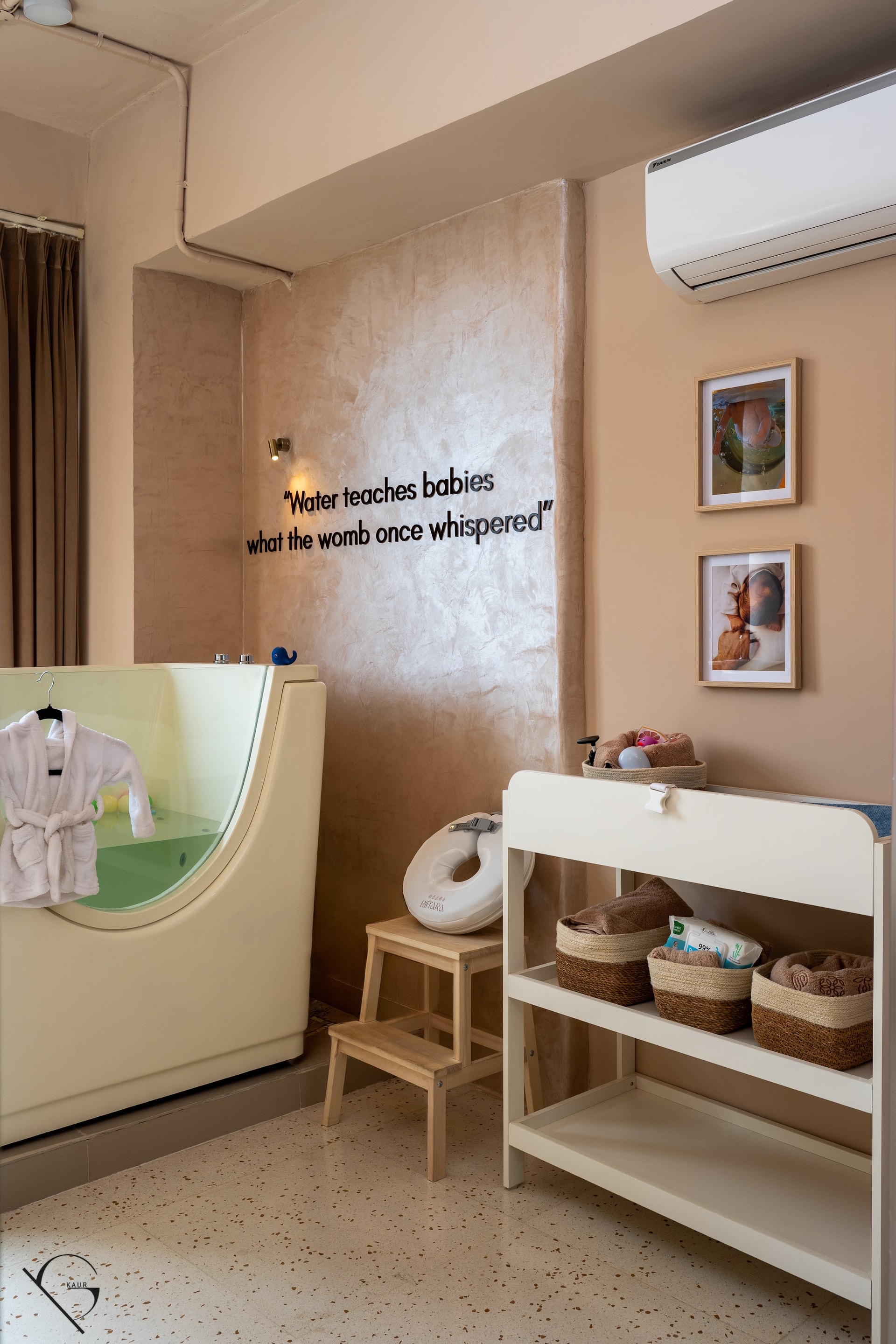
A closer view of the same room shows the inscription that frames the entire experience: a line about water teaching babies what the womb once whispered, set in dark serif type against backlit plaster. The room treats the postnatal body and the newborn body as equally deserving of considered design.
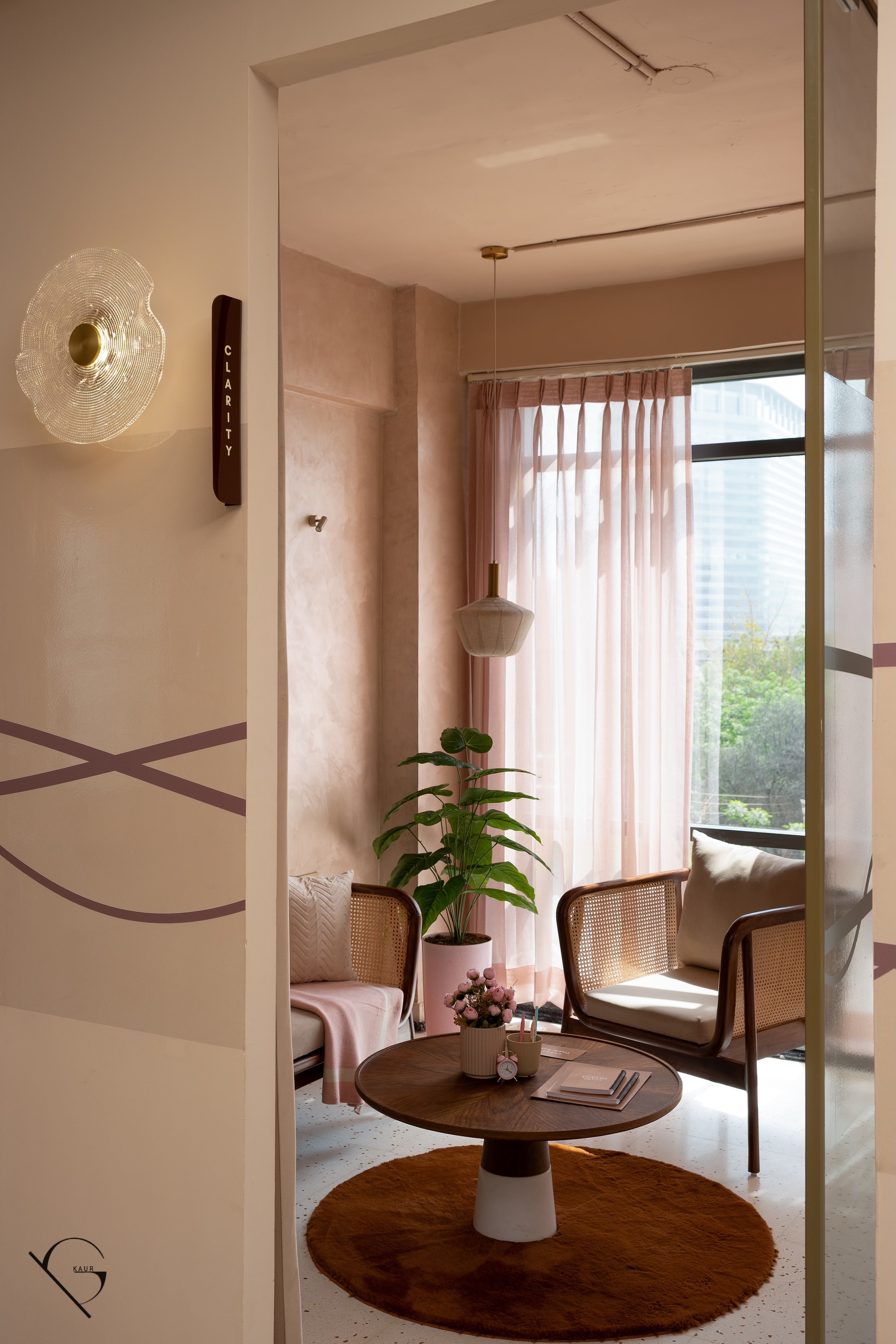
The consultation room dials the palette into a deeper, more saturated blush. Sheer pink drapes filter the daylight from the tall window, and a cane-and-walnut settee and matching armchair in dark walnut frames face a small round walnut table on a deep brown circular rug.
The wall text here speaks of courage as the act of whispering one’s story to someone who can hear. It is the kind of room where the design decisions, the soft seating, the round rather than rectangular table, the absence of a desk between practitioner and patient, are doing therapeutic work of their own.
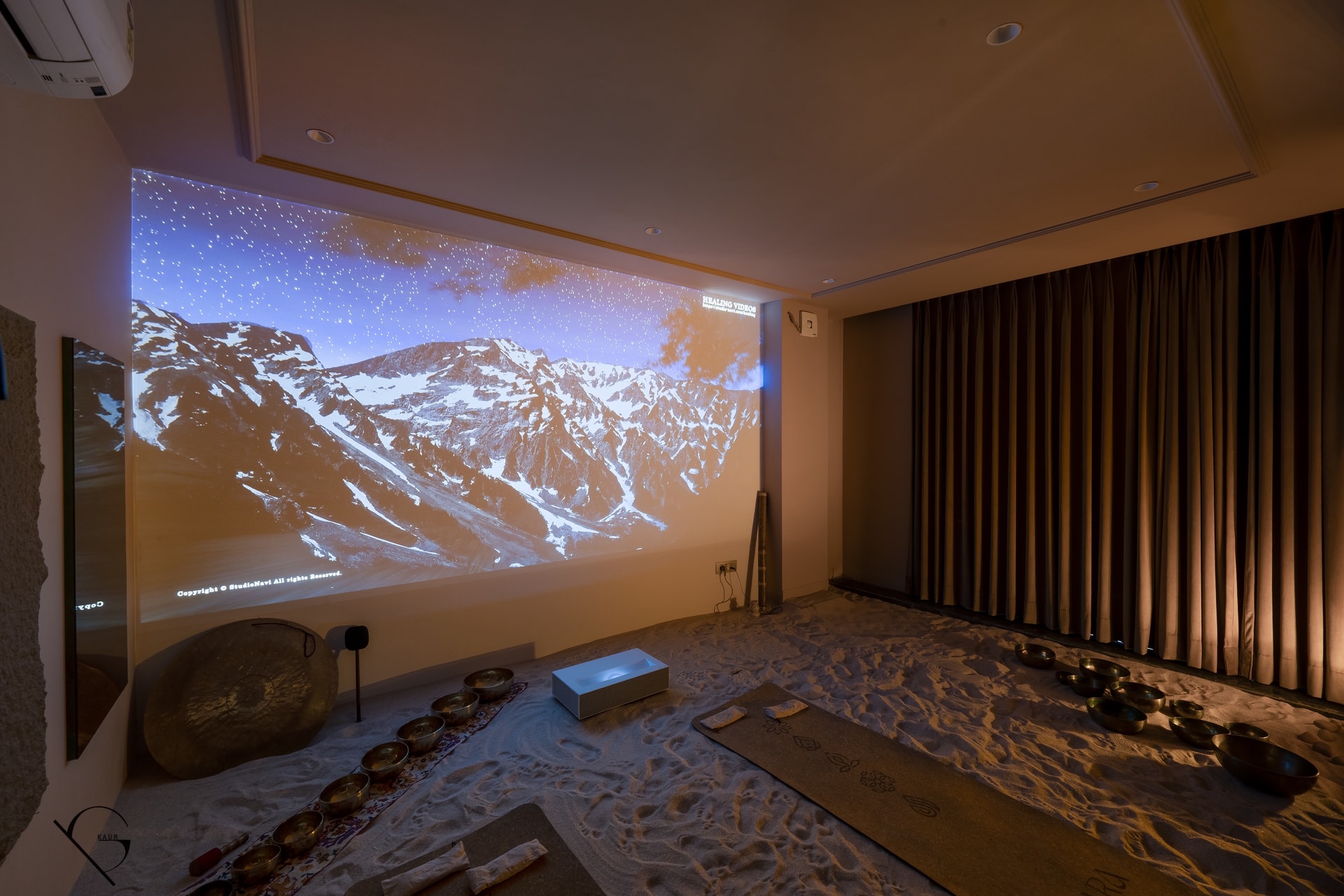
The sound healing room is the project’s most unexpected gesture. A bed of fine pale sand covers the floor, dotted with brass singing bowls and a ceremonial gong, and the long wall becomes a projected landscape, here a snow-capped mountain range under a star-strewn sky.
The drapes are drawn tight along the opposite wall to hold the darkness, and the floor itself becomes the seating. It is a room designed to undo the body’s posture rather than support it, and the decision to commit fully to sand rather than to a softer suggestion of it gives the space its conviction.
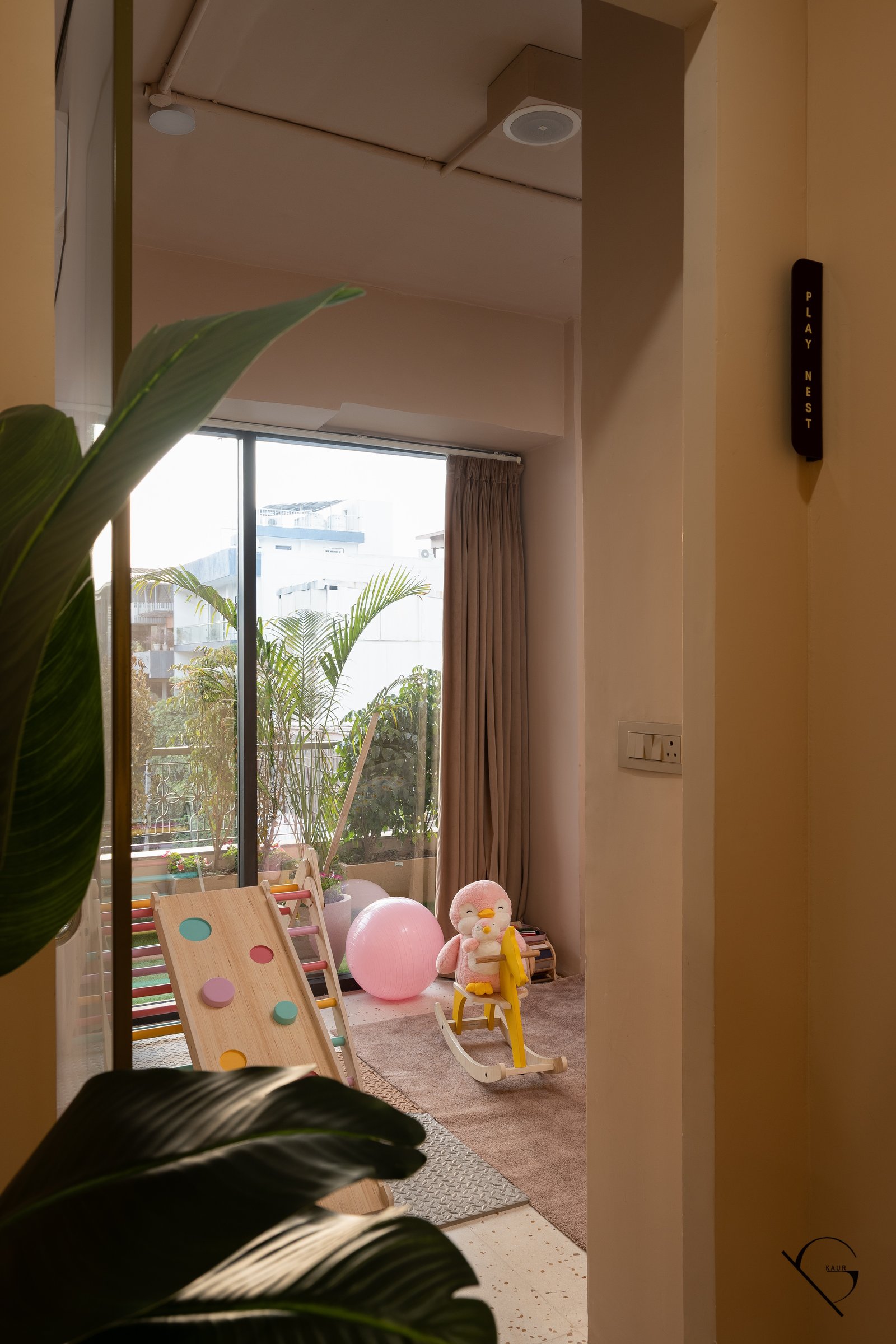
The Play Nest, glimpsed through a doorway marked by a slim vertical signage panel, holds the spaces dedicated to early childhood. A wooden climbing slide in primary pastels, a soft plush companion on a yellow rocking horse, and a pink exercise ball occupy a generous rug, with the same tall windows pulling in greenery from outside.
The palette here lifts from the blush of the adult zones into something brighter, but still restrained: the toys are wooden and quietly coloured rather than plastic and loud. It is a children’s room designed without condescension.
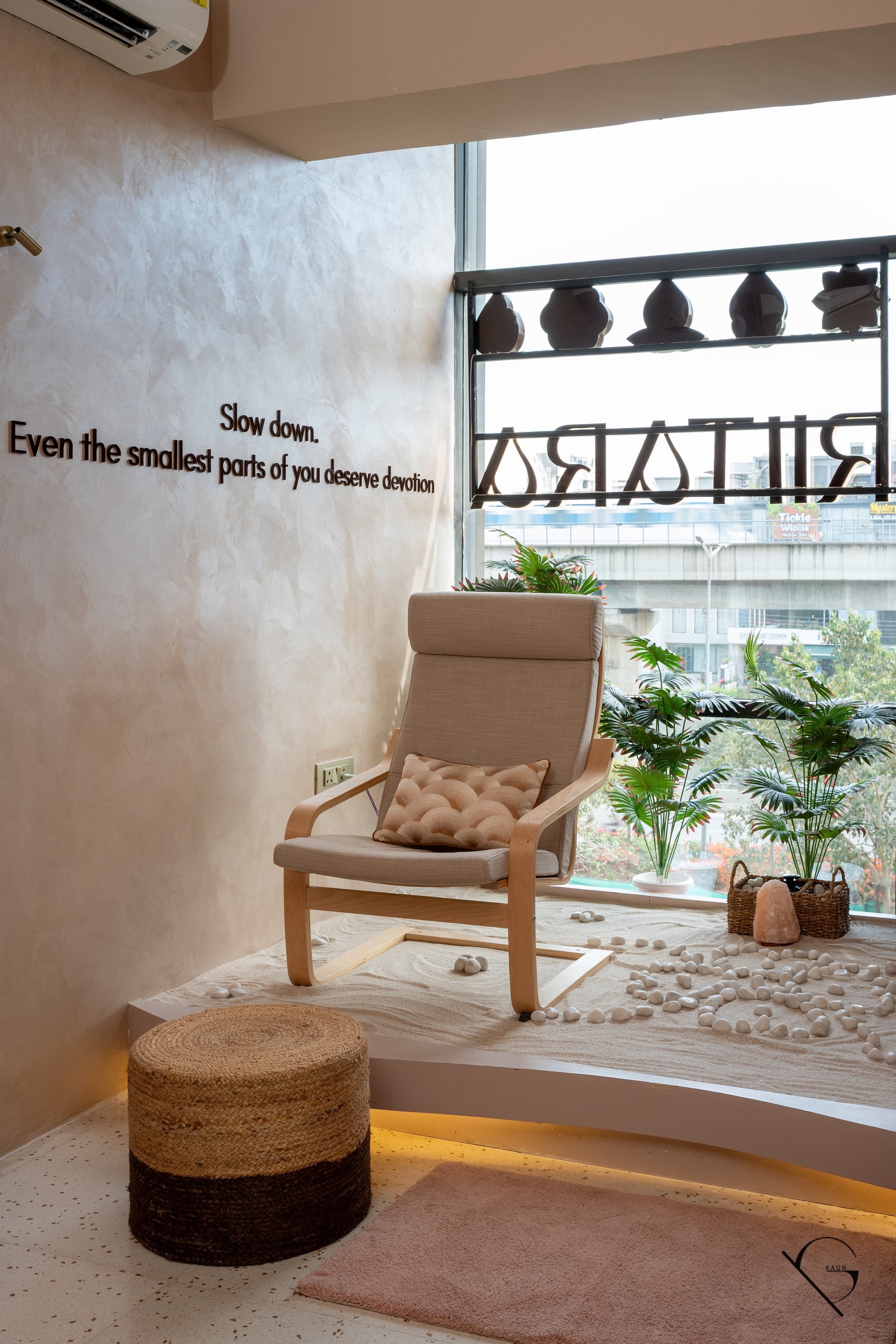
One of the most quietly affecting corners in the project is a small meditation alcove built around a raised platform of sand and white pebbles. A pale linen-upholstered armchair sits on the platform beside a jute pouf, framed by a window that carries the Riitara wordmark in reverse on the balcony railing outside.
The wall text reads: slow down, even the smallest parts of you deserve devotion. It is the kind of sentence that the room genuinely earns, because every material in the alcove, the sand, the stones, the linen, the salt lamp tucked into a basket, has been chosen for tactile permission rather than visual effect.
Within the wider landscape of Indian wellness design, Riitara is doing something unusual. It is treating women’s biological transitions, pregnancy, postpartum, the long arc that follows, as a continuous design subject rather than a series of medical episodes, and it is using a material vocabulary, plaster, linen, cane, wood, sand, that draws from domestic interiors rather than from spa-industry shorthand. The result reads less like a facility and more like an extended home.
What lingers about the project is its refusal of the clinical without any retreat into the saccharine. The plaster is honest, the lighting is warm without being theatrical, and the totems at the entrance carry the project’s argument with quiet conviction: that the feminine body deserves a space designed at its own pace, in its own language.