Wellness spaces have spent the last decade chasing the visual vocabulary of the spa, all polished surfaces and orchestrated drama, when what the body actually asks for during practice is something quieter. A Pilates studio is a room of small adjustments and inward attention, and its architecture should know this.
At Cue Pilates in Pune, Mistry Design Workshop has built precisely that kind of room. Conceived by architect Sunil Mistry across a 1,050 square foot floor plate, the studio reads as a single, soft volume where organic geometry and diffused light replace the harder gestures one expects of a fitness interior. The brief was less about performance and more about preparation: a space that quiets the mind before it asks anything of the body.
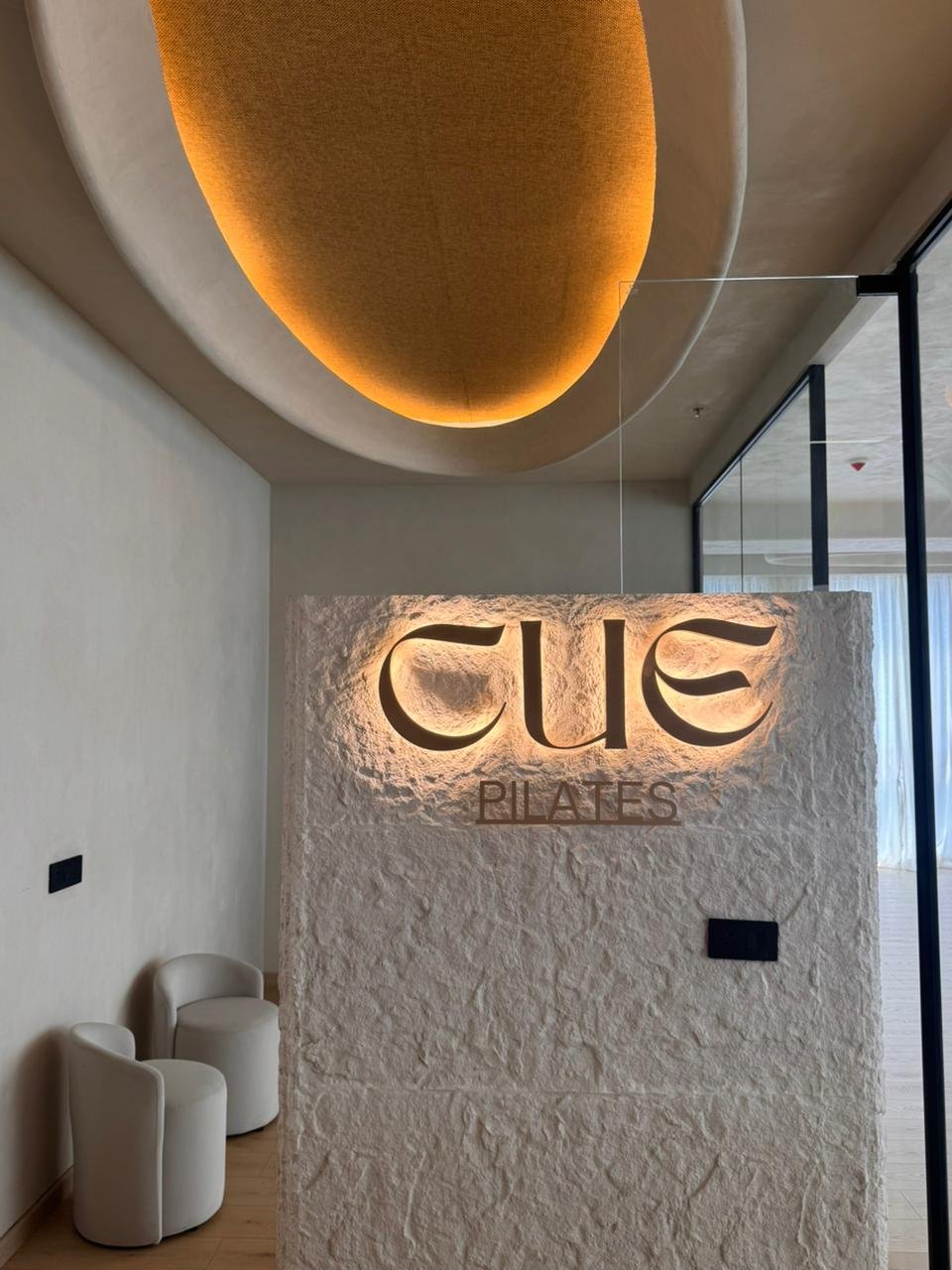
The arrival sets the grammar immediately. A textured plaster monolith carries the backlit Cue Pilates wordmark, its rough hand-applied surface deliberately tactile against the smooth shell of the rest of the studio. Overhead, a sculpted ceiling well in warm fabric glows like a low sun, and the entire entry reads as an argument: that this is a place to slow down, not gear up.
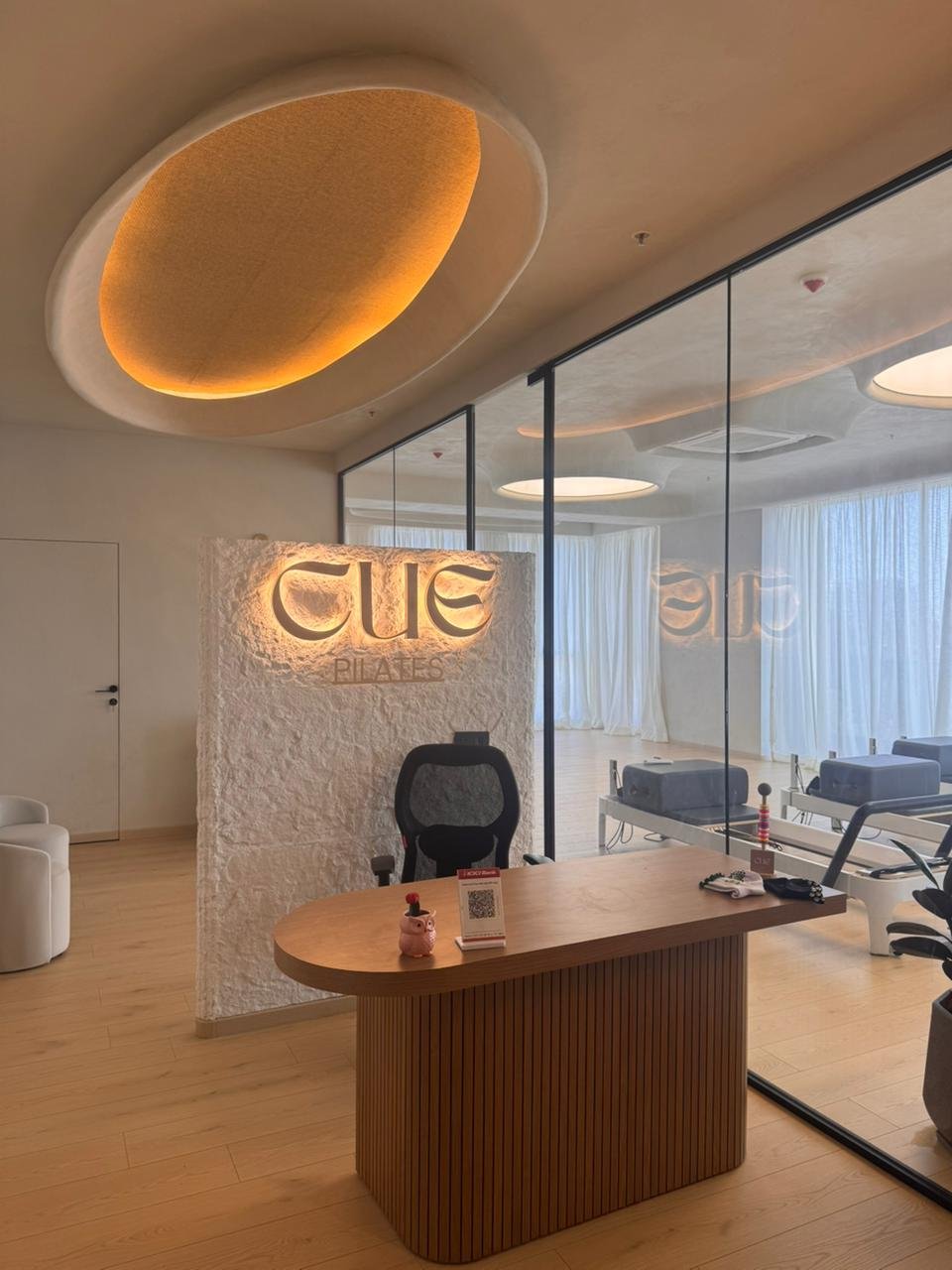
The reception desk extends the same logic in a different register. A reeded wood-grain base curves into a soft oval, sitting just in front of the textured signage wall, while a glass partition opens the eye through to the practice floor beyond. Nothing here insists on itself; the curved desk, the rounded ceiling cove, the boucle tub chairs at the edge all repeat a single instruction to round off the corners of arrival.
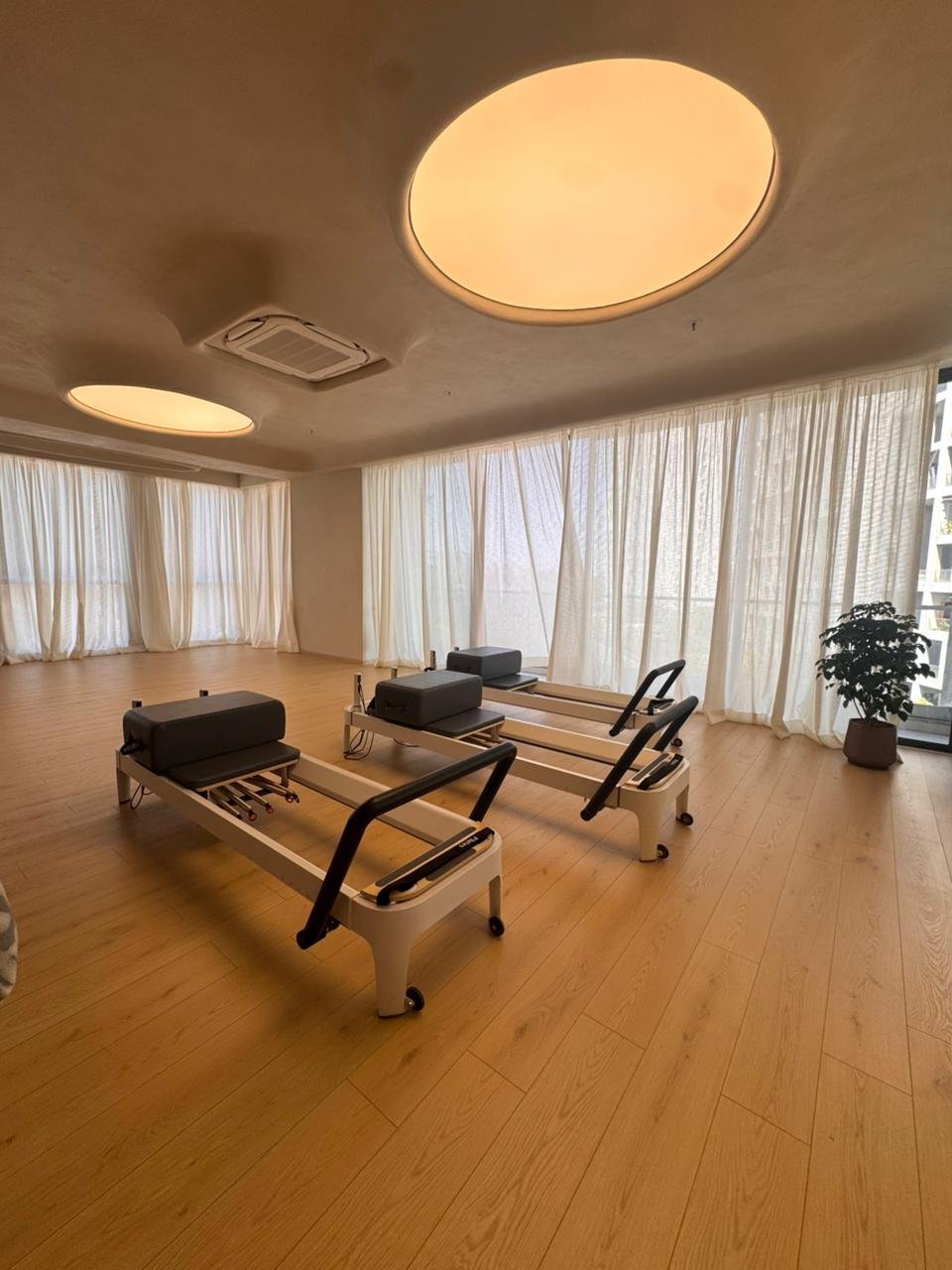
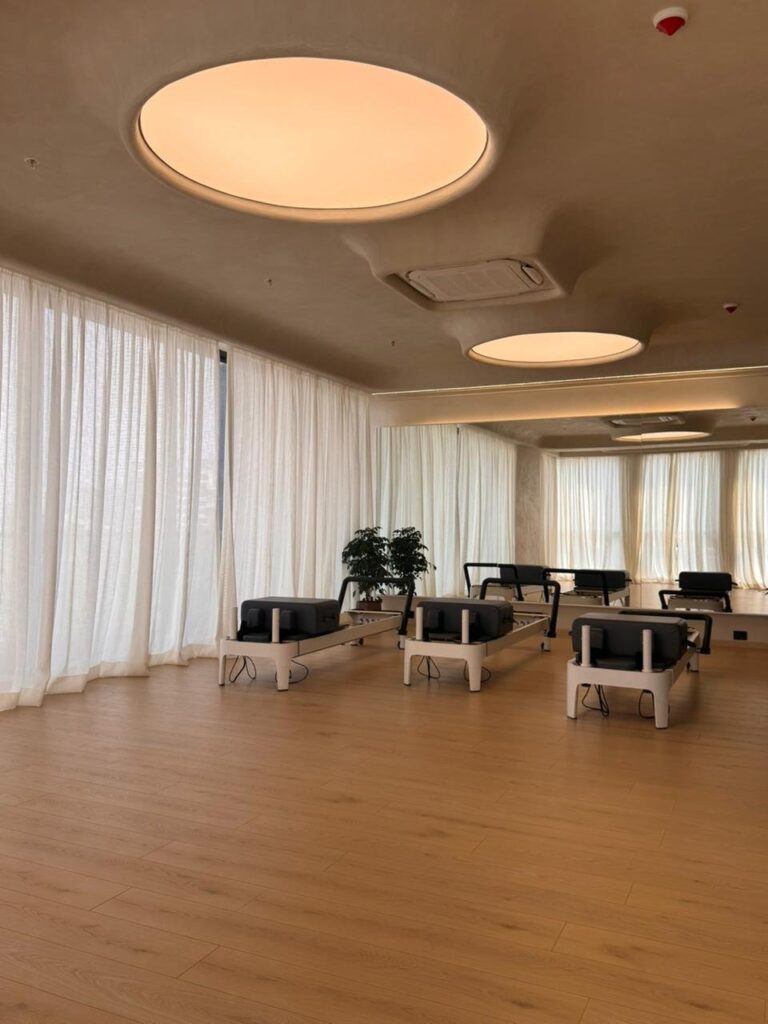
Through the partition, the main studio reveals its central architectural gesture. Two enormous circular light wells, set into a softly modelled ceiling, hover above the practice floor like suspended moons, their diffused glow doing the work that recessed downlights cannot. The light is even, shadowless, and warm enough to feel like late afternoon at any hour of the day.
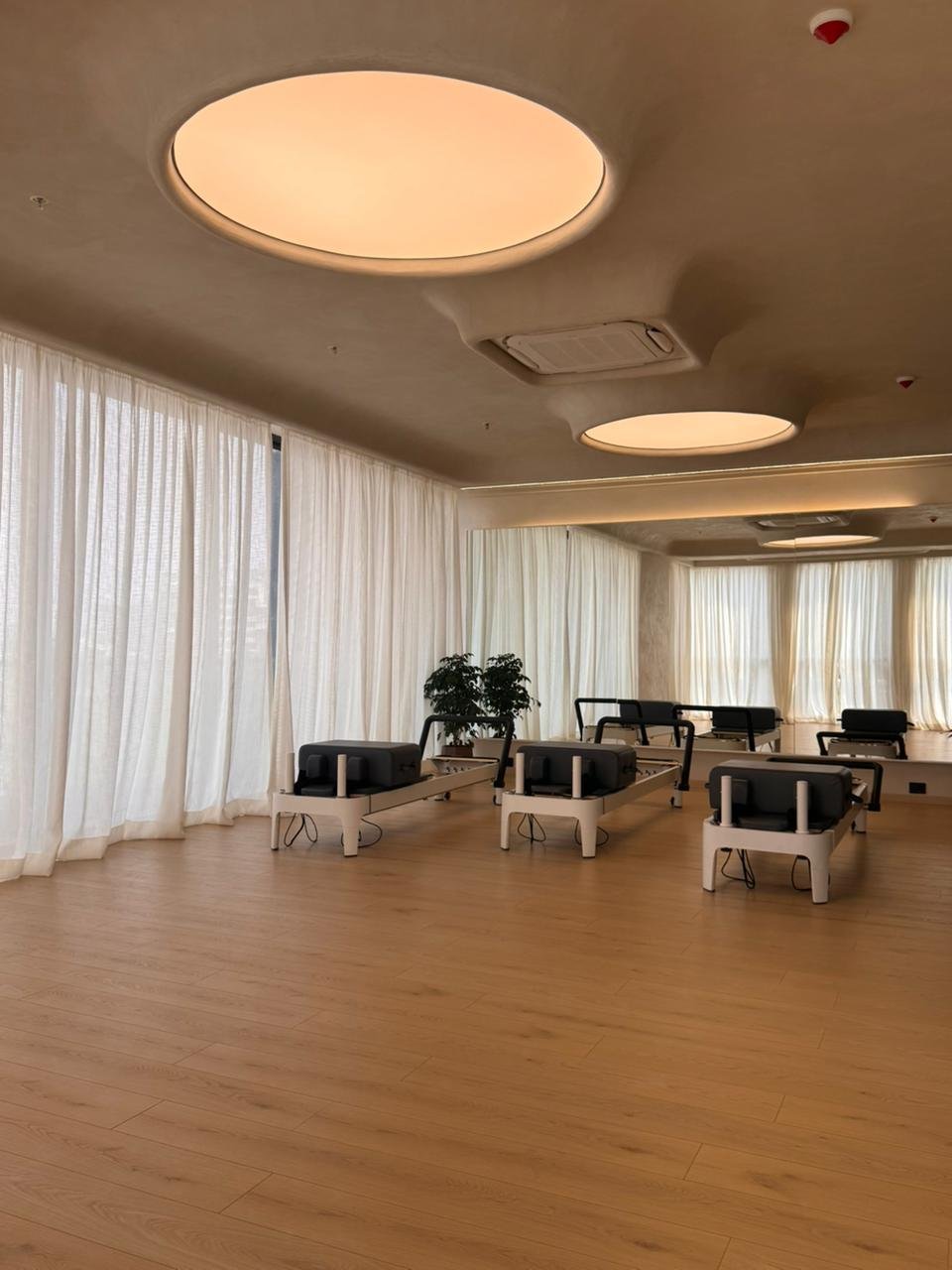
The reformers are arranged in a clean linear sequence across blond oak flooring, and the whole room breathes through full-height sheer curtains that wrap the perimeter.
““The design translates the idea of fluidity into built form, using organic geometry, warm materiality, and diffused light to create a cohesive and tranquil experience.””
What Mistry has understood is that a Pilates studio is fundamentally a mirror room, and mirrors are unforgiving of clutter. The mirrored wall along one side multiplies the volume and supports the functional need for postural alignment, but it also forces every other surface to earn its restraint. The ceiling, the curtains, the flooring all hold their tone so the reflection never fragments.
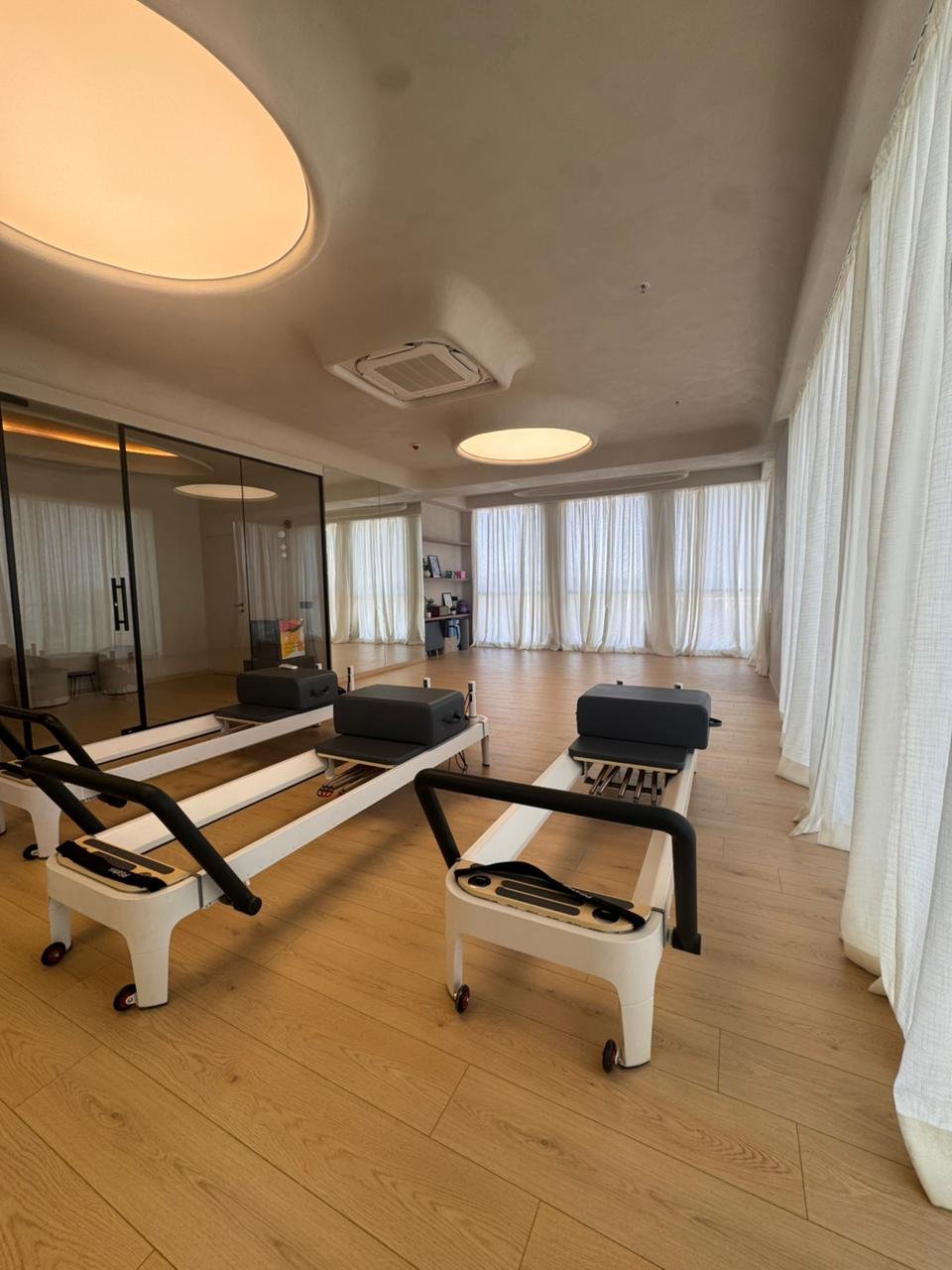
Moving deeper into the floor, the spatial continuity becomes more apparent. The reformers sit on castors against the mirrored wall, and the curtained wall opposite carries the same hushed envelope all the way to the far end of the studio. There are no partitions, no zones, no visual interruptions, only the rhythm of equipment placed on an uncluttered field.
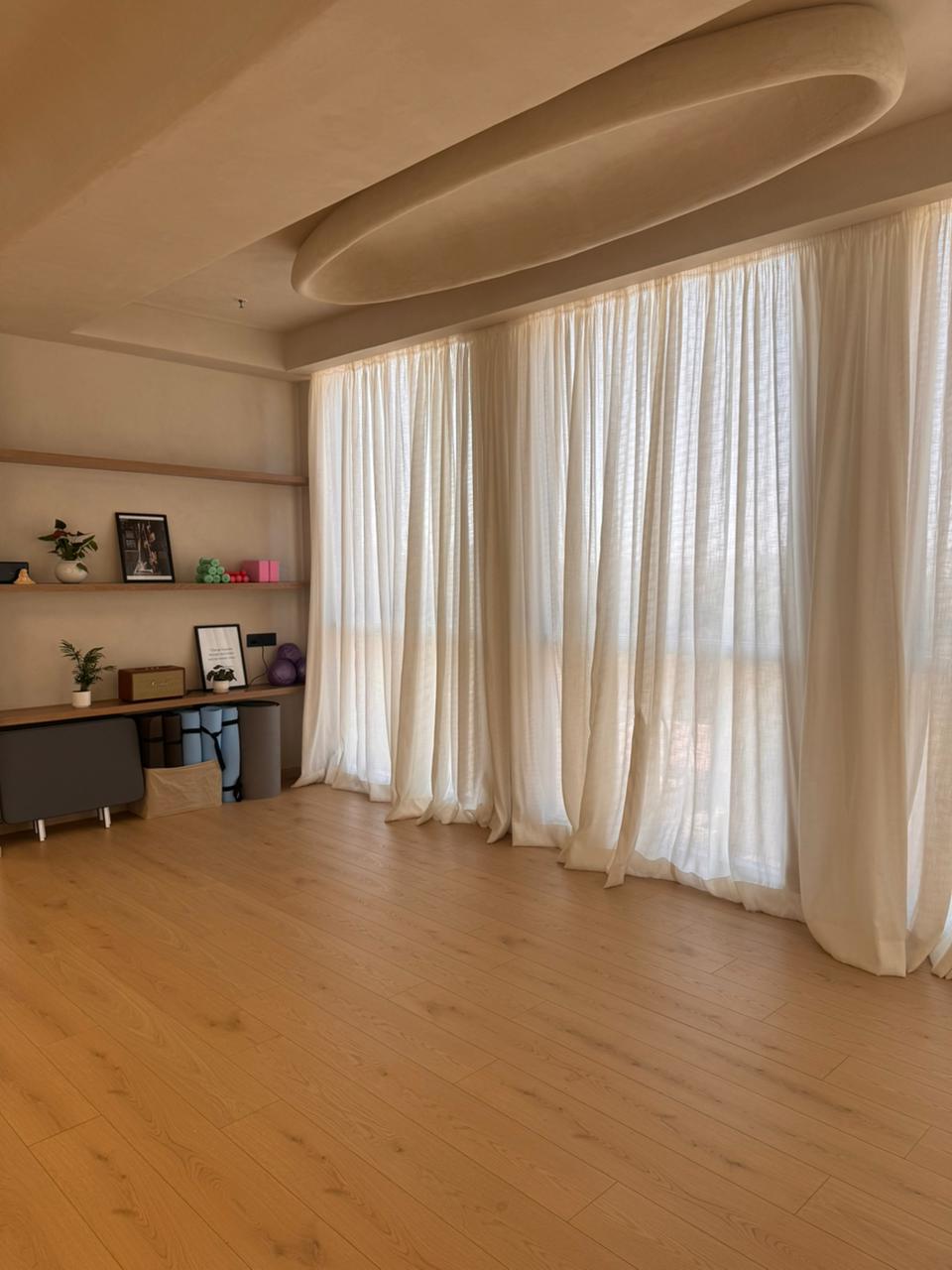
Along one edge of the studio, a shallow open shelf carries the small evidence of daily use, framed prints, a vintage radio, dumbbells in muted colours, mats stowed in soft canvas slings. The shelf is built into a low cabinet and it functions as both storage and a visual anchor.
What Mistry Design Workshop has produced here speaks to a quieter strand of commercial wellness design now emerging in Indian cities like Pune, one that resists the temptation of the photogenic gym and instead borrows from the language of the meditation hall, the sound bath, the spa antechamber. The studio is unmistakably contemporary, but its references are older and slower.
The achievement at Cue Pilates lies in how completely the architecture serves the practice rather than overshadowing it. A studio of this scale could easily have collapsed into either clinical efficiency or decorative excess, and the work avoids both by trusting a single material idea, fluidity, to carry every decision from the ceiling wells to the curtain weight to the curve of the reception desk. The result is a room that does not need to be impressive to feel considered.