There is an ease to a home that draws from tradition without once apologising for it. Not the self-conscious curation of vintage pieces arranged for effect, but a deeper commitment, one where wainscoting, turned timber legs, and floral upholstery exist because they belong to a living vocabulary of domesticity, not because they are having a moment on social media.
The Melias, designed by Bonita Casa, is this kind of home. The apartment operates on a principle that is deceptively simple: that warmth is built not through colour alone but through the layering of craft traditions, from carved timber to cane, from block-printed wallpaper to hand-upholstered medallion-back chairs. Every room introduces its own tonal identity while remaining loyal to the material grammar established at the threshold.
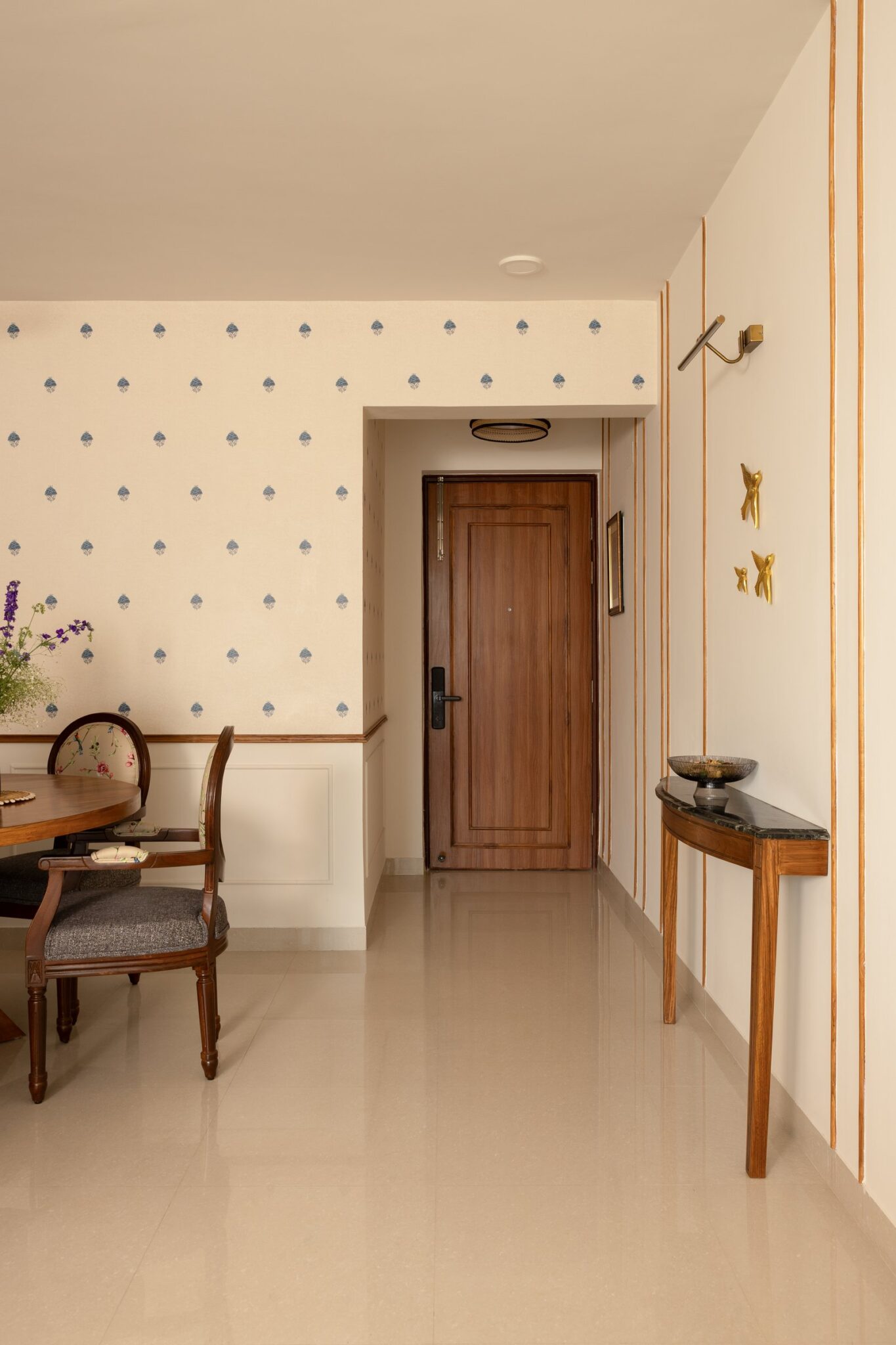
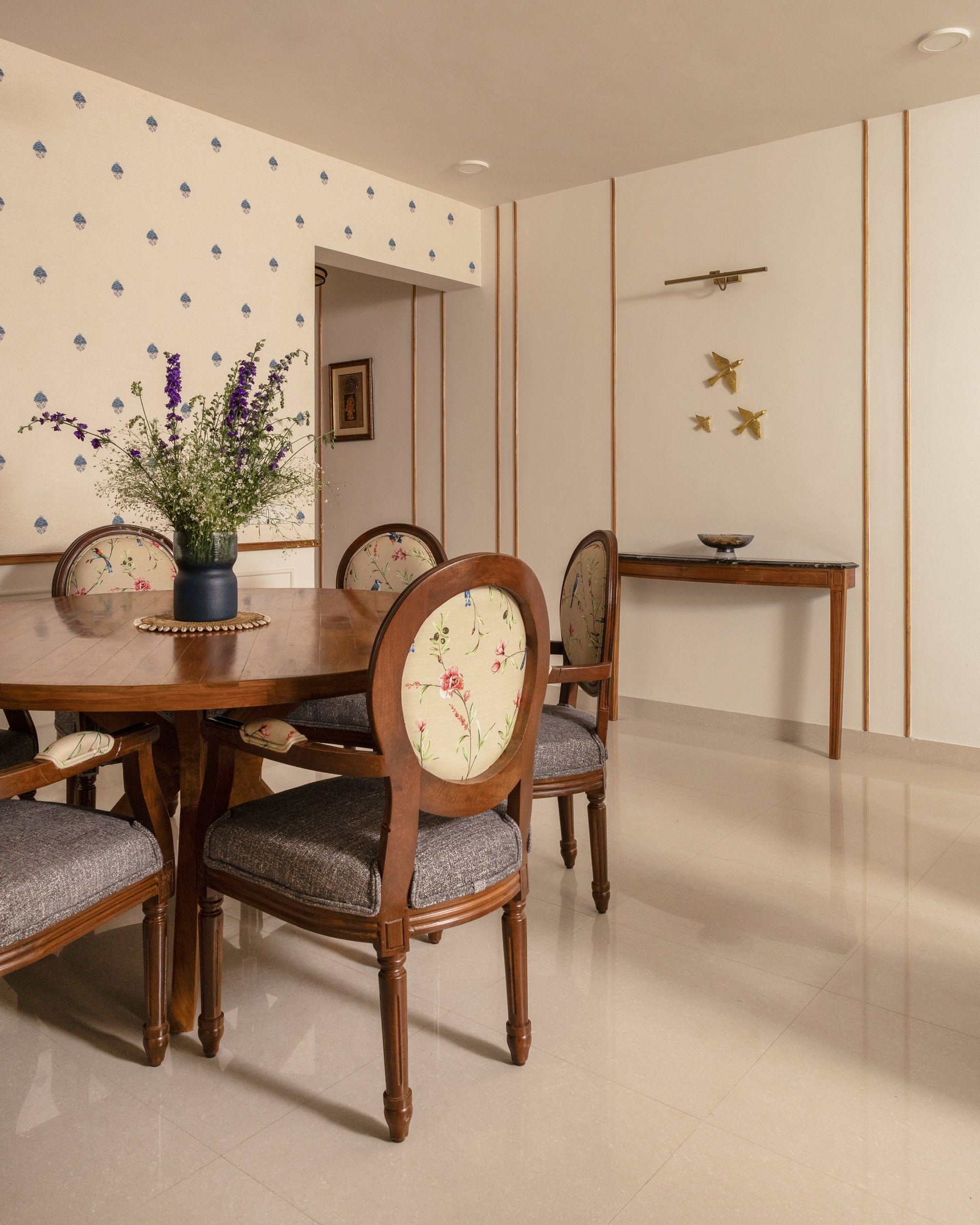
The entry corridor announces its intentions immediately. A delicate block-motif wallpaper runs along one wall, its blue motifs spaced with the regularity of a textile repeat, while the opposite wall is articulated with slim timber battens and a half-round console with a dark stone top, grounding the passage and giving it spatial definition rather than leaving it as mere transit.
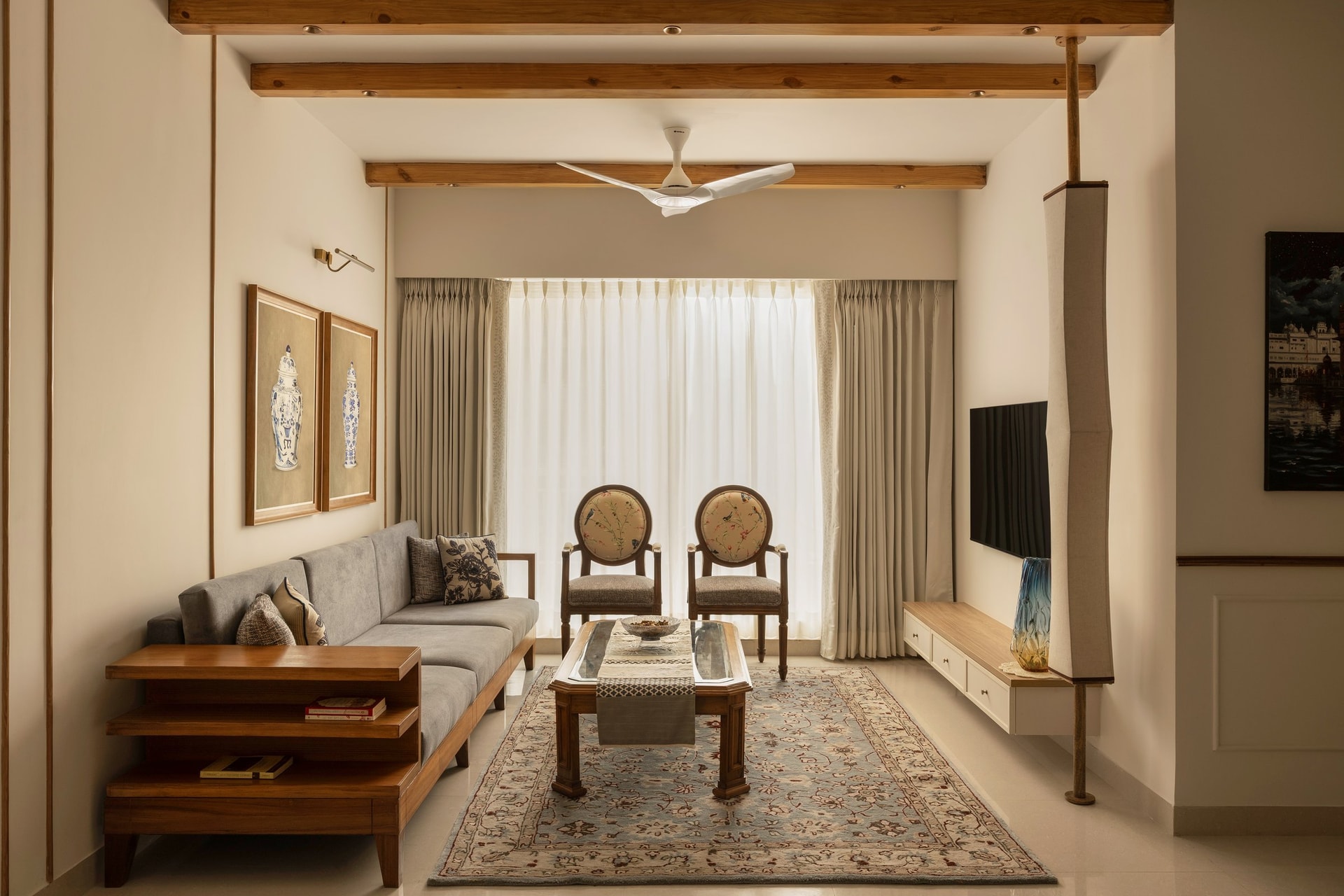
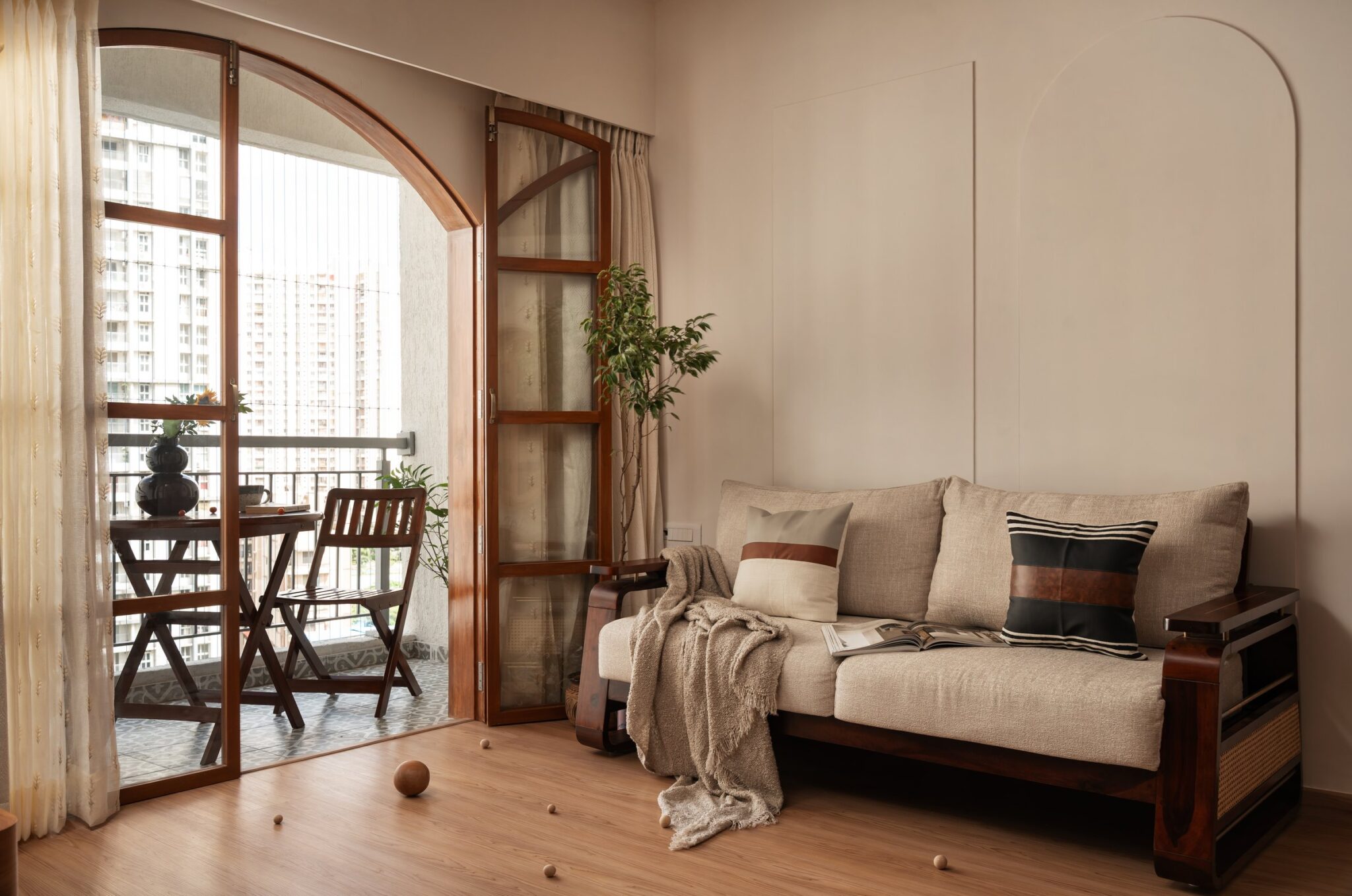
The living room carries the home’s central argument forward. Exposed timber beams span the ceiling, lending the room a proportion and warmth that the apartment’s concrete shell would never have offered on its own, and the seating arrangement below, a sofa facing a pair of medallion-back chairs, feels genuinely inhabited rather than styled for a single afternoon.
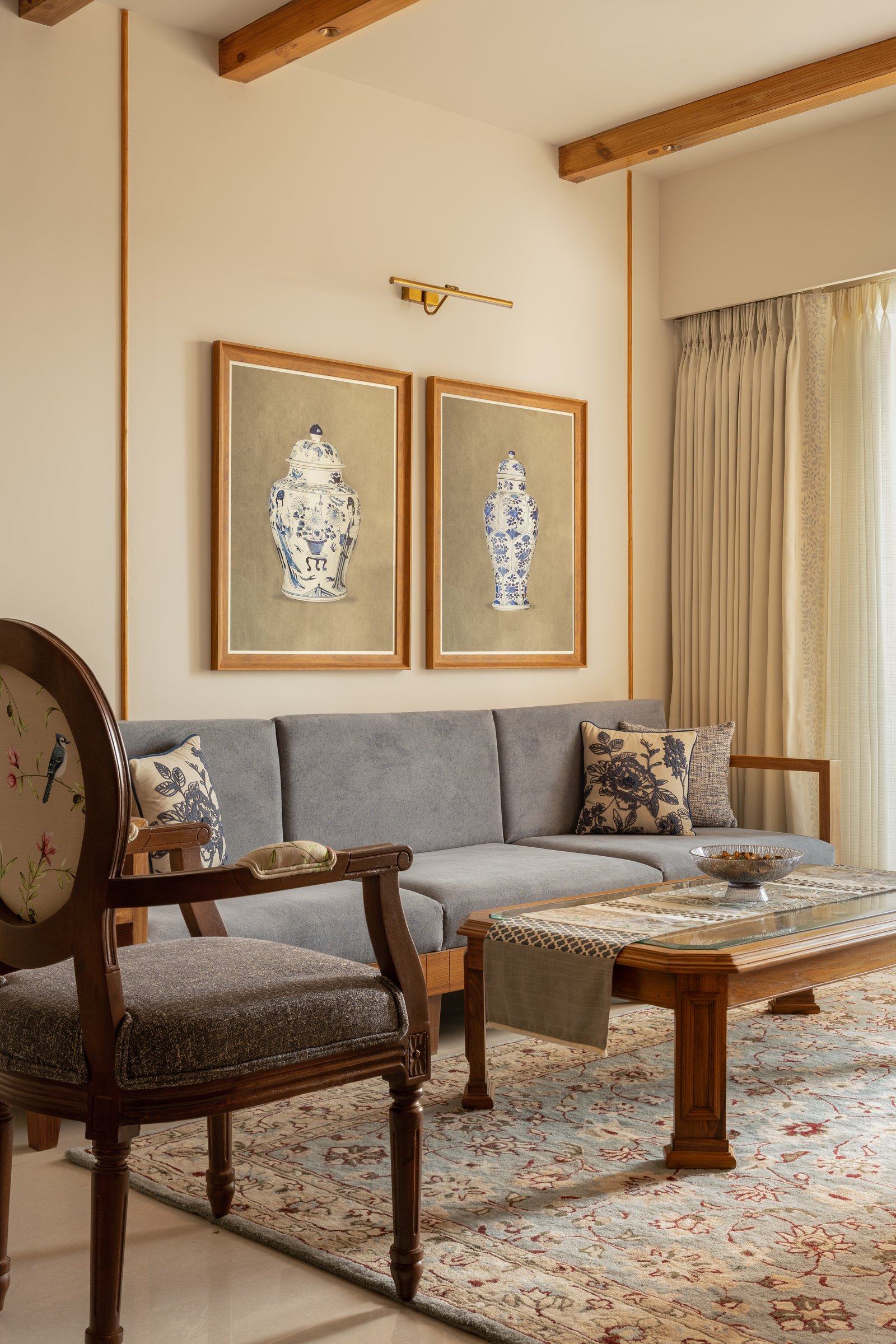
What earns the room its composure is how sparingly it deploys focal points. A pair of framed porcelain-vase illustrations above the sofa does much of the visual work, their blue tones quietly echoing the rug below. The room lets its art and its textiles carry the weight of personality, trusting that the timber and cream palette can hold the frame together.
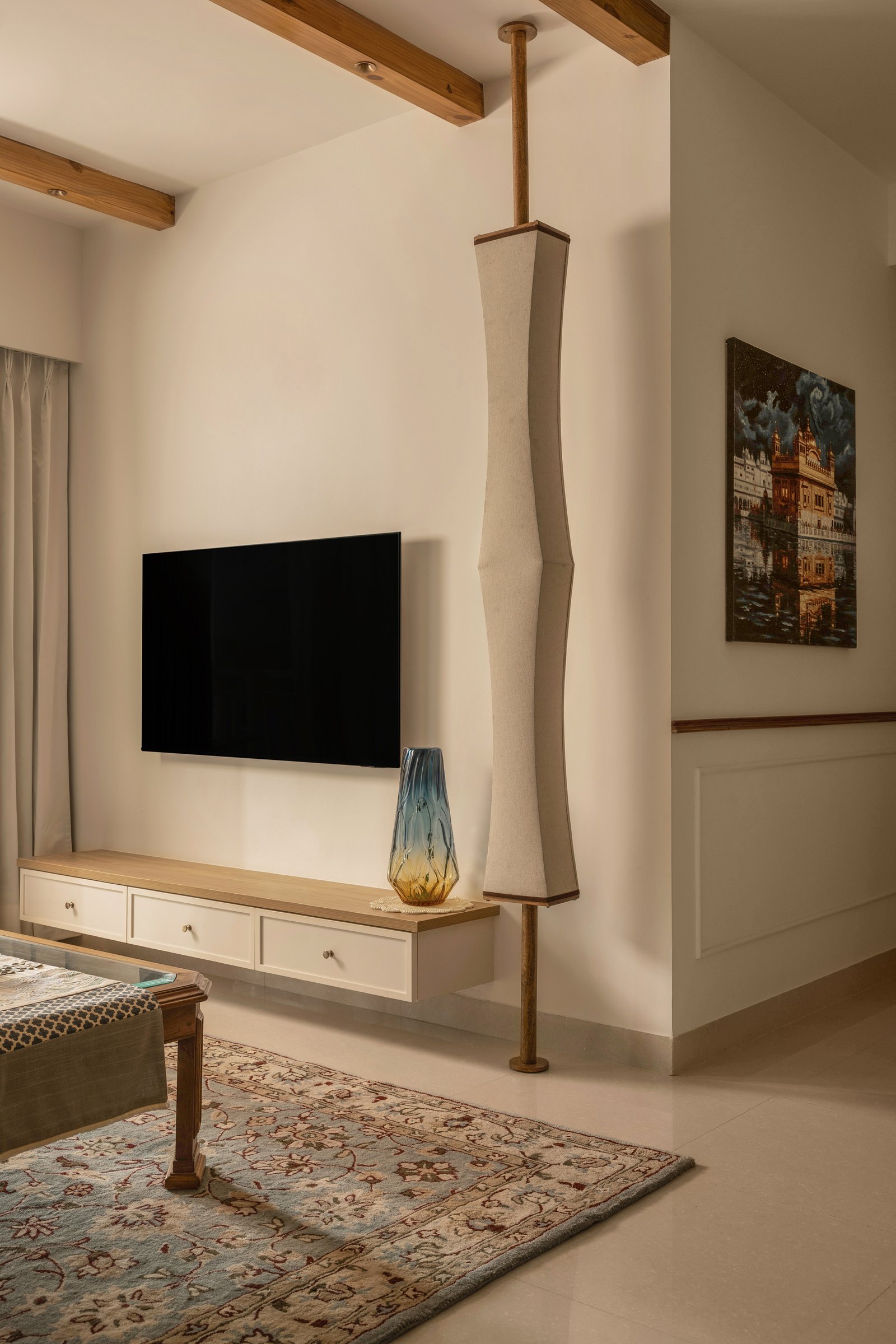
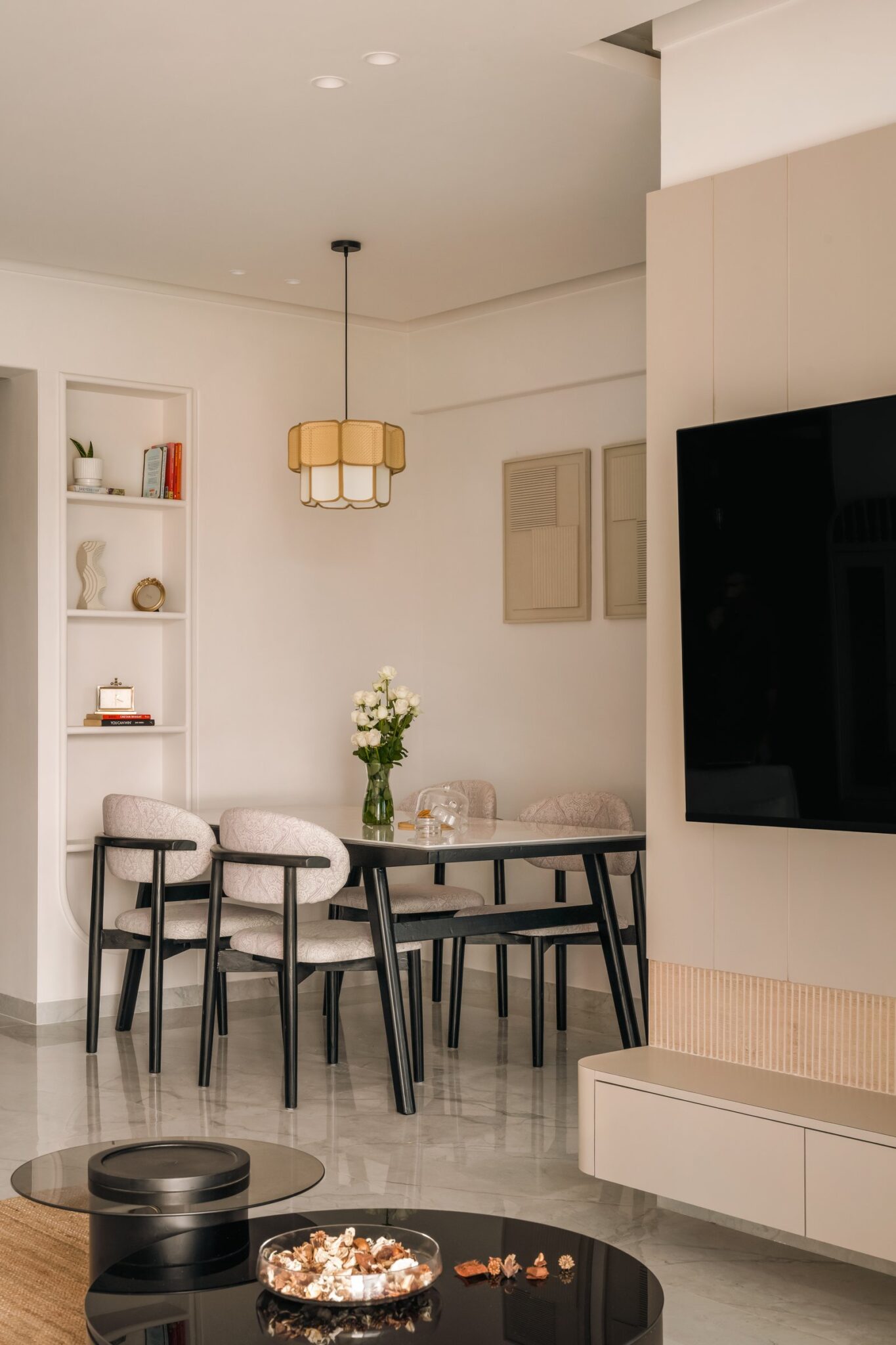
The television wall introduces the room’s most unexpected detail: a floor-to-ceiling sculptural element wrapped in linen, its sinuous, pinched form softening the transition between living and circulation areas. It reads less as a partition and more as an invitation to pause, a piece that converts a structural column into something worth looking at.
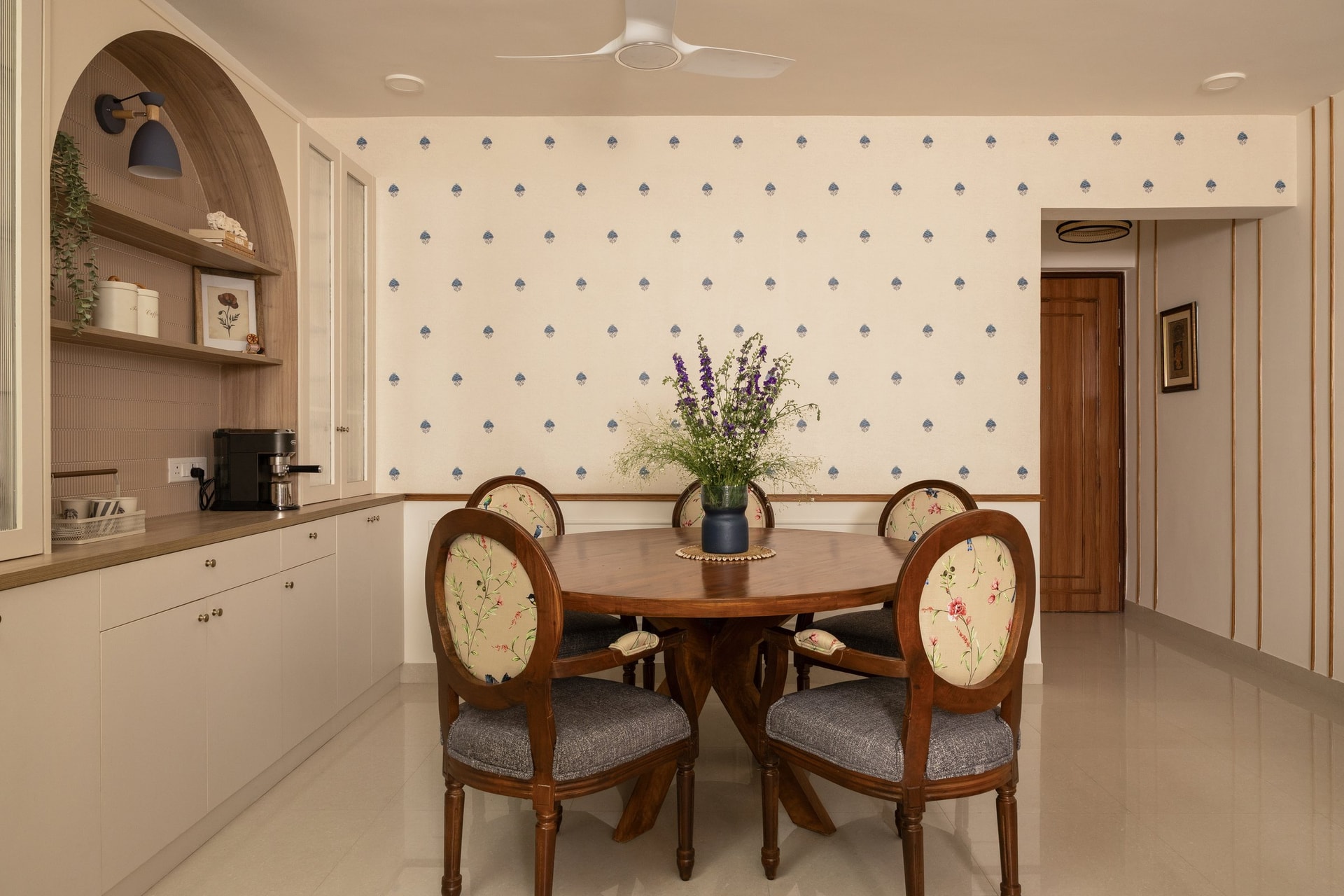
The dining area continues the wallpaper language of the foyer, wrapping the round timber table in the same blue-motif pattern and reinforcing the sense that this home unfolds as one continuous narrative. An arched niche set into the built-in cabinetry, lined with fine ribbed tiling and open shelves, introduces a softened geometry that breaks the rectilinear run of the storage wall beside it.
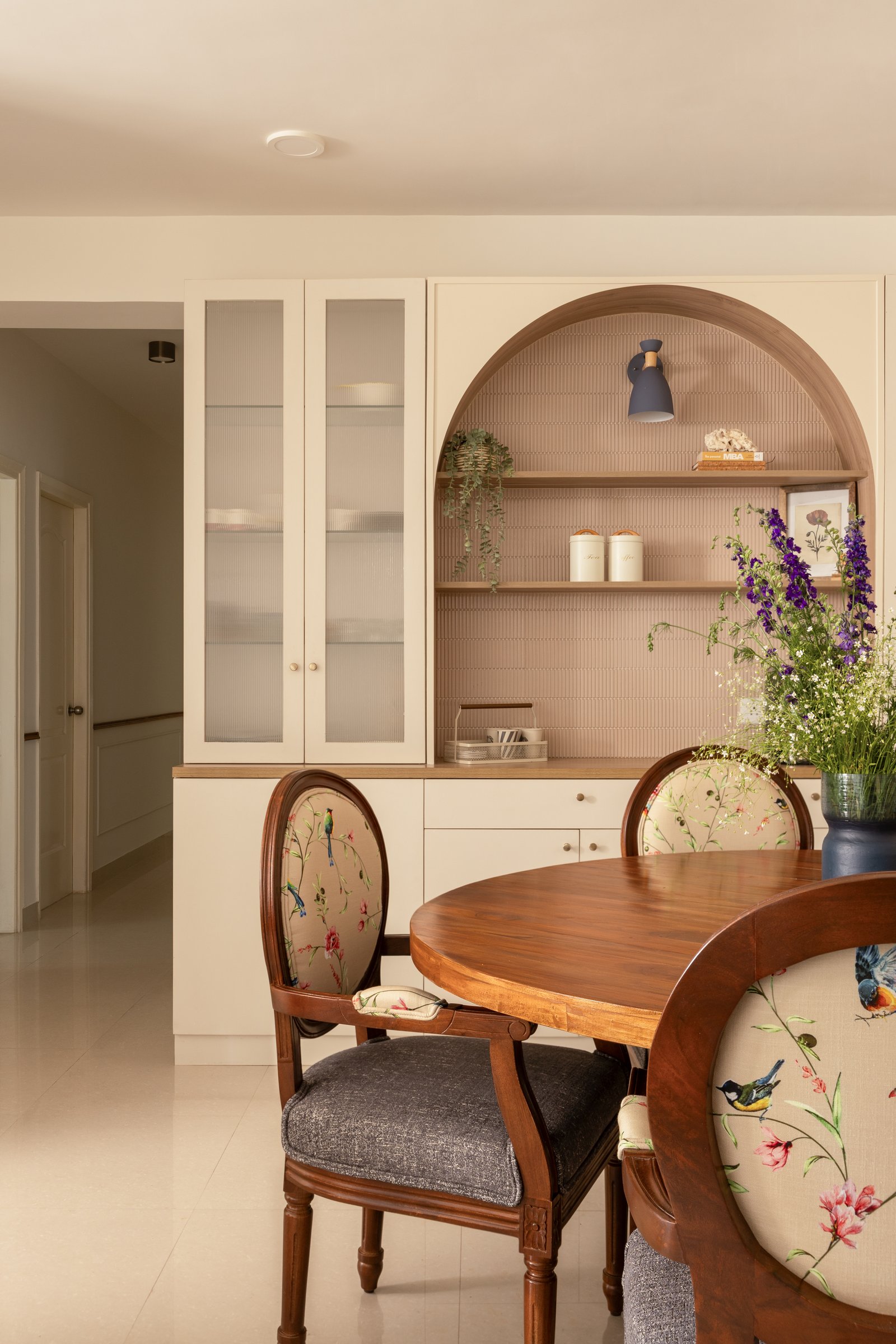
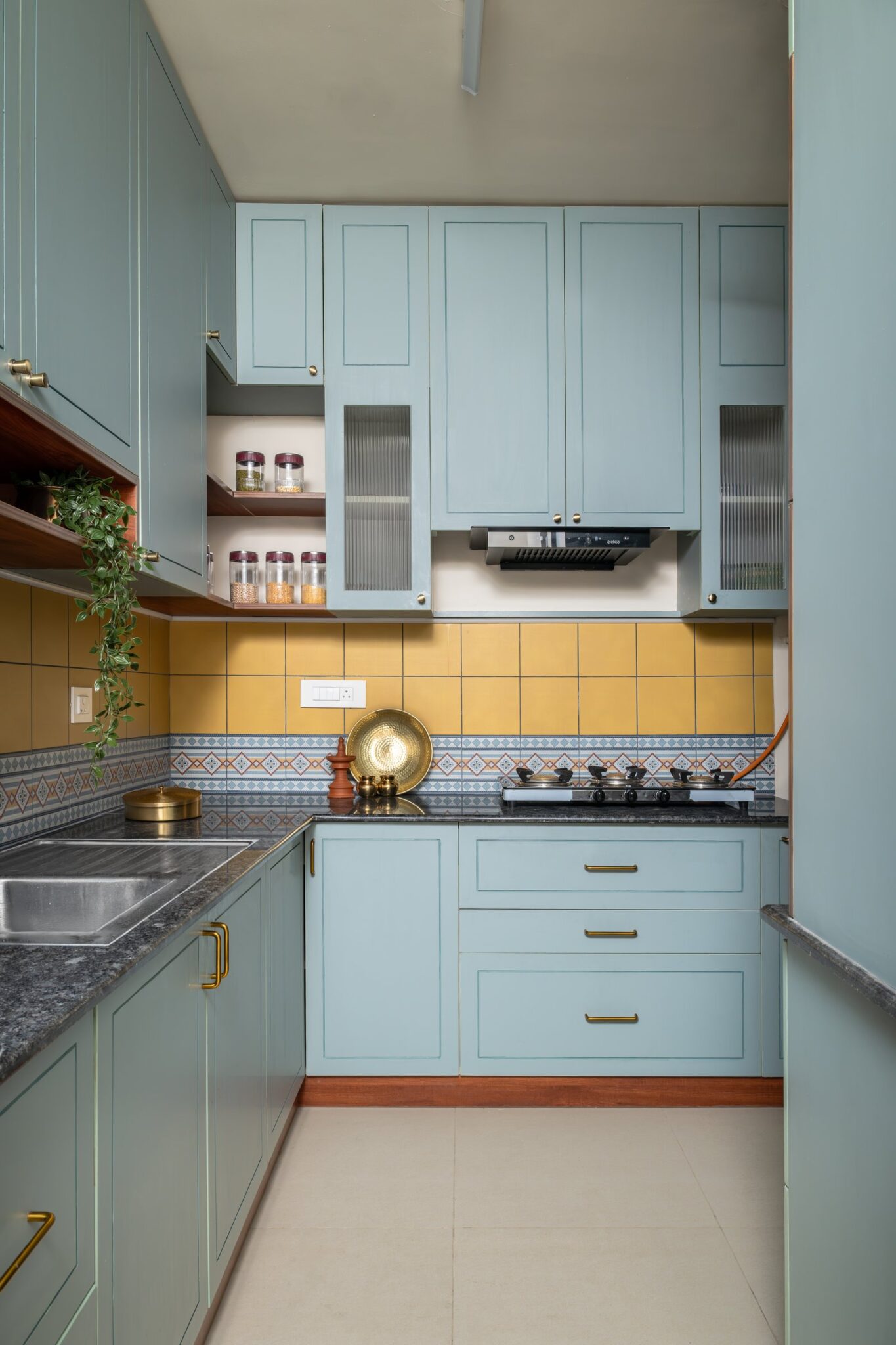
Seen closer, the dining chairs reveal their floral medallion backs, each upholstered with a bird-and-floral print that brings genuine colour into a palette otherwise governed by cream and timber. The adjacent crockery unit, its glass-fronted cabinets flanking a large arched open-shelf niche lit by a wall sconce, with smaller drawers running below, is resolved with the discipline of a kitchen but the temperament of a display cabinet.
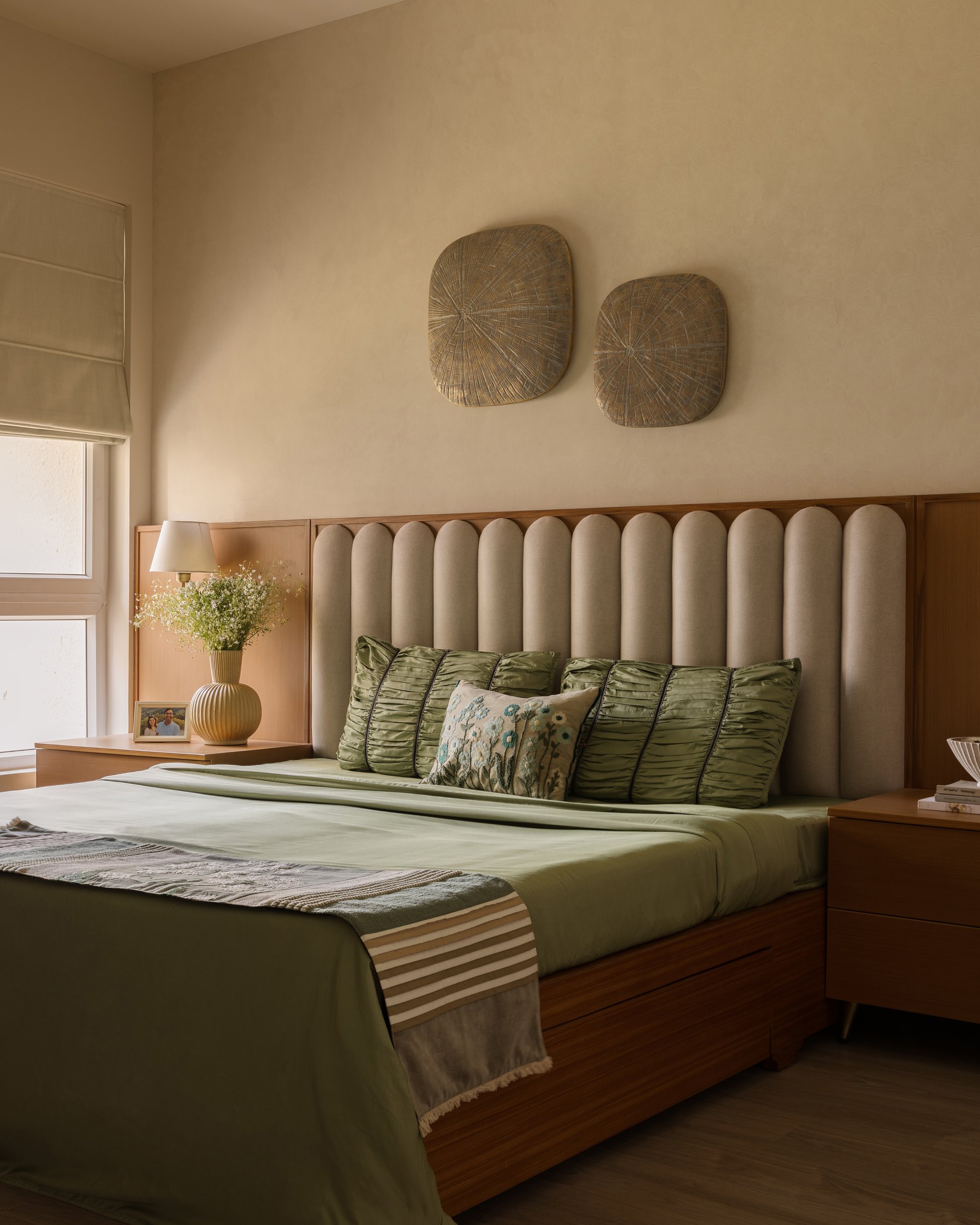
The master bedroom shifts register entirely. A textured plaster wall in muted sand replaces the cream and wallpaper of the public rooms, and the scalloped upholstered headboard, set within a timber frame, introduces a softness that is echoed in the olive bed linen. The room commits to earth tones, and that single-minded chromatic discipline gives it a quiet density the living spaces deliberately avoid.
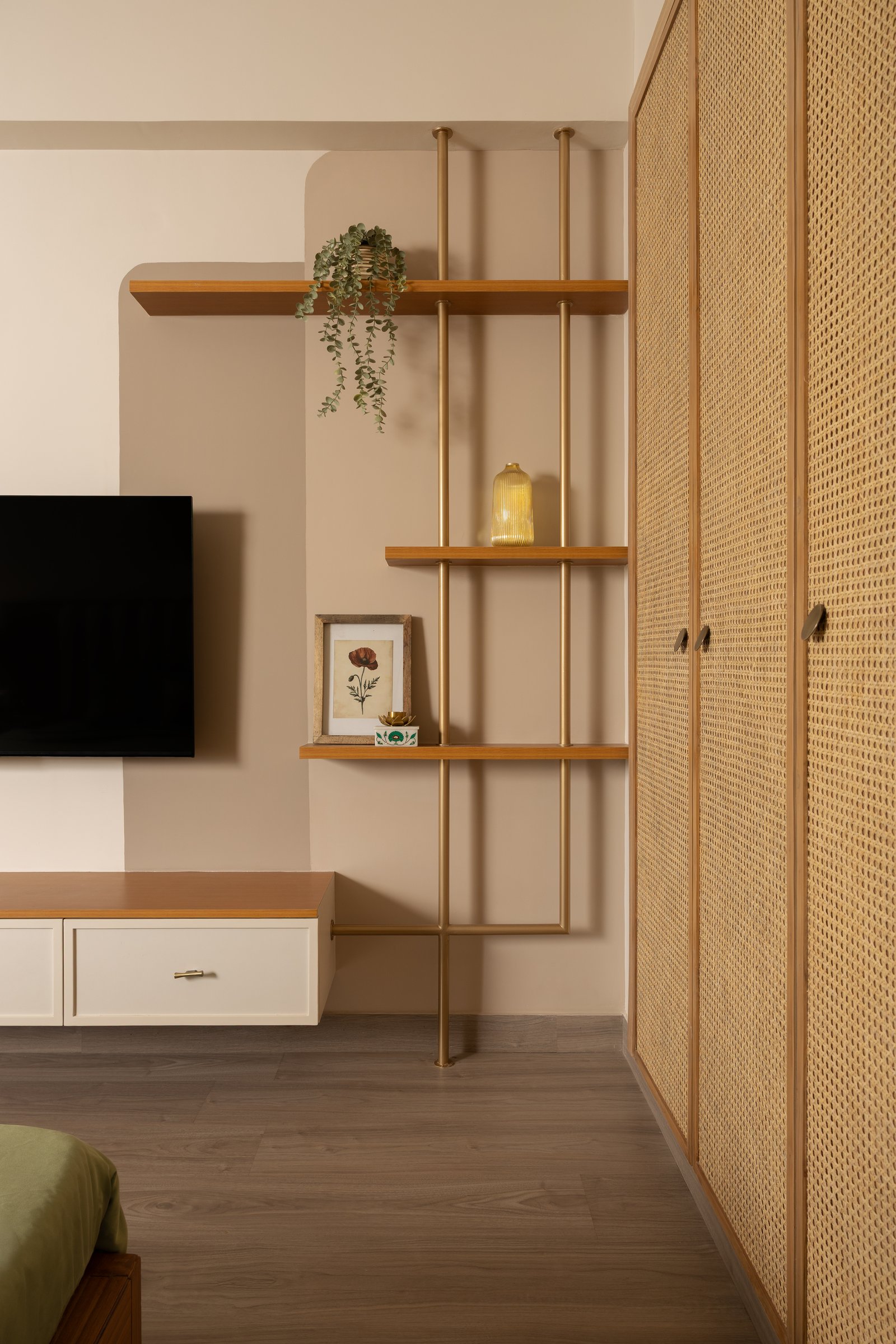
Across from the bed, a brass-and-wooden open shelving unit sits beside a full-height wardrobe finished in woven cane panels. The cane brings texture and breath to what could have been a flat expanse of cabinetry, and the shelving, lightweight and deliberately minimal, provides a counterpoint that prevents the storage wall from dominating the room.
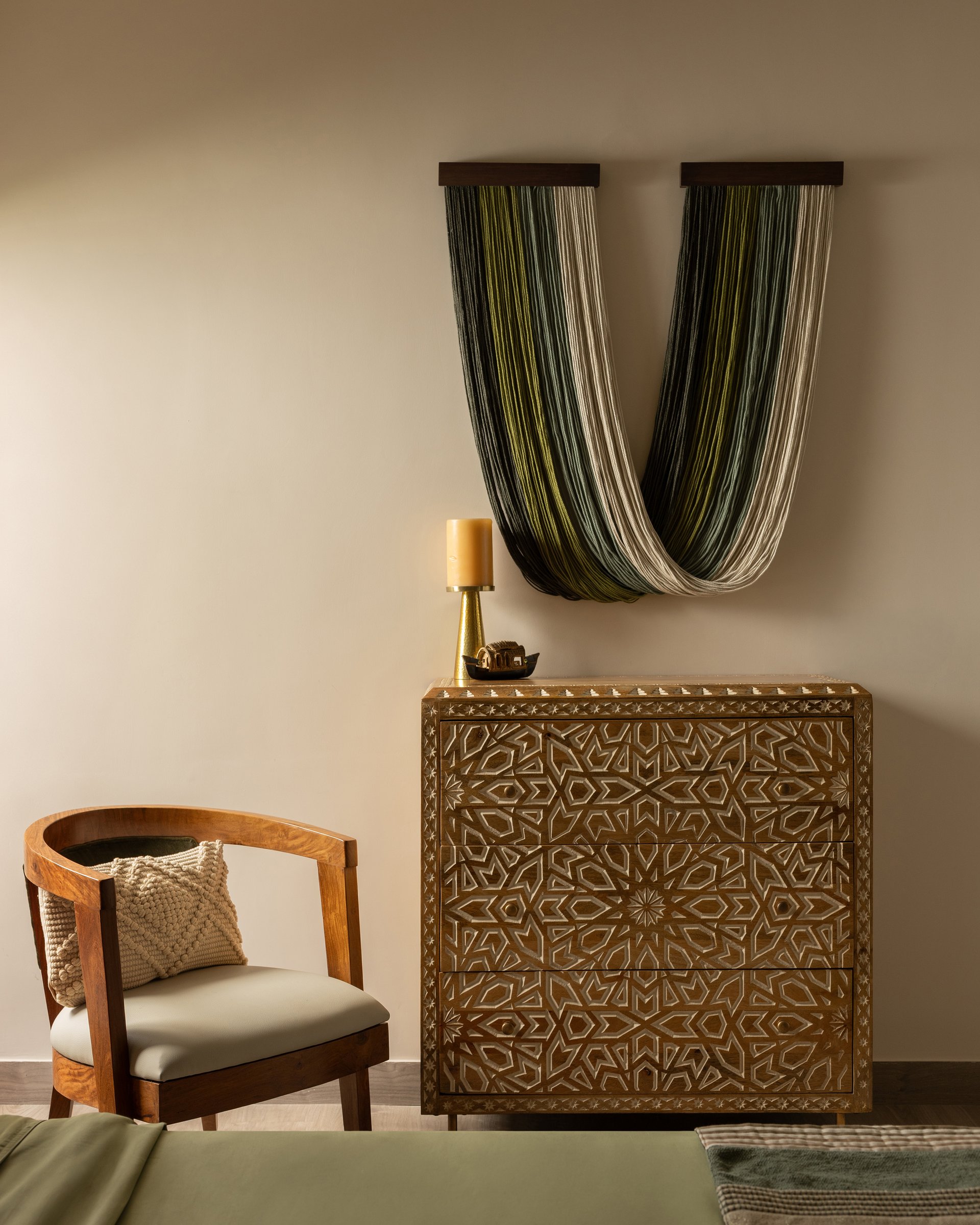
A corner of the master bedroom houses the room’s most characterful pieces: a carved wooden chest with geometric relief patterning, its surface dense and tactile, and above it a draped fibre wall installation in greens and cream. This is where the home’s commitment to craft registers most clearly, not in reproduction furniture but in objects that carry the evidence of hands at work.
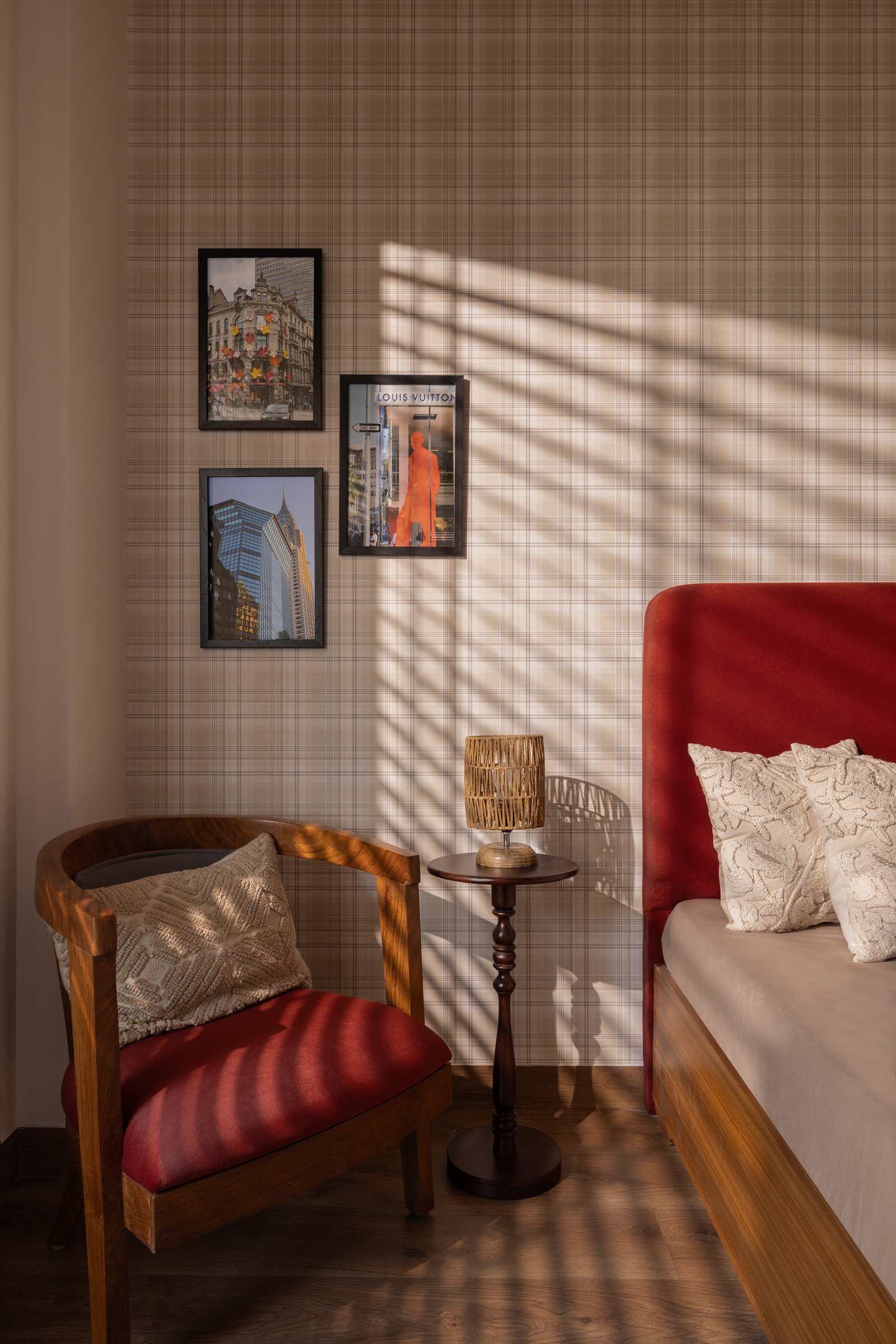
The guest bedroom takes a decisively different tonal direction, swapping earth tones for a plaid wallpaper in warm taupe and a headboard upholstered in deep red. Natural light streaming through the blinds casts sharp geometric shadows across the wall, and the room feels younger, more cosmopolitan, a deliberate counterpoint to the rest of the home’s measured traditionalism.
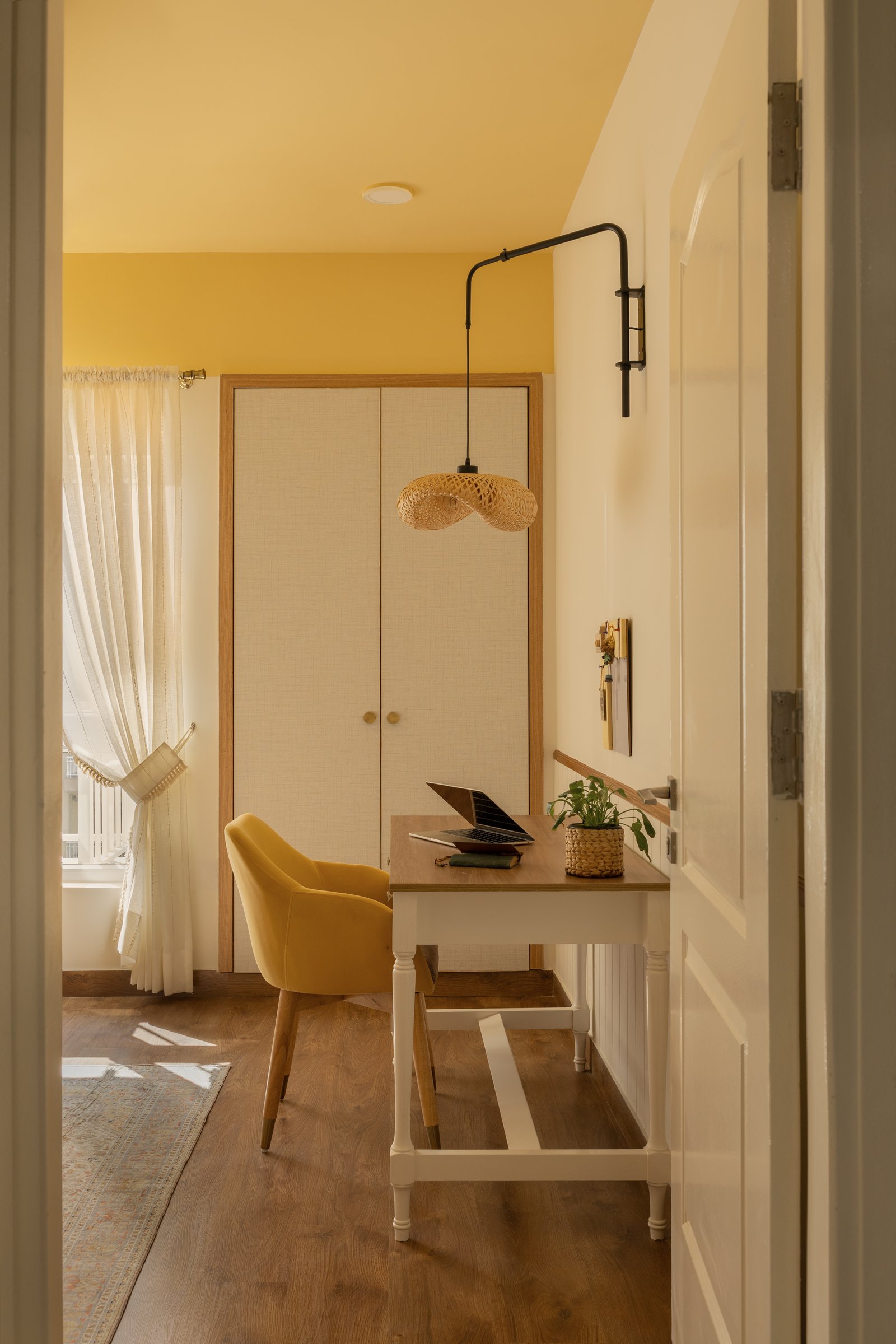
The study, tucked into what appears to be a converted room or balcony, is the home’s most spirited space. A sunshine-yellow ceiling energises the compact footprint, and the desk, a simple white-and-timber piece below a woven shade hung from a black wall-mounted swing arm, sits against a wardrobe clad in fabric panels. The colour commitment is bold, and it works precisely because the rest of the home earns it through restraint.
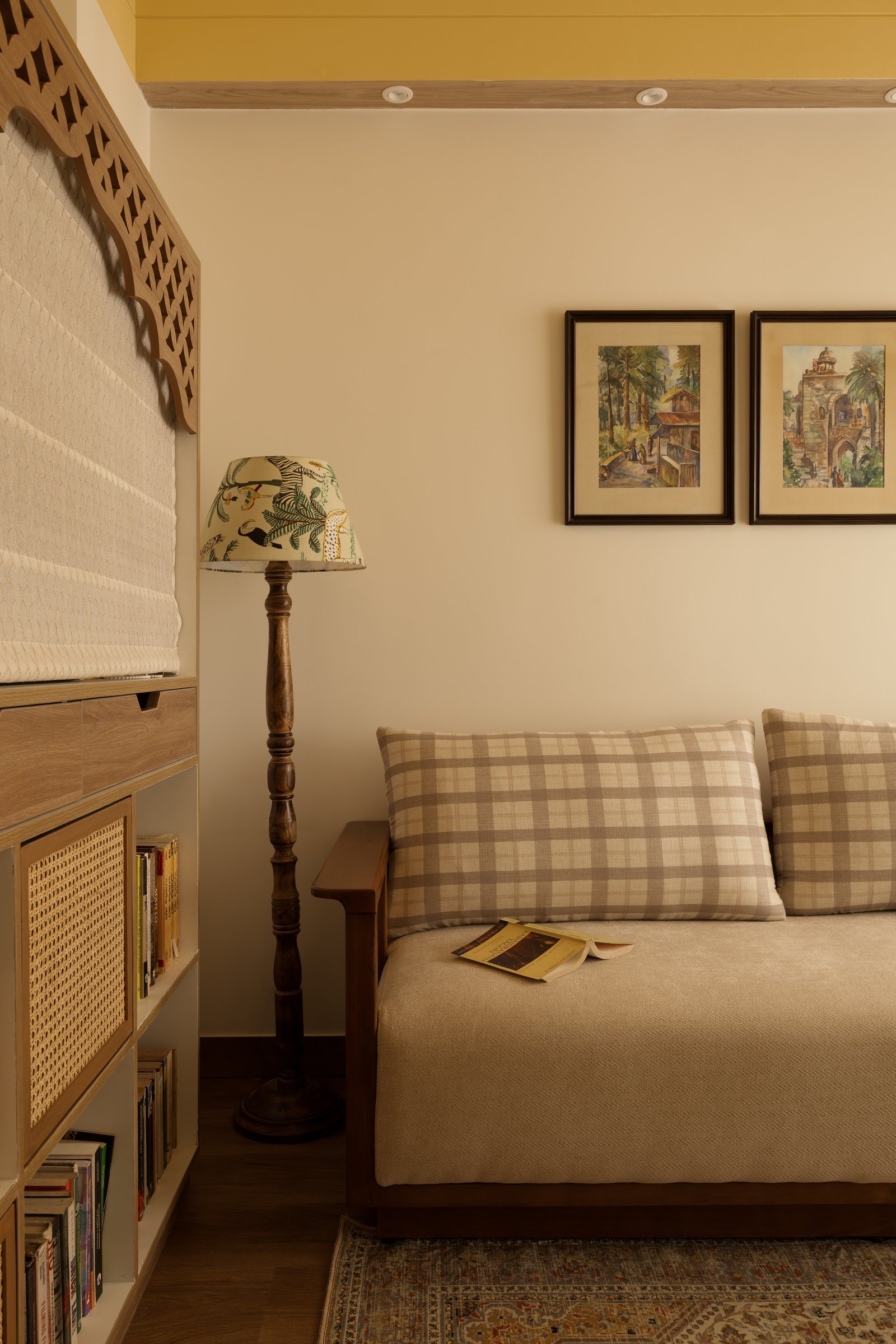
A daybed corner within the study, flanked by a cane-fronted bookshelf and a turned-wood floor lamp with a botanical shade, establishes this as a room for reading and slow afternoons. Framed watercolour streetscapes depicting architecture and palm trees on the wall above and a carved wooden fretwork bracket above the shelving complete the room’s character: unhurried, layered, and generously personal.
In a moment when Indian residential design often gravitates toward either stark minimalism or maximalist spectacle, The Melias occupies a measured middle ground. It draws from classical European furniture forms, Indian textile and craft traditions, and a contemporary understanding of proportion, holding all three in a balance that feels neither forced nor nostalgic.
What Bonita Casa has achieved here is a home where every room has its own personality yet none feels like it belongs to a different project. The material consistency, from timber beams to wainscoting to cane, provides the connective thread, while the shifts in colour and mood from room to room reflect the reality of a household where different members inhabit their spaces differently. That sensitivity to lived experience, rather than any single design gesture, is what holds the project together.