Curves, arches, and rounded profiles are easy to deploy as accent moves, a softened doorframe here, a rounded mirror there. But to commit to them as a spatial language, to let them govern walls, furniture, ceiling lines, and the rhythm of movement between rooms, demands a conviction that few residential projects in Indian cities are willing to sustain.
The Form House, a 1,750-square-foot apartment in Perungudi, Chennai, is precisely that kind of commitment. Designed by Reflection Matters, led by principal architects Sharath Kumar L and Swathi S, the project takes the soft geometry of arches and sculptural silhouettes and extends them into every surface and every custom-made piece of furniture, producing a home that feels less like a decorated apartment and more like a single, continuous design gesture rendered across multiple rooms.
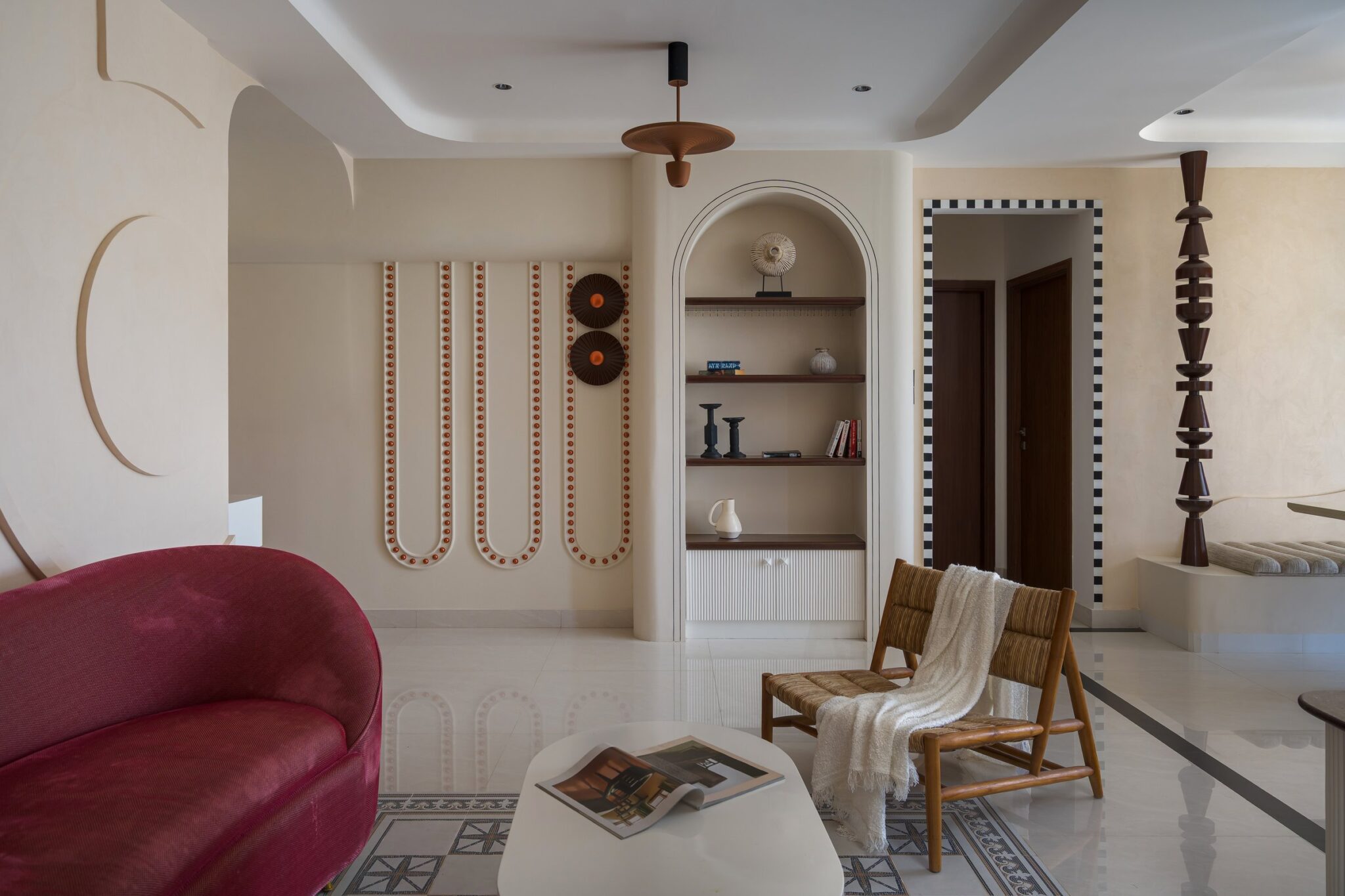
The living room establishes the project’s central argument within seconds. A wall of sculpted plaster relief, its U-shaped forms studded with terracotta-toned beads and paired with dark rosette accents, operates as the room’s primary artwork, not hung but built into the architecture itself. Beside it, an arched display niche with timber shelving introduces the vocabulary that will repeat throughout the home.
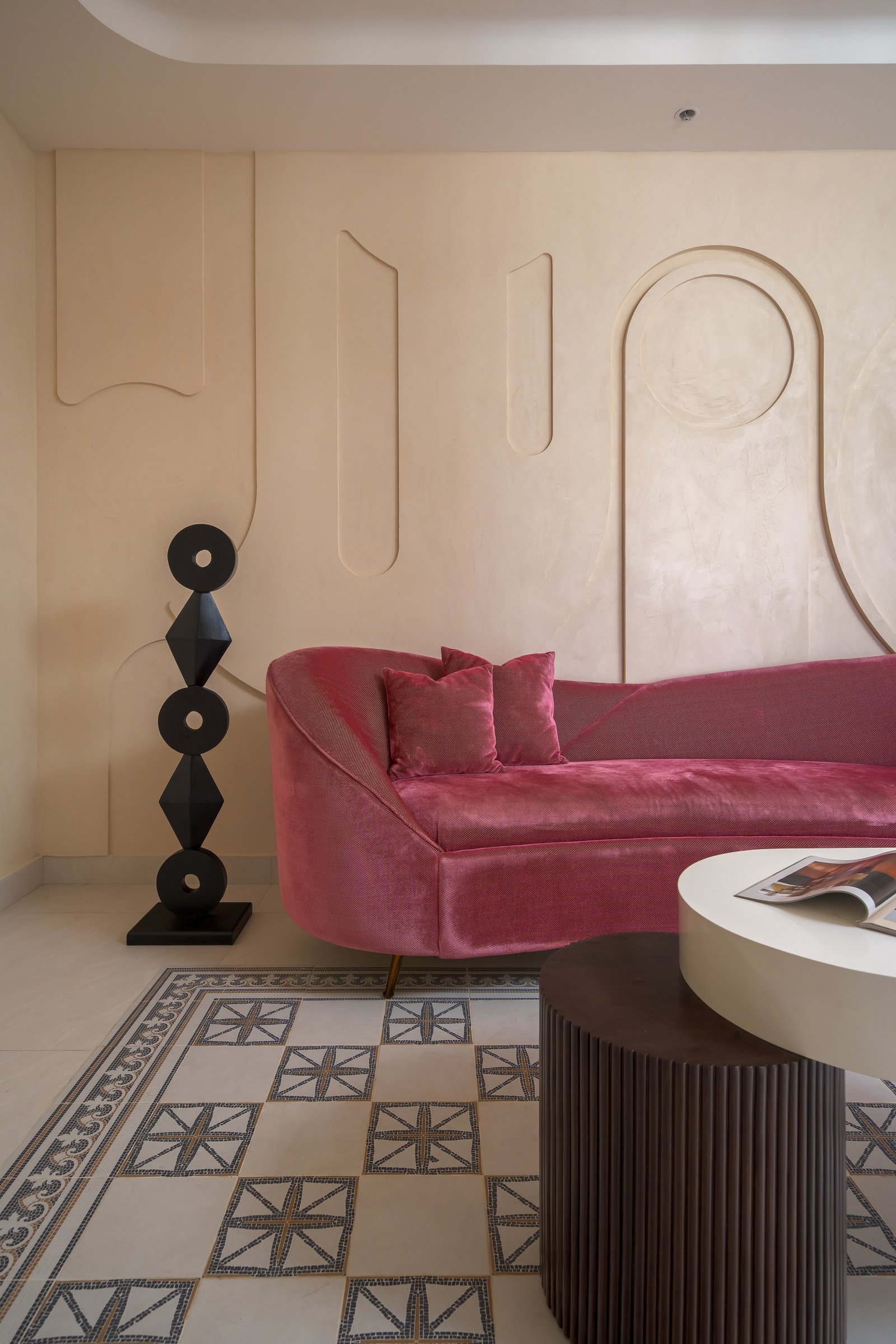
Against the opposite wall, a curved sofa in rich rose-pink velvet sits before a plaster surface incised with abstract, looping outlines. The pairing is deliberate: the sofa’s form echoes the wall’s soft geometries, while a black abstract totem sculpture stands sentinel to one side and a fluted-base coffee table edges into the foreground. The mosaic-patterned floor tile underfoot adds a layer of artisanal complexity that grounds what could otherwise feel too smooth, too resolved.
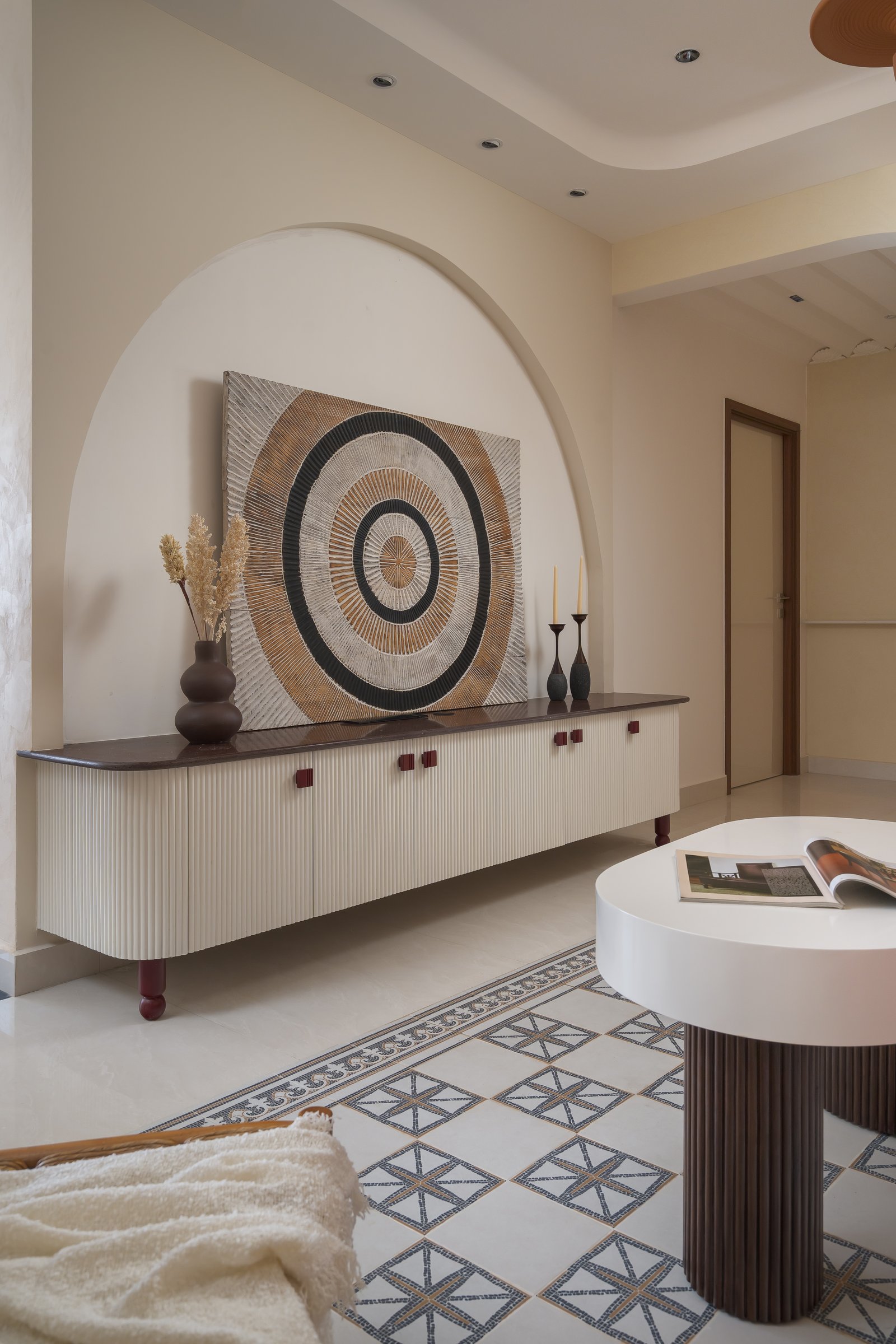
A fluted console set within a large arch completes the living room’s composition. The console’s maroon legs and knob details quietly reference the sofa’s colour, and the concentric artwork propped above it reinforces the circular motifs that define the home’s design grammar. What is notable here is restraint: the palette stays within blush, cream, and maroon, and the room gains its richness from form rather than from competing colours.
““Each element is thoughtfully crafted, balancing functionality with visual expression.””
Where the living zone ends and the dining area begins is signalled not by a wall but by a change in floor treatment and the appearance of a tall, turned-wood totem sculpture that rises from the built-in banquette seating. The checkerboard tile border around the entry doorframe offers a graphic counterpoint to the soft plaster surfaces, a sharp, deliberate moment of contrast.
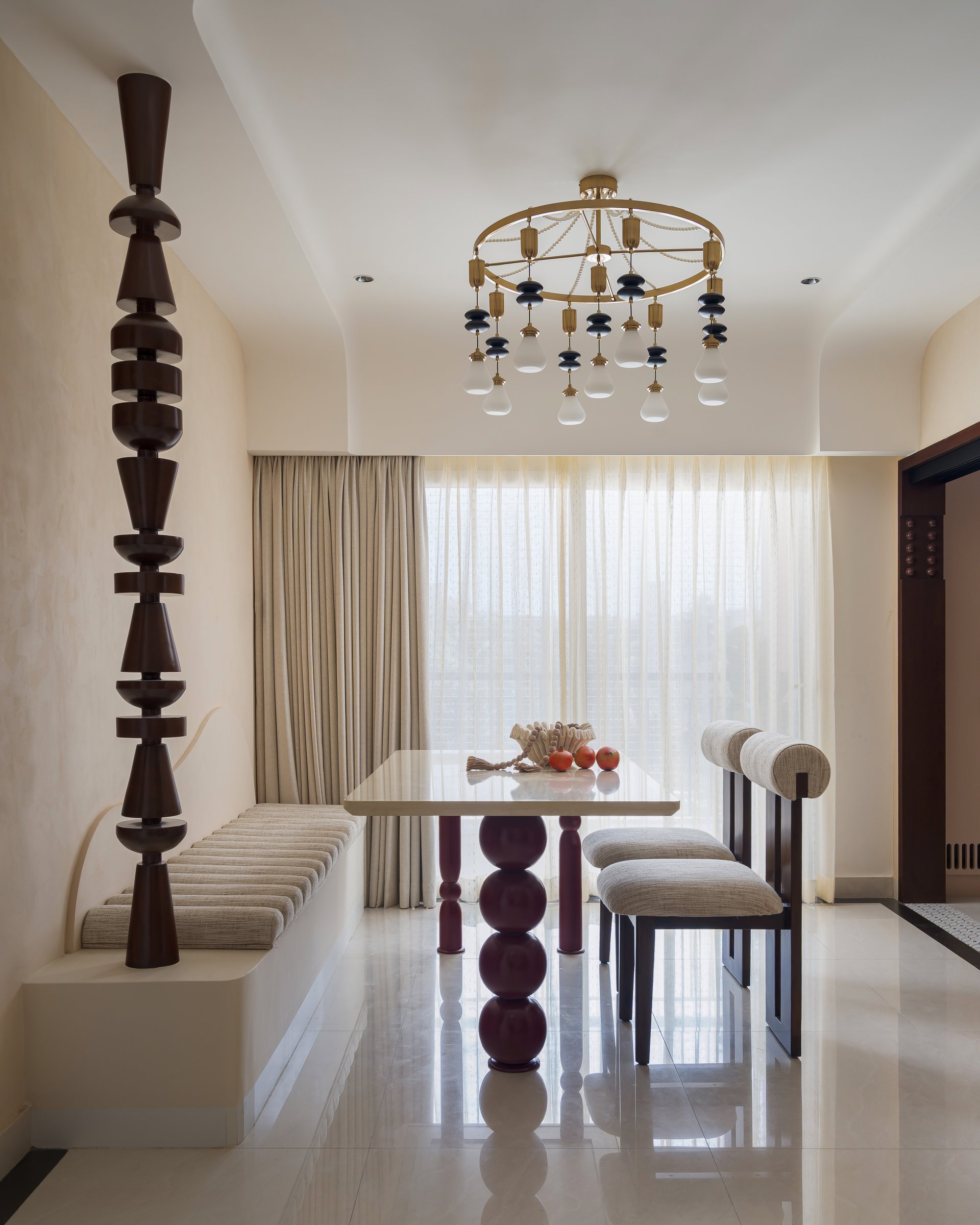
The dining area is the home’s most sculptural composition. A table supported by stacked maroon spheres sits beneath a brass chandelier whose own forms, dark disc-shaped pendants, dangling bulbs, echo the project’s obsession with rounded geometry. The built-in bench along the wall, paired with the tall sculptural totem rising from the banquette, gives the space an almost ceremonial verticality.
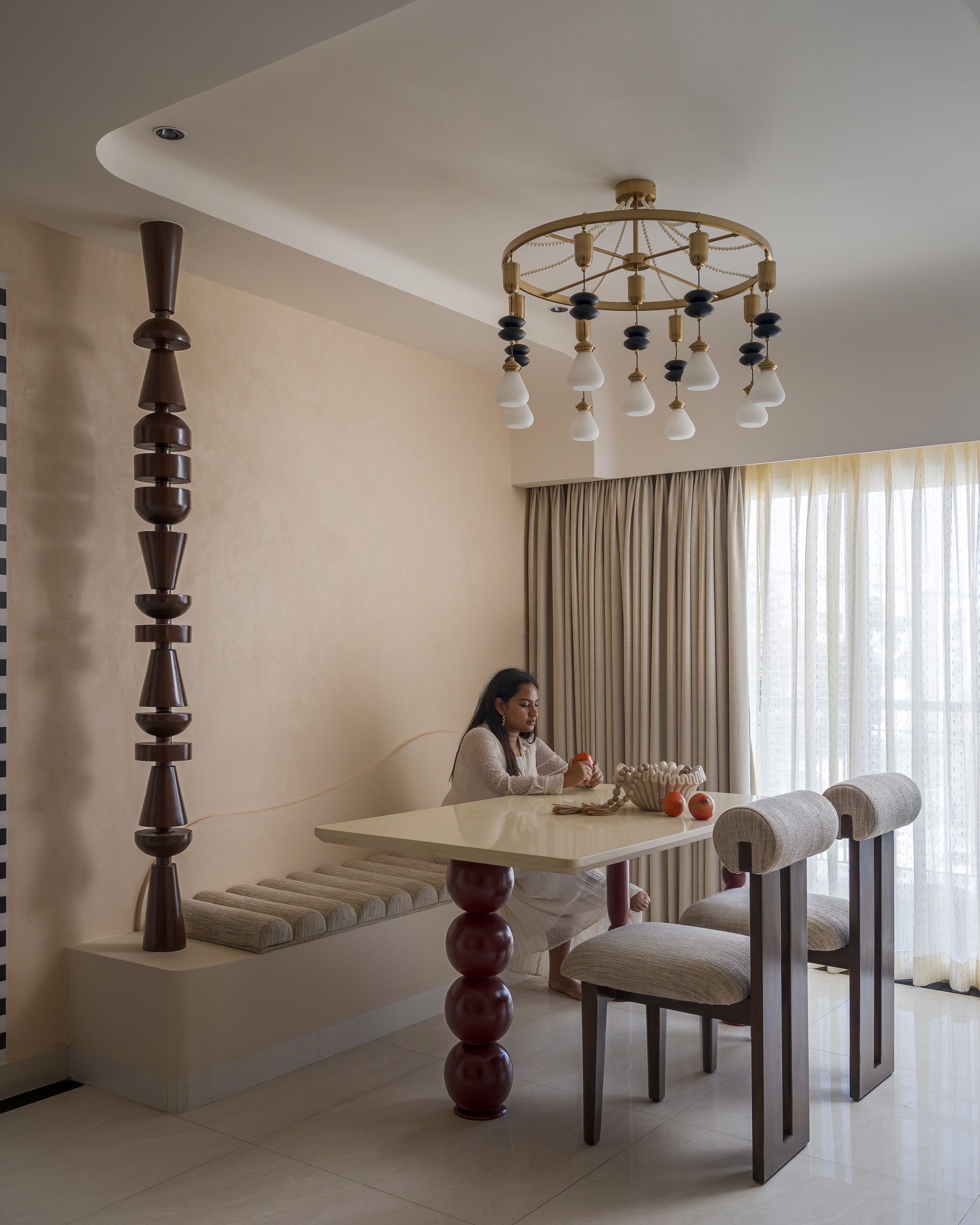
The banquette is generous enough for casual sitting, the sheer curtains filter Chennai’s light into a warm, even glow, and the chandelier casts a pattern of gentle shadows that shift through the day.
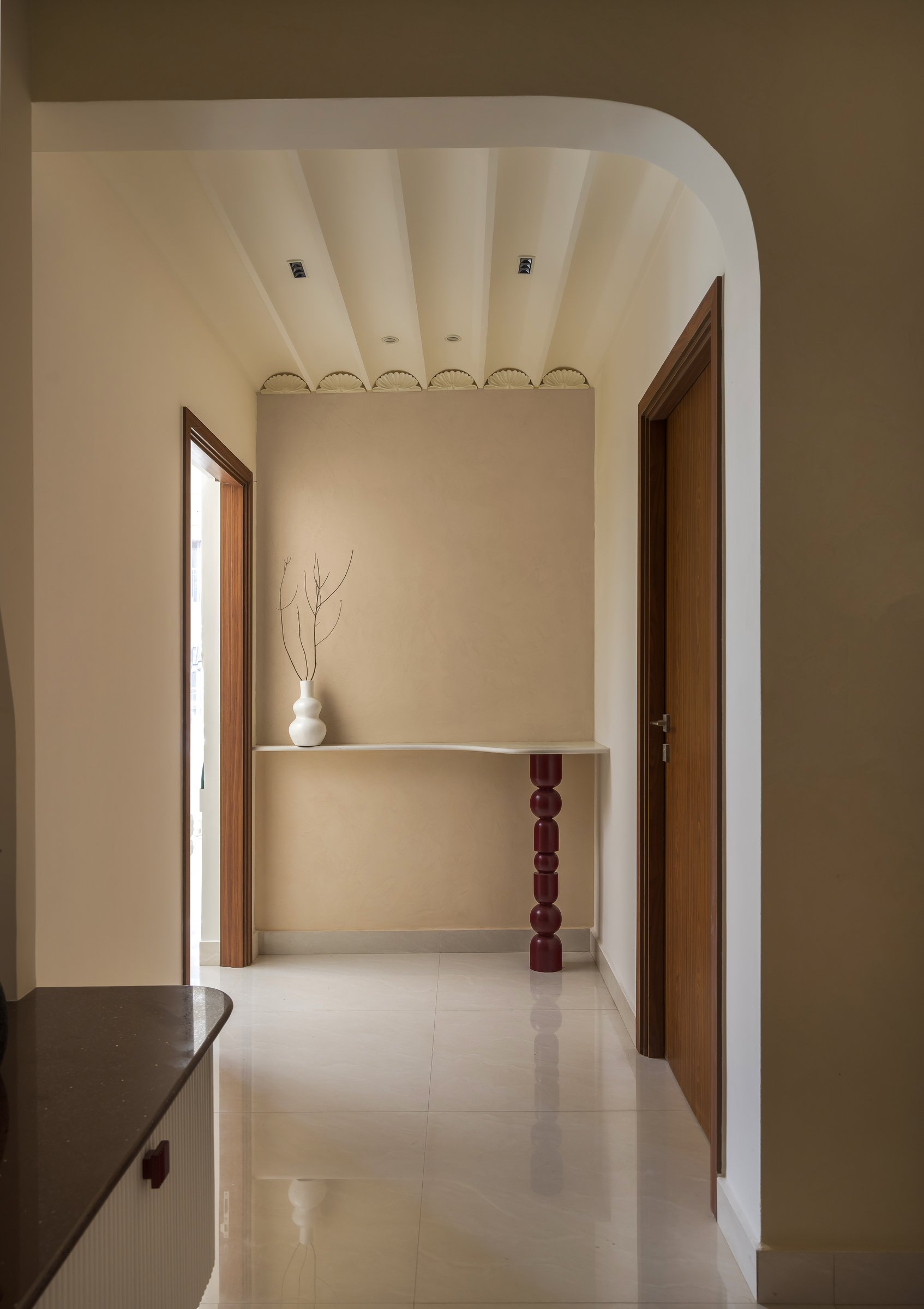
A passage connecting the kitchen and bedroom zones is handled with the same spatial attention as the principal rooms. A console table on a maroon leg composed of stacked spheres sits beneath a scalloped ceiling detail, and an arched opening frames the corridor’s end. It is a transitional space, but it carries the home’s design vocabulary without interruption.
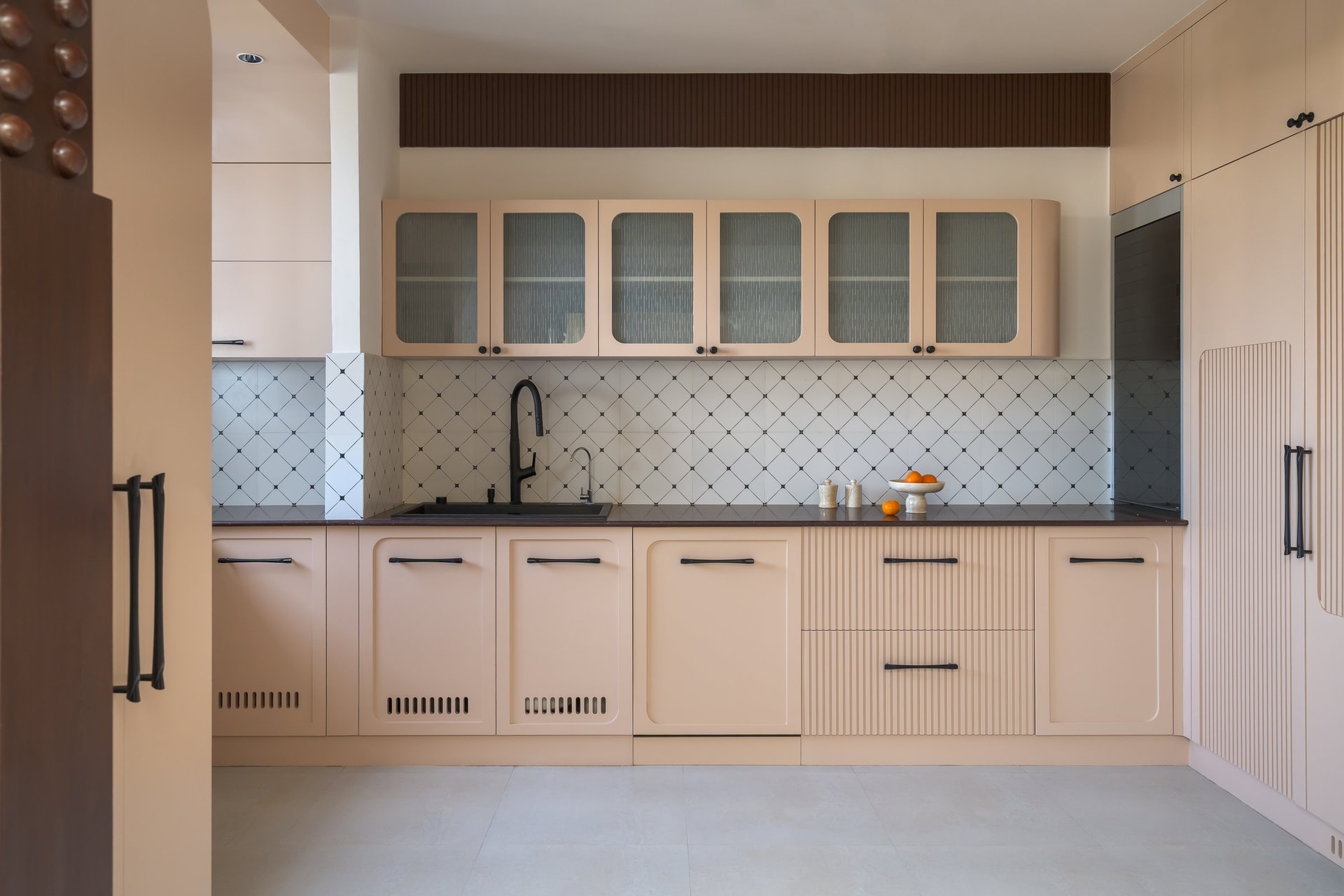
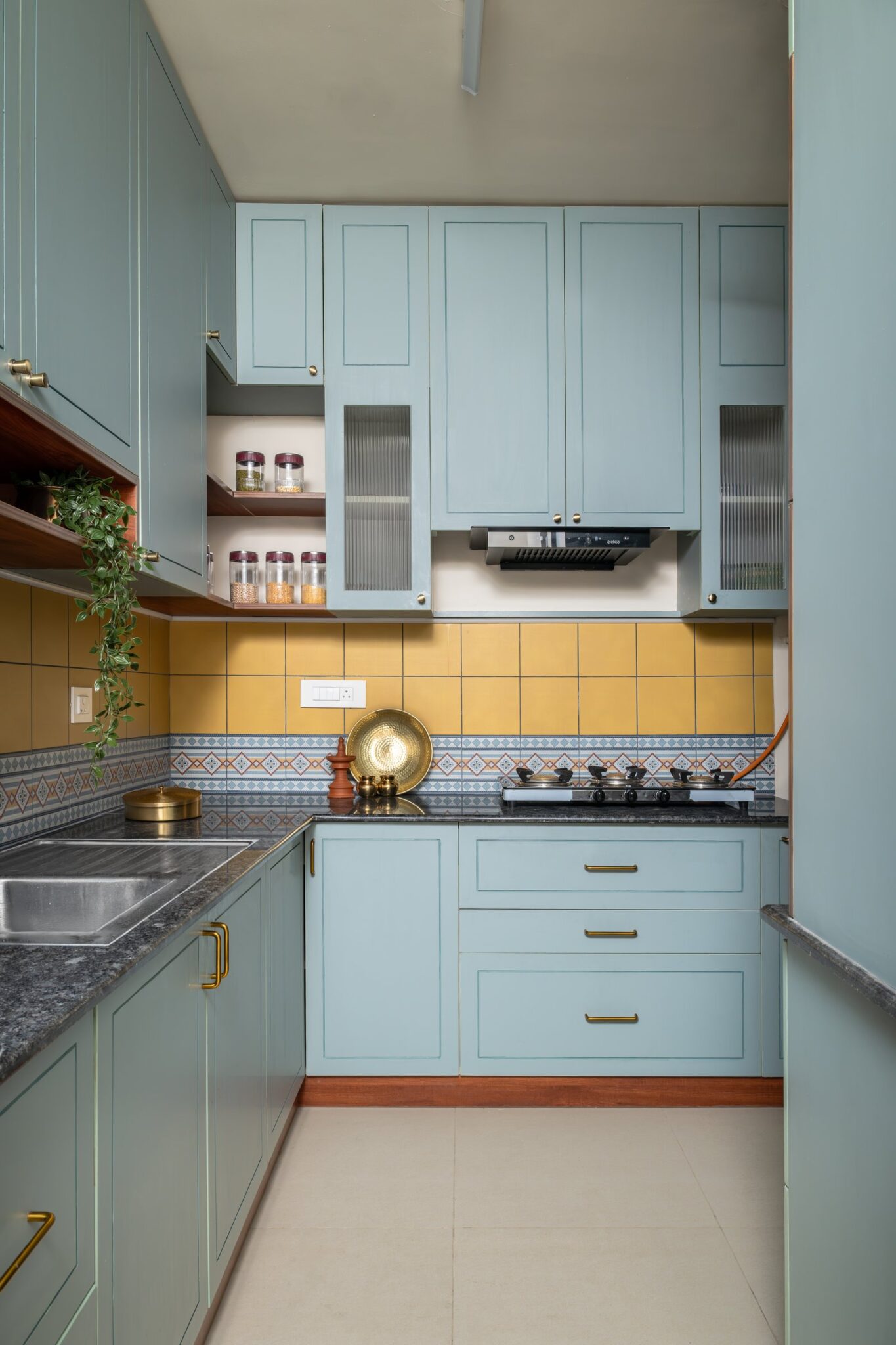
The kitchen trades the living area’s warm plaster palette for a cleaner register of pale blush cabinetry and a diamond-patterned backsplash in muted tones. Arched panel detailing on the cabinet doors and fluted drawer fronts keep the curved language alive, while dark hardware provides the necessary punctuation. The room is functional and restrained, content to support the bolder gestures elsewhere in the home.
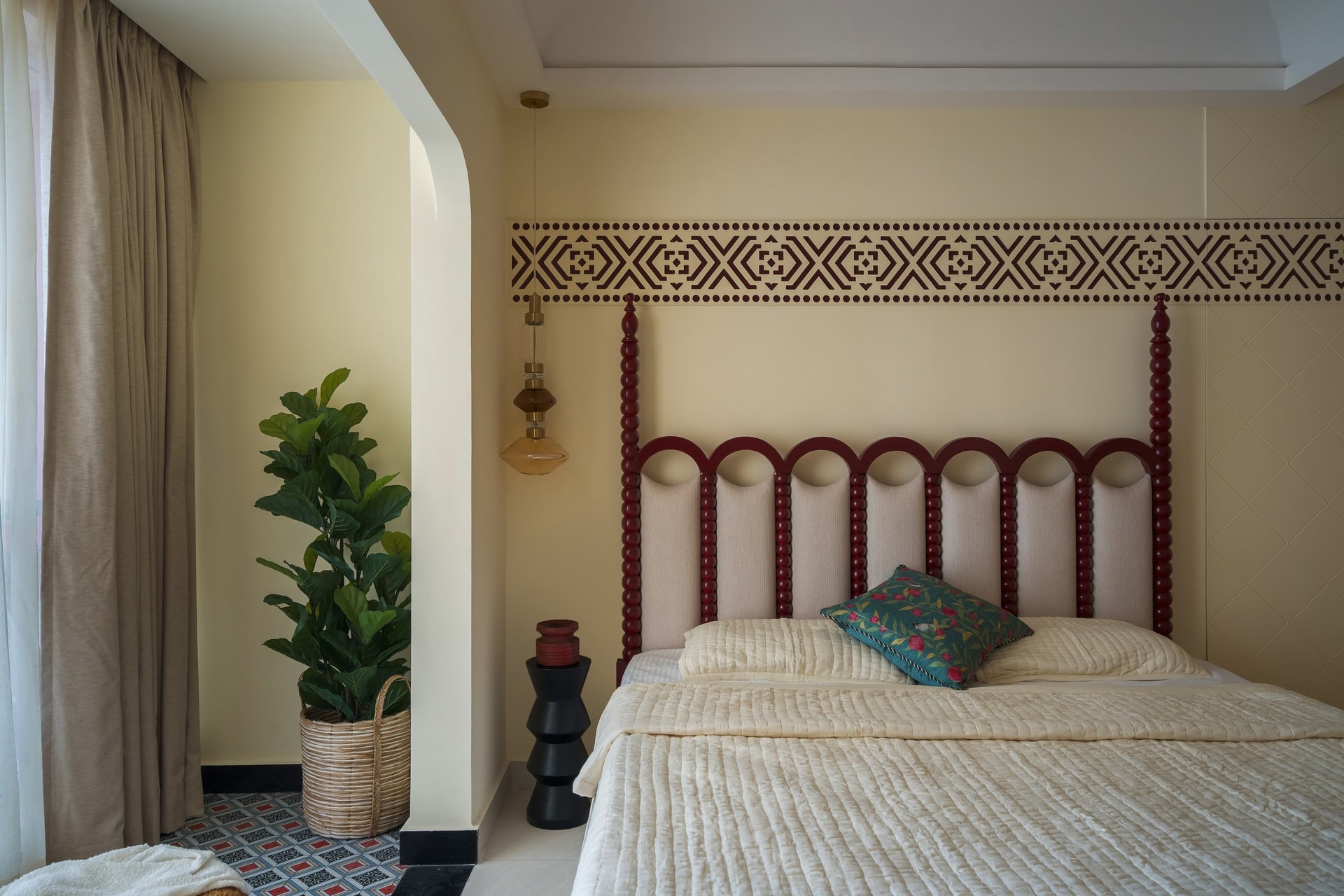
The master bedroom shifts the material conversation toward warmer territory. A custom headboard with arched, upholstered panels framed by turned maroon bobbin columns reads as a contemporary reinterpretation of traditional Indian craft furniture. Above it, a geometric border in maroon on the warm cream wall references jaali-like patterning without replicating it directly.
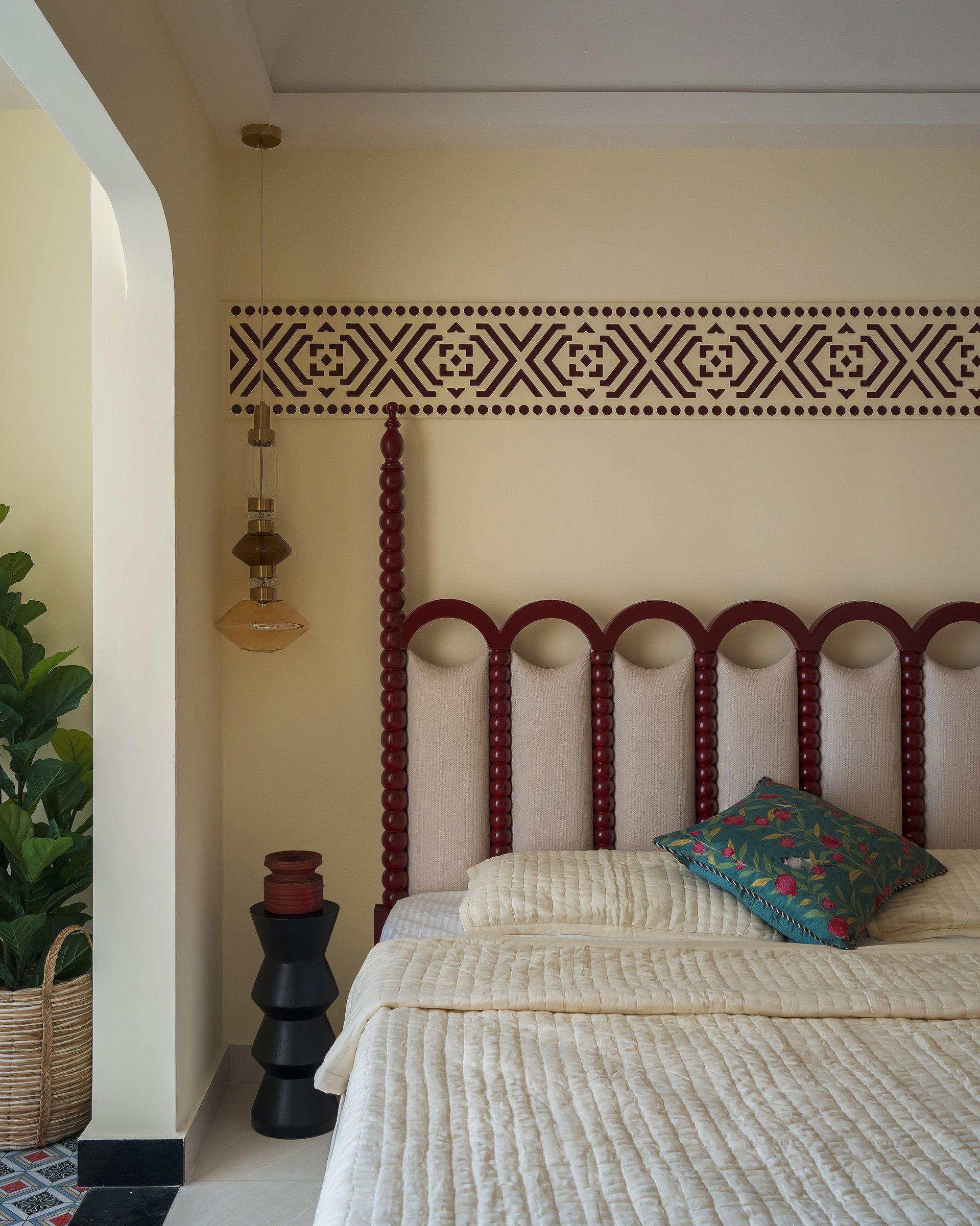
Seen closer, the headboard’s construction reveals its ambition: each bobbin column is individually turned, the arched upholstered panels between them giving the piece a rhythmic quality closer to architectural detailing than bedroom furniture. A stacked glass-and-brass pendant beside the bed continues the home’s preference for objects that double as sculptural forms.
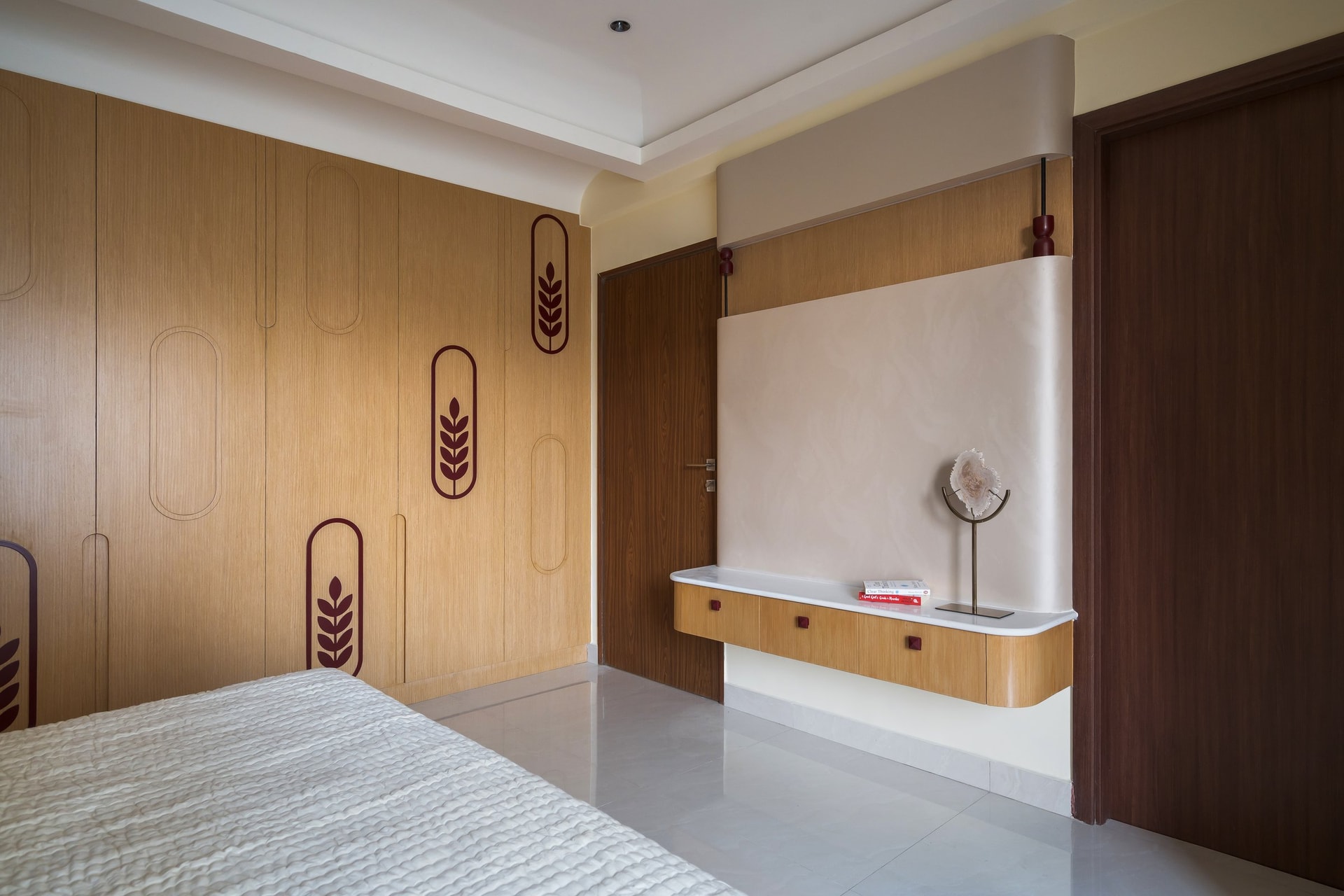
On the facing wall, oak-toned wardrobes are inlaid with dark botanical motifs within capsule-shaped outlines, a graphic, almost illustrative move that introduces pattern without wallpaper. A floating console with curved edges and a plaster TV panel unify the room’s two sides, keeping the geometry consistent even in the most utilitarian elements.
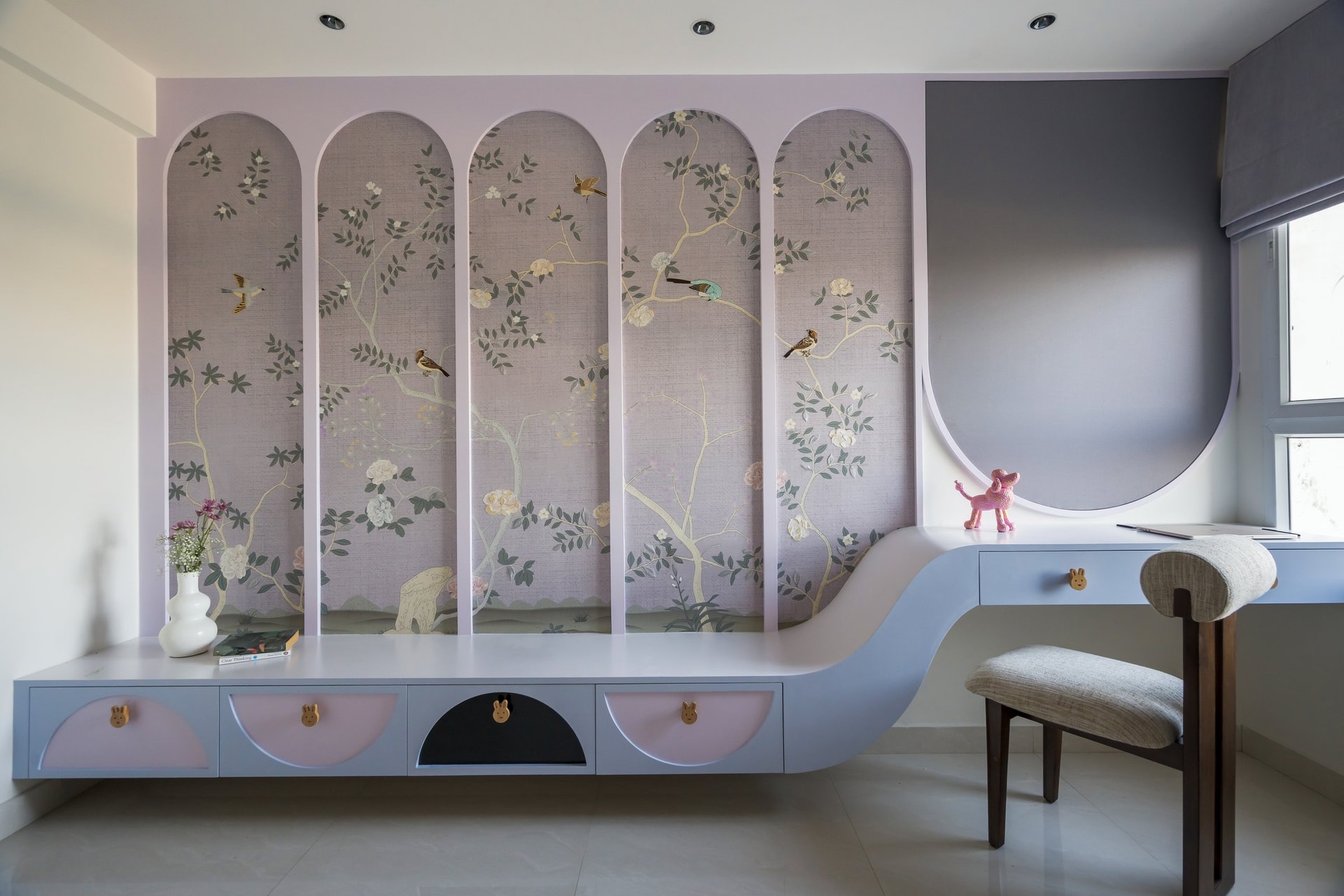
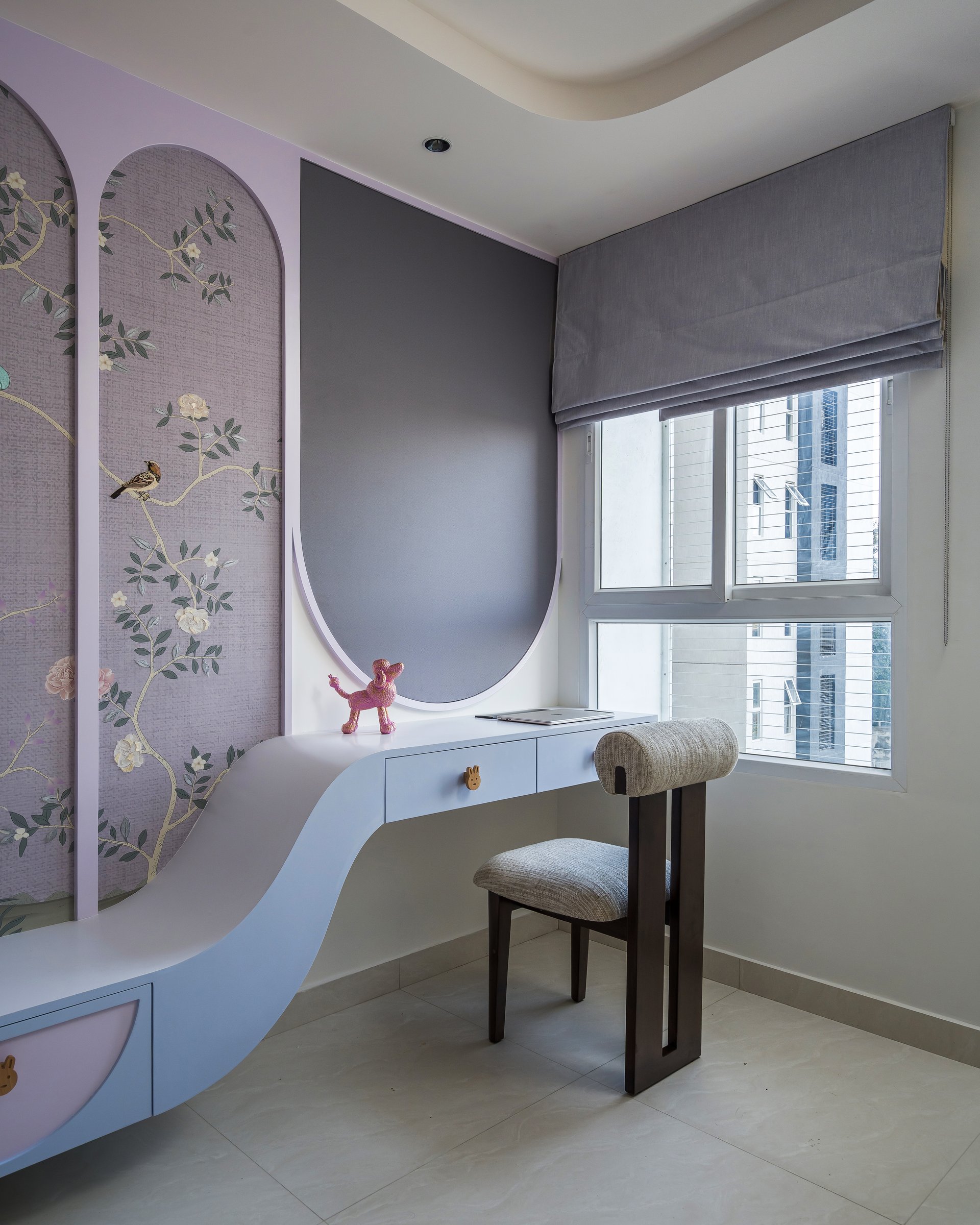
The child’s room is where the project allows itself to be genuinely playful. A wall of arched panels framing a chinoiserie-style botanical wallpaper in lavender and grey becomes the room’s centrepiece, and a wave-shaped storage unit in pale blue flows into a study desk, its silhouette suggesting motion rather than static furniture. The palette shifts to cool tones, marking a clear departure from the warm blush of the public spaces.
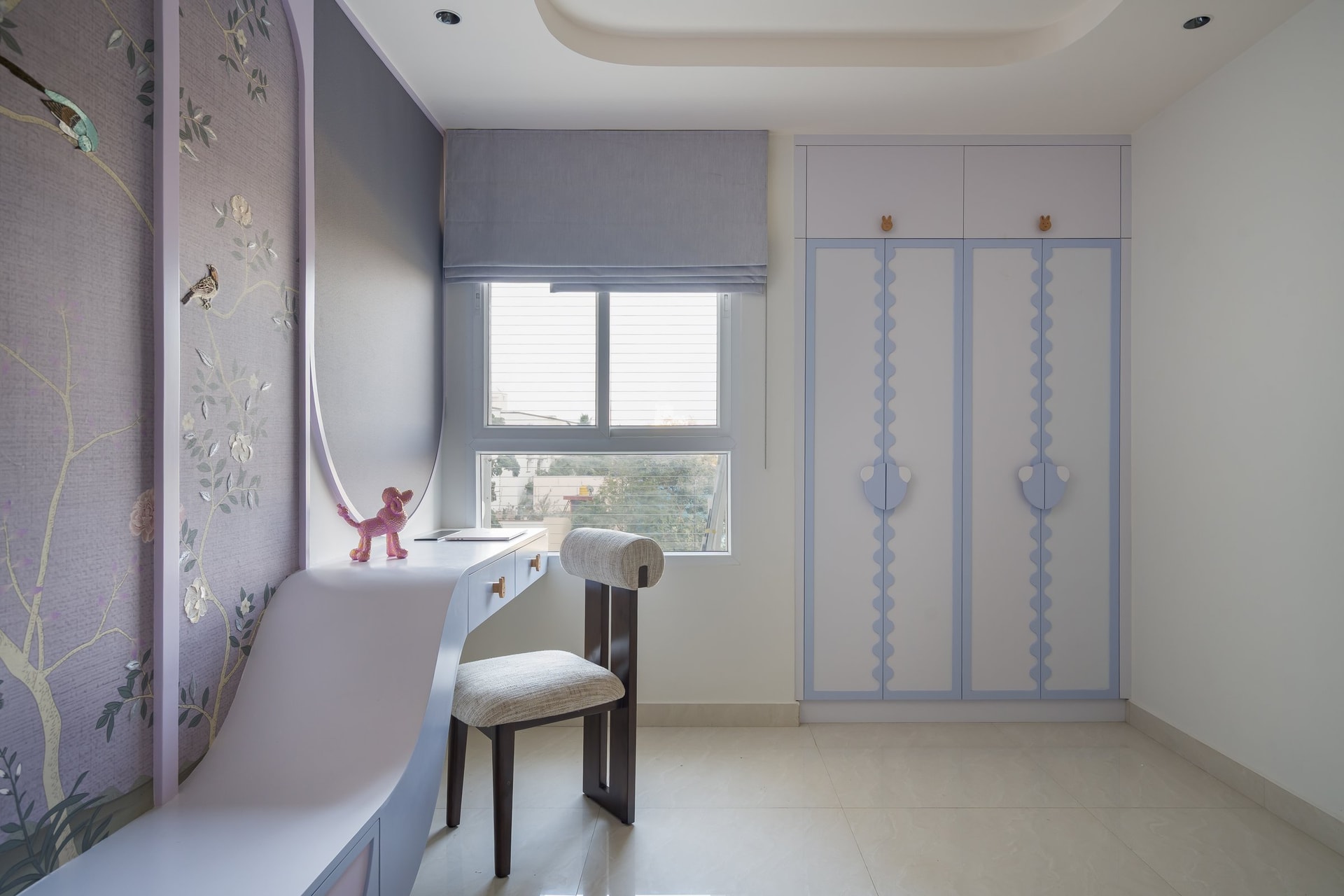
The wardrobe in this room carries the same curved language but translates it into scalloped edge details and playful handles. The continuity is important: even in a child’s room, the design system holds, adapted rather than abandoned.
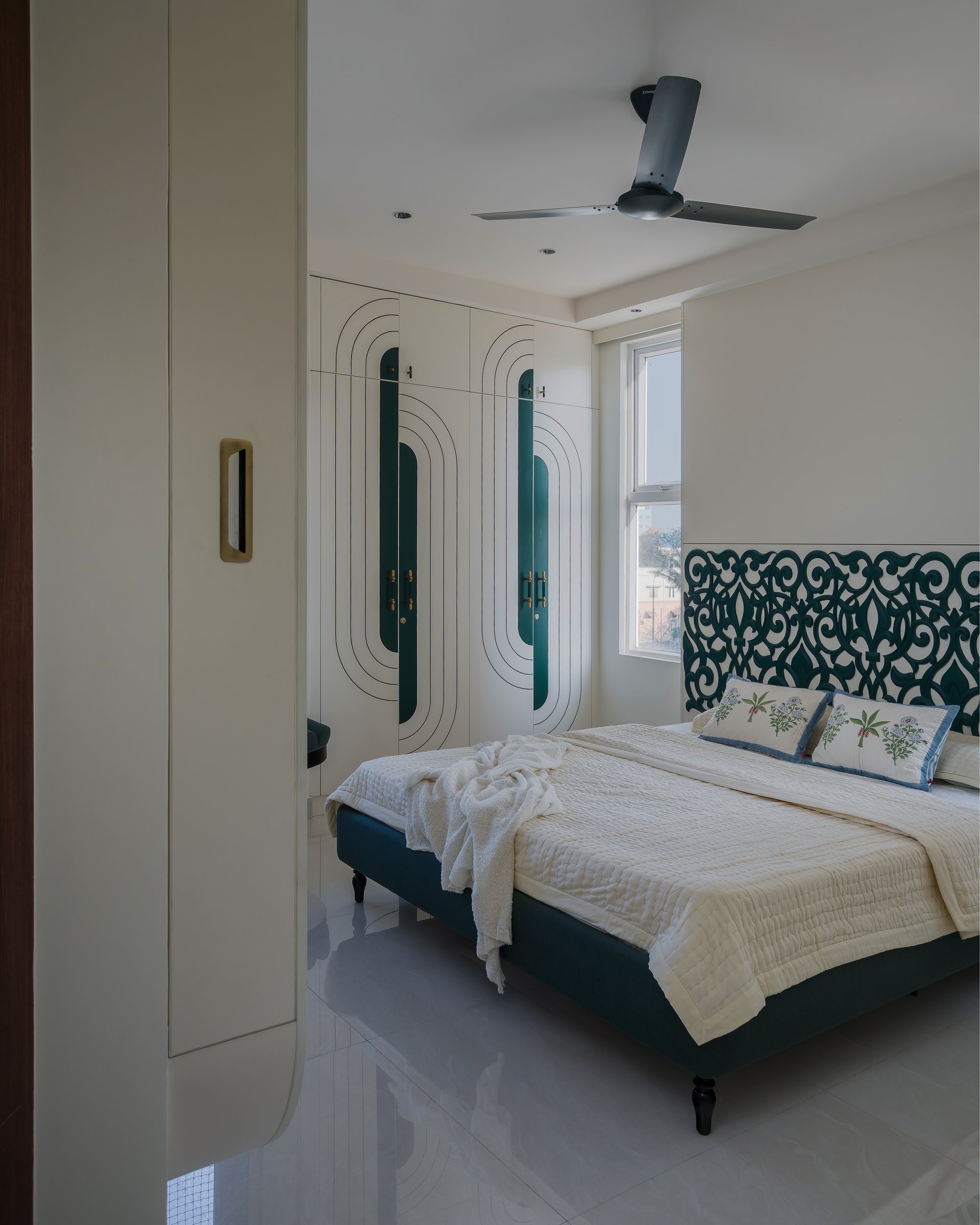
A second bedroom takes a cooler, more graphic direction. Teal upholstery on the bed and a laser-cut scrollwork headboard panel are paired with white wardrobes whose arc-and-line detailing echoes the living room’s plaster wall, but here in a pared-down, almost monochromatic register. The room demonstrates how the home’s curved vocabulary adapts across moods without losing coherence.
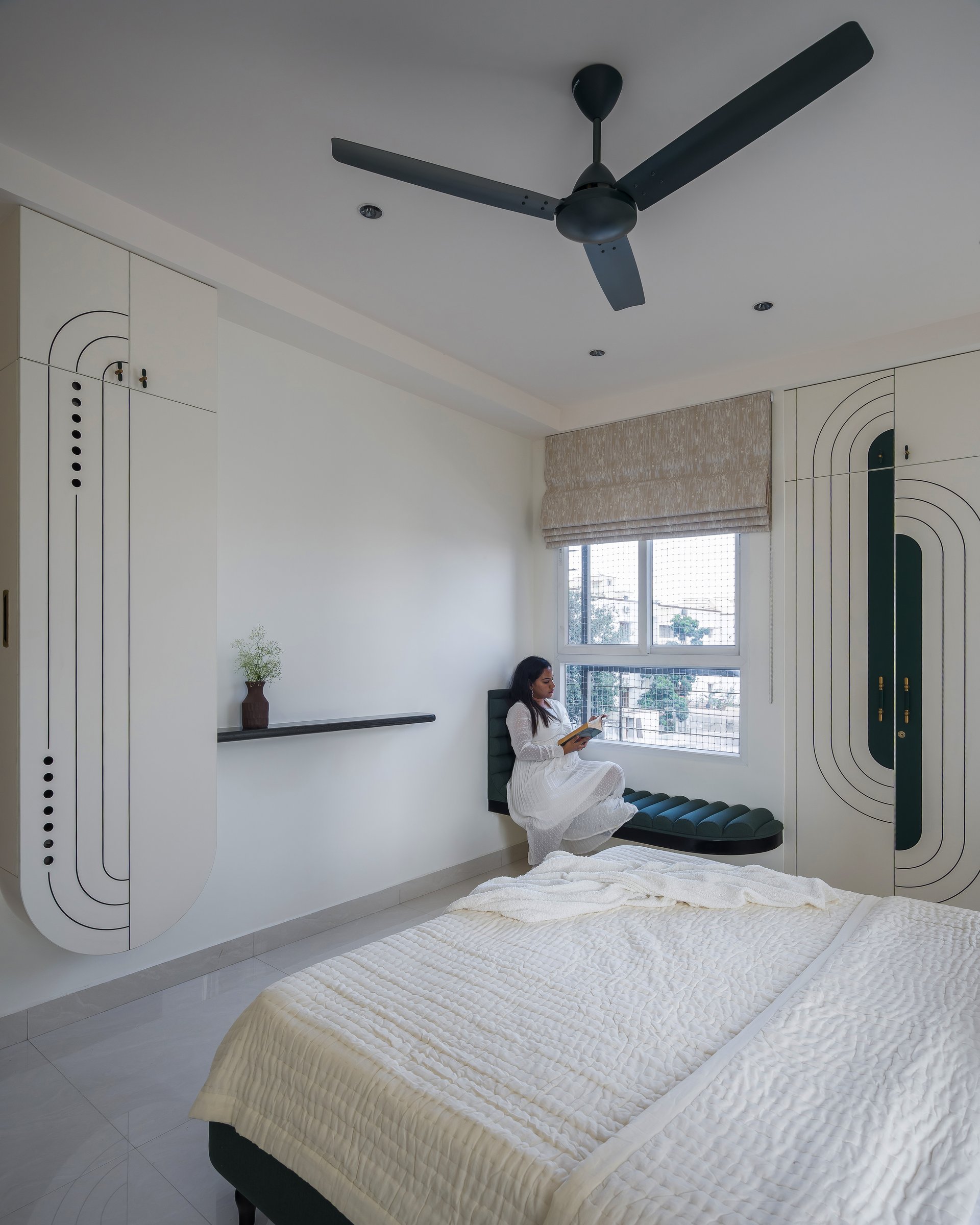
Seen from the foot of the bed, the room’s storage walls reveal their full composition: flanking wardrobes with rounded panel insets frame a floating shelf and a built-in window seat upholstered in teal.
In a city where apartment interiors often default to either stark minimalism or maximalist layering, The Form House occupies a distinctive middle ground. Its Indian sensibility is present in the craft details, the turned wood, the jaali-referenced borders, the artisanal wall treatments, but it is folded into a contemporary framework rather than displayed as a separate gesture. The project suggests that tradition and modernity need not be reconciled, because in skilled hands they were never in opposition.
What Reflection Matters has achieved here, within a standard Chennai apartment footprint, is a home where form is not an overlay but a structural principle. Every arch, every curve, every turned leg participates in a single, sustained argument about how domestic space can be shaped by geometry and craft in equal measure, producing rooms that feel both deliberate and genuinely comfortable to inhabit.