There is a particular kind of confidence required to build a home around architectural ornament rather than against it. In a city where compact apartments tend to default toward clean-lined neutrality, a home that commits to patterned tile, turned timber columns, and hand-painted wall borders is making a statement not about decoration but about identity, about the conviction that the spaces we inhabit should carry the imprint of the cultures that shaped us.
Designed by CanvasInc, an architecture and interior design studio based in Mumbai, this apartment in Kandivali takes on the challenge of weaving traditional Indian craft references into a thoroughly contemporary spatial plan. The vocabulary is unmistakable: checkered arches, classical mouldings, carved ceiling trims, and floral cement tiles appear throughout, not as isolated moments of nostalgia but as a coherent material grammar that connects every room in the home.
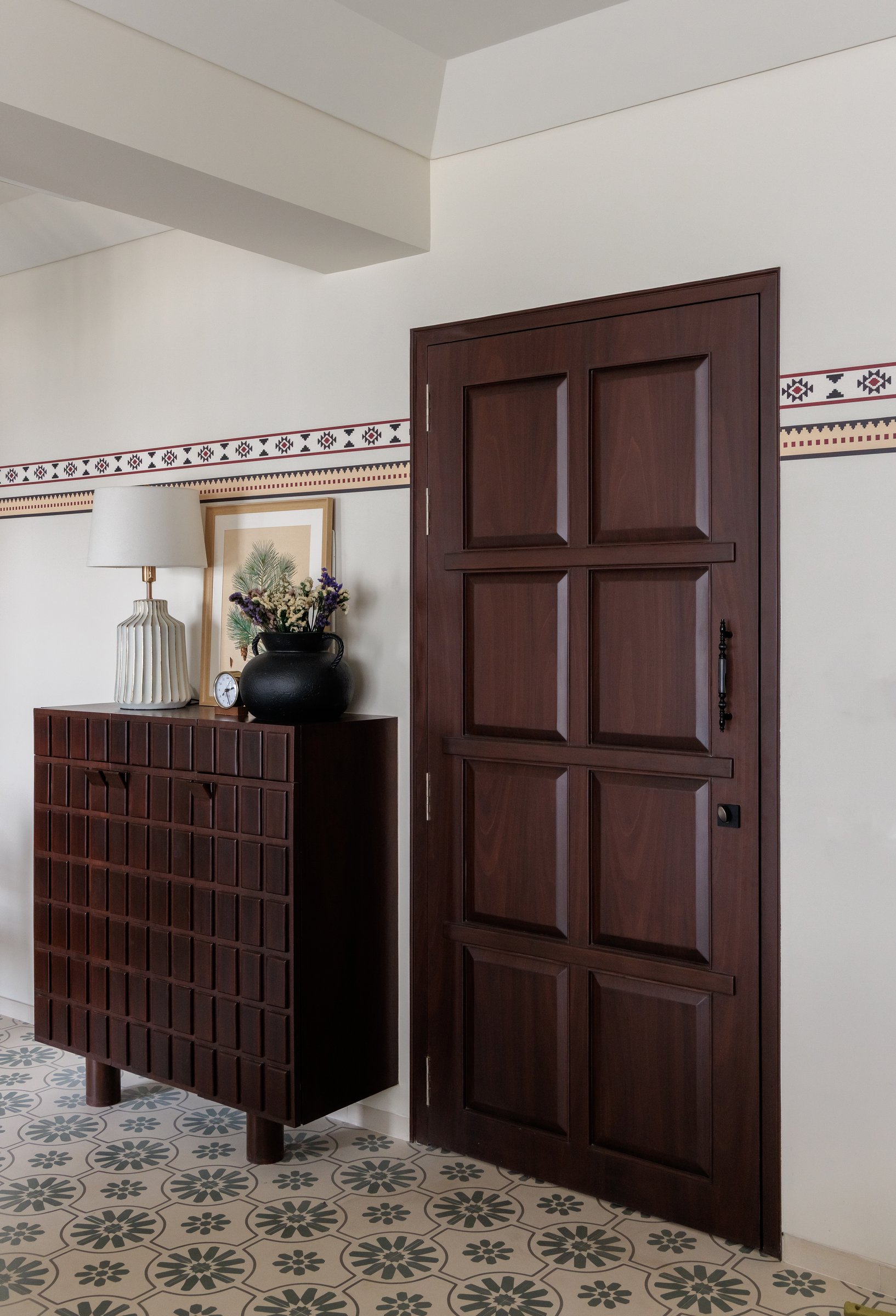
The entry sets that grammar immediately. A panelled timber door in deep walnut opens onto patterned floor tiles, and a geometric border runs along the upper wall, signalling that this home has a decorative point of view and intends to hold it from threshold to bedroom.
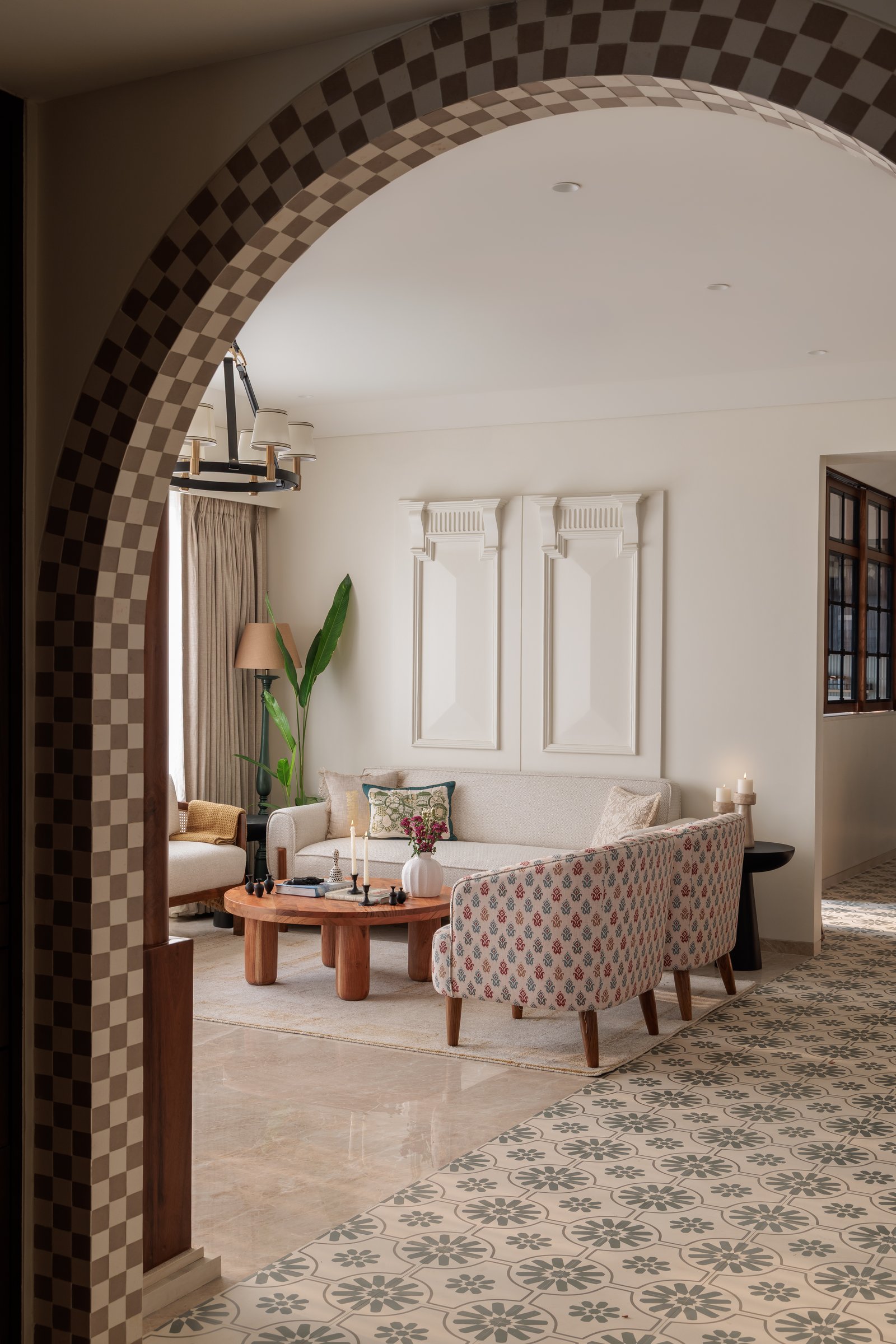
Through a generous checkered arch, the living room reveals itself. The arch is the home’s most distinctive gesture: a curve finished in a brown-and-cream chequerboard pattern that frames the seating arrangement beyond like a proscenium framing a stage.
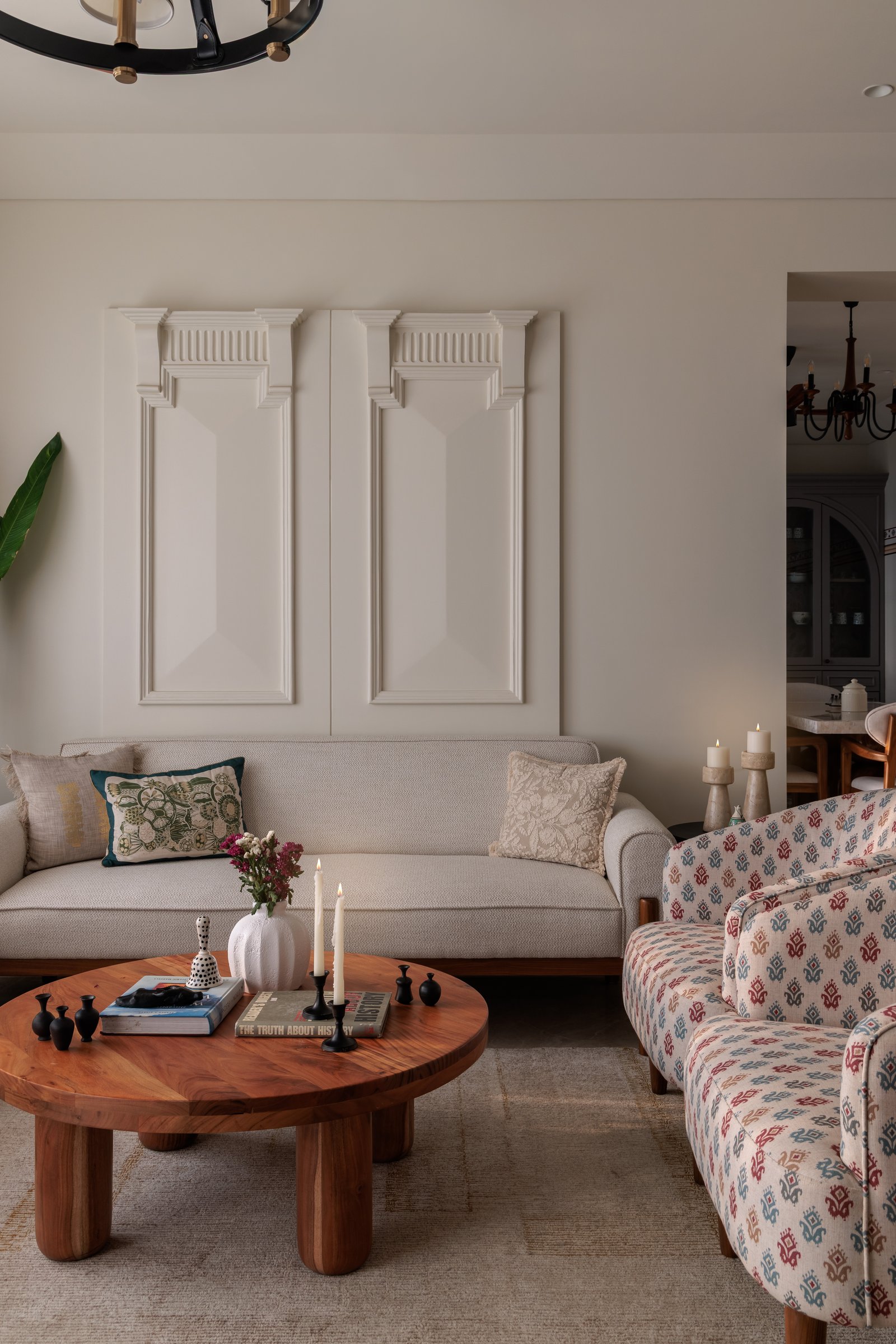
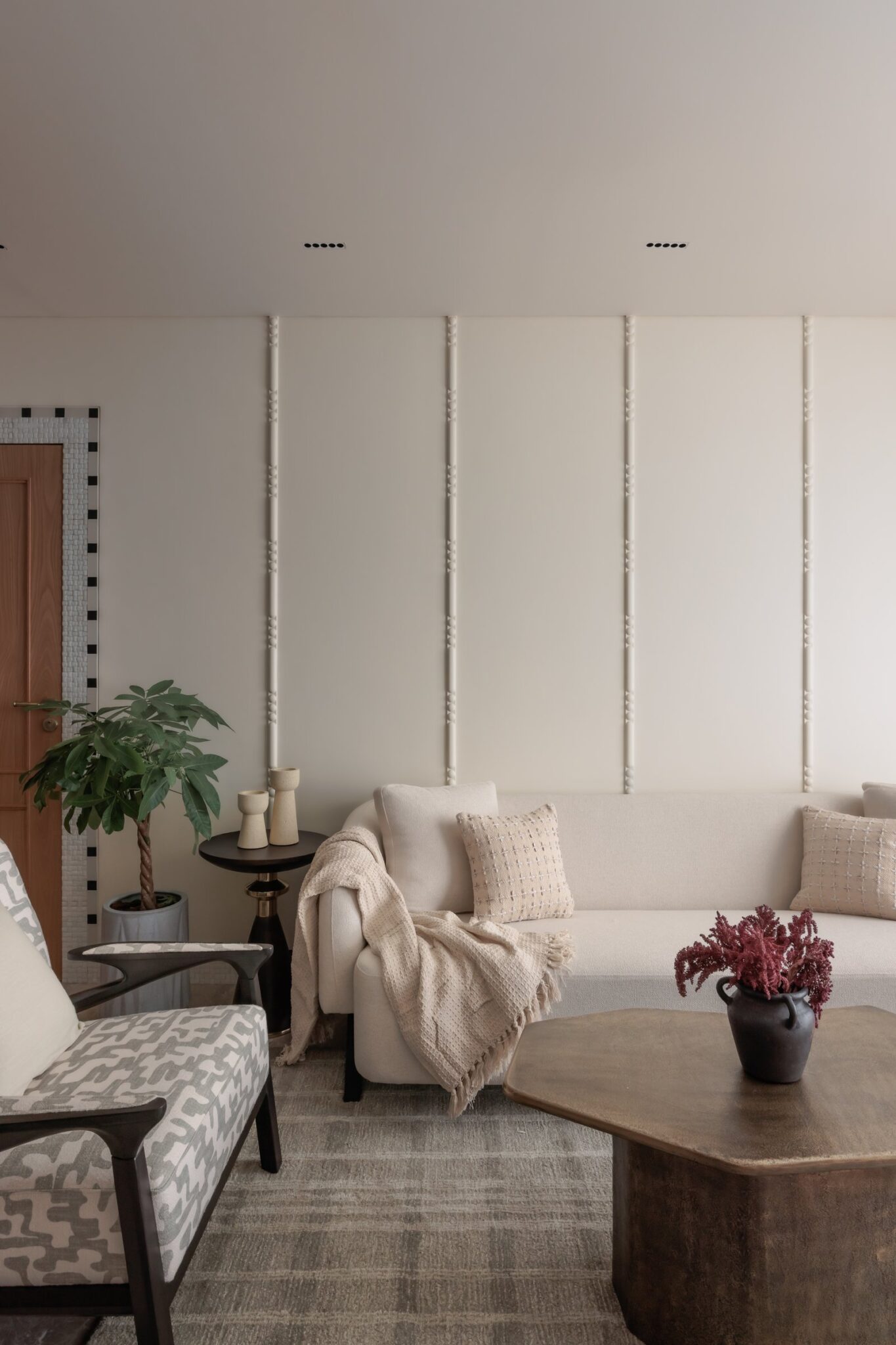
Behind the sofa, a pair of raised wall panels with classical pediment detailing anchors the room. These mouldings, painted the same warm white as the surrounding wall, lend architectural weight without adding colour, allowing the block-printed accent chair to carry the room’s visual energy.
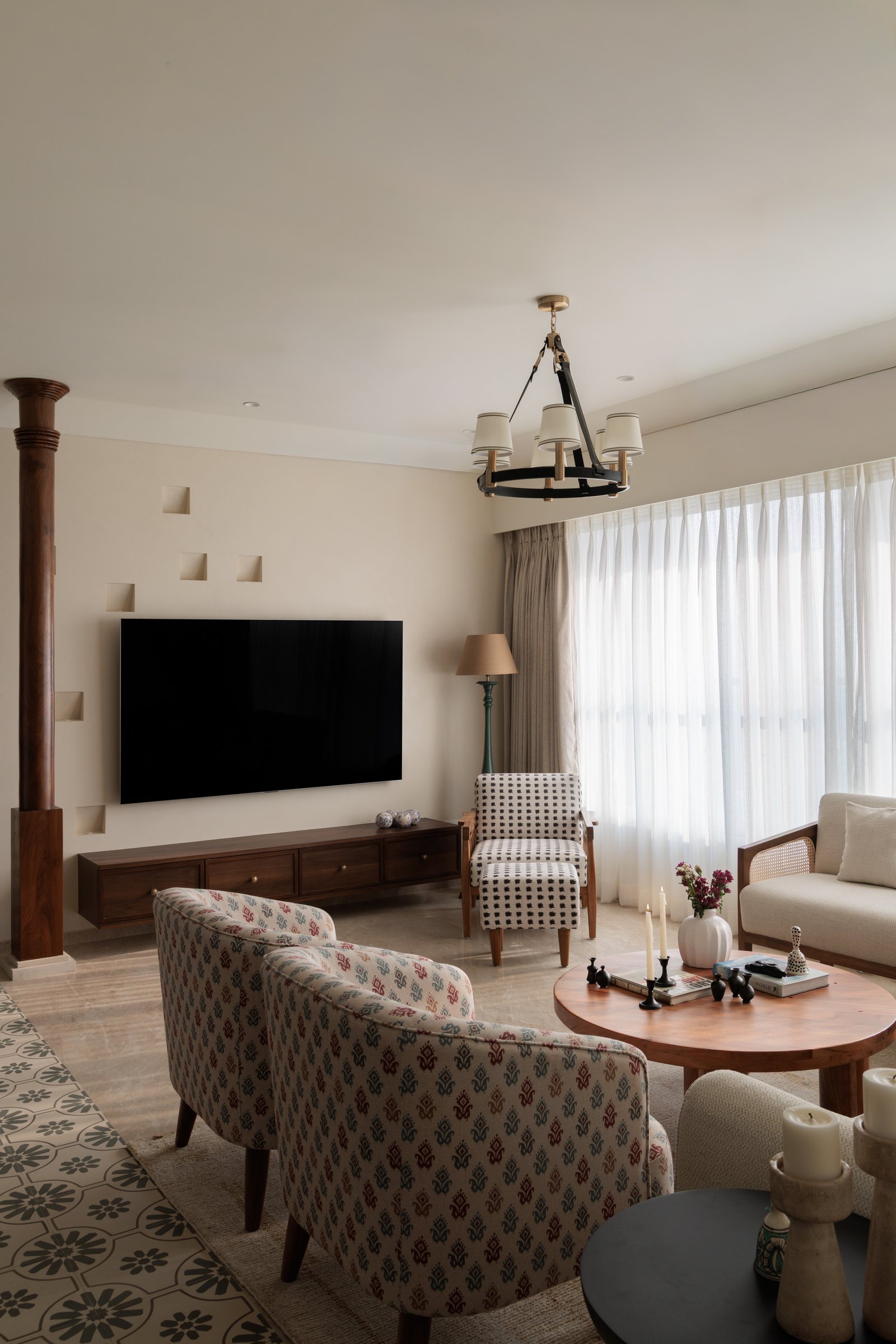
The opposite wall reveals a turned timber column standing beside the television unit, its fluted detailing referencing temple and haveli architecture. Small pyramidal niches recessed into the plaster around the screen add a subtle play of shadow, evidence that the designers treated even the TV wall as an opportunity for craft rather than a surface to conceal.
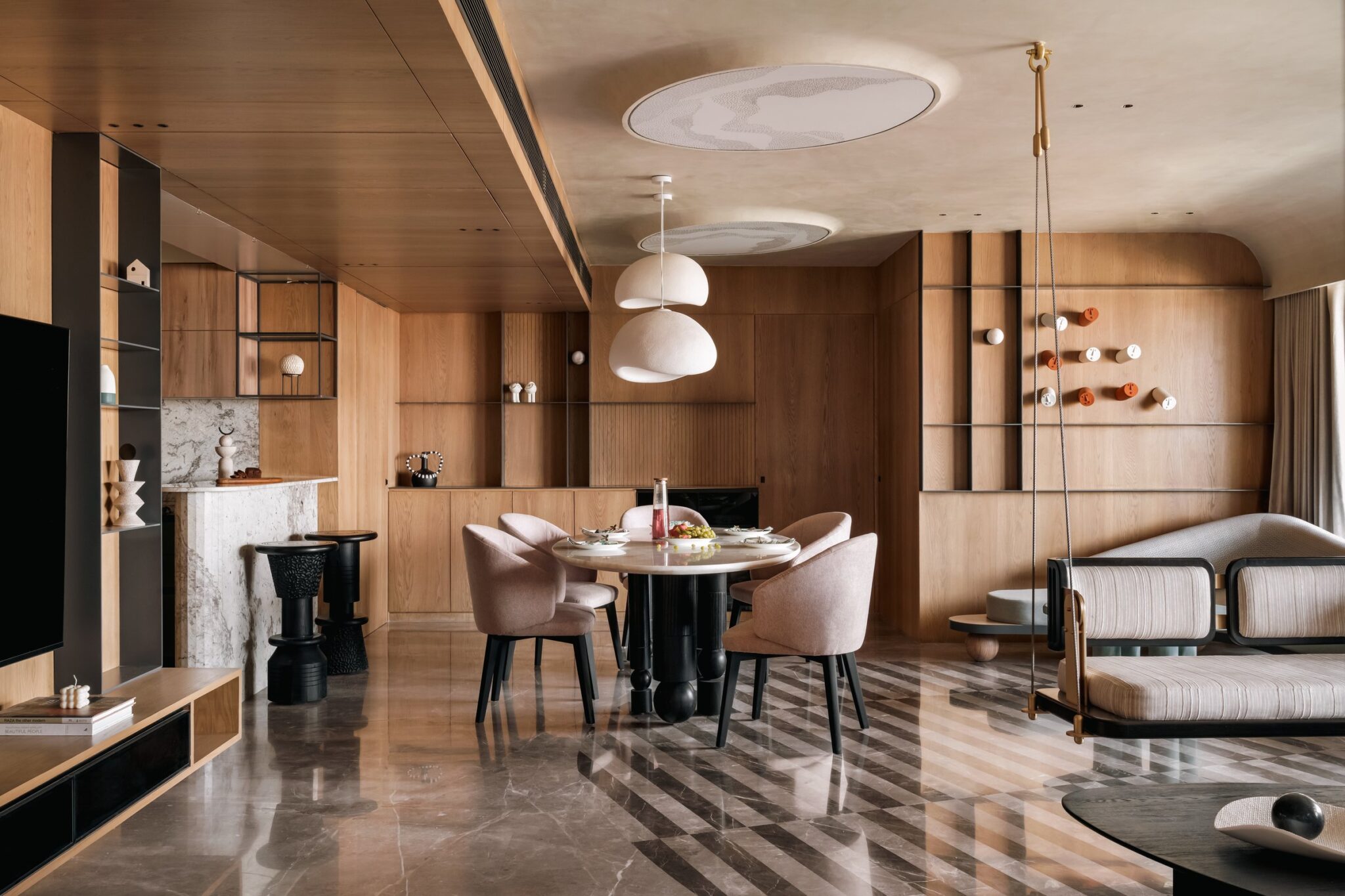
What holds this living room together is restraint in palette. The seating, curtains, and rug stay within a family of warm creams and natural linens, so the architectural elements and printed fabrics can speak without competition. The solid timber coffee table at the centre grounds the arrangement with weight and warmth.
A built-in bar cabinet in muted grey occupies the wall between living and dining zones, its arched niche lined with a floral wallpaper in soft pinks and greens. The pattern picks up the botanical sensibility of the wall borders elsewhere, creating continuity between zones without literal repetition.
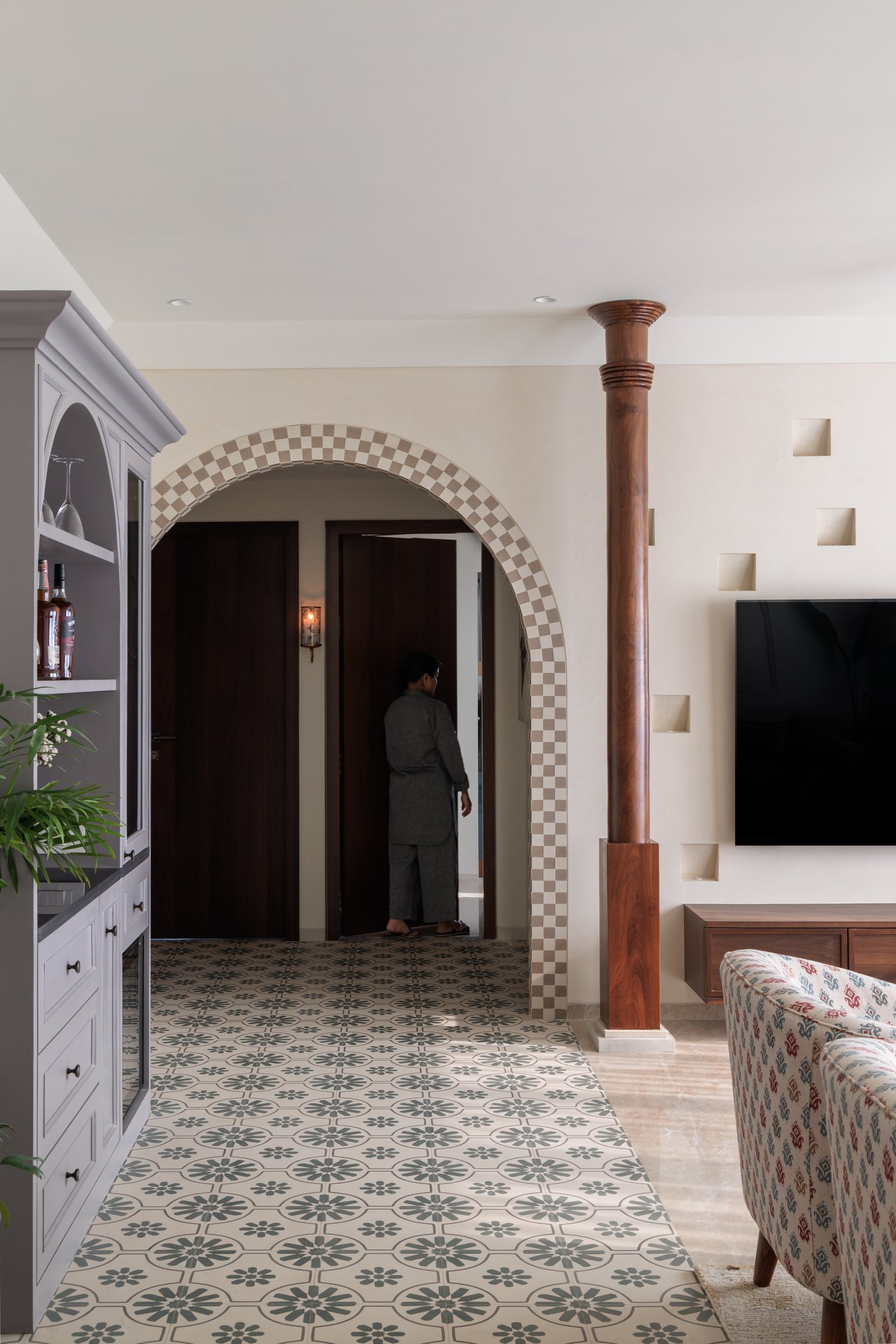
From this angle, the spatial logic becomes clear: the checkered arch acts as a threshold between the public rooms and the private corridor beyond, with the patterned cement tile running right through, unifying both sides. The timber column reads as both structural punctuation and a visual anchor for the entire living zone.
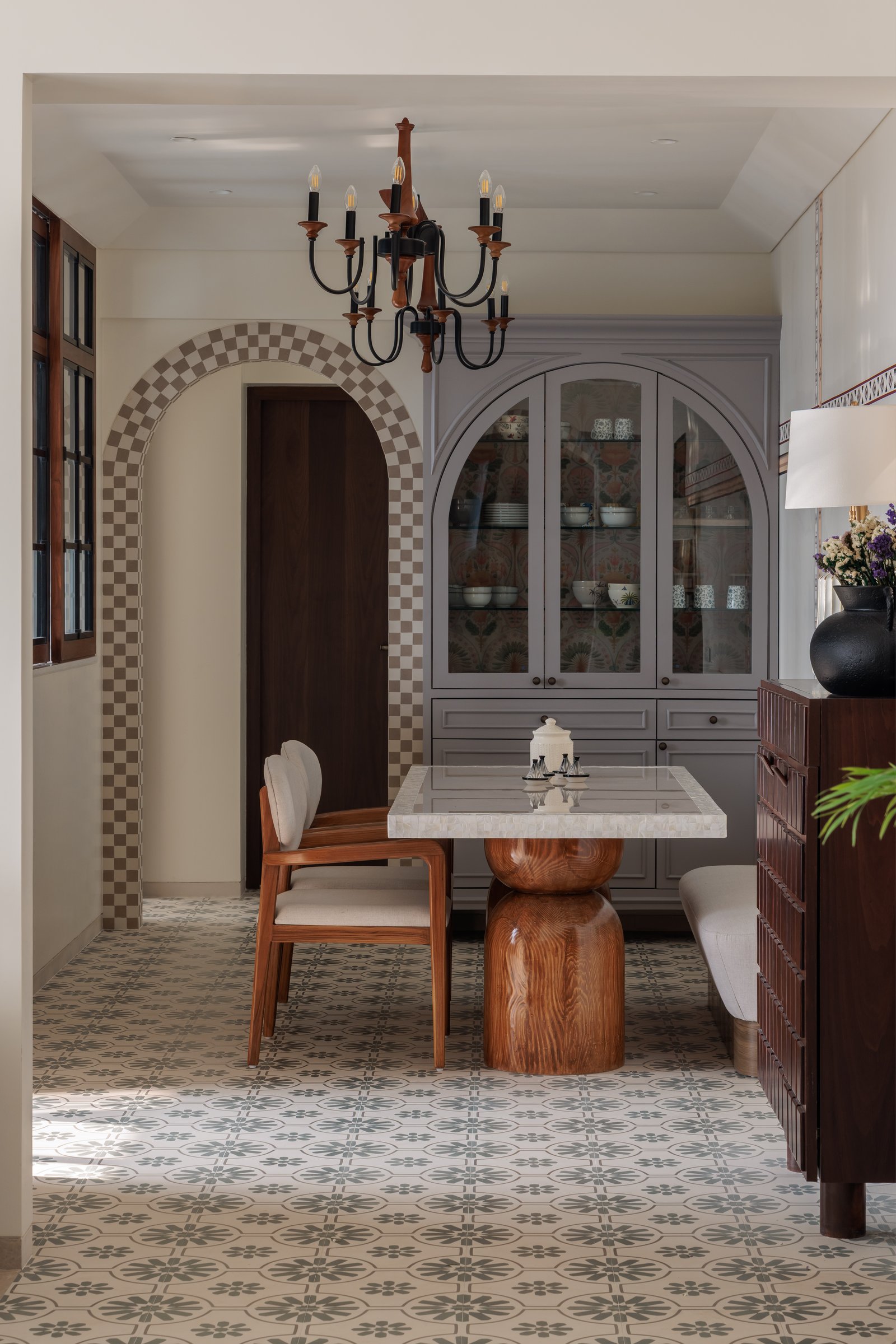
The dining area occupies the passage between kitchen and living room, a compact arrangement that makes a virtue of its position. A sculptural timber base supports a marble-topped table, and the arched glass-fronted hutch behind it, lined with the same floral pattern as the bar, gives the small dining zone its own identity.
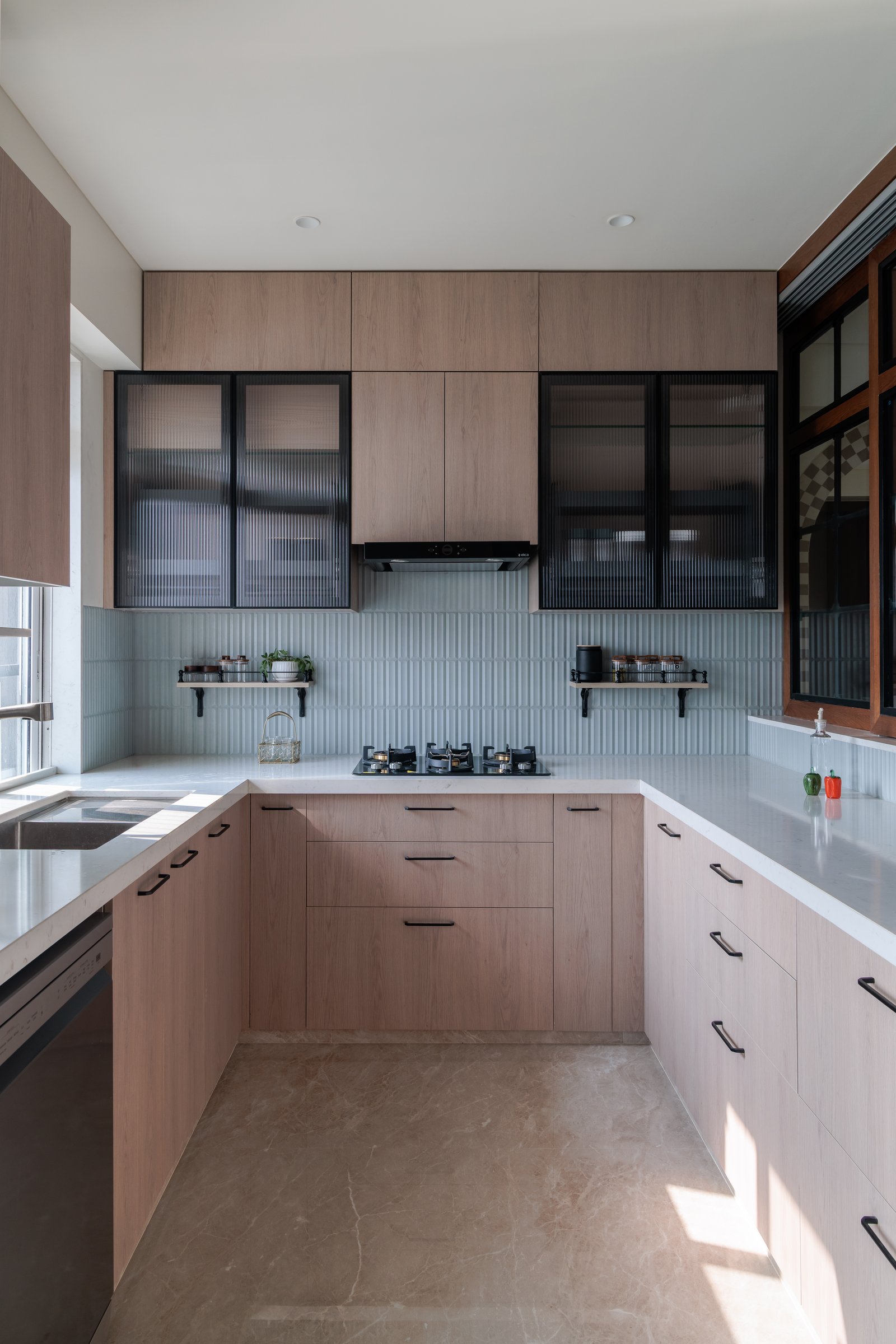
The kitchen steps into a different register. Light oak cabinetry and ribbed tile form a clean, workmanlike composition, with fluted glass panels in black frames adding texture to the upper cabinets. The shift from the ornamental language of the living spaces is deliberate, acknowledging that a kitchen needs clarity and function above atmosphere.
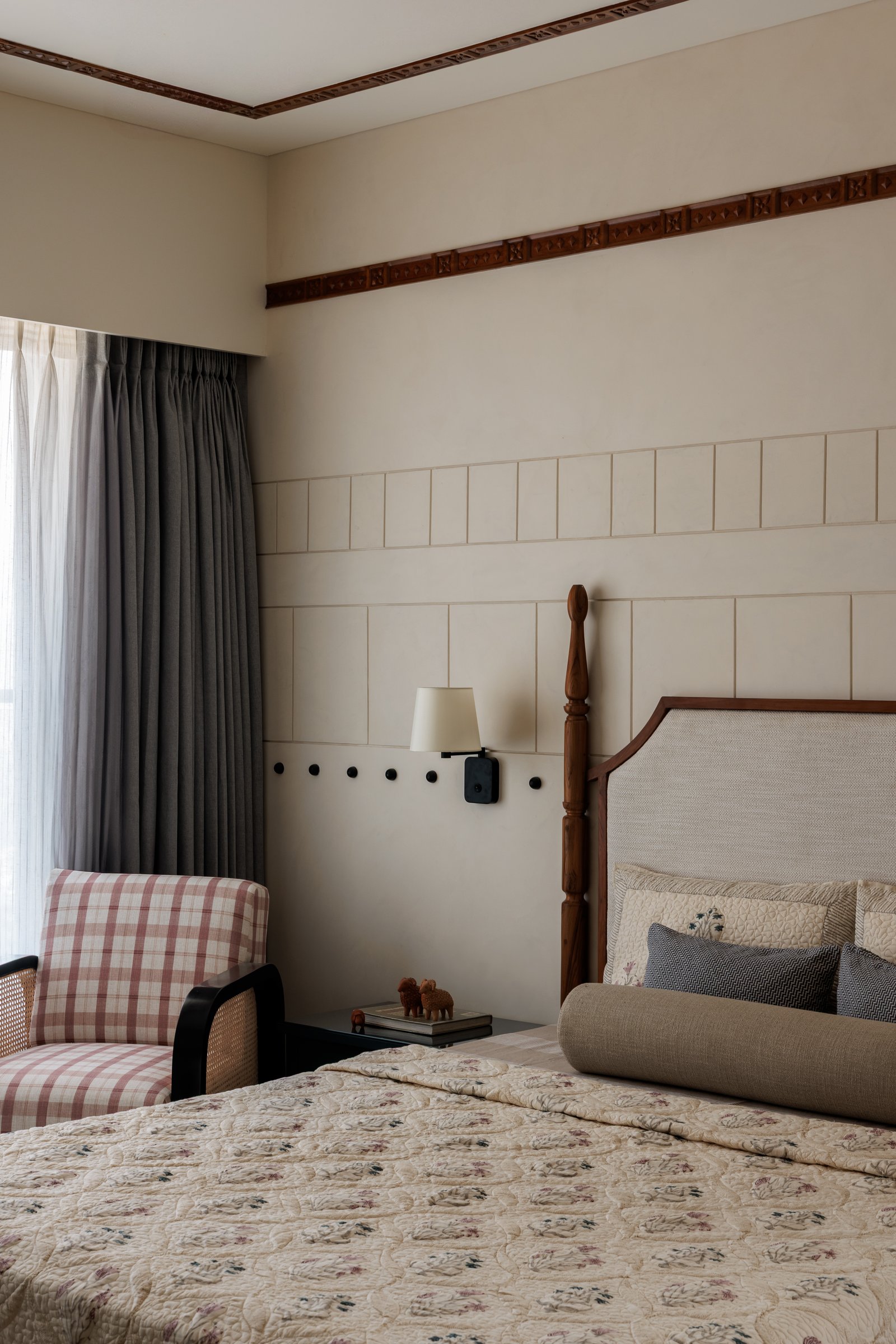
The master bedroom slows the tempo considerably. A four-poster bed with turned timber finials and an upholstered headboard panel sits against a wall of raised rectangular mouldings in matte cream, with a carved timber trim running along the ceiling perimeter. The language here is quieter but related to the living room’s classical references.
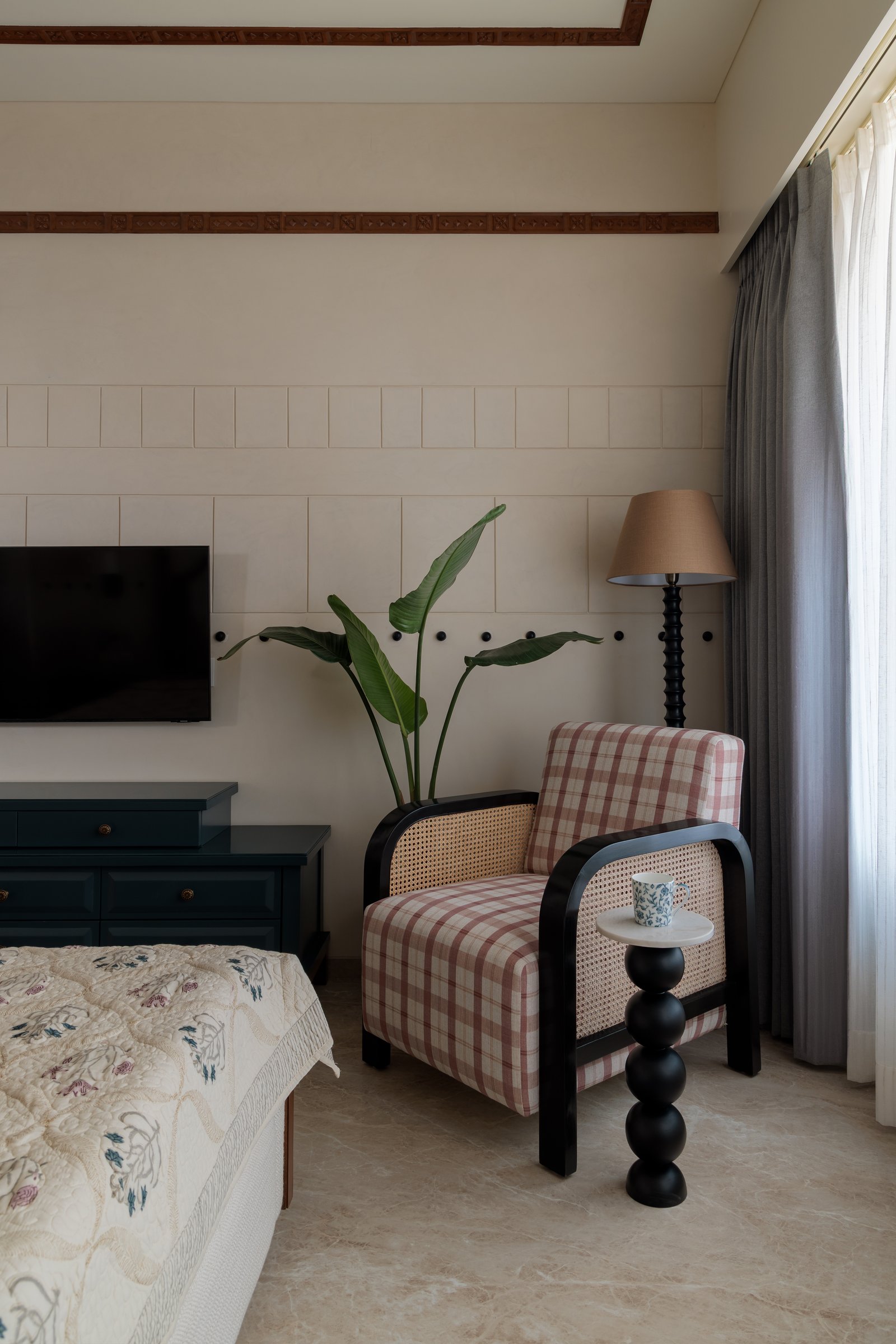
Across from the bed, a gingham-upholstered armchair with cane-woven side panels and a sculptural black side table create a reading corner. The panelled wall continues behind, maintaining a sense of enclosure and consistency, while the dark-painted console beneath the television introduces a note of depth.
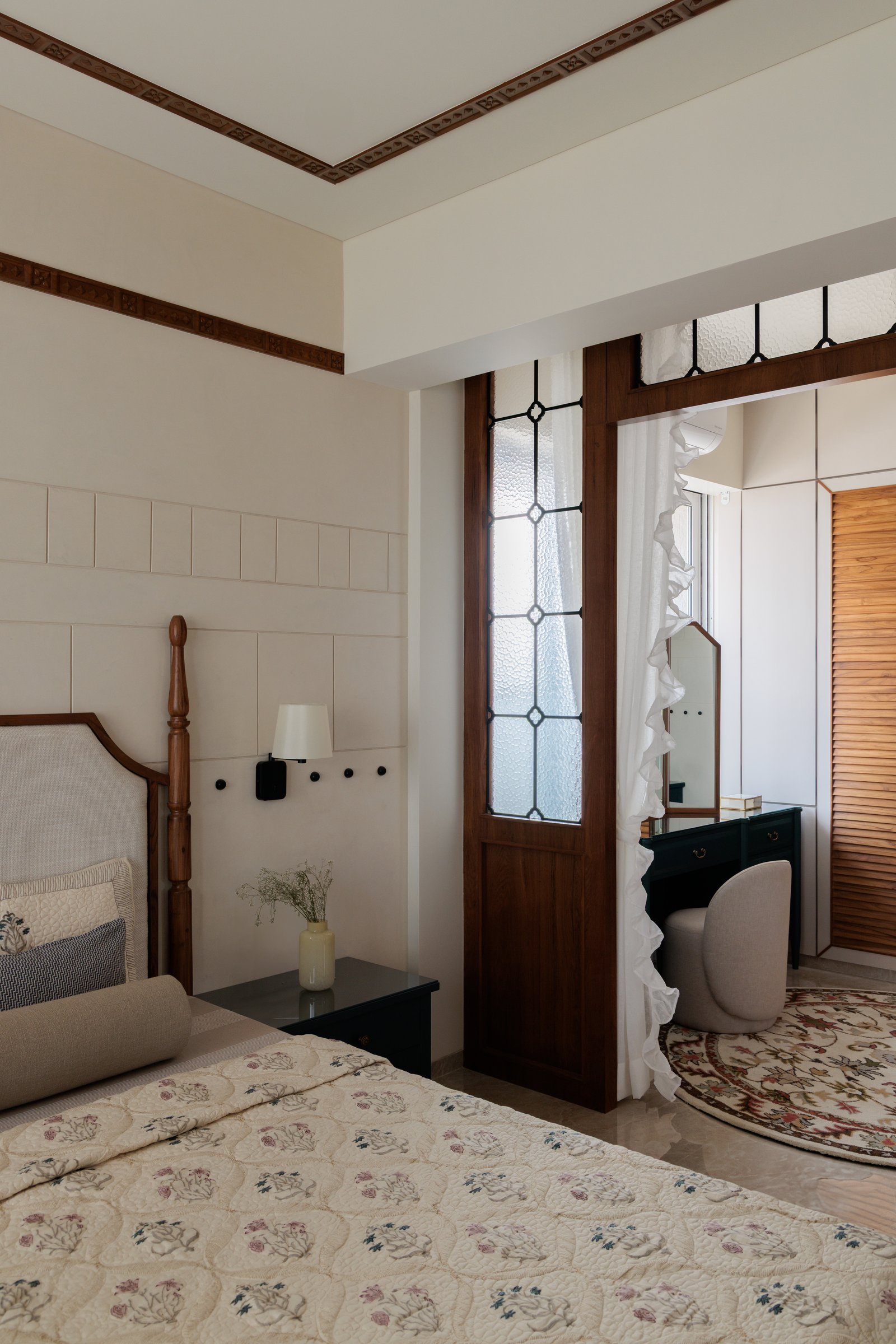
Beyond the bed, a timber-and-glass door with a matching leaded-glass transom above leads into the dressing area. The door filters light while preserving privacy, and a vanity and wardrobe zone is glimpsed beyond, framed by ruffled white curtains that add a layer of softness to the otherwise architectural doorway.
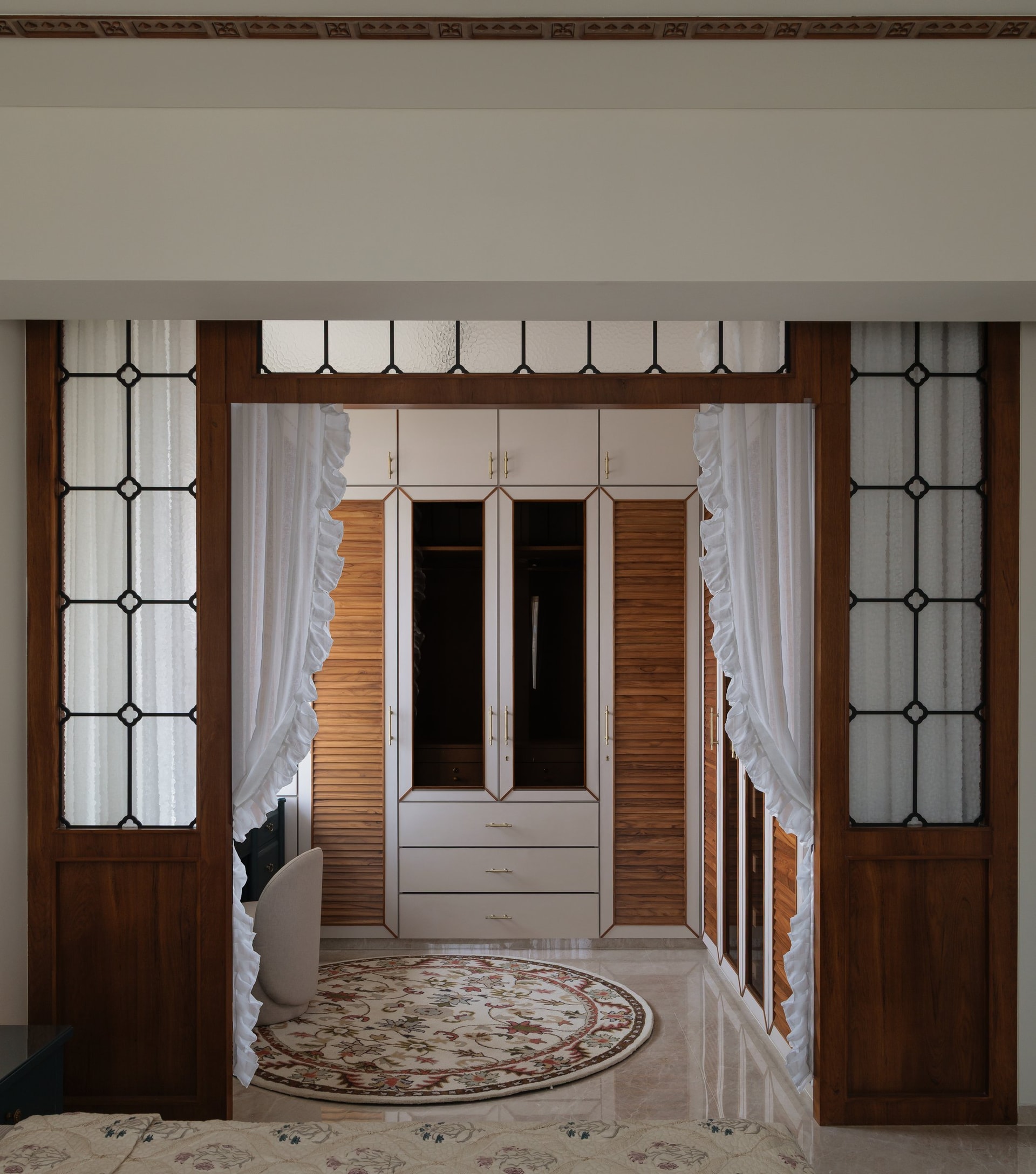
The dressing space itself is generous for an apartment of this scale: louvred timber panels flank a central wardrobe with mirrored doors, and the carved ceiling trim continues from the bedroom into this zone, ensuring the two spaces read as one continuous room rather than separate functions.
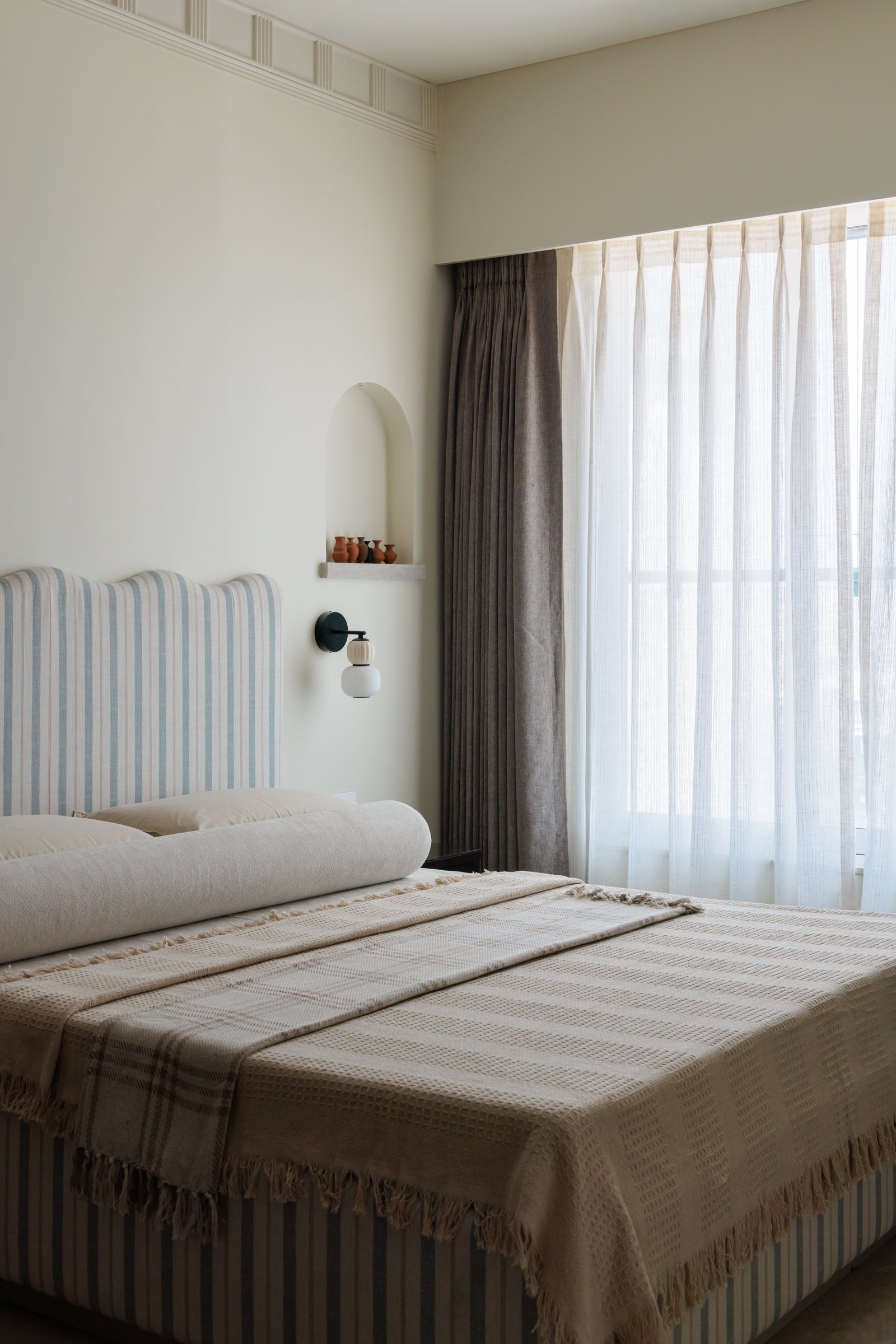
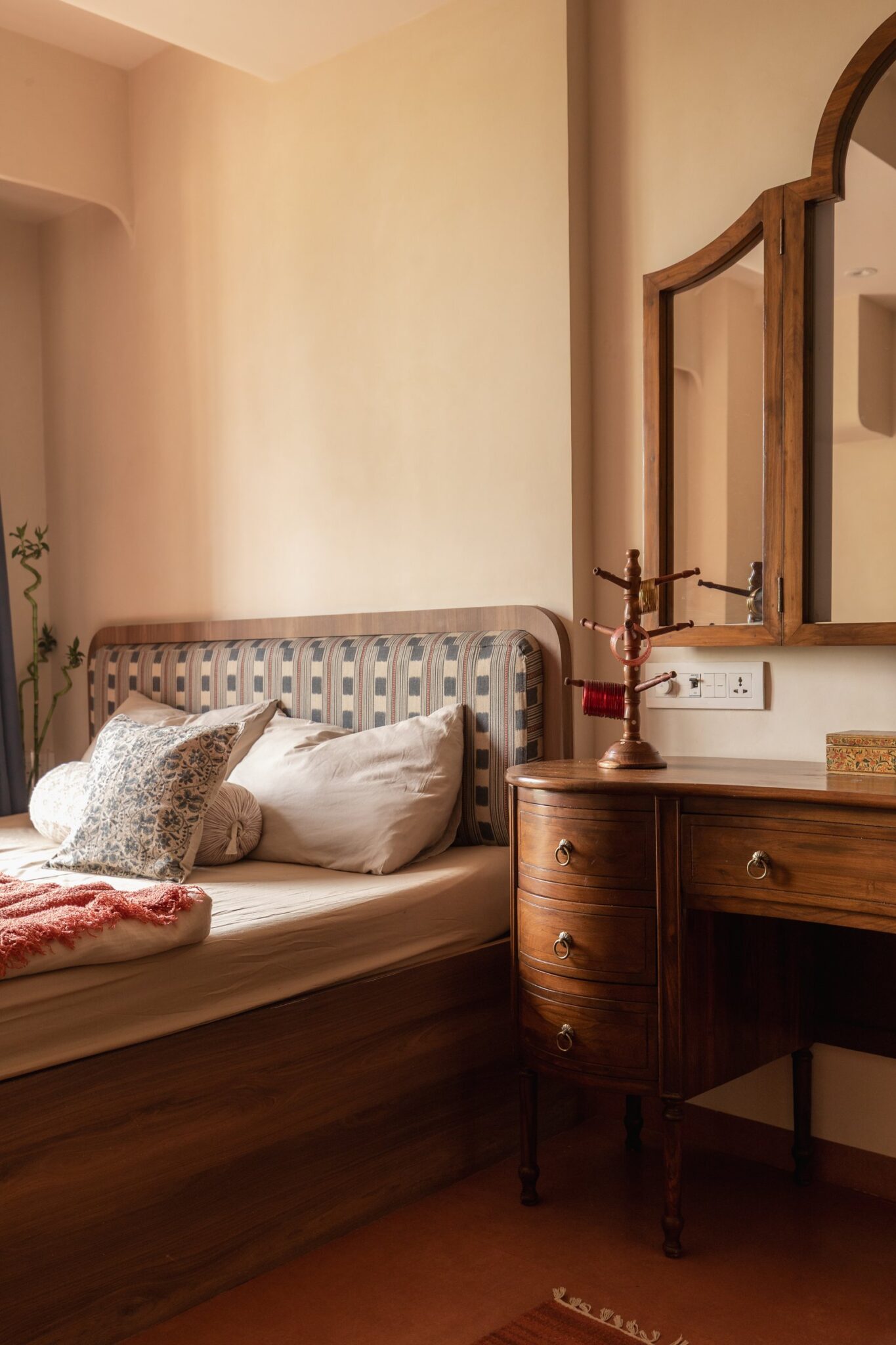
A second bedroom takes an entirely different approach. Here, a striped upholstered headboard in pale blue and cream replaces the master’s timber framework, and a small arched niche in the wall holds a row of miniature terracotta vessels. The mood is lighter, younger, and deliberately less formal.
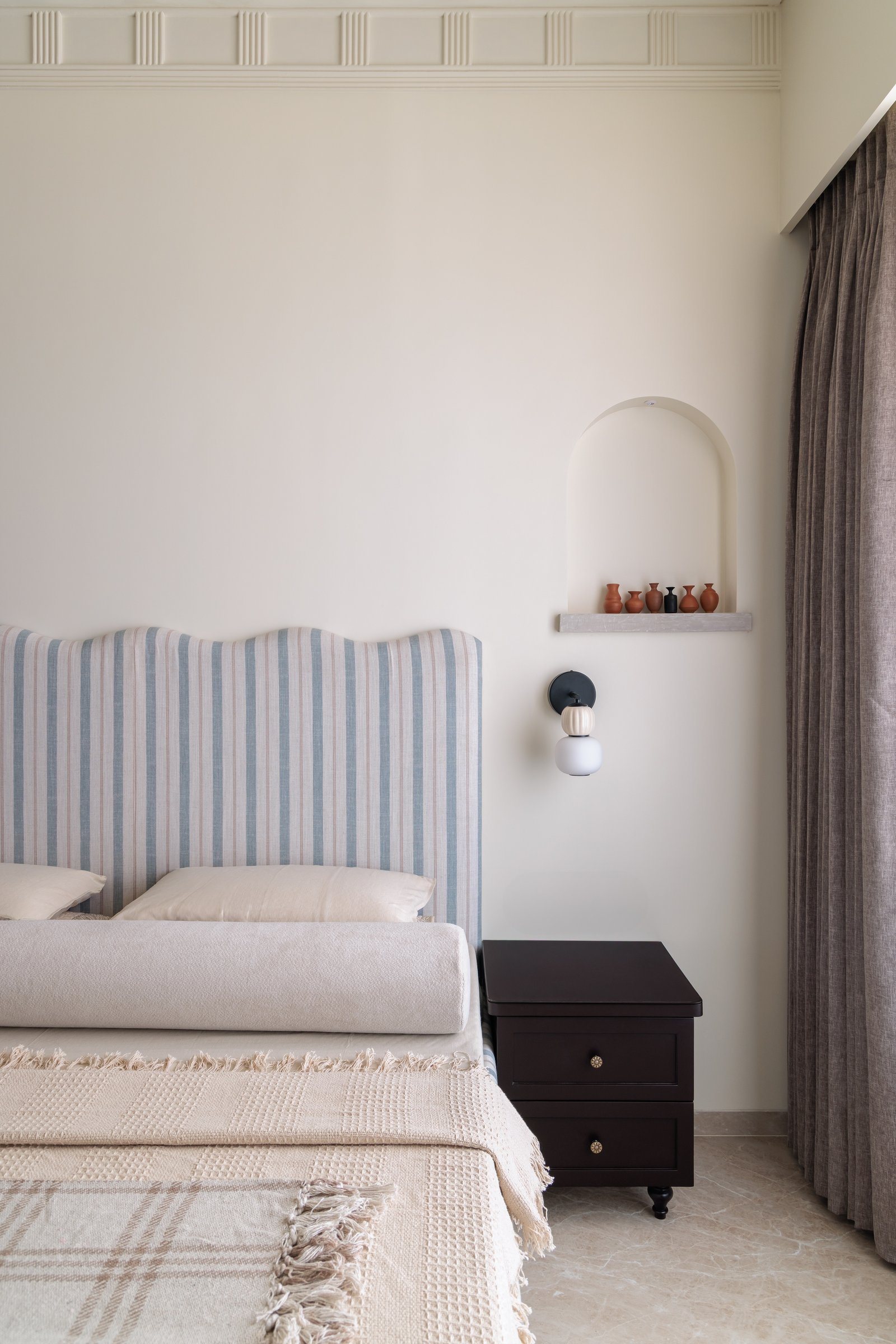
The bedside detail confirms the shift: a dark timber nightstand, a compact wall sconce, and the same arched niche with its tiny ceramics. The cornice moulding at the ceiling is rendered in matching cream rather than timber, maintaining the home’s commitment to architectural trim while dialing down the material richness.
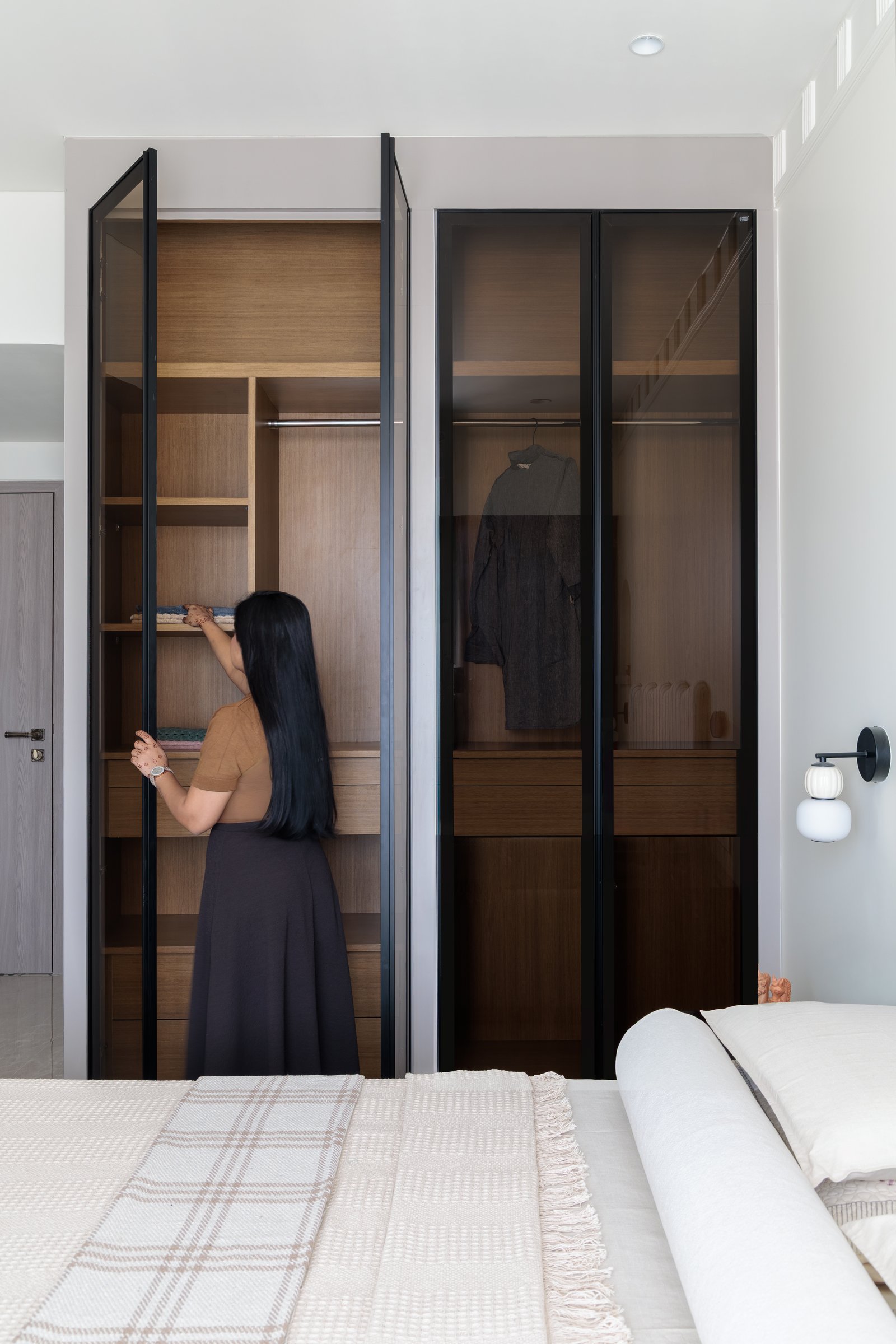
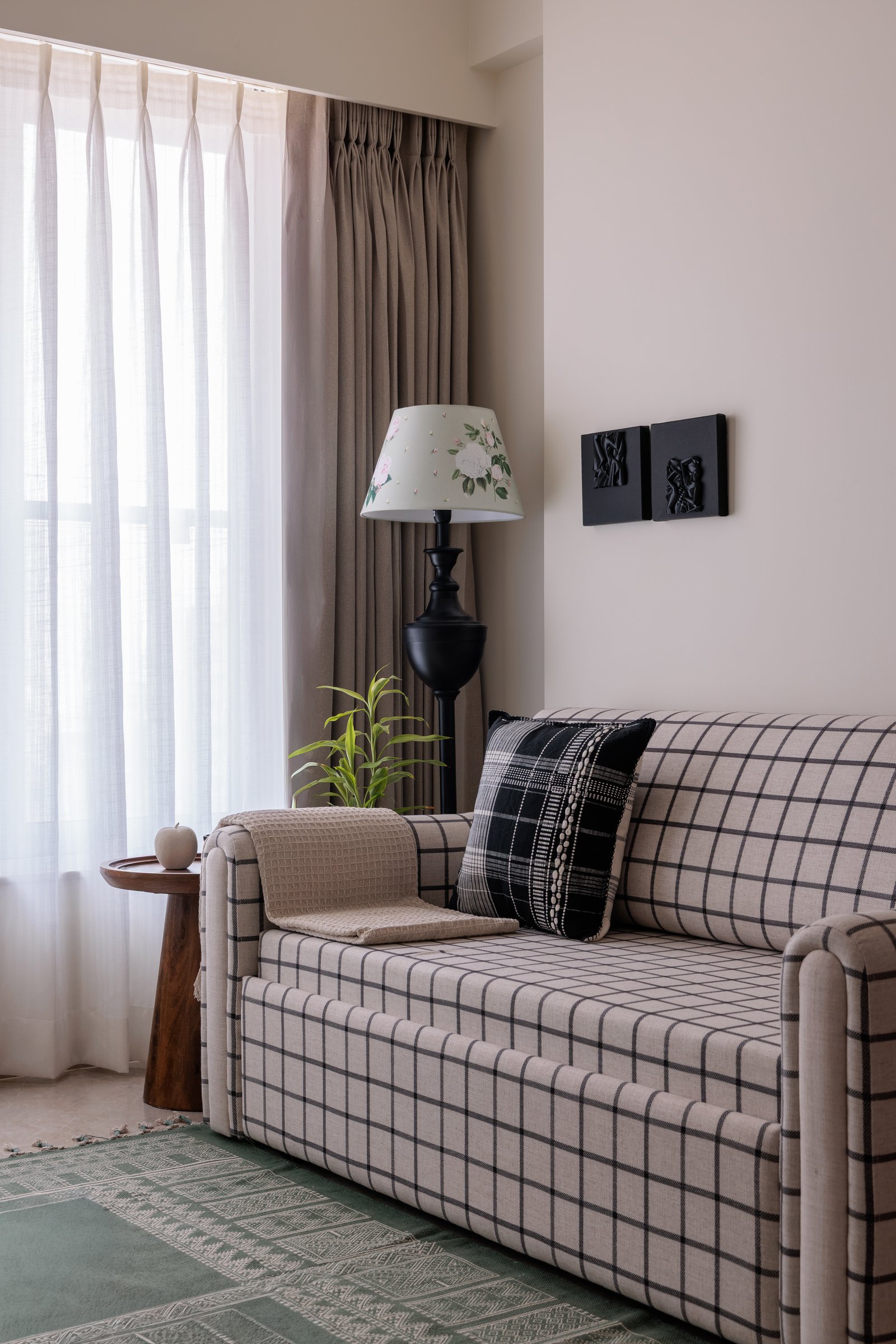
A guest or study room introduces yet another character: a grid-check sofa in linen, a botanical-print lampshade, and a pair of small black relief sculptures on the wall. The green woven rug beneath anchors the room in a palette distinct from the rest of the apartment, giving this corner its own identity without disrupting the whole.
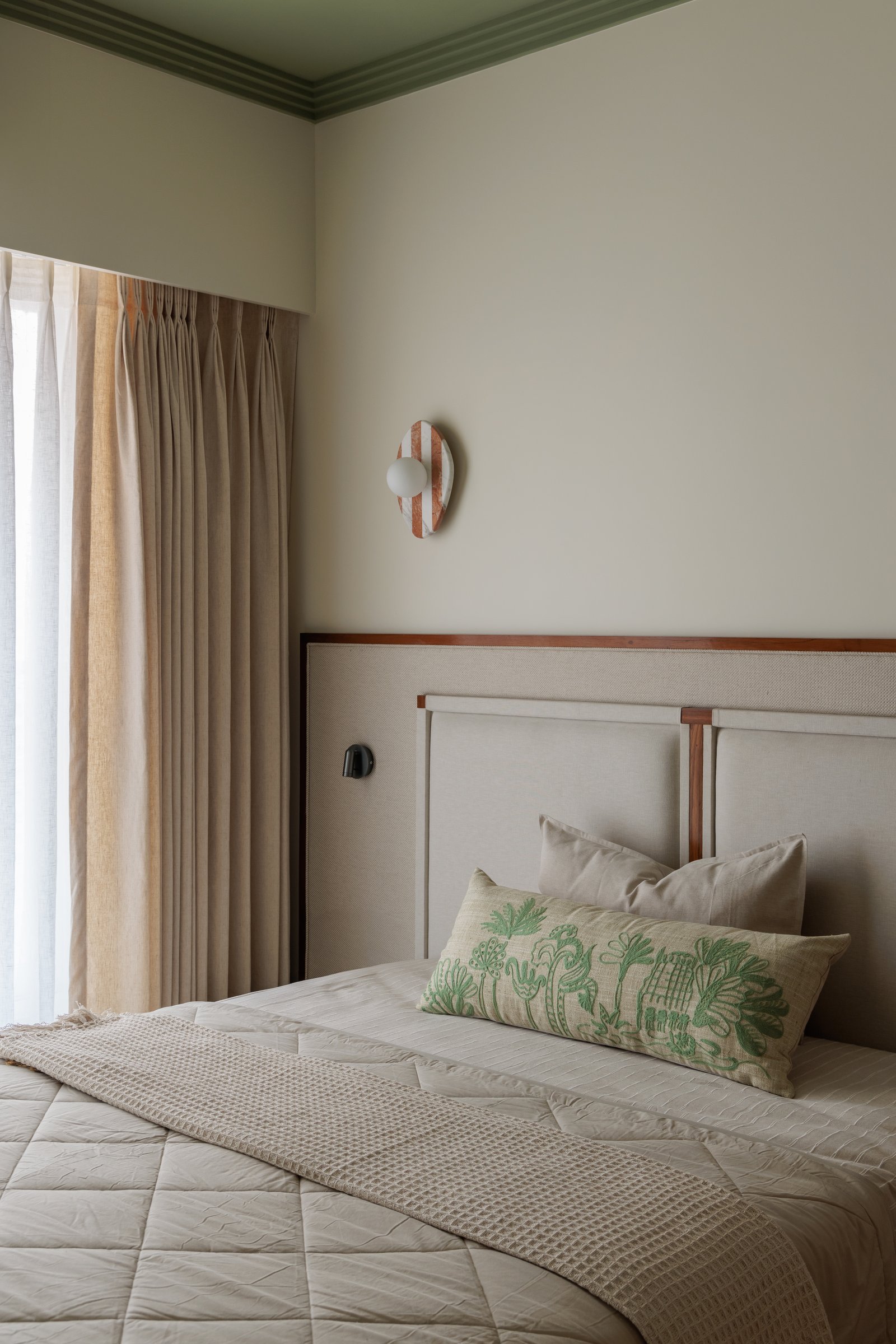
One of the bedrooms is distinguished by a sage-green painted ceiling and matching cornice, an unexpected move that gives the room a cocoon-like warmth. The upholstered headboard in natural linen and a striped wall sconce keep the walls neutral, letting the ceiling colour do the atmospheric work.
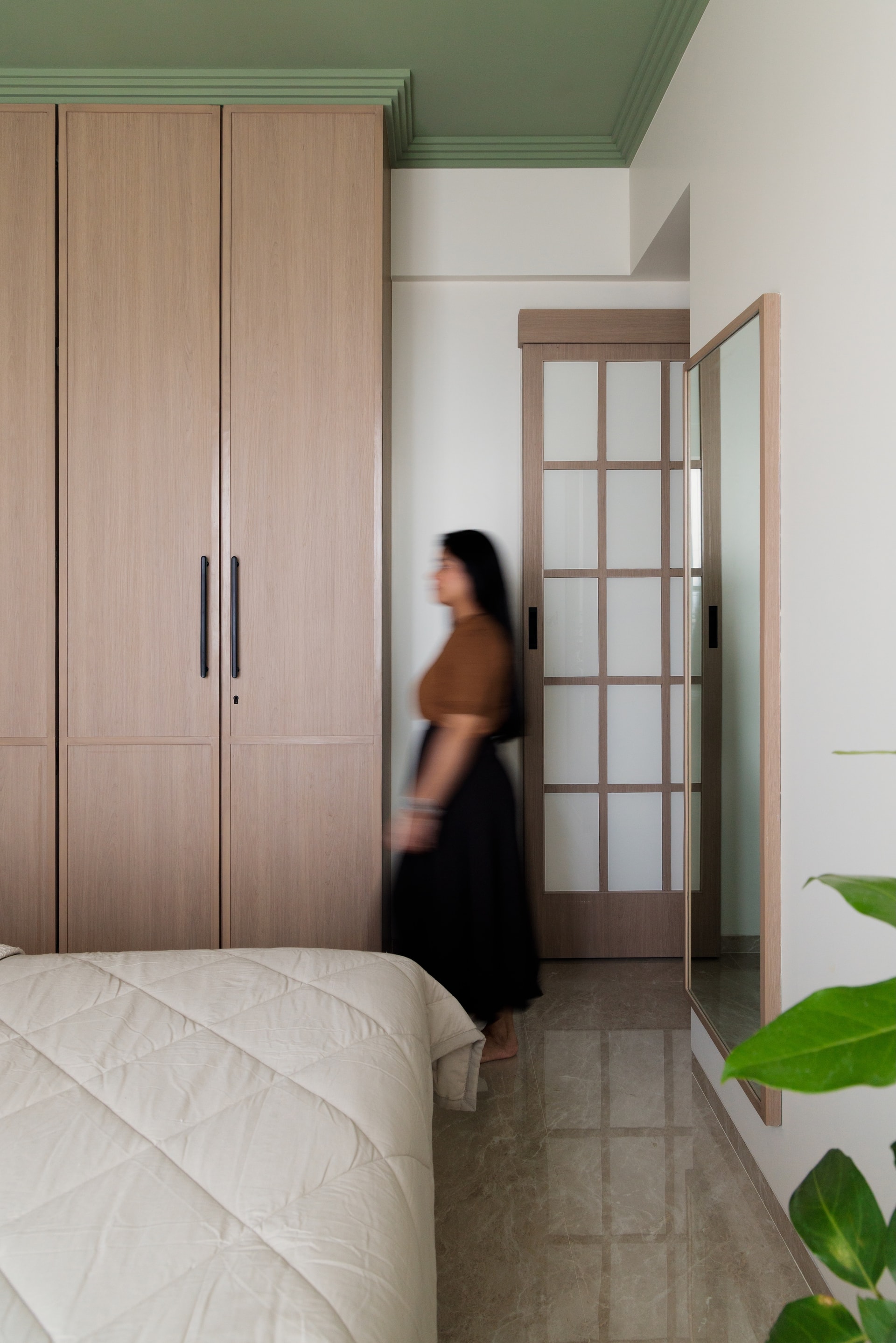
The adjoining wardrobe and sliding door composition here uses the same oak-toned timber and grid-paned glass seen in other rooms, creating continuity across the home’s private zones. The blurred figure moving through the doorway captures the sense of daily movement these spaces are designed to support.
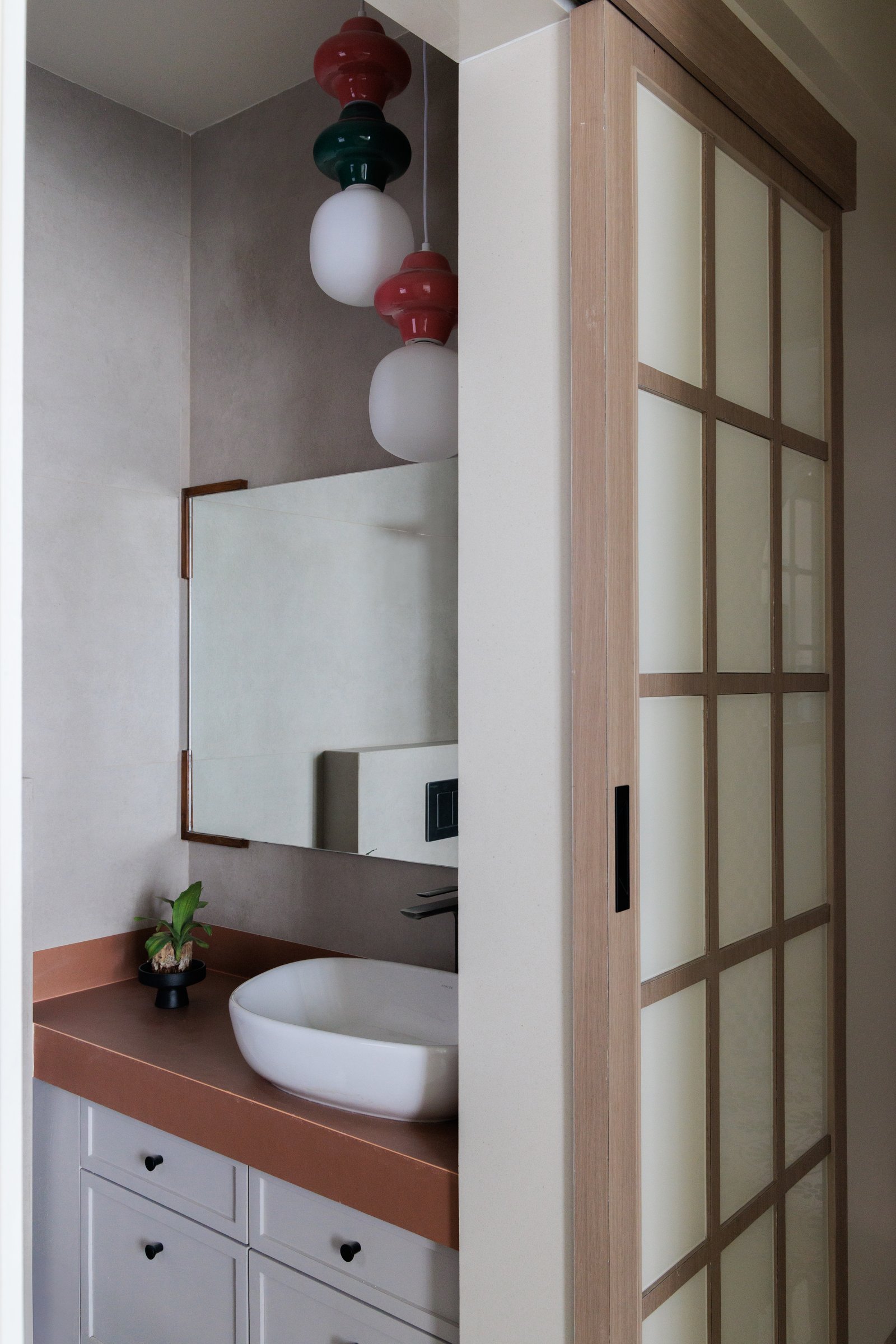
A bathroom glimpsed through its sliding door reveals a terracotta-toned counter, cement-finished walls, and a cluster of colourful stacked-sphere pendant lights that introduce an unexpected playfulness. It is the kind of small, confident gesture that distinguishes a designed home from a decorated one.
What CanvasInc has achieved here is a layered conversation between Indian decorative traditions and the spatial realities of a Mumbai apartment. The checkered arches, moulded panels, and carved timber trims do not feel borrowed or applied; they feel integrated into a design system that has its own internal logic, its own rules about when to be ornamental and when to step back.
This is a home that understands that tradition is not a single gesture but a sustained commitment, carried through floor tiles and ceiling trims, through the curve of an arch and the weave of a chair. That commitment, held across every room with both generosity and discipline, is what gives the apartment its warmth and its coherence.