Some homes are built around new ideas; others are built around old ones, carefully kept. The distinction is rarely visible at first glance, but it announces itself the moment a piece of furniture older than the apartment itself enters the frame, holding its ground against everything new placed beside it.
This Ahmedabad residence, designed by Studio Minim, was conceived as exactly that kind of home. The brief was less about furnishing a fresh interior and more about composing a setting for objects the family had carried across decades and addresses, an inherited carved cabinet, a bronze deity, side tables with elephant-shaped legs, all rehoused inside a contemporary architectural shell of polished green floors, walnut joinery, and pale cream walls.
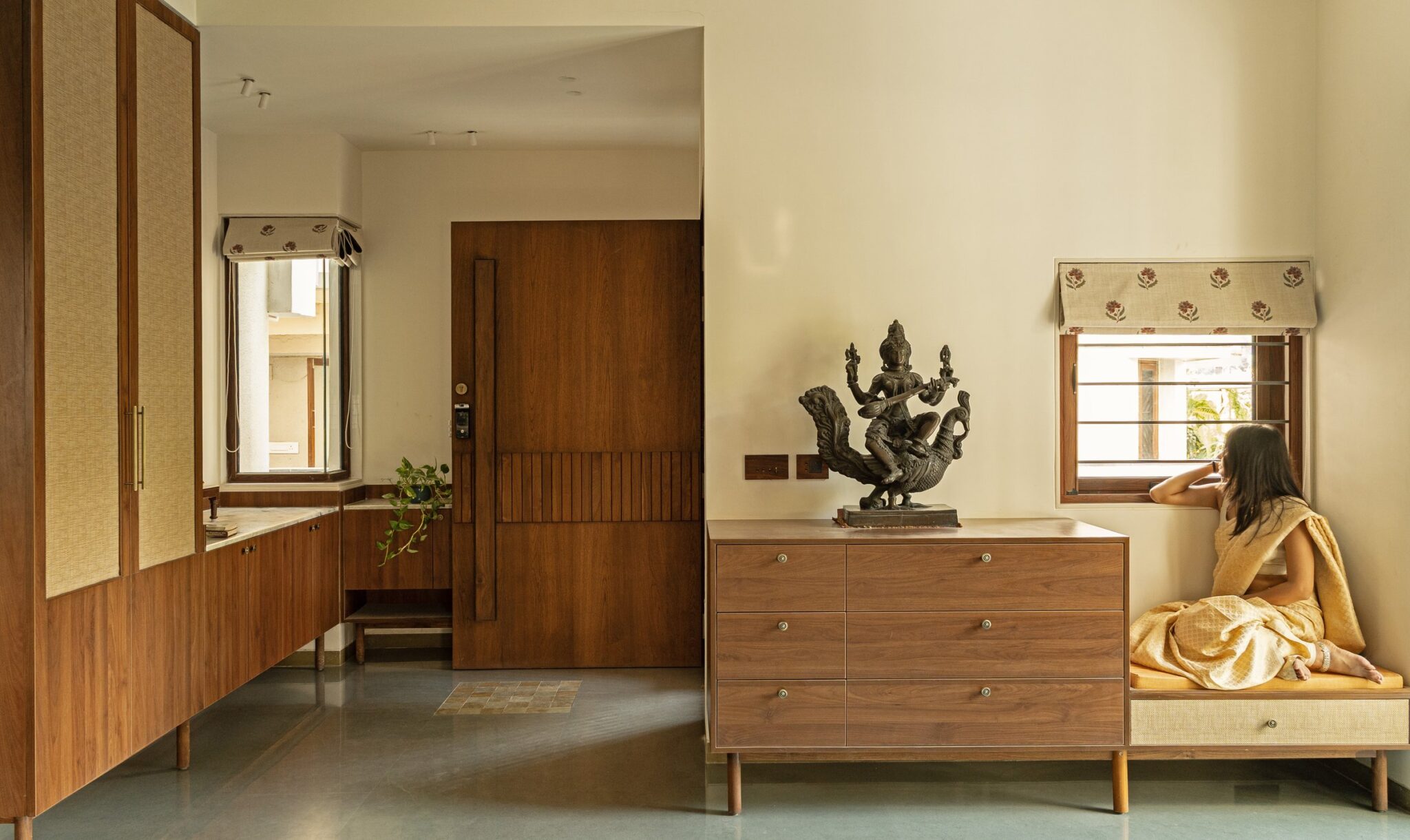
The foyer establishes the tonal grammar of the project in a single glance. A six-drawer chest carries a bronze deity at its centre, while a window seat with a caned base offers an immediate, unhurried gesture of welcome, the kind that suggests the home prefers being lived in slowly.
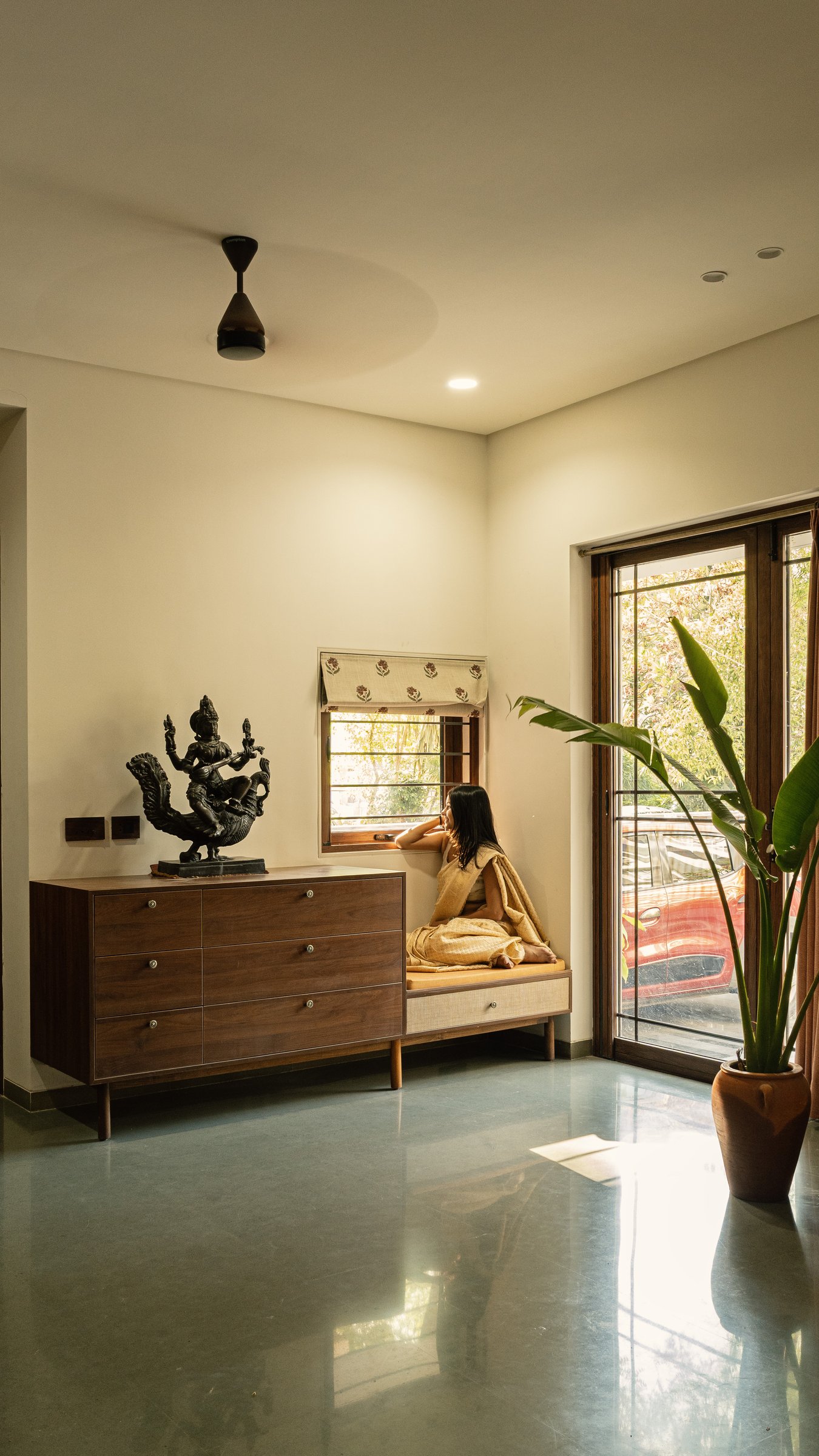
The window-seat alcove reads as a small composed room rather than a transitional space. The polished green floor catches the light from a tall framed door, and the deity presides quietly over the chest, setting the home’s argument before a single threshold is crossed: heirlooms first, architecture in support.
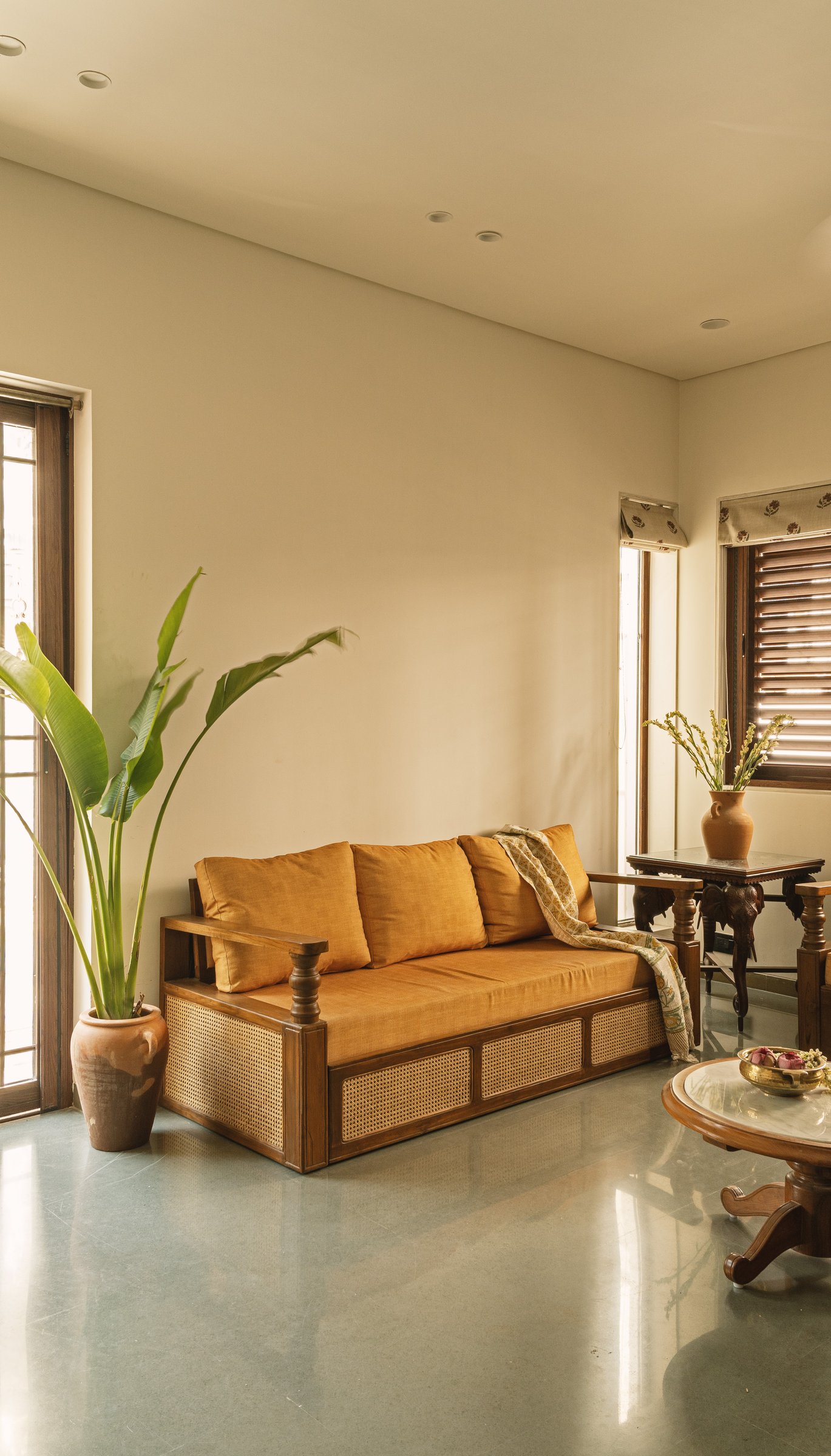
The living room opens with a daybed in cane and dark wood, its mustard cushions and a lightly printed throw striking the room’s clearest chord of colour. Banana-leaf foliage rises in a terracotta pot nearby, and the polished floor gathers the afternoon light into something close to a glaze.
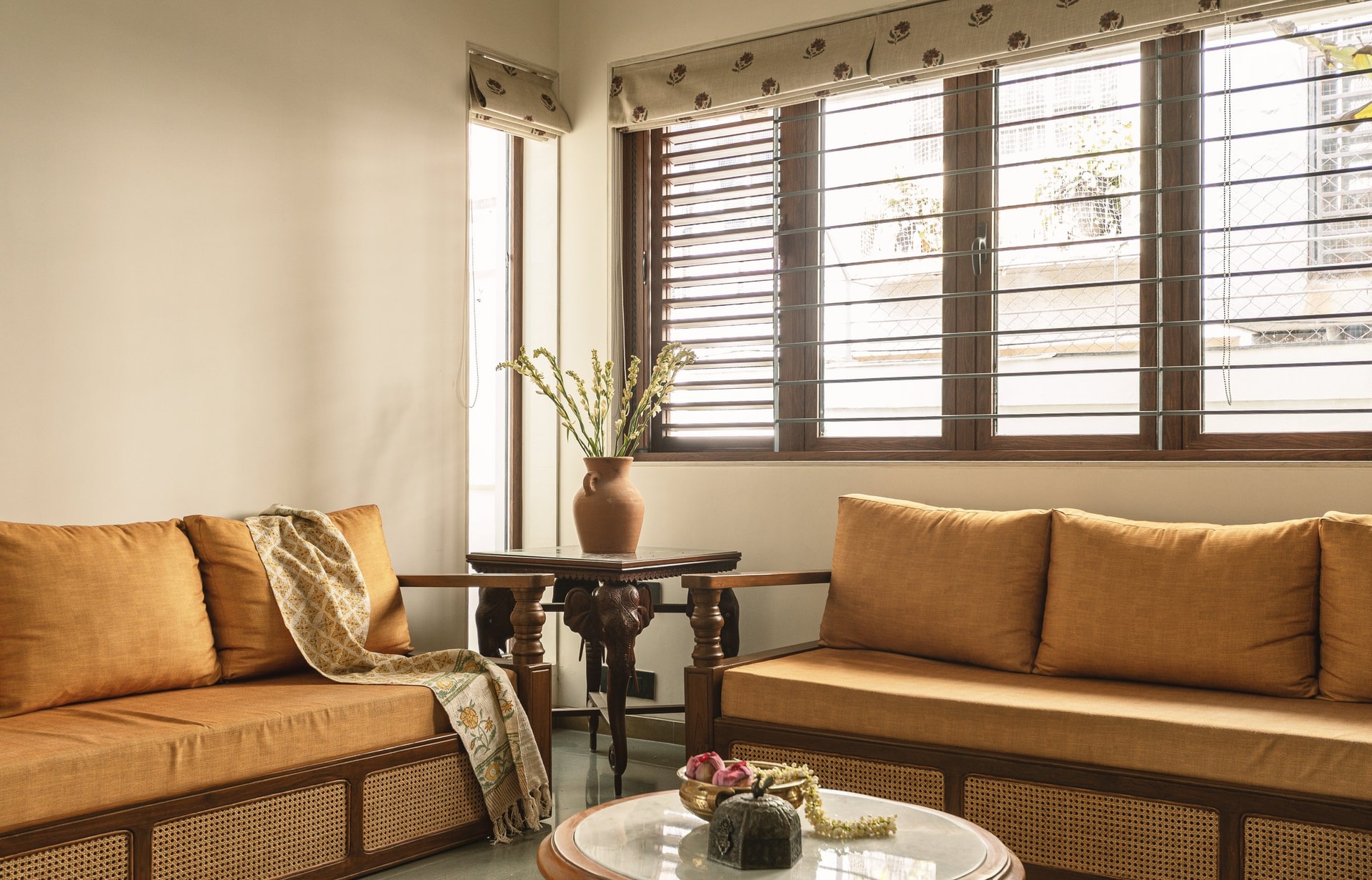
Across the room, two cane-base sofas in mustard upholstery face each other across a round, glass-topped occasional table with a turned wooden base. Between them sits a small carved side table with elephant-shaped supports, the kind of inherited piece that would feel costumed in a more clinical interior but here looks entirely at home.
““The home was conceived as a setting for what the family already owned, not the other way around.””
Rather than designing furniture to match the heirlooms or buying contemporary pieces that erase them, the studio chose cane-and-wood sofas that share the visual language of the older objects without imitating them. The room composes itself across generations.
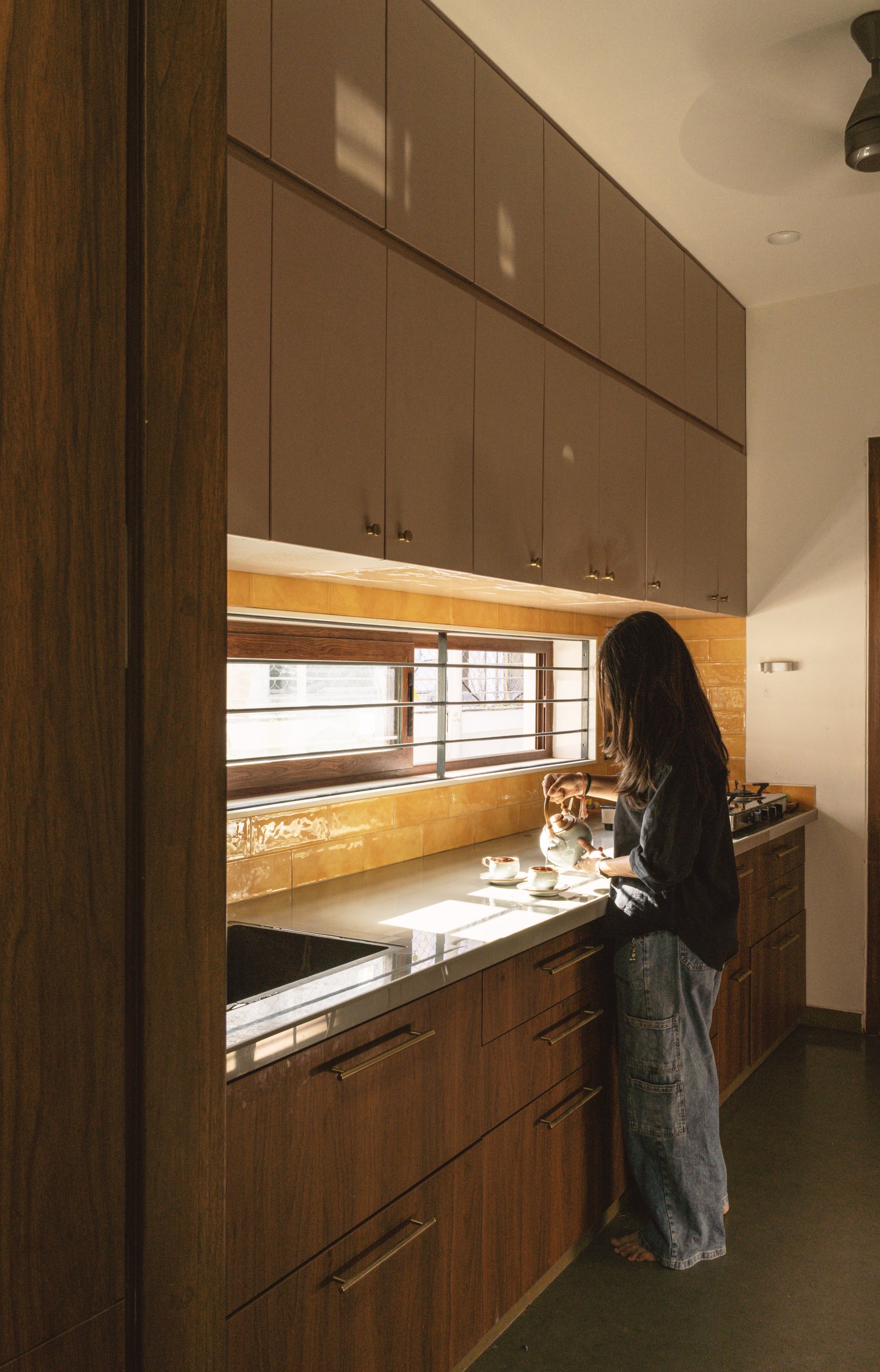
The galley kitchen takes a quieter approach, working in two registers: lower cabinetry in warm wood-grain veneer and upper cabinetry in a muted mauve-grey matte finish. A glazed honey-toned tile backsplash runs between them, catching light from a long horizontal window placed exactly where it is most useful, above the counter where the work happens.
The dining area sits adjacent, organised around a round marble-topped table on a turned wooden pedestal, ringed by four chairs with chevron-patterned seats in muted plum tones. A tall storage wall behind, with reeded glass uppers and a veined stone niche, offers display without performance, the kind of cabinetry that earns its scale by being genuinely useful.
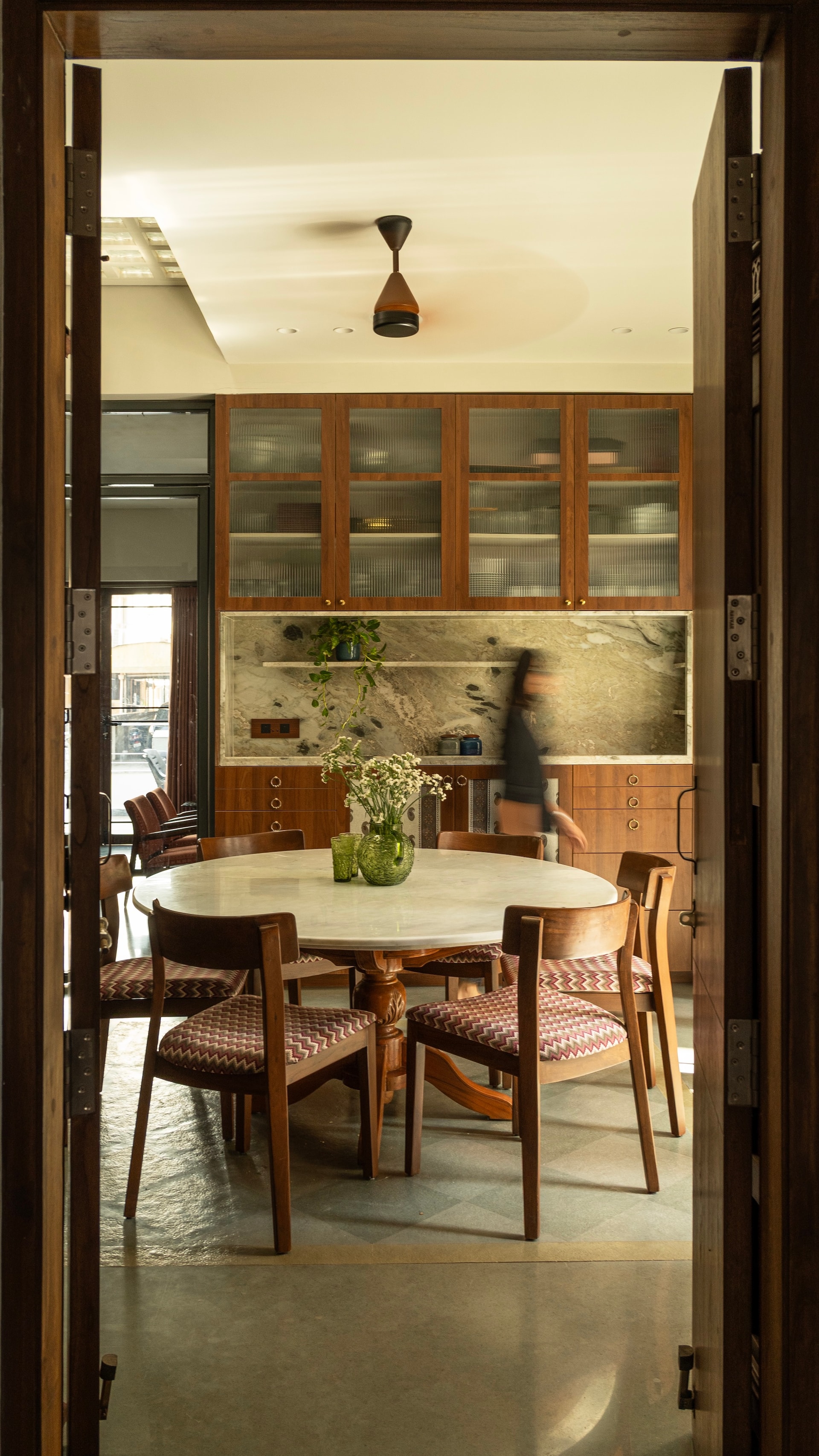
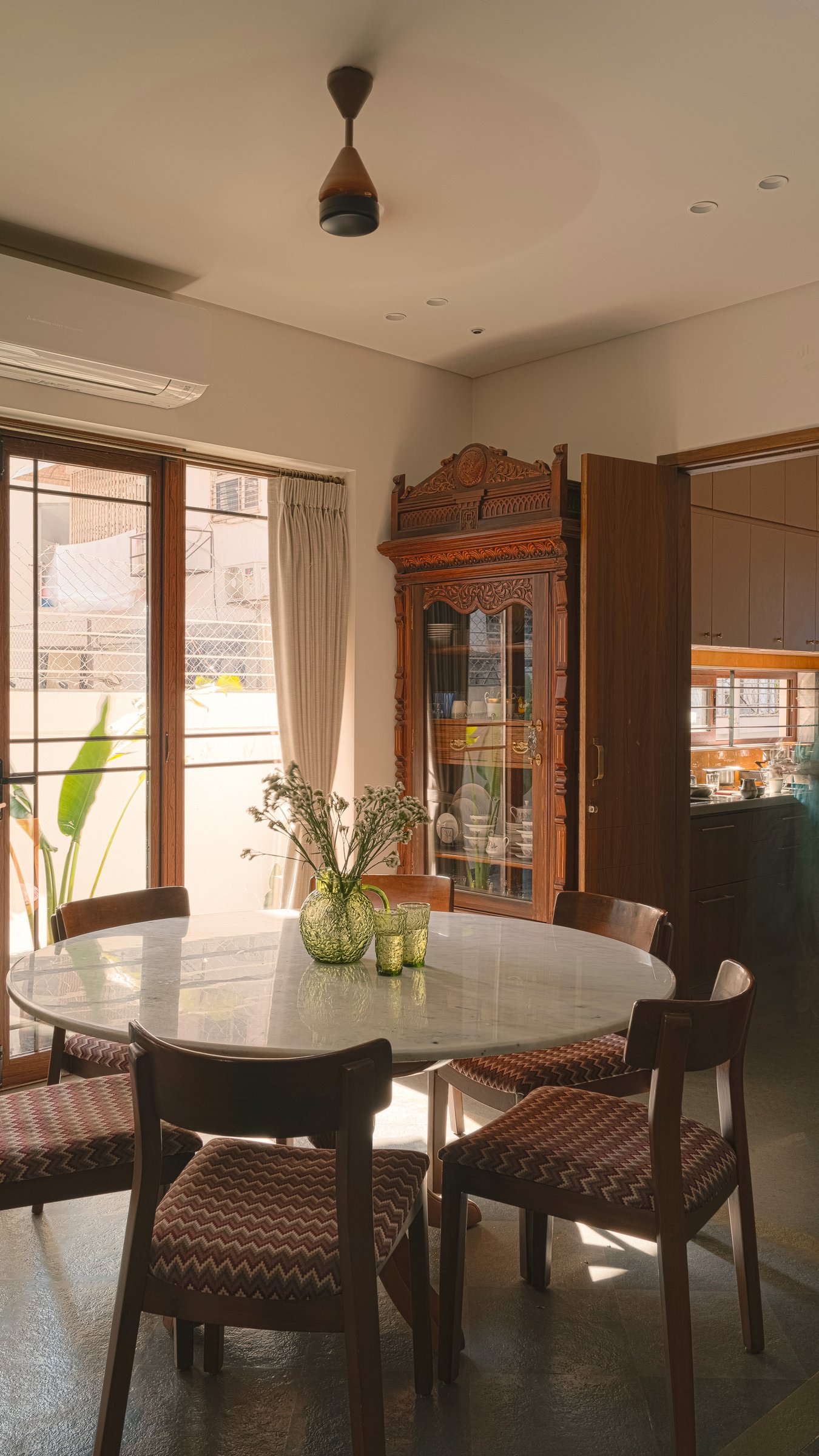
A tall, intricately carved heirloom cabinet stands beside the doorway to the kitchen, its glass-fronted shelves filled with the family’s china. The piece is unmistakably old, unmistakably grand, and unmistakably the room’s centre of gravity, the modern joinery around it stepping back to let it speak.
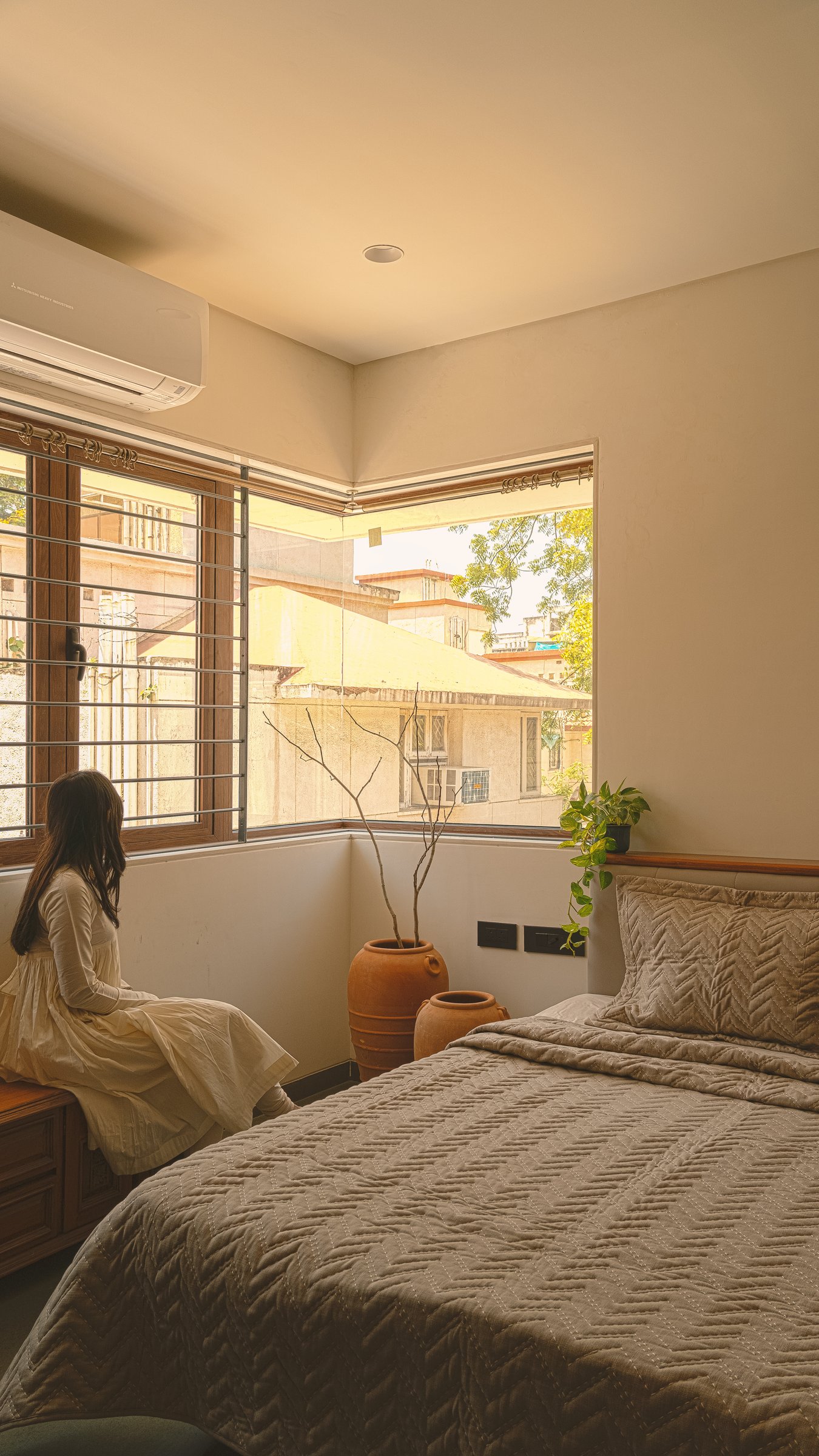
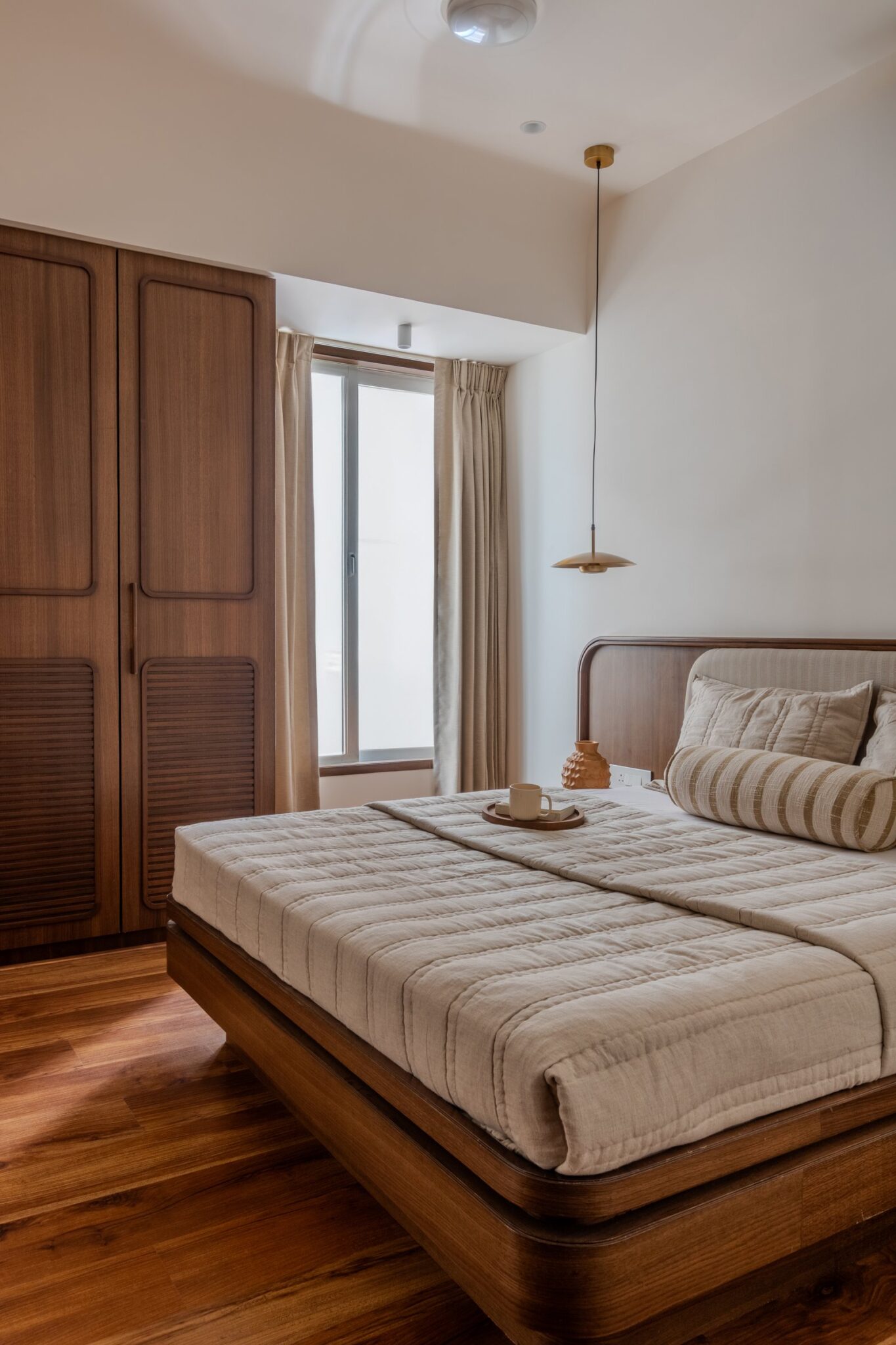
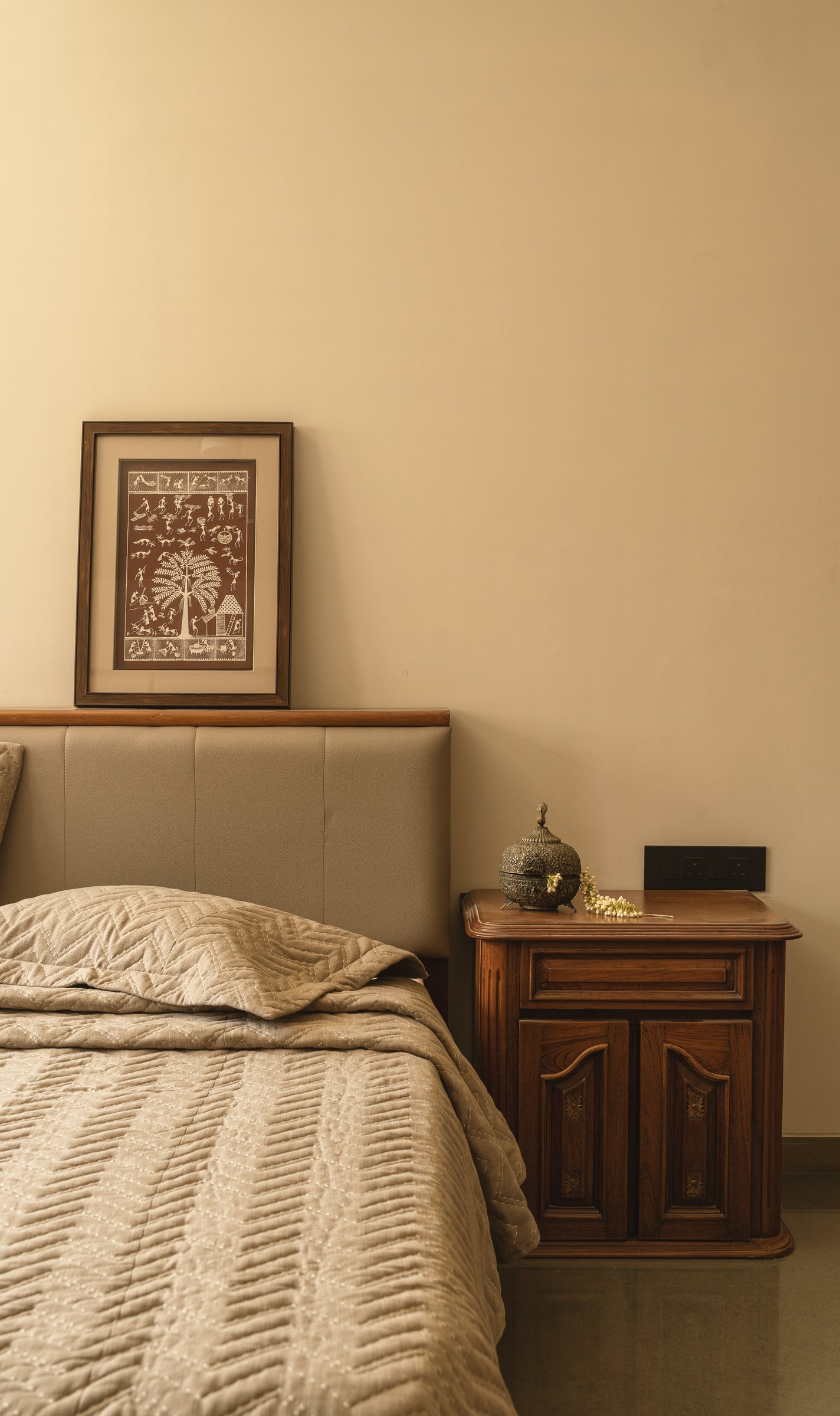
The master bedroom turns the corner with a generous L-shaped window that pulls the canopy of the street into the room. A pair of terracotta urns sit on the floor below the window with bare branches rising from them, and the bed in its quilted herringbone cover takes the same low, unhurried tone the rest of the home has set.
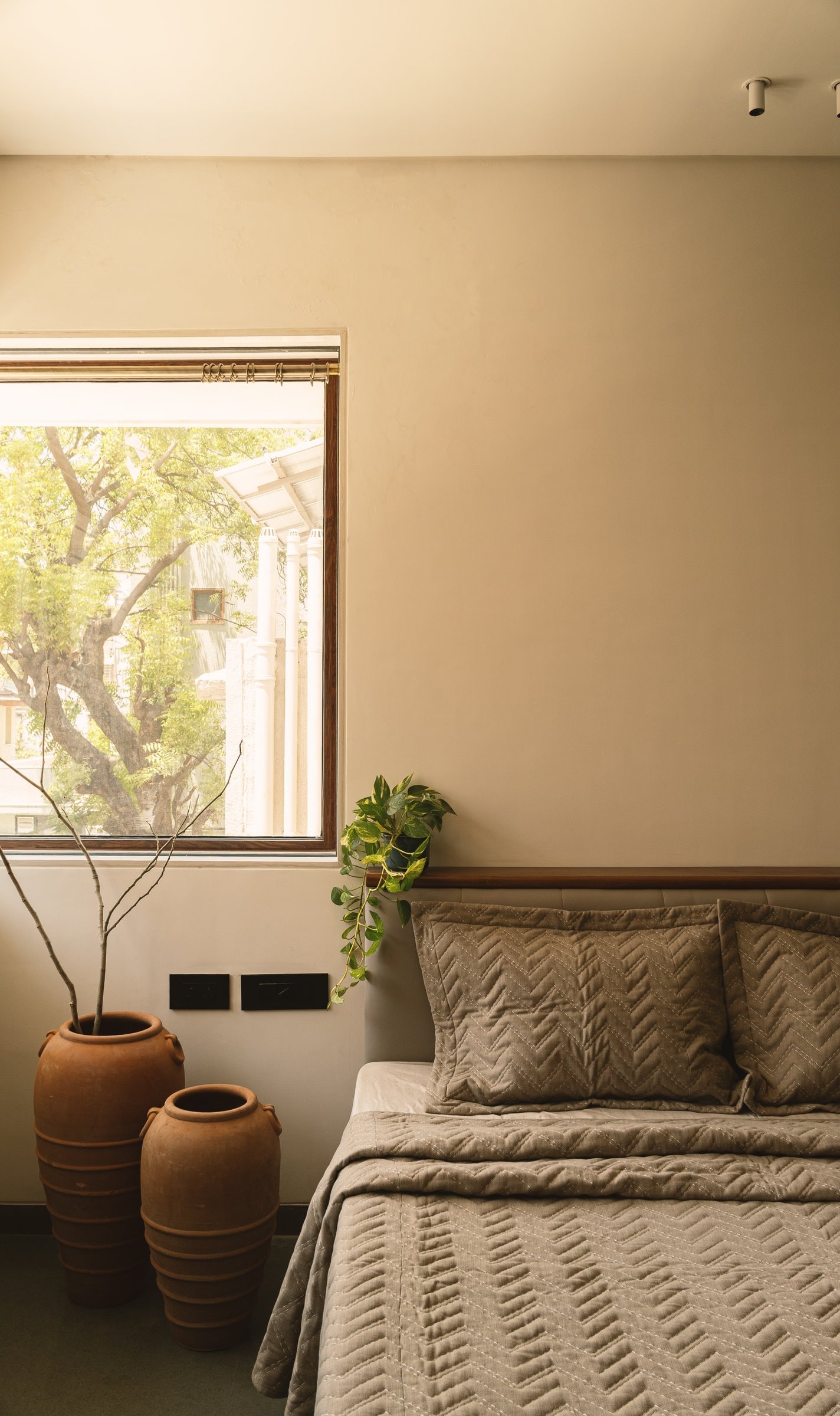
The wall is painted a soft sand tone that warms in the light, and the terracotta vessels at the window double as a still life and a piece of slow furniture.
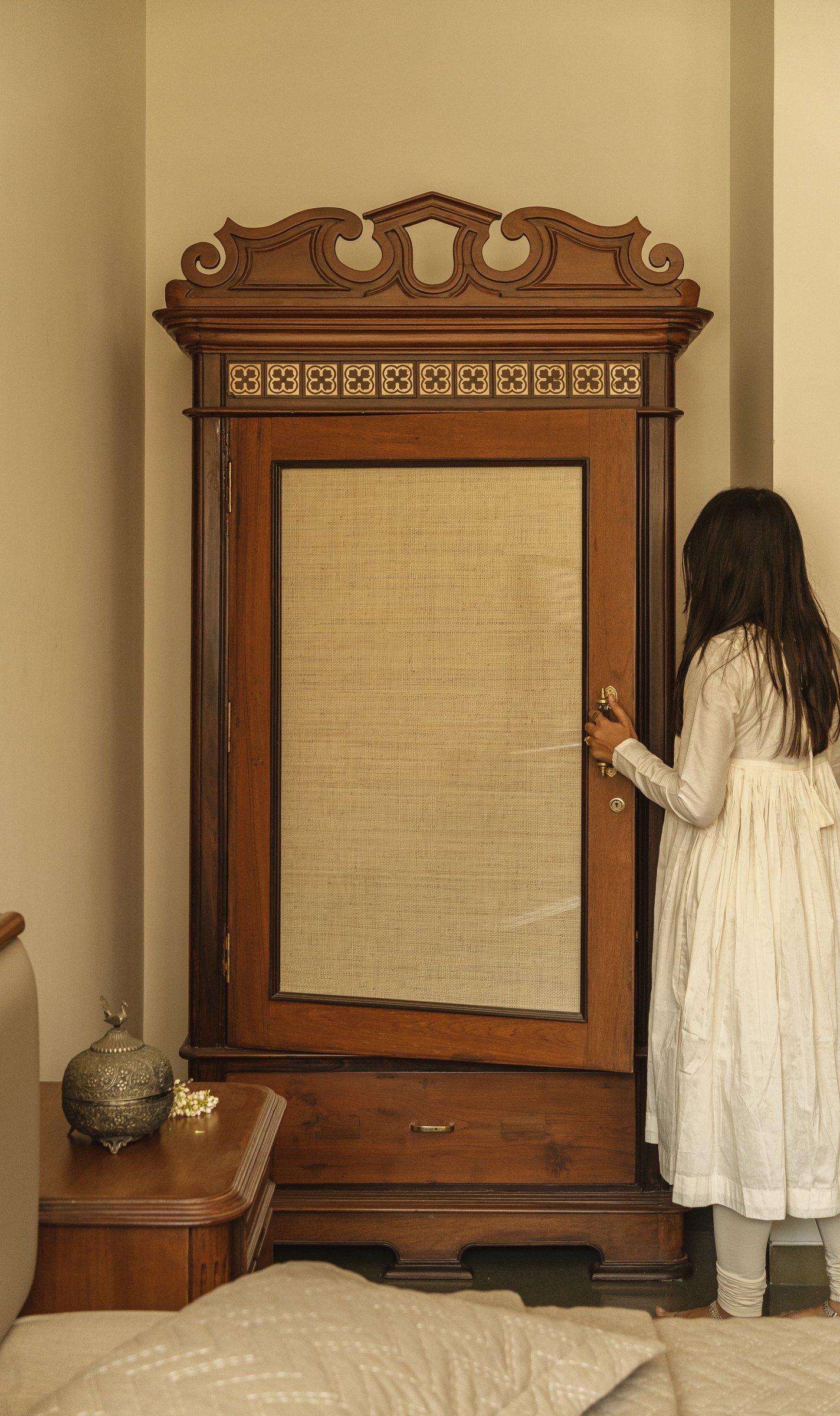
In the same room, a tall heirloom almirah in carved wood with a caned central panel and a decorative pediment stands sentinel against the wall. It is the kind of piece that asks for nothing more than space, and the studio gives it exactly that: an unornamented stretch of wall, a calm light, and the dignity of being seen.
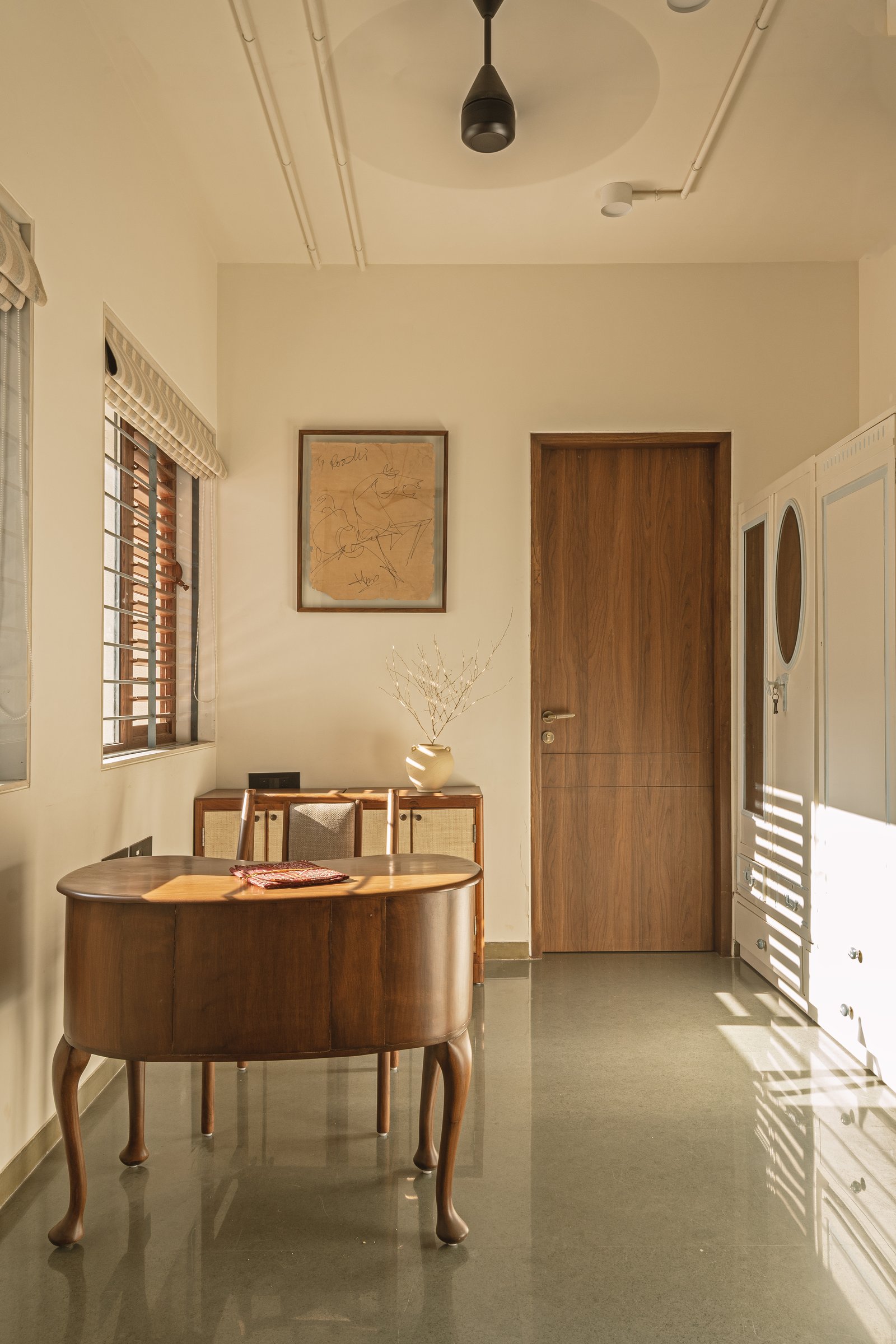
Elsewhere in the home, a study sits in its own small room with a sculptural wooden desk on cabriole legs as its single decisive object. A small framed sketch hangs above a low credenza, the door to the room is finished in the same warm wood-grain as the rest of the joinery, and the polished green floor carries through, stitching the spaces together.
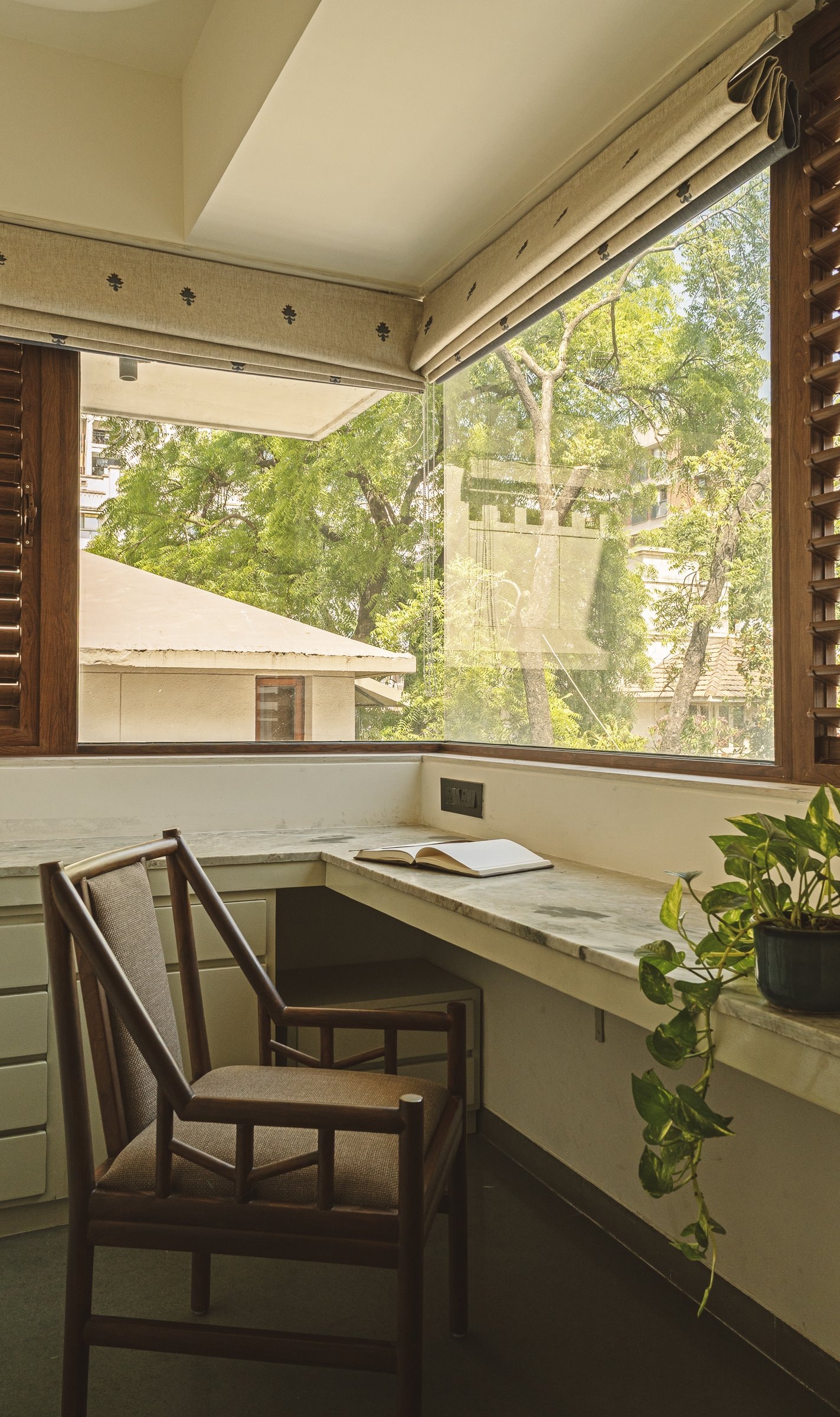
A second work nook has been built into a window bay, with a marble-topped writing surface running along two sides and a wooden chair pulled up to it.
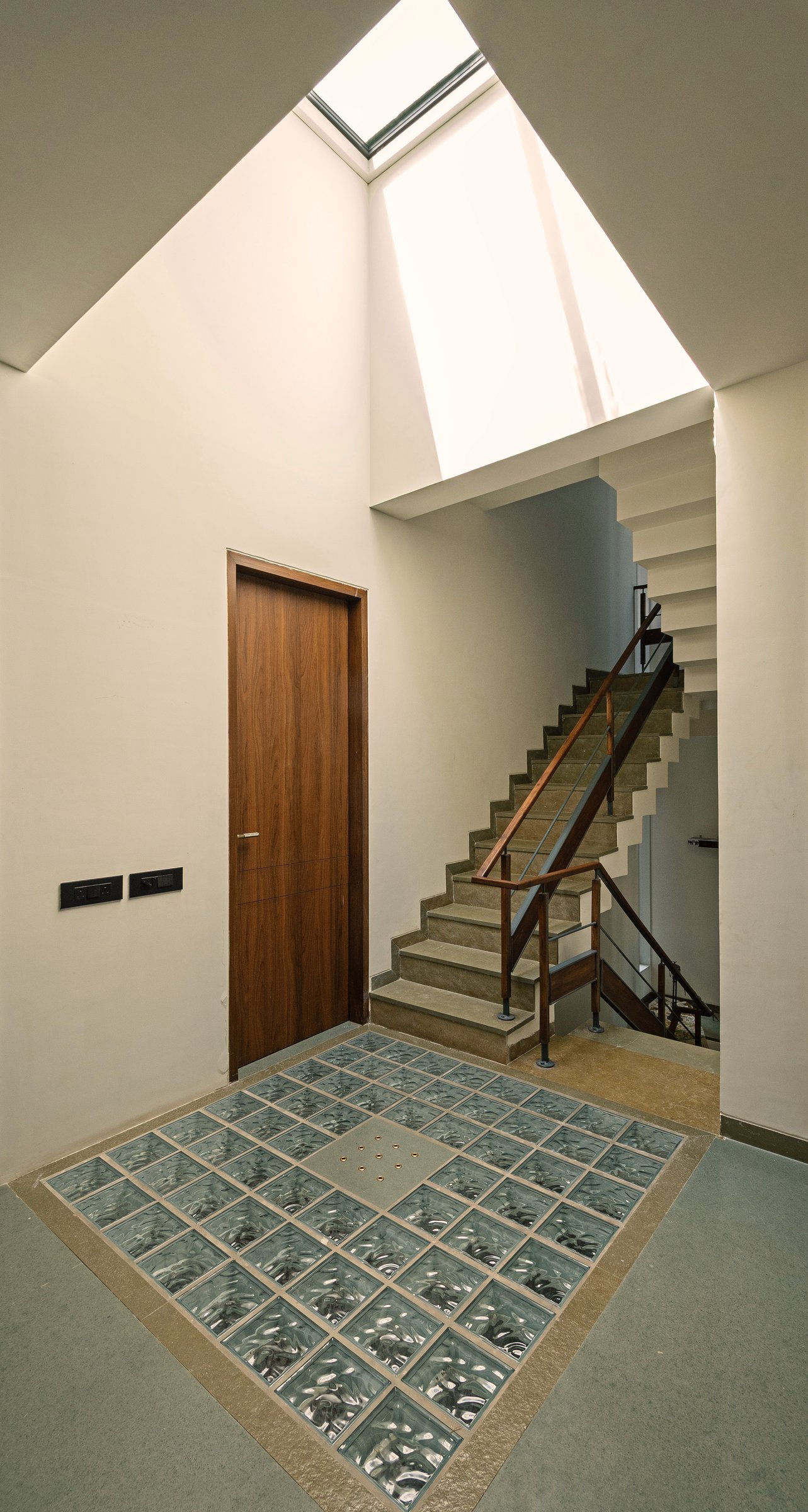
The internal stair is the home’s most architectural moment. A skylight cuts a sharp pyramid of light into the double-height void above, glass-block flooring at the landing carries that light downward into the floor below, and a single panelled wood door sits at the base of the stair like a quiet punctuation mark. It is the only space in the home that argues for itself in purely architectural terms.
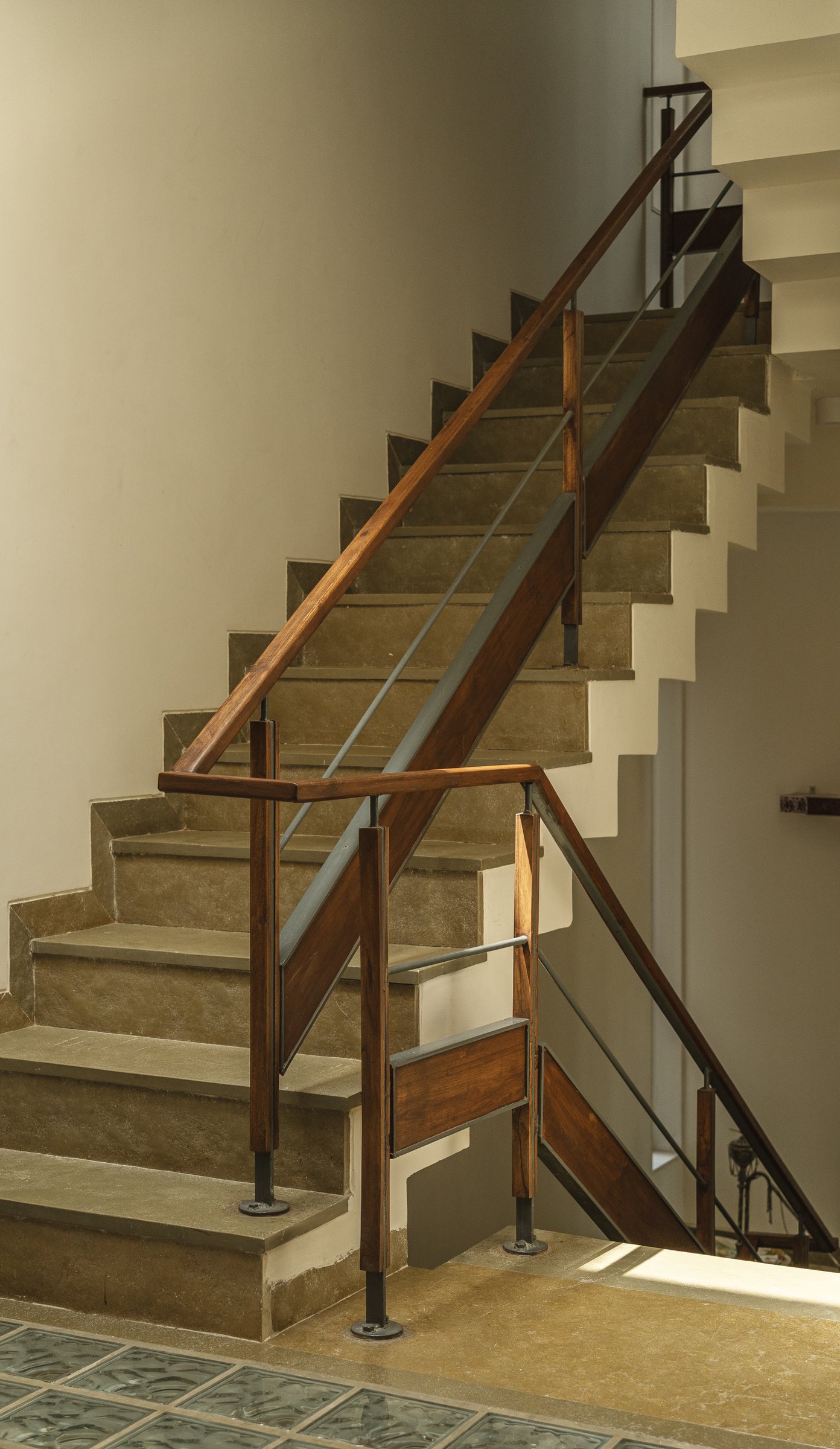
The staircase itself, seen from below, pairs concrete treads with a wood-and-steel handrail in a pragmatic, unfussy detail. The wood matches the joinery elsewhere in the home; the steel is left dark and matte.
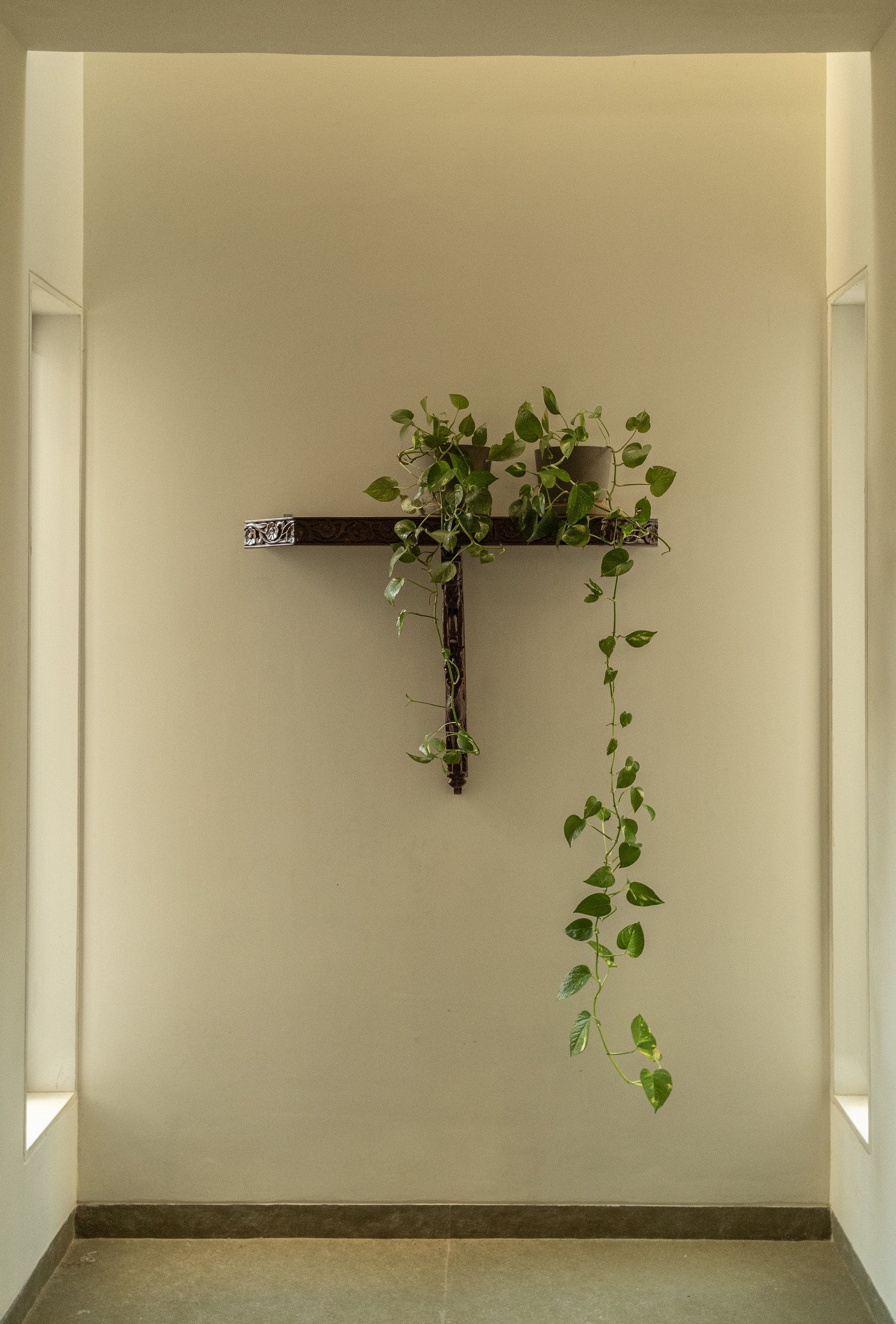
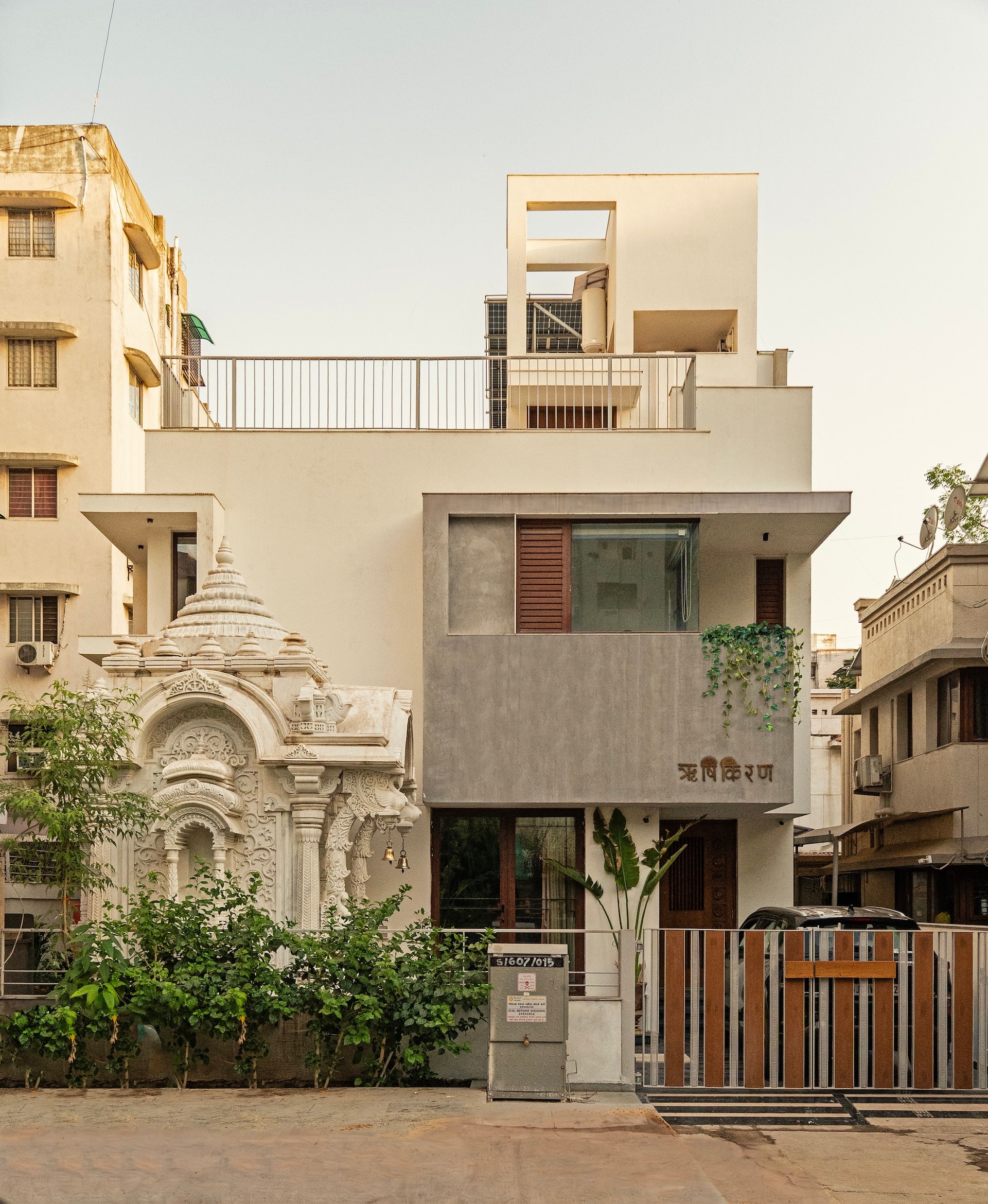
What this house describes, in the end, is a particular sensibility within Indian residential design, one that rejects the false binary between heritage and contemporary, between heirloom and new build. Studio Minim has not styled the family’s old furniture into an interior; the studio has built an interior that allows the old furniture to keep working.
In this lies the project’s quiet success: it is not a home that performs a relationship with the past, but one that simply continues it. The architecture provides the room, the joinery provides the consistency, and the inherited objects provide what neither of those things can, which is time.