The wellness studio has become one of the most over-designed typologies of the last decade, weighed down by neon signage, mirrored walls treated as branding canvas, and the visual grammar of the gym borrowed wholesale into spaces that promise something quieter. To strip that vocabulary away and rebuild it from materials more often associated with the residential interior is a riskier proposition than it appears. The result either reads as a sanctuary or as a misjudgement; there is little room in between.
Soul Mvnt, a boutique Pilates studio in Dubai Design District, sits firmly in the first category. Designed by AHI Interiors under the direction of Jessica Khouzami, the project took a shell-and-core unit and built, from the ground up, a space that holds two distinct registers of movement, high-intensity Lagree and slower mat-based work, alongside a reception, retail corner, and two changing rooms, all bound by a single material logic of burl wood, micro-cement, and Avalanche marble.
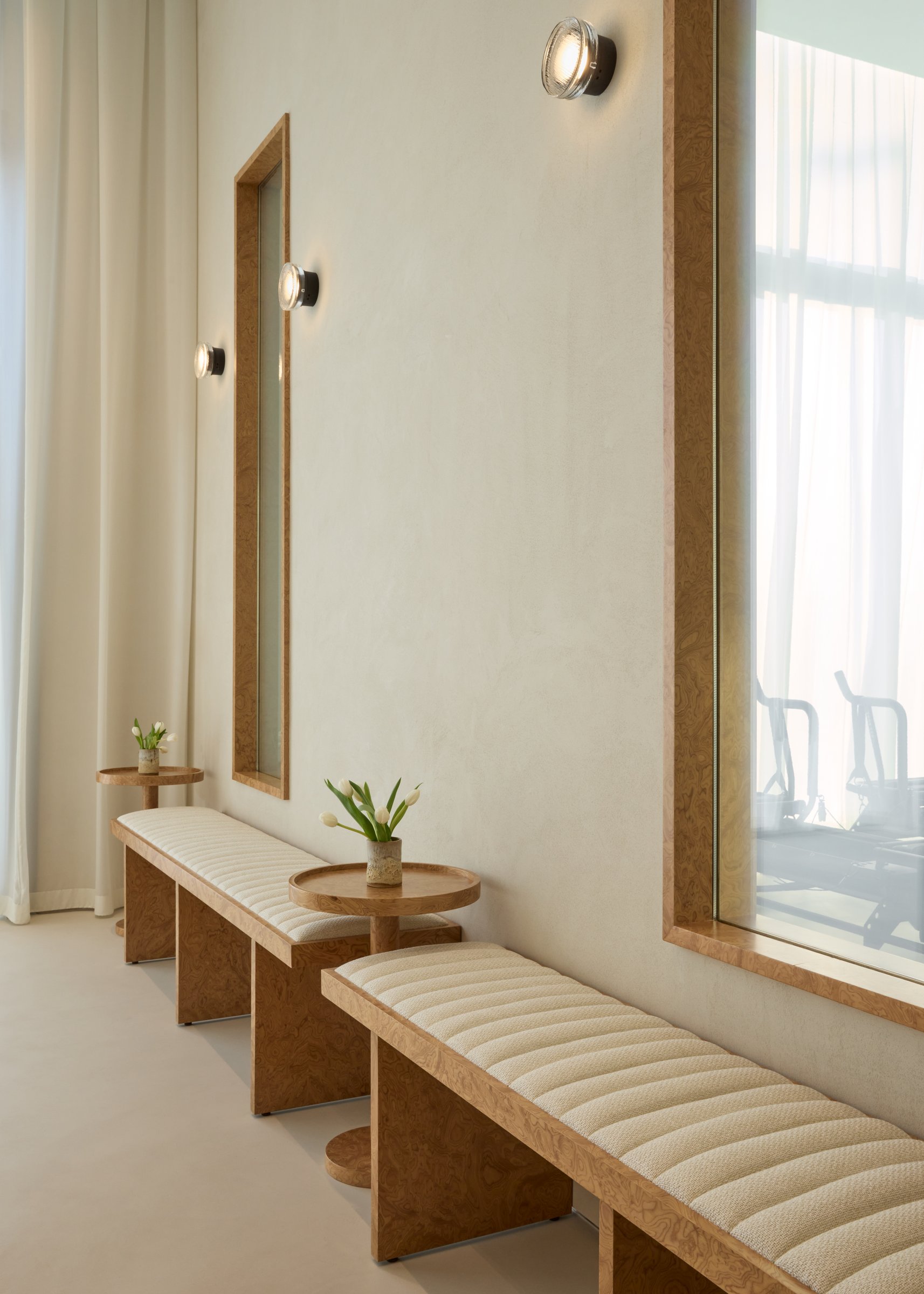
A run of benches in burl wood, their seats softly ribbed in cream upholstery, lines the wall beside the Lagree studio, paired with small round side tables. Wall sconces punctuate the micro-cement plane above, their sculptural glass forms reading more like objects than fixtures. The intent here is unmistakable: arrival, not entry, with a place to sit and gather before a class begins.
Through the timber-framed window, the rows of reformers are just visible, a quiet preview of the intensity to come. It is a transitional moment that does the work of an entire foyer without behaving like one.
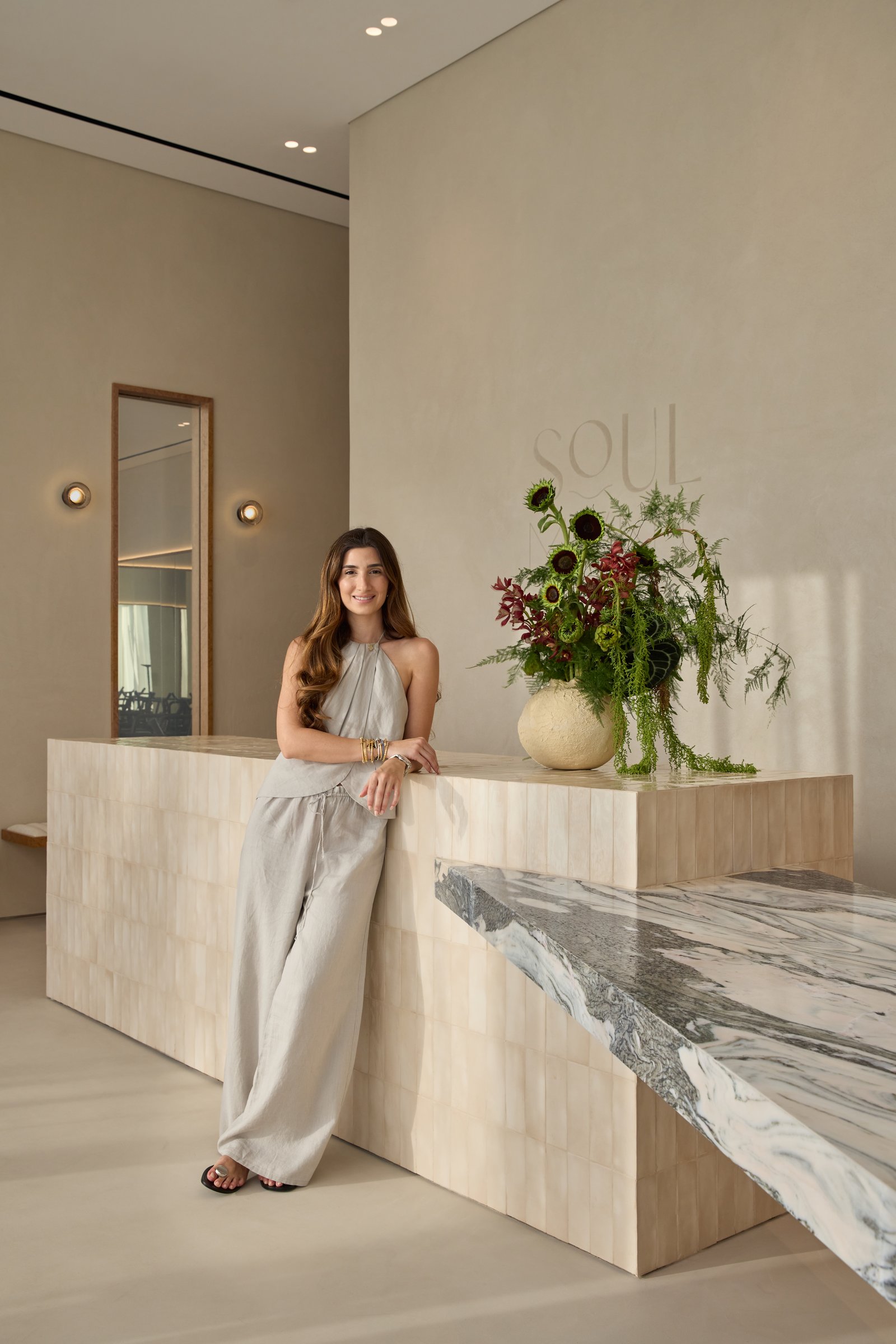
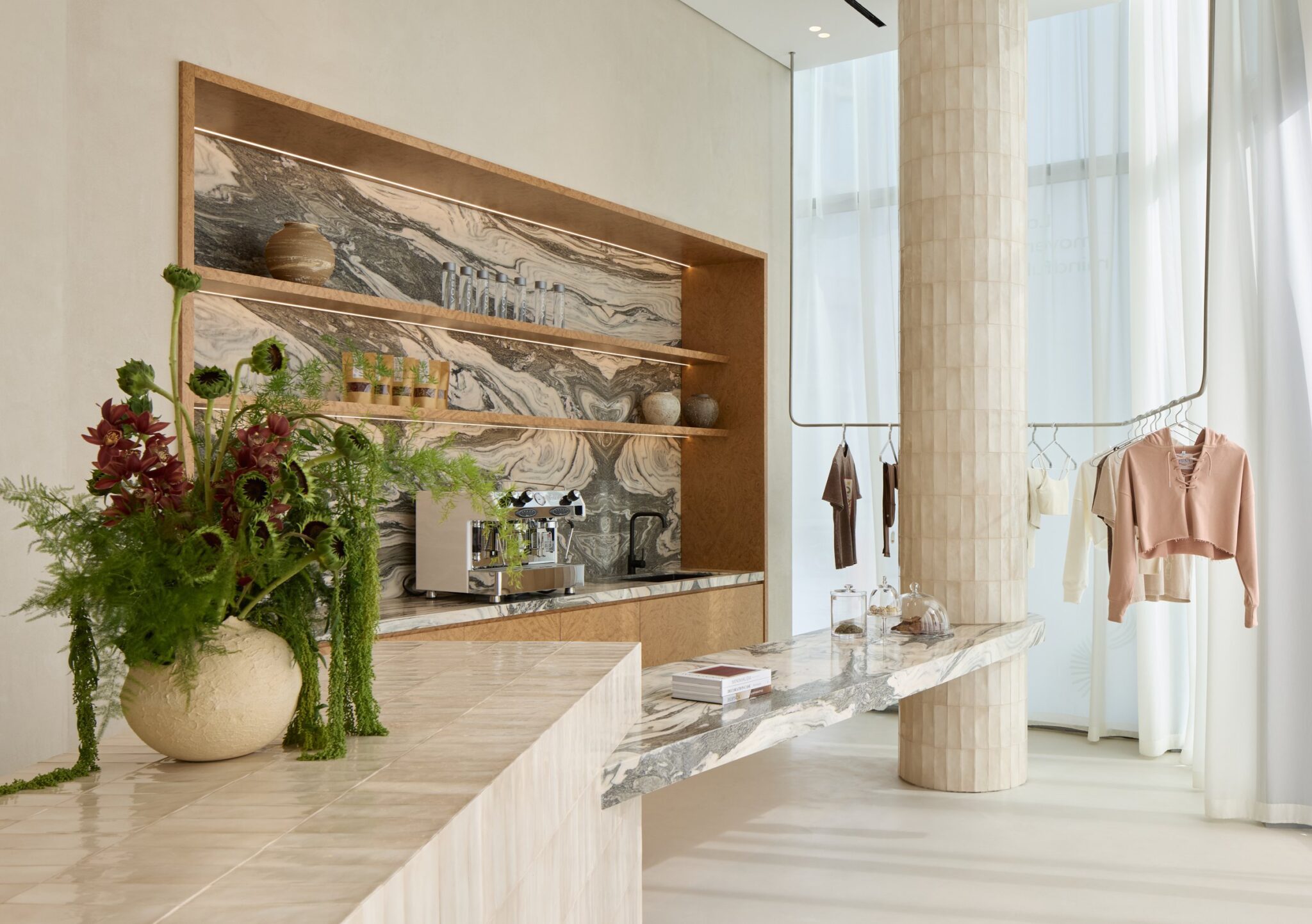
The reception desk is the project’s signature gesture, a sculptural volume clad in handmade ivory tiles that catches light unevenly across its surface, with a cantilevered shelf of Avalanche marble extending sideways in a single dramatic plane. The marble’s grey-and-cream movement is left to do the work of ornamentation; nothing else competes.
““The clients gave us full creative freedom. They trusted us to take their vision and build something that felt more like a sanctuary than a studio.””
That trust is legible in every decision visible here, from the etched Soul wordmark held back to a whisper on the wall to the choice of a single ceramic vessel of seasonal stems as the only object on the counter. The reception does not announce the brand so much as set its tonal register.
Just beyond the desk, a service bar and integrated retail wall extend the same material conversation. A recessed niche framed in burl wood holds the Avalanche marble as a continuous backdrop to slim shelves of glassware, ceramics, and apothecary products, with an espresso machine sitting almost incidentally within the composition.
The retail rail, suspended in front of a tiled column, carries a small edit of apparel rather than a full merchandising display. The decision to keep the offer tight is itself an editorial one; the space is asked to feel like a studio first, a shop second.
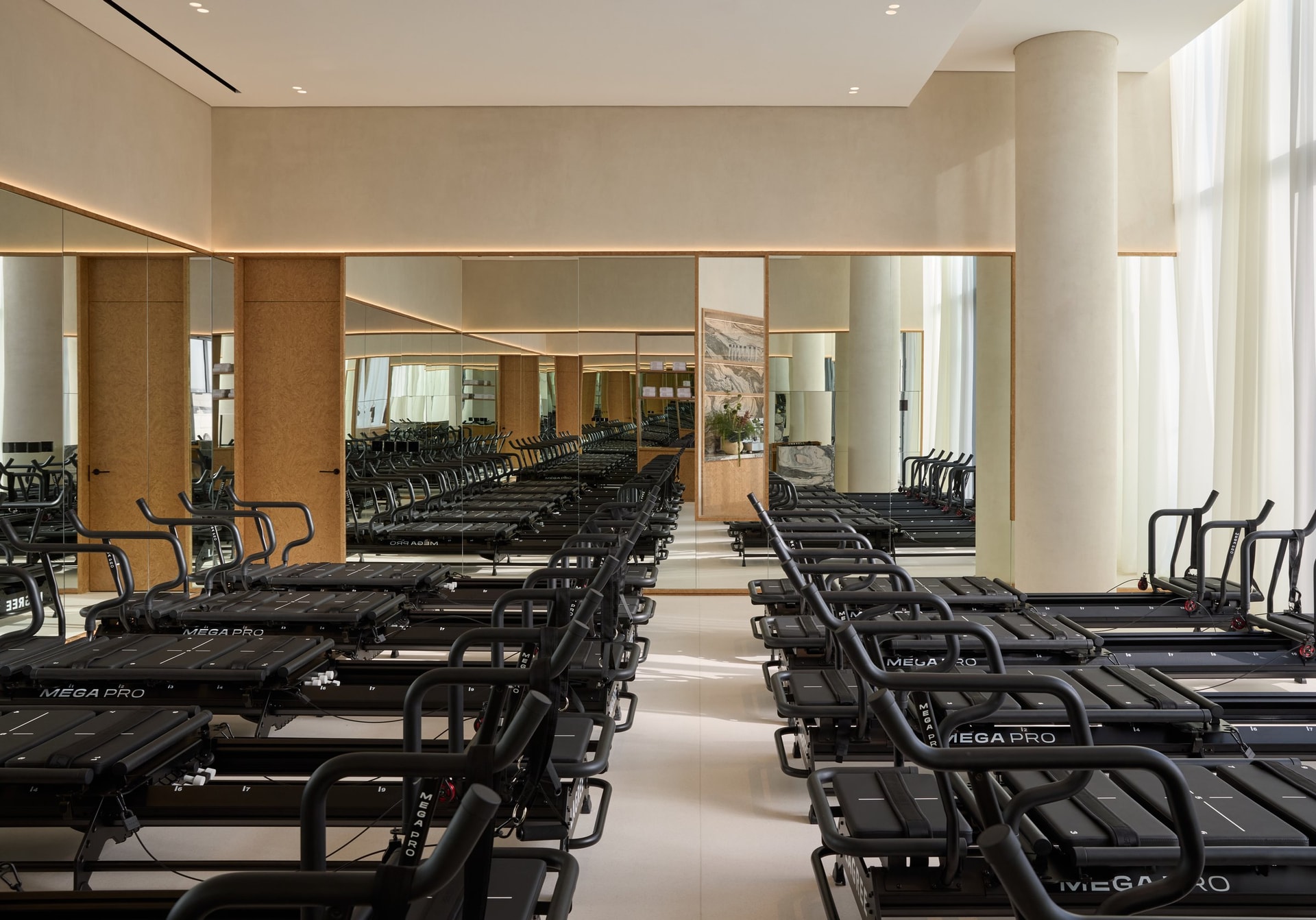
The Lagree studio is the project’s most charged room, and the design responds by holding everything else back. Reformers in matte black line up in disciplined rows against floor-to-ceiling mirrors on both flanks, the reflections multiplying the equipment into what feels like an infinite grid. The micro-cement walls and ceiling absorb light rather than bounce it, and the burl wood pilasters between mirror panels become the only warm interruptions in an otherwise monochrome field.
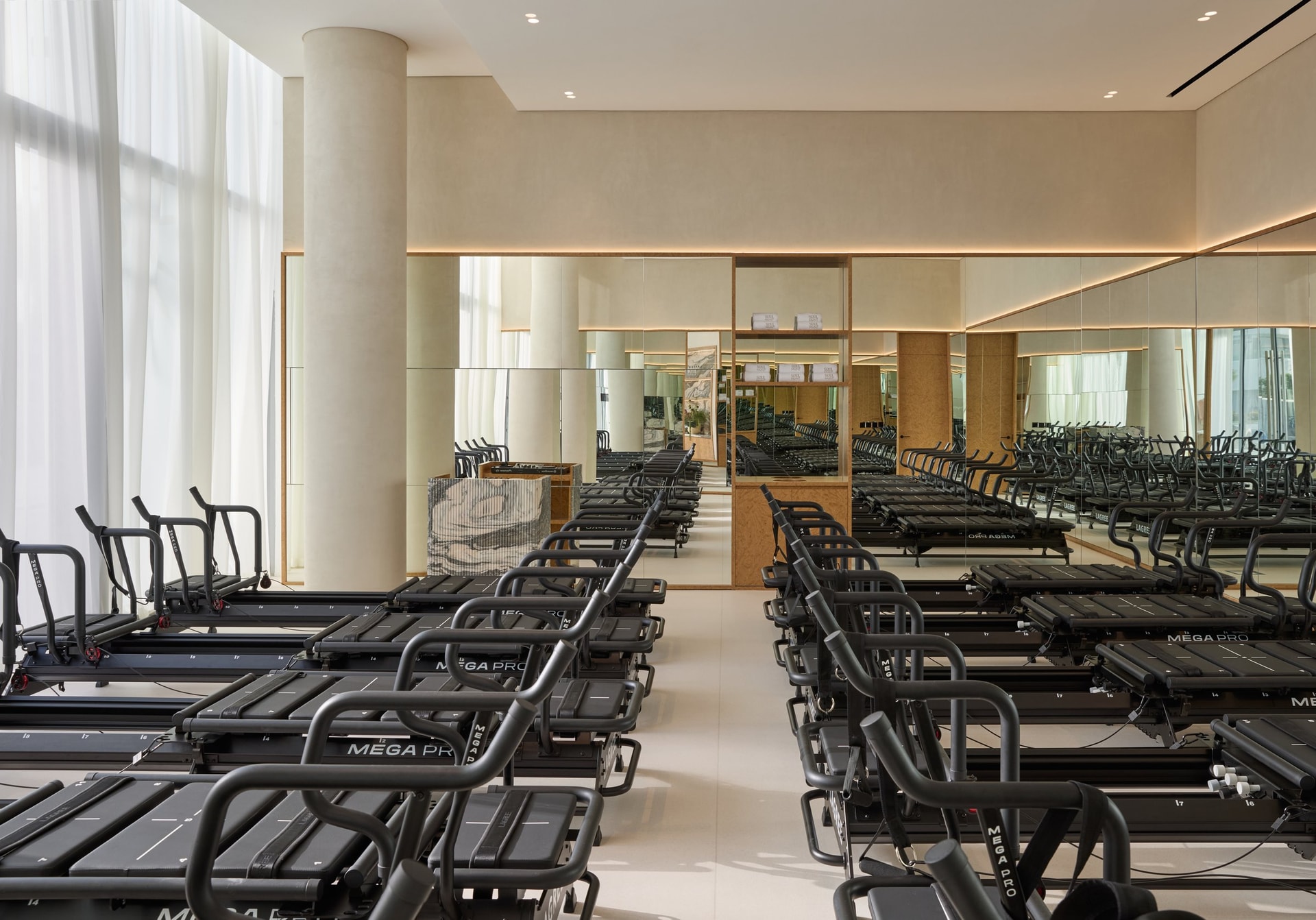
Seen from the opposite end, the same room reveals its other anchor: a compact marble towel station, sitting low against the back wall like a sculptural object rather than a piece of equipment. The full-height curtains soften the perimeter where the mirrors end, and the structural column, wrapped in micro-cement, is allowed to remain visible rather than disguised, presiding over the disciplined rows of Mega Pro reformers that fill the floor.
Acoustic insulation built into the perimeter walls and flooring does the unglamorous work of containing the sound of high-energy classes within these four planes, a technical achievement that the visible design never feels obliged to explain.
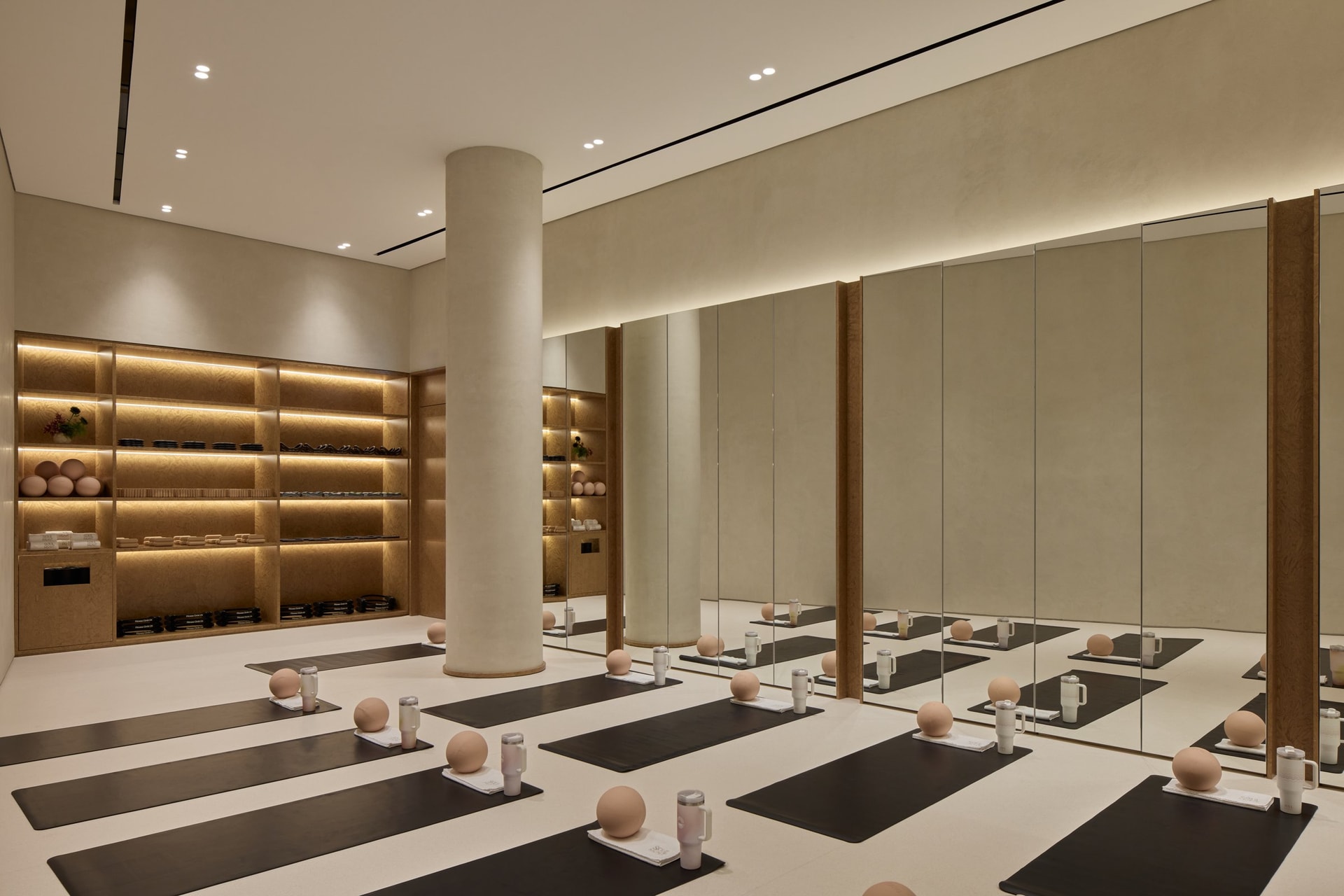
The mat studio, by contrast, is the project’s quiet room. The shelves, framed in burl wood and warmed by hidden strip lighting, hold the small equipment of the practice — balls, blocks, weights — as if it were a curated display rather than functional storage.
The same micro-cement that floors the common areas continues here, and the columns are left rounded and unadorned. The effect is of a room designed to subtract rather than add: less ornament, less noise, less of everything except attention.
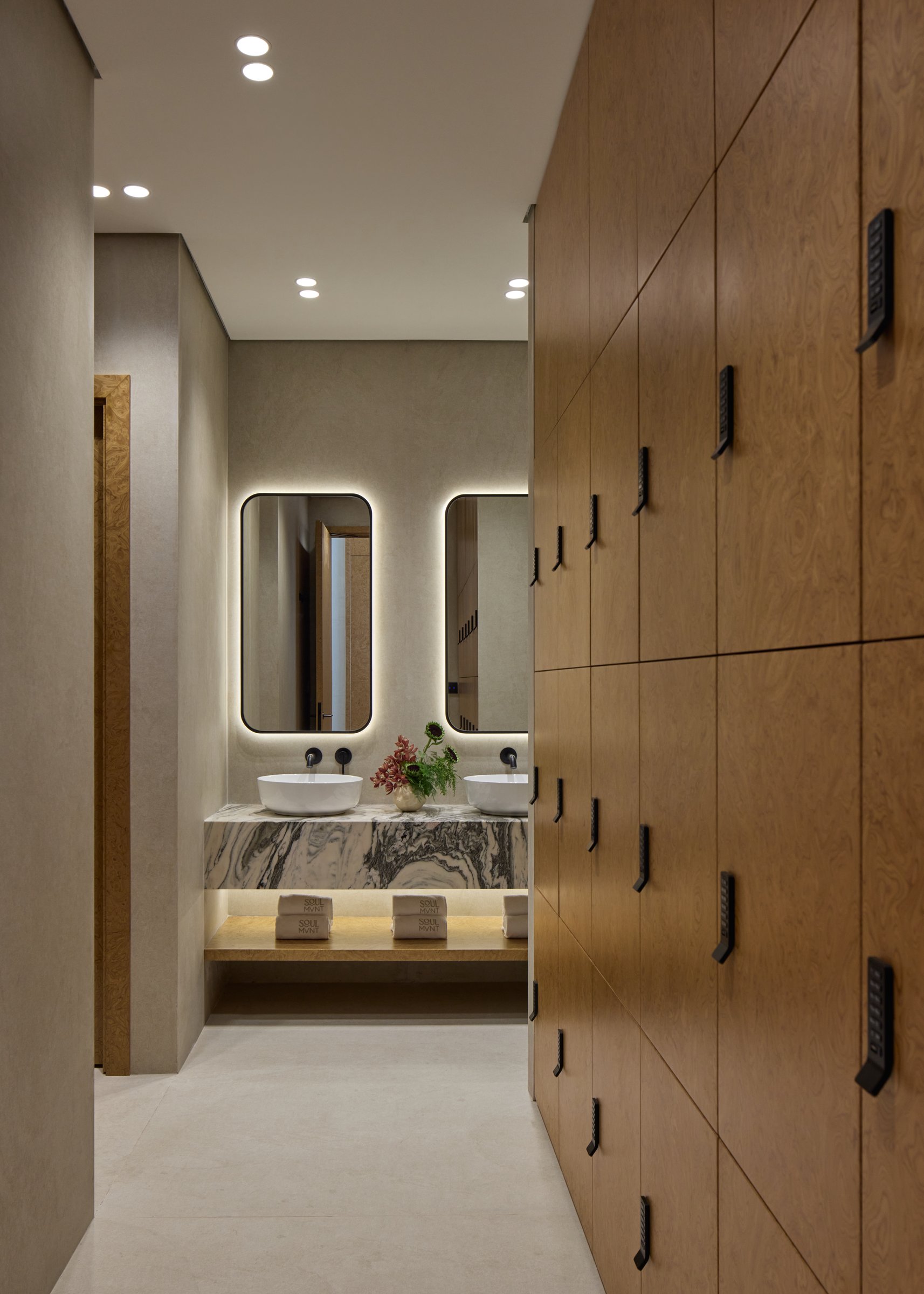
The changing room continues the material discipline without softening it for the back-of-house. A full wall of burl wood lockers, each fitted with a slim blackened pull, runs the length of the corridor and terminates at a marble-topped vanity flanked by two backlit mirrors.
The decision to extend the same Avalanche marble used at reception into the wet zones is what holds the project together across its different functions. There is no demotion of materials as one moves deeper into the plan; the locker room is treated with the same compositional seriousness as the entrance.
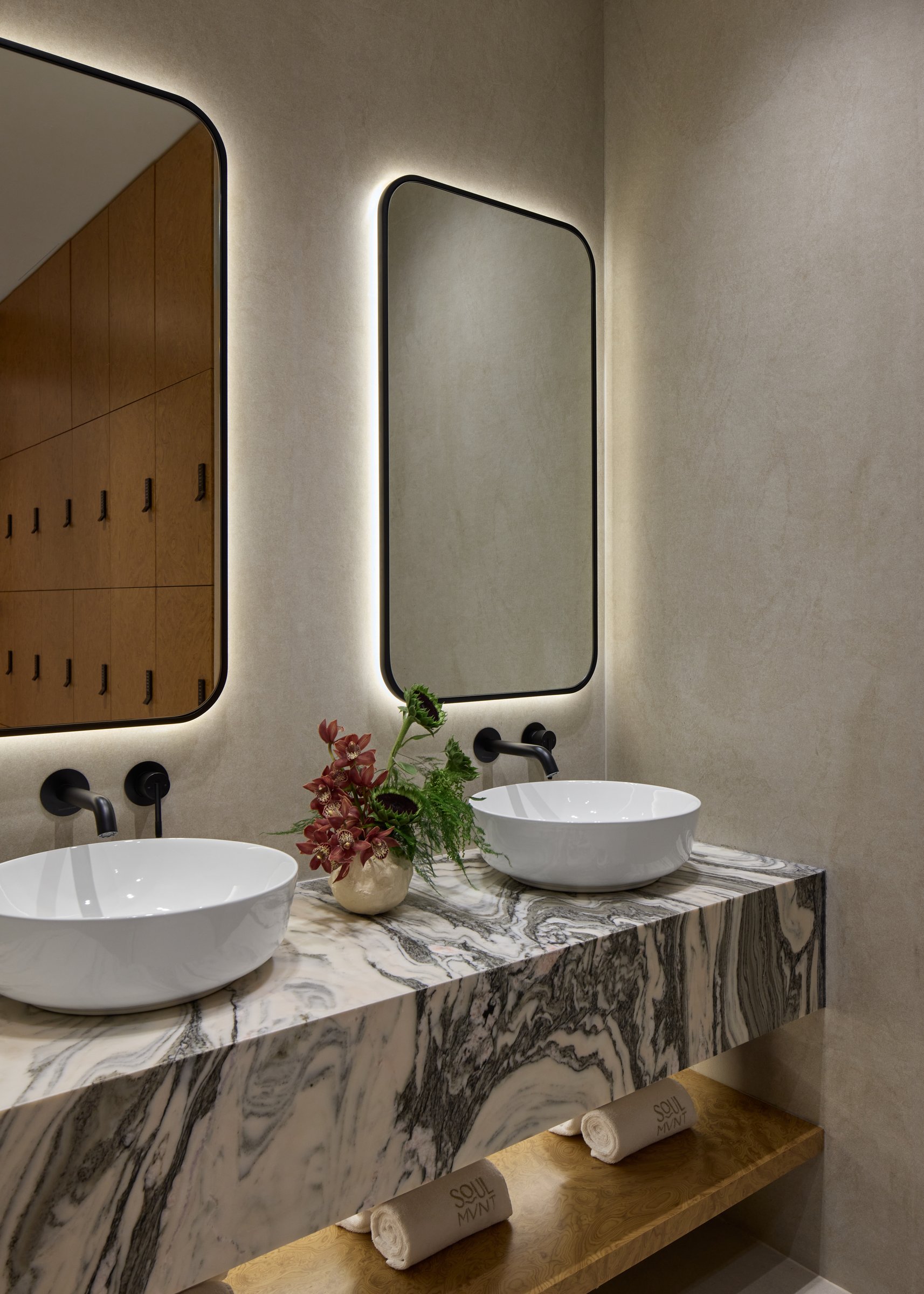
At the vanity itself, the marble is allowed its full theatrical reading. Two white basins sit on a thick slab whose grey-veined movement is dramatic enough to function as the room’s single ornamental element, framed by backlit mirrors with softly rounded corners and matte black wall-mounted taps.
The lighting here is the quietest design decision and arguably the most considered. Rather than overhead fixtures, the mirrors carry their own halo, and the recessed ceiling lights are dimmed to a level that flatters rather than exposes, closer to a hotel bathroom than a studio one.
Within Dubai’s wellness landscape, where the studio-as-spectacle remains the dominant idiom, Soul Mvnt makes a different argument about what a Pilates space might be. It draws its vocabulary from hospitality and residential interiors rather than from the gym, and treats acoustic engineering, drainage routing, and back-of-house joinery with the same care given to the front-of-house photograph. The project sits comfortably within Dubai Design District’s broader ambition to host work that takes craft seriously, regardless of typology.
What lingers is the coherence of the thinking, the sense that every surface met the next on purpose, and that the building was reasoned through from raw shell to ribbed DJ booth without losing the original quiet. In a city where wellness is often sold through visual volume, Soul Mvnt makes its case by turning the volume down.