There is a particular kind of confidence required to design an apartment that looks out at the Burj Khalifa and chooses, instead, to look inward. Most homes within sight of that silhouette borrow its grammar: polish, scale, the spectacle of glass. This one refuses the invitation entirely.
Designed by Laconico, the apartment, designed for short- and mid-term rental, sits in Downtown Dubai, where the city’s most photographed skyline presses against the window in full daylight. The studio’s response was to lower the volume of everything inside, so that the room reads as a sanctuary rather than a vantage point. Neutral palettes, tactile fabrics, and a single piece of sculptural lighting do the talking.
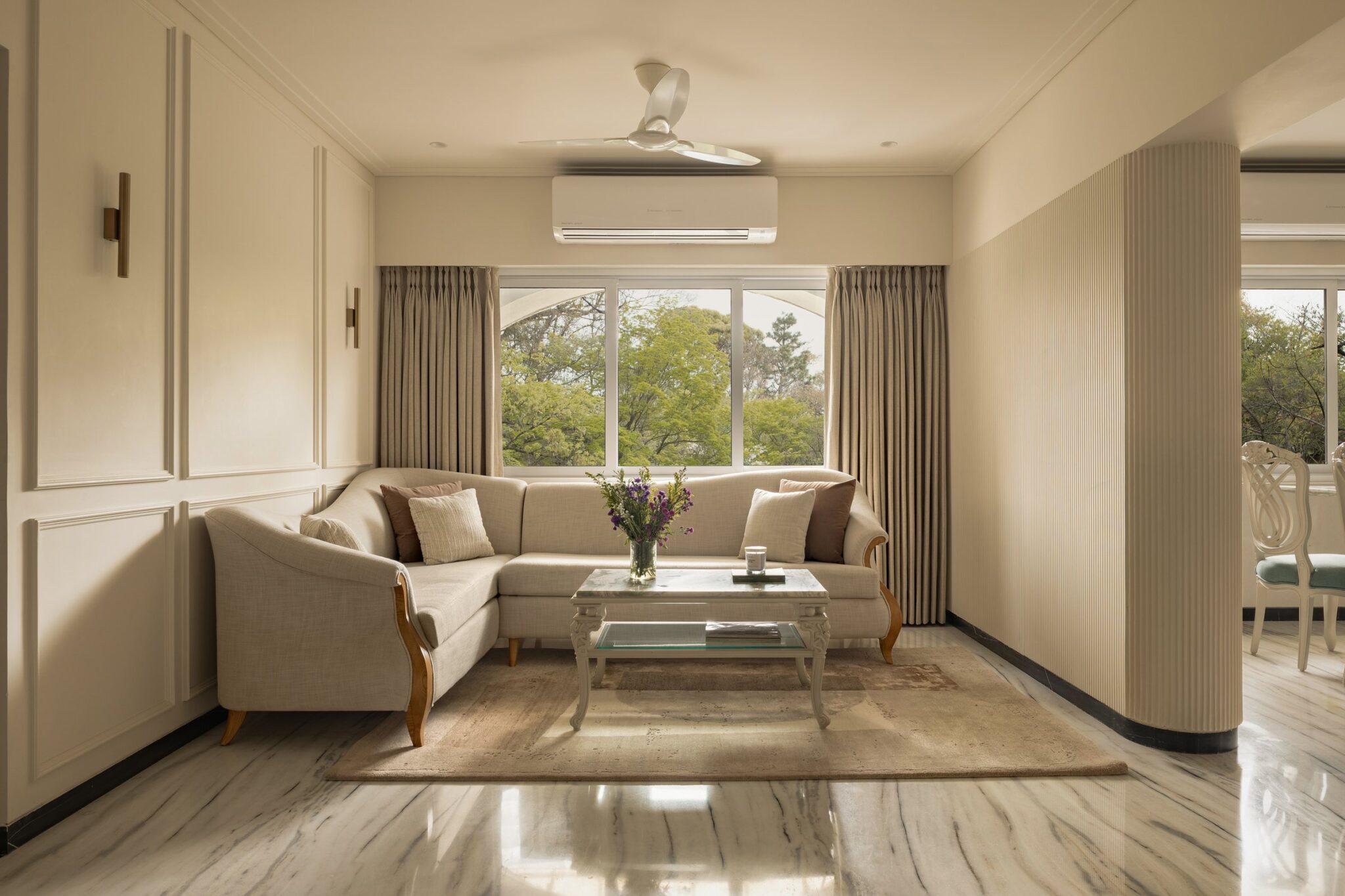
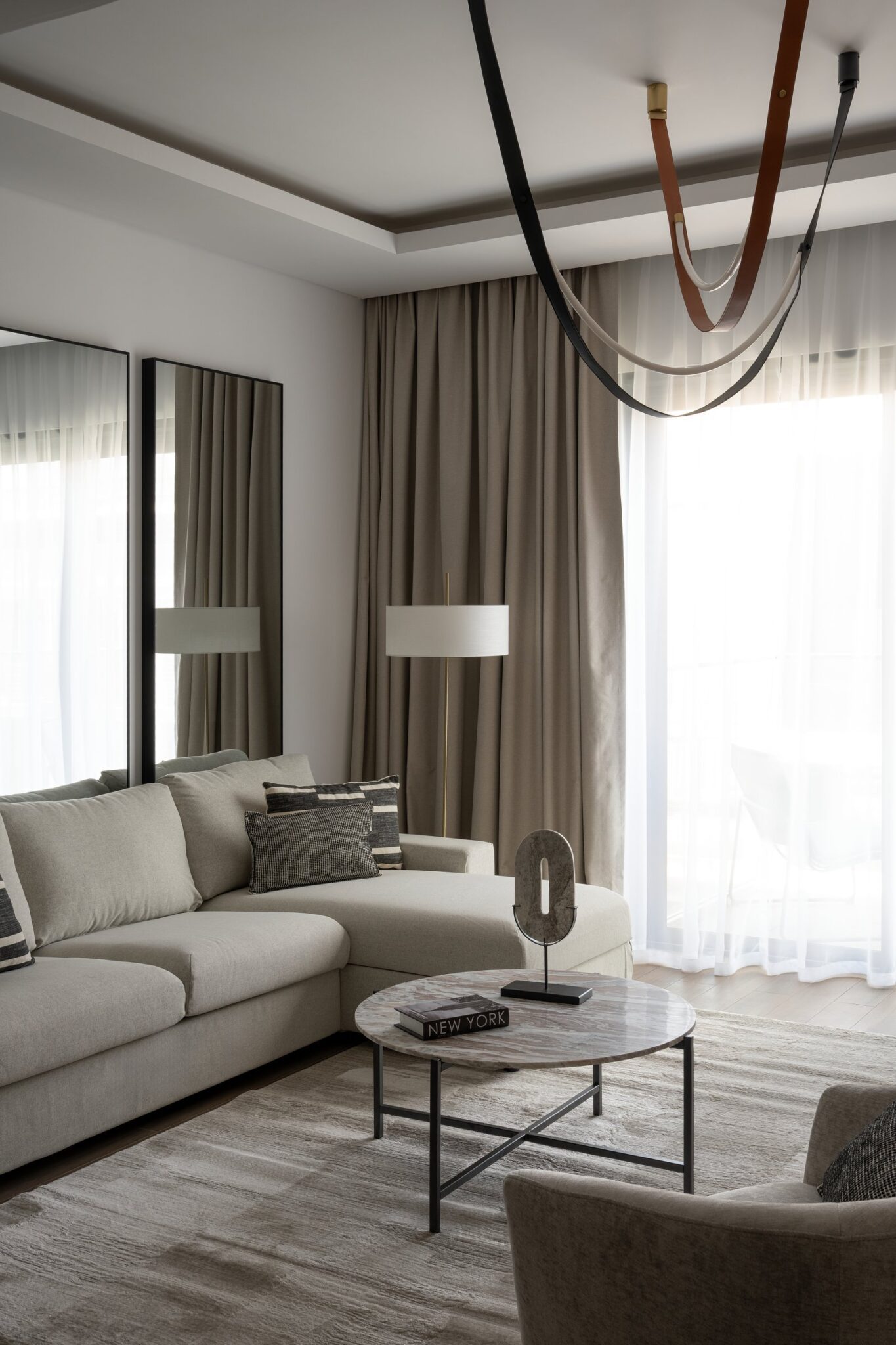
The living room is built around a discipline of beige, taupe, and ash, a palette that could easily flatten into hotel anonymity but here holds depth because of how the textures are layered. A linen sectional meets a stone-topped coffee table on a deeply piled rug, and the floor-to-ceiling drapery softens the architectural edge of the window without obscuring the light. Tall mirrors in slim black frames lean against the wall, pulling the room’s verticality upward.
Above all of this hangs the apartment’s single theatrical gesture: a sculptural pendant of looped leather straps in cognac, cream, and black, suspended from brass-collared ceiling mounts. It is the only object in the room that asks to be looked at, it earns the attention completely.
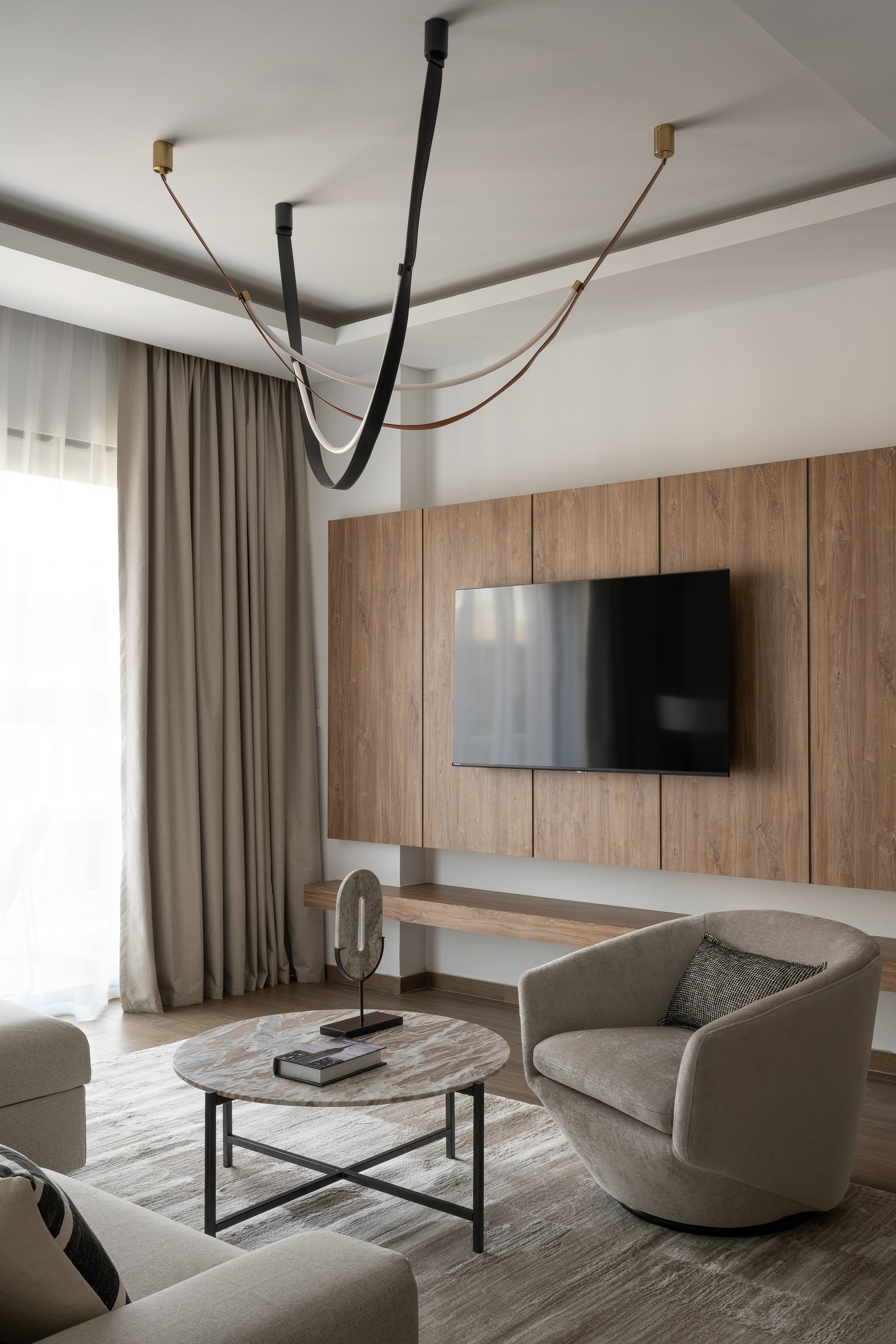
From the opposite vantage, the media wall reveals itself as the room’s quiet anchor, a panelled run of warm wood-grain that holds the television without ceremony and extends into a floating ledge below. The panel’s vertical seams echo the drapery’s folds, so the two largest surfaces in the room speak the same language.
““We wanted the apartment to feel like an exhale after the city,” the studio notes of the brief.”
A swivel armchair in oat-toned chenille sits at an easy angle to the sofa, its curved back softening what could have been a rigid conversation axis. The room is arranged for the slower choreography of two people moving through an evening, and the furniture reflects that intention.
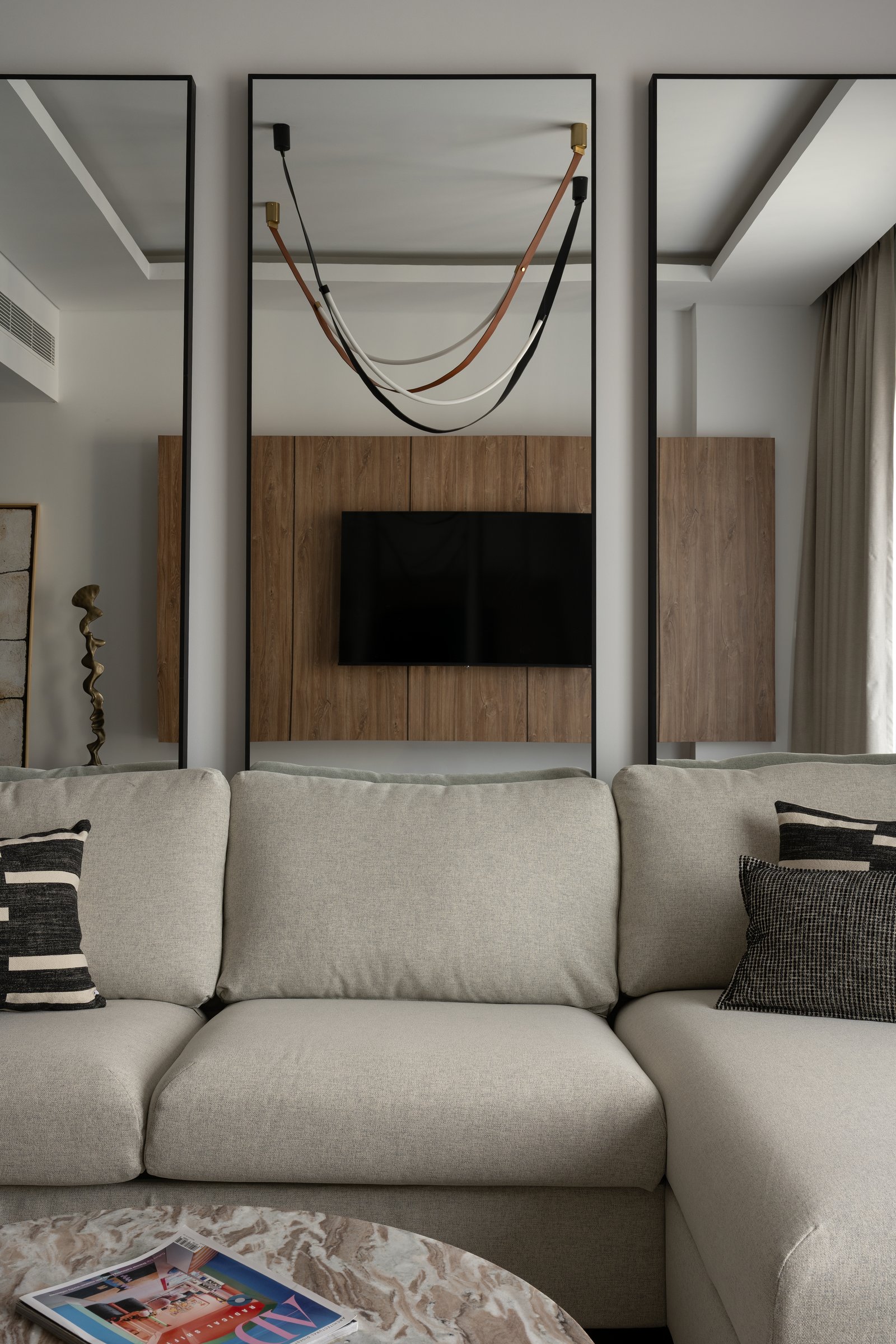
Framed between the twin mirrors, the sectional reads almost as a portrait of how Laconico thinks about composition: symmetry held loosely, ornament withheld until it counts. The cushions in graphite and ivory geometrics are the only patterned element in the entire seating area, and they punctuate rather than decorate.
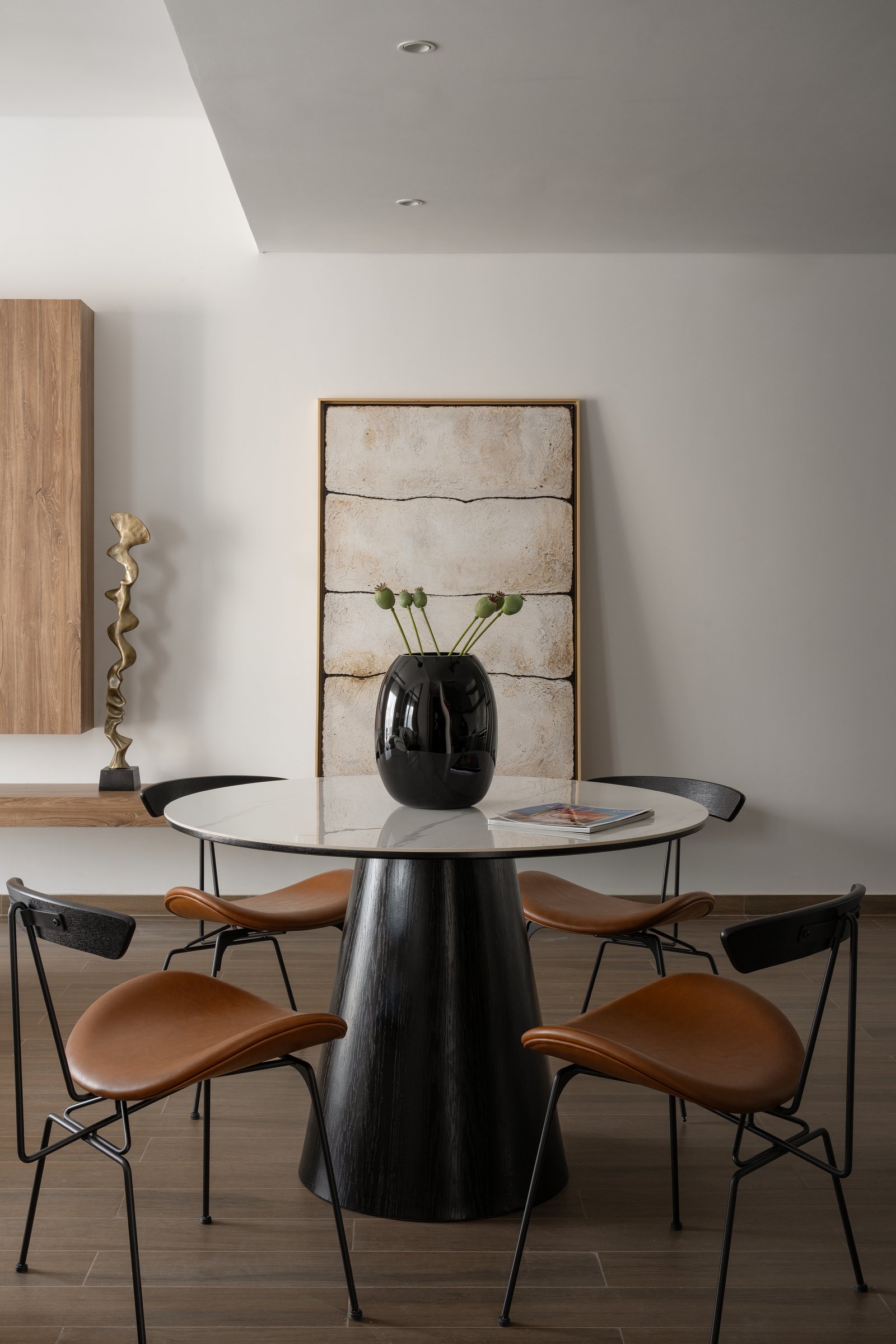
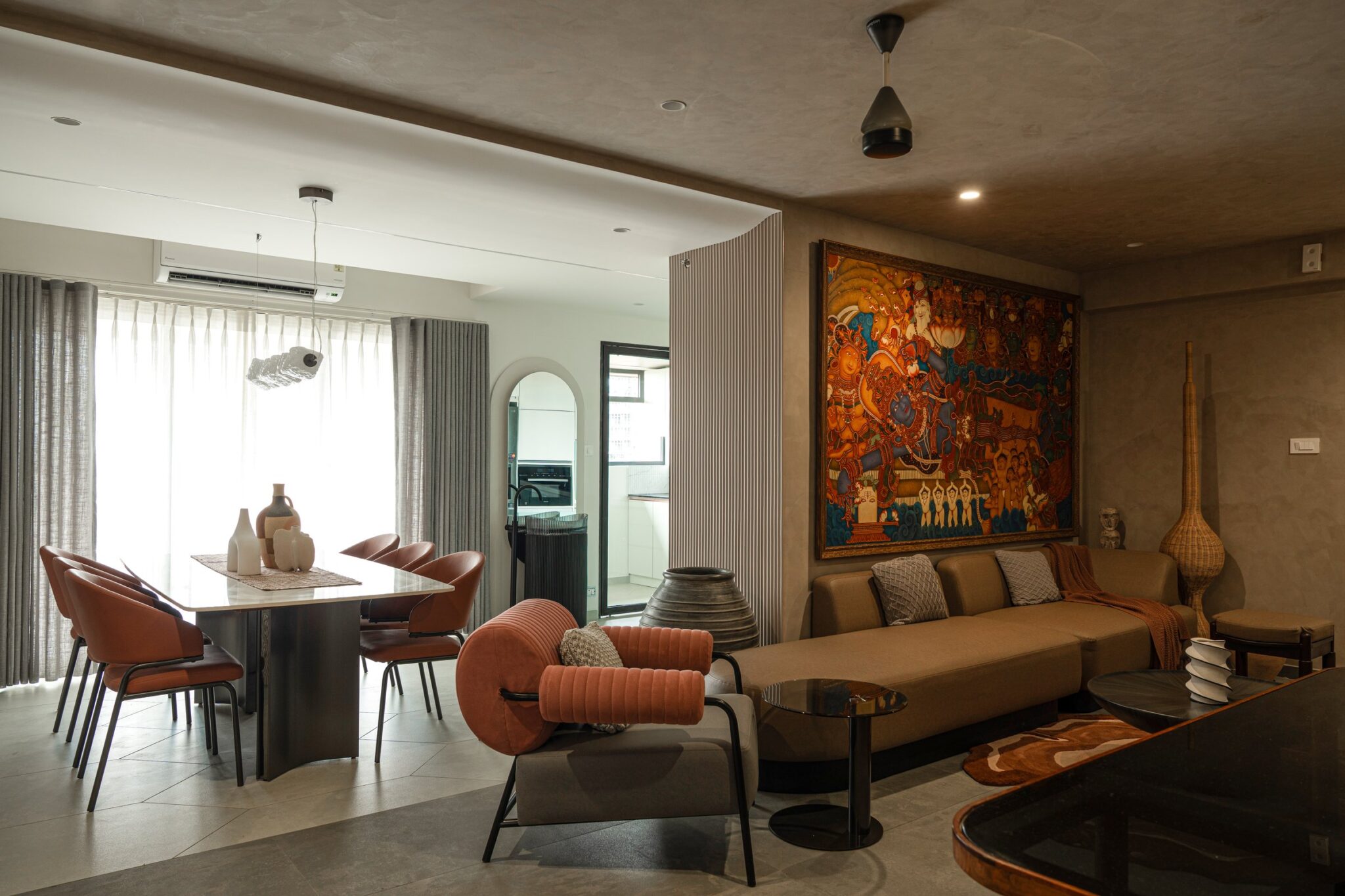
The dining area continues the apartment’s tonal logic but introduces its sharpest contrast. A round table with a pale stone top sits on a sculpted black pedestal, encircled by four chairs whose tan saddle-leather seats and slim black wire frames feel borrowed from a mid-century sketchbook.
The composition reads less like a dining room and more like a still life that happens to seat four.
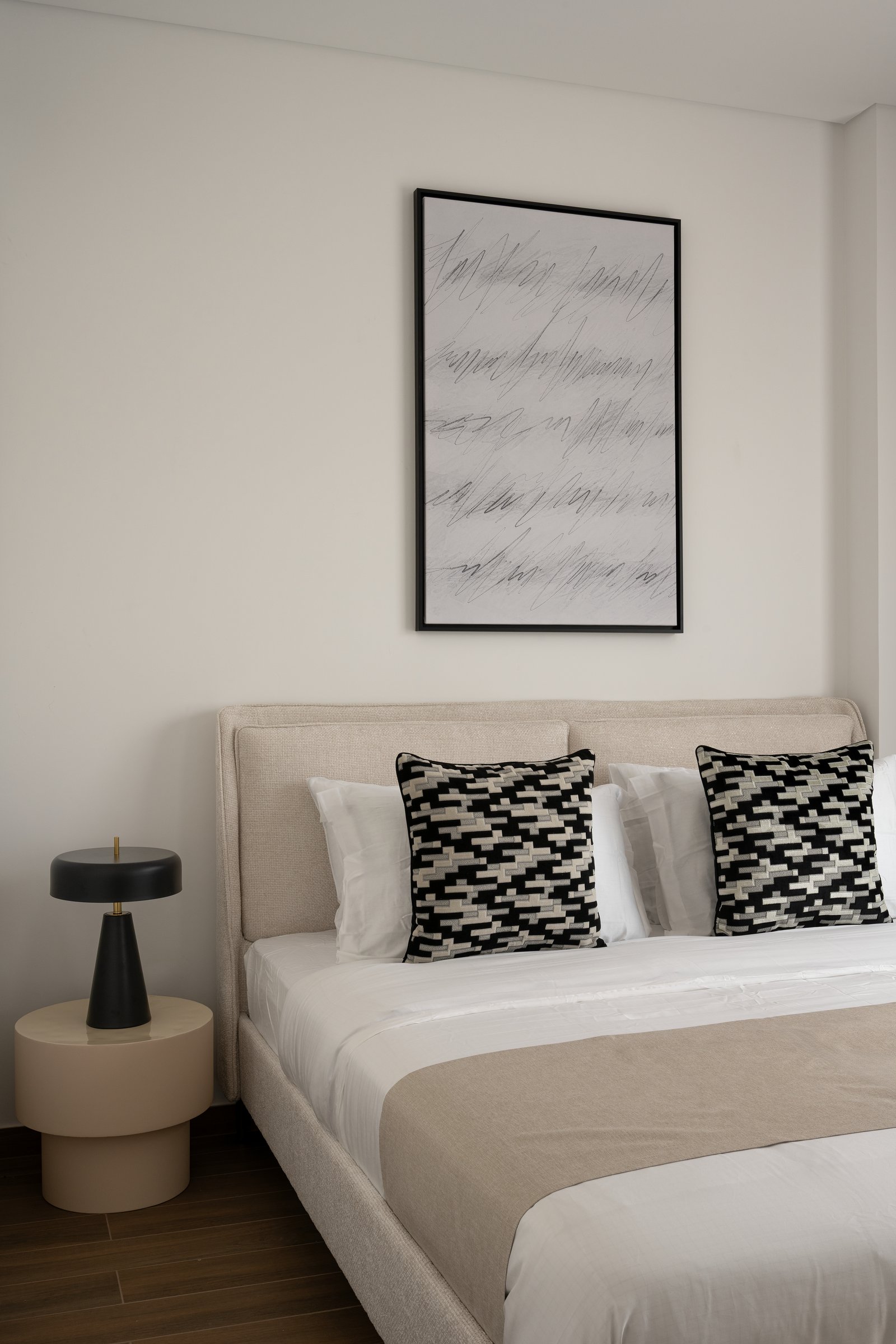
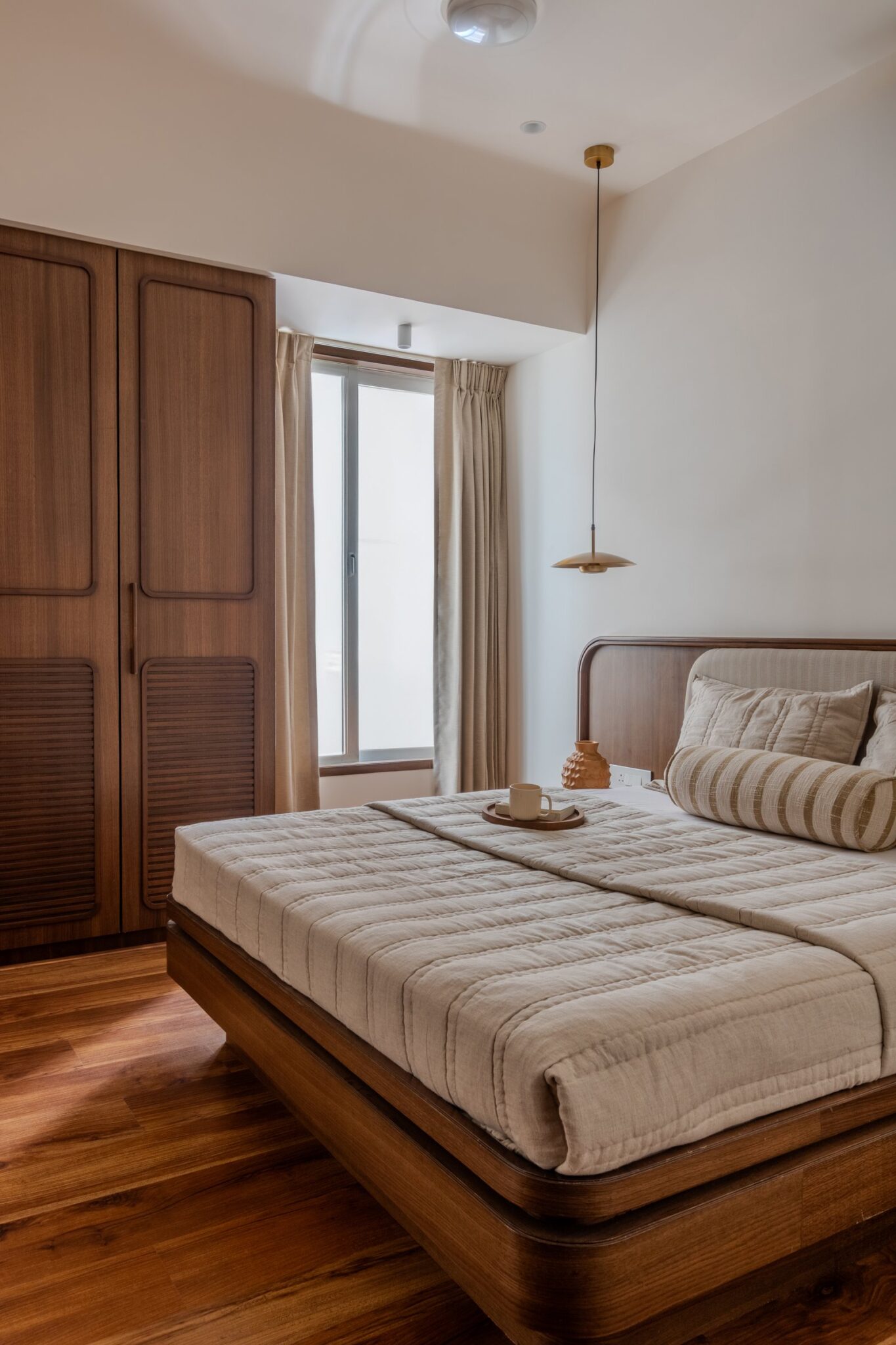
The master bedroom strips the palette down further, to bone, oat, and the soft black of a single framed artwork above the headboard. The upholstered bed in textured cream linen anchors the room with a low, generous presence, and the cushions in monochrome geometric weave repeat the only patterned note from the living room.
The framed work, a gestural composition of charcoal scribbles on white, brings a kinetic quality to a room that is otherwise still. It is the kind of art choice that signals the occupants think about what they hang, not just what matches.
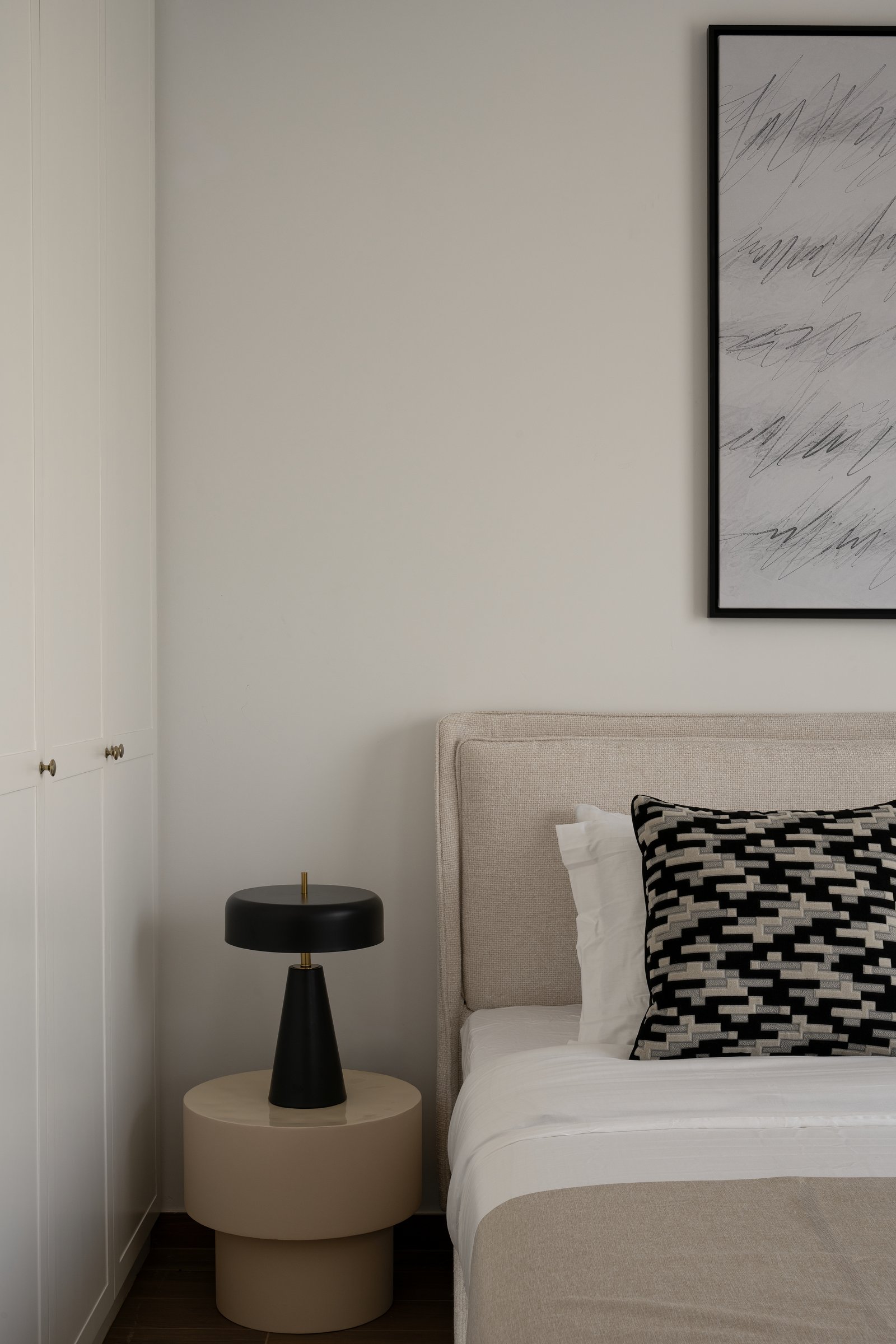
A closer view reveals the bedside arrangement in its full restraint: a cylindrical pedestal side table in sand, holding a black-domed table lamp with a brass stem. The proportions are deliberate, the lamp’s mushroom cap echoing the table’s drum form, the whole composition reading as a single sculpture rather than two objects.
Built-in wardrobes to the left disappear into the wall in matte white with discreet hardware, a reminder that the apartment’s storage has been resolved as architecture rather than furniture.
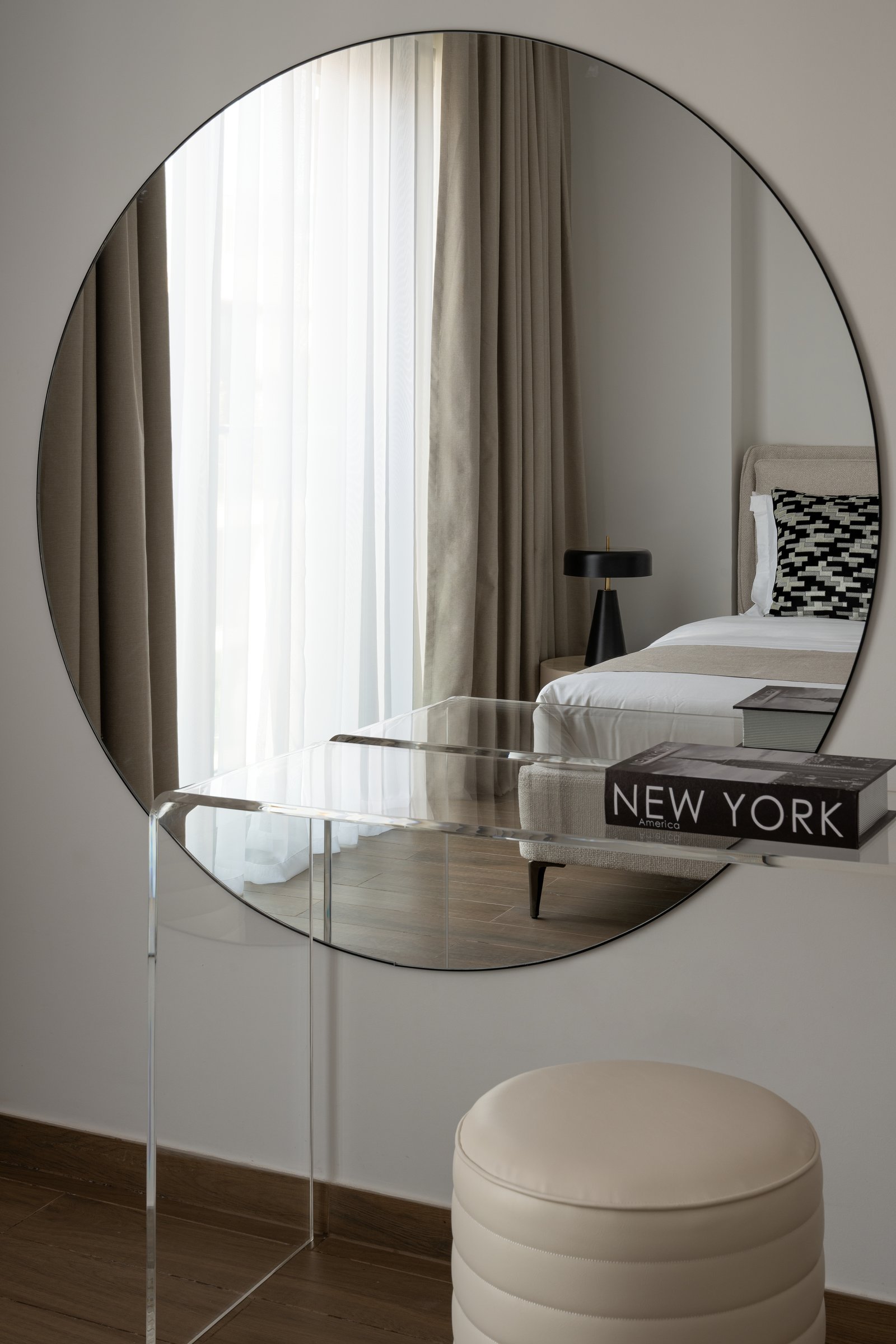
On the opposite side of the bedroom, a large circular mirror in a thin black frame hangs above a transparent acrylic console, a piece that performs the architectural trick of holding objects while occupying no visual space. A cylindrical ivory ottoman sits beneath it, ribbed and softly padded, the only soft form in an otherwise crystalline composition.
The mirror catches the room’s window light and returns it as a portrait of the bed beyond, so the dressing corner doubles as a second framing of the room itself.
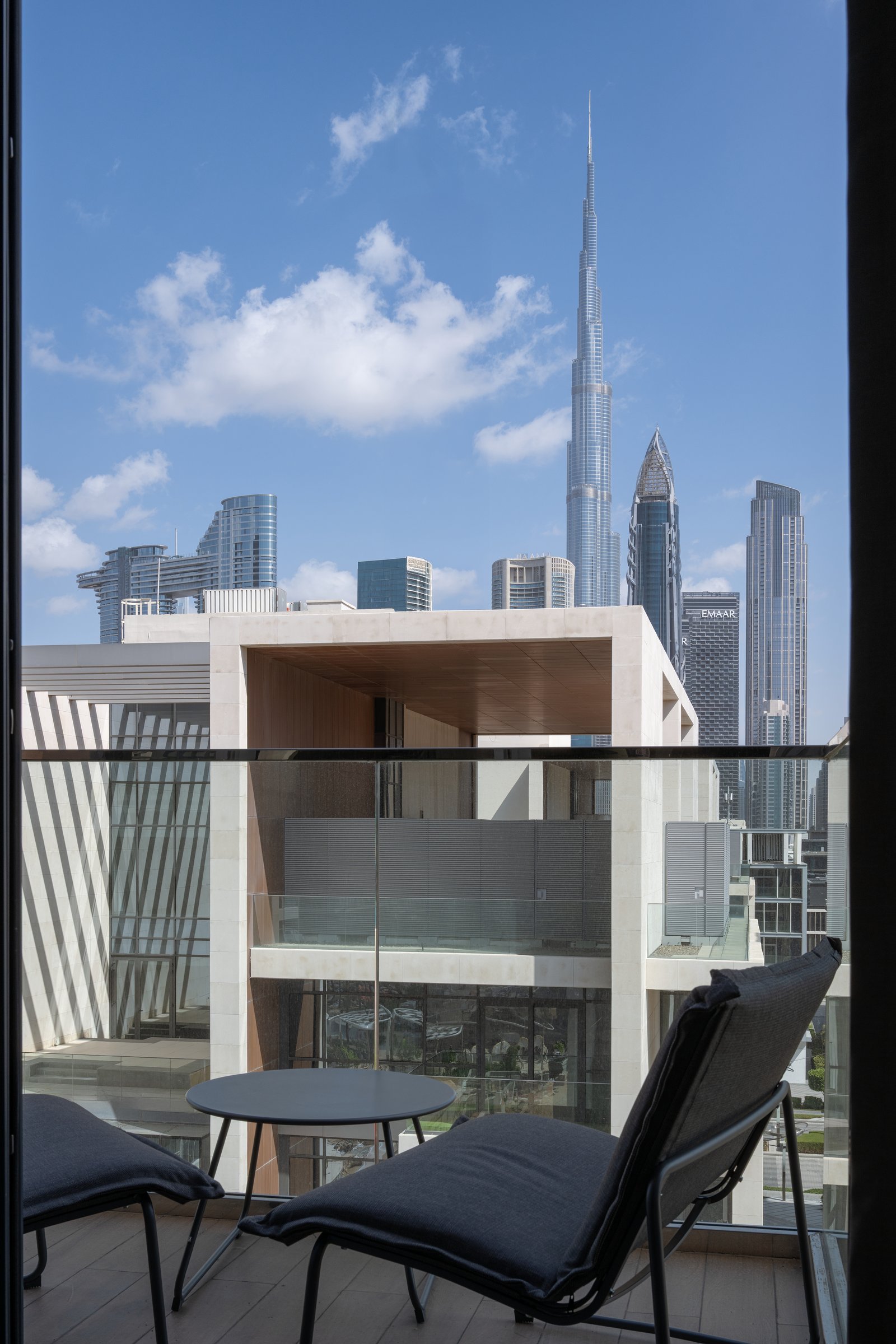
And then, the view. From the balcony, the Burj Khalifa rises through a foreground of stepped concrete and glass parapets, and two slim loungers in charcoal weave sit beside a low side table, oriented squarely toward the skyline. It is the only place in the apartment where the city is allowed to enter the design rather than be filtered out, and the furniture is correspondingly spare, a recognition that nothing built indoors could compete.
Within the wider context of Downtown Dubai residential design, where high-floor apartments often lean into reflective surfaces and high-contrast statement materials, Laconico’s approach reads as a deliberate counter-position. The studio has worked toward a vocabulary that treats neutrality as a discipline rather than a default, and the result feels closer to a European apartment than to the city’s prevailing aesthetic.
The home holds its own register, quiet, tactile, edited, and the skyline becomes one element among several rather than the reason the rooms exist.