A sample apartment carries a unique architectural challenge. It must convince a visitor that a compact footprint can accommodate the richness of everyday life, while doing so without the personal artefacts and histories that typically lend a home its character. Every design decision must operate in two registers at once, distinct enough to feel intentional, yet flexible enough to resonate with a wide range of future occupants.
For Neutral House, a 735 sq. ft. sample apartment in Pal, Surat, Studio Oculus approaches this challenge through a language of restraint. Designed by Dhruv Rupawala, the residence is anchored by a quiet palette of oak finishes, beige stone, and soft off white surfaces. Rather than relying on bold gestures, the project allows proportion, light, and carefully calibrated detailing to shape the spatial experience.
The result is an interior that feels larger than its footprint suggests. Seamlessly integrated storage, custom built furniture, and a layered yet understated material palette create a sense of continuity across the home. By prioritising clarity over excess, Neutral House demonstrates how thoughtful design can transform a compact apartment into a space that feels composed, adaptable, and deeply liveable.
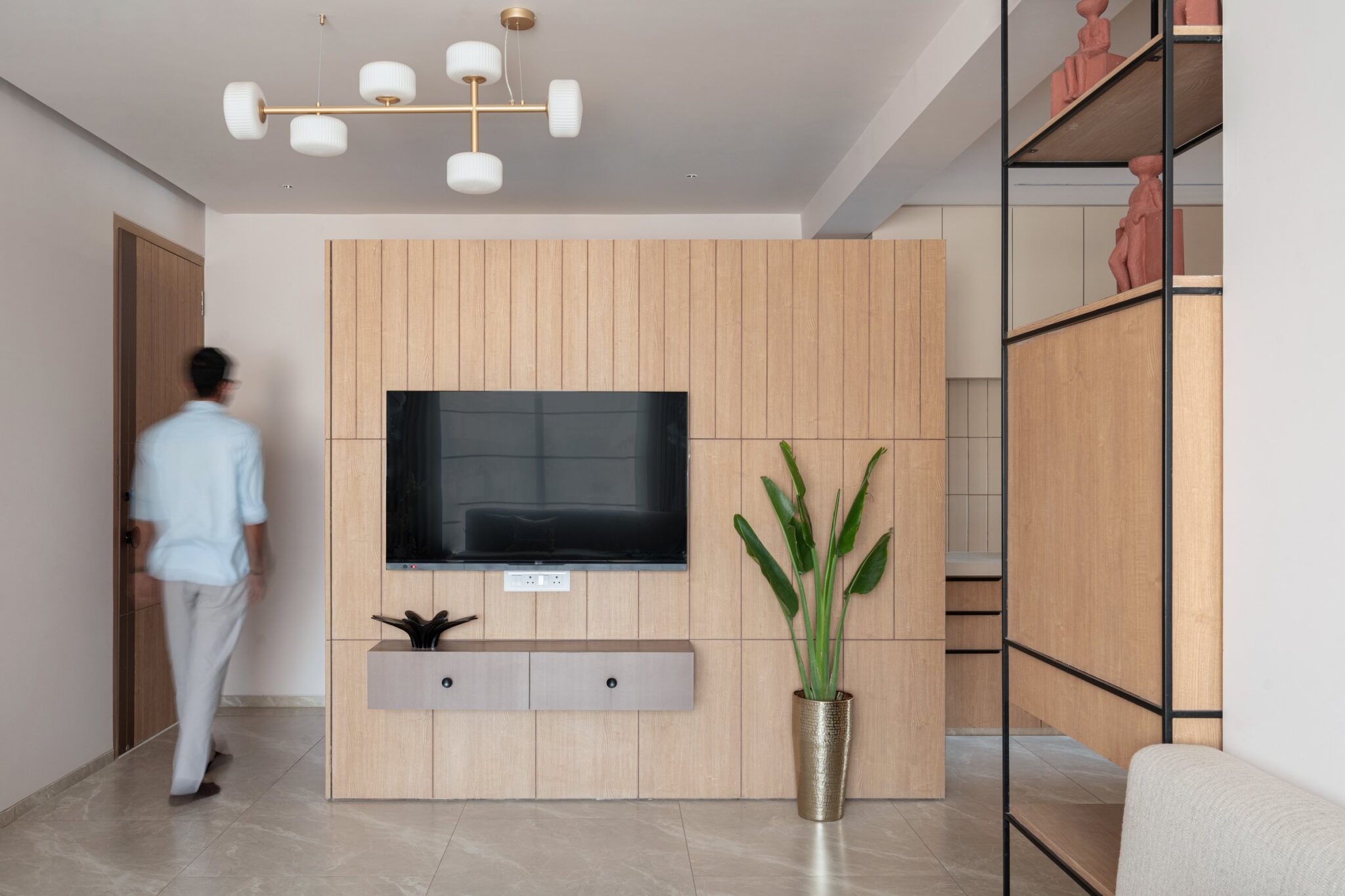
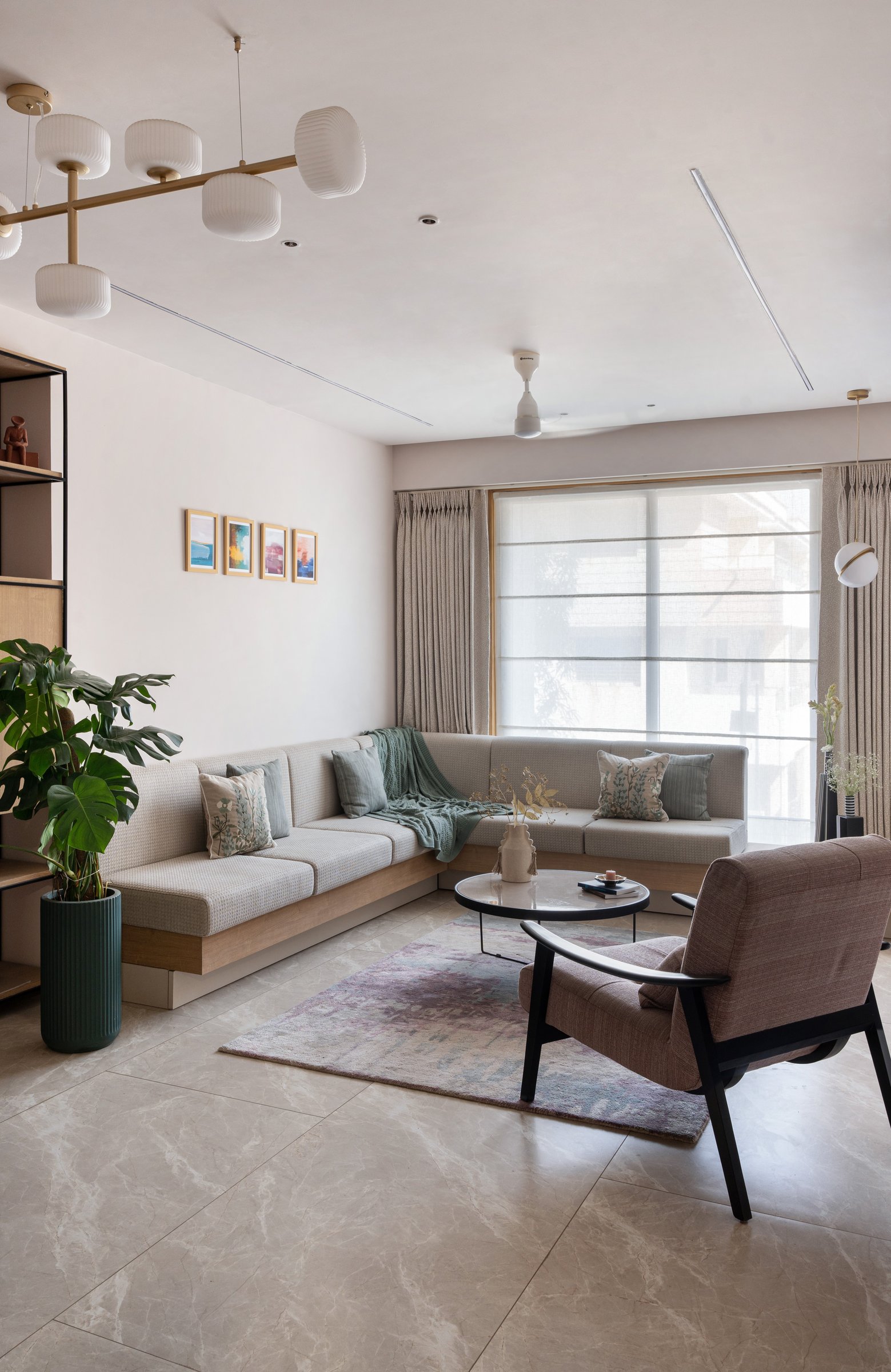
Arrival is anchored by a panelled oak volume that integrates the television while supporting a slim floating drawer console below. By allowing the unit to stand independent of the adjoining walls, Studio Oculus preserves a sense of openness and vertical continuity, preventing the compact interior from feeling visually constrained. Above, a brass and glass chandelier introduces a layer of warmth and refinement, its soft glow contrasting gently with the cool stone flooring beneath.
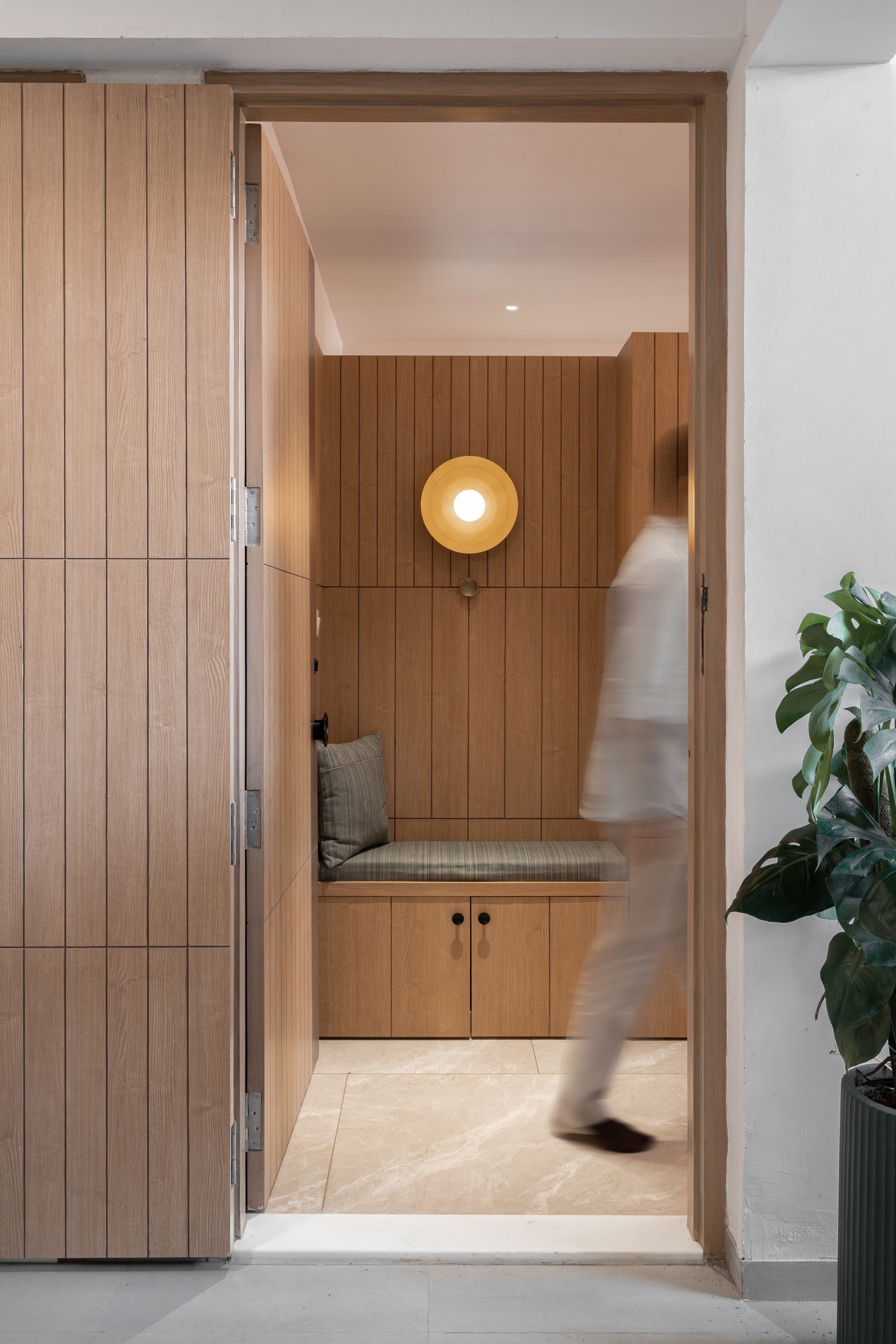
The foyer unfolds as a carefully composed space in its own right, clad in vertical oak panelling and fitted with a built in bench, a circular wall sconce, and concealed storage beneath the seat. In many ways, it distils the home’s larger design approach into a single moment: functionality seamlessly integrated into architecture, light used with restraint, and materials allowed to create character through texture and craftsmanship rather than overt display.
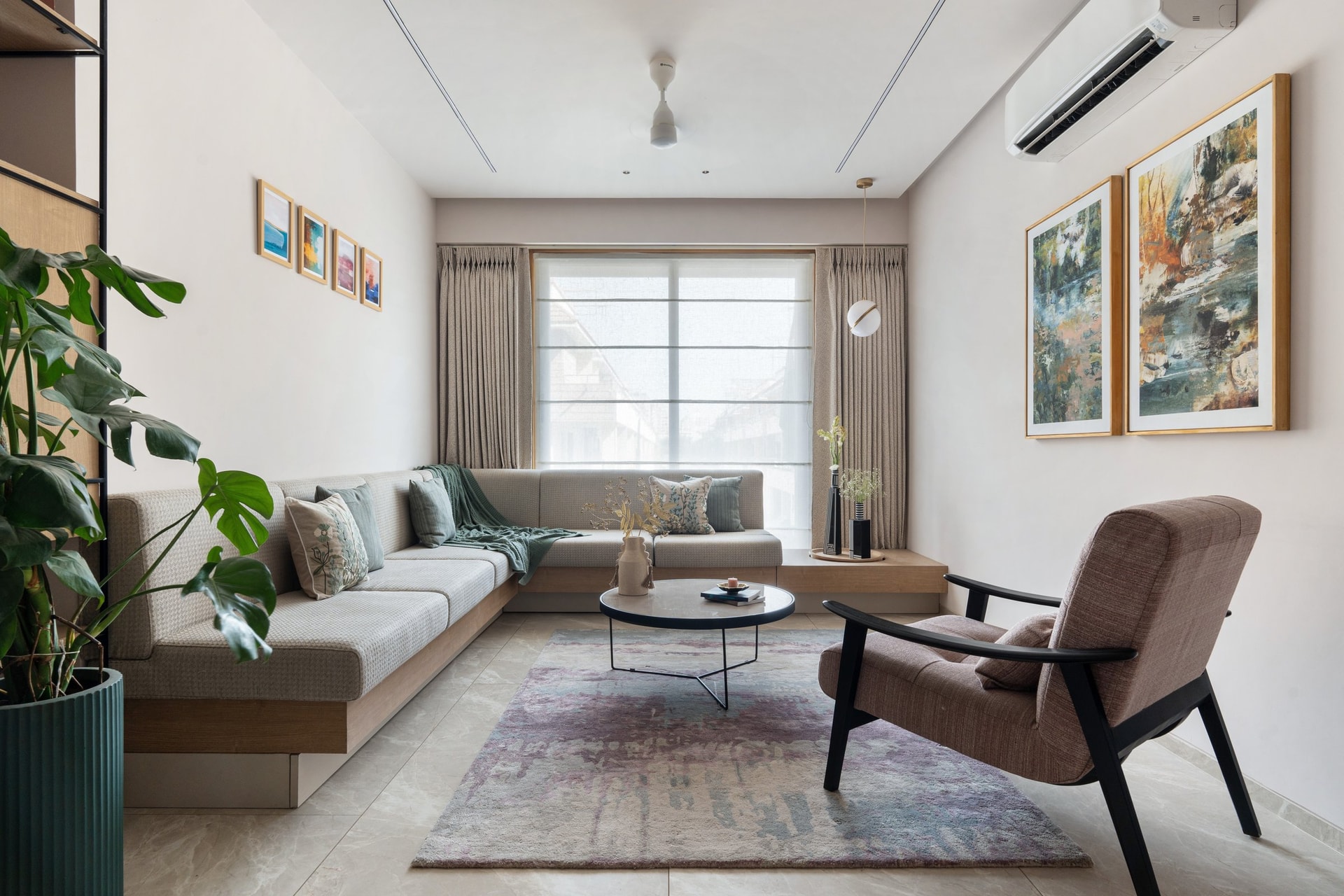
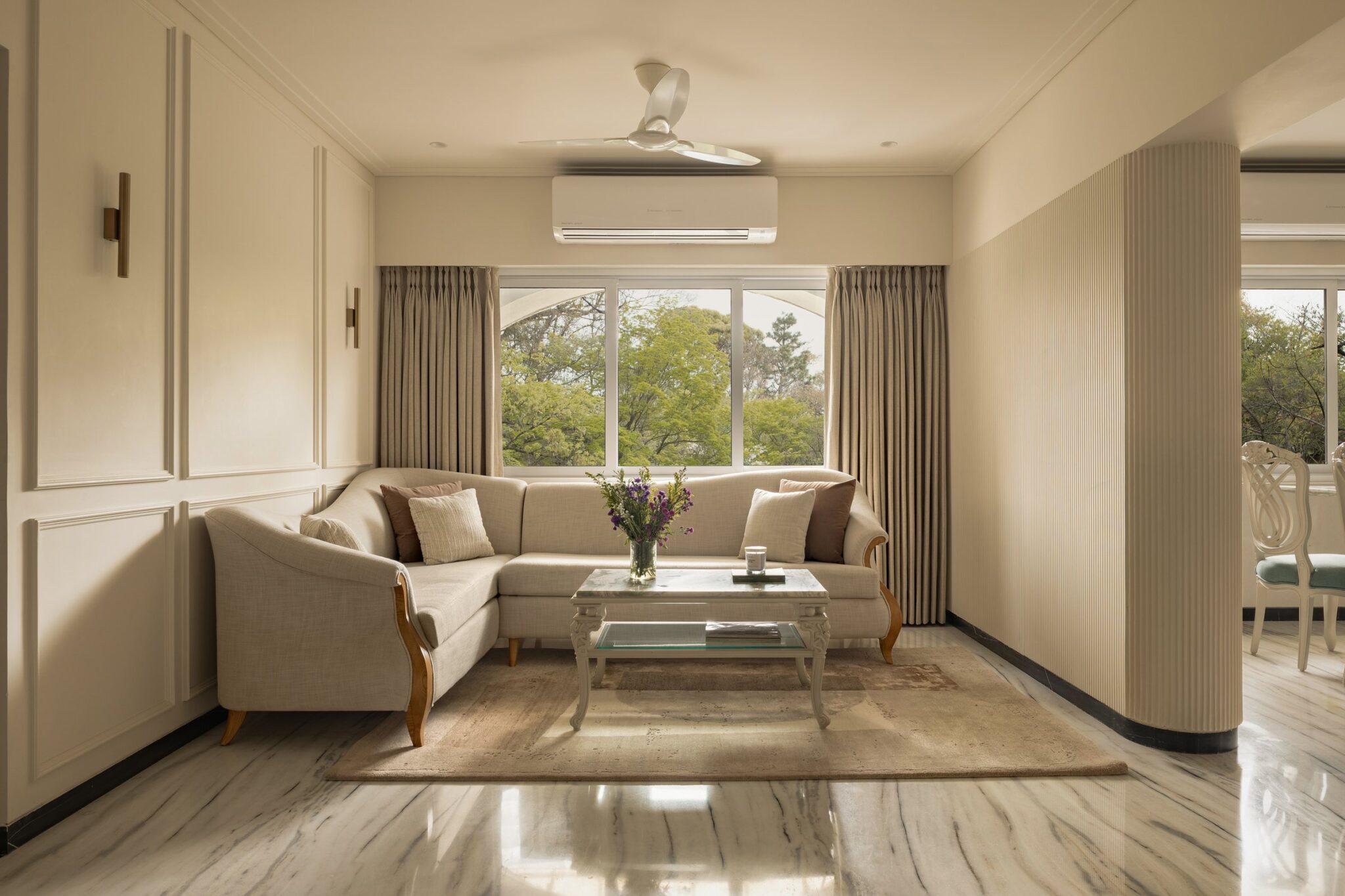
The living room is composed with a deliberate sense of restraint. A long built in sofa wraps around the corner beneath a window filtered by woven blinds, creating a comfortable setting for everyday living. Opposite, a black framed armchair introduces a sharper graphic presence, balancing the softness of the upholstered seating. Framed artworks in muted aquatic hues lend the space a subtle layer of colour, enriching the palette while preserving the room’s calm and neutral character.
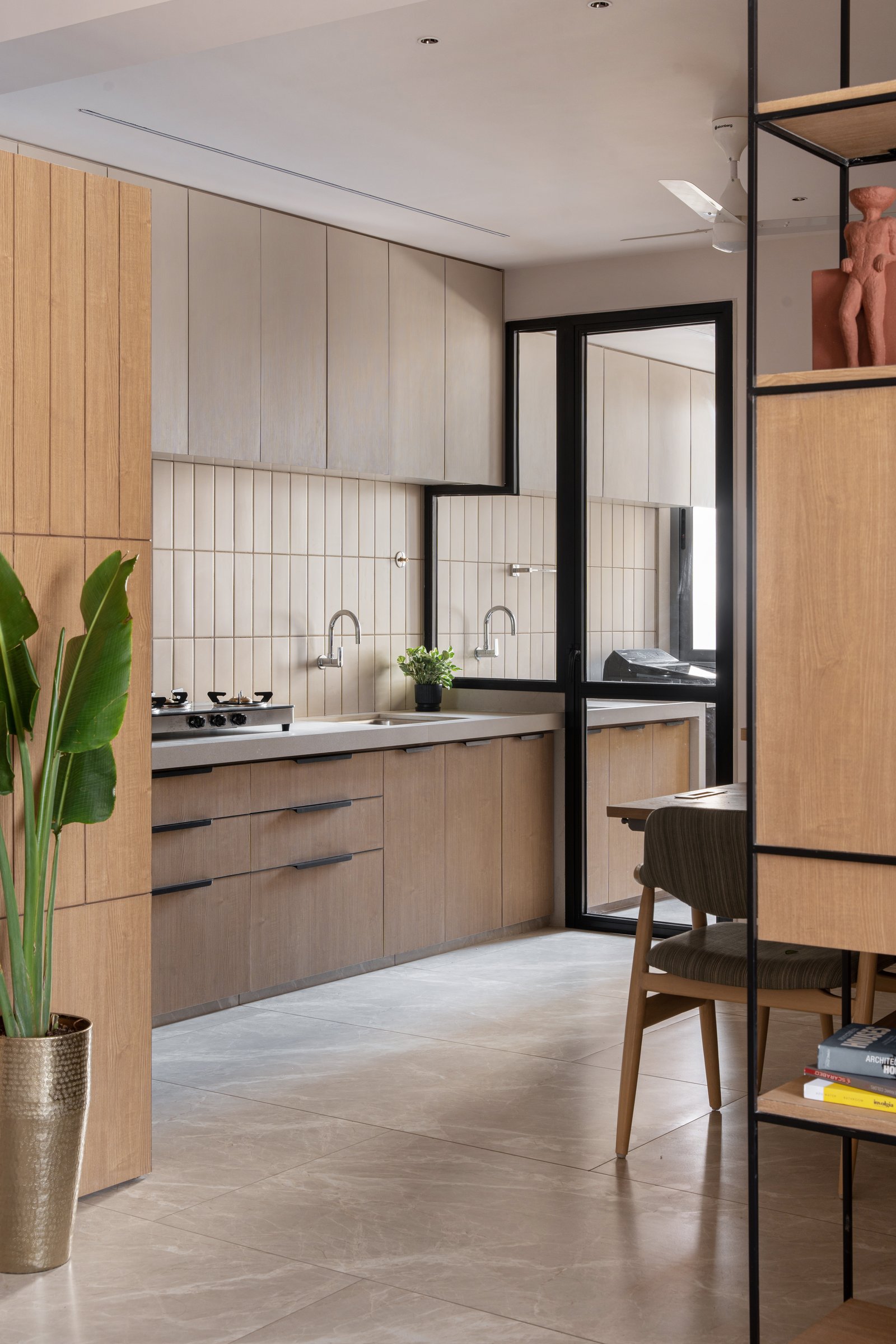
The kitchen extends the home’s restrained material palette through wood fronted lower cabinetry, pale upper units, and a vertically laid tile backsplash that introduces texture and rhythm to the working wall. A black framed glazed partition separates the utility area beyond, allowing daylight to travel through the service spaces while maintaining a sense of order and visual discretion.
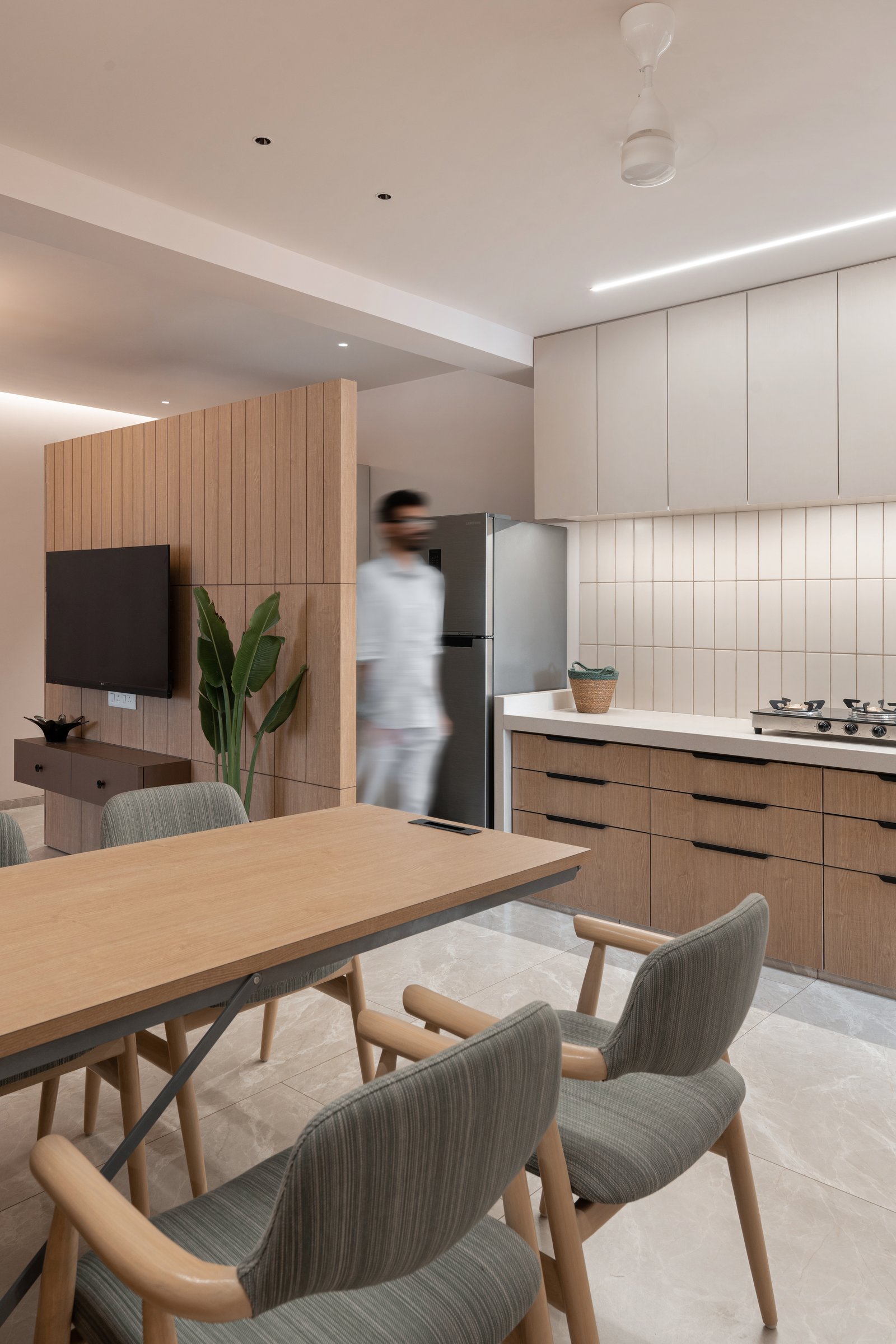
Viewed in relation to the dining area, the kitchen’s place within the open plan becomes more legible. The wood clad partition that accommodates the television on its opposite face subtly delineates the threshold between the social and service zones without interrupting the apartment’s visual continuity. Positioned between them, the dining table acts as a natural point of connection, bringing the different functions of the home together. Above, a linear cove light integrated beneath the upper cabinetry casts a soft glow across the work surface, adding depth and practicality to the space.
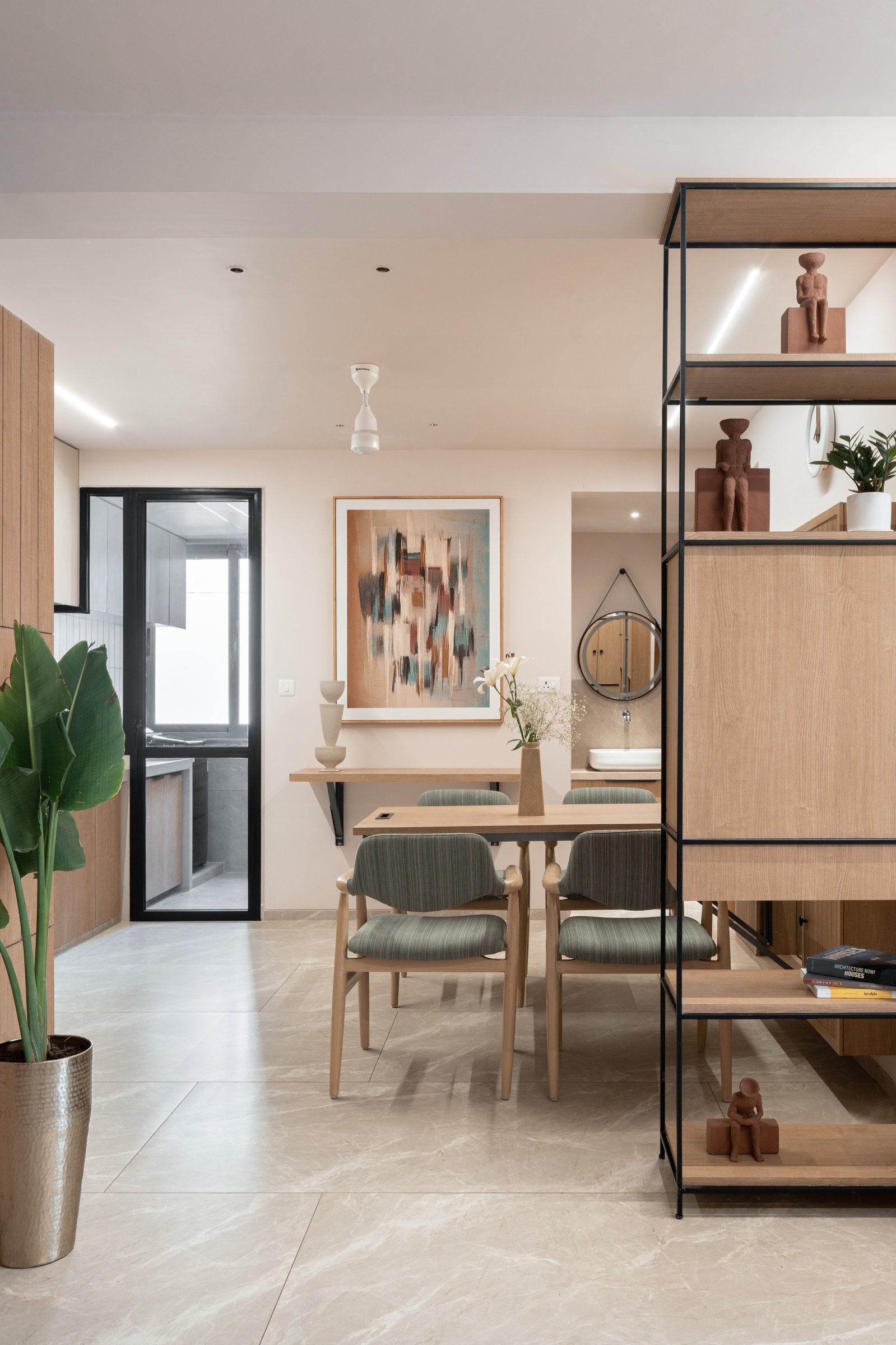
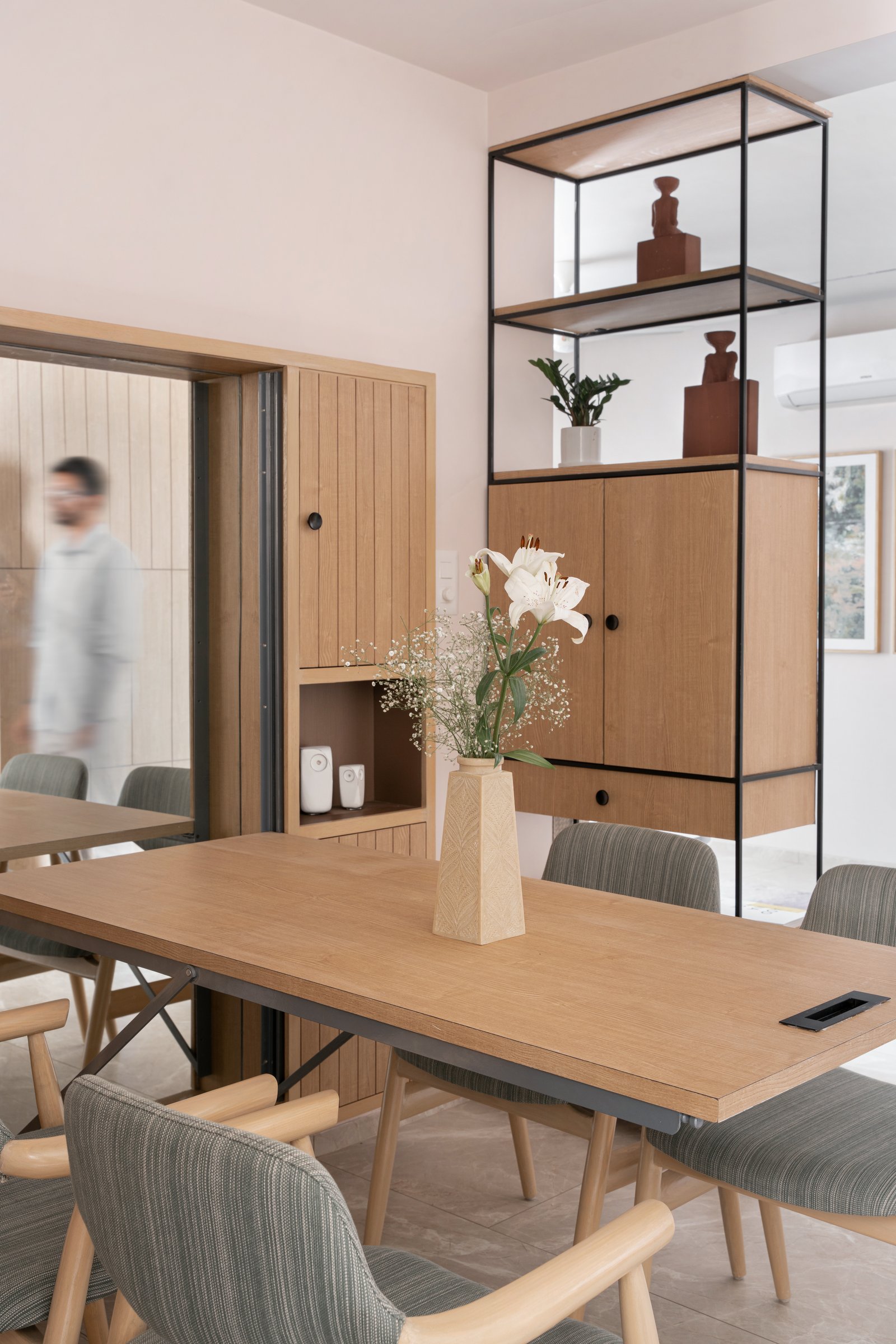
A closer look at the dining area reveals the precision of its detailing. Conceived as a pull out dining table, the oak topped surface extends seamlessly from the adjoining cabinetry, offering a flexible solution that responds to the compact footprint without compromising functionality.
As Dhruv Rupawala notes, “By detaching these storage volumes from the ceiling, we have preserved the uninterrupted verticality of the space, creating a sense of visual porosity that allows the compact layout to feel simultaneously expansive, light filled, and intimate.” This principle is evident throughout the apartment, where furniture and storage define space without visually weighing it down.
The master bedroom introduces a softer and more enveloping atmosphere. A curved feature wall in reeded oak wraps behind the bed, meeting a peach toned upholstered panel that lends warmth and tactility to the space. Beside it, a delicate pendant composed of stacked glass globes replaces the conventional bedside lamp, while an arched mirror set into the adjacent wall introduces a gentler geometry that softens the room’s otherwise rectilinear framework.
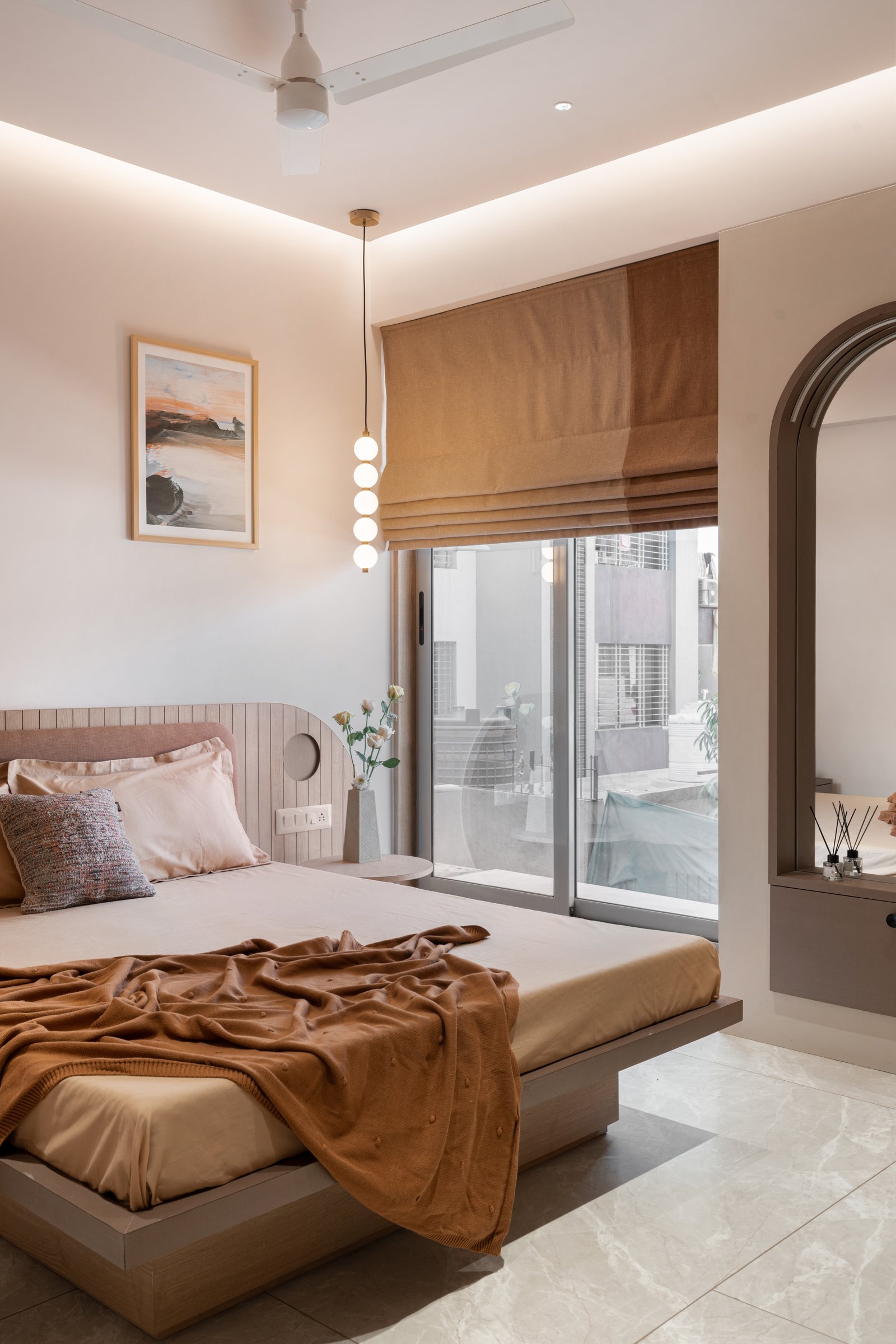
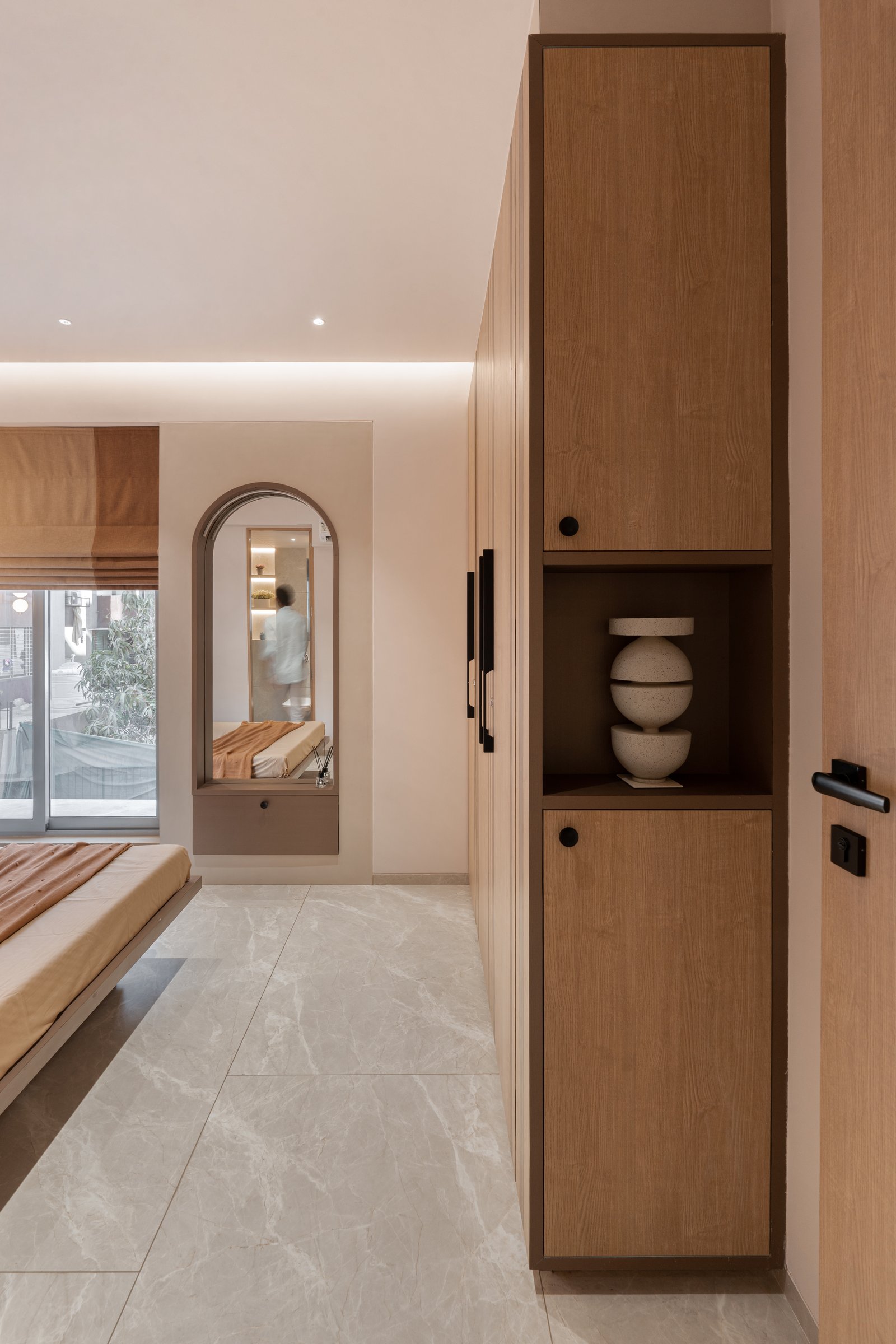
The dressing zone is articulated through an arched mirror recessed into a plastered surround, paired with a wood-fronted tall cabinet. The grouping shows how built-in joinery absorbs both wardrobe and display functions into a single continuous wall.
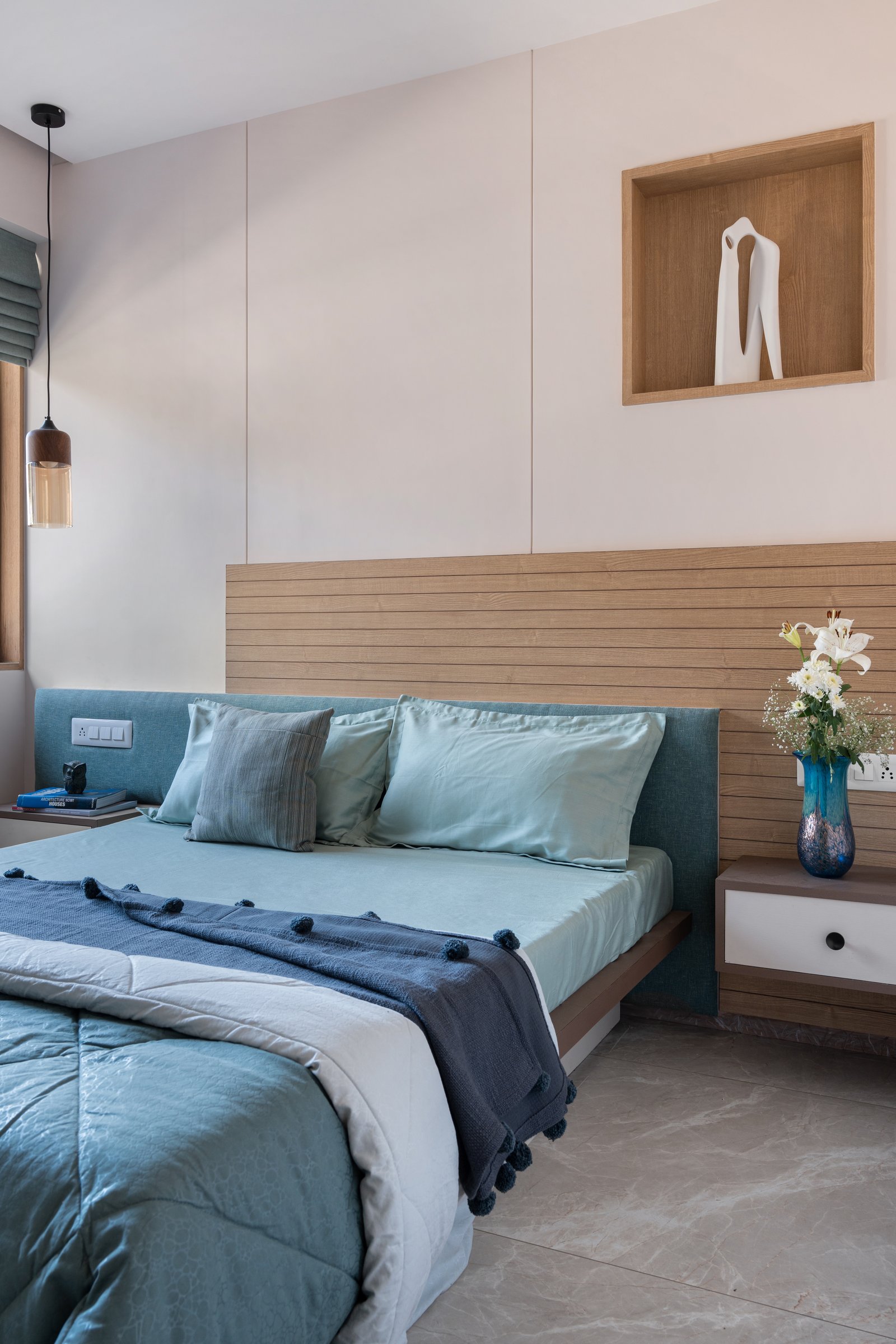
The second bedroom shifts away from the warmth of the master suite, embracing a cooler palette centred on muted shades of blue. A horizontally detailed wood headboard stretches across the width of the wall, complemented by an upholstered backrest in soft teal that introduces comfort and colour in equal measure.
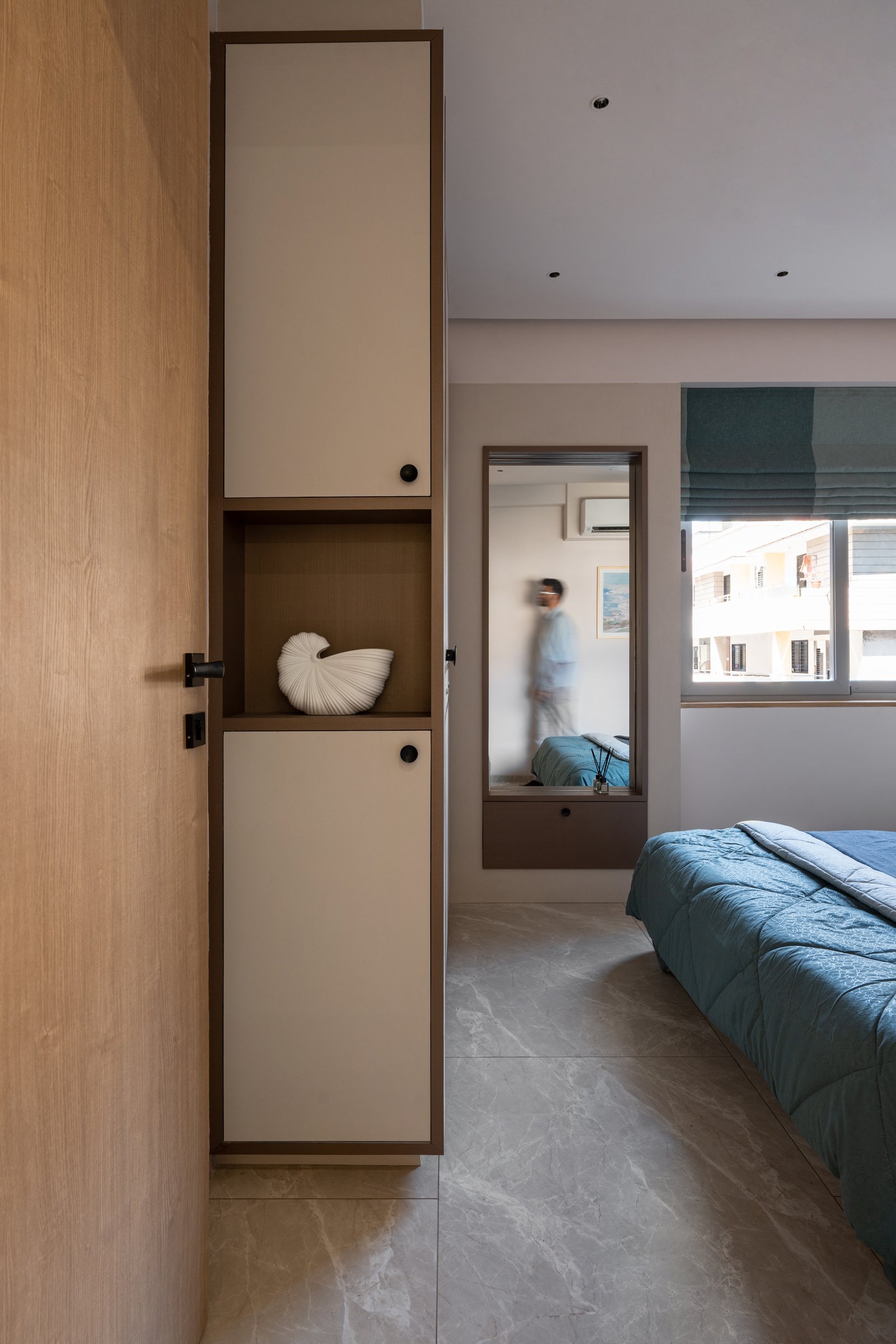
From the doorway, the room’s circulation reveals a tall cabinet with an open central niche, paired with a mirrored alcove set into the wall beyond. The detail demonstrates the studio’s commitment to integrating display moments within everyday joinery rather than treating them as discrete decorative interventions.
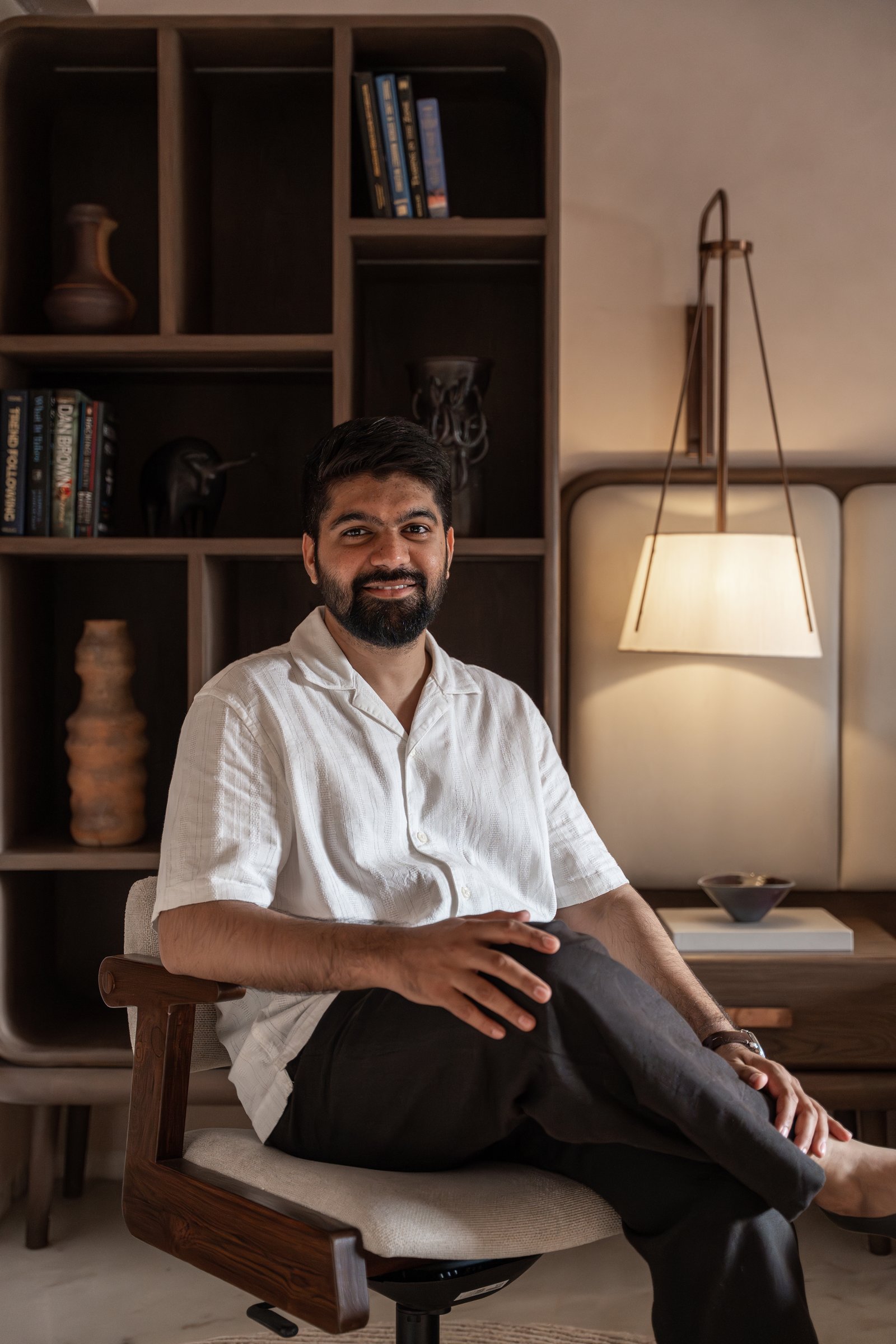
For Dhruv Rupawala, architecture begins with the idea of the Oculus, an aperture through which light, atmosphere, and materiality shape the experience of space. Neutral House translates that philosophy into a compact urban setting, where every surface, volume, and junction has been carefully considered to create a sense of calm, clarity, and openness within a limited footprint.
Within India’s evolving residential market, the sample apartment has become an increasingly significant typology, tasked with balancing aspiration and adaptability for future homeowners. Rather than treating neutrality as an absence of character, Studio Oculus approaches it as a deliberate design strategy, building a language of warm oak finishes, pale stone surfaces, and integrated joinery that feels enduring rather than generic.
What Neutral House ultimately demonstrates is that restraint can be deeply expressive when executed with precision. The apartment offers a framework rather than a prescription, leaving room for future lives and personal narratives while ensuring that the architecture remains complete in its own right. Through careful detailing, material consistency, and an unwavering commitment to clarity, Studio Oculus has created a home that feels both timeless and distinctly contemporary.