A home does not need to choose between heritage and the present tense. The most considered Indian apartments today are those that hold both registers at once, letting carved wood sit beside clean-lined upholstery without insisting either give way. The trick lies not in compromise but in calibration: knowing which gestures deserve ornament and which deserve quiet.
Set in the leafy suburbs of Thane, Anandam was conceived by D+U Architects for the Patil family, a couple and their five-year-old daughter who wanted a home that felt rooted yet practical for the rhythms of modern living. Across this compact two-bedroom apartment, the studio works through a layered palette of peach, ivory, deep maroon, and earthy green, threading carved details and rhythmic panelling through rooms that never feel overdressed.
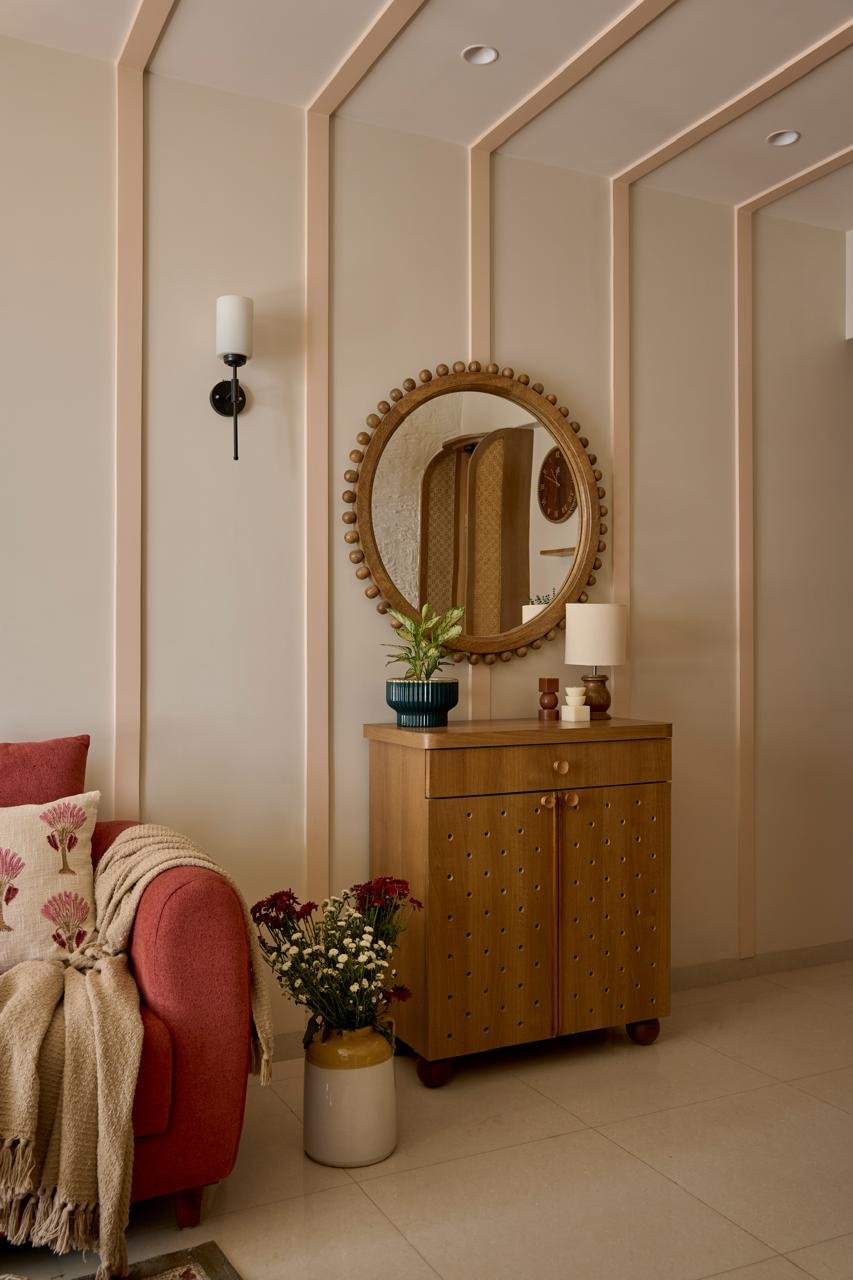
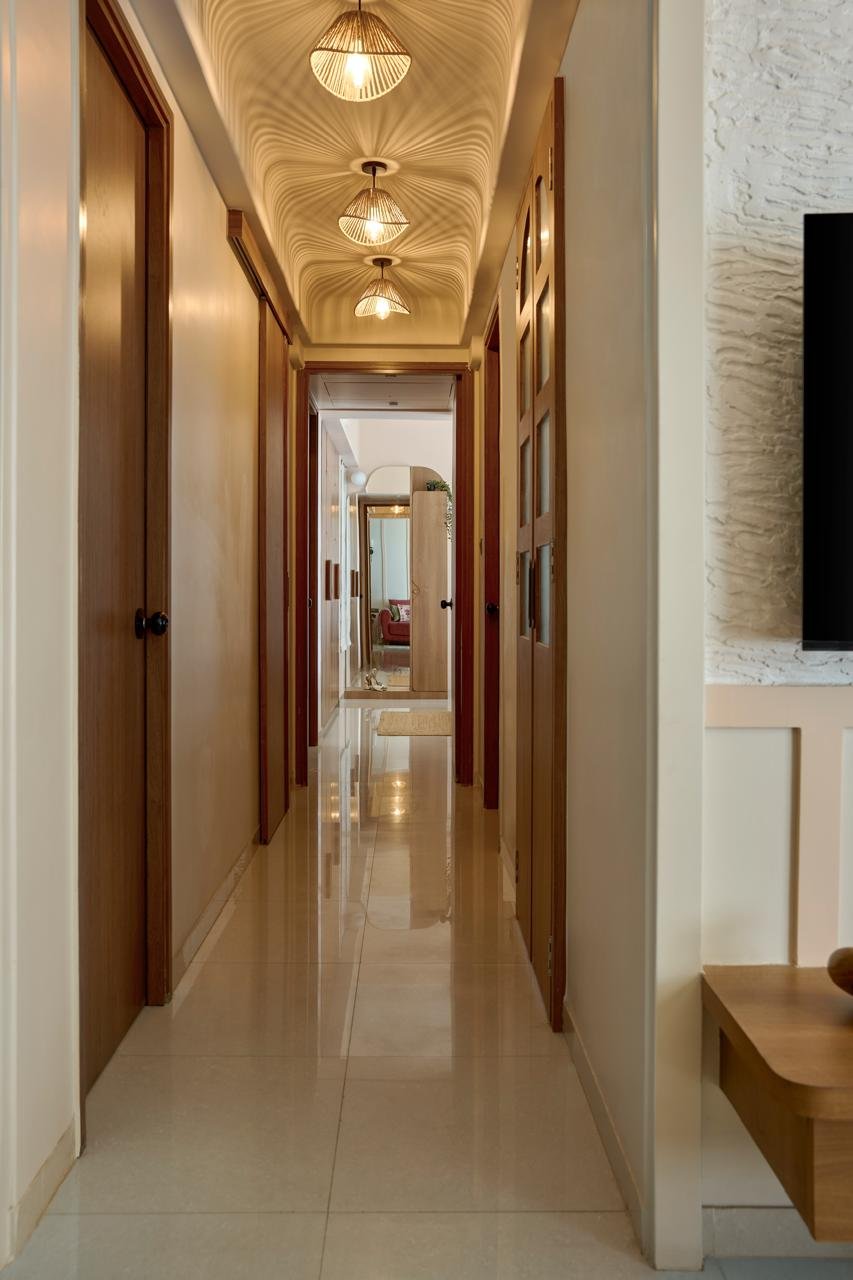
The foyer announces the apartment’s central idea before a single room is entered. A continuous run of peach-toned slats traces the wall and folds across the ceiling in a quiet waterfall, lifting the proportions of a modest entry and giving the eye somewhere to travel. A round mirror framed in beaded wood sits above a perforated cabinet, its dotted face echoed later in unexpected places throughout the home.
The gesture is generous but disciplined. A single black sconce, a terracotta-toned armchair edge, a ceramic urn of seasonal blooms; nothing more is asked of the space, and nothing more is needed. The panelling does the architectural work, and the objects simply confirm the tone.
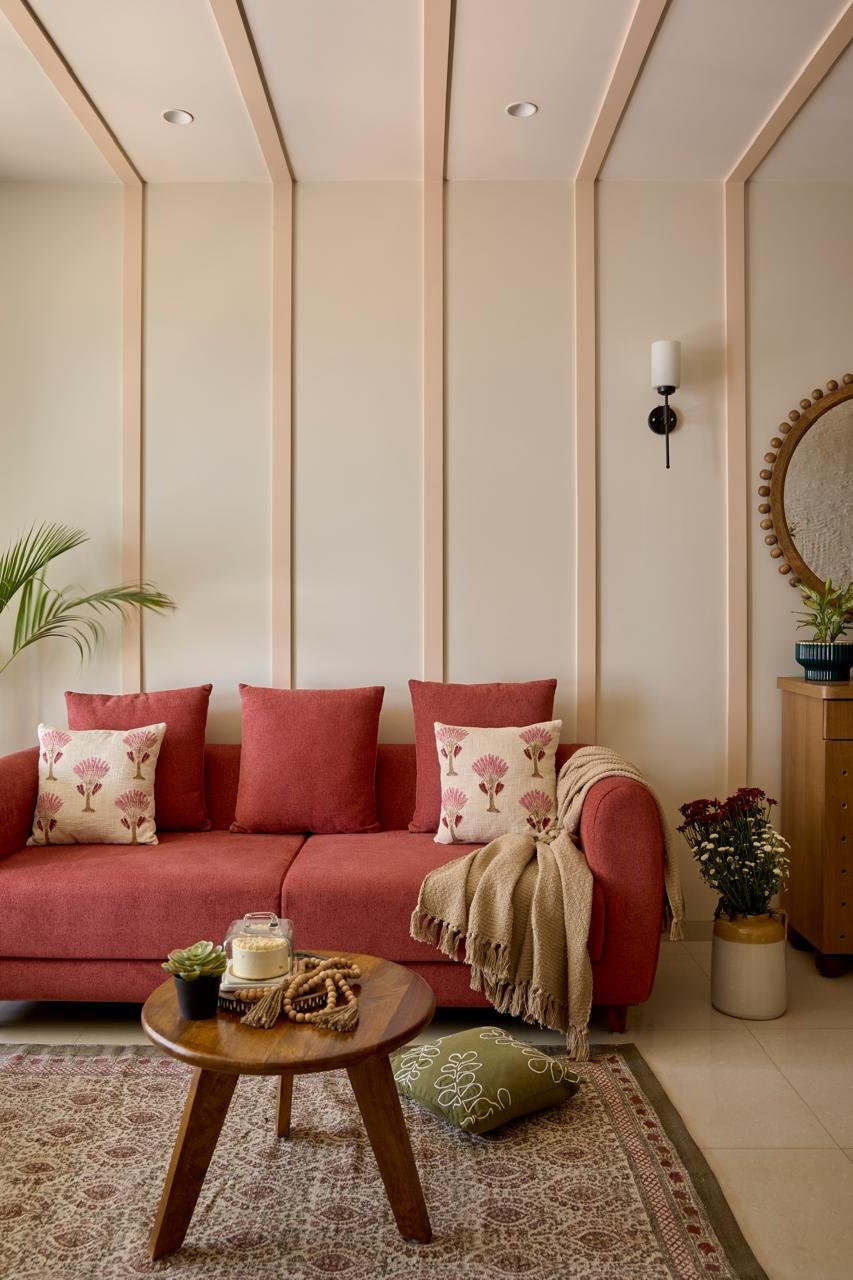
The living room extends this peach-and-ivory choreography across a fuller wall, the slats rising vertically before curving into the ceiling plane. Against this softened backdrop, a maroon sofa lands with deliberate weight, its rounded arms and clean silhouette holding the room’s contemporary register while the block-printed cushions and a low round wooden table speak in a more traditional cadence.
What makes the composition work is restraint. The palette stays warm and tonal, with a single saturated note allowed to dominate, and the remaining surfaces step back to let it. A potted palm and a jute-toned rug ground the arrangement without competing for attention.
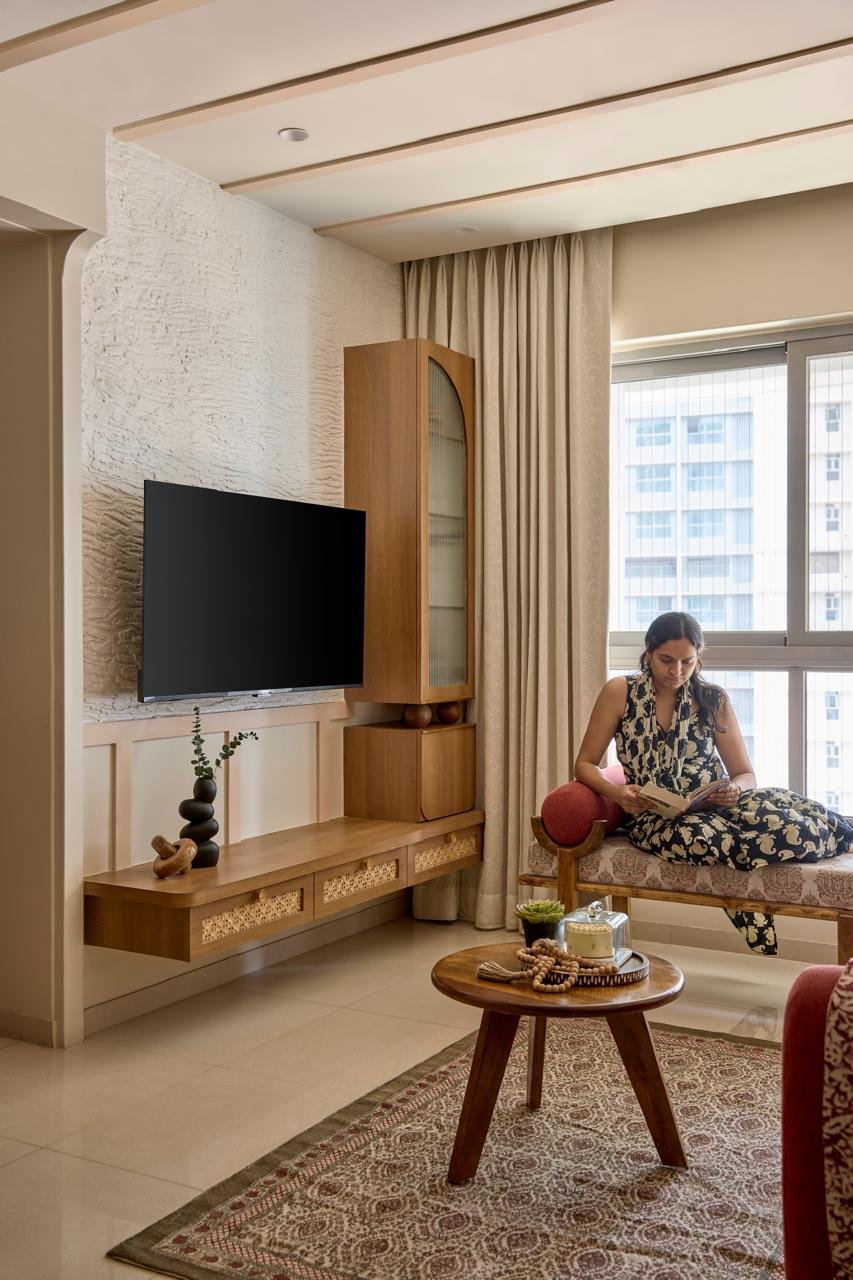
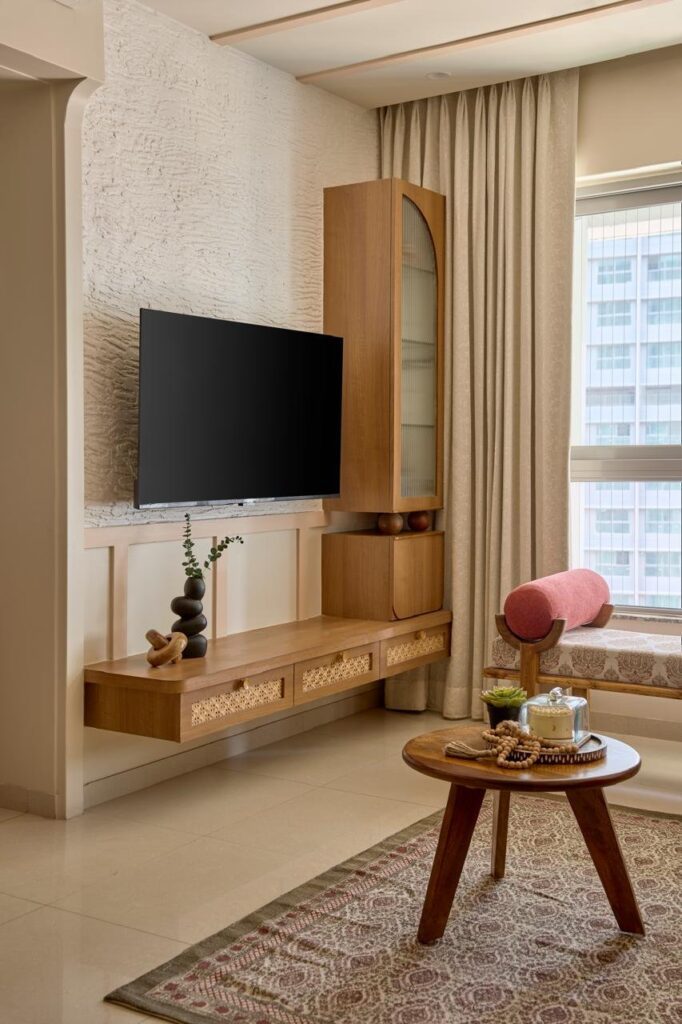
Across from the seating, the media wall reveals how the studio handles the harder material conversations. A textured ivory plaster surface, deeply combed and almost relief-like, frames the television and brings a tactile counterpoint to the otherwise smooth room. The wood-grained unit below carries an arched glass cabinet on one side and a low floating console with cane-inset drawers on the other.
““The Patil family wanted a space that feels rooted, elegant, and timeless, yet still practical for modern living.””
The window bay turns into a small upholstered perch, a place to read with the city held at a comfortable remove. It is the kind of detail that reveals how the apartment was actually thought through: not as a sequence of photo angles but as a set of small, livable invitations.
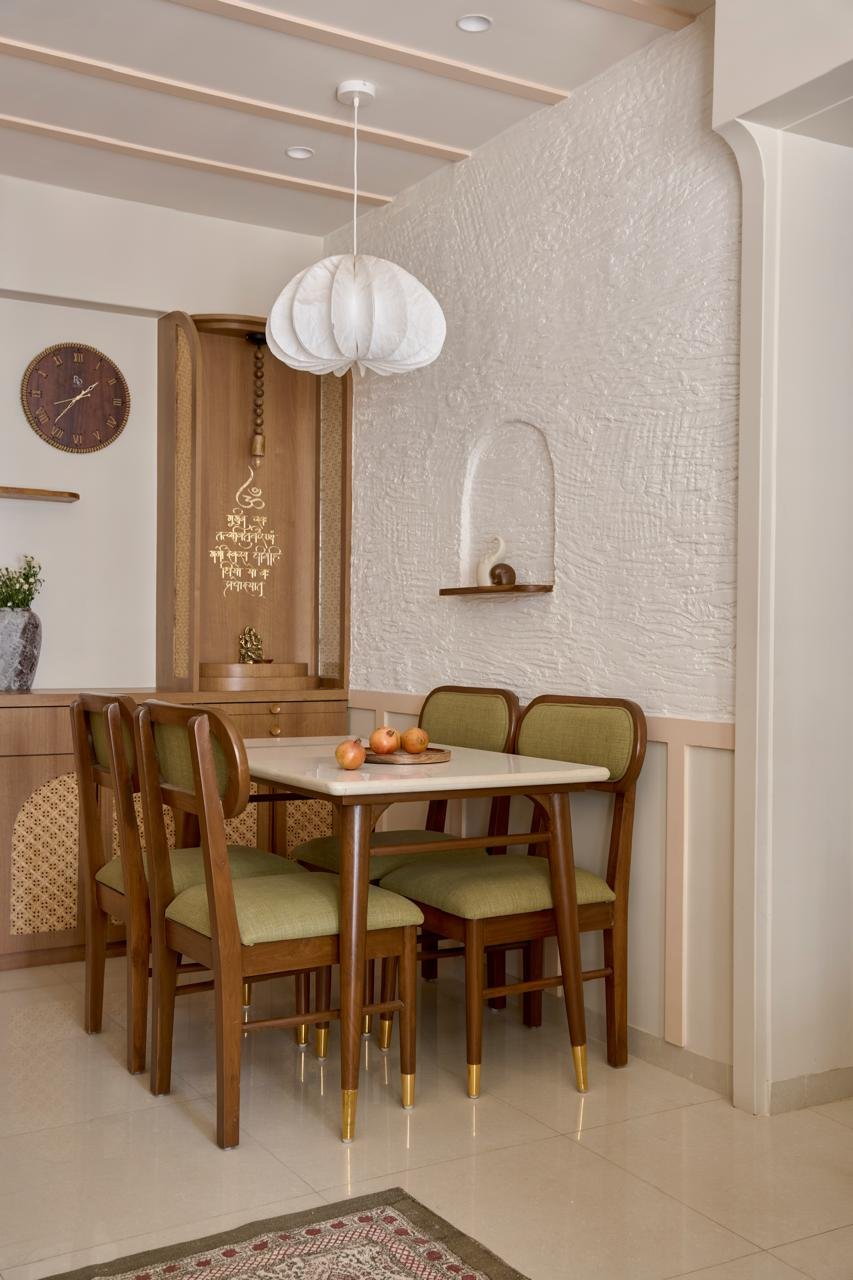
The dining area sits in continuous conversation with the living room, sharing its ceiling rhythm and material temperature. A square stone-topped table is paired with four chairs in warm wood and sage upholstery, their brass-tipped legs adding a quiet glint. Overhead, a softly crumpled paper pendant from, a contemporary reading of a traditional lantern, casts the table in a low, diffused glow.
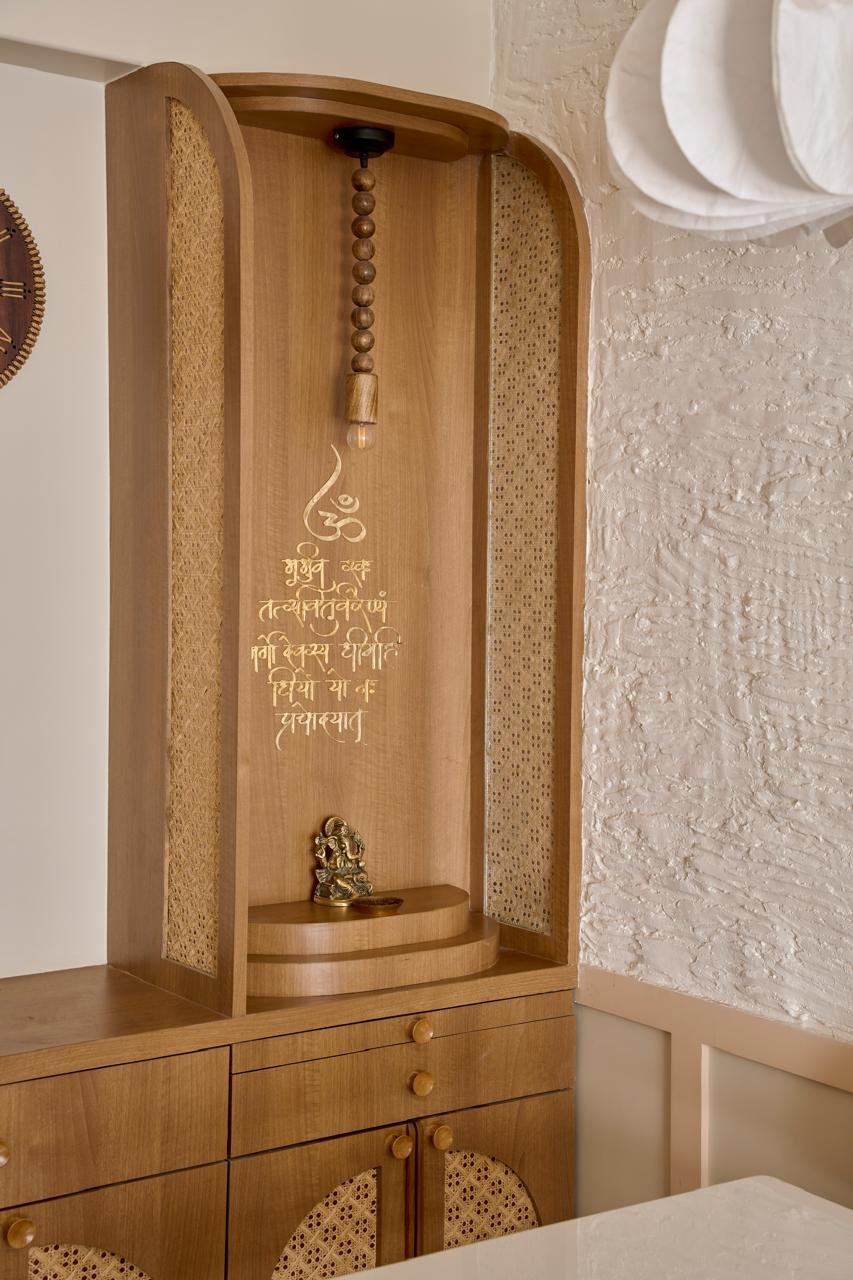
To one side of the dining zone, a built-in pooja niche frames the apartment’s spiritual centre. Cane-panelled flanks and a carved Sanskrit shloka in gilt give the alcove the weight of a heritage object while keeping its proportions modest and resolved. The textured plaster wall reappears here, tying the niche to the living room’s media setting.
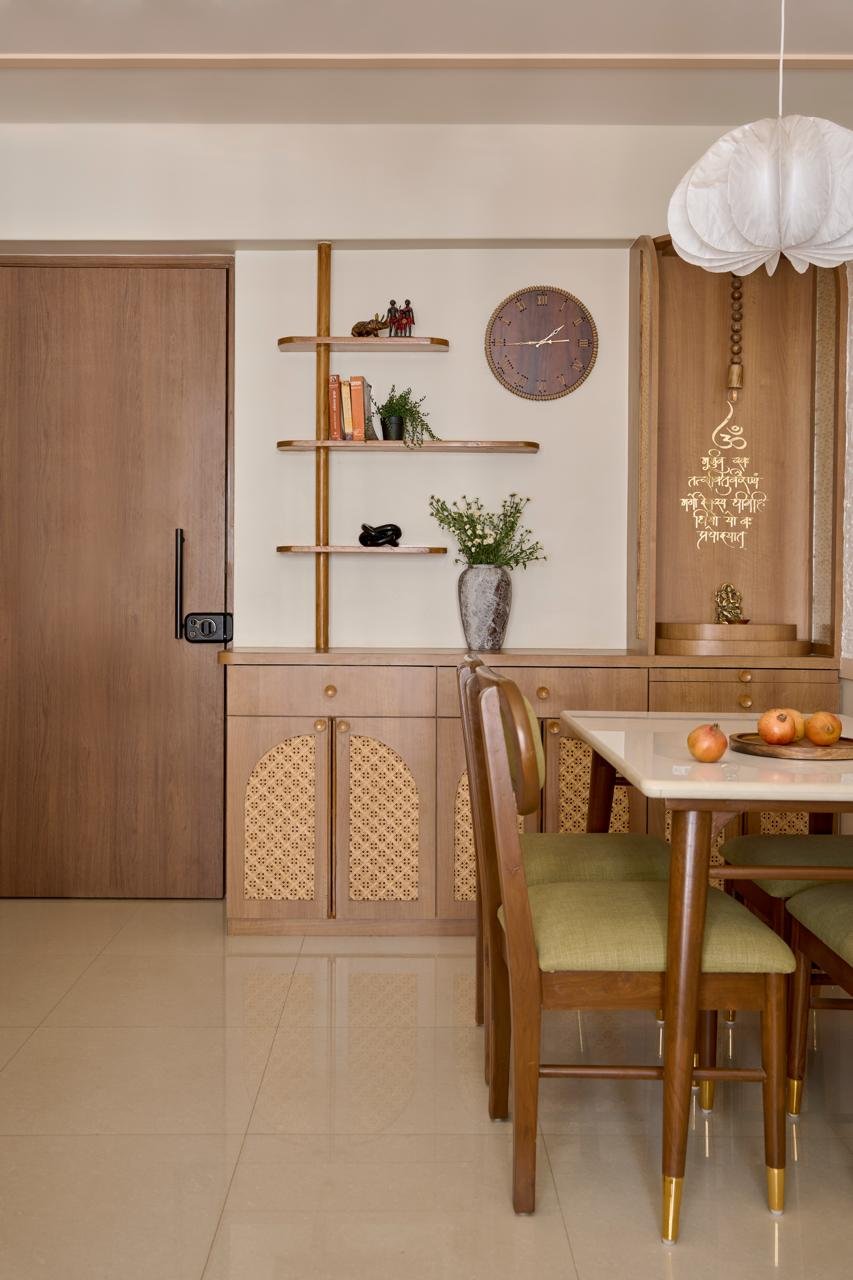
The dining wall opposite is held by a slender open shelving unit, its brass-tipped wooden uprights mirroring the chair legs across the room. A wooden wall clock, a small group of figurines, books, and a single vase of cut flowers are arranged with the lightness of a still life. Below, the cane-arched cabinetry repeats the pooja’s grammar in a quieter key.
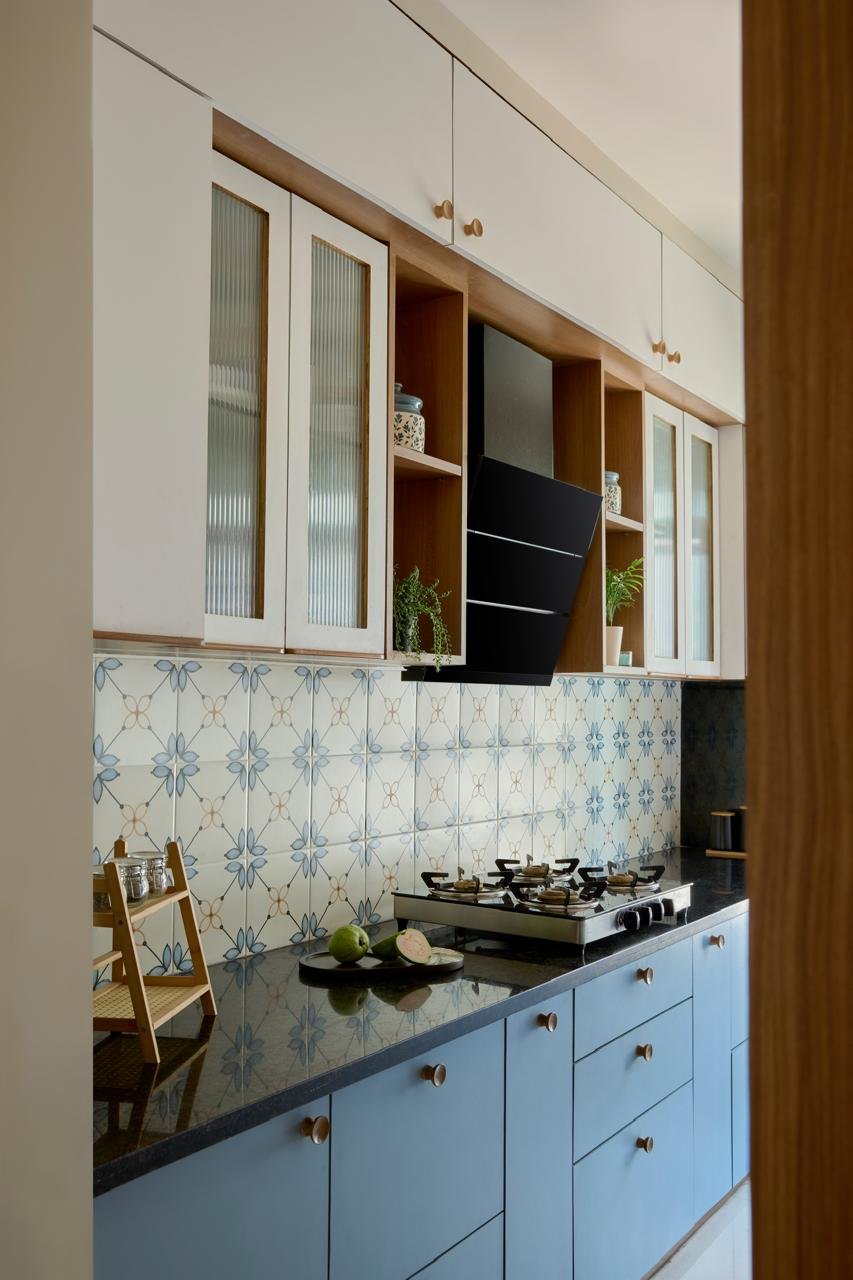
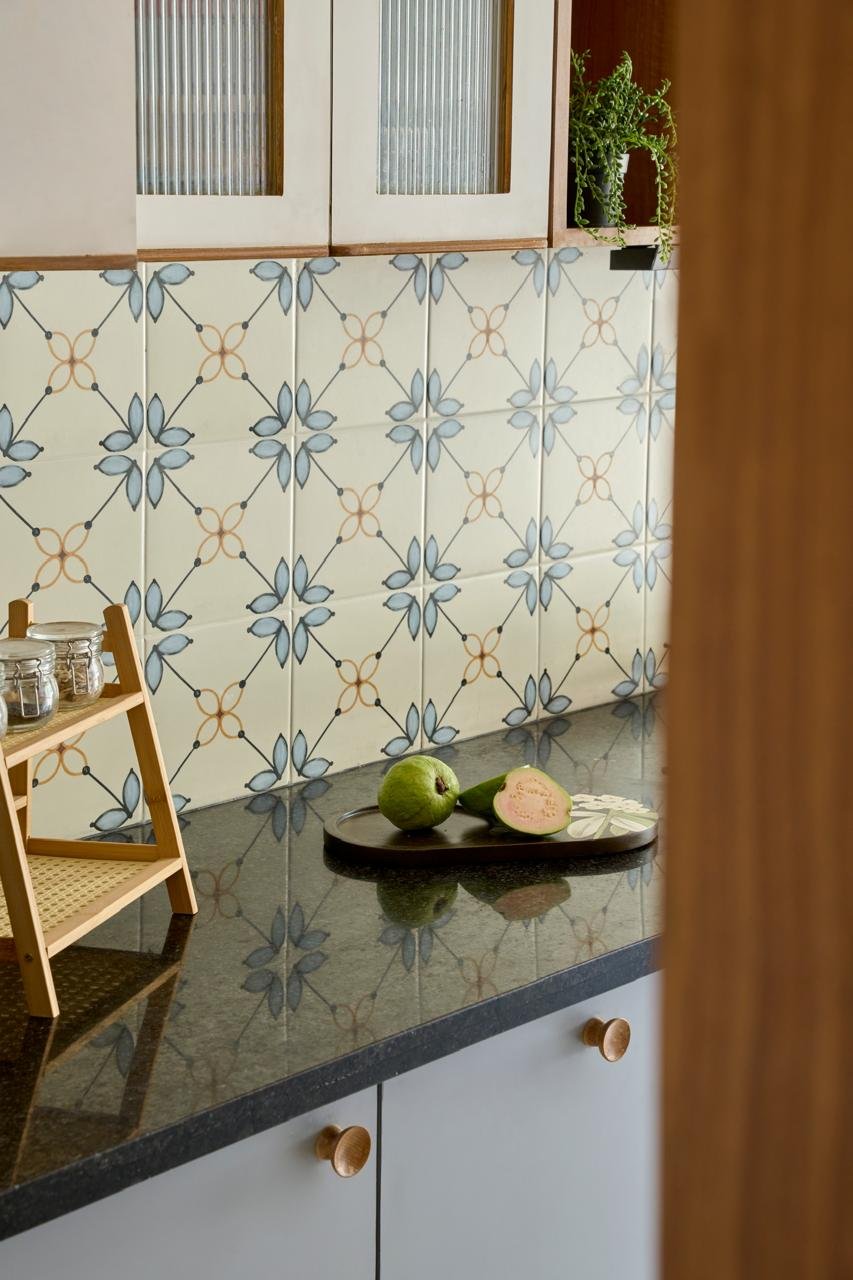
The kitchen is where the apartment lets itself be playful. Soft blue lower cabinetry meets ivory uppers with reeded-glass insets, and a hand-painted floral-tile backsplash in blue, ochre, and ink runs the length of the counter. Wooden knobs and exposed wood-lined niches keep the modern layout from tipping into clinical territory.
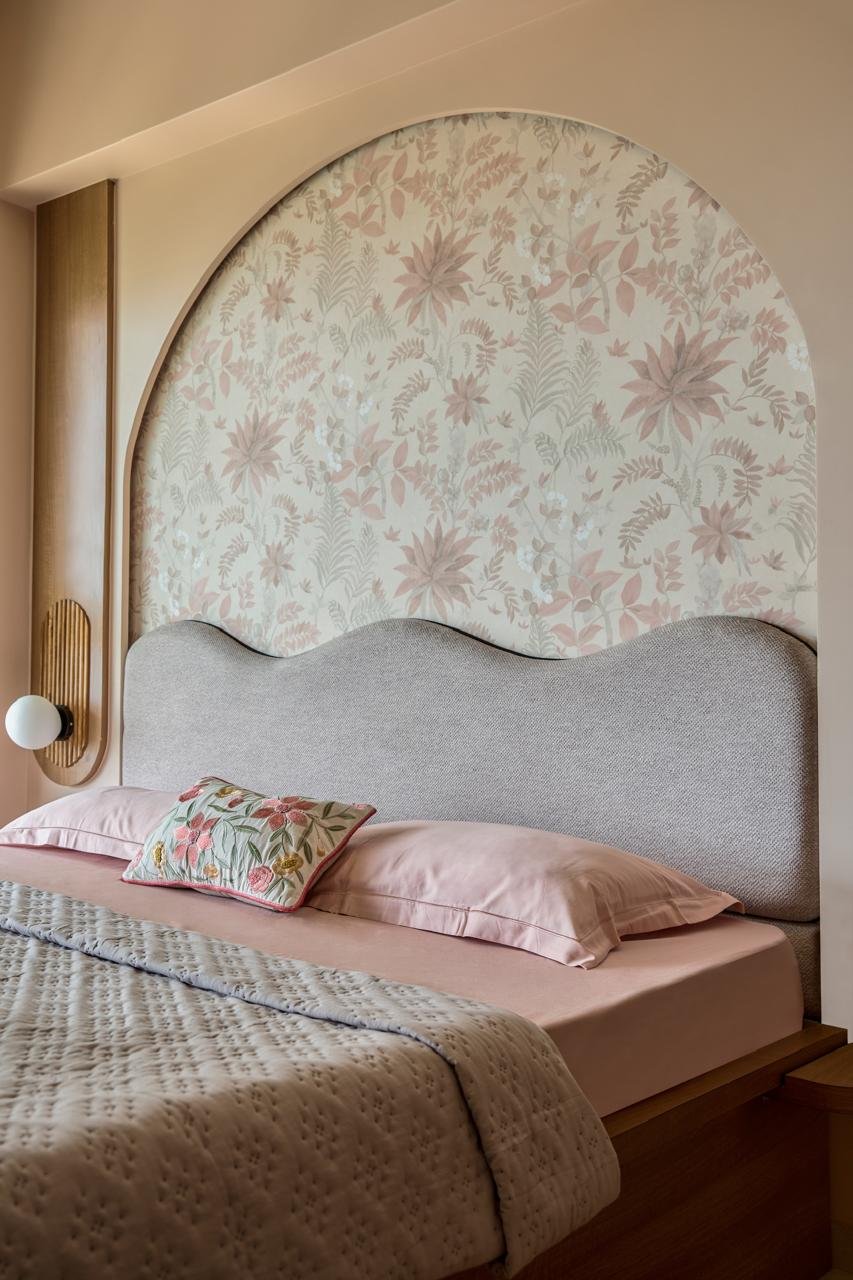
The master bedroom moves into a softer key entirely. A curved arched panel rises behind the bed, its upper half papered in a botanical print of pale ferns and dusty pink blooms, its lower half resolved into a wave-edged upholstered headboard in warm grey. Peach walls hold the composition, and a single embroidered cushion picks up the floral language at close range.
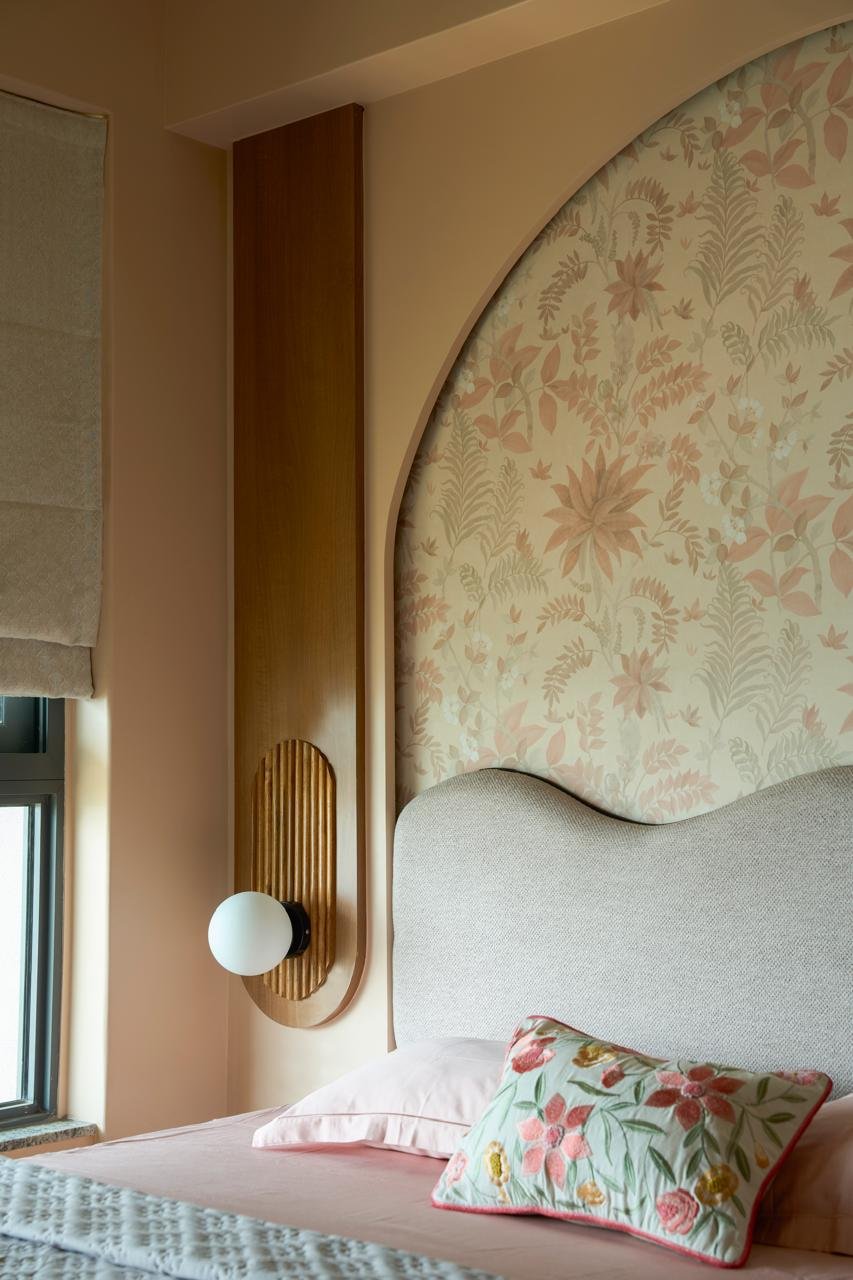
The detail at the headboard’s edge shows the studio at its most considered. A slim wooden pilaster with a reeded lower section holds a single round glass sconce, anchoring the arch and resolving the meeting point of wallpaper, fabric, and wall. The curve of the headboard against the deeper curve of the arch creates a quiet rhythm, the kind of layered geometry that rewards a second glance.
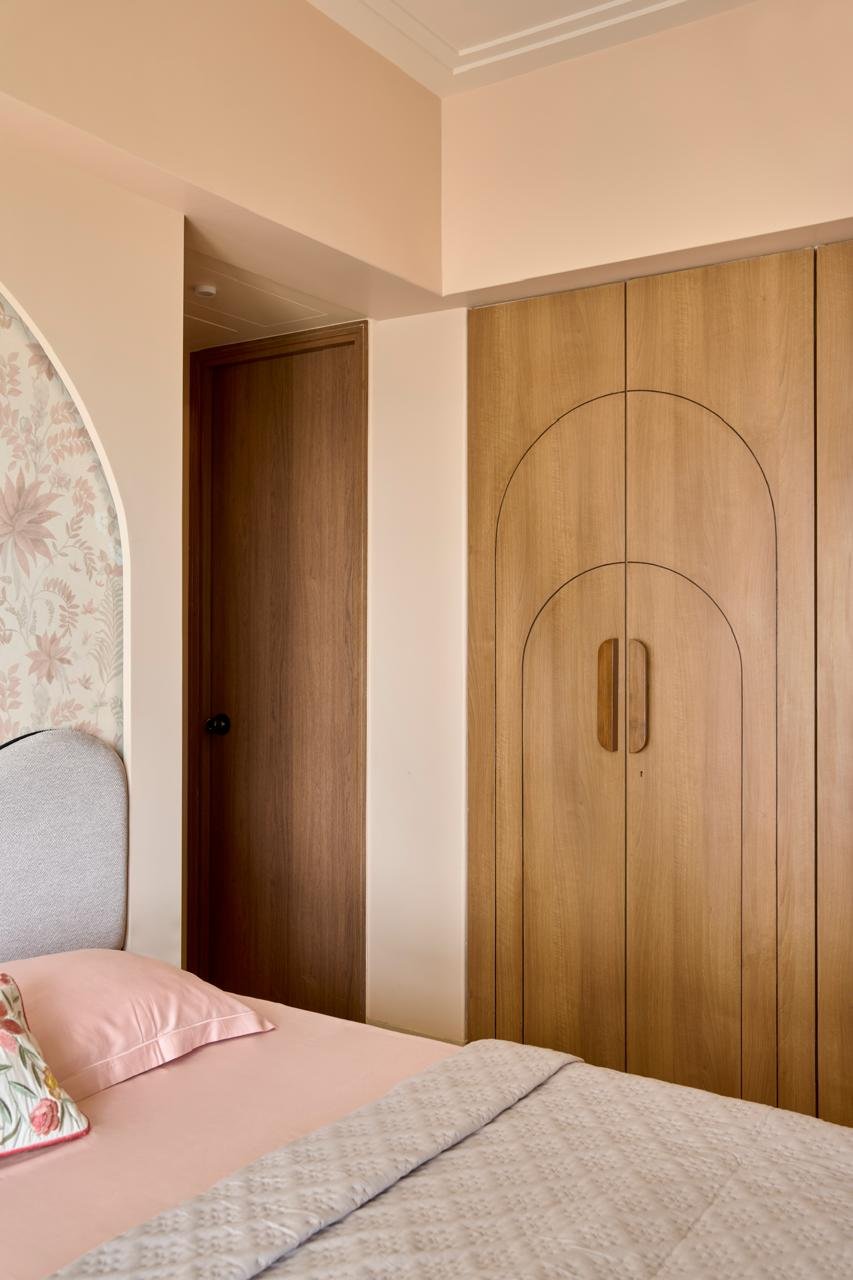
Across from the bed, the wardrobe wall is treated as a piece of architecture rather than storage. Tall wooden doors carry an inlaid double-arch motif, the larger arch enclosing a smaller one, with sculpted vertical pulls at the centre. The gesture is restrained but unmistakable, echoing the bedhead’s curve and the apartment’s broader vocabulary of soft, rounded forms.
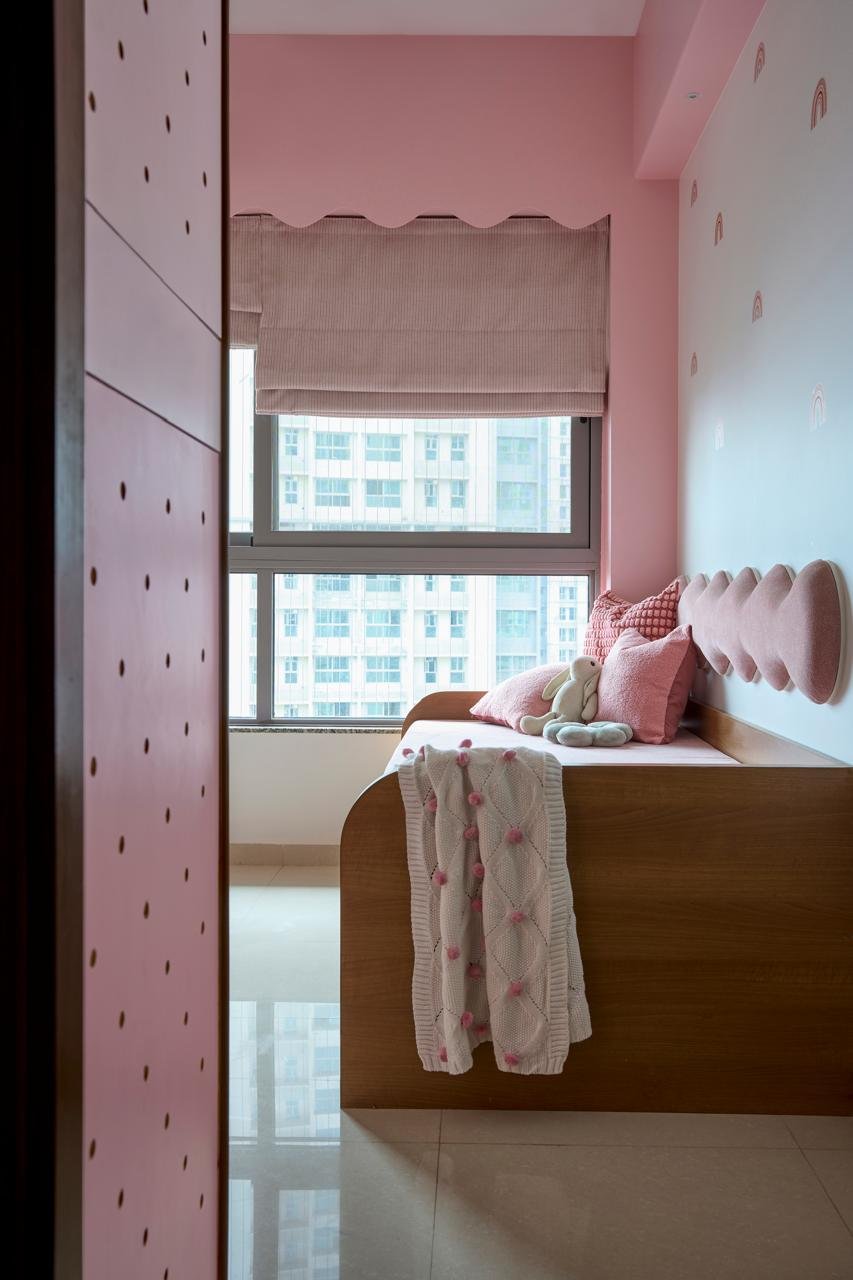
The daughter’s bedroom commits fully to a single colour idea. Pink walls and ceiling wrap the room in a confident wash, with hand-painted rainbow motifs scattered across the lighter accent wall and a scalloped pelmet softening the window. The wardrobe to the left, perforated with a regular grid of small dots, repeats the foyer cabinet’s dotted face in a younger, more graphic register.
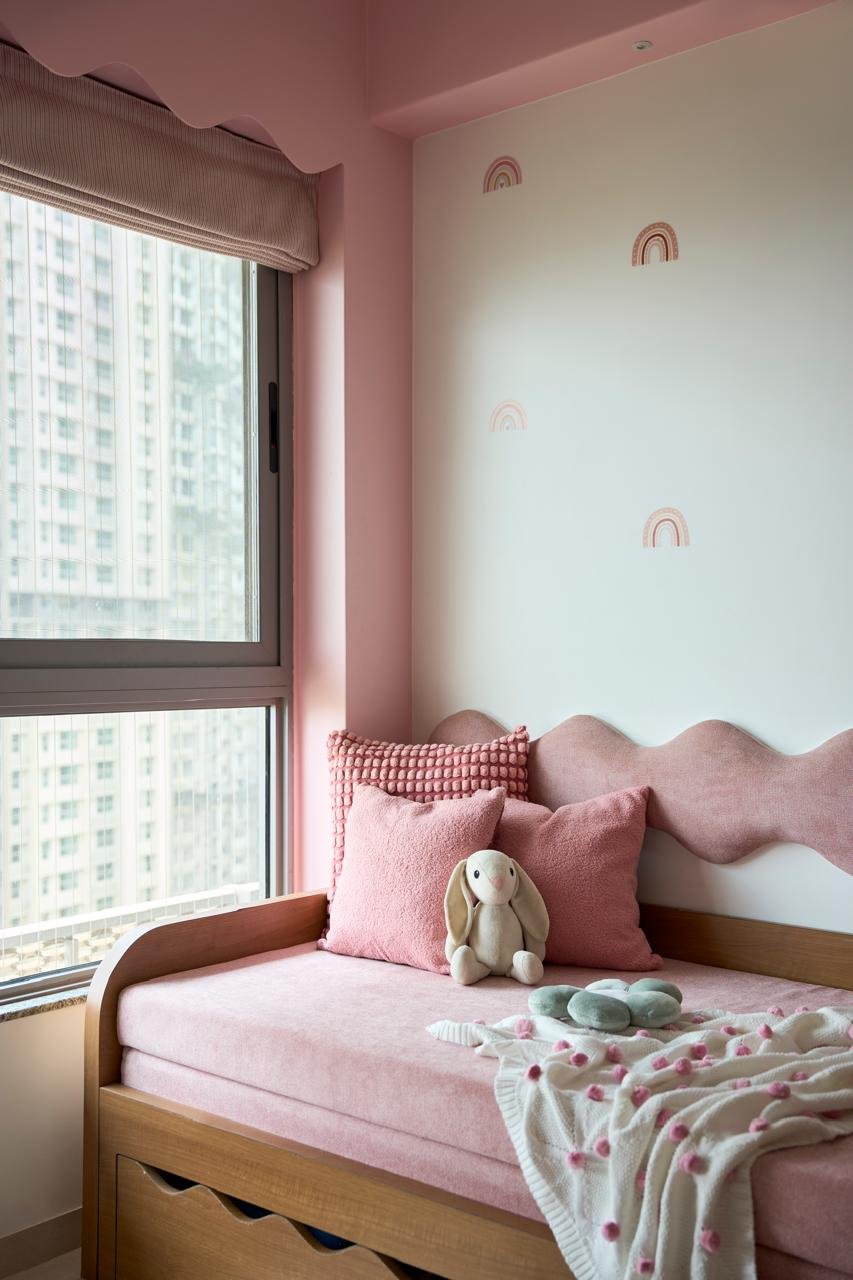
The window bench is the room’s quiet centrepiece. A wave-edged upholstered backrest in dusty pink runs along the wall, its silhouette echoing the master bedroom’s headboard at a child’s scale. Pom-pom throws and a small plush rabbit place the design firmly in the world of a five-year-old without ceding it to clutter.
The study corner of the same room shows how the studio handles whimsy with discipline. The desk’s curved leg loops down into a sphere foot, a Memphis-inflected gesture rendered in matte pink, while the wall-mounted shelving above carries books, a calendar, and a single potted plant. The arrangement is bold in form but uncluttered in execution.
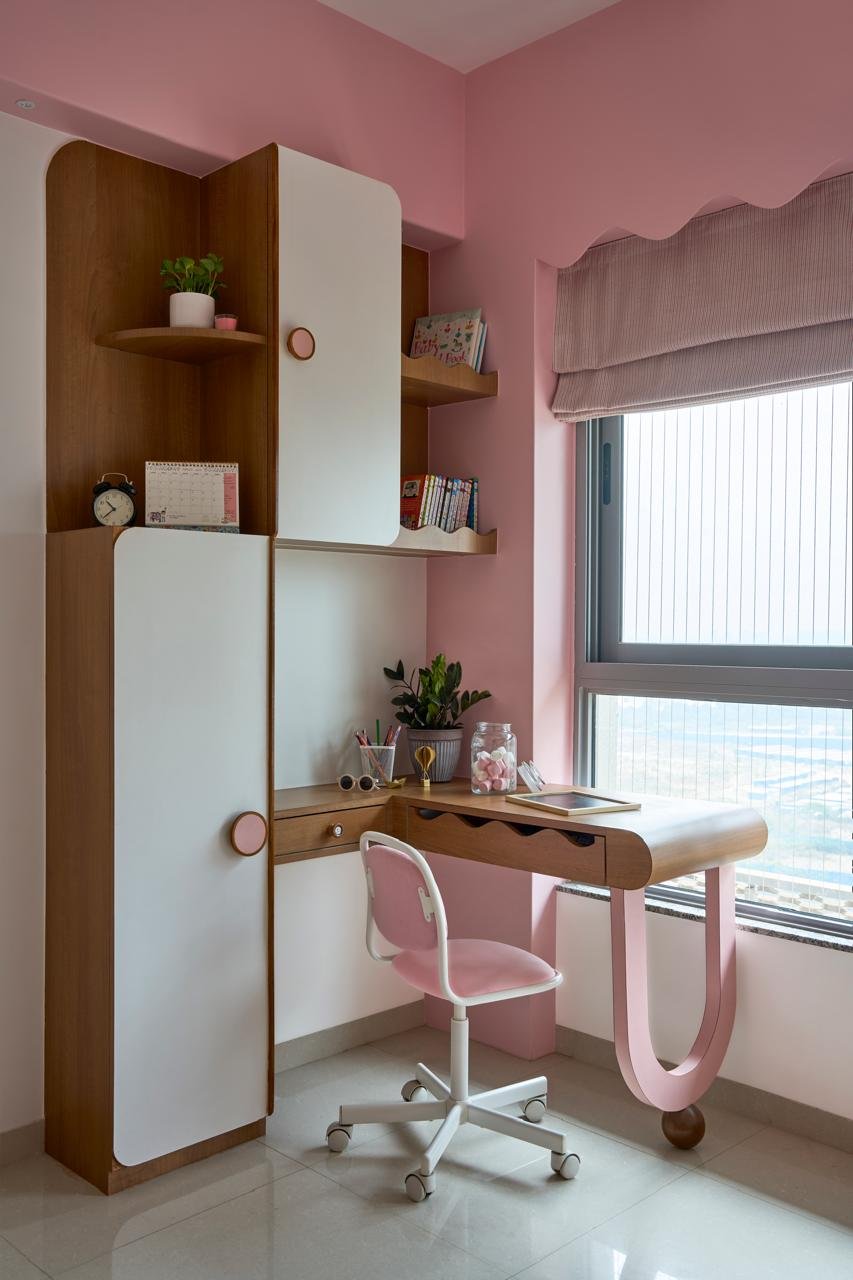
The tall storage tower combines rounded white doors with wood-toned shelving and pink circular pulls, while the open shelves curve gently at their corners. Every hard edge has been softened, and yet the room remains intentional rather than saccharine, a difficult balance the studio holds with confidence.
D+U Architects’ work on Anandam belongs to a growing register of Indian residential design that takes traditional reference seriously without staging it as theatre. The carved wood, the patterned tile, the pooja niche, the cane inserts; each arrives in a quieter form than its heritage cousin, calibrated for a compact apartment and a young family rather than for a grand house.
What lingers, finally, is the project’s tonal consistency. Anandam does not announce itself; it accumulates. The peach panelling, the maroon sofa, the pink bedroom, the patterned backsplash; each space holds its own argument, and together they make a home that feels both culturally familiar and entirely of its present moment.