Retail spaces have spent the better part of a decade learning to behave less like shops and more like rooms one might inhabit, but the gesture is rarely earned. Most fall back on theatrical lighting and styled vignettes, mistaking atmosphere for argument. The interesting projects, the ones that hold attention beyond a first visit, do something quieter: they translate what is being sold into how it is shown.
The Parnami Incense Sticks Flagship Store in Vadodara is one such project. Designed by The Crossboundaries, led by Harsh Boghani, the thousand-square-foot store occupies a triangular site, a geometry that most retail designers would treat as a problem to be hidden. Here it becomes the project’s defining grammar, from the bold portal at the entrance to the angled display volumes that fan outward through the interior, all of it tied together by a sculptural ceiling installation that interprets, quite literally, the drifting smoke of an incense stick.
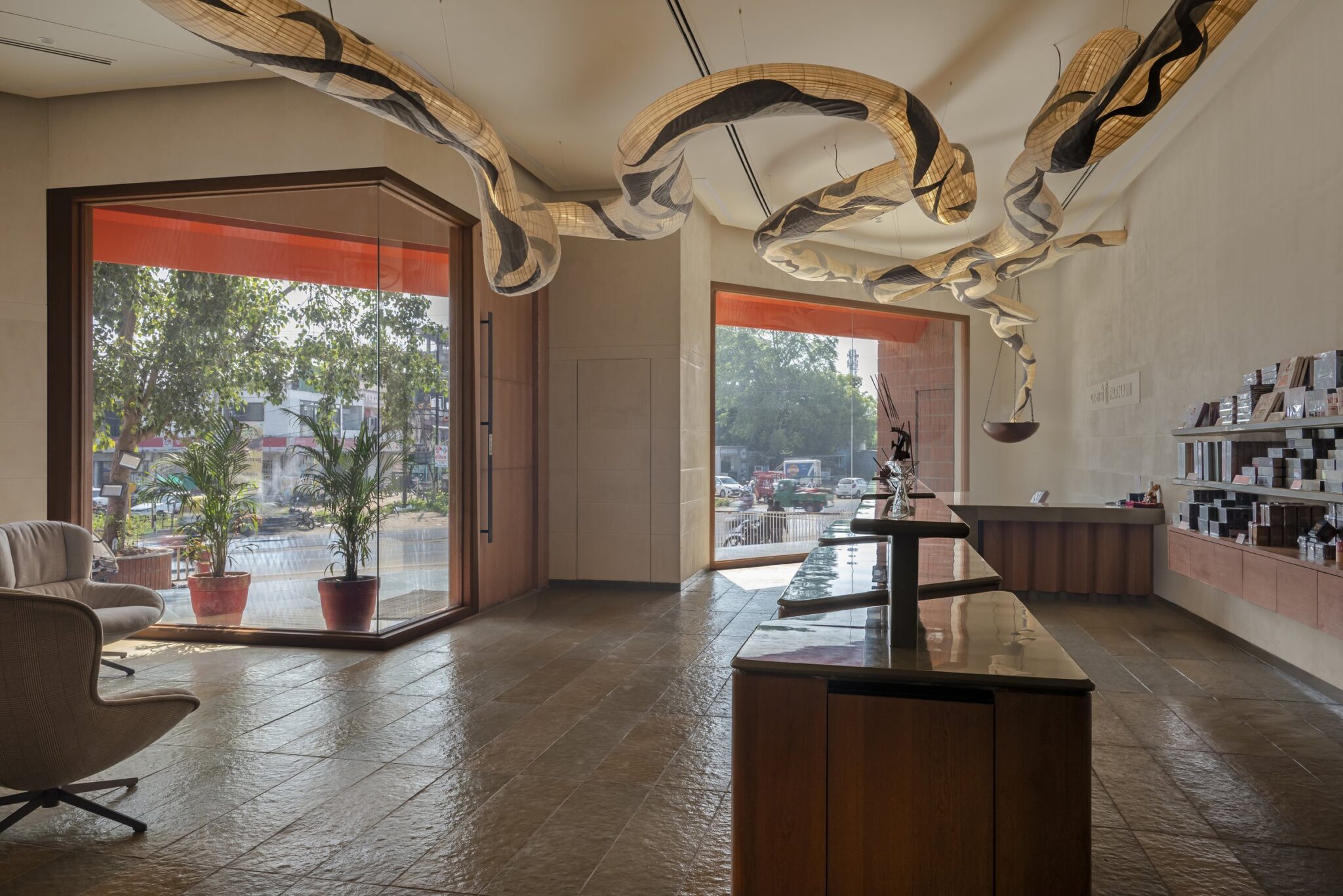
The interior reveals itself with unusual generosity for a compact retail floor. Yellow Kota stone, finished in a mix of matte and river polish, runs uninterrupted underfoot, and the long counter in oakwood veneer hovers low enough to keep the entire volume visible from the doorway. Above it all, the suspended fabric installation uncoils across the ceiling like a slow, deliberate exhalation.
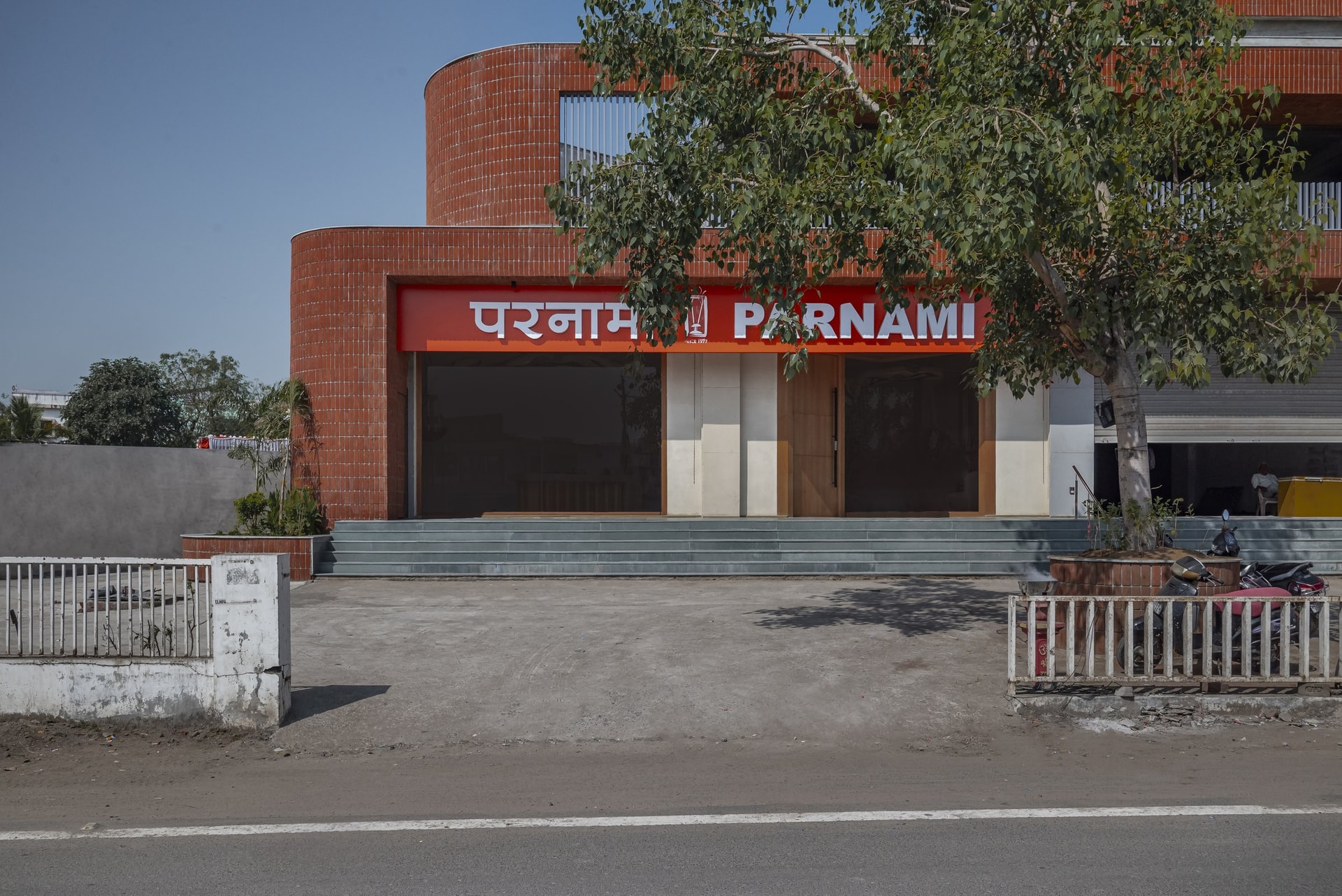
The exterior reads first as architectural rather than commercial, which is a quietly radical decision in a category dominated by signage. Curved walls clad in red brick wrap around the corner site, and the storefront recedes behind a calm horizontal band carrying the Parnami wordmark in Devanagari and Latin scripts side by side. The brand has been making incense since 1977, and the facade lets that lineage speak without underlining it.
Inside the entry sequence, the triangular portal performs the work of a threshold rather than a door. The vertical volume rises generously above the visitor, and a pair of large windows on either side admit street life as quiet, framed images. It is the architectural equivalent of an inhalation before something is said.
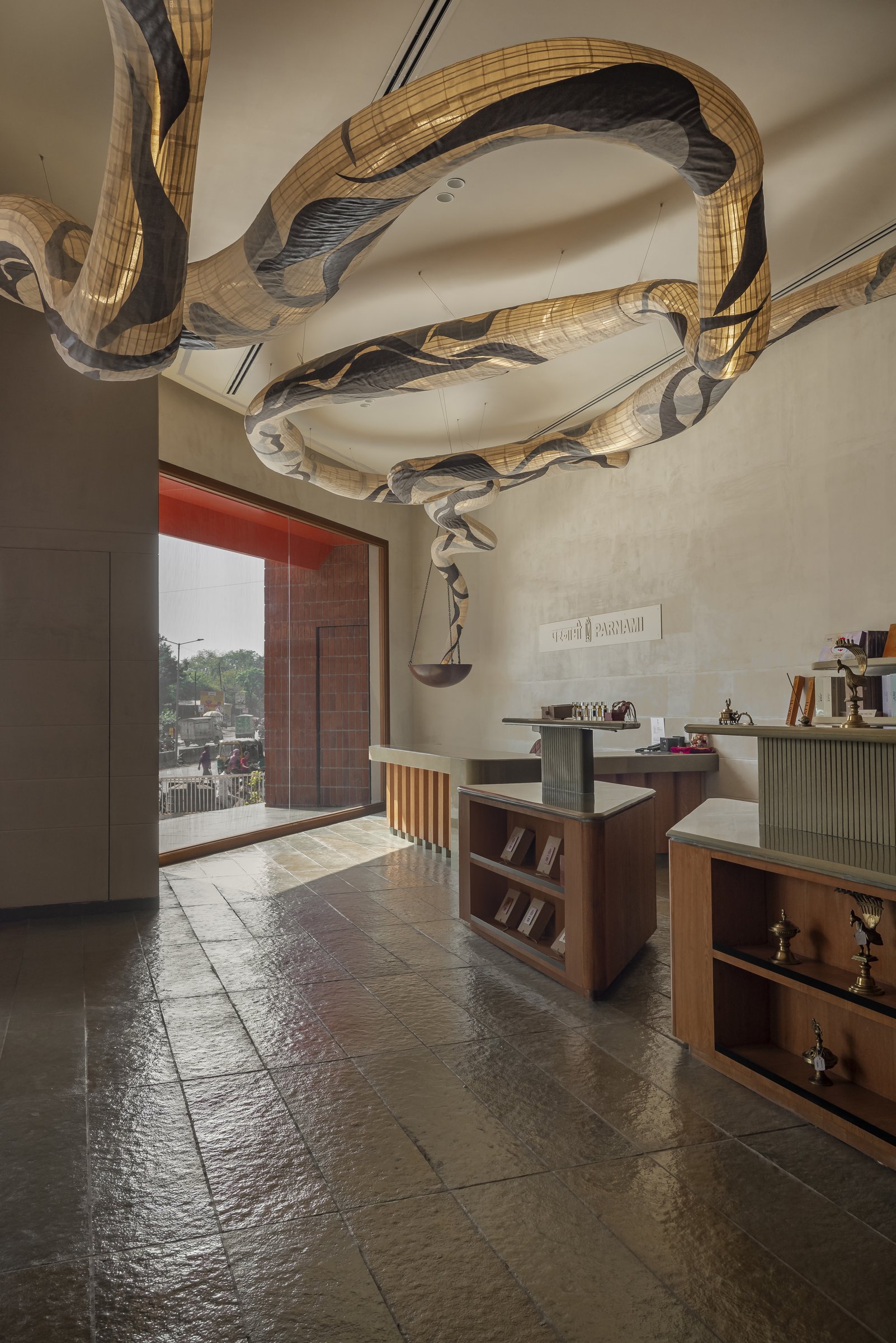
From the entry, the long axis of the store opens up with the bespoke lighting installation as its first proposition. Crafted by Agiyo from layered fabric stretched over slender ribs and lit from within by warm LEDs, the piece curls and folds along the ceiling in a continuous gesture, sometimes tightening into a coil, sometimes loosening into a wide ribbon. A small brass scale hangs from one of its lengths, a deliberate reference to the older retail rituals of weighing and measuring.
““At the heart of the space floats a bespoke sculptural lighting installation inspired by the drifting smoke of an incense stick, tying the spatial narrative directly to the essence of the product.””
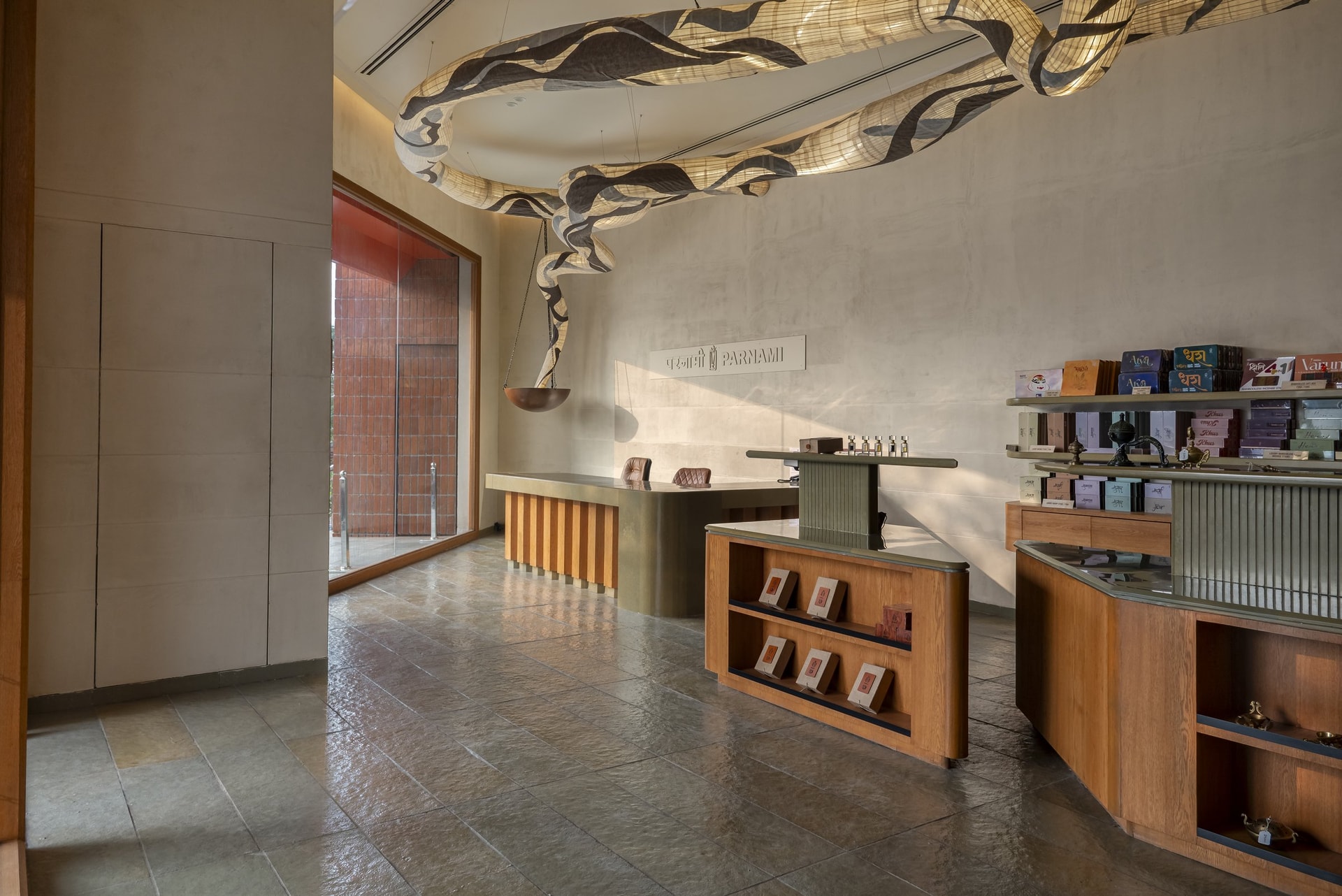
The counter itself is a study in restraint. A long oakwood base with vertical slatted detailing meets a darker metallic top, set against a pale stone-textured wall on which the Parnami wordmark sits like a calm punctuation mark. The fluted detail recurs at the smaller display islands ahead, knitting the furniture into a single family of forms.
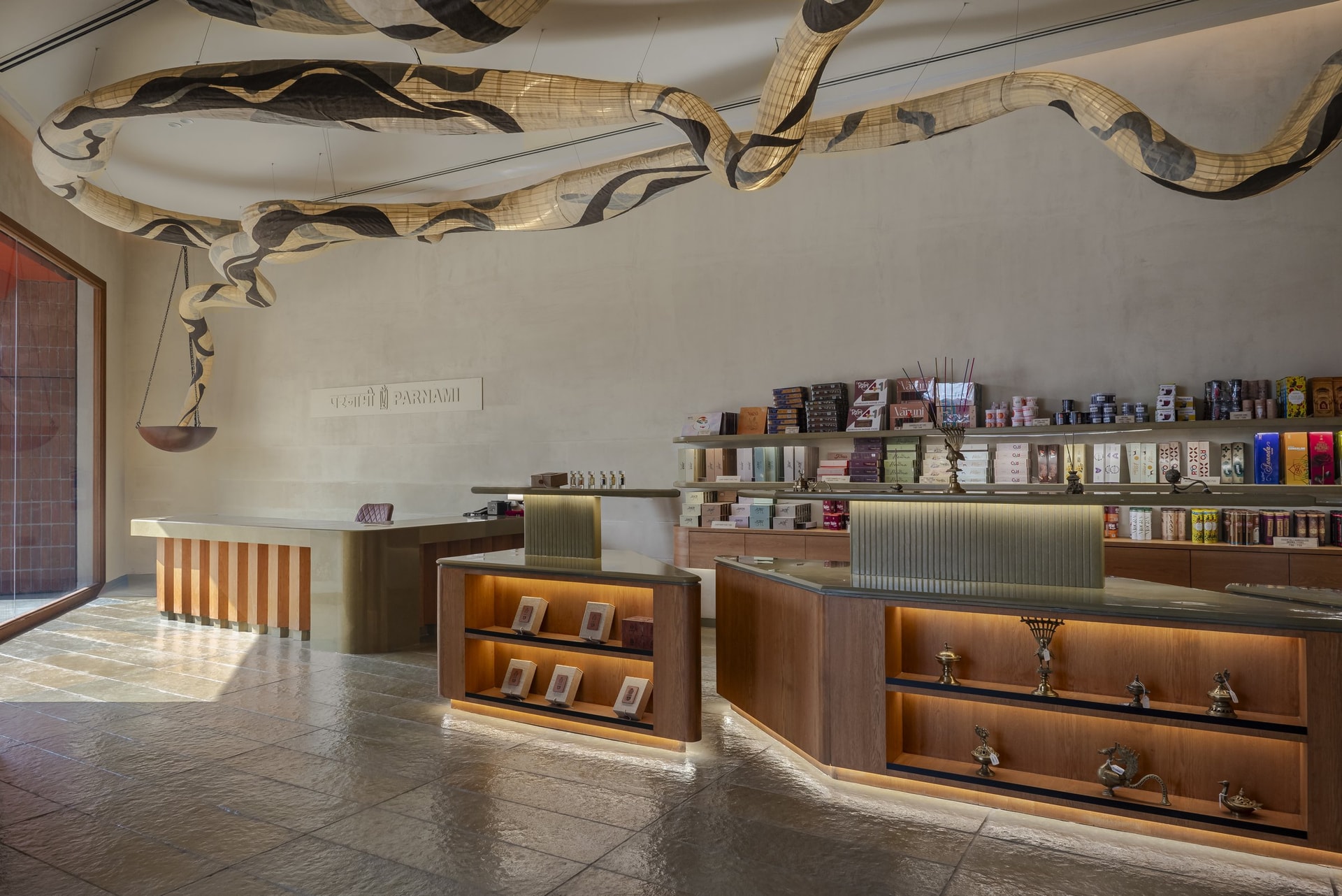
The display strategy is the clearest expression of the studio’s spatial intelligence. Low-height oak units, lit from within by recessed warm light, sit clear of the walls so that sightlines remain open across the entire floor. Storage is folded into the furniture itself, which keeps the back walls clean for the longer shelves of incense packaging that read, almost, as a graphic register.
That register is the room’s quiet payoff. Two slim ledges run the length of the back wall, holding rows of incense in their printed boxes, the colours and scripts lined up like a small archive of the brand’s range. Below, the oak counters open into shelves of brass diyas and ritual objects, the one warm metallic note in a palette otherwise tuned to stone, wood, and fabric.
Seen straight on, the central island reveals its triangular DNA most plainly. Three angled volumes step forward toward the visitor, each with its own niche of objects, and the geometry that began at the front portal resolves itself here as a quiet rhyme. Few retail interiors of this scale earn the right to repeat a single formal idea this thoroughly.
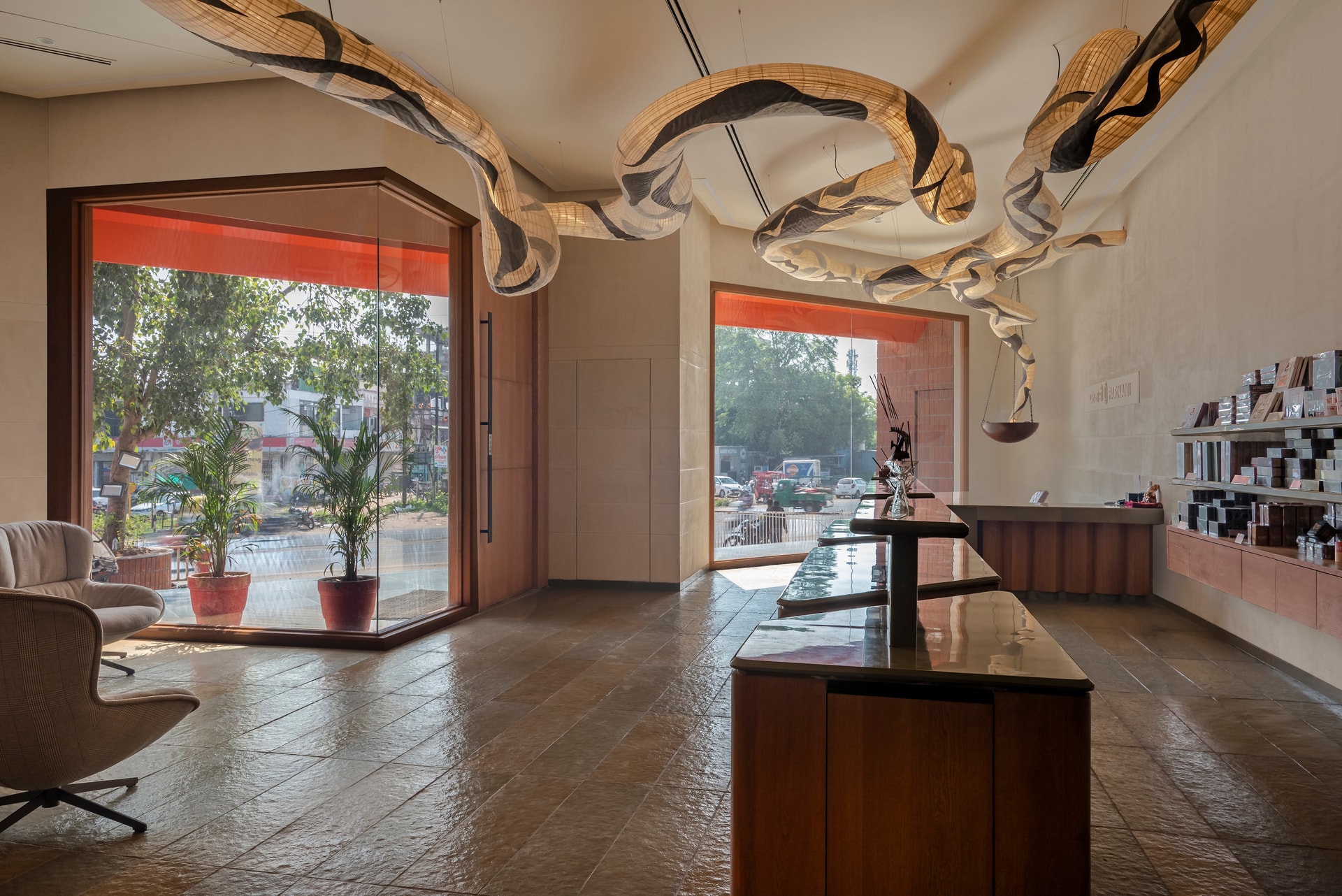
The ceiling installation, viewed from the rear of the store looking back, performs its full theatrical register. The fabric ribbons twist and overlap in three dimensions, casting their patterned shadows softly across the pale wall behind. Indirect cove lighting at the wall’s upper edge keeps the surface luminous without competing with the piece itself.
What Parnami achieves, in the end, is something Indian retail design has been circling around for some years without quite landing. It treats a brand rooted in ritual not by quoting tradition decoratively, the temple-bell-on-a-shelf approach, but by locating the right metaphor and committing to it architecturally. Smoke becomes ceiling, ritual becomes circulation, and the product is allowed to be the small, beautifully packaged thing it has always been.
The store proposes that retail at this scale, in a tier-two city, can hold its own against any flagship in the metros without resorting to spectacle. Its quiet confidence, the unbroken Kota floor, the single sculptural gesture overhead, the disciplined material list, suggests a kind of design maturity that the category badly needs. It is a small store with a large idea, and the idea is the building.